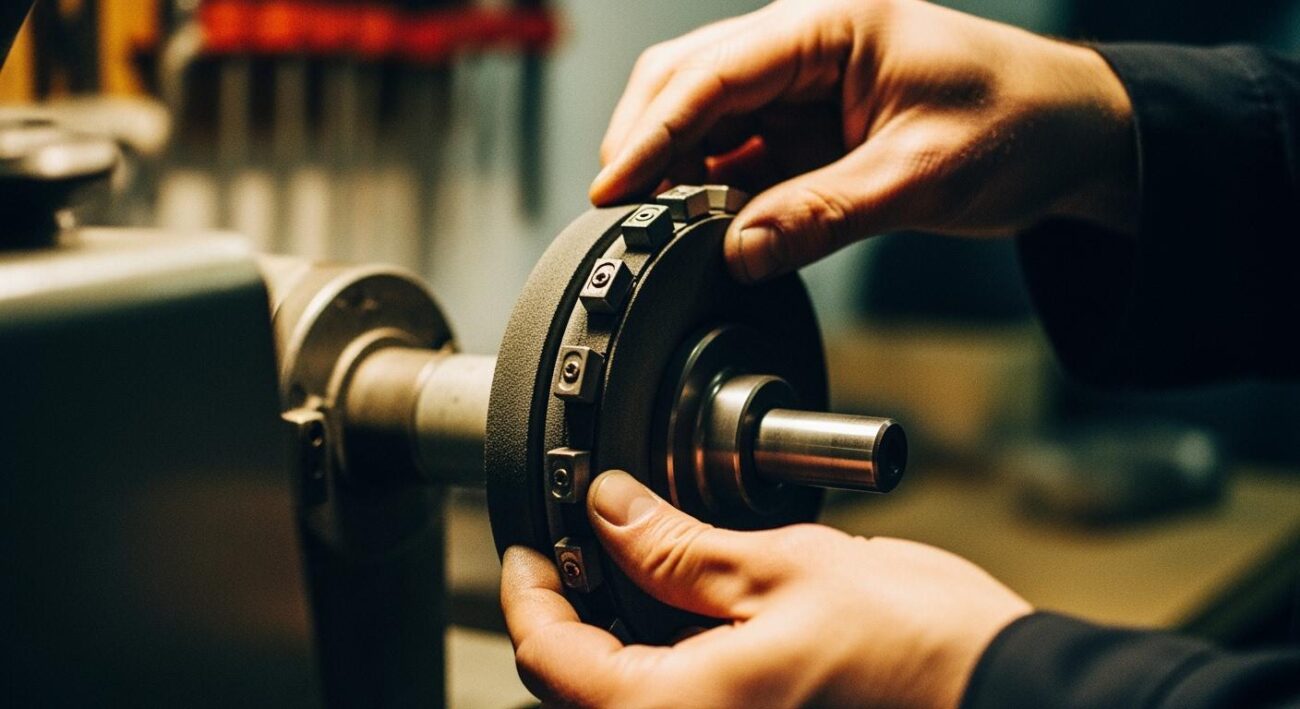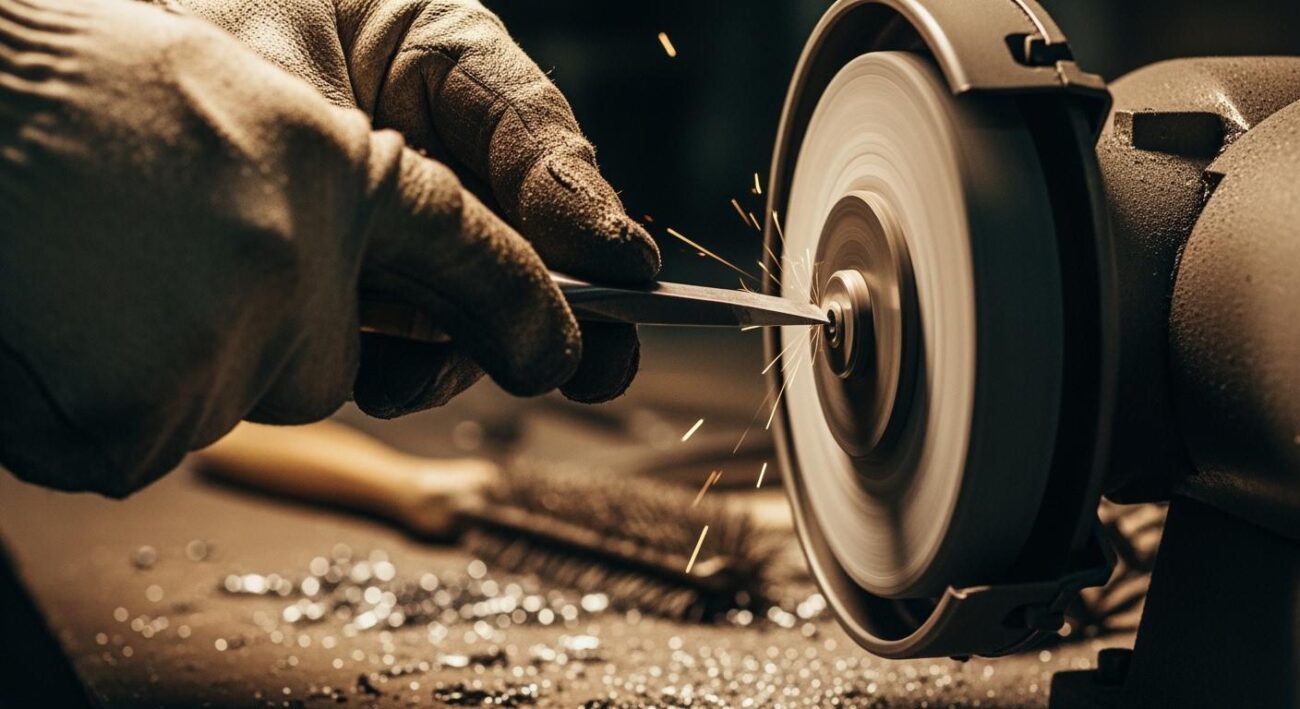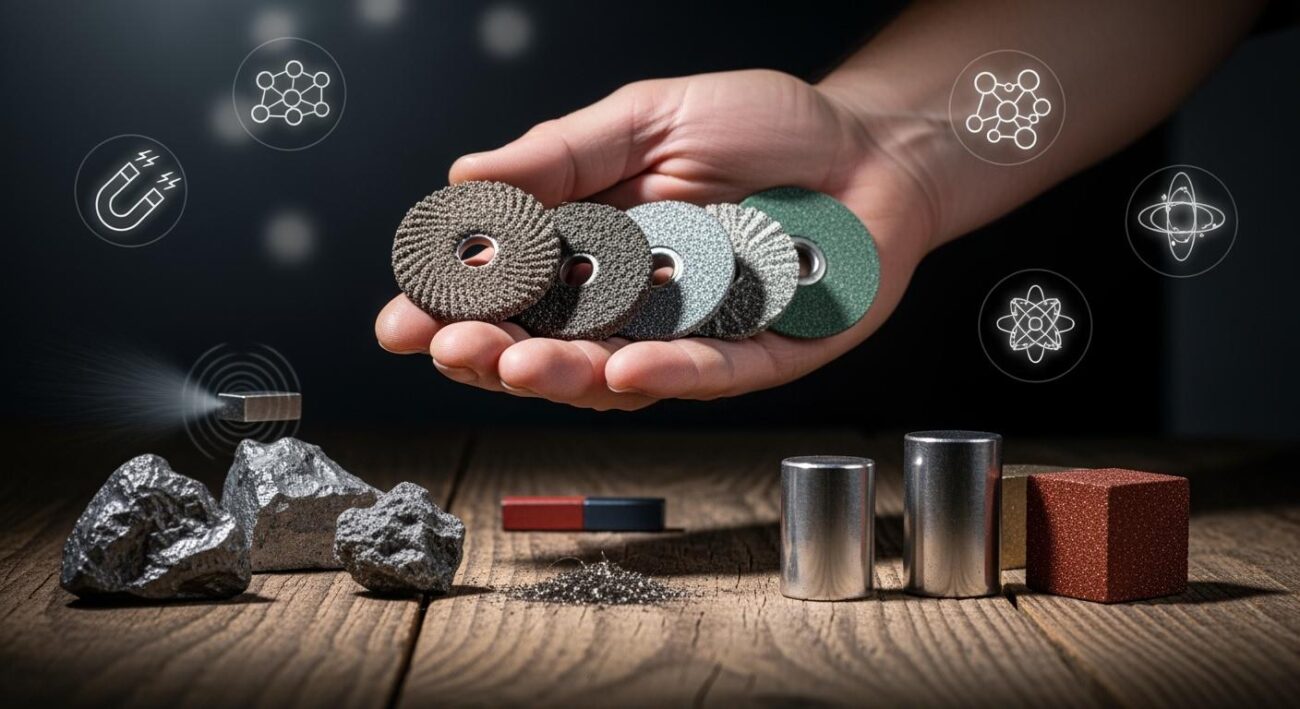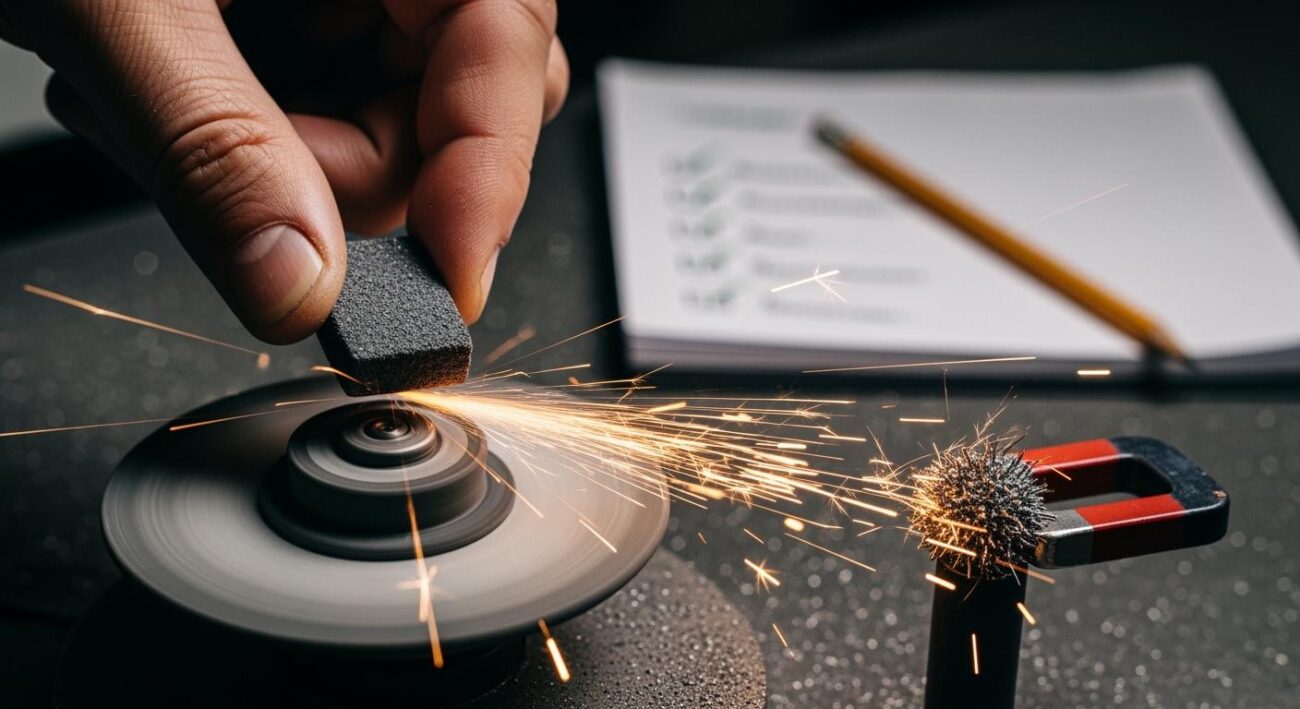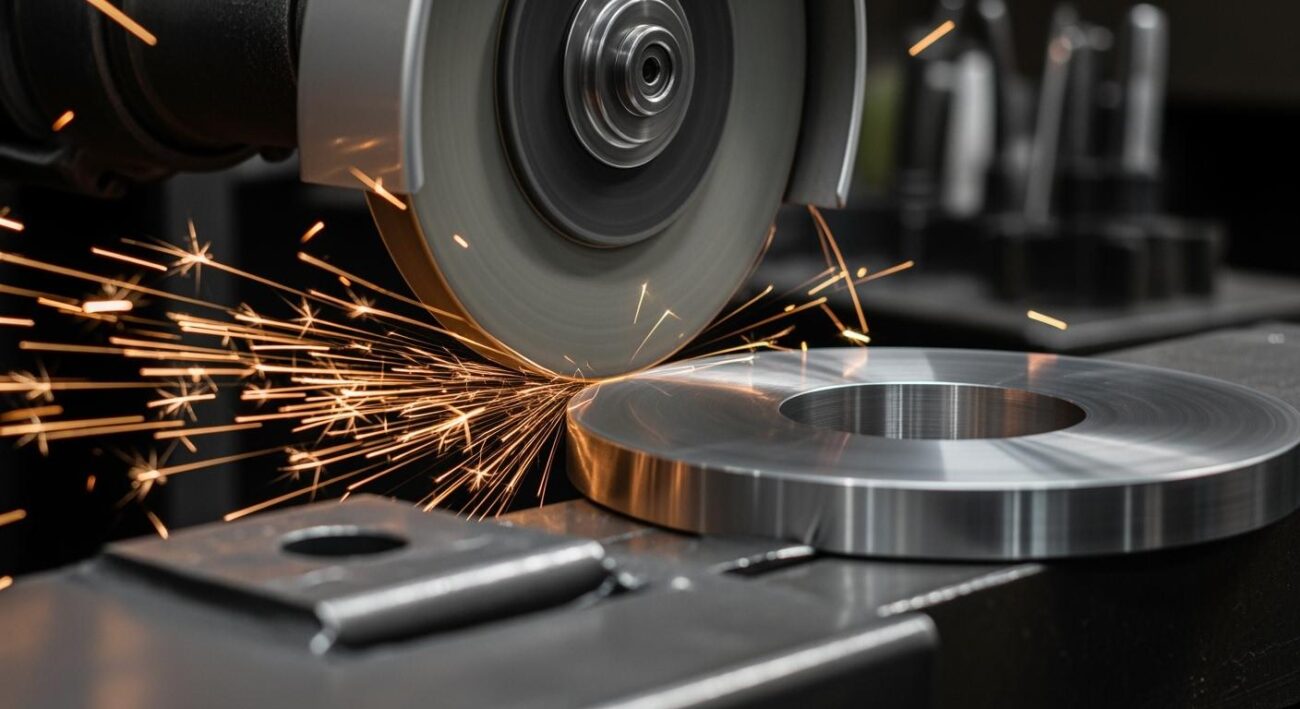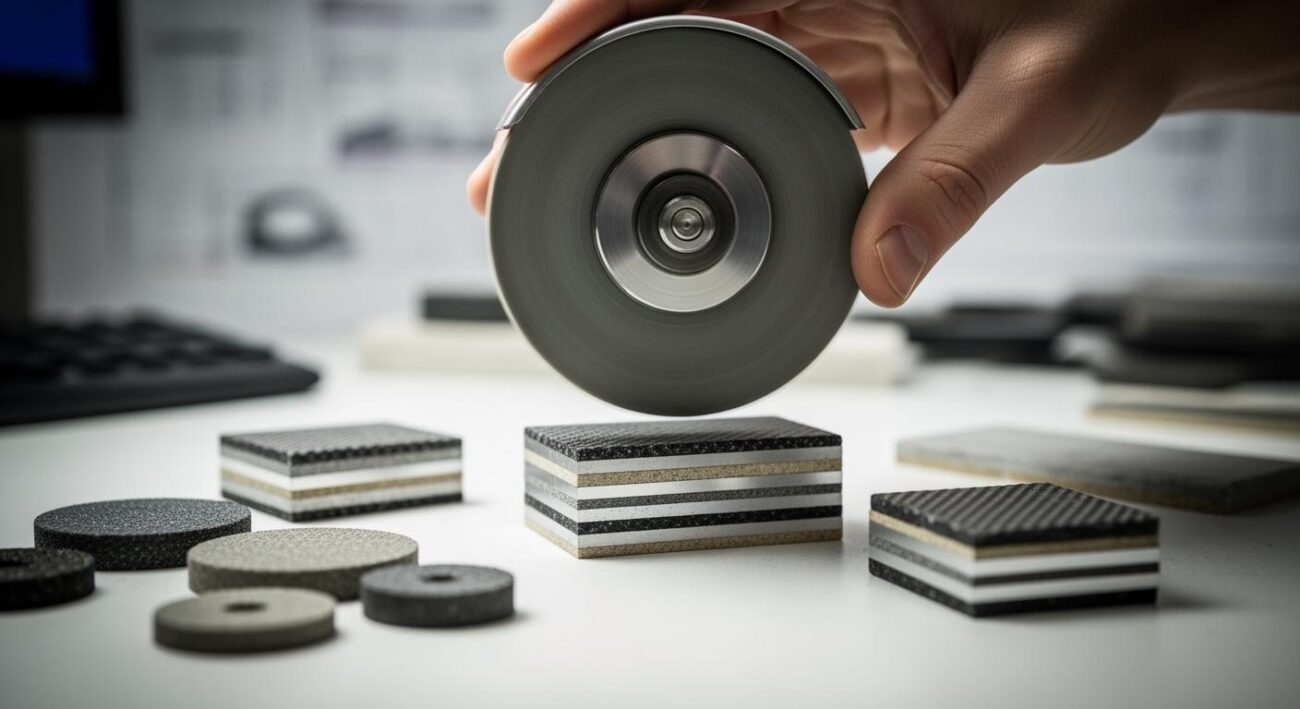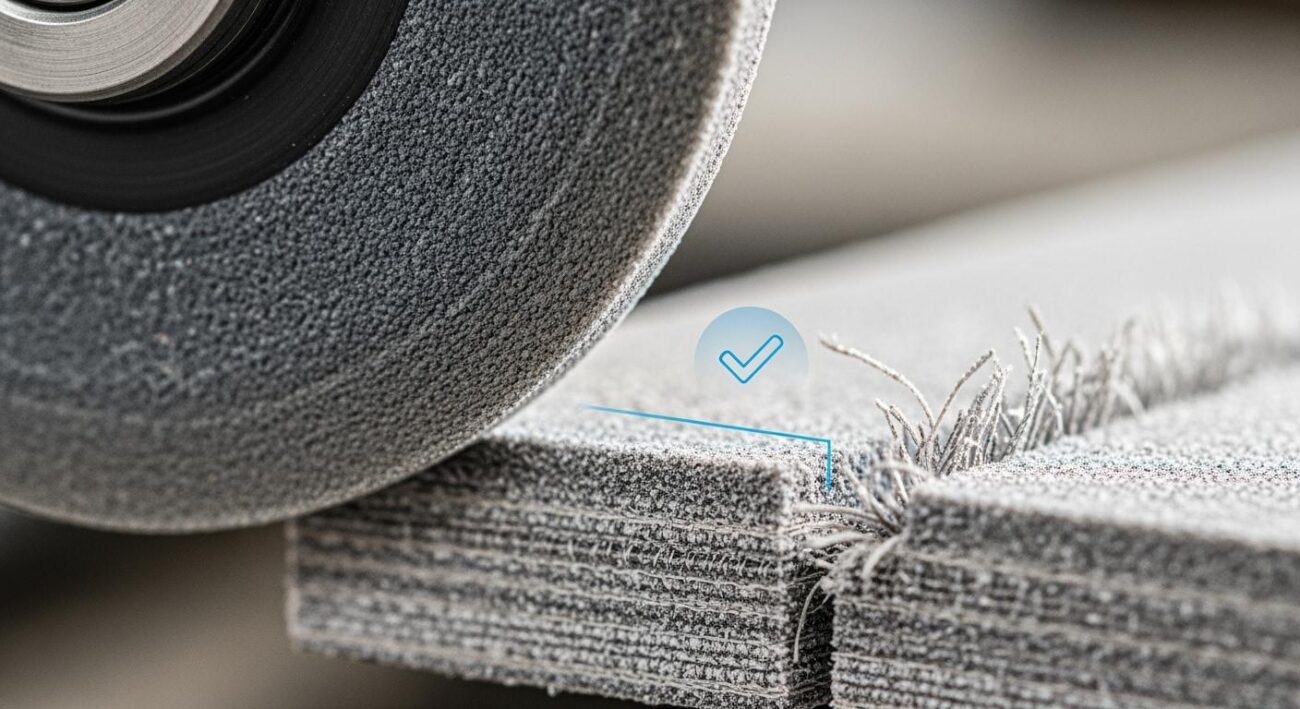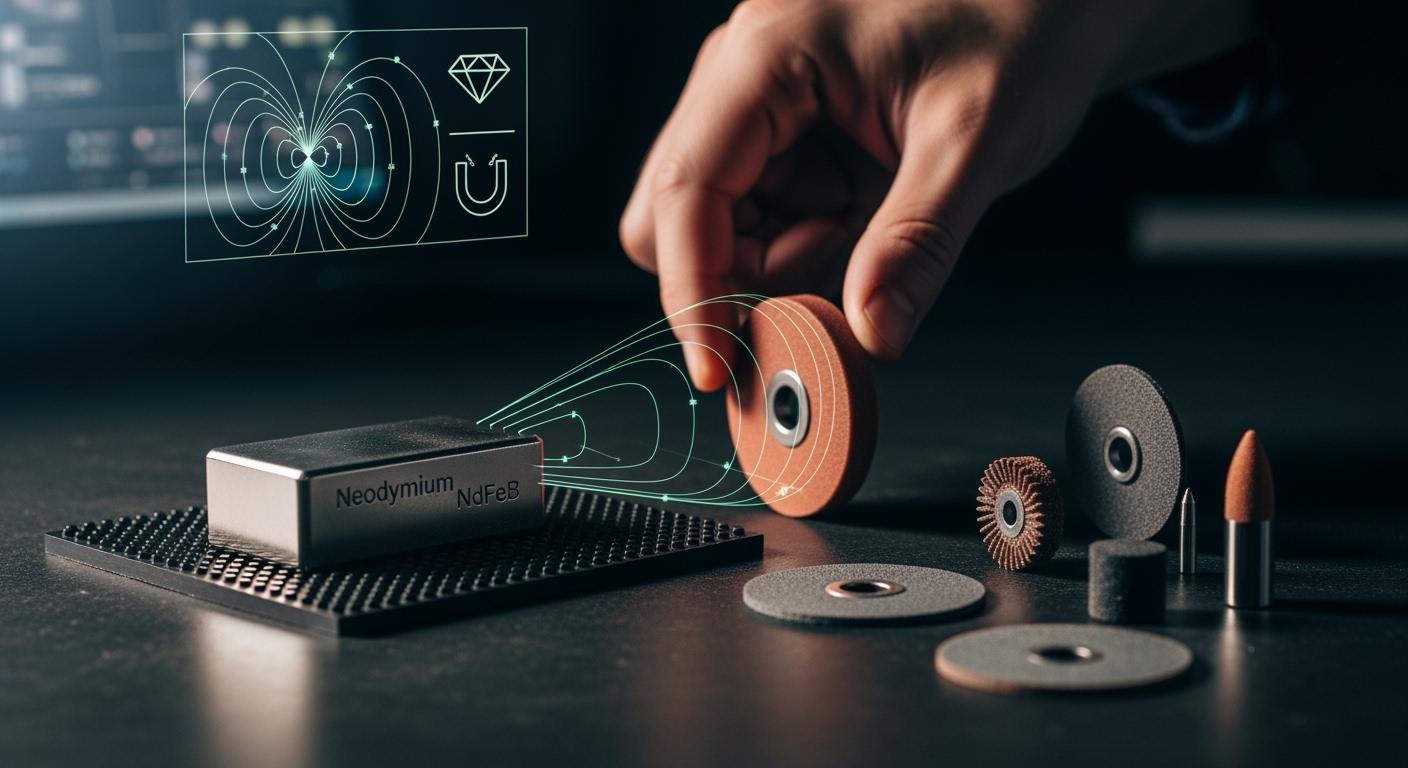
You want to keep NdFeB magnets strong during grinding. Choose diamond and CBN grinding wheels to avoid magnetic property loss. Aimgrind helps you select grinding wheels for sensitive materials like NdFeB. You need the right wheel and proper grinding conditions to lower heat and stop demagnetization. Aimgrind’s experts give you practical steps and advice so you can protect your magnets while grinding.
Key Takeaways
- Choose diamond or CBN grinding wheels to protect NdFeB magnets from heat damage during grinding.
- Control the grinding temperature to avoid demagnetization; keep it below 150°C to maintain magnetic strength.
- Use water-based coolants to lower heat and prevent damage; apply coolant directly to the grinding area.
- Select the right grit size for NdFeB magnets; fine grit reduces the risk of chipping and provides a smooth finish.
- Monitor grinding pressure and temperature closely to ensure safe handling and maintain the quality of the magnets.
NdFeB Sensitivity in Grinding
Heat Effects on Magnetic Properties
You need to understand how heat affects NdFeB magnets during grinding. NdFeB magnets have a strong magnetic force, but they are very sensitive to temperature. When you grind these magnets, friction creates heat. If the temperature rises too much, the magnets can lose their strength. You should know the critical temperature ranges for NdFeB magnets:
| Temperature Range (°C) | Effect on NdFeB Magnets |
|---|---|
| 150–180 | Risk of thermal demagnetization |
| Above 180 | Permanent loss of magnetic strength |
If you let the temperature reach 150°C to 180°C, you risk damaging the magnets. When the temperature goes above 180°C, the magnets can lose their magnetic power forever. You must control the grinding process to keep the temperature low. Using the right grinding wheel and cooling method helps protect the NdFeB magnets from heat damage.
Demagnetization Risks
You face another challenge when grinding NdFeB magnets. If you do not control the process, you can demagnetize the magnets. This means the magnets will not work as well as before. NdFeB magnets are more likely to lose their magnetism compared to other types. You need to use gentle pressure and avoid overheating. Aimgrind has years of experience helping customers solve these grinding problems. The team at Aimgrind can help you choose the best grinding wheels and settings for NdFeB magnets. You get expert advice on how to keep your magnets strong and safe during grinding.
Choosing the Right Grinding Wheel for NdFeB
Diamond vs. CBN Grinding Wheels
You need to select grinding wheels carefully when working with NdFeB magnets. You can choose between diamond and cbn wheels. Both types help you avoid magnetic property loss. Diamond grinding wheel works well for precision and fine surface finishes. You use diamond for delicate tasks and low-speed grinding. Cbn wheels give you high cutting efficiency and resist heat better than diamond wheels. You use cbn for high-speed and high-volume production.
- Diamond grinding wheel gives you a smooth finish.
- Cbn wheels endure heat during grinding NdFeB magnets.
- Cbn wheels keep their shape and sharpness at high temperatures.
- Diamond may not withstand heat as well as cbn in fast cutting.
You need to think about your grinding speed and production volume. If you grind at high speed, cbn wheels protect NdFeB magnets from heat damage. If you need fine detail, diamond grinding wheel gives you the best surface quality.
Aimgrind CBN Wheel Advantages
Aimgrind offers cbn grinding wheels that match your needs for NdFeB magnets. You get wheels with exceptional hardness and thermal stability. Aimgrind cbn wheels cut faster and run cooler than conventional abrasives. You can use them for both wet and dry grinding. Aimgrind provides cbn wheels in different bond types, so you can select grinding wheels that fit your equipment and process.
Tip: Aimgrind’s cbn wheels last longer and reduce downtime. You save money and keep your magnets strong.
Aimgrind helps you choose the right grinding wheel for NdFeB. You get expert advice and sample optimization. You can trust Aimgrind to match wheel parameters to your material and grinding machine.
Bond Types and Cooling Methods
You need to know about bond types and cooling methods when choosing the right grinding wheel for NdFeB. Aimgrind offers diamond and cbn wheels in resin, vitrified, and electroplated bonds. Each bond type gives you different benefits.
| Bond Type | Features | Best Use Case |
|---|---|---|
| Resin | Flexible, absorbs shock | High-speed, light grinding |
| Vitrified | Strong, stable, resists heat | Precision, dry grinding |
| Electroplated | Sharp, accurate, easy to shape | Intricate, detailed work |
You need to use cooling methods to keep NdFeB magnets safe. Water-based coolants work best. You spray coolant directly on the grinding area. This lowers the temperature and prevents demagnetization. You should avoid dry grinding unless you use cbn wheels with high thermal resistance.
Note: Always monitor the temperature during grinding. You protect your magnets and keep their magnetic properties.
You can select grinding wheels from Aimgrind’s product range. You get help with bond types and cooling methods. Aimgrind supports you with custom solutions for NdFeB grinding.
Select Grinding Wheels: Practical Steps
Grit Size and Specification
You need to select grinding wheels that match the material and shape of your NdFeB magnets. Start by identifying the magnet type. NdFeB magnets are hard and brittle magnets. You must choose the right grit size to avoid chipping and cracking. Fine grit gives you a smooth finish and reduces the risk of damage. Coarse grit removes material faster but can cause more heat and stress. Aimgrind recommends grinding wheels with fine grit for NdFeB magnets.
Here is a step-by-step process to select grinding wheels for NdFeB applications:
- Identify the magnet type and hardness.
- Select grinding wheels with diamond or CBN abrasives.
- Choose the bond type based on your grinding needs. Resin bond works well for fine grinding. Vitrified bond holds shape for efficient grinding.
- Match the wheel to the magnet shape, such as block, ring, or arc segment.
- Prepare for grinding by using non-magnetic fixtures and applying coolant.
Tip: Aimgrind helps you optimize wheel parameters and provides sample testing to ensure the best results.
Pressure and Handling Tips
You must handle hard and brittle magnets with care. Use advanced rotary surface grinders with automation and load monitoring. This controls pressure and prevents chipping. Avoid traditional grinding methods that require expert skill. Always chamfer or tumble edges to reduce chipping. Do not drill, saw, or grind neodymium magnets without proper tools.
- Use diamond wheels to minimize cracking.
- Apply light, steady pressure during grinding.
- Keep magnets cool with water-based coolant.
Note: Aimgrind’s recommended grinding wheels protect your magnets from damage and keep the process safe.
Matching Wheel to NdFeB Hardness
You need to match the grinding wheel to the hardness of NdFeB magnets. These magnets are hard and brittle magnets, so you must select grinding wheels with high thermal stability. Aimgrind offers CBN wheels that maintain sharpness and shape at high temperatures. You get wheels in different bond types and grit sizes. Aimgrind’s experts help you select grinding wheels that fit your equipment and material. You receive parameter matching and sample optimization for your specific needs.
| Magnet Type | Wheel Type | Bond Type | Grit Size |
|---|---|---|---|
| NdFeB | Diamond/CBN | Resin/Vitrified | Fine/Medium |
Aimgrind’s process ensures you get the right wheel for NdFeB magnets. You protect magnetic properties and achieve high-quality results.
Grinding Permanent Magnets: Best Practices
Minimizing Heat Generation
You need to control heat when grinding permanent magnets. Excessive heat can cause loss of magnetic properties. You should use light pressure during grinding. This reduces friction and keeps the temperature low. Always select grinding wheels with high thermal stability. Aimgrind’s CBN wheels help you maintain sharpness and shape even at high speeds.
You must use a coolant to protect NdFeB magnets. Coolant absorbs heat and prevents demagnetization. Apply coolant directly to the grinding area. This keeps the magnets cool and safe. You should avoid dry grinding unless you use wheels designed for high thermal resistance.
Tip: Monitor the temperature during grinding. If you see signs of overheating, stop and check your process.
Here is a simple checklist for minimizing heat:
- Use light, steady pressure.
- Select wheels with high thermal stability.
- Apply coolant generously.
- Monitor temperature throughout the process.
Quality Control and Monitoring
You must check the quality of your magnets after grinding permanent magnets. Inspect the surface for cracks, chips, or discoloration. These signs show possible heat damage or improper handling. Use non-magnetic fixtures to hold the magnets securely. This prevents movement and reduces the risk of chipping.
Aimgrind commits to quality and customer satisfaction. You receive expert advice and sample optimization. Aimgrind helps you match grinding wheels to your equipment and material. You can trust Aimgrind to support your grinding permanent magnets process.
Note: Keep records of grinding parameters and results. This helps you improve your process and maintain high standards.
| Step | Action |
|---|---|
| Inspect magnets | Check for cracks and chips |
| Monitor temperature | Use sensors or infrared tools |
| Record parameters | Track wheel type and pressure |
You protect the magnetic properties of NdFeB magnets by following these best practices. Aimgrind supports you with quality products and reliable service.
You protect NdFeB magnets by choosing the right grinding wheel and following careful grinding practices. Aimgrind’s CBN grinding wheels give you exceptional hardness and wear resistance. These wheels help you keep magnetic strength and surface quality. CBN wheels work well for brittle, metallic magnets like NdFeB. You get expert support from Aimgrind’s service process. For quick reference, use a table to compare wheel types, bond types, and cooling methods. This helps you make the best choice every time.
FAQ
What is the best way to keep magnets strong during grinding?
You should use the right grinding wheels and cooling methods. This protects magnets from heat. You keep magnets strong by controlling grinding pressure. You also need to check dimensional tolerance and surface accuracy after each grinding step.
How do I achieve tight dimensional tolerance when grinding NdFeB magnets?
You must use precise grinding equipment. You should measure magnets before and after grinding. Always check dimensional tolerance with accurate tools. You can ask Aimgrind for advice on grinding wheels. This helps you keep magnets within the required tolerance.
Why does surface accuracy matter for magnets?
Surface accuracy helps magnets fit and work well in devices. You need good grinding wheels to get smooth surfaces. You should check surface accuracy after grinding. This keeps magnets safe and working as designed.
How can I avoid damaging magnets during grinding?
You must use light pressure and the right grinding wheels. Always cool magnets during grinding. You should check for cracks and chips. You need to measure dimensional tolerance and surface accuracy. This keeps magnets safe and strong.
What should I do if magnets lose strength after grinding?
You should check your grinding process. Too much heat can cause magnets to lose power. You need to review grinding pressure, cooling, and wheel type. Always check dimensional tolerance and surface accuracy. You can contact Aimgrind for help with grinding solutions.
Contact Us
For More Grinding Solution or Customized Abrasive Tools