

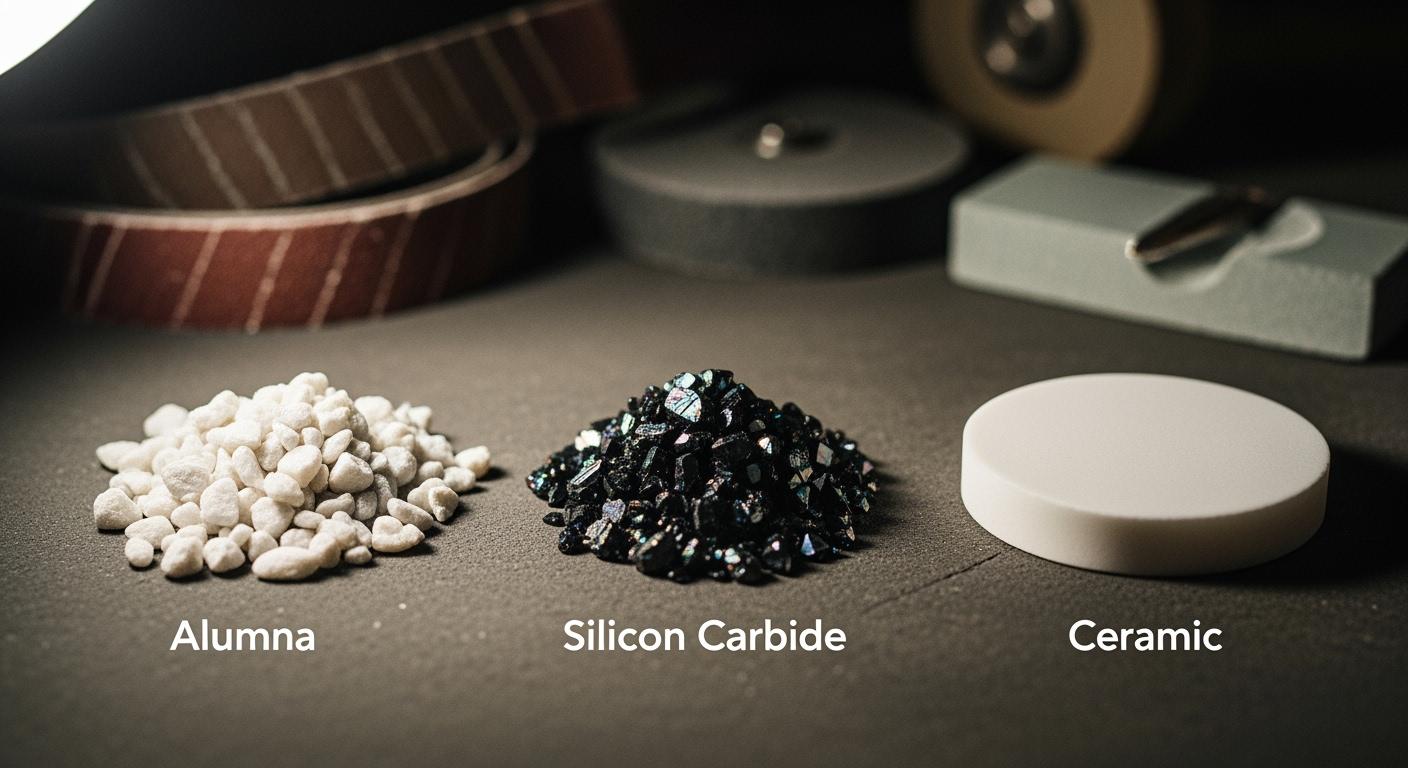
You want the best abrasive for your project, but the answer depends on your needs. Aimgrind helps you match abrasive materials to your workpiece and goals. The choice between Alumina vs Silicon Carbide, ceramic, or other abrasive types relies on factors like hardness, material, finish, application, and cost. The table below shows common factors that affect abrasive selection in manufacturing:
| Factor | Description |
|---|---|
| Hardness | The hardness of the workpiece guides abrasive choice for efficient material removal. |
| Material Type | Each material reacts differently to abrasives. |
| Desired Finish | The finish you want shapes the grit and abrasive type. |
| Applications | Specific tasks require unique abrasive shapes and actions. |
| Cost | Budget matters when picking abrasives. |
Key Takeaways
- Choose alumina for general metalwork. It offers durability and a longer lifespan, making it cost-effective for various applications.
- Select silicon carbide for glass and ceramics. Its sharpness and fast cutting ability make it ideal for brittle materials, but it wears out quickly.
- Use ceramic abrasives for tough jobs. They provide high precision and durability, making them suitable for heavy-duty grinding and high-speed applications.
- Consider super hard abrasives for top precision. They excel in grinding very hard materials and reduce downtime, leading to long-term savings.
- Match the abrasive to your task. Understanding the material, desired finish, and budget helps you select the right abrasive for optimal results.
Alumina vs Silicon Carbide: Abrasive Material Basics
Alumina Abrasive Properties
You often see alumina, also called aluminum oxide, as a common abrasive material in grinding. Aluminum oxide abrasives have high hardness, usually ranking 9 on the Mohs scale. This makes them strong enough to scratch and shape metals like steel. You get good durability with alumina, so it works well for grinding tasks that need stable wear and long life. Aluminum oxide abrasives keep their cutting ability over time, especially when you use them on hardened steel. You can use alumina for both ordinary carbon steel and stainless steel. However, for very hard or brittle materials, you may want to look at other options. The grains in alumina abrasives fracture to keep sharp edges, which helps you get a consistent finish. Many industries choose alumina vs silicon carbide when they want toughness and steady performance.
Silicon Carbide Abrasive Properties
Silicon carbide stands out as a sharper and harder abrasive material than aluminum oxide. You notice its almost diamond-like hardness, which makes it perfect for grinding glass, ceramics, and other brittle materials. Silicon carbide abrasives cut fast and give you a strong initial cutting force. However, they wear out faster than aluminum oxide, so you may need to replace them more often. Silicon carbide is more brittle, which means it breaks down quickly but always exposes new sharp edges. You find silicon carbide abrasive useful for wet sanding and for working on non-ferrous metals. Black silicon carbide is great for grinding, while green silicon carbide works well for polishing. When you compare alumina vs silicon carbide, you see that silicon carbide is best for applications where you need high cutting efficiency on hard, brittle surfaces.
Ceramic Abrasive Overview
Ceramic abrasives use engineered microstructures to give you both high hardness and toughness. These abrasives have controlled friability, so they micro-fracture under pressure and always show fresh cutting points. This self-sharpening feature means ceramic abrasives last longer than both alumina and silicon carbide. You get stable performance and less downtime because the abrasive keeps working efficiently. Ceramic abrasives work well for heavy corrosion removal, stainless steel fabrication, and aerospace parts. They also handle high-speed grinding better than many other abrasive materials. When you look at alumina vs silicon carbide vs ceramic, you see that ceramic abrasives offer a blend of efficiency, durability, and long life. Aimgrind uses its experience to help you choose the right abrasive for your application, matching the abrasive material to your needs in grinding and finishing.
| Abrasive Type | Hardness Level |
|---|---|
| Brown Fused Alumina | Moderate |
| White Fused Alumina | High |
| Silicon Carbide | Very High |
Tip: Aimgrind customizes abrasive solutions for your industry, ensuring you get the best performance for every grinding application.
Comparing Abrasives: Performance and Applications
Cutting Efficiency and Durability
You want to know how each abrasive performs when you start grinding. Silicon carbide stands out as the hardest abrasive among the three. It has a Vickers hardness between 2,100 and 2,500 HV. This makes silicon carbide ideal for cutting extremely hard materials. You see fast cutting speeds with silicon carbide, especially when you work on glass, ceramics, or non-ferrous metals. However, silicon carbide wears out quickly because it is brittle. You need to replace silicon carbide abrasives more often during heavy-duty grinding.
Alumina, also known as aluminum oxide, offers a different balance. You get a longer service life with alumina because it is tough and self-sharpening. Aluminum oxide abrasives cut more slowly than silicon carbide, but you spend less time changing wheels. Alumina resists corrosion and stays stable across a wide pH range. You can use alumina for grinding steel and other metals that need steady wear and durability.
Ceramic abrasives combine high hardness and toughness. You notice that ceramic abrasives micro-fracture under pressure, always exposing new cutting points. This self-sharpening feature means ceramic abrasives last longer than both alumina and silicon carbide. You get stable performance and less downtime. Ceramic abrasives handle high-speed grinding and heavy corrosion removal. You see consistent results when you use ceramic abrasives for demanding tasks.
- Silicon carbide abrasive: Highest hardness, fastest cutting, wears out quickly.
- Alumina: Tough, longer lifespan, slower cutting, stable in harsh environments.
- Ceramic: Self-sharpening, durable, efficient for high-speed and heavy-duty grinding.
Best Uses for Each Abrasive
You need to match the abrasive to your material and task. Silicon carbide works best for grinding, cutting, polishing, and sandblasting. You use silicon carbide for metal grinding, glass cutting, and ceramic polishing. Black silicon carbide shapes and finishes non-ferrous metals like aluminum, brass, and copper. You also use silicon carbide for grinding glass and ceramics because of its sharp edges.
Alumina is effective for grinding steel, stainless steel, and high-strength metals. You choose aluminum oxide when you want a tough abrasive that lasts longer. Zirconia alumina is strong for grinding stainless steel and high-carbon steel. You use alumina for woodworking, metalworking, and glass processing. You get a smoother finish with higher grit numbers. For delicate tasks like glass finishing, you pick soft abrasives that are highly friable.
Ceramic abrasives are best for cutting hard metals such as titanium and stainless steel. You use ceramic abrasives for aerospace parts, heavy corrosion removal, and high-speed grinding. Ceramic abrasives give you consistent results and reduce downtime. You see ceramic abrasives used in industries that demand precision and durability.
- Silicon carbide: Glass cutting, ceramic polishing, non-ferrous metal grinding, sandblasting.
- Alumina: Steel grinding, woodworking, metalworking, glass processing, high-strength metals.
- Ceramic: Titanium and stainless steel cutting, aerospace, heavy-duty grinding, corrosion removal.
Tip: Aimgrind offers super hard abrasives for demanding applications. You can choose diamond or CBN grinding wheels when you need unmatched cutting efficiency and durability.
Cost-Effectiveness and Value
You want to get the best value from your abrasive. Silicon carbide costs more than alumina. You pay a higher price for silicon carbide, but you get fast cutting and high wear resistance. However, you replace silicon carbide abrasives more often because they wear out quickly.
Alumina is cost-effective. You spend less on aluminum oxide abrasives, and you get exceptional wear resistance. Aluminum oxide lasts longer, so you save money on replacements. You see aluminum oxide used in many industries because it offers a good balance between cost and performance.
Ceramic abrasives cost more than alumina but offer longer service life and consistent results. You invest in ceramic abrasives when you need durability and efficiency for tough grinding jobs. Ceramic abrasives reduce downtime and improve productivity.
| Property | Silicon Carbide | Aluminum Oxide | Ceramic |
|---|---|---|---|
| Cost | More Expensive | Cost-Effective | Higher Initial Cost |
| Lifespan | Quick Wear | Long Service Life | Longest Service Life |
| Performance | Fast Cutting | Steady Grinding | Consistent Results |
| Best Application | Hard/Brittle | Tough Metals | High-Precision Tasks |
You see that the choice depends on your material, task, and budget. Aimgrind helps you select the right abrasive for your grinding needs. You can explore Aimgrind’s super hard abrasives for advanced applications where conventional abrasives do not deliver the required performance.
Aimgrind Super Hard Abrasives: Advanced Solutions
What Are Super Hard Abrasives?
You may wonder what makes super hard abrasives different from other options. Super hard abrasives use diamond and cubic boron nitride (CBN) as their main materials. These grains are much harder than traditional abrasive grains. You find these abrasives in Aimgrind’s advanced grinding wheels and tools. When you need to grind very hard materials or want the best surface finish, you can rely on these high-performance solutions.
Benefits for Industrial Applications
Super hard abrasives give you many advantages in tough grinding jobs. You get longer tool life and less downtime because these abrasives keep their sharpness for a long time. They also help you achieve precise results, even on the hardest metals and ceramics. Many industries use super hard abrasives for critical grinding tasks:
- Aerospace: You grind hard alloys and composites for aircraft parts.
- Automotive: You shape high-performance engine parts with accuracy.
- Electronics: You need precision for semiconductor and device components.
- Medical Devices: You create surgical tools and implants with clean finishes.
- Tool and Die Making: You produce precision tools and dies for top performance.
You can see how these abrasives improve productivity. The table below shows how tool life and cost per part compare:
| Tool Type | Cost | Lifespan (Parts) | Cost per Part | Tool Changes for 5,000 Parts |
|---|---|---|---|---|
| Tool A | $50 | 1,000 | $0.05 | 5 |
| Tool B | $120 | 3,000 | $0.04 | 2 |
You get increased throughput and lower cost per part. Faster grinding means you finish more parts in less time.
- Increased throughput: You produce more parts with higher cutting speeds.
- Lower cost per part: You save on machine time and labor.
When to Choose Super Hard Abrasives
You should consider super hard abrasives when you need the highest precision and durability in your grinding process. These abrasives work best for materials that are too hard for conventional options. If you want to reduce tool changes and keep your grinding line running longer, super hard abrasives are a smart choice. You may notice a higher initial investment, but you save money over time because you replace tools less often. Many companies with strict quality needs or high production volumes choose these abrasives for their grinding operations.
Note: Super hard abrasives may not fit every budget, but they offer long-term savings and better results for demanding grinding tasks.
How to Choose the Right Abrasive
Selecting the right abrasive for your project can make a big difference in the quality and speed of your work. You need to think about the material, the finish you want, and your budget. Aimgrind helps you match abrasive products to your needs, so you get the best results in every application scenario.
Material Type and Abrasive Selection
You should always start by looking at the material you want to grind or polish. Harder materials like steel need harder abrasives, while softer materials like aluminum work better with a universal abrasive material that is less aggressive. Glass and ceramics need a sharp abrasive that will not crack or chip the surface.
Here is a simple table to help you match your material to the right abrasive:
| Workpiece Material | Recommended Abrasive | Notes |
|---|---|---|
| Steel | Alumina, Ceramic | High hardness and durability needed |
| Aluminum | Aluminum Oxide, Garnet | Softer, less aggressive abrasives |
| Glass | Silicon Carbide, Diamond | Sharp, hard grains for clean finish |
| Titanium | Ceramic, Super Hard Abrasives | For tough, high-precision grinding |
You can also look at these factors:
- Hardness: Use a harder abrasive for reshaping or rust removal. Use a softer abrasive for a fine finish.
- Friability: Choose a friable abrasive if you want new sharp edges during grinding.
- Shape: Pick the right shape for your abrasive products to match complex surfaces.
Aimgrind offers customization services to help you select the best abrasive for your unique material and application scenarios.
Desired Finish and Application
You need to decide what kind of finish you want. Do you want a mirror shine, a matte look, or just a smooth surface? The finish affects which abrasive and grit you should use. For example, sandpaper with a coarse grit removes material quickly but leaves a rough finish. Fine grit sandpaper gives you a smooth or even shiny finish.
Here are some common methods and the finishes they create:
- Sandblasting: Gives a uniform matte finish.
- Grinding: Creates a rough or matte finish, depending on the grit.
- Brushing: Makes a directional matte finish.
- Polishing: Gives a shiny or mirror finish, especially on metals like stainless steel or brass.
The right abrasive helps you avoid surface damage and overheating. If you use the wrong abrasive, you may see scratches, burns, or extra labor costs. Always match the abrasive to your task for a clean, consistent finish.
| Aspect | Impact on Finish and Quality |
|---|---|
| Right Abrasive | Clean, consistent finish |
| Wrong Abrasive | Surface damage, extra work, higher costs |
| Grit Size | Smoothness and shine of the final product |
You can use sandpaper for both rough shaping and fine polishing. Alumina works well as a universal abrasive material for many metals. For the best results, Aimgrind can help you choose the right abrasive products for your finish and application.
Budget and Longevity Considerations
You want to get the most value from your abrasive products. Budget plays a big role in your choice. Sometimes, a lower-cost abrasive like alumina works well for general tasks. For large projects, you should think about the total cost, not just the price of one sandpaper sheet or grinding wheel.
Here are some tips:
- Look at the initial price and the lifespan of the abrasive.
- Durable abrasives like ceramic or super hard abrasives cost more at first but last longer.
- Long-lasting abrasives reduce downtime and replacement costs.
- Eco-friendly options may cost more but help you meet regulations.
You can save money over time by choosing abrasive products with high durability. Aimgrind can help you balance cost and performance for your application scenarios.
Tip: Make a checklist before you buy. Write down your material, the finish you want, your budget, and how long you need the abrasive to last. Share this with Aimgrind’s experts to get a custom solution.
A Practical Checklist for Choosing Abrasives:
- What material are you working with? (Steel, aluminum, glass, etc.)
- What finish do you want? (Matte, mirror, smooth, rough)
- What is your budget for abrasive products?
- How long do you need the abrasive to last?
- Do you need a universal abrasive material or a specialized one?
- Will you use sandpaper, grinding wheels, or another form?
- Do you need help with customization? (Aimgrind can assist!)
You can always reach out to Aimgrind for advice. Their team will help you match the right abrasive to your project, so you get the best finish, value, and durability.
You have many abrasive options. Choose alumina for general metalwork. Pick silicon carbide for glass or ceramics. Use ceramic abrasives for tough jobs and long life. Select super hard abrasives when you need top precision and durability. Matching the abrasive to your task gives you the best results. If you feel unsure, reach out to Aimgrind. Their experts help you find the perfect solution for your project.
FAQ
What makes ceramic abrasive different from other abrasives?
You get unique properties with ceramic abrasive. The microstructure gives you high toughness and resistance. Ceramic abrasive keeps sharp edges. You see better precision and longer life. These properties help you achieve a smooth surface on hard materials.
Why should I choose ceramic abrasive for metal grinding?
You should pick ceramic abrasive for its toughness and resistance. It works well on steel and titanium. You get consistent surface finishes. Ceramic abrasive provides high precision. You also notice less heat buildup and better resistance to wear.
How does ceramic abrasive improve precision in grinding?
Ceramic abrasive has controlled micro-fracturing properties. You always see new sharp edges. This feature gives you stable precision. You achieve a clean surface. The toughness and resistance of ceramic abrasive help you avoid uneven wear.
What are the main properties of ceramic abrasive?
Ceramic abrasive offers high toughness, strong resistance, and excellent precision. You notice these properties in every grinding task. The abrasive resists heat and wear. You get a smooth surface and reliable performance. Ceramic abrasive stands out for its durability.
Can ceramic abrasive handle tough materials and high-speed grinding?
Yes, you can use ceramic abrasive for tough materials. The toughness and resistance make it ideal for demanding jobs. You see high precision even at fast speeds. Ceramic abrasive keeps its properties under pressure. You get a clean surface every time.
Contact Us
For More Grinding Solution or Customized Abrasive Tools