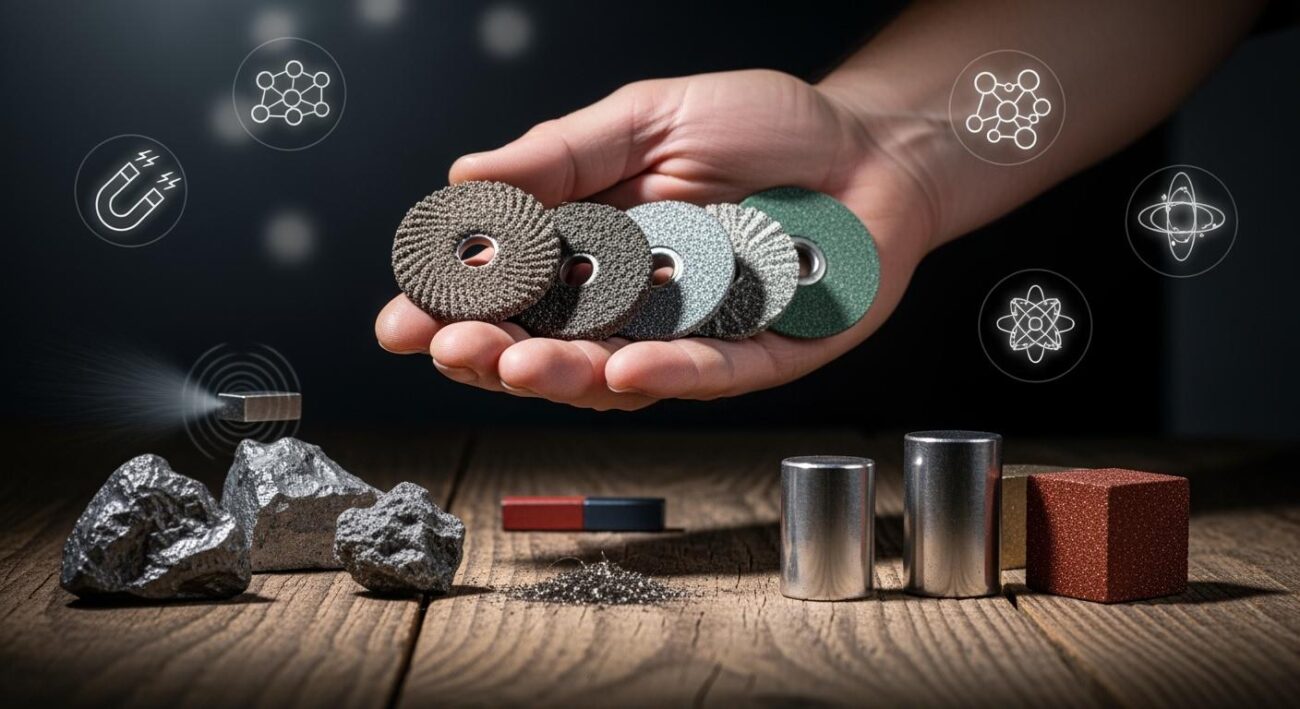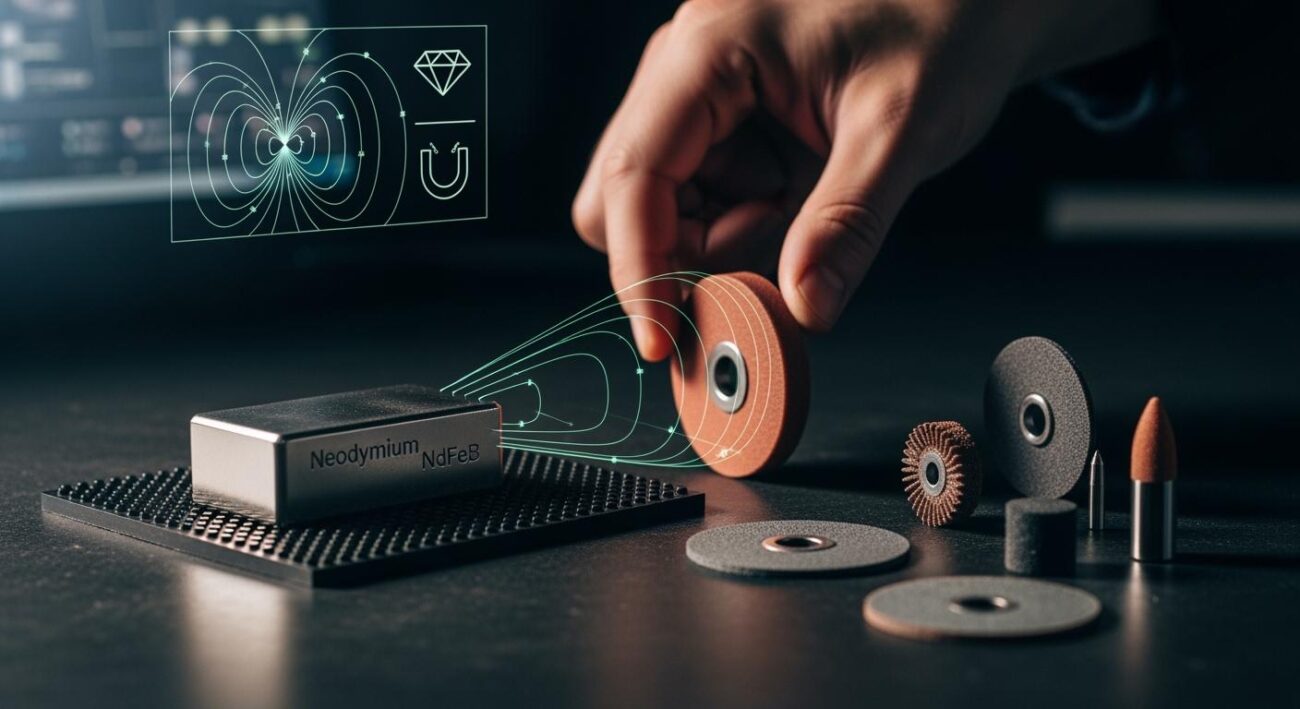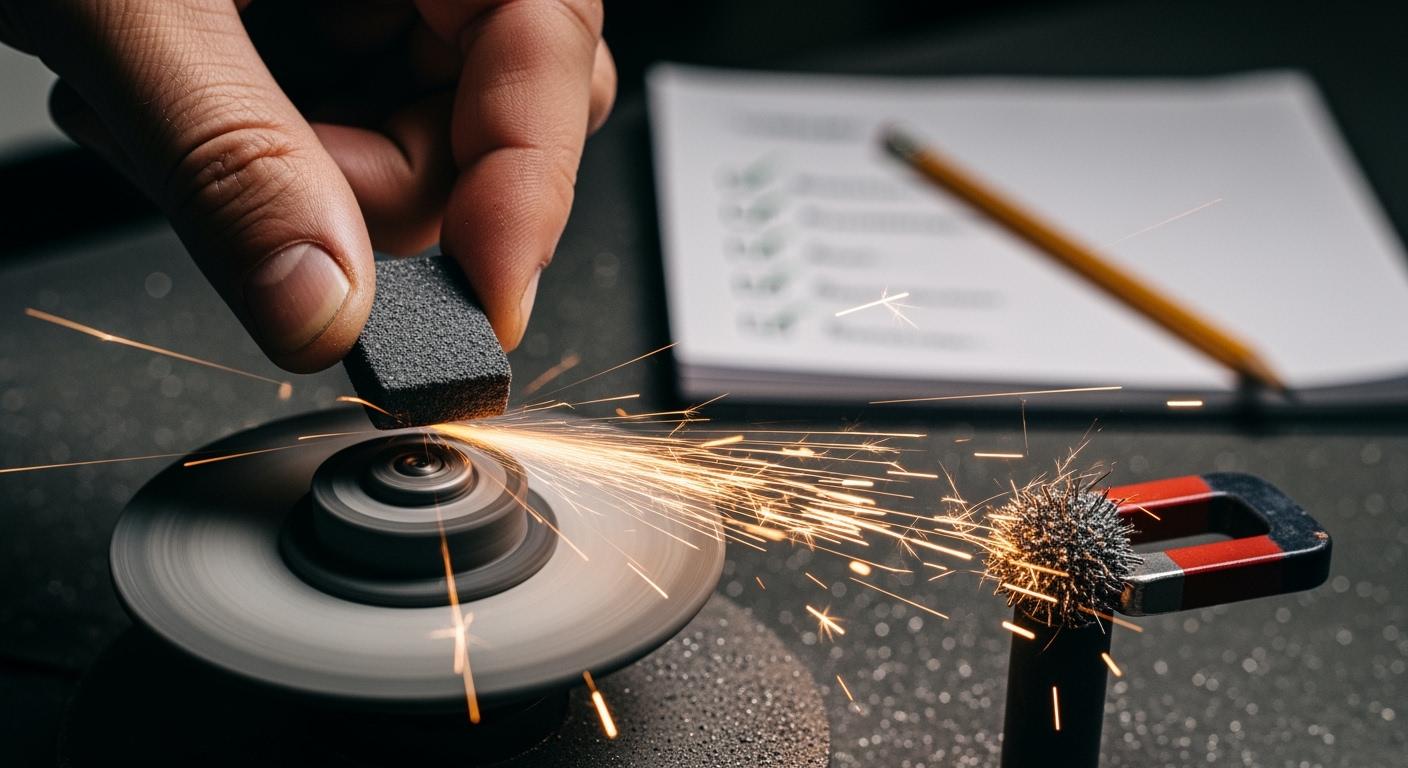
When you start grinding magnetic composite materials, you must focus on several key factors. Material properties affect how the process works. Tool selection shapes your results. You must set the right process parameters for safe and effective grinding. Surface quality matters for the final product. You also face unique challenges with these materials. Each factor can change your results. Aimgrind uses super hard abrasives to help you get precision and efficiency in your grinding tasks.
Key Takeaways
- Understand the magnetic properties of your material. Test magnetic permeability to choose the right clamping method.
- Select the appropriate grinding tool. Use diamond wheels for ceramics and CBN wheels for ferrous materials to ensure precision.
- Control process parameters carefully. Adjust speed, feed rates, and coolant application to achieve optimal grinding results.
- Pay attention to surface quality. Inspect the finish after grinding to maintain high standards and avoid defects.
- Implement demagnetization after grinding. Use AC demagnetization to ensure parts function correctly without unwanted magnetic effects.
Material Properties in Grinding Magnetic Composite Materials
Magnetic Permeability and Clamping
You need to understand magnetic properties before you start grinding magnetic composite materials. Magnetic permeability tells you how well a material responds to a magnetic field. High magnetic permeability means the material attracts magnets easily. This property affects how you clamp the workpiece during grinding. If you use a magnetic chuck, the material stays secure. Low magnetic permeability makes clamping harder. You may need mechanical clamps or special fixtures. Magnetic properties also influence the grinding process. Strong magnetic fields can change the way the abrasive interacts with the surface. You must check the magnetic properties of each composite. This helps you choose the right clamping method and grinding tool.
Tip: Always test the magnetic properties of your material before you begin grinding. This step helps you avoid mistakes and ensures safety.
Thickness and Configuration
Thickness plays a big role in grinding magnetic composite materials. Thin materials bend or vibrate during grinding. You must use gentle pressure and slow feed rates. Thick materials stay stable but need more force. The configuration, such as shape and size, changes how you set up your grinding process. You must match your grinding wheel and machine settings to the thickness and configuration.
Here is a table showing typical thickness ranges for magnetic composite materials used in precision grinding:
| Thickness Range (mm) | Description |
|---|---|
| 1 mm or higher | Widely used as magnetic shields |
| Up to 51 mm | Maximum thickness for plates and discs |
You must check the thickness before you start grinding. This step helps you avoid errors and improves surface quality. Magnetic properties also change with thickness. Thicker materials may have stronger magnetic fields. You must adjust your grinding process to match these changes.
Composite Structure and Hardness
Composite structure means the way different materials combine in your workpiece. You may see layers of metals, ceramics, or polymers. Each layer has its own magnetic properties. Some layers attract magnets. Others resist them. You must know the structure before you start grinding. Hardness tells you how tough the material is. Hard composites need super hard abrasives. Softer composites need less aggressive tools. Magnetic properties affect hardness. Some magnetic composites become harder when exposed to a magnetic field. You must choose the right grinding wheel for each structure and hardness level.
- Make a checklist:
- Identify each layer in the composite.
- Test the hardness of each layer.
- Check the magnetic properties of each layer.
- Match your grinding tool to the hardest layer.
Grinding magnetic composite materials requires careful planning. You must study magnetic properties, thickness, and structure. This helps you get the best results and avoid damage.
Grinding Tool Selection with Aimgrind Super Hard Abrasives
Choosing the right tool is the most important step in precision grinding of magnetic composite materials. You need to match your grinding wheel to the material and the job. Aimgrind helps you do this with super hard abrasives. These tools use diamond and CBN grains. They give you the best results for tough jobs. You can trust Aimgrind to help you reach high levels of precision and surface quality. Aimgrind offers custom solutions for every grinding challenge. You get the right tool for your machine and your material.
Abrasive Grain Types: Diamond and CBN
You must pick the right abrasive grain for precision grinding. Diamond grains work well for non-ferrous materials and hard composites. CBN grains are best for ferrous materials and magnetic composites. CBN wheels give you long life and sharp cutting edges. You can use CBN wheels for many types of magnetic composite materials. They keep their shape and size during long grinding runs. This means you get consistent precision every time. CBN wheels also help you avoid heat damage. They move heat away from the workpiece. This protects your material and keeps your results accurate.
Tip: Use diamond wheels for ceramics and non-magnetic layers. Use CBN wheels for steel, iron, and magnetic alloys.
You can ask Aimgrind for advice on which grain to use. Aimgrind’s experts will help you choose between diamond and CBN wheels. You get the best match for your precision grinding needs.
Bond Types and Tool Geometry
The bond holds the abrasive grains in place. You must choose the right bond for your grinding job. Strong bonds support the grains and help you remove material quickly. Weak or brittle bonds can break and cause poor grinding results. Aimgrind offers many bond types, such as resin, metal, vitrified, and electroplated. Each bond type works best for certain jobs. For example, metal bonds give you strength and long life. Resin bonds give you smooth finishes and fast cutting. Vitrified bonds give you stability and shape control. Electroplated bonds work well for special shapes and small parts.
Tool geometry also matters in precision grinding. The shape and size of your grinding wheel affect how it touches the material. You can choose flat wheels, cup wheels, or special shapes. Aimgrind can design custom wheels for your machine and your part. You get the best results when you match the bond and geometry to your grinding job.
Note: Research shows that strong bonds, like those in Aimgrind’s CBN wheels, help you remove material more efficiently. They keep the grains in place and give you better control during precision grinding.
Compatibility with Magnetic Materials
You must check if your grinding tool works well with magnetic materials. CBN wheels are the top choice for magnetic composites. They give you high precision and long service life. CBN wheels do not react with iron or steel. This means you get clean cuts and smooth surfaces. You can use CBN wheels for many types of magnetic alloys and composites. They help you reach tight tolerances and fine finishes.
Aimgrind’s CBN wheels are made for precision grinding of magnetic materials. You can use them for both rough and finish grinding. They keep their shape and size, even after many hours of use. You get less downtime and more parts finished on time. Aimgrind also offers custom CBN wheels for special jobs. You can ask for different sizes, shapes, and bonds. This helps you solve any grinding problem you face.
- Why choose Aimgrind for your grinding tools?
- You get expert advice on tool selection.
- You can order custom CBN wheels for your machine.
- You get tools that last longer and give you better precision.
- You can trust Aimgrind’s quality and service.
When you use Aimgrind’s super hard abrasives, you get the best results in precision grinding. You can handle any magnetic composite material with confidence. You get high precision, long tool life, and smooth finishes every time.
Process Parameters for Grinding Magnetic Composite Materials
Speed and Feed Optimization
You need to set the right speed and feed rates when grinding magnetic composite materials. These settings control how fast the wheel moves and how quickly you feed the material into the wheel. If you use the wrong speed, you can damage the workpiece or the grinding wheel. For rough grinding, you should use lower speeds and higher feed rates. For precision grinding, you need higher speeds and slower feeds. This helps you get a smooth finish and tight tolerances.
Here is a table to help you choose the right parameters:
| Parameter | Rough Grinding | Precision Grinding |
|---|---|---|
| Wheel Speed (fpm) | 2000–4000 | 4000–6500 |
| Depth of Cut (mm) | 0.25–0.50 | 0.0002–0.005 |
| Feed Rate (mm/min) | 100–500 | 10–50 |
Tip: Start with lower speeds and feeds, then adjust as you check the surface quality.
Coolant Selection and Application
Coolant plays a big role in grinding. You need to pick the right coolant and apply it correctly. Coolant keeps the workpiece cool, stops it from growing due to heat, and helps you keep tight sizes. It also makes the grinding wheel last longer by reducing wear. Coolant flushes away grit and chips, which gives you a cleaner cut and a better surface finish. If you remove heat quickly, you prevent burns and protect the material’s quality.
| Aspect | Benefit |
|---|---|
| Dimensional Accuracy | Coolant stops thermal growth and keeps your sizes correct. |
| Grinding Wheel Life | Lubrication slows wear and helps your wheel last longer. |
| Surface Finish Quality | Flushing grit gives you smoother surfaces. |
| Grinding Burn Prevention | Quick cooling stops overheating and surface damage. |
| Metallurgical Integrity | Good cooling protects the inside of the material, not just the surface. |
Note: Always use enough coolant and direct it at the grinding zone for best results.
Depth of Cut and Pressure Control
You must control the depth of cut and the pressure during grinding. If you take off too much material at once, you risk cracks or burns. Small depths of cut help you get a fine finish and avoid damage. You should also use steady, gentle pressure. Too much pressure can cause the wheel to wear out fast or damage the workpiece. Always check your results and adjust the depth and pressure as needed.
Grinding magnetic composite materials needs careful control of all these process parameters. When you set the right speed, feed, coolant, depth, and pressure, you get better results and longer tool life.
Surface Quality and Demagnetization
Surface Finish Standards
You need to pay close attention to surface finish when grinding magnetic composite materials. Surface finish standards help you measure how smooth or rough the surface is after grinding. You can use tools like profilometers to check the surface. A smooth surface reduces friction and improves performance. You should aim for a consistent finish across the entire part. If you see scratches or uneven spots, you may need to adjust your grinding process. High-quality abrasives, like those from Aimgrind, help you achieve the best surface finish.
Tip: Always inspect the surface after grinding. This step helps you catch problems early and maintain quality.
Dimensional Accuracy
Dimensional accuracy is important in grinding. You want each part to match the required size and shape. You can use several methods to maintain accuracy during grinding:
- Machine tool rigidity keeps the grinding machine stable.
- Vibration damping systems reduce movement and keep cutting conditions steady.
- Advanced control systems monitor and adjust grinding parameters in real time.
- In-process gauging systems, such as laser interferometry and touch probes, check dimensions without stopping the grinding process.
- Adaptive control algorithms change grinding settings based on feedback, so you get consistent results.
You should use these methods to make sure your parts meet the exact specifications. Accurate grinding helps you avoid waste and improves the performance of magnetic composite materials.
Minimizing Residual Magnetism
After grinding, you may notice that some parts still have magnetism. You need to use demagnetization to remove this. AC demagnetization works best. This method uses a decreasing alternating magnetic field to neutralize the material. You should perform demagnetization right after grinding or magnetic testing. Check the magnetic values before the final washing step. Avoid using magnetic lifting tools once you have neutralized the part. Demagnetization helps you prevent unwanted magnetic effects in your finished products. You can improve reliability and safety by following these steps. Demagnetization is a key part of the process when working with magnetic composite materials.
Note: Demagnetization protects your parts from interference and ensures they work as intended.
Grinding Alnico Magnets: Challenges and Solutions
Heat Generation and Management
When you start grinding alnico magnets, you face a big challenge with heat. Alnico magnets are hard and brittle. Grinding creates friction, which leads to heat. Too much heat can change the magnetic properties of these magnets. You must keep the temperature low to protect their performance. Machining alnico magnets in the un-magnetized state helps reduce heat build-up. You should use coolants and control the grinding speed. Aimgrind’s super hard abrasives help you manage heat. These tools move heat away from the workpiece. You get better performance and protect the magnet’s quality.
Tip: Always check the temperature during grinding alnico magnets. This step helps you keep the magnets strong and reliable.
Magnetic Interference Effects
Grinding alnico magnets can cause magnetic interference. The grinding process may create stray magnetic fields. These fields can affect the performance of your magnets. You must use proper shielding and grounding. Aimgrind’s super hard abrasives give you stable grinding. You get less interference and more consistent performance. You should avoid using magnetic chucks when grinding alnico magnets. Mechanical clamping works better. This method keeps the magnets safe and improves performance.
| Challenge | Solution |
|---|---|
| Magnetic Interference | Use mechanical clamps and Aimgrind tools |
| Stray Fields | Shield and ground your work area |
| Performance Loss | Choose super hard abrasives for stability |
Tool Wear and Maintenance
Grinding alnico magnets wears down tools quickly. The hard and brittle nature of these magnets puts stress on grinding wheels. You must check your tools often. Aimgrind’s super hard abrasives last longer. You get more grinding cycles and better performance. Regular maintenance keeps your grinding wheels sharp. Clean your tools after each grinding session. Replace worn wheels to keep your performance high. Aimgrind offers custom solutions for grinding alnico magnets. You get tools that match your needs and improve your results.
Note: Using Aimgrind’s super hard abrasives helps you reduce downtime and boost performance when grinding alnico magnets.
You must consider many factors for successful grinding of magnetic composite materials. Focus on powder insulation coatings, heat treatment, powder composition, and particle size. Pay attention to tool selection and process control, including pressure and lubrication. Aimgrind’s super hard abrasives help you achieve precise grinding results. Always match your grinding method to your material and application. Stay informed about new grinding technologies.
| Advancement Type | Description |
|---|---|
| Specialized tools and strategies | Diamond-coated tools and ultrasonic-assisted machining improve grinding quality. |
| High-precision motion control | Multi-axis machines enhance grinding accuracy for complex shapes. |
| In-process measurement and compensation | Real-time adjustments boost grinding precision and consistency. |
FAQ
What is the difference between grinding and polishing magnetic composite materials?
You use grinding and polishing to achieve different results. Grinding removes material quickly and shapes the part. Polishing creates a smooth, shiny surface. Both steps help you reach tight tolerances and improve the final quality of magnetic composite materials.
Why do tolerances matter in grinding and polishing?
Tolerances show how close your finished part is to the desired size. You must control grinding and polishing to meet these tolerances. Tight tolerances ensure your parts fit and work well in their final application.
How do you choose the right tool for grinding and polishing?
You select tools based on the material, required tolerances, and finish. Super hard abrasives from Aimgrind work well for grinding and polishing magnetic composites. These tools help you achieve precise tolerances and high-quality surfaces.
Can grinding and polishing affect the magnetic properties?
Yes, grinding and polishing can change magnetic properties if you use too much heat or pressure. You must control the process to protect the material. Using the right tools and coolants helps you keep the magnetic properties stable.
What steps help you achieve the best results in grinding and polishing?
You should check the material, select the right tool, and set proper parameters. Always monitor tolerances during grinding and polishing. Clean the part after each step. These actions help you get the best finish and performance.
Contact Us
For More Grinding Solution or Customized Abrasive Tools