

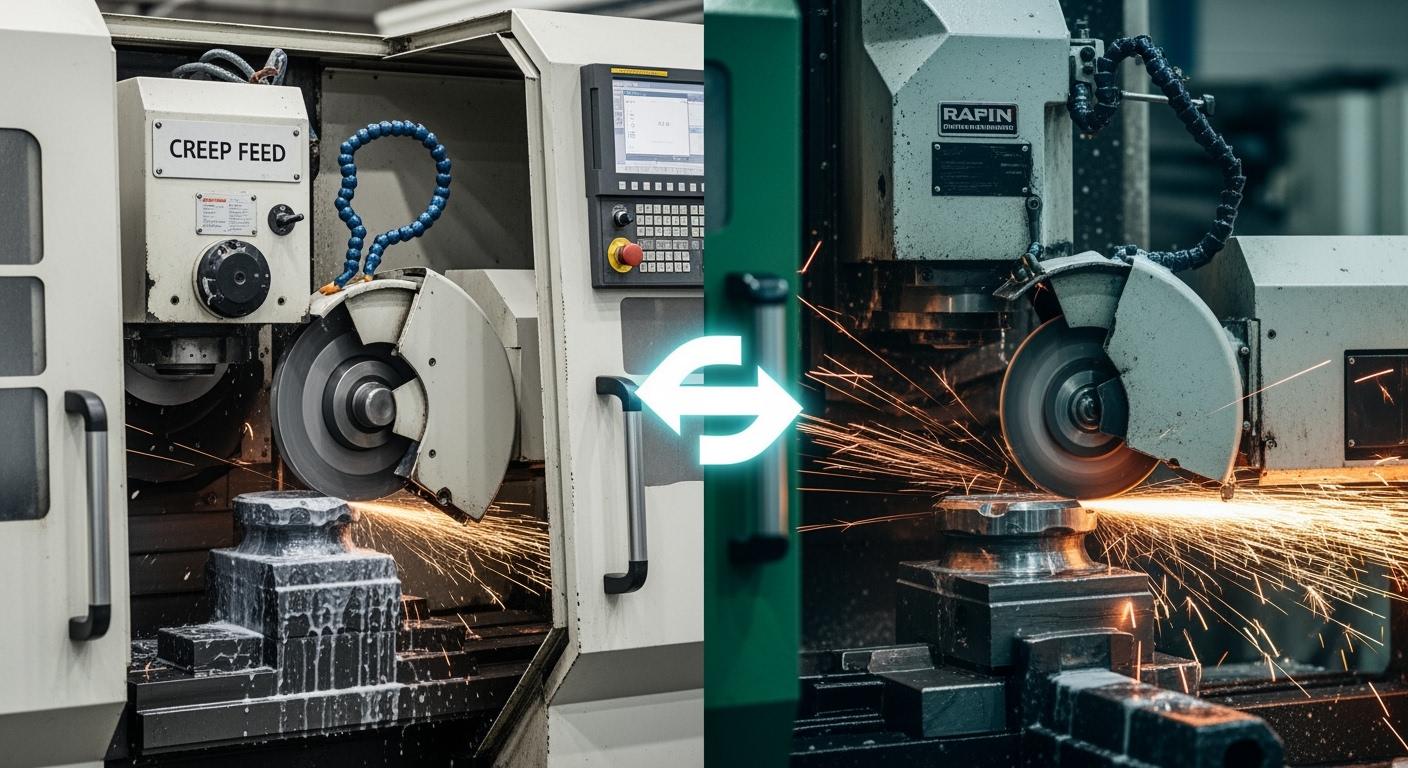
When you compare creep feed vs conventional grinding, your choice depends on several important factors. These include how fast you need to work, the cost, the finish quality, and the level of precision you want. Here are some of the most common decision factors:
| Decision Factor | Description |
|---|---|
| Production Efficiency | How well the process uses time and resources. |
| Cost-Effectiveness | How affordable the process is over time. |
| Surface Quality | How smooth and accurate the finished surface will be. |
| Dimensional Accuracy | How close the finished piece matches the exact size needed. |
| Application Requirements | What the material and shape demand for success. |
Aimgrind helps you match the right grinding method to your needs. You can rely on Aimgrind’s expertise and CBN grinding wheels for the best results.
Key Takeaways
- Creep feed grinding is ideal for high material removal and smooth finishes, making it perfect for tough jobs like aerospace and medical device manufacturing.
- Conventional grinding offers flexibility and ease of setup, suitable for smaller jobs and a variety of materials, but may not match the speed of creep feed grinding.
- Consider your production goals, material type, and machine capabilities when choosing between creep feed and conventional grinding methods.
- Aimgrind provides expert support to help you select the right grinding wheel and method for your specific needs, ensuring optimal performance.
- Adjusting feedrate and infeed settings in creep feed grinding can significantly impact surface quality, so balance these parameters for the best results.
Creep Feed vs Conventional Grinding: Key Differences
Process Mechanics Compared
When you look at creep feed vs conventional grinding, you see big differences in how each process works. Here is a simple table to help you compare:
| Feature | Creep Feed Grinding | Conventional Traverse Grinding |
|---|---|---|
| Depth of Cut | High (deep cuts in one pass) | Low (shallow cuts, many passes) |
| Feed Rate | Low (slow movement of workpiece) | High (fast movement of workpiece) |
| Contact Area | Large (longer contact arc) | Small (shorter contact arc) |
| Material Removal Rate | High (removes more material quickly) | Lower (removes less material per pass) |
| Cutting Forces | High (needs strong machine and wheel) | Lower (less stress on machine) |
In creep feed grinding, you use a high depth of cut and a slow feed rate. This means the grinding wheel touches more of the workpiece at once. You get a high material removal rate because the wheel removes a lot of material in one pass. You need a machine with strong cutting forces and a powerful spindle. You often see spindle power requirements of at least 15 to 20 horsepower per inch of wheel width. The wheel drive motor usually needs more than 18 kW of power. The machine must also have high static loop stiffness, about 100,000 pounds per inch for each inch of wheel width.
In conventional traverse grinding, you use a shallow depth of cut and a fast feed rate. The grinding wheel touches less of the workpiece at a time. You remove less material with each pass, so you need more passes to finish the job. The cutting forces are lower, so you do not need as much machine power or stiffness.
Performance and Efficiency
You want to know how these two methods perform in real work. Creep feed grinding stands out when you need high productivity. It works at lower workpiece speeds but uses higher depths of cut. This creates a large contact area between the wheel and the workpiece. You can achieve high material removal rates, which is great for mass production. The process also gives you better surface quality because the wheel wears down more slowly.
Conventional traverse grinding works well for jobs that need less material removed and do not require deep cuts. You get a coarser surface because the abrasive grains touch the workpiece for a shorter time. This method is good for quick jobs or when you need to keep costs low.
Practical Implications
You need to think about what each method means for your shop or factory. Creep feed grinding lets you finish tough jobs faster. You can remove a lot of material in one pass, which saves time. You need a strong machine and a powerful grinding wheel to handle the high cutting forces. You also need to make sure your equipment can handle the power and stiffness needed.
Conventional traverse grinding is easier to set up and does not need as much machine power. You can use it for many types of jobs, especially when you do not need to remove a lot of material. It is a good choice for smaller shops or when you want to keep things simple.
Tip: If you want high material removal rates and better surface quality, choose creep feed grinding. If you want flexibility and lower machine requirements, go with conventional traverse grinding.
By understanding these key differences, you can choose the right grinding method for your needs.
Creep Feed Grinding: Process and Results
Feedrate and Infeed
You control the results of creep feed grinding by adjusting the feedrate and infeed. These two settings decide how much material you remove and how smooth the finished part will be. The process uses higher cutting depths and a slow feedrate. This means the grinding wheel touches a large contact surface on the workpiece. You can see the typical parameters in the table below:
| Parameter | Value |
|---|---|
| Feedrate (vfa) | 150 mm/min |
| Depth of cut (ae) | 5 mm/pass |
| Surface speed (vc) | 25 m/s |
| Q-Prime (Q’w) | 12.5 mm³/mm/sec |
| Wheel diameter (ds) | 400 mm |
| Chip thickness (hm) | 0.5 µm |
| Aggressiveness (Fa) | 11.8 |
When you increase the feedrate, you get a rougher finish. Surface roughness rises as the feedrate goes up. If you want a smoother part, you should lower the feedrate and adjust the infeed carefully. This helps you protect tool life and keep the surface in good shape.
Surface Finish and Quality
Creep feed grinding gives you excellent surface finish. You can often reach surface roughness values below 0.5 µm. Most jobs fall between 0.4 and 1.6 µm. This process creates a large contact surface, which helps you achieve a fine finish. If you set the feedrate too high, the surface may become rougher. The grinding depth also affects the surface. Deeper cuts can lead to more cracks below the surface. You need to balance these settings to get the best results.
Note: Careful adjustment of feedrate and infeed keeps your surface quality high and reduces subsurface damage.
Ideal Applications
You should use creep feed grinding when you need to remove a lot of material quickly and still get a smooth finish. This method works well for tough metals and superalloys. The field of application for creep feed grinding includes aerospace, tool manufacturing, and automotive parts. You often see it used for making turbine blades, gear profiles, and other parts that need tight tolerances. The field of application for creep feed grinding also covers jobs where you need a large contact surface and high efficiency.
Conventional Grinding and Traverse Grinding Explained
Process Characteristics
You use conventional grinding when you want to remove small amounts of material with each pass. This process works with a shallow depth of cut and a fast feed rate. You move the grinding wheel quickly across the workpiece. The wheel speed and workpiece speed both affect how well the process works.
- The grinding wheel works better as you increase its speed, but only up to a point. If you go too fast, the efficiency drops.
- When you raise the feed speed, the pressure on the wheel goes up. This helps the wheel make better contact with the workpiece.
- You get the best results when you balance the grinding speed and feed speed. This lets more abrasive grains do their job and improves grinding efficiency.
You often see higher forces and thermal stresses in this process, especially if you push the machine too hard. You need to watch your settings to avoid overheating or damaging the part.
Surface Quality and Wheel Wear
The surface finish you get from conventional grinding is usually rougher than what you see with creep feed grinding. The grinding wheel also wears out faster. You can compare the two methods in the table below:
| Surface Quality | Conventional Grinding | Creep Feed Grinding |
|---|---|---|
| Quality | Coarser | Finer |
| Wheel Wear | Higher | Lower |
The type of abrasive material in your wheel changes how quickly it wears down. Abrasive grains act like tiny cutting tools. Some materials last longer and keep their shape better. Others wear out faster. You want a wheel that wears at a moderate rate. This helps you keep a steady grinding force and good material removal.
Best Use Cases
You should choose conventional grinding for jobs that need flexibility and speed. This method works well for many materials and shapes. The table below shows which abrasives fit different materials:
| Material Type | Suitable Abrasives |
|---|---|
| Steels and Steel Alloys | Aluminum oxide, Zirconia alumina |
| Cast Iron | Diamond, Silicon carbide |
| Nonferrous Metals | Diamond, Silicon carbide |
| Non-metallic Materials | Diamond, Silicon carbide |
You can use this process for flat surfaces, simple shapes, and parts that do not need a super fine finish. It is a good choice for general workshops and repair jobs. You can also pick from different bond types for your grinding wheel, such as resin, metal, vitrified, or electroplated, to match your needs.
Tip: If you want a process that is easy to set up and works for many jobs, conventional grinding is a smart choice.
Grinding Wheel Selection with Aimgrind CBN Wheels
Choosing CBN Grinding Wheels for Creep Feed
When you select a grinding wheel for creep feed grinding, you want a tool that can handle tough jobs. Aimgrind CBN grinding wheels give you several advantages for this process. You benefit from:
- Outstanding hardness
- High thermal conductivity
- Superior wear resistance
- Unique chemical stability
- Improved grinding performance for difficult-to-machine metals
These properties help you remove material quickly and keep a smooth finish. CBN wheels from Aimgrind work well with superalloys and hardened steels. You get longer wheel life and less downtime. For creep feed grinding, you should also pay attention to coolant supply. Good coolant flow keeps the wheel cool and protects your workpiece from heat damage.
CBN Wheels for Conventional Grinding
You can use CBN wheels for conventional grinding as well. Aimgrind offers different bond types and grit sizes to match your needs. Here are some important points to consider:
- Resin-bond wheels work best for most tool and cutter grinding.
- Electroplated wheels are good for form grinding.
- Coarser grits help you remove material faster.
- Finer grits give you a smoother surface.
- Concentration levels between 75 and 100 provide the best balance of wheel life and cutting speed.
The table below shows how grit size affects your surface finish:
| Parameter | Description | Impact on Surface Finish |
|---|---|---|
| Grit Size | Grit sizes range from coarse (e.g., 36) to fine (e.g., 120). | Finer grits (80–120) produce smoother surfaces but may reduce material removal rates. |
You can choose the right combination to get the finish and speed you want.
Matching Wheel to Application
You need to match your CBN grinding wheel to your machine and your job. Follow these steps:
- Align wheel shape and size with your machine and the part you want to grind.
- Pick a bond type that fits your grinding conditions—resin, vitrified, or metal.
- Choose a grit size and concentration for the finish and speed you need.
- Make sure your wheel can be trued and dressed for high accuracy.
- Check that your machine is stable and rigid for precision work.
- Use the right coolant supply to control heat and remove swarf.
Aimgrind helps you select the best CBN wheel for both creep feed grinding and conventional grinding. You get expert advice and custom solutions for your material and process.
Application Scenarios: When to Use Each Method
Creep Feed Grinding in Industry
You often see creep feed grinding in industries that need to remove a lot of material from tough parts. This method works best when you want deep cuts in high-strength materials. You can finish a part in fewer passes, which saves time and energy. Many factories use this process for parts that must meet strict standards.
Here are some common scenarios where creep feed grinding stands out:
- You need to make deep cuts in hard metals or superalloys.
- You want to remove a large amount of material in a single pass.
- You work in the aerospace industry and must shape turbine blades with high accuracy.
- You produce medical devices that require precise and smooth surfaces.
When you compare creep feed vs conventional grinding, you notice that creep feed grinding gives you higher productivity and better surface quality for these demanding jobs.
You can see the benefits of switching to creep feed grinding in the table below:
| Benefit | Description |
|---|---|
| Higher Material Removal Rate (MRR) | Creep feed grinding achieves significantly higher MRR compared to traditional milling processes. |
| Reduced Cycle Time | Longer productive passes shorten overall cycle time, enhancing efficiency. |
| Fewer Passes | Less time is lost to machine reverses and stops, contributing to productivity gains. |
| Lower Tooling Costs | Overall tooling costs decrease due to the efficiency of the process. |
| Higher Quality | The process allows for finer tolerances and complex geometric forms, improving part quality. |
| Space Efficiency | Creep feed grinding requires less space compared to broaching setups, making it more efficient. |
| Continuous Dressing | Maintains wheel sharpness, leading to lower grinding forces and increased production rates. |
| Example Case | A medical device manufacturer reduced cycle time from 1 hour to 10 minutes with CDCF. |
You can achieve faster production, lower costs, and better part quality with creep feed grinding. This makes it a top choice for industries that need high performance.
Conventional Grinding in Practice
You use conventional grinding when you want flexibility and a simple setup. This method works well for many materials and shapes. You can handle small batches or repair jobs with ease. Many workshops choose this process for flat surfaces and simple parts.
You may face some challenges if you use conventional grinding in high-volume production:
- Slower material removal rate makes it less efficient for large jobs.
- Higher costs can result from longer cycle times and machine expenses.
- Risk of thermal damage increases if you do not control the process well.
- Grinding soft materials can clog the wheel, which lowers efficiency and affects surface quality.
When you compare creep feed vs conventional grinding, you see that conventional grinding gives you more flexibility but may not match the speed or quality of creep feed grinding for tough jobs. You can still rely on conventional grinding for general tasks, maintenance, and when you need to switch between different materials quickly.
Aimgrind Solutions for Your Needs
You can trust Aimgrind to help you choose the right grinding method for your work. Aimgrind offers expert advice and custom grinding wheels for both creep feed and conventional grinding. You get support for every step, from diagnosing your problem to matching the right wheel and optimizing your process.
If you need to decide between creep feed vs conventional grinding, you can talk to Aimgrind’s team. You will receive help with:
- Selecting the best CBN grinding wheel for your material and machine.
- Designing a custom wheel formula for special applications.
- Improving your production efficiency and surface quality.
- Reducing your tooling costs and downtime.
You can visit Aimgrind’s website to learn more about their grinding solutions. You will find the right tools and support to achieve your production goals.
You should choose creep feed grinding when you need high material removal and a smooth finish. Conventional grinding works best for flexibility and simple jobs.
- Think about your material, production goals, and machine power.
- Ask experts for advice if you feel unsure.
Tip: Aimgrind can help you pick the right grinding method and wheel for your needs. Visit their website for expert support.
FAQ
What is the main difference between creep feed and conventional grinding?
You use creep feed grinding for deep cuts and high material removal. You use conventional grinding for shallow cuts and more passes. Creep feed works best for tough jobs. Conventional grinding gives you more flexibility.
When should you choose a CBN grinding wheel?
You should choose a CBN grinding wheel when you need to grind hard materials like hardened steel or superalloys. CBN wheels last longer and cut faster than regular abrasives.
Can you use the same grinding wheel for both methods?
You should match the wheel to your process. CBN wheels from Aimgrind work for both methods, but you need to pick the right bond type and grit size for your job.
How does Aimgrind help you select the right grinding wheel?
Aimgrind offers expert advice and custom wheel design. You get help with material selection, machine matching, and process optimization. You can contact Aimgrind for personalized support.
Contact Us
For More Grinding Solution or Customized Abrasive Tools