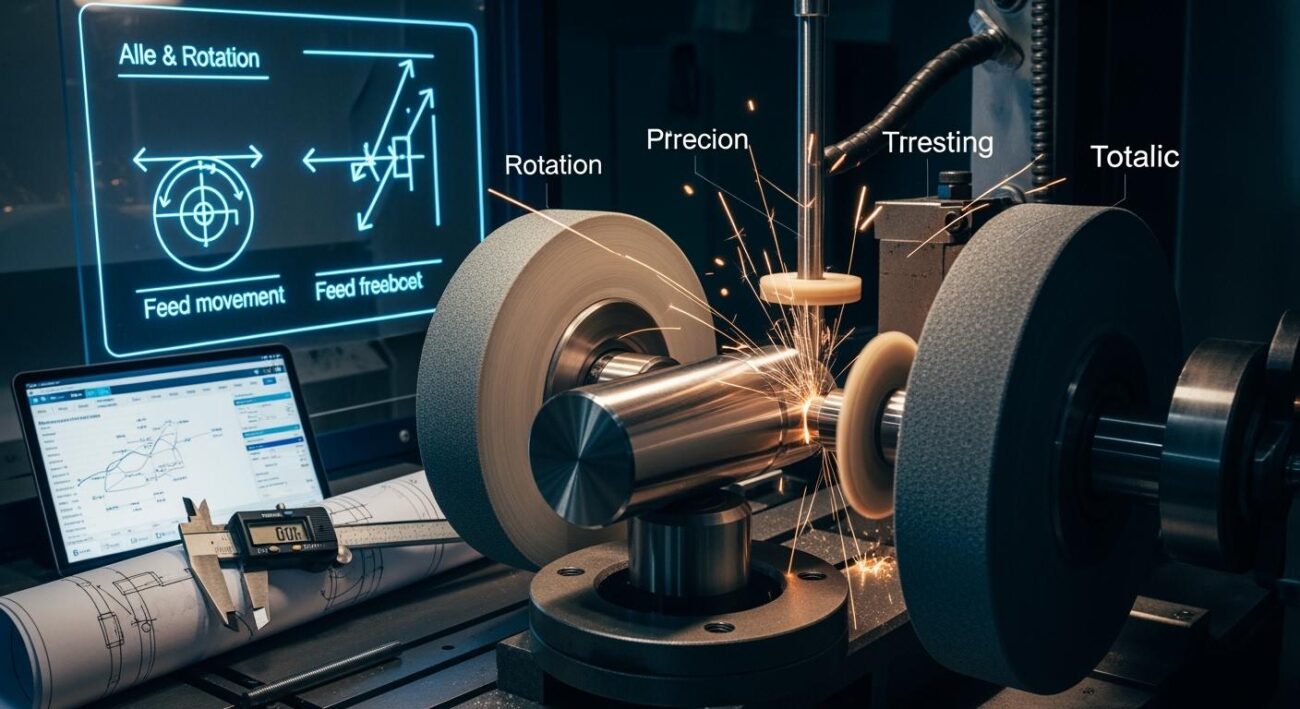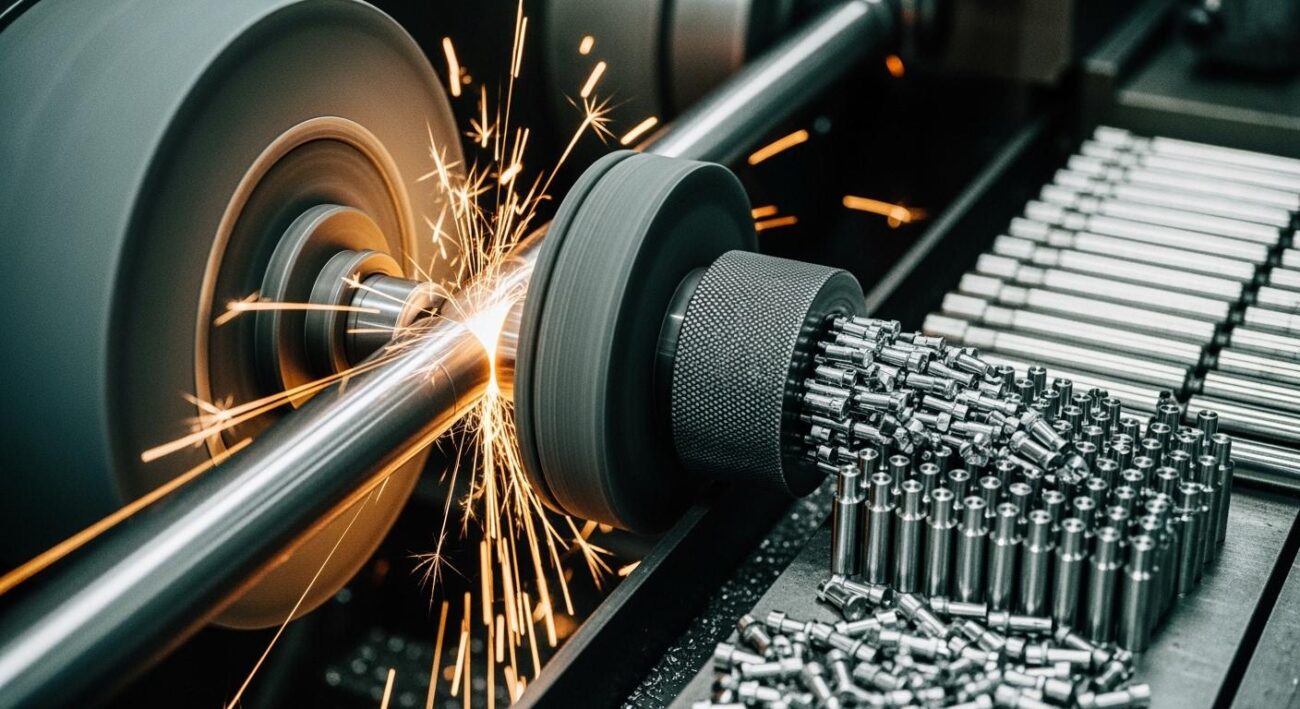
You achieve the best results in centerless grinding when you focus on key setup parameters. Work support rests need perfect alignment, and regulating wheel inclination must stay between 5 and 8 degrees. Regulating wheel speed should reach about 100 feet per minute, and dressing the grinding wheels is essential. Centerless grinding lets you shape parts without holding them, making it vital in manufacturing. Quality wheels like Aimgrind CBN grinding wheels boost performance. Take advice from experts for complex tasks.
| Parameter | Description |
|---|---|
| Work Support Rest | Needs to be carbide and perfectly aligned for best results |
| Regulating Wheel Inclination | Set between 5–8 degrees for proper support |
| Regulating Wheel Speed | About 100 ft/min based on working diameter |
| Wheel Dressing | Dress regulating wheel across its surface for effective grinding |
Key Takeaways
- Align the work support rest perfectly to ensure stability and accuracy during grinding.
- Set the regulating wheel speed between 20 and 40 RPM for optimal cutting performance.
- Regularly dress the grinding wheel to maintain sharpness and improve surface finish.
- Adjust the feed rate based on material hardness to balance speed and surface quality.
- Use high-quality wheels like Aimgrind CBN for better durability and consistent results.
Centerless Grinding Setup Essentials
Regulating Wheel Speed
You control the regulating wheel speed to manage how long the grinding wheel contacts the workpiece. If you set the speed too high, the grinding wheel has less time to cut, which can cause instability. Instability often leads to chatter marks and poor surface finish. Adjusting the speed helps you maintain optimal grinding conditions and improve roundness. In centerless grinding, you usually set the regulating wheel speed between 10 and 50 meters per minute. For most materials, a speed between 20 and 40 RPM works best. Keep the grinding speed ratio between 60 and 120 to avoid grinding burns or chatter marks.
Key points about regulating wheel speed:
- High speed can cause instability and surface defects.
- Proper speed improves roundness and finish.
- Adjust speed based on material and desired outcome.
Grinding Wheel Selection
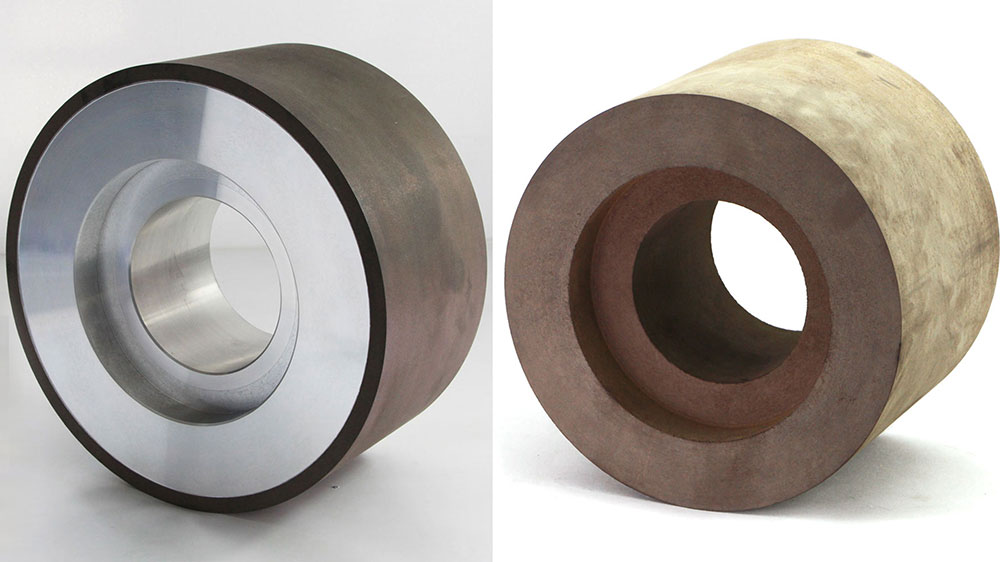
You choose the grinding wheel based on the material type, hardness, and the grinding difficulty. For hard materials, you need a wheel with mild, friable grades and finer grits. The bond type matters too. Soft grades release dulled grains and expose sharper ones, which helps when grinding tough materials. You select from abrasives like Aluminum Oxide, Silicon Carbide, Cubic Boron Nitride (CBN), and Diamond. Bond types include vitrified, resinoid, and metal bonds. The abrasive material and bond type affect cutting ability and wheel life.
Aimgrind CBN grinding wheels stand out for hard materials. CBN wheels offer exceptional durability because cubic boron nitride is very hard. You benefit from longer wheel life and less downtime in high-volume manufacturing. CBN wheels keep a sharp edge, which gives you consistent and accurate grinding. This matters in industries like aerospace and automotive, where you must meet tight tolerances and achieve superior surface finishes. CBN wheels also have high thermal conductivity, so they dissipate heat well. You can grind heat-sensitive materials with less risk of thermal damage.
Tip: Aimgrind provides customized grinding wheels and helps you match the right wheel to your equipment and process. You get expert advice and sample optimization for your specific needs.
Work Support and Blade
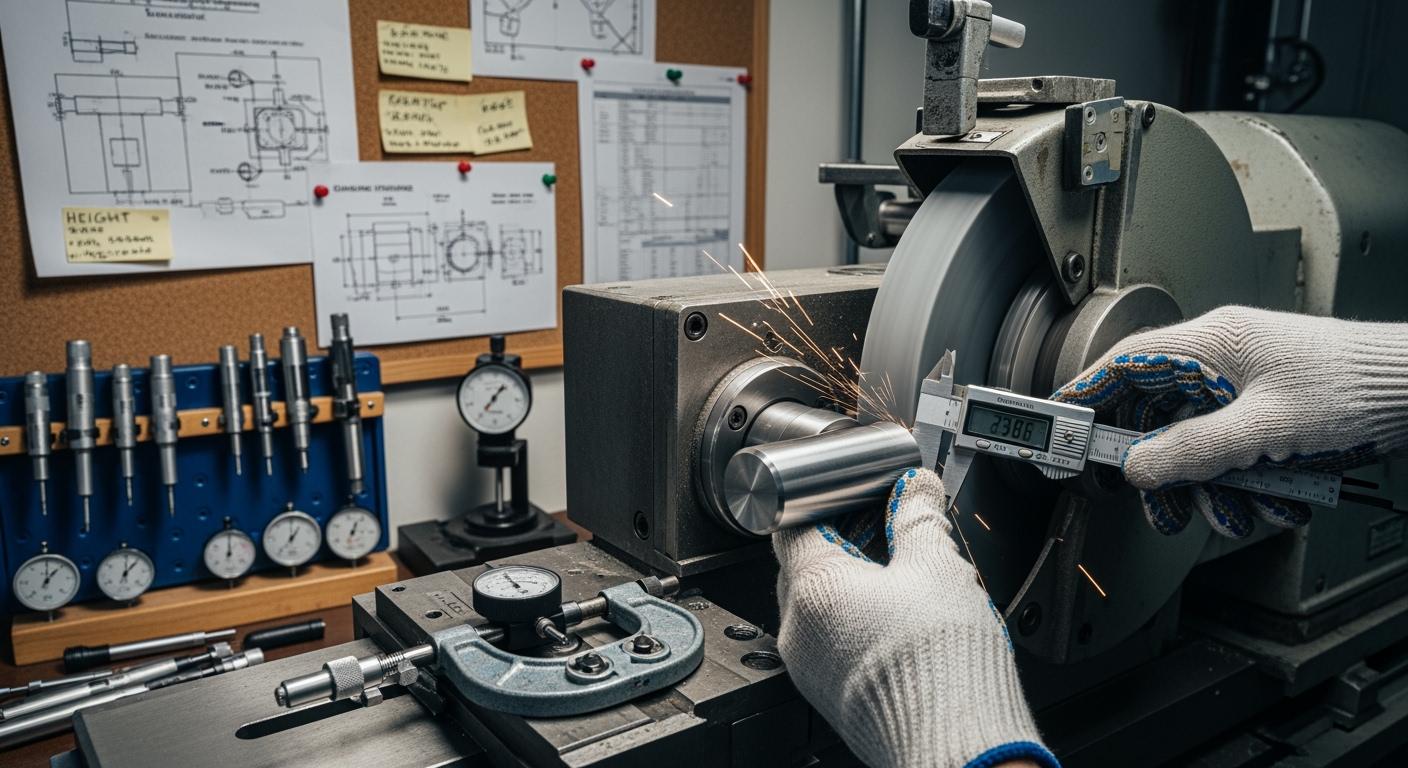
You rely on the work support blade to hold the workpiece steady between the grinding and regulating wheels. The blade’s height, angle, and alignment affect grinding accuracy and part stability. If you set the blade at the workpiece centerline, you maximize stability. Above-center setups (0.0005″ to 0.002″ high) improve surface finish for softer materials. Below-center setups help with aggressive stock removal but reduce stability.
| Aspect | Impact on Grinding Accuracy |
|---|---|
| Height of Work Rest Blade | Ensures workpiece is held securely at the correct angle. |
| Relative Angles of Wheels | Determines how the workpiece centers itself during rotation. |
| Proper Alignment | Prevents dimensional inaccuracies and promotes uniform removal. |
You measure the workpiece height accurately. For a 1-inch diameter workpiece, set the height to half an inch above the wheel’s centerline. Position the workpiece one-third of the way down from the top of an angled workblade against the regulating wheel. Use a top blade angle of about 30 degrees for most applications.
Work rest blade alignment is foundational for precision grinding. It provides stable support and directly impacts production quality.
Wheel Dressing
You dress the wheel regularly to reveal fresh and sharp grains. This improves cutting speed and efficiency. Dressing also extends wheel lifespan and prevents the wheel from becoming too thin or breaking. You get a smoother and flatter workpiece surface, which enhances dimensional accuracy.
| Impact Area | Description |
|---|---|
| Improves Wheel-Cutting Ability | Dressing reveals fresh and sharp grains, enhancing cutting speed and efficiency. |
| Extends Wheel Lifespan | Prevents the wheel from becoming too thin and breaking, reducing replacement costs. |
| Improves Workpiece Surface Finish | Creates a smooth and flat workpiece surface, enhancing dimensional accuracy and integrity. |
You select a dressing tool based on the wheel’s material and condition. For CBN wheels, use diamond or CBN dressing tools. For new wheels, use aggressive tools. For worn wheels, use less aggressive tools. Always dress the wheel before starting grinding operations. Use light pressure to avoid damaging the wheel. Maintain regular dressing intervals to keep the wheel sharp.
Effective dressing tools include handheld abrasive sticks, rotary wheels, single and multipoint diamond tools, and rotary diamond tool configurations.
Feed Rate Adjustment
You set the feed rate to control how quickly the workpiece moves through the grinding zone. If you increase the feed rate, you remove material faster but risk surface defects and reduced accuracy. If you decrease the feed rate, you improve surface finish and accuracy but slow down production. You balance feed rate with wheel speed, material hardness, and desired finish to achieve the best results.
Note: Adjust feed rate based on the grinding wheel type and workpiece material. Aimgrind experts can help you optimize feed rate for your specific setup.
You master these setup parameters to achieve high-quality results in centerless grinding. Each parameter affects grinding performance, surface finish, and part accuracy. You get the best outcomes when you select the right wheel, set the blade correctly, dress the wheel regularly, and adjust speed and feed rate for your application.
Performance Factors in Centerless Grinding
Surface Finish and Accuracy
You control surface finish and accuracy by adjusting key parameters. The height of the work rest blade affects grinding forces and part stability. Setting the blade at the workpiece centerline gives you the best geometric accuracy. The angle of the regulating wheel changes the feed rate and rotational speed. Angles between 2 and 3 degrees balance productivity and surface finish. Grinding wheel positioning ensures uniform contact and reduces thermal damage. Proper alignment prevents dimensional errors.
| Parameter | Description |
|---|---|
| Work Rest Blade Height | Influences grinding forces, part stability, and geometric accuracy. |
| Regulating Wheel Angle | Affects workpiece feed rate and rotational speed. |
| Grinding Wheel Positioning | Ensures uniform contact pressure and minimizes thermal damage. |
Aimgrind helps you match these parameters to your equipment. You get sample optimization and expert advice for your grinding needs.
Material Removal Rate
You adjust the speed ratio between the grinding wheel and the workpiece to control material removal. Different grinding operations require different removal rates.
- Roughing removes 3.5 to 8.0 mm³/mm/s.
- Finishing removes 1.0 to 1.5 mm³/mm/s.
- Fine finishing removes 0.2 to 1.0 mm³/mm/s.
You achieve higher machining accuracy with a lower grinding wheel feed rate. Larger stock removal and faster workpiece rotational speed improve outcomes. Adjusting feed rates and wheel speed enhances efficiency.
Tip: Aimgrind experts can help you select the right wheel and set the best parameters for your centerless process.
Tolerance Control
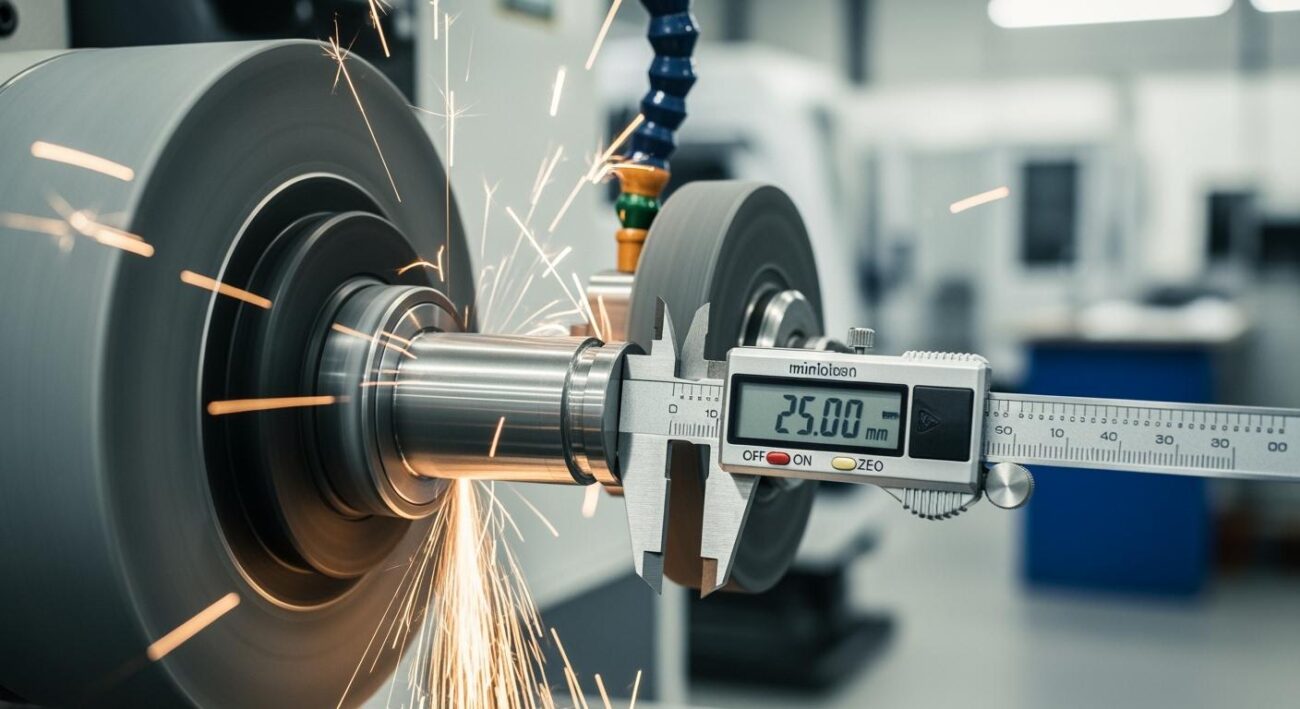
You achieve tight tolerances with modern centerless equipment. You can reach tolerances as close as ±0.0001 inches (±0.0025 mm). This level of precision is important for automotive parts and other applications where exact measurements matter. You maintain these tolerances by monitoring wheel condition, setup parameters, and machine alignment.
Aimgrind supports you with parameter matching and sample optimization. You get reliable results and consistent quality.
Troubleshooting Centerless Issues
Surface Finish Problems
You may notice rough or uneven surfaces after centerless grinding. Several factors can cause this. If the guide wheel tilts too much, the workpiece moves too quickly. Reduce the angle to slow it down. Sometimes, the grinding wheel rotates too fast or the dressing is not effective. Lower the dressing speed and redress the wheel for better results. A regulating wheel that is too thick can also cause poor finishes. Rebuild the wheel if needed. Using a high-quality wheel, like an Aimgrind CBN grinding wheel, helps you achieve a smoother finish and reduces the risk of surface defects.
Tip: Always check your wheel condition and dressing process before starting a new batch.
Out-of-Tolerance Parts
When parts do not meet size requirements, you need to act quickly. Start by checking the grinding wheel alignment with a precision indicator. Inspect the work rest blade for wear or height changes. Examine the machine bed for signs of wear. Optimize coolant flow to prevent heat buildup. Replace worn blades, balance and dress the wheel, and make sure speed ratios match the material. Always check the hardness of incoming material. Balancing the wheel is the most critical step for consistent results.
- Check wheel alignment and blade condition.
- Inspect machine bed and coolant flow.
- Replace worn parts and balance the wheel.
- Verify speed ratios and material hardness.
Vibration and Chatter
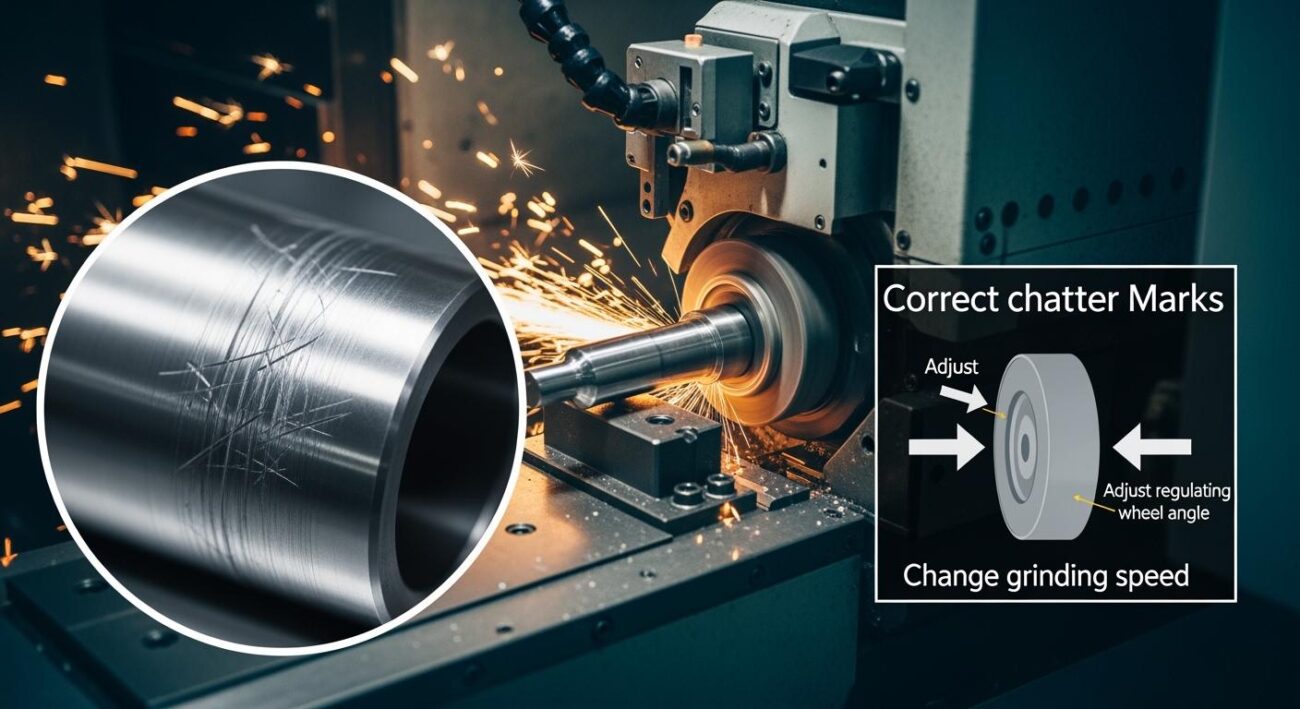
Vibration and chatter can ruin part quality. Mechanical vibrations from the machine cause the grinding wheel and workpiece to oscillate. This leads to inconsistent material removal and chatter marks. Both the grinding wheel and regulating wheel must be balanced. An imbalance causes strong vibrations. Incorrect feed setup also leads to chatter and poor surface finish. Make sure your machine is stable and all wheels are balanced.
| Source of Vibration | Solution |
|---|---|
| Mechanical vibration | Secure machine and foundation |
| Wheel imbalance | Balance both wheels |
| Incorrect feed setup | Adjust feed parameters |
Wheel Loading
Wheel loading happens when material builds up on the wheel surface. This reduces cutting ability and causes overheating. Dress the wheel regularly to keep it sharp. Choose the right wheel for your material. Aimgrind CBN grinding wheels resist loading and maintain performance, especially with hard materials. Regular maintenance and correct wheel selection help you avoid this issue.
Tips: Monitor wheel condition and dress frequently to prevent loading.
Best Practices for Centerless Grinding
Setup and Preparation
You start every centerless operation with careful setup and preparation. Select the right grinding wheel for your material and application. Aimgrind CBN wheels give you high precision and consistency, especially when you need tight tolerances. Always align the work rest blade and set the parameters for your process. Quick-change tooling and stored CNC programs help you reduce setup times and increase efficiency. Automated wheel dressing cycles keep your grinding performance steady.
Monitoring and Adjustment
You must monitor your process to catch any deviations early. Use in-process gaging to measure part diameter during grinding. This technique alerts you to diameter changes right away. Post-process gages check the part after grinding and help you confirm accuracy. The table below shows two effective monitoring techniques:
| Technique | Description |
|---|---|
| In-process gaging | Measures part diameter during grinding, automatically alerts operators to diameter variations. |
| Post-process gages | Measures part diameter after grinding, automatically alerts operators to diameter variations. |
You adjust the wheel speed, feed rate, and blade height as needed to keep your process stable.
Maintenance and Inspection
Regular maintenance keeps your centerless machine running smoothly. You should clean slides, check coolant, and inspect guards every day. Lubricate rails, check belt tension, and inspect the wheel each week. Every month, check alignment and spindle bearings. Once a year, perform a full overhaul and replace worn parts. The table below outlines a maintenance schedule:
| Frequency | Key Tasks | Expected Benefit |
|---|---|---|
| Daily | Clean slides, check coolant, inspect guards | Prevent debris-induced wear |
| Weekly | Lubricate rails, check belt tension, inspect wheel | Avoid premature component failure |
| Monthly | Full alignment check, spindle bearing inspection | Maintain dimensional accuracy |
| Annually | Full overhaul, replace seals and worn parts | Extend total machine lifespan by years |
Quality Validation
You validate quality by checking part dimensions and surface finish after grinding. High-quality wheels, like Aimgrind CBN wheels, help you achieve consistent results. These wheels provide enhanced grinding efficiency and reduce thermal damage. When you follow best practices, you reduce scrap rates, improve first-pass yield, and lower material costs. You also extend wheel lifespan and cut operating costs. Aimgrind supports you with a comprehensive service process, including parameter matching and sample optimization, so you can achieve the best results in every centerless grinding application.
You achieve the best results in centerless grinding when you master setup parameters and follow proven best practices. Using a high-quality wheel, such as an Aimgrind CBN grinding wheel, lets you maintain accuracy and efficiency across long production runs.
- Modern wheel technology increases lifespan and reduces tool changes.
- Regular process validation with real-time monitoring ensures consistent quality.
- Expert support and training help you resolve centerless challenges quickly.
Continuous improvement and the right wheel choice keep your grinding operations reliable and productive.
FAQ
What is a centerless grinder and how does it work?
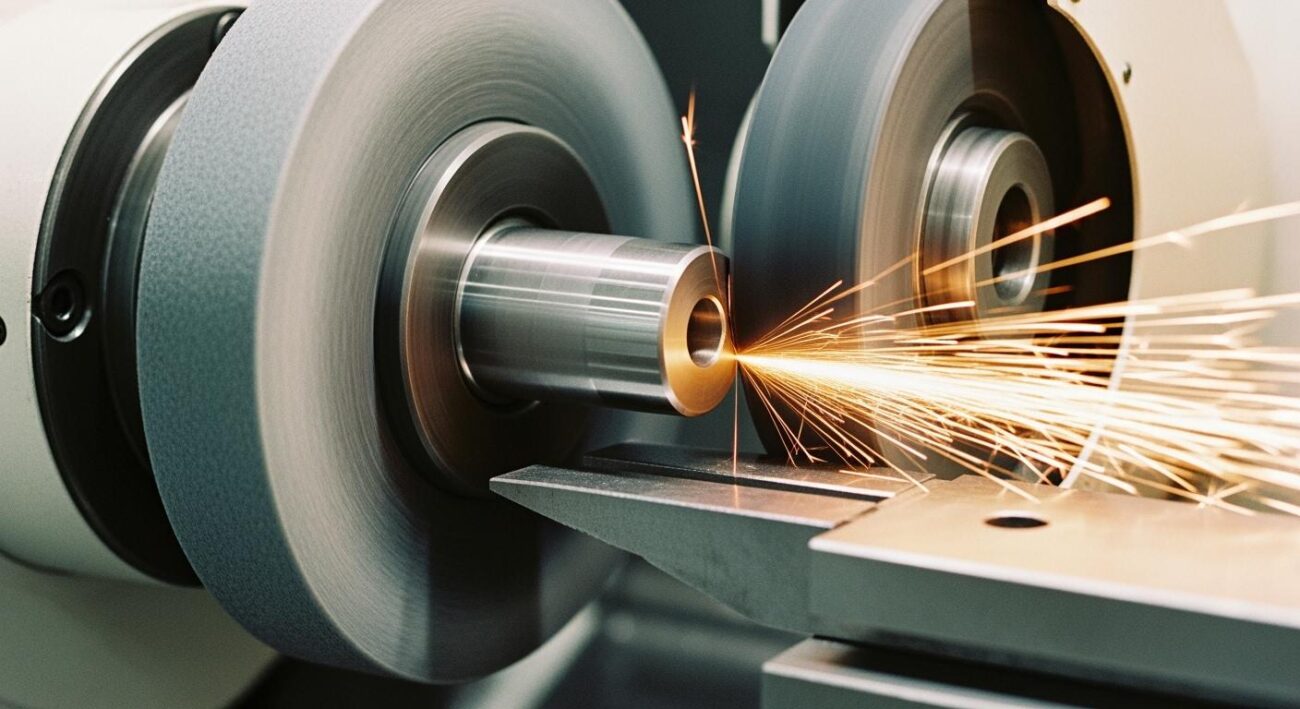
A centerless grinder uses two wheels and a work rest blade. You place the part between the wheels. The wheels spin and move the part. This process shapes the part without holding it in a chuck or center.
How do you choose the right grinding wheel for a centerless grinder?
You select the wheel based on the material and finish you want. Hard materials need CBN wheels. Aimgrind offers expert advice to help you match the best wheel to your centerless grinder and your job.
Why is a finish pass important in centerless grinding?
A finish pass removes small amounts of material. You use it to get a smooth surface and tight size control. This step helps you achieve the best quality and accuracy for your parts.
How often should you dress the grinding wheel?
You should dress the wheel before each new job. Regular dressing keeps the wheel sharp and clean. This practice helps you get better results and extends the life of your centerless grinder.
What are common problems with centerless grinding and how can you fix them?
You may see poor surface finish, vibration, or parts out of size. Check wheel alignment, dress the wheel, and adjust speeds. Using the right wheel and keeping your centerless grinder clean helps prevent most issues.
Contact Us
For More Grinding Solution or Customized Abrasive Tools