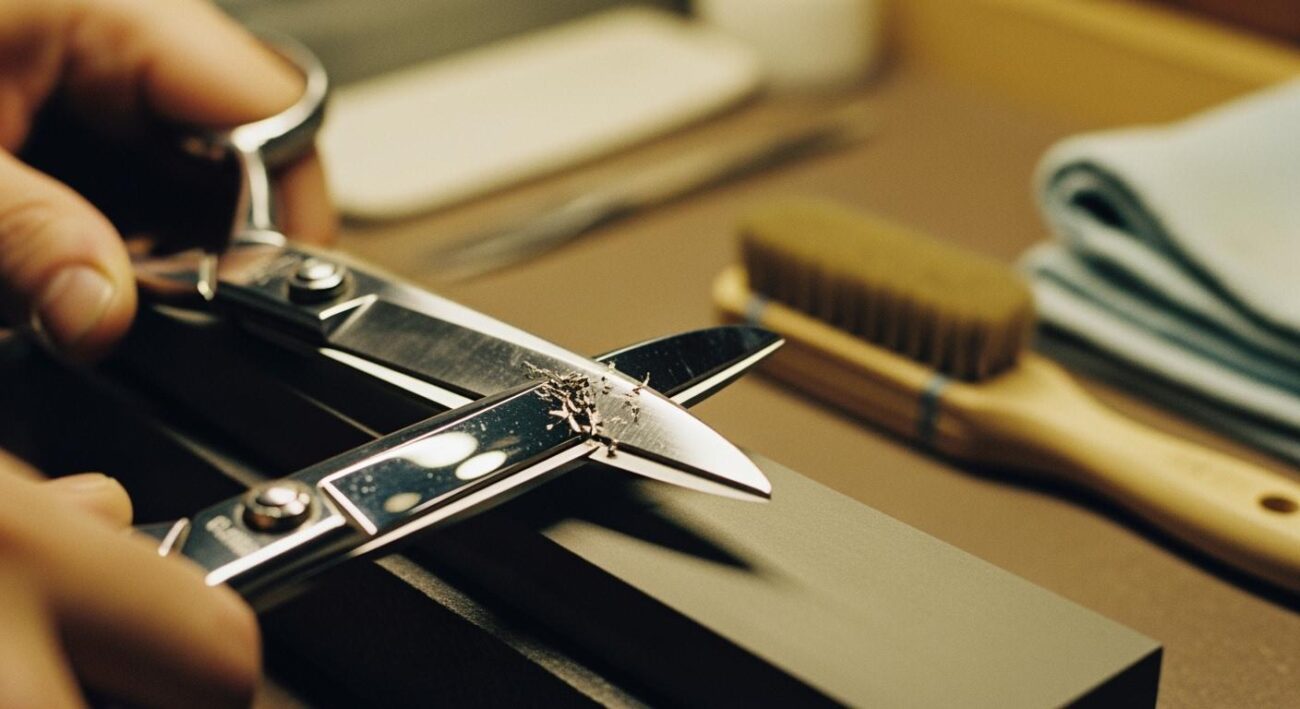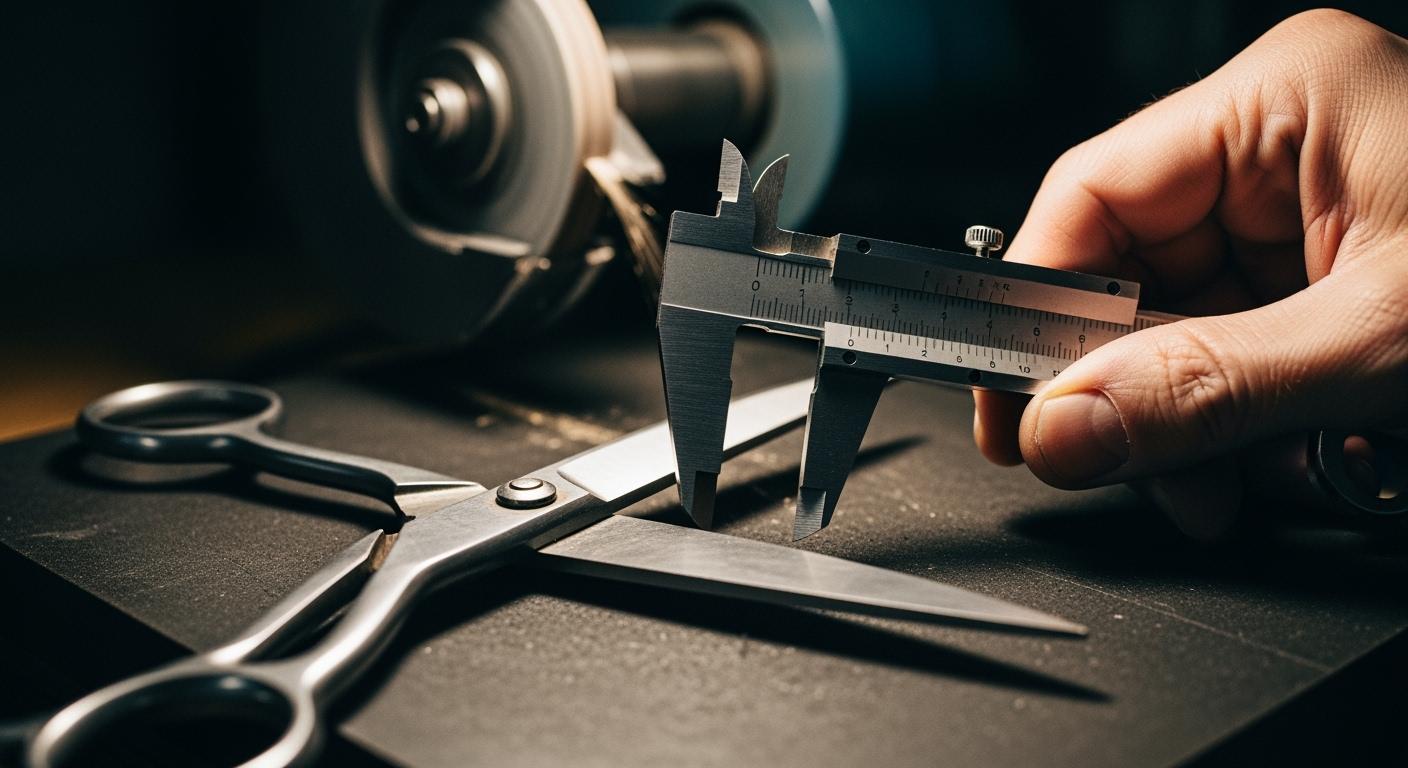
You need synchronized grinding accuracy to keep both scissor blades sharp and effective. If you want the best results, focus on precision and accuracy during every step. Aimgrind brings years of experience in precision grinding solutions. You get better performance when you choose the right tools, such as Aimgrind diamond grinding wheels. Pay attention to alignment, apply even pressure, and use the correct technique. These actions help you achieve smooth cuts and extend the life of your scissors.
Key Takeaways
- Inspect and clean both scissor blades before grinding. This ensures you spot any damage and prepares them for precise work.
- Use Aimgrind diamond grinding wheels for better performance. These wheels provide durability and a smooth finish, making your grinding process more efficient.
- Secure the blades properly with clamps and fixtures. This prevents movement and keeps both blades aligned for accurate grinding.
- Monitor the grinding process closely. Check for symmetry and edge consistency to ensure both blades perform well after sharpening.
- Avoid common mistakes like misalignment and uneven pressure. These issues can lead to poor cutting quality and reduce the lifespan of your scissors.
Preparation for Dual-Blade Grinding
Blade Inspection and Cleaning
You need to start with a careful inspection of your dual-blade scissors. Look for any chips, cracks, or signs of wear on both blades. Clean each blade with a soft cloth to remove dust, oil, or residue. Dirt can affect grinding accuracy. Use a gentle solvent if you see stubborn stains. Make sure both blades are dry before you continue. This step helps you spot problems early and ensures your dual-blade scissors are ready for precise grinding.
Tip: Always check the pivot area of your dual-blade scissors. Dirt or rust here can cause uneven movement during grinding.
Marking Reference Points
You should mark clear reference points on your dual-blade scissors before grinding. Use a fine-tip marker to draw a line along the edge you plan to grind. This line helps you keep track of your progress and maintain symmetry. For best results, mount your dual-blade scissors securely. Use a two-clamp system to hold the scissors steady. Adjust the smaller clamp for the base and the larger clamp for the tip. This setup prevents movement and keeps both blades in the correct position.
Set the sharpening angle for your dual-blade scissors. Most scissors require a 60° angle. Use a quick set guide to adjust the angle. Marking and setting the angle ensures you grind both blades evenly. When you follow these steps, you prepare your dual-blade scissors for accurate and synchronized grinding.
- Inspect both blades for damage.
- Clean and dry each blade.
- Mark the grinding edge.
- Secure the dual-blade scissors with clamps.
- Set the correct sharpening angle.
You create a strong foundation for dual-blade grinding by following these steps. This preparation leads to better accuracy and longer-lasting scissors.
Choosing Tools for Synchronized Grinding Accuracy
Selecting Aimgrind Diamond Grinding Wheels
You need the right grinding wheel to achieve synchronized accuracy for both scissor blades. Aimgrind diamond grinding wheels give you a clear advantage. These wheels use a diamond abrasive layer that cuts hard materials like alloys and ceramics with ease. You get a sharp edge and a smooth finish every time.
Aimgrind wheels last longer than traditional wheels. You spend less time changing wheels and more time grinding. The wheels keep their shape, so you get consistent results. You can choose from resin, metal, or vitrified bonds. Each bond type fits different grinding needs. Aimgrind offers custom sizes, so you match the wheel to your machine.
Tip: Use Aimgrind diamond grinding wheels for both wet and dry grinding. You get flexibility and high performance in any setting.
Here is a quick comparison:
| Feature | Aimgrind Diamond Wheels | Conventional Wheels |
|---|---|---|
| Cutting Efficiency | High | Medium |
| Durability | Long-lasting | Shorter lifespan |
| Surface Finish | Smooth | Less smooth |
| Customization | Available | Limited |
Using Alignment Fixtures and Gauges
You need alignment fixtures and feeler gauges to keep both blades in sync. Fixtures hold the blades steady during grinding. You avoid unwanted movement and keep the blades parallel. Feeler gauges help you measure the gap between blades. You check for symmetry and adjust as needed.
Follow these steps for best results:
- Place the blades in the fixture.
- Use the feeler gauge to check the gap.
- Adjust until both blades are parallel.
- Start grinding with Aimgrind wheels.
Note: Always check alignment before and after grinding. You maintain accuracy and extend the life of your scissors.
Setting Up the Dual-Blade System
Blade Positioning and Parallel Setup
You need to set up your dual-blade system with care. Start by securing both blades in dual vises. This prevents flexing and keeps the blades steady. Use guide rod pairs that match the sweet spot of each dual-blade. Guide rods help limit edge re-profiling and keep the blades aligned. Adjust the height of your setup if you use modular designs. This lets you fit different jaw heights for optimal clamping.
You can use a vise-less carriage to maintain consistent guide rod angles. This helps when you refinish both blades in parallel. Stone stops protect the dual-blade edges from damage during grinding. These stops are important when you use multiple guide rod setups. You keep the blades safe and maintain accuracy.
- Secure both blades in dual vises.
- Use guide rod pairs for alignment.
- Adjust height for different jaw sizes.
- Try a vise-less carriage for parallel refinishing.
- Add stone stops to protect edges.
You create a stable foundation for dual-blade grinding. This setup keeps both blades parallel and ready for precise work.
Adjusting Machine Angles and Pressure
You must adjust machine angles and pressure to achieve synchronized accuracy in dual-blade grinding. Position the work-rest blade correctly. This ensures roundness and matches the blade to the grinding wheels. Dress the wheels at regular intervals. This keeps the cutting profile consistent and reduces vibration.
Control contact pressure during dual-blade grinding. Uniform pressure prevents vibration and keeps both blades even. Monitor material temperature. Excessive heat can affect grinding accuracy and damage the dual-blade edges.
| Factor | Description |
|---|---|
| Work-rest blade positioning | Essential for correct roundness; adjusted relative to grinding wheels. |
| Wheel dressing intervals | Maintains consistent cutting profile and reduces vibration. |
| Contact pressure | Must be controlled to minimize vibration and ensure uniform pressure. |
| Material temperature | Monitored to prevent excessive heat buildup affecting grinding accuracy. |
You keep your dual-blade system accurate by following these steps. Proper setup and careful adjustments lead to sharp, reliable scissors.
Grinding Process and Quality Control
Step-by-Step Synchronized Grinding
You need to follow a clear process to achieve synchronized grinding accuracy for both blades. Start by setting your objectives. Decide how sharp you want your dual-blade scissors to be and what level of cutting performance you need. Prepare your grinding station. Check the Aimgrind diamond grinding wheels for any signs of wear. Make sure your dual-blade shear cutting setup is stable and aligned.
Begin running the grinding process. Use Aimgrind wheels to remove material evenly from both blades. Adjust the wheel surface speed and feed rates to match the hardness of the blades. Monitor the material removal rate. Keep the depth of cut consistent for each pass. Check coolant nozzles for damage and measure coolant temperature. Proper cooling prevents overheating and keeps the shear edges smooth.
Evaluate your progress after each grinding cycle. Use a feeler gauge to check the gap between blades. Record the results. Write down the amount of material removed and the number of passes. Publish your findings if you work in a team. Share the data so everyone can see the improved accuracy in dual-blade shear cutting.
Tip: Always dress your Aimgrind diamond grinding wheels before starting. This keeps the cutting profile sharp and ensures synchronized grinding accuracy.
Step-by-step procedure:
- Set objectives for dual-blade shear cutting.
- Prepare grinding station and check Aimgrind wheels.
- Run grinding process with controlled speed and feed rates.
- Evaluate blade symmetry and edge consistency.
- Record material removal and grinding parameters.
- Share results for quality control.
Monitoring Symmetry and Edge Consistency
You must monitor symmetry and edge consistency during dual-blade grinding. Use advanced methods to check the surface roughness and edge quality. Machine learning models like SAE–LSTM and CNN can predict surface roughness with high accuracy. These tools help you spot any unevenness in the shear edges.
Check the symmetry of your dual-blade shear cutting setup. Use feeler gauges and visual inspection. Compare both blades after each grinding cycle. Look for signs of taper or size variation. Use vibration sensors to detect any irregularities in the cutting edges.
| Study | Method | Key Findings |
|---|---|---|
| Wang et al. | SAE–LSTM | Achieved MAE ≈ 0.027 μm and MAPE ≈ 1.56% for surface roughness prediction. |
| Charde et al. | Tree-based ML | Outperformed other models with MAE ≈ 0.064 for rapid prediction. |
| Azarhoushang | CNN with GAF images | Achieved 94% prediction accuracy using edge devices for monitoring. |
| Guo et al. | Optimized DBNs | Reduced prediction error by over 40% with new compact DL models. |
| Zhang et al. | CNN-AFEADF | Achieved ~3% relative error with reduced training time. |
Note: Use Aimgrind diamond grinding wheels for dual-blade shear cutting. You get consistent edge quality and symmetry.
Testing Dual-Blade Function
You need to test the dual-blade function after grinding. Open and close the scissors several times. Listen for smooth movement. Check if both blades meet evenly along the cutting edge. Try cutting different materials like paper, fabric, and thin metal. Watch for clean cuts and no snagging.
Inspect the blades for dimensional defects. Look for taper or size variations. Check for surface finish problems like chatter marks or grinding burn. Make sure the setup-related defects are not present. Verify the work rest blade positioning and wheel speeds.
| Quality Control Failure | Description | Preventive Measures |
|---|---|---|
| Dimensional defects | Issues affecting part size and geometry, such as taper and size variations | Ensure proper machine setup and alignment, inspect components for wear, and maintain correct parameters. |
| Surface finish problems | Visible defects like chatter marks and grinding burn | Regularly dress grinding wheels, optimize coolant flow, and monitor grinding parameters. |
| Setup-related defects | Problems from incorrect positioning or alignment of components | Verify work rest blade positioning, check wheel speeds, and ensure proper alignment between wheels. |
Alert: Always check for quality control failures after dual-blade shear cutting. Use Aimgrind diamond grinding wheels to prevent surface finish problems and dimensional defects.
You maintain synchronized grinding accuracy by following these steps. You achieve improved accuracy in dual-blade shear cutting and extend the life of your scissors.
Common Mistakes in Dual-Blade Grinding
Misalignment Issues
You often see misalignment when you grind dual-blade scissors. Misalignment happens when the blades do not stay parallel during the shear process. You may notice that the cutting edges do not match up. This mistake leads to poor shear performance and uneven cutting. You must check the alignment before you start grinding. Use fixtures and gauges to keep the blades in place. If you skip this step, you risk creating blades that do not shear properly.
You can spot misalignment by looking at the gap between the blades. If the gap changes along the length, you have a problem. Misalignment causes the shear to lose its sharpness. You may see rough cutting lines or jagged edges. You need to fix the alignment to restore the cutting quality.
The cross-section view shows that there are actually two burrs, one very large triangular burr, and then a more typical thin, broken burr on top of that. The presence of large and small burrs can affect the sharpness and cutting efficiency of the blade, leading to issues such as dulling and uneven cuts.
Uneven Grinding and Pressure
You sometimes apply uneven pressure during the grinding process. Uneven pressure creates problems for the shear edges. You may see one blade with a thicker cutting edge than the other. This mistake affects the cutting action and makes the shear less effective. You must use steady hands and keep the pressure balanced.
You can use a table to check for signs of uneven grinding:
| Symptom | Impact on Shear | Solution |
|---|---|---|
| Uneven edge thickness | Poor cutting quality | Adjust grinding pressure |
| Visible burrs | Dull shear performance | Dress grinding wheels |
| Rough surface finish | Jagged cutting lines | Monitor grinding speed |
You need to monitor the grinding process closely. If you see burrs or rough spots, you must stop and check your grinding wheel. You can dress the wheel to fix the cutting profile. You must keep the shear edges smooth and consistent. If you use Aimgrind diamond grinding wheels, you get better control over the cutting process. You avoid uneven grinding and improve the shear quality.
You must avoid these mistakes to achieve sharp, reliable shear blades. You get clean cutting results and extend the life of your scissors.
You achieve synchronized grinding accuracy by inspecting blades, using Aimgrind diamond grinding wheels, and applying precise alignment techniques. For best results, use methods like cross-coupled control, adaptive servo tuning, and dual quaternion-based interpolation. You also need to address mechanical backlash and thermal effects. Regular maintenance keeps your scissors sharp and reliable:
| Maintenance Task | Frequency |
|---|---|
| Sharpening | Every 2–3 months |
| Oiling | Monthly or as needed |
| Cleaning | Weekly |
| Tension Check | Monthly |
Stay consistent with these steps for long-lasting performance.
FAQ
What is synchronized grinding accuracy for dual-blade scissors?
You achieve synchronized grinding accuracy when both scissor blades have matching edges and angles. This process helps you get smooth cuts and long-lasting sharpness. You need proper alignment, even pressure, and the right tools for the best results.
How do cnc machines help with dual-blade grinding?
You use cnc machines to control grinding speed, angle, and pressure. These machines let you repeat the same process for each blade. You get precise results every time. Cnc grinding solutions make your work easier and more accurate.
Why should you choose Aimgrind diamond grinding wheels for cnc grinding?
You pick Aimgrind diamond grinding wheels because they last longer and cut harder materials. You get a smooth finish and less downtime. These wheels fit many cnc machines. You can use them for both wet and dry grinding.
Can multitasking cnc machines improve grinding efficiency?
You use multitasking cnc machines to handle several steps at once. These machines let you grind, measure, and adjust without stopping. You save time and keep both blades in sync. Cnc multitasking machining boosts your productivity.
How often should you check blade alignment during cnc grinding?
You should check blade alignment before, during, and after grinding. You use gauges and fixtures to keep the blades parallel. This step helps you avoid mistakes and keeps your scissors sharp.
Contact Us
For More Grinding Solution or Customized Abrasive Tools