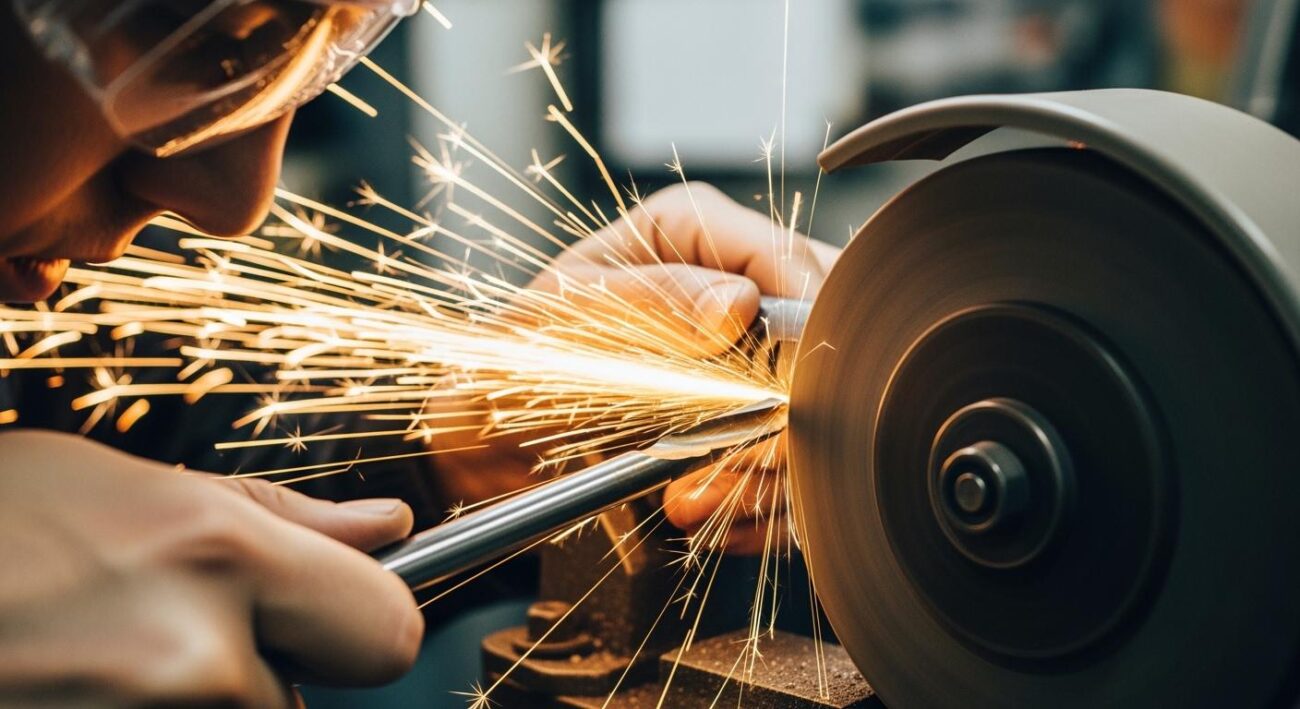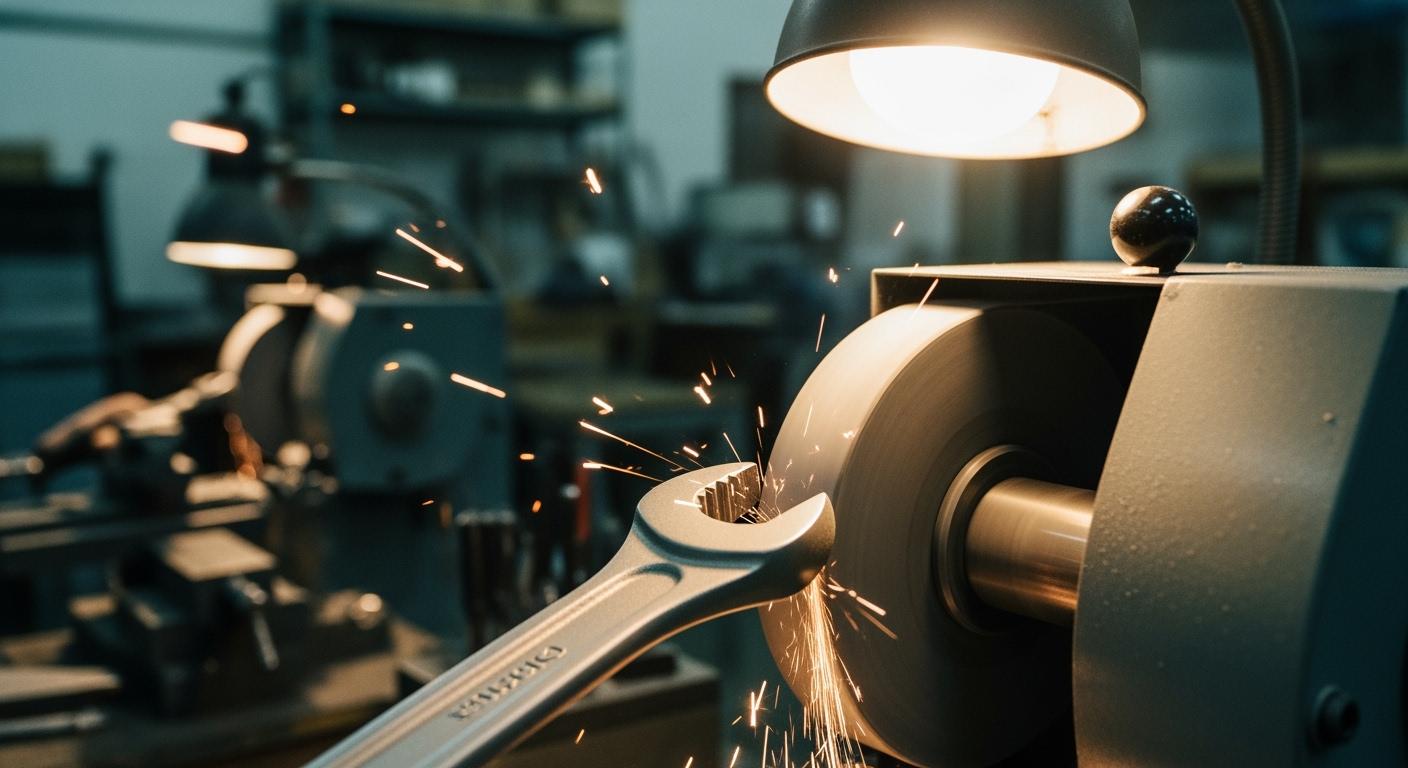
You face unique grinding challenges when working with titanium hand tools. Titanium reacts with carbon and nitrogen during grinding, which increases friction and causes tool wear. The workpiece material often sticks to the tools, leading to rapid wear. You need grinding wheels that resist adhesion, avoid clogging, and keep a stable path. Specialized solutions like Aimgrind’s super hard abrasives help manage these issues and improve performance.
Key Takeaways
- Titanium’s high strength and low thermal conductivity lead to rapid tool wear and overheating during grinding. Choose specialized abrasives to manage these challenges effectively.
- Advanced grinding techniques, like super-high speed grinding, reduce tool wear and improve surface quality. Consider switching from conventional methods for better results.
- Aimgrind’s super hard abrasives, made with diamond and CBN grains, enhance grinding efficiency and tool longevity. Use these for precise results and less downtime.
- Always prioritize safety when grinding titanium. Wear proper protective gear and maintain a clean workspace to minimize fire risks and health hazards.
- Effective heat management is crucial. Use cooling methods like flood coolant or high-pressure systems to prevent damage and extend tool life.
Grinding Challenges with Titanium Tools
Material Properties Impact
When you work with titanium alloy materials, you face unique grinding challenges. Titanium combines steel-like rigidity with the lightness of a metal. This combination creates a tough environment for grinding titanium tools. The high strength of titanium alloy materials means you need specific grinding techniques to prevent rapid tool wear. You cannot use just any abrasive. You must choose abrasive materials that can handle the hardness and elasticity of titanium alloy materials.
- Titanium alloy materials have high strength, which leads to:
- Rapid tool wear and deformation during grinding.
- Unstable cutting conditions because of titanium’s elastic nature.
- Surface layers that harden up to 30% more than their original hardness, increasing cutting forces and internal stresses.
- Different grades of titanium alloy materials behave differently. Some grades deform or fracture more easily, while others withstand more stress. You need to understand these differences to optimize your grinding process.
Titanium’s tendency to melt during milling also affects grinding. Built-up edges can form on your tools, making the process even more difficult. You must use grinding wheels that resist adhesion and clogging to keep your work smooth and precise.
Heat and Tool Wear Issues
Grinding titanium alloy materials generates a lot of heat. Unlike steel, titanium does not conduct heat away from the grinding zone efficiently. Most of the heat stays in the cutting area. This heat buildup can cause several problems for your tools.
- Excessive heat can lead to thermal cracking on the tool surface. Cracks may grow and cause the tool to fail suddenly.
- High temperatures can soften the tool material. When this happens, the tool loses its hardness and strength.
- If you do not use enough cutting fluid, heat cannot escape. This causes even more wear on your tools.
You must manage heat carefully when grinding titanium alloy materials. Using the right grinding wheels and cooling methods helps prevent damage. High strength and poor heat conductivity make titanium alloy materials especially challenging. You need to pay close attention to tool wear and temperature to achieve the best results.
Grinding challenges with titanium alloy materials require you to use advanced techniques and specialized abrasives. When you understand the impact of material properties and heat, you can choose the right solutions for grinding titanium tools.
Grinding Titanium Alloy Methods
Conventional vs. Advanced Techniques
You can choose from several methods when grinding titanium alloy. Conventional grinding uses lower speeds and basic abrasive wheels. This method often creates high grinding forces and temperatures. You may see surface defects like voids, micro-cracks, and fractures. These problems make it hard to get a smooth finish on titanium.
Advanced techniques, such as super-high speed grinding, use specialized abrasive wheels and much faster speeds. You get lower grinding forces and temperatures. Surface defects change to pulled-out, smearing, or crushed areas, which are easier to control. You can see the differences in the table below:
| Grinding Method | Grinding Speed (m/s) | Normal Grinding Force | Tangential Grinding Force | Specific Grinding Energy | Grinding Temperature | Surface Defects |
|---|---|---|---|---|---|---|
| Conventional Grinding | 20 | Higher | Higher | Higher | Higher | Voids, micro-cracks, fractures |
| Super-High Speed Grinding | 120 | Lower | Lower | Lower | Lower | Pulled-out, smearing, crushed areas |
You can improve your results by switching to advanced grinding titanium alloy methods. You reduce tool wear and get a better surface finish.
Role of Super Hard Abrasives by Aimgrind
You need the right abrasive for grinding titanium alloy. Aimgrind’s super hard abrasive wheels use diamond and CBN grains. These abrasive materials cut titanium efficiently and last longer. You get precise results and less downtime.
Super hard abrasive wheels help you manage heat and reduce tool wear. You can grind titanium alloy with more accuracy and less risk of damage. You also help the environment by choosing safer compounds for dressing abrasive wheels. Here are some environmental tips:
- Choose non-toxic compounds for dressing abrasive wheels.
- Reduce the concentration of electrolytes in abrasive wheel dressing.
- Dispose of abrasive waste safely to protect operators and surroundings.
You can rely on Aimgrind’s super hard abrasive wheels for grinding titanium alloy. You achieve high precision and durability in your tools.
Tool Wear & Overheating in Grinding Titanium
Abrasive Wear Factors
You face unique challenges when you grind titanium. The temperature in the grinding zone rises quickly. High temperature causes chemical reactions between titanium and the tool material. These reactions increase friction and make the tool stick to the workpiece. You see more tool wear because of this adhesion. At high temperature, a brittle film forms on the surface. This film contains oxides and nitrides. The film reduces elasticity and increases work hardening. As a result, tool wear becomes more severe.
You notice that titanium causes more tool wear than other materials. This happens because titanium does not conduct heat well. The temperature stays high near the surface. The chemical reactivity of titanium also makes tool wear worse. In comparison, stainless steel mainly causes wear through work hardening and built-up edge formation.
- High temperature leads to chemical reactions and tool adhesion.
- Brittle films form at elevated temperature, increasing work hardening.
- Titanium’s low thermal conductivity keeps temperature high at the surface.
- Tool wear is more severe with titanium than with stainless steel.
Managing Heat and Preventing Damage
You must control temperature to protect your tools and improve performance. Several methods help you manage heat during grinding. You can use flood coolant application to keep the temperature down. High-pressure coolant systems also remove heat from the grinding zone. Minimum Quantity Lubrication (MQL) uses a small amount of lubricant to reduce temperature and friction.
You should optimize coolant flow to enhance heat dissipation. High-quality grinding wheels help minimize heat buildup. You can control grinding speeds to reduce thermal damage. Using abrasives like silicon carbide, green silicon carbide, and diamond reduces adhesion to titanium and lowers temperature at the surface. These steps help you maintain good surface quality and extend tool life.
Tip: Always monitor temperature during grinding. High temperature can damage the surface and reduce tool performance.
The effectiveness of heat management shows in the results. Multiple side mill passes reduce surface compressive residual stresses compared to single passes. Machining and heat treating influence the distribution of residual stress in titanium alloys. Four different heat treat conditions—STQ-970, STQ-1000, STA-970/550, and STA-1000/550—were tested. X-Ray Diffraction measured residual stresses using the sin2ψ method at different ψ angles.
| Evidence | Description |
|---|---|
| 1 | Multiple side mill passes reduce surface compressive residual stresses compared to single passes. |
| 2 | Machining and heat treating significantly influence residual stress distribution in Ti-6Al-4V alloys. |
| 3 | Four heat treat conditions were tested: STQ-970, STQ-1000, STA-970/550, STA-1000/550. |
| 4 | X-Ray Diffraction measured residual stresses using the sin2ψ method across varying ψ angles. |
You can achieve better surface quality and tool performance by managing temperature and tool wear during grinding.
Safety Hazards in Grinding Titanium
Fire Risk and Titanium Dust
You must stay alert when you grind titanium. The process creates swarf and dust that can ignite easily. Titanium dust is highly flammable. If you let it build up, you increase the risk of fire. High temperatures from grinding can cause thermal debris that burns skin. Flying debris can block your sight and affect your accuracy. You may face vision loss or serious eye damage if you do not protect your eyes.
Titanium forms a protective film at high temperatures. This film can make the surface brittle and reduce elasticity. Overheating during grinding lowers surface integrity. You must clean up dust during and after your project. Always use caution when handling titanium dust. Keep a class D fire extinguisher nearby for emergencies.
Tip: Clean your workspace often to prevent dust hazards. Remove swarf and dust from tools and surfaces.
Protective Measures and Best Practices
You can reduce hazards by following safety measures. Wear proper PPE, such as respirators, goggles, and gloves. Make sure your workspace has good ventilation. Use explosion-proof equipment and follow strict fire prevention protocols.
| Safety Measure | Description |
|---|---|
| Class D fire extinguishers | Install at accessible locations for fire safety. |
| Dedicated disposal containers for titanium waste | Maintain to prevent hazardous accumulation. |
| Regular cleaning to prevent dust accumulation | Essential to minimize dust hazards. |
| Emergency response training for all personnel | Important for preparedness in case of incidents. |
Choose the right grinding wheel and use conservative parameters. This lowers the risk of wheel breakage. Address excessive feed pressure, bond hardness, and tool vibration to keep your grinding environment safe.
Note: Emergency response training helps everyone stay prepared. Practice fire drills and review safety protocols often.
You protect yourself and your workspace when you follow these best practices. You keep grinding safe and efficient.
Aimgrind Solutions for Grinding Titanium Tools
Benefits of Super Hard Abrasives
You need reliable results when you work with titanium. Aimgrind’s super hard abrasives give you that reliability. These abrasives use diamond and CBN grains, which are some of the hardest materials on earth. You get wheels that stay sharp and strong, even under tough conditions. This means you can grind titanium with less effort and more control.
You see better surface quality and longer tool life when you use high thermal conductivity vitrified CBN wheels. These wheels remove heat quickly, so your tools do not overheat. You also finish your work faster because the wheels cut more efficiently. The table below shows how these wheels compare to ordinary wheels:
| Type of Grinding Wheel | Surface Quality Improvement | Grinding Efficiency | Tool Longevity |
|---|---|---|---|
| High Thermal Conductivity Vitrified CBN | Superior to ordinary wheels | Enhanced | Increased |
| Ordinary Vitrified CBN | Standard performance | Standard | Standard |
You get a smoother finish and spend less time changing wheels. You also reduce the risk of tool failure. This helps you save money and keep your workspace safe.
Tip: Choose super hard abrasives for titanium to get the best results and protect your investment.
Customization and Service Process
You do not have to settle for one-size-fits-all solutions. Aimgrind gives you a full service process that matches your needs. You start with a problem diagnosis. The Aimgrind team listens to your challenges and studies your equipment. They look at your grinding process and find ways to improve it.
Next, you get parameter matching. Aimgrind experts select the right wheel formula for your tools and machines. They consider the type of titanium, the grinding speed, and the finish you want. You receive sample optimization, where you test the wheels and see the results for yourself. If you need changes, Aimgrind adjusts the formula until you are satisfied.
You benefit from:
- Custom wheel design for your specific grinding tasks
- Expert advice on process improvement
- Sample testing to ensure the best fit
- Ongoing support for your production needs
You can trust Aimgrind to help you solve your toughest grinding problems. You get more than just a product—you get a partner who cares about your success.
Note: You can contact Aimgrind for a consultation or visit their website at aimgrind.com to learn more about their solutions.
You face grinding challenges when you work with titanium hand tools. These challenges include rapid tool wear, overheating, and fire risks. You need specialized solutions to overcome these problems. Aimgrind’s super hard abrasives help you achieve better results and safer grinding.
Tip: Always use proper safety gear and keep your workspace clean. Choose the right abrasive for your titanium tools.
FAQ
What makes titanium hard to grind?
Titanium has high strength and low thermal conductivity. You see rapid tool wear and overheating. The material sticks to grinding wheels, which causes clogging and surface defects.
How do Aimgrind’s super hard abrasives help?
You use diamond and CBN grains in Aimgrind’s wheels. These abrasives stay sharp longer and resist heat. You get smoother finishes and less downtime.
What safety steps should you follow when grinding titanium?
Always wear goggles, gloves, and a respirator. Clean dust often. Keep a class D fire extinguisher nearby. Make sure your workspace has good ventilation.
Can you use conventional abrasives for titanium?
You can try conventional abrasives, but you see faster wear and poor results. Super hard abrasives work better for titanium. You get higher precision and longer tool life.
Contact Us
For More Grinding Solution or Customized Abrasive Tools