You know that profile accuracy makes a big difference when you grind engine blades. Small errors can lead to serious problems in engine performance. You need tools that deliver precision every time. Aimgrind’s diamond grinding wheels help you reach high standards and keep your work reliable. Skilled operators, advanced machines, and quality tools all work together to make each blade perfect.
Key Takeaways
- Choose the right grinding equipment, like Aimgrind diamond grinding wheels, to ensure precision and durability in engine blade manufacturing.
- Regularly calibrate and align your grinding machine to maintain profile accuracy and prevent costly errors.
- Control your grinding environment by managing temperature, vibration, and cleanliness to enhance the quality of your engine blades.
- Implement real-time monitoring and train operators to catch errors early, ensuring consistent results and high profile accuracy.
- Maintain thorough documentation and traceability for each engine blade to support quality assurance and compliance.
Preparation for Engine Blade Grinding
Equipment Selection and Aimgrind Diamond Grinding Wheels
You need the right grinding equipment to achieve high profile accuracy in engine blade manufacturing. The choice of tools affects your results. Aimgrind diamond grinding wheels give you the precision and durability you need for tough materials like hard alloys and ceramics. These wheels help you keep a consistent shape and surface finish, which is important for both machining accuracy and blade performance.
Here are the most critical factors to consider when you select grinding equipment:
| Critical Factor | Description |
|---|---|
| Material Removal Rates | High rates help you produce blades efficiently. |
| Surface Quality | Good surface quality improves blade durability and performance. |
| Geometry Adaptability | Equipment must handle complex blade shapes. |
| Repeatability | Consistent results keep profile accuracy high. |
| Integrated Measuring Systems | Tools like 3D inspection systems check profiles after grinding. |
| Defined Contact Pressure | CNC systems control pressure for better machining accuracy. |
Aimgrind’s diamond grinding wheels support all these needs. You can trust them for reliable and repeatable results.
Machine Calibration and Alignment
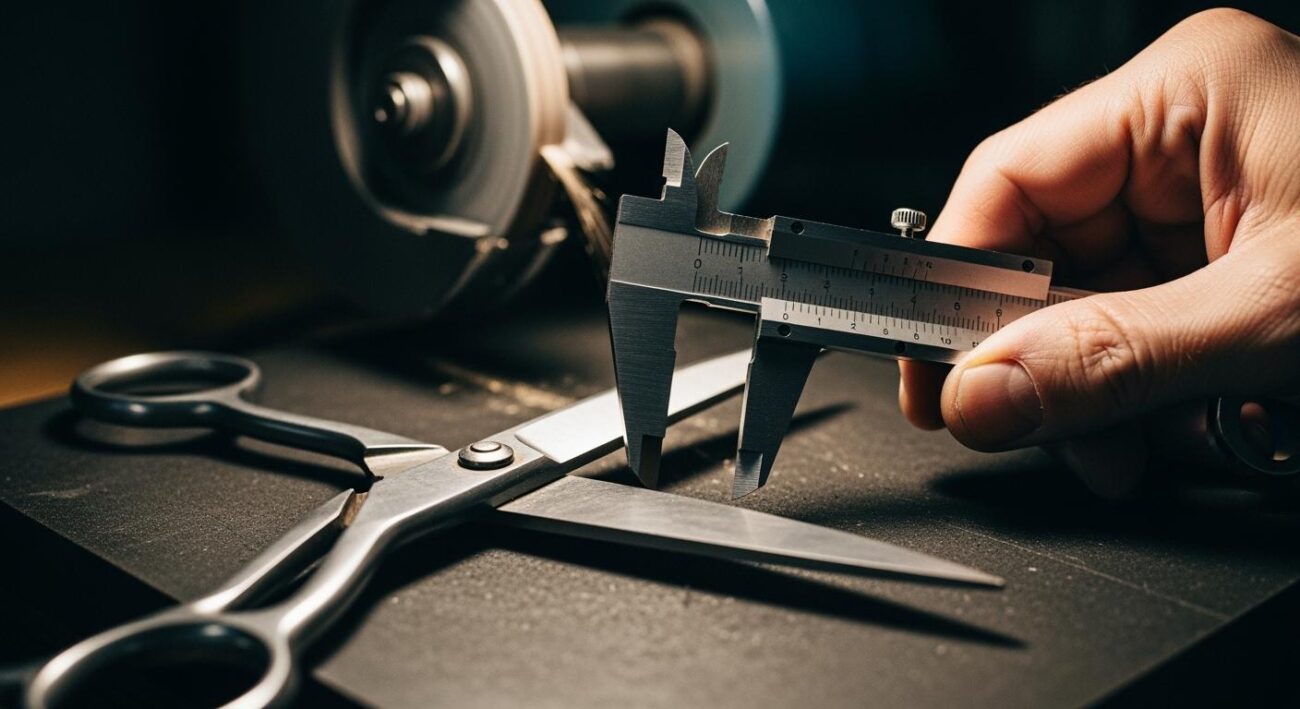
You must check your grinding machine before you start. Calibration makes sure the machine moves as you expect. Alignment keeps the grinding wheel and the blade in the right position. If you skip these steps, you may lose profile accuracy and precision. Always follow the machine’s guidelines for calibration. Use measuring tools to check alignment. This helps you avoid errors and keeps your process stable.
Environmental Controls
The grinding environment affects your results. Changes in temperature can cause the machine or blade to expand or shrink. This can lower machining accuracy. Vibration can also make the grinding process less stable. You should control both temperature and vibration to keep profile accuracy high. Humidity and dust can damage blades and tools, so keep your workspace clean.
Here are some best practices for your grinding facility:
- Use energy-efficient machines.
- Install dust control and filtration systems.
- Reduce noise with acoustic enclosures.
- Manage water use with closed systems.
- Recycle waste and byproducts.
When you control your environment, you protect your tools and improve the quality of every engine blade you grind.
Process Control and CNC Abrasive Belt Grinding
You need strong process control to achieve consistent results in engine blade grinding. Cnc abrasive belt grinding technology helps you reach high levels of profile accuracy. This method uses computer-controlled machines to guide abrasive belts along the blade surface. You get repeatable results and reduce errors.
Precision Fixtures and Workholding
You must secure each engine blade with precision fixtures. These fixtures hold the blade steady during cnc abrasive belt grinding. You avoid movement that can cause mistakes. Workholding systems keep the blade in the right position. You protect the blade from distortion and maintain profile accuracy. You should check the setup before every grinding session. Balanced force distribution during clamping prevents uneven pressure. You get a stable grinding environment and better results.
Toolpath Planning for Profile Accuracy
You plan the toolpath to guide the abrasive belt along the blade. Good toolpath planning helps you minimize profile deviations. You select strategies like waterline finishing for vertical walls. This improves surface quality and reduces errors. You keep the setup stable and clamp the workpiece firmly. You reduce vibrations by using shorter tools and damped extensions. You avoid chatter and extend tool life. You must focus on these points:
- Tool path strategy selection improves surface quality.
- Setup stability and workpiece clamping maintain accuracy.
- Reducing vibrations and chatter increases tool life and finish.
You use cnc abrasive belt grinding to follow the planned toolpath. You get uniform results and high profile accuracy.
Operator Training and Real-Time Monitoring
You train operators to use cnc abrasive belt grinding machines. Skilled operators understand how to set up fixtures and plan toolpaths. You teach them to monitor the process in real time. You use feedback systems to check grinding pressure and blade position. You spot problems early and make adjustments. You rely on adaptive force control to keep polishing pressure steady. You use programmable contact pressure for controlled grinding. You get stable surface finishing results and consistent blade profiles.
Tip: Real-time monitoring helps you catch errors before they affect profile accuracy. You improve quality and reduce waste.
Here is a table showing how cnc abrasive belt grinding technology supports profile accuracy:
| Feature | Contribution to Profile Accuracy |
|---|---|
| Precise positioning | Ensures accurate alignment and repeatability in grinding. |
| Adaptive force control | Maintains consistent polishing pressure for uniform results. |
| Stable surface finishing results | Reduces variability, enhancing the quality of the blade profile. |
| Programmable contact pressure | Allows for controlled and reproducible grinding processes. |
| Defined coordinate environment | Eliminates measurement errors, improving positional accuracy. |
You combine technology, skilled operators, and careful planning. You achieve precision and consistent profile accuracy in every engine blade.
Inspection and Profile Accuracy Assurance
In-Process Measurement Techniques
You need to check each engine blade during grinding to maintain high profile accuracy. Advanced measurement tools help you catch errors early. You can use contact or non-contact methods. Coordinate Measuring Machines (CMM) use a probe to touch the blade and collect data points. Laser scanning uses light to scan the surface without touching it. Optical methods use cameras and light patterns to measure shapes.
Here is a table comparing the most common measurement techniques:
| Measurement Technique | Type | Accuracy | Speed | Notes |
|---|---|---|---|---|
| CMM | Contact | Moderate | Slow | Provides point cloud data but lacks full 3D information. |
| Laser Scanning | Non-contact | High | Fast | Based on laser triangulation, offers high accuracy and efficiency. |
| Optical Non-contact Methods | Non-contact | Moderate | Moderate | Includes triangulation, fringe projection, and stereovision methods. |
Laser scanning stands out for its speed and high accuracy. You can use it to check the blade profile while grinding. This helps you make quick adjustments and keep grinding accuracy high. CMMs work well for detailed checks but take more time. You should choose the method that fits your process and quality needs.
Post-Grinding Inspection Protocols
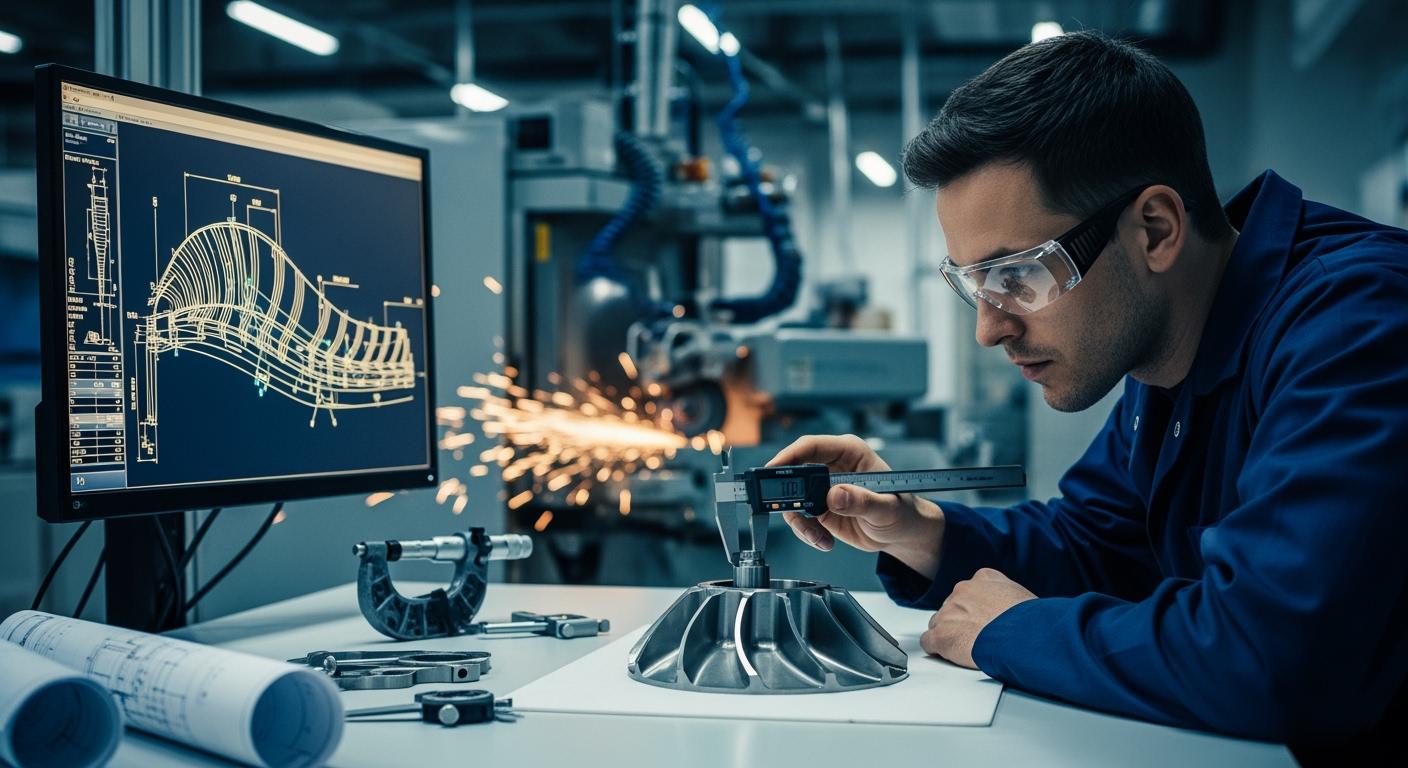
After grinding, you must inspect each blade to confirm it meets all requirements. You use advanced tools like CMMs and laser scanners to measure the final shape. These tools help you compare the blade to the original design. You look for any deviations in the profile. If you find a problem, you can fix it before the blade moves to the next step.
You should follow a clear inspection protocol:
- Clean the blade to remove dust and debris.
- Set up the blade in the inspection machine.
- Measure key points and surfaces.
- Compare results to the design specifications.
- Record all measurements and findings.
Tip: Use digital photography to capture the blade’s surface condition. This helps you track changes over time and plan maintenance.
You also need to check the environment during inspection. Temperature and humidity can affect measurement results. Automated systems can record these conditions and add them to your inspection report.
Documentation and Traceability
You must keep detailed records for every engine blade. Traceability means you can track each part from raw material to final inspection. This protects you from using counterfeit or unapproved parts. It also helps you find and fix problems if they appear later.
Here are key documentation practices you should follow:
- Keep a complete history for each part, from start to finish.
- Link every blade to its material lot, process parameters, and inspection results.
- Store certificates of compliance to show the blade meets all requirements.
- Record all tests and inspections, including who performed them and when.
- Use digital photos to document surface conditions at each stage.
Traceability supports quality assurance and regulatory compliance. You can show that you followed all procedures and used qualified personnel. You also have proof that the inspection environment met the right standards.
| Aspect | Contribution to Quality Assurance and Compliance |
|---|---|
| Comprehensive Documentation | Captures preparation procedures, environmental conditions, and personnel qualifications involved in inspections. |
| Visual Records | Digital photography provides evidence of surface conditions at each stage, aiding in evaluation and maintenance planning. |
| Personnel Qualification Records | Verifies that inspection teams have necessary certifications and training, ensuring qualified personnel conduct inspections. |
| Environmental Monitoring | Ensures optimal conditions for inspections, affecting accuracy and effectiveness. Automated systems provide timestamped records. |
Note: Good documentation and traceability give you confidence in your process. You can quickly respond to any issues and prove your commitment to quality.
Continuous Improvement in Engine Blade Grinding
Analyzing Deviations and Root Cause
You need to check for deviations in engine blade profiles to keep your grinding process accurate. Deviations can happen in many sections of a blade. You can use a table to track the types and locations of these deviations:
| Type of Deviation | Number of Blade Sections |
|---|---|
| Machining Deviations | 7 types across 13 sections |
You should use advanced inspection systems to spot these deviations early. The Blazer 2S Flex, a six-axis, non-contact inspection system, helps you measure complex blade shapes quickly and accurately. This technology lets you see where the profile does not match the design. You can then find the root cause, such as tool wear, machine misalignment, or setup errors.
To analyze root causes, follow these steps:
- Review inspection data after each grinding session.
- Compare the measured profile to the design.
- Identify patterns in the deviations.
- Check machine settings and tool condition.
- Adjust your process to fix the problem.
Tip: Regular analysis helps you catch small errors before they become big problems.
Process Optimization with Aimgrind Solutions
You can improve your grinding process by using Aimgrind’s expertise and custom solutions. Aimgrind offers diamond grinding wheels that match your specific needs. You get wheels designed for your materials and machines. This means you achieve better accuracy and longer tool life.
Aimgrind’s team helps you choose the right wheel formula and grinding parameters. You can ask for sample optimization to test new setups. The team reviews your process and suggests changes to boost efficiency. You also get support for diagnosing problems and matching parameters.
Here are ways Aimgrind supports your process optimization:
- Personalized grinding wheel selection
- Custom formula design for your materials
- On-site problem diagnosis and parameter matching
- Sample testing and feedback for continuous improvement
Note: When you work with Aimgrind, you gain a partner who helps you reach higher standards in engine blade grinding.
You can achieve high profile accuracy in engine blade grinding by following a systematic approach. Preparation, process control, inspection, and continuous improvement all play important roles. Aimgrind diamond grinding wheels help you boost productivity and maintain surface quality. Ongoing evaluation methods, such as vision sensors and robotic trajectory planning, let you adapt and keep standards high.
| Key Aspect | Details |
|---|---|
| Optimization Framework | Integrates toolpath planning and process parameter regulation. |
| Methodology | Uses iterative algorithms and global material removal models. |
| Experimental Results | Improved accuracy by over 32%, with mean surface error of 0.0143 mm. |
- Advanced grinding tools increase material removal rates and reduce tool wear.
- Vision sensors and compensation strategies help you correct errors in real time.
- Robotic trajectory planning ensures accurate polishing paths and profile consistency.
Keep evaluating your process and tools. You will maintain high standards and achieve reliable results.
FAQ
What makes profile accuracy important in engine blade grinding?
You need high profile accuracy to keep the engine running safely. Small errors in the blade profile surface can cause engine vibration or damage. Accurate grinding helps you avoid costly repairs and keeps the engine working at its best.
How do Aimgrind diamond grinding wheels help with engine blade grinding?
You use Aimgrind diamond grinding wheels to get precise shapes on engine blades. These wheels last longer and keep their form. You achieve better surface quality consistency and reduce downtime. This helps you maintain engine performance.
What is the best grinding method for engine blade profiles?
You should use CNC abrasive belt grinding for engine blade profiles. This grinding method gives you control and repeatability. You can follow complex shapes and keep the engine blade profile accurate. This method also reduces errors.
How do you check the quality of the engine blade profile surface?
You use tools like laser scanners and CMMs to measure the engine blade profile surface. These tools give you fast and accurate results. You compare the data to the design. You make sure the engine blade meets all requirements.
How can you improve the grinding process for engine blades?
You can improve the grinding process by using advanced tools and real-time monitoring. You train operators and use feedback systems. You work with experts to choose the right wheels. This helps you keep engine blades accurate and reliable.
Contact Us
For More Grinding Solution or Customized Abrasive Tools