Why Wheel Changes Don’t Stop Grain Loss: Force vs Bond Strength
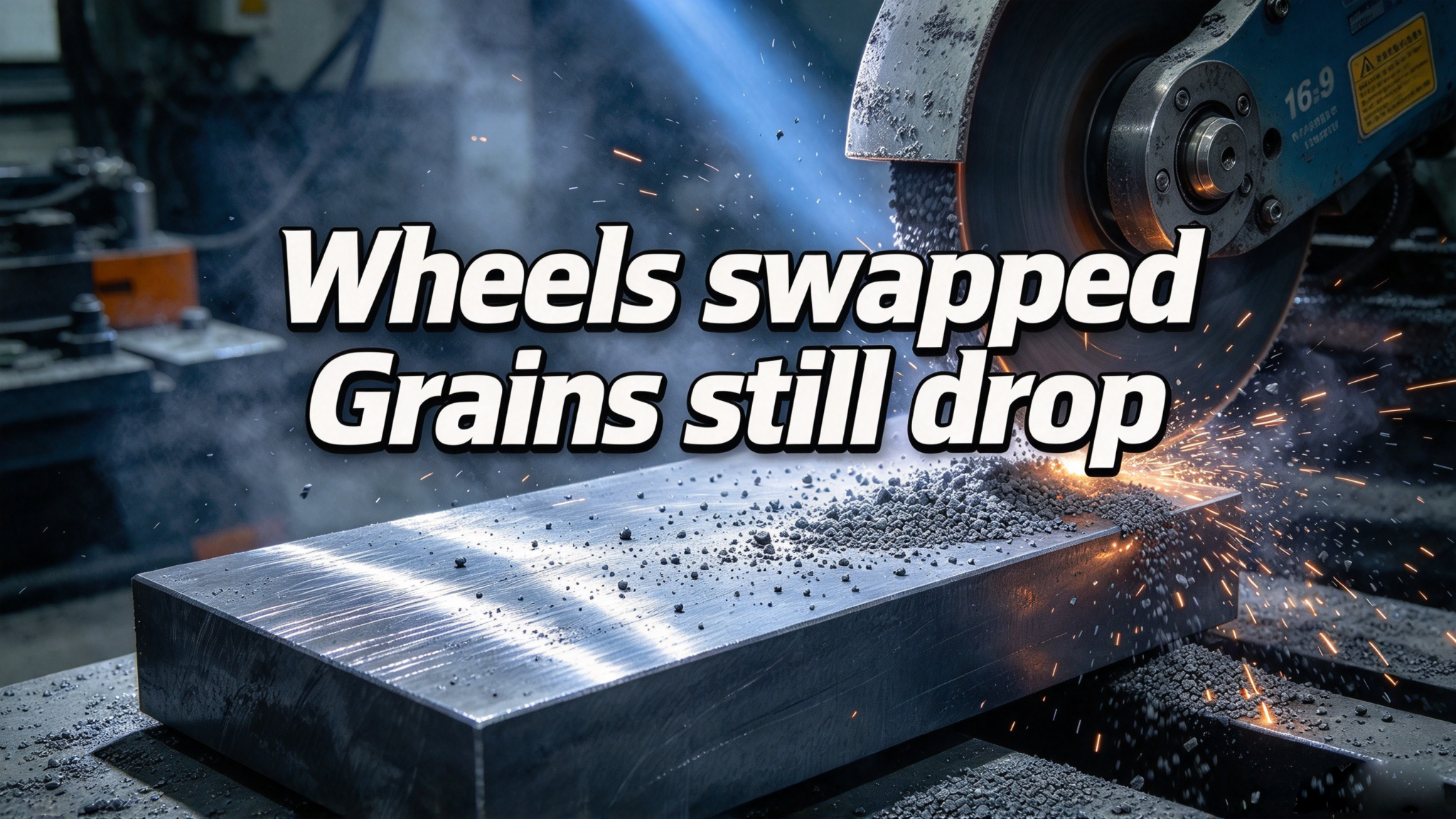
You change the wheel. The grains still come off. A layer of grit on the table, random deep scratches on parts, sizes drifting. A harder grade holds for two days, then the shedding returns. Different brand, different grade, different grit — one lap around suppliers, same result.
In most of these cases, grain loss is not a wheel problem. It is a force problem: the load on each individual grain has exceeded the bond’s holding strength. Until that load comes down, any wheel will shed. This guide walks through the five checks that actually stop it — and explains why “going harder” can make it worse.
First Check: Self-Sharpening or Grain Pullout?
A grinding wheel is designed to renew itself. Grains dull, fracture, and make way for fresh cutting edges. That is self-sharpening, and the small, steady, even loss that comes with it is normal. The wheel stays sharp because of it.
Grain pullout is different. Grains are ripped out whole before they ever dulled, leaving voids, bald patches, and rounded wheel edges. Same visible symptom — grit on the table — but a completely different cause.
Three Quick Checks
| Check | Normal Self-Sharpening | Abnormal Grain Pullout |
|---|---|---|
| Amount | Small, steady, even | A layer of grit after a few parts |
| Distribution | Even wear across the face | Local bald patches, corner rounding |
| Part symptoms | Stable surface quality | Random scratches, drifting sizes |
| Spindle power | Stable in steady state | Climbs, then fluctuates sharply |
There is also a time dimension. If shedding is worst in the first few parts after dressing, check the dressing first. If the wheel ran fine for a while and then started shedding, check whether it has reached the end of its steady wear stage.
Expert Tip: Do not treat normal self-sharpening as a fault. If you chase it with a harder wheel, you close the self-sharpening channel and trade grain loss for glazing, burning, and a spindle power climb. The first step is always to confirm which one you are looking at.
The Bill Grain Loss Hands You
Once you confirm abnormal pullout, the next question is what it costs. The first cost is scratches. Released grains get flushed into the grind zone, roll between wheel and workpiece, get pressed into the surface, and drag out random deep gouges. Positions are never fixed and never repeat between parts. That is three-body wear, and it is one of the most visible consequences of grain loss.
The second cost is a feedback loop. Fewer working grains means more load on every grain that remains. The more a wheel sheds, the faster it sheds. Many sudden failures on the shop floor are this loop spinning up.
The third cost is size drift. Local grain loss makes the wheel out-of-round, and dimensions start moving up and down. The fourth is cost: grinding ratio collapses, wheel consumption doubles, and scrapped parts come along for the ride.
Safety note: If grain loss suddenly accelerates with new noise or rising vibration, stop the machine. That is the signature of an unbalanced wheel heading toward failure — not a process problem to debate. Check the guard, check the wheel, and do not restart until you know why.
Expert Tip: Random scratches and size drift are often treated as separate problems. In a grain-loss situation, they are symptoms of the same root cause. Fix the force balance and both tend to fade together.
The Force Side: Why Changing Wheels Can’t Help
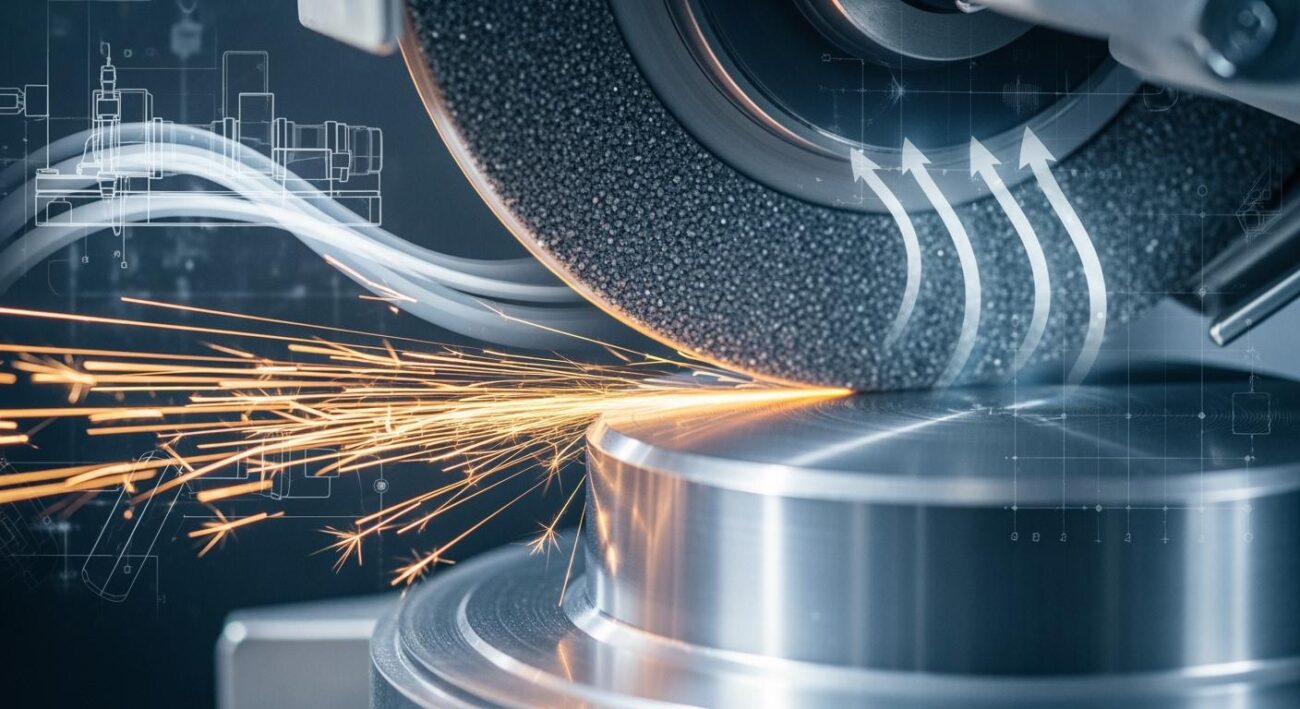
Everything on the force side hangs off one lever: the thicker the chip each grain takes, the higher the force on that grain — and force scales with the square of chip thickness. Three things make chips thicker: lower wheel speed, faster workpiece feed, and deeper cuts.
Low Wheel Speed: The Most Overlooked Culprit
Below the wheel’s recommended range, every grain takes a thicker bite. The sneaky detail: as a wheel wears down toward its minimum diameter, peripheral speed drops at the same rpm. Grain loss that gets worse late in the wheel’s life is often just this.
And when speed is too low, every brand of wheel is overloaded the same way. That is why changing wheels doesn’t help. Common reference ranges: vitrified alumina wheels often run 25–35 m/s, while CBN wheels run higher. The exact range depends on the wheel and the manufacturer’s recommendation.
Heavy Depth of Cut on a Fine-Grit Wheel
This is the same math from the other side: small grains, shallow anchoring, huge chips. A finishing wheel doing roughing work will shed in patches. The fix is giving the roughing work back to the roughing wheel, not replacing the finishing wheel.
Vibration and Interrupted Cuts
Steady grinding force below the bond limit does not mean you are safe. Interrupted cuts — keyways, splines, interrupted surfaces — add impact peaks that can be multiples of the average and snap bond bridges outright. On interrupted-cut work, impact resistance matters more than cutting efficiency when selecting a wheel.
Over-Aggressive Dressing
Too deep, too fast: the diamond dresser breaks bond posts across the surface and leaves grains standing on loose footing. They look present, but they are already loose. The first few parts after dressing shed worst. The standard practice is light and repeated passes, followed by a break-in pass on scrap material.
Loading and Coolant
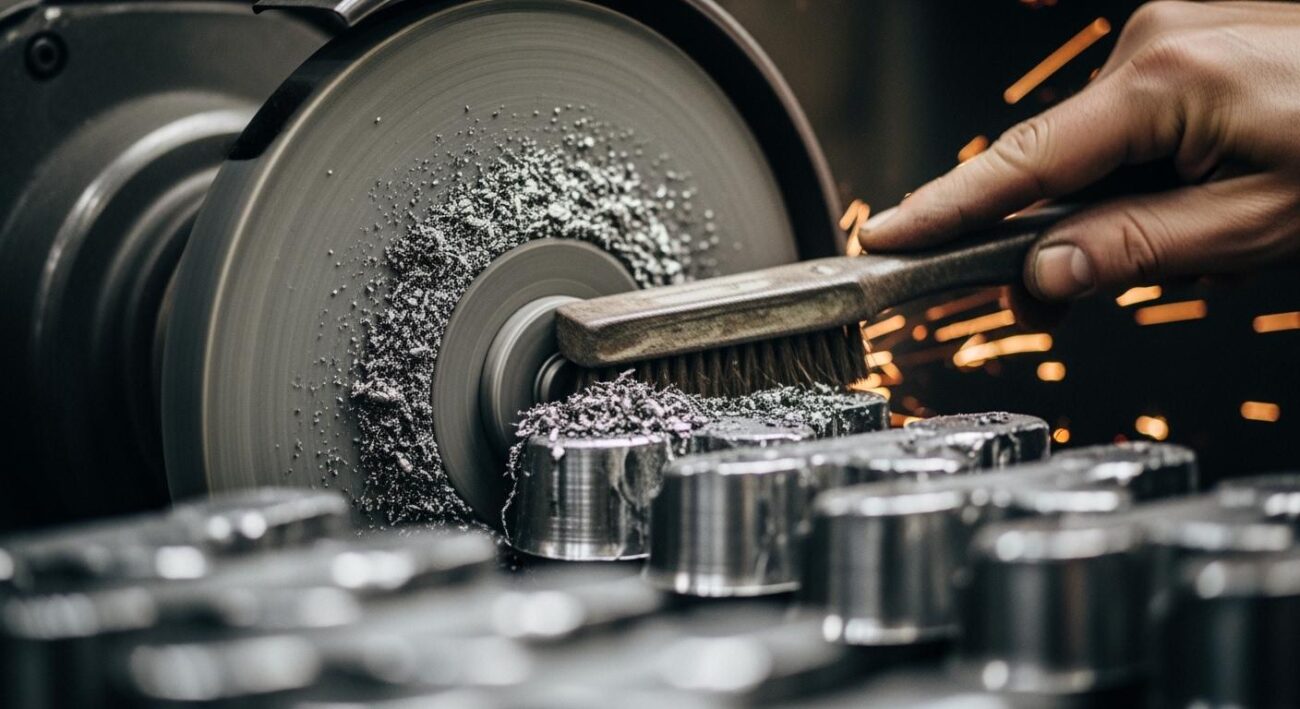
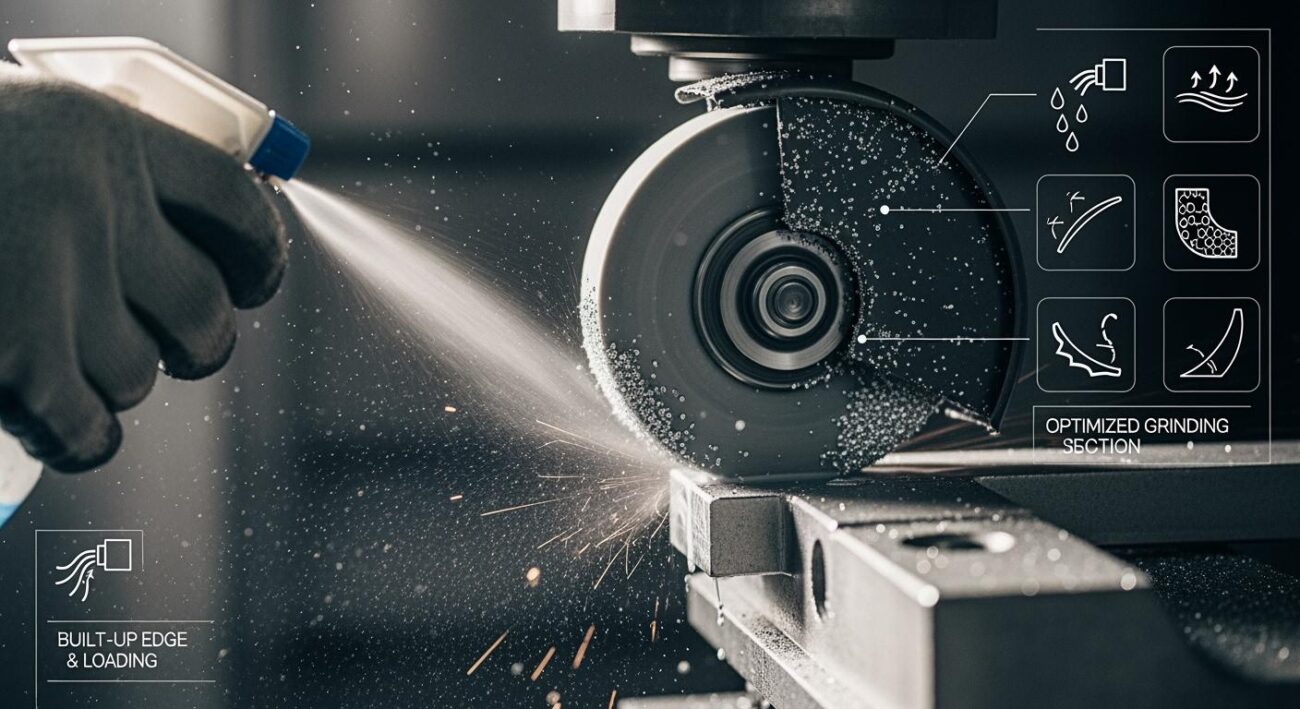
In sticky materials, chips fill the pores, grinding force climbs, and grains get pushed out whole. Check structure grade first, then hardness, then abrasive. On the coolant side: resin bonds soften with heat. Starved coolant or dry grinding drops holding strength right at the contact zone. Never run resin wheels dry.
| Force-Side Factor | Mechanism | Field Sign |
|---|---|---|
| Low wheel speed | Thicker chip per grain, force scales with square | All brands shed; worse as wheel diameter shrinks |
| Heavy depth of cut / feed | Thicker chip per grain | Shedding starts after load increases |
| Vibration / interrupted cut | Impact peaks snap bond bridges | Interrupted surfaces, spindle runout, chatter marks |
| Over-aggressive dressing | Bond posts broken across the surface | Worst shedding in first parts after dressing |
| Loading | Force pushed up, grains pushed out whole | Shiny wheel face, sticky material |
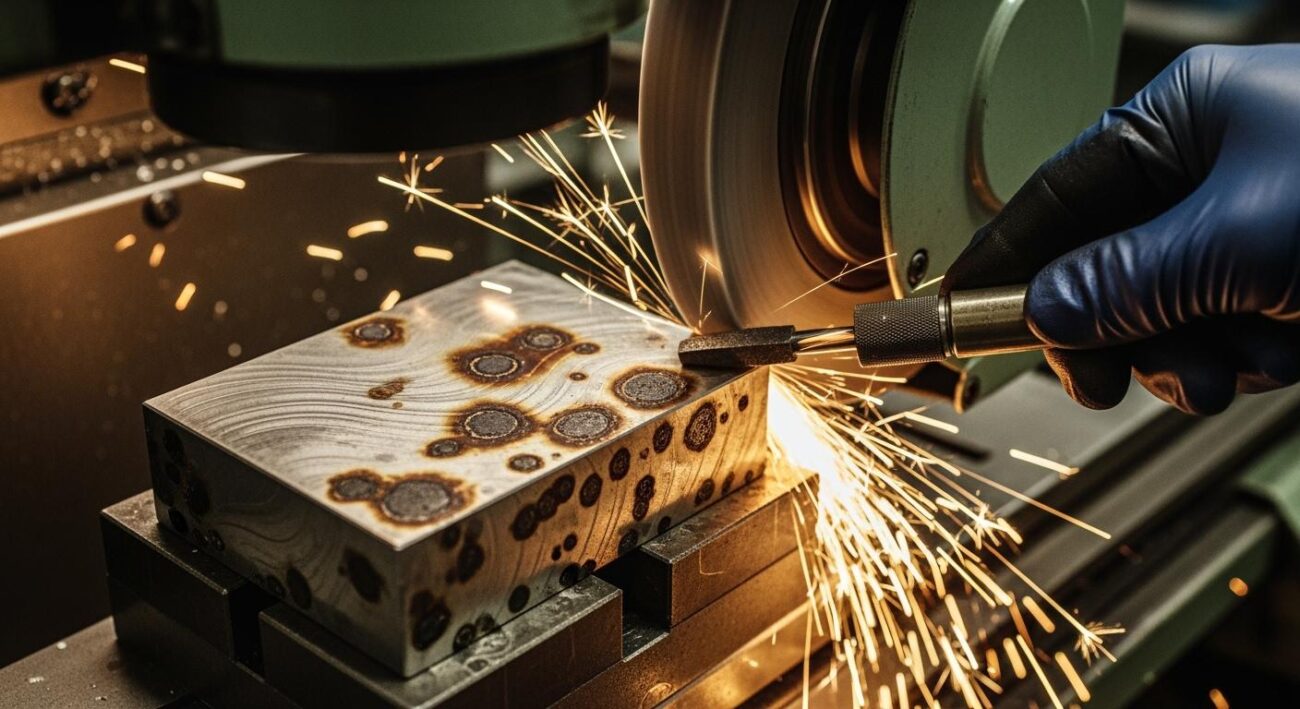
| Poor coolant | Resin bond softens, holding strength drops | Shedding together with burn; worst when dry |
Expert Tip: Recalculate wheel speed for the current diameter, not the new-wheel diameter. A wheel that ran fine at 35 m/s when new may be running well below its recommended range by the time it is half worn. That alone can explain late-life grain loss.
The Holding Side: What Is Actually in the Wheel
Here is the counterintuitive part: too-soft wheels shed grains, and too-hard wheels shed too. A soft wheel lets go of grains before they have done their work. An over-hard wheel holds dull grains hostage, grinding force builds and builds, until whole grain clusters tear out at once. That is the source of the “go harder, shed faster” loop.
If the wheel was already hard to cut with and spindle power was climbing before the shedding started, harder is the wrong direction.
Two More Traps
Grade letters are only comparable inside the same bond system. A K in resin and a K in vitrified are not the same holding strength. “I went harder” sometimes just means “I bought the same letter twice.” Judge hardness by grinding behavior, not by the stamp.
Resin bonds age. Wheels that sat in stock for years absorb moisture and lose strength quietly. If a resin wheel sheds and it has been in the warehouse for years, check storage and shelf life before blaming the formulation. That step costs nothing.
Abrasive Toughness
If grains come out whole with clean fractures, the abrasive may be too tough for the job. Impacts that cannot fracture the grain get carried entirely by the bond. A more friable abrasive — microcrystalline alumina, polycrystalline CBN — that microfractures on demand often fixes pullout better than another hardness step.
| Hardness Zone | Failure Mode | Direction |
|---|---|---|
| Soft end (e.g., F, G) | Grains release before doing work | Going harder is correct |
| Matched grade | Self-sharpening dominates | Keep, adjust process |
| Hard end (e.g., T, U) | Dull grains held, force builds, clusters tear out | Reduce hardness, do not add more |
Expert Tip: If grain loss started after the wheel became hard to cut with and spindle power was already climbing, do not add hardness. You are already in the over-hard zone. The fix is on the process side, not the wheel side.
What to Do, in Order
Work through this sequence: reduce force first, then check holding strength. Do not jump to the wheel until the first four steps are clean.
| Step | Check | Action |
|---|---|---|
| 1 | Wheel speed | Compare to recommended range; recalculate for current diameter |
| 2 | Dressing | Light and repeated, followed by a break-in pass |
| 3 | Coolant | Flow on the contact zone; no dry grinding on resin |
| 4 | Parameters | Drop depth of cut one step and watch |
| 5 | Wheel itself | Storage and shelf life first, then hardness, structure, abrasive — one variable at a time |
Going harder rescues a genuinely soft wheel. It does nothing for an overloaded grain — except trade grain loss for glazing and burning. Before adding hardness, answer one question: before the shedding started, was the wheel cutting freely or was it already struggling? Only if it was cutting freely does “too soft” deserve suspicion.
Change one variable at a time. Grind 3 to 5 parts, compare grain loss rate, spindle power, and scratch count, then move to the next variable. If you change three things at once, the shedding may stop without you knowing which change did it — and the next recurrence will be just as confusing.
Expert Tip: The wheel that stops your grain loss is rarely the next one you buy. It is the one already on the machine, running with the load brought back under the bond’s holding strength.
Frequently Asked Questions
Why does a harder wheel sometimes shed more, not less?
✅ An over-hard wheel holds dull grains in place. Grinding force keeps building until whole grain clusters tear out at once. If the wheel was already hard to cut with and spindle power was climbing before the shedding started, adding hardness pushes you further into that failure mode.
How do I know if my wheel speed is too low?
✅ Compare the current peripheral speed against the wheel manufacturer’s recommended range — not against a number you remember from another wheel. Recalculate for the current diameter, because speed drops as the wheel wears. If all brands shed the same way and the wheel is toward the end of its life, low speed is a prime suspect.
Can a resin wheel that sat in storage for years cause grain loss?
✅ Yes. Resin bonds absorb moisture and lose strength over time. If a resin wheel sheds and it has been in stock for years, check storage conditions and shelf life before blaming the formulation. This is one of the first things to check when a brand-new wheel sheds from the first part.
What does it mean if grains come out whole with clean fractures?
✅ It usually means the abrasive is too tough for the job. Impacts that should microfracture the grain are instead carried entirely by the bond, which eventually lets go. A more friable abrasive — microcrystalline alumina or polycrystalline CBN — often fixes this better than another hardness step.
When should I stop the machine immediately?
✅ If grain loss suddenly accelerates with new noise or rising vibration, stop the machine. That is a sign of an unbalanced wheel heading toward failure, not a process problem to troubleshoot while running. Check the wheel and guard before restarting.
Key Takeaways
- Grain loss is usually a force problem, not a wheel problem — the load per grain has exceeded the bond’s holding strength.
- Separate normal self-sharpening from abnormal pullout before changing anything.
- Low wheel speed is the most common and most overlooked cause. Recalculate for current diameter.
- Too-hard wheels shed too — dull grains are held until clusters tear out.
- Grade letters are only comparable within the same bond system.
- Check speed, dressing, coolant, and parameters before touching the wheel.
- Change one variable at a time and verify with grain loss rate, spindle power, and scratch count.
- Sudden acceleration with noise or vibration is a safety stop, not a troubleshooting step.
More grinding questions? Need a custom wheel solution?
Contact Us →