

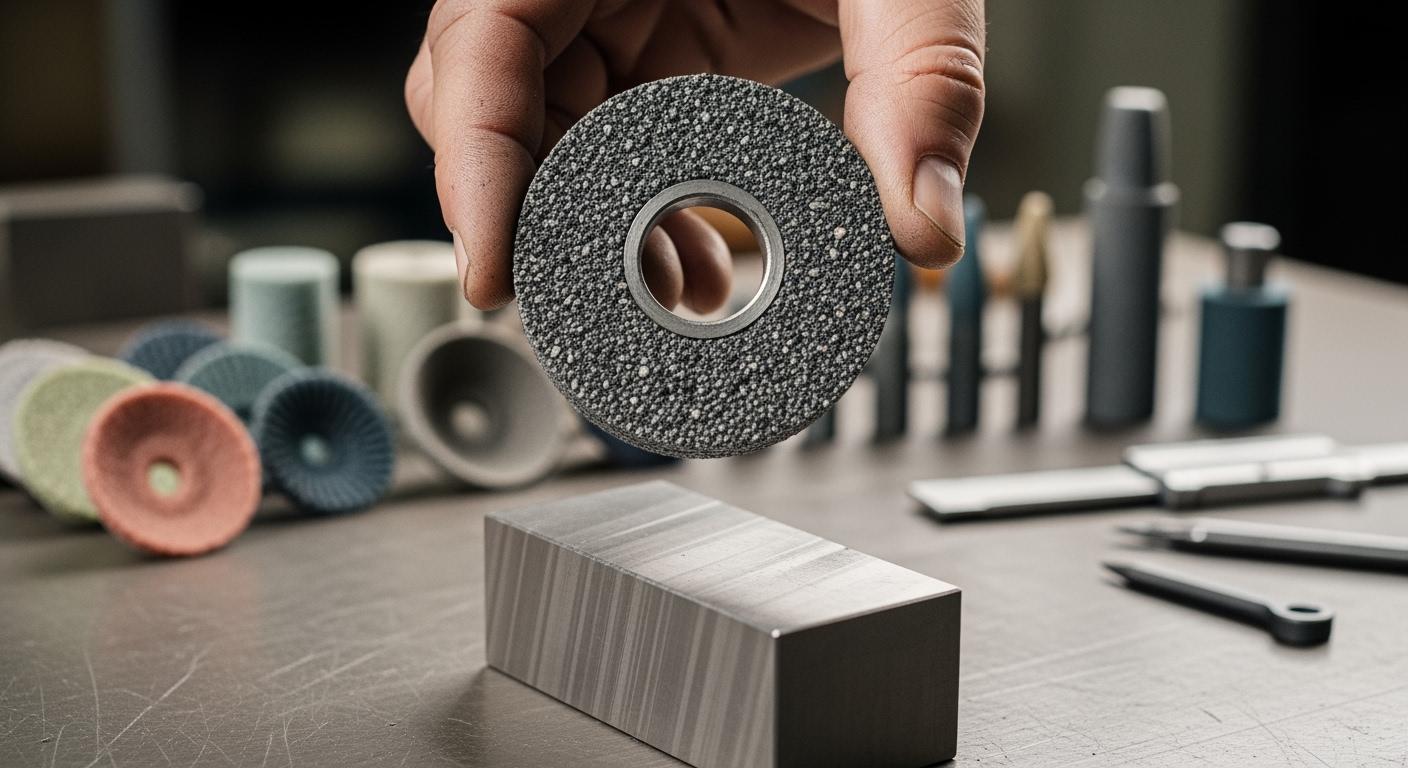
You should select grinding wheels like diamond, zirconia alumina, ceramic, or aluminum oxide for die steel. Each type offers strong cutting power and stands up to the hardness of steel. Die steel needs a grinding wheel that handles heat and keeps a smooth finish. Different types of grinding wheels work better for certain steel grades and jobs. Aimgrind helps you find the right grinding wheel for tough-to-grind metals. You get expert advice and custom solutions for every application.
Key Takeaways
- Choose grinding wheels like diamond, zirconia alumina, ceramic, or aluminum oxide for die steel.
- Match the wheel to the steel’s hardness and heat resistance for effective grinding.
- Select coarse grits for fast removal and fine grits for a smooth finish.
- Avoid silicon carbide wheels for standard steel to prevent rapid wear.
- Consult Aimgrind for expert advice and custom grinding solutions.
Die Steel Properties and Grinding Challenges
Hardness and Heat Resistance
When you work with die steel, you face unique challenges. The hardness of the material makes it tough to grind. You need to choose grinding wheels that can handle this strength. Here are some key properties that affect your grinding process:
- Hardness: Die steel resists scratches and dents. You need wheels with bonds that match this toughness.
- Toughness: This property helps steel absorb energy and avoid breaking. Strong bonds in your grinding wheel help manage high forces.
- Tensile Strength: Die steel can stretch without snapping. Sharp cutting action from the wheel is important.
- Thermal Conductivity: Die steel does not move heat away quickly. You need wheels that keep grinding cool.
- Chemical Reactivity: Some steels react with abrasives at high temperatures. The right wheel avoids unwanted reactions.
Grinding hard steel with the wrong wheel can cause problems. Softer wheels let dull grains break away, exposing new, sharp grains. This helps reduce heat and prevents burning or cracks on your workpiece. Grinding always creates friction, which leads to heat. Too much heat can change the steel’s surface, cause cracks, or even weaken the part.
Tip: Always watch for signs of overheating, like burn marks or discoloration. These can mean your grinding wheel is too hard or your process needs adjustment.
| Evidence Description | Impact on Heat Resistance |
|---|---|
| Heat checks, also known as microcracks, can result in premature cracking and failure. | Improper grinding can lead to heat-related issues. |
| Soft-bond, coarse-grit grinding wheels are preferred for premium grades of tool steel. | Wheel type affects heat generation during grinding. |
| Hard-bond, fine-grit wheels can cause burning and heat checking of the die section. | Certain wheel types can make heat issues worse. |
Surface Finish and Application Needs
You often need a smooth surface finish on die steel parts. The finish affects how parts fit together, how long they last, and how well they resist wear. In many industries, you measure surface roughness using values like Ra and Rz. A smoother finish means less friction and better sealing.
For precision work, you may need a surface roughness below 10 microinches Ra. Grinding helps you reach these fine finishes, especially when machining cannot. Even small changes in finish can cause problems, like leaks in hydraulic systems or early wear in bearings.
Different grinding wheels give different finishes. Vitrified wheels work well for precision grinding. Aluminum oxide wheels balance cost and performance. Zirconia alumina wheels last longer and handle rough grinding. Ceramic wheels are best for hard steels. Fine-grit wheels (80-120) polish the surface, while coarse grits remove material quickly.
| Roughness Grade (N) | Ra (µm) | Ra (µin) | Typical Process Example |
|---|---|---|---|
| N4 | 0.2 | 8 | Grinding / Polishing |
| N5 | 0.4 | 16 | Fine Milling / Turning |
| N6 | 0.8 | 32 | Standard Milling / Turning |
Remember, the right grinding wheel helps you achieve the finish your application needs. Always match your wheel to the job for the best results.
Types of Grinding Wheels for Die Steel
Aluminum Oxide and Zirconia Alumina Wheels
You will find aluminum oxide and zirconia alumina wheels among the most common types of grinding wheels for die steel. Aluminum oxide grinding wheels work well for general steel grinding. They offer a sharp, fast initial cut and remain cost-effective for many jobs. These wheels use aluminum oxide grains, which provide consistent hardness and are easy to find in many grit sizes. You can use them for a wide range of applications, from automotive body work to general fabrication.
Zirconia alumina wheels use a special zirconia alumina grain. This type of wheel cuts fast and stays sharp because it self-sharpens during use. You can rely on zirconia alumina for heavy-duty grinding and rough material removal. These wheels hold up under high pressure and extreme temperatures, making them ideal for tough jobs.
| Wheel Type | Cutting Ability | Durability | Suitability for Grinding Applications |
|---|---|---|---|
| Zirconia Alumina | Fast cut, self-sharpening, consistent | Holds up under high pressures and extreme temperatures | Ideal for aggressive material removal and rough grinding on various steels |
| Aluminum Oxide | Sharp, fast initial cut, cost-effective | Dulls over time, less longevity | Commonly used for general-purpose grinding on steel, iron, and other metals |
Aluminum oxide remains the most popular choice for general metal grinding wheel types because it balances cost and performance. Zirconia alumina costs more but gives you better toughness and longer life for demanding jobs.
You should avoid silicon carbide wheels for standard steel. These wheels can react with iron at high temperatures, which leads to rapid wear and poor results.
Ceramic Grinding Wheels
Ceramic grinding wheels bring advanced technology to your grinding process. These wheels use a proprietary ceramic alumina grain. This grain gives you exceptional hardness, which is important for grinding hard materials like die steel. Ceramic wheels stay sharp because they self-sharpen as you use them. This feature means you get a consistent cut and less downtime for wheel changes.
Ceramic wheels also run cooler than many other types of grinding wheels. This helps prevent heat-related damage to your workpiece. You can use these wheels for aggressive grinding without worrying about premature wear. The advanced bond technology in ceramic wheels holds the grains in place, so you get a long wheel life and high performance.
If you need a grinding wheel for hard-to-grind metals, ceramic wheels are a smart choice. They give you a high cut rate and help you achieve a fine finish on die steel.
Diamond Grinding Wheels by Aimgrind
When you need the highest precision and durability, diamond grinding wheels from Aimgrind stand out. These wheels use a diamond abrasive layer, which gives you unmatched cutting efficiency. You can use diamond grinding wheels for hard alloys, ceramics, and composites. They work well for both wet and dry grinding processes.
Aimgrind offers diamond grinding wheels in different bond types, such as resin, metal, and vitrified. You can choose the right bond for your specific application. These wheels keep their shape and sharpness, so you get consistent results over time. You will notice faster material removal, reduced grinding forces, and improved surface finishes.
Aimgrind’s diamond grinding wheels are available in many sizes and configurations. You can even request custom wheels to match your equipment and process. If you want to boost productivity and quality, Aimgrind’s diamond grinding wheels are a valuable investment.
Tip: For die steel, always consider the chemical compatibility of your abrasive. Diamond abrasives can react with iron in steel, which may cause rapid wear. For some die steels, cBN (cubic boron nitride) wheels are preferred because they do not react with iron.
Choosing a Grinding Wheel for Hard-to-Grind Metals
Choosing a grinding wheel for hard-to-grind metals like die steel means you must match the wheel to the material’s properties. You should look at the hardness, toughness, and heat resistance of the steel. You also need to think about the finish you want and the speed of your grinding process.
Here are some industry guidelines for selecting the right grinding wheels:
- Abrasive Material: Use aluminum oxide for general steel, zirconia alumina for tougher jobs, and ceramic aluminum oxide for precision.
- Grit Size: Pick coarse grits for rapid removal and fine grits for finishing.
- Wheel Hardness: Choose hard wheels for longer life and soft wheels for quick stock removal.
- Bond Type: Select vitrified bonds for precision and organic bonds for high-speed applications.
You should always match the abrasive material to the workpiece. For die steel, conventional abrasives like aluminum oxide or zirconia alumina work well. For superabrasives, cBN wheels are often the best choice because they resist chemical reactions with iron.
You will find many types of grinding wheels made for all metals, including type 27 grinding wheels and type 28 grinding wheels. Each type has a unique shape and use. Type 27 grinding wheels are flat and work well for surface grinding. Type 28 grinding wheels have a concave shape, which helps with aggressive stock removal.
Note: Never use silicon carbide wheels on standard steel. The carbon in silicon carbide can dissolve into the steel at high temperatures, causing the wheel to break down quickly.
When you follow these guidelines, you can select the best abrasive grinding wheels for your application. Aimgrind can help you with custom solutions and expert advice for any grinding challenge.
Practical Guide to Choosing a Grinding Wheel
Matching Wheel to Steel Hardness
When you start choosing a grinding wheel for die steel, you must match the wheel to the hardness of the steel. Harder materials need wheels with stronger bonds, like vitrified or metal. Tough materials require resinoid bonds for extra strength. If the steel does not conduct heat well, you should use a wheel that cuts cooler, such as one with a porous vitrified bond. Remember, material type determines grinding wheel type. For mild steel, general-purpose aluminum oxide grains work best. For stainless steel, pick wheels that are free from iron, sulfur, and chlorine to avoid contamination. For cast iron, silicon carbide wheels are a good choice because of their sharpness.
Selecting Grit Size and Bond Type
You must also think about grit size and bond type. Coarse grits remove material quickly, while fine grits give a smoother finish. For soft metals like aluminum, use a coarser grit and a softer grade to prevent loading. The type of grinding—rough, precision, or finishing—will guide your choice. Always check that the wheel matches your machine’s RPM and arbor size. This keeps your grinding applications safe and effective.
Tip: Never ignore coolant and lubrication. These help prevent overheating and extend the life of your grinding wheels.
Checklist for Grinding Wheel Selection
You can follow these steps for choosing a grinding wheel for die steel:
- Identify the material you are working with.
- Determine the right size and style of grinding wheel.
- Select the abrasive based on material type.
- Check the hardness and condition of the workpiece.
- Decide if you need roughing or finishing.
- Match the wheel’s specifications to your machine.
- Confirm the wheel fits your industrial-grade grinding requirements.
Common mistakes to avoid include:
- Choosing the wrong wheel for your application.
- Running the wheel at the wrong speed.
- Forgetting to use coolant.
- Not dressing the wheel.
- Using incorrect feed rates.
- Storing wheels poorly.
- Allowing contaminants on the wheel.
| Service Type | Description |
|---|---|
| Technical Support | Get help choosing a grinding wheel for your needs and solving problems. |
| Consultation | Receive expert advice on grinding processes and technical questions. |
| Custom-Made Wheels | Order wheels designed for your unique materials and grinding requirements. |
Aimgrind offers support and custom solutions for all grinding wheels. You can contact Aimgrind for help with any grinding challenge.
You should select grinding wheels based on the steel’s hardness, grain size, and bonding material. For die steel, you get the best results when you match the wheel grade to the workpiece. Custom diamond grinding wheels from Aimgrind use advanced brazing and even diamond distribution, which boost tool life and production.
- You benefit from stable performance and lower costs.
- You can consult with Aimgrind for expert advice, technical support, and custom grinding wheels for your unique needs.
Industry experts recommend understanding grit size, bond type, and manufacturer quality before choosing grinding wheels.
FAQ
What is the best grinding wheel for die steel?
You should use diamond, ceramic, zirconia alumina, or aluminum oxide wheels. Each type works well for different jobs. Diamond wheels give you the highest precision and durability.
How do you choose the right grit size for die steel?
Pick coarse grits (36-60) for fast material removal. Choose fine grits (80-120) for a smooth finish. Always match the grit to your grinding goal.
Can you use diamond grinding wheels on all types of die steel?
You can use diamond wheels on many hard materials. For some die steels, cBN wheels work better because they do not react with iron.
Why does wheel bond type matter?
The bond holds the abrasive grains. Strong bonds like vitrified or metal last longer on hard steel. Softer bonds release grains faster for cooler grinding.
Tip: Always check your machine’s speed and wheel compatibility before starting.
Contact Us
For More Grinding Solution or Customized Abrasive Tools