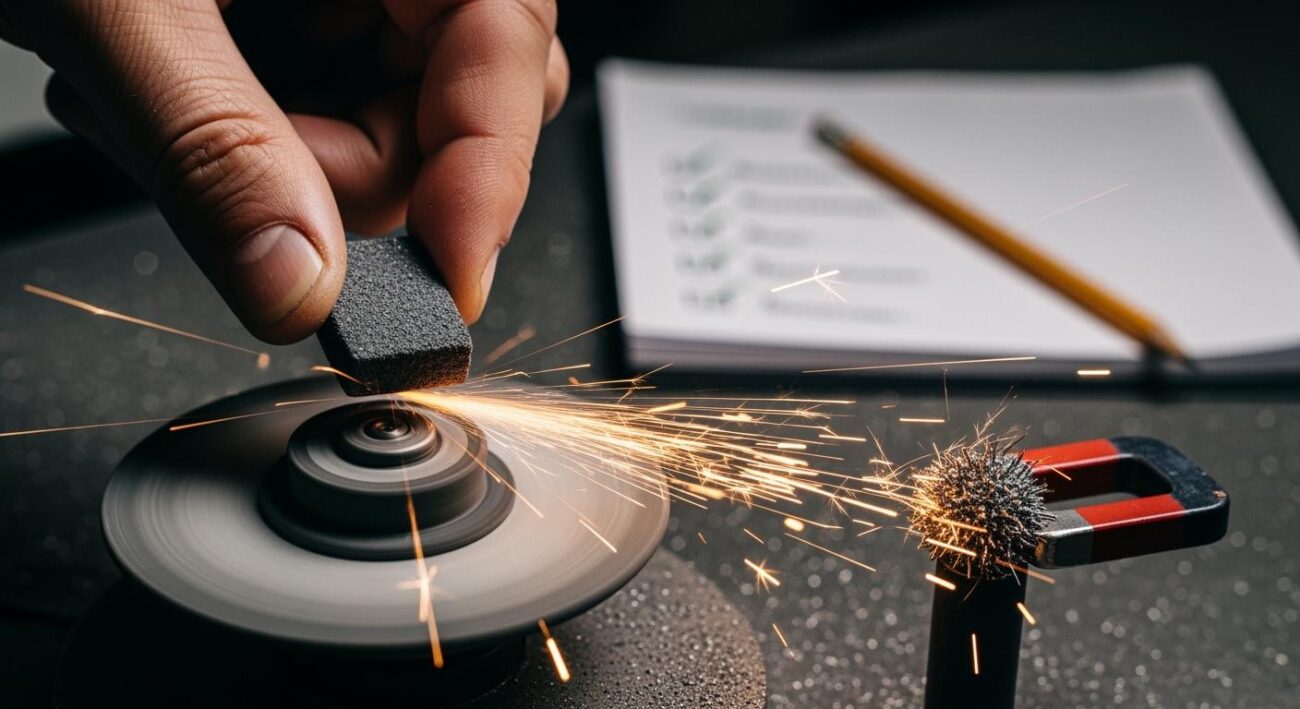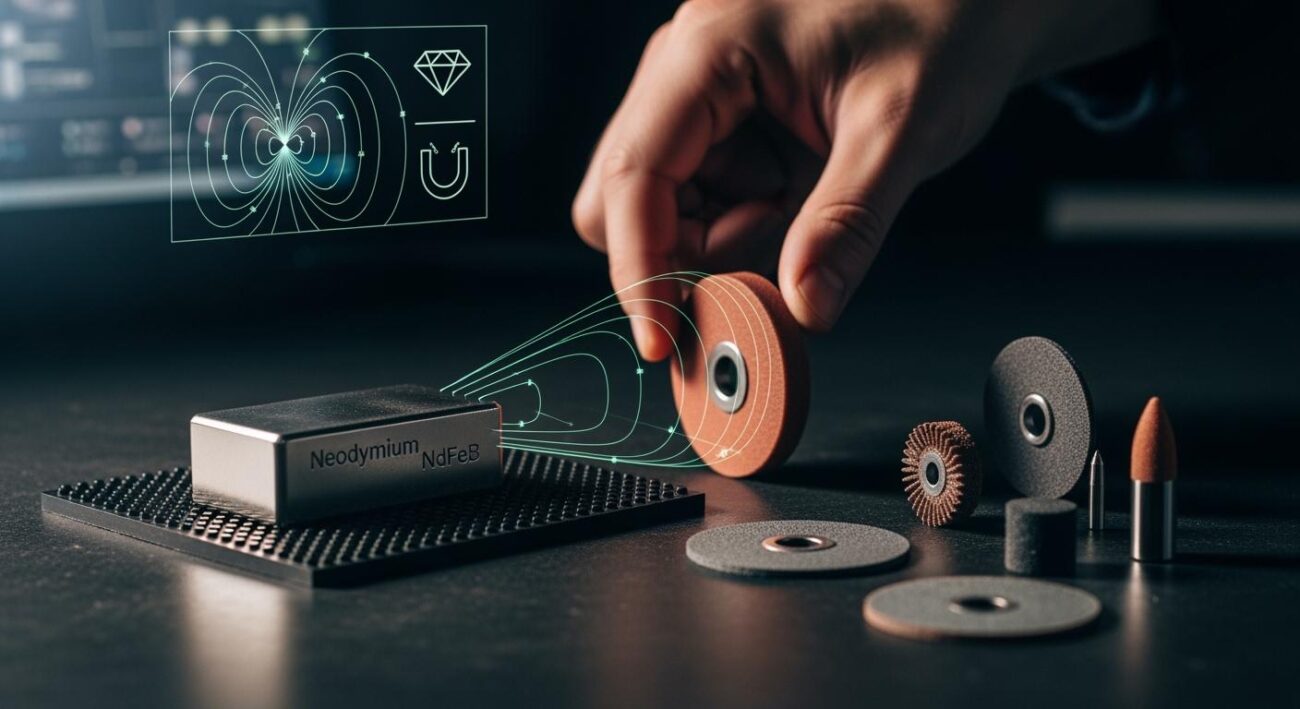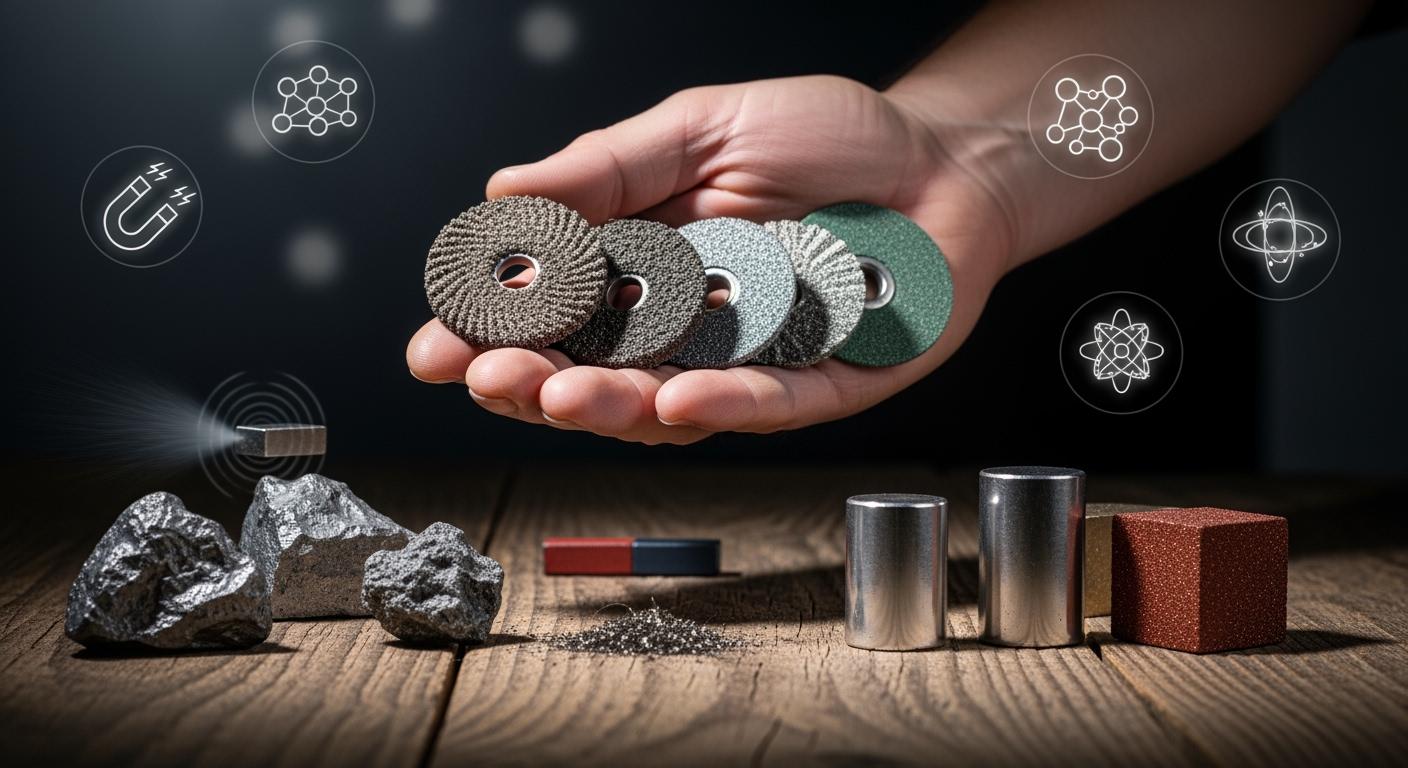
You need to select grinding wheels based on the type of magnetic material you work with. Matching the grinding wheel to the material improves production efficiency and product quality. For example:
- CBN wheels work well with ferromagnetic magnets because they resist heat and cut efficiently.
- Diamond wheels shape NdFeB magnets with high hardness and handle strong forces.
- Choosing the right wheel specification for magnet size and finish matters.
Aimgrind provides custom grinding solutions and diamond grinding wheels for precision and durability.
Key Takeaways
- Identify the type of magnetic material before selecting a grinding wheel. This ensures you choose the right wheel for optimal performance.
- Use diamond grinding wheels for hard and brittle materials like NdFeB and ferrite magnets. They provide durability and a smooth finish.
- Consider grit size and wheel hardness. Coarse grits remove material quickly, while fine grits create a polished surface.
- Select the appropriate bond type for your grinding wheel. Vitrified bonds offer high efficiency, while resin bonds are better for polishing.
- Maintain your grinding wheels regularly. Clean and inspect them to ensure consistent performance and avoid costly replacements.
Material Type Determines Grinding Wheel Type
Identifying Magnetic Material Types
You need to know what kind of magnetic material you are working with before you select grinding wheels. Each material has unique properties. Here are the main types you might see in industrial grinding:
- Neodymium Iron Boron (NdFeB)
- Samarium Cobalt (SmCo)
- Alnico
- Ceramic (Ferrite)
- Samarium Iron Nitride (Sm2Fe17N3)
- Dysprosium (Dy)-Free magnets
You can start by checking the material label or asking your supplier. Aimgrind helps you identify these materials so you can match the right grinding wheel to your needs.
Hard vs. Soft Magnetic Materials
Magnetic materials fall into two groups: hard and soft. Hard magnets keep their magnetism for a long time. Soft magnets lose their magnetism easily. You must know which group your material belongs to because it affects how you grind it.
- Hard magnets, like NdFeB and SmCo, need tough grinding wheels.
- Soft magnets, such as some ferrites, require wheels that can handle their brittleness.
Aimgrind uses its experience to diagnose your material type. This ensures you get the best grinding wheel for your process.
Ferrite and Rare Earth Magnets
Ferrite and rare earth magnets have different grinding needs. You can see the differences in the table below:
| Magnet Type | Machining Difficulty | Cost Implications |
|---|---|---|
| Neodymium | Easier to machine | Cost driven by machining process |
| Ferrite | More brittle, harder | More expensive for complex parts due to machining challenges |
Ferrite magnets are very hard and brittle. Only diamond abrasives work well for grinding ferrite magnets. Rare earth magnets, like NdFeB, are easier to machine but still need strong wheels. Aimgrind offers diamond grinding wheels that handle both types with precision.
Remember, material type determines grinding wheel type. Aimgrind’s experts help you select grinding wheels that match your magnetic material for the best results.
Select Grinding Wheels for Magnetic Materials
When you select grinding wheels for magnetic materials, you need to know how each type works with your material. Each grinding wheel has its own strengths. You can make better choices when you understand these differences.
Aluminum Oxide Grinding Wheels
You often use aluminum oxide grinding wheels for softer magnetic materials. These wheels work well with soft ferrites and some types of Alnico magnets. They give you a smooth finish and are easy to use. You can use them for general grinding tasks. If you want to shape or smooth soft magnets, this type is a good choice. However, they do not last long when you use them on hard or brittle magnets.
Silicon Carbide Grinding Wheels
Silicon carbide grinding wheels are harder than aluminum oxide wheels. You can use them for grinding harder ferrite magnets. They cut faster and handle brittle materials better. If you need to grind ceramic or ferrite magnets, silicon carbide wheels help you get a clean surface. They also work well for rough grinding. You should not use them for rare earth magnets because they wear out quickly and may not give you the best finish.
Diamond Grinding Wheels by Aimgrind
Diamond grinding wheels by Aimgrind give you the best results for hard and rare earth magnets. You can use them for Neodymium (NdFeB), Samarium Cobalt (SmCo), and other tough materials. These wheels have a diamond abrasive layer that cuts through hard magnets with ease. You get high precision and a smooth finish. Aimgrind designs these wheels for long life and top performance. You save time and money because you do not need to replace them often.
Tip: If you want to select grinding wheels for high-value magnets, choose diamond grinding wheels by Aimgrind. You get better durability and accuracy.
When you select grinding wheels, you also need to think about the bond type. The bond holds the abrasive grains together. Each bond type changes how the grinding wheel works. You can see the main differences in the table below:
| Bond Type | Performance Characteristics | Suitable Applications |
|---|---|---|
| Vitrified | High grinding efficiency, better holding force for abrasive grains | High-speed grinding, engineering ceramics, magnetic materials |
| Resin | Lower efficiency, mainly for finish polishing | Finish polishing |
| Metal | Poor self-sharpening, lower grinding efficiency | Not ideal for high-efficiency grinding |
You should select grinding wheels with a vitrified bond for most magnetic materials. This bond gives you high grinding efficiency and keeps the abrasive grains in place. If you need a fine finish, resin bonds work well. Metal bonds are not the best for fast grinding, but you can use them for special shapes.
When you select grinding wheels for magnetic materials, always match the wheel type and bond to your material. Aimgrind helps you choose the right grinding wheel for your needs. You get better results and longer wheel life.
Key Factors in Grinding Wheel Selection
Grit Size and Wheel Hardness
You need to pay attention to grit size and hardness when you select grinding wheels. Grit size controls how much material you remove and how smooth the surface becomes. Coarse grits work best for rough grinding and shaping. Fine grits help you achieve a polished finish. The hardness of the wheel affects how it performs during grinding. Wheels with higher hardness handle tough materials and keep their shape longer. Softer wheels wear faster but can give you a smoother finish. Always match the hardness of the material to the wheel hardness for the best results.
Tip: If you want a smooth surface, choose a fine grit. For fast material removal, select a coarse grit.
- Coarse grits (24 to 36) remove material quickly.
- Fine grits (80 and above) create a polished surface.
Bond Type and Structure
Bond type and structure play a big role in grinding wheel performance. The bond holds the abrasive grains together and affects durability. You can choose from different types of grinding wheels based on bond type. Vitrified bonds offer strength and fire resistance. Resin bonds work well for finish polishing. Metal bonds are good for special shapes. The bond structure also impacts how the wheel reacts to heat and chemicals during grinding.
| Bond Type | Characteristics |
|---|---|
| Vitrified Bond | Strength, hardness, grain size, fire resistance, wettability, thermal expansion |
| Fused Bond | Higher alkaline oxide can decompose SiC abrasive at high temperatures |
| Semi-Fused Bond | Improves fluidity and high-temperature wettability but reduces abrasive strength |
You must avoid chemical reactions between the abrasive and the material. This prevents clogging and keeps the grinding wheel sharp.
Cost, Durability, and Performance
You want to select grinding wheels that balance cost, durability, and performance. Some types of grinding wheels last longer and reduce downtime. Aimgrind’s diamond grinding wheels offer high durability and precision. You save money because you replace wheels less often. Always match wheel parameters to your application. If you use the wrong wheel, you risk uneven wear or surface burns. Consult experts at Aimgrind for guidance. They help you choose the right wheel for your needs.
| Factor | Description |
|---|---|
| Abrasive Type | Different types of grinding wheels have unique properties for magnetic materials. |
| Grit | Grit size affects finish and removal rate. |
| Bond | Bond material impacts durability and effectiveness. |
Note: Always follow manufacturer recommendations and match wheel parameters to your grinding task.
Process Considerations for Grinding Magnetic Materials
Grinding Speed and Coolant Use
You need to control grinding speed and coolant use to get the best results. Grinding speed affects how quickly you remove material from magnetic parts. If you use a high speed, you can finish the job faster, but you may risk overheating the workpiece. Overheating can damage the surface and change the magnetic properties. Coolant helps you avoid this problem. It absorbs heat and keeps both the grinding wheel and the workpiece cool. Coolant also improves the type of surface finish you achieve. You will see fewer defects and a smoother finish. Using coolant extends the life of diamond wheels and keeps your grinding machine in good condition. You will spend less time on maintenance and more time on production.
Removal Rate and Surface Finish
You must balance removal rate and surface finish when you grind magnetic materials. A high removal rate lets you shape parts quickly, but it can leave a rough surface. A smooth finish is important for magnetic materials because it helps with coating and reduces energy loss. If you want a fine finish, use a slower feed rate and a finer grit. This method works well for steels and rare earth magnets. A rough surface can cause problems like higher magnetic losses and poor coating. Always check the finish after grinding. Aimgrind wheels help you get the right finish for your application.
Tip: A smooth surface improves the performance of steels and other magnetic materials.
Maintenance and Replacement
You should keep your grinding wheels in top shape. Regular maintenance helps you avoid problems and keeps your finish consistent. Clean the wheels after each use. Check for cracks or uneven wear. Replace wheels that show signs of damage. Aimgrind diamond wheels last longer, so you will not need to replace them as often. Good maintenance saves you money and keeps your grinding results steady. You will get a better finish on steels and other magnetic materials every time.
| Maintenance Task | Benefit |
|---|---|
| Cleaning | Keeps surface free of debris |
| Inspection | Prevents wheel failure |
| Timely Replacement | Maintains finish quality |
You can select the right grinding wheel for magnetic materials by following a clear process. First, identify your material. Next, match the wheel type and bond to your needs. Pay attention to grit size and wheel hardness. The table below shows how this match improves your results:
| Feature | Description |
|---|---|
| Abrasive Composition | Strong materials like CBN and diamond grit give you high wear resistance and precision. |
| Granulometry of The Working Wheel | Smaller granules help you achieve smooth surfaces and tight tolerances. |
Aimgrind supports you with custom grinding solutions for every application.
FAQ
What is the best grinding wheel for hard magnetic materials?
You should use diamond wheels for hard magnets. Diamond wheels give you the best grinding wheel performance. They last longer and help you achieve a smooth finish. Aimgrind offers custom diamond wheels for tough materials.
How do I choose the best grinding wheel for ferrite magnets?
You need to select diamond wheels for ferrite magnets. Diamond wheels are the best grinding wheel for brittle materials. They cut cleanly and reduce breakage. You get better results with Aimgrind’s diamond wheels.
Can I use the best grinding wheel for both soft and hard magnets?
You can use different wheels for each type. The best grinding wheel for hard magnets is diamond. For soft magnets, you may use aluminum oxide wheels. Always match the wheel to the material for safe grinding.
How often should I replace my grinding wheel?
You should check your wheel after each grinding session. Replace it if you see cracks or uneven wear. Using the best grinding wheel from Aimgrind helps you reduce replacements and save money.
What safety tips should I follow when grinding magnetic materials?
Always wear safety goggles and gloves. Keep your workspace clean. Use coolant to prevent overheating. Choose the best grinding wheel for your material. Follow Aimgrind’s instructions for safe grinding.
Contact Us
For More Grinding Solution or Customized Abrasive Tools