

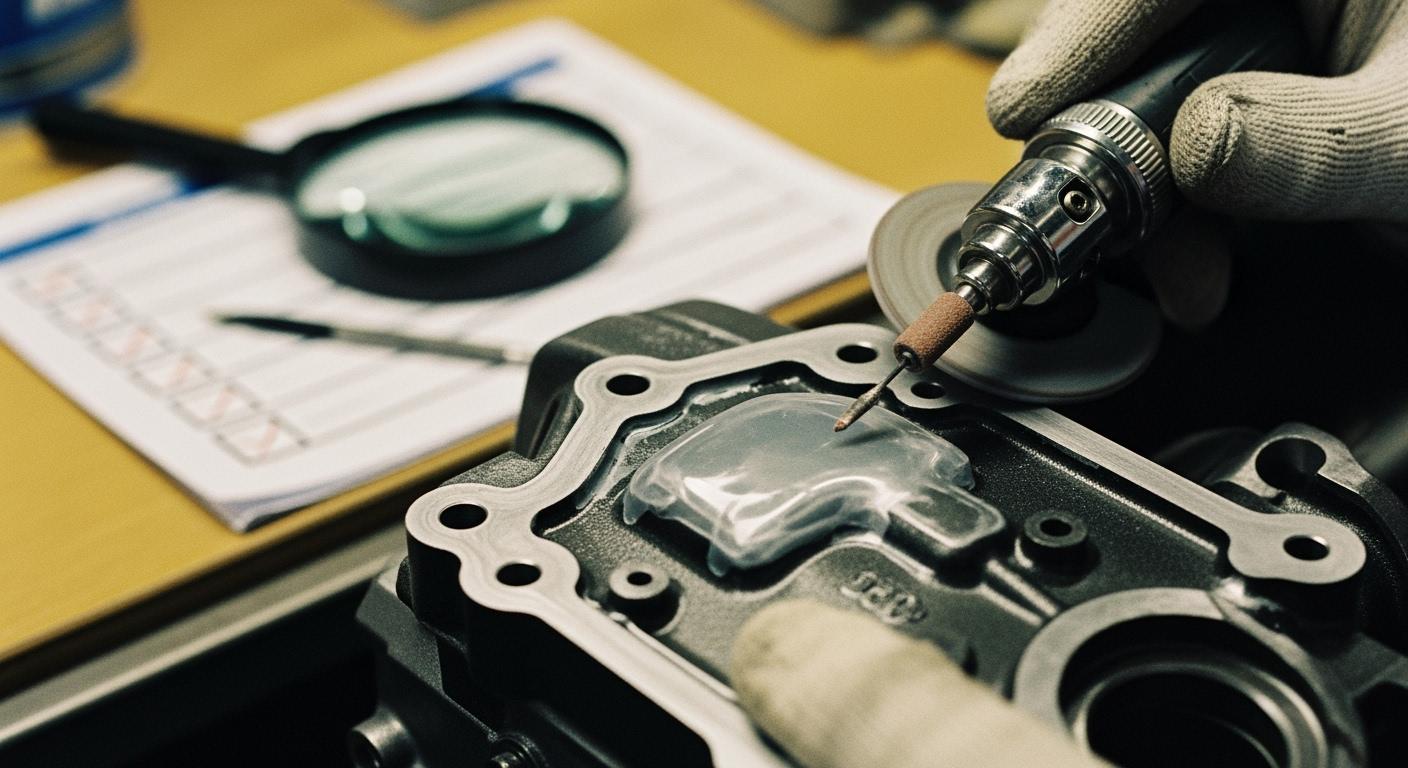
When you work with grinding coated engine parts, you must focus on the right tools and careful process control. Tool selection plays a big role in protecting the coating and engine performance. Brands like Aimgrind offer advanced solutions, such as CBN grinding wheels, that give you precise results. You can achieve better outcomes by choosing equipment that matches the coating and by following best practices during grinding.
Key Takeaways
- Understand the type of coating on engine parts. Each coating has unique properties that affect the grinding method you should use.
- Always clean and prepare the surface before grinding. This prevents damage to the coating and ensures better results.
- Choose the right grinding wheel, like CBN wheels from Aimgrind. They offer durability and precision for coated engine parts.
- Control feed rates and pressure during grinding. Start slow to avoid damaging the coating and maintain engine performance.
- Use proper coolant to manage heat. This protects the coating and enhances the quality of your grinding work.
Grinding Coated Engine Parts: Key Considerations
Understanding Coating Types
You need to know what type of coating covers your engine parts before you start grinding coated engine parts. Each coating has a special purpose. Some coatings protect against heat. Others fight corrosion or reduce friction. Common types include ceramic, thermal spray, and hard chrome coatings. You may also see nickel or carbide coatings on engine parts.
When you understand the coating, you can choose the right grinding method. For example, ceramic coatings need a different approach than thermal spray coatings. If you use the wrong grinding wheel or technique, you can damage the coating. This can lead to poor engine performance. You should always check the manufacturer’s information about the coating. This helps you avoid mistakes and keeps the engine part safe.
Grinding coated engine parts requires you to match your tools and process to the coating. You protect the surface and keep the engine running well. You also make sure the coating lasts as long as possible.
Tip: Make a chart of the coatings you work with. List their properties and the best grinding methods for each. This helps you choose the right tools every time.
Cleaning and Preparation
You must clean and prepare the surface before grinding coated engine parts. Dirt, oil, or old residue can cause problems. If you skip cleaning, you risk damaging the coating during grinding. You may see blisters or bubbles under the coating. These come from trapped moisture or poor cleaning. Sometimes, the coating can peel away from the engine part. This happens when the surface is not clean and the coating cannot stick well.
Proper cleaning and preparation give you a strong bond between the coating and the engine part. This step also helps the coating resist corrosion. You get better results when you grind coated engine parts that have been cleaned well.
- Blistering: Bubbles or blisters can form under the coating if you do not clean the surface.
- Peeling: The coating can peel off if the surface has oil, dirt, or other contaminants.
You should use the right cleaning tools for each coating. Some coatings need gentle cleaning. Others can handle stronger methods. Always dry the part well before you start grinding coated engine parts. This prevents moisture from getting trapped under the coating.
Grinding coated engine parts works best when you pay attention to cleaning and preparation. You protect the coating and keep the engine part strong. You also avoid costly repairs and downtime.
Grinding Wheel Selection and Aimgrind Solutions
CBN Grinding Wheels for Engine Parts
You need the right grinding wheels to protect coated engine parts. CBN grinding wheels stand out as a top choice for this task. These wheels use Cubic Boron Nitride, a material that is much harder than traditional abrasives. You get a tool that lasts longer and works better on tough coatings.
CBN grinding wheels are 2.5 times harder than aluminum oxide wheels. This means you can use them for a much longer time. You do not have to change wheels as often. Over time, this saves you money, even if the first cost is higher. You also get better grinding wheel performance because CBN wheels keep their shape and sharpness.
You will see CBN grinding wheels used in many industries. The aerospace sector uses them for 34.2% of coated engine part applications. The automotive sector uses them for 23.7%. These numbers show that many experts trust CBN grinding wheels for important jobs.
CBN grinding wheels offer many benefits for coated engine parts. You get:
- Superior thermal conductivity. This helps you avoid overheating the coating.
- Better surface finish. You can achieve a smooth and even surface.
- Self-dressing ability. The wheel stays sharp and does not need frequent changes.
Aimgrind provides a wide range of CBN grinding wheels. You can find wheels with different bond types, shapes, and sizes. Aimgrind’s wheels are known for their strength, durability, and precision. You can trust them for grinding coated engine parts in many settings.
Here is a table that shows the main advantages of Aimgrind’s CBN grinding wheels:
| Advantage | Description |
|---|---|
| Exceptional Strength and Adhesion | Provides a strong grip on abrasive grains, enhancing cutting efficiency. |
| Inherent Porosity | Allows for effective coolant delivery and chip clearance, preventing loading and maintaining sharpness. |
| Chemical Inertness | Ensures stability and longevity in grinding performance by resisting reactions with coolants. |
| Dressability | Enables reconditioning of the wheel, maintaining performance over time. |
| High Rigidity | Maintains precise shape and dimensional accuracy, crucial for grinding complex forms. |
| Excellent Thermal Stability | Extends wheel life significantly, reducing the need for frequent dressing and lowering overall costs. |
| Reduced Loading | Keeps abrasive grains exposed for efficient cutting, preventing clogging. |
Tip: If you want to reduce downtime and get consistent results, choose CBN grinding wheels from Aimgrind. You will see better results and lower costs over time.
Matching Wheel to Coating Material
You must match your grinding wheels to the coating material on your engine parts. Each coating has its own hardness and properties. You need to pick a wheel that fits these needs.
Follow these steps to choose the right grinding wheels:
- Check the hardness of the coating. Softer coatings need finer grit grinding wheels. Harder coatings need coarser grit.
- Decide on the surface finish you want. Finer grit grinding wheels give you a smoother finish.
- Make sure the grinding wheels fit your machine. Check the speed and power ratings.
- Think about the type of grinding you will do. Surface grinding, cylindrical grinding, and centerless grinding each need special grinding wheels.
- Pick the right bond strength. The bond must match the rigidity and precision you need.
- Choose the right shape. The grinding wheels must fit the shape of your engine part.
- Check coolant compatibility. Some grinding wheels work better with certain coolants.
- Balance cost and performance. Look for grinding wheels that give you the best value over time.
You can ask Aimgrind for help if you are not sure. Aimgrind offers custom grinding wheels and expert advice. You can get wheels made for your exact coating and machine.
CBN grinding wheels from Aimgrind work well with many coatings. You can use them on nickel, chrome, and ceramic coatings. These wheels help you avoid overheating and keep the coating safe. You also get a better finish and longer wheel life.
Note: Always test a new grinding wheel on a sample part first. This helps you check the results before you work on important engine parts.
You can improve your grinding wheel performance by choosing the right grinding wheels for each job. You will protect your coatings and keep your engine parts working well.
Optimizing Grinding Wheel Performance
Grit Size and Wheel Speed
You can improve precision grinding by choosing the right grit size and adjusting wheel speed. Grit size affects how much material you remove and the finish you achieve. Coarse grit removes material quickly but may leave scratches. Fine grit gives you a smoother surface, which is important for thermal barrier coatings and anti-friction coatings. You should match the grit size to the coating and the finish you want.
Wheel speed also plays a big role in grinding coated engine parts. If you use a high wheel speed, you may generate more heat. This heat can damage thermal barrier coatings and anti-friction coatings. Lower feed rates and optimized wheel speeds help you control temperature and protect the coating. You keep the quality of your work high and avoid problems with the engine part.
- Lower feed rates and optimized wheel speeds reduce heat generation.
- Higher surface speeds can raise the grinding temperature and affect the coating.
- Increased feed speed makes the grinding wheel travel farther, which creates more heat.
You can boost productivity by finding the right balance between grit size and wheel speed. This balance helps you achieve precision grinding and maintain the quality of thermal barrier coatings and anti-friction coatings.
Dressing and Maintenance
You must keep your grinding wheel in top shape for consistent results. Dressing removes loaded materials and restores the wheel’s cutting efficiency. You can use a diamond roller to dress the wheel. This tool improves efficiency and extends the wheel’s life. After mounting the wheel, dressing ensures it stays aligned with the arbor. For simple profiles, a tool grinder works well. For complex shapes, use specialized dressing machines to get precise profiles.
Follow these steps for best results:
- Dress with a diamond roller for better efficiency.
- Check concentricity after mounting and dress if needed.
- Use a tool grinder for basic shapes.
- Choose specialized machines for complex profiles.
- Sharpen the wheel with a handheld stick to expose fresh grains.
Regular dressing keeps the wheel sharp and maintains geometric accuracy. You get a better surface finish, which is important for thermal barrier coatings and anti-friction coatings. Good maintenance also boosts productivity and ensures high quality in precision grinding.
Tip: Schedule regular dressing and maintenance to keep your grinding wheel ready for every job. This habit protects your investment and supports top productivity.
Process Control for Engine Performance
Feed Rates and Pressure
You can protect coated engine parts by controlling feed rates and pressure during grinding. Start with a lower feed rate to avoid sudden stress on the coating. High pressure or fast feed rates can cause damage, such as cracks or peeling. You should increase the feed rate slowly as you watch for any signs of damage. This careful approach helps you keep engine performance high and maintain the coating’s strength. When you use the right pressure, you also improve efficiency and reduce the risk of costly repairs.
Tip: Always check the coating after each grinding pass. If you see any damage, stop and adjust your settings.
Coolant Use and Heat Management
Coolant plays a big role in managing heat and preventing damage to coated engine parts. Too much heat can weaken the coating and lower engine performance. You should pick the right coolant for your grinding job. Here is a table to help you choose:
| Type of Coolant | Advantages | Disadvantages |
|---|---|---|
| Oil-Based Machine Coolants | Excellent lubricity, long tool life, good rust protection | Poor heat dissipation, increased fire risk, difficult cleaning |
| Soluble Oils | Improved cooling, good lubrication, general-purpose | Susceptible to rust, bacterial growth, and difficult to clean from workpieces |
| Chemical Machine Coolants | High cooling capacity, effective at high temperatures, low maintenance | May require specific conditions to maintain effectiveness, potential for chemical reactions |
You can boost efficiency by using coolants that remove heat quickly. This step helps you avoid thermal damage and keeps engine performance steady. Always monitor coolant flow to make sure it reaches the grinding area.
Ventilation and Workspace Safety
Grinding coated engine parts can create dust, fumes, and other hazards. Good ventilation keeps you safe and protects engine performance. Use local exhaust systems for dry grinding. These systems capture dust and dirt before they reach your breathing zone. Make sure hoods and ducts are designed to move enough air and control dust.
- Local exhaust ventilation is needed for dry grinding.
- Hoods must capture dust and dirt to prevent exposure.
- Exhaust systems should stop harmful dusts, fumes, and vapors from spreading.
- All parts of the system must work well and stay in good condition.
Proper ventilation also improves efficiency by keeping your workspace clean. You avoid damage to both the coating and your health. Always check your ventilation system before you start grinding.
Safety and Best Practices in Grinding
Personal Protective Equipment
You must focus on safety every time you grind coated engine parts. Grinding creates flying particles, sparks, and dust. You need the right personal protective equipment to protect yourself from these hazards. The table below shows the main types of equipment you should use and the rules that guide their use:
| Type of PPE | Hazard Description | Regulation Reference |
|---|---|---|
| Eye/Face Protection | Risk of flying particles, debris, and sparks. | OSHA 29 CFR 1910.133 |
| Hand Protection | Risk of cuts, lacerations, abrasions, and thermal burns. | OSHA 29 CFR 1910.138 |
| Respiratory Protection | Hazardous airborne dust from grinding operations. | OSHA 29 CFR 1910.134 |
| Hearing Protection | High noise levels leading to potential hearing loss. | OSHA 29 CFR 1910.95 |
You lower your risk of injury when you wear the right gear. Studies show that using personal protective equipment reduces injuries at work. You get the best results when your equipment fits well and you know how to use it. Training helps you use each item the right way. You should check your gear before each job to make sure it is in good condition. This habit supports safety and keeps you ready for any grinding task.
Tip: Always keep extra safety gear nearby. If something breaks or gets dirty, you can switch quickly and stay safe.
Handling and Inspecting Coated Parts
You protect both the coating and yourself when you handle engine parts with care. Start by washing each part with hot water and soap. Rinse and dry it completely. Use a cleaner to remove any leftover dirt or oil. Test the finish with a strong thinner. If it wipes off, sand it down. If it stays, you can move to the next step. Block sand the surface with P220-P320 grit to remove defects. Clean and dry the part again. Apply a plastic adhesion promoter to any bare spots. Cover the whole part with a flexible sealer. Now you are ready for painting or further grinding.
After grinding, you need to inspect the coating. Different coatings need different checks:
- For powder or paint systems, use touch-up paint or re-coat the area. Clean and lightly sand before you apply anything new.
- For anodized aluminum, use a chemical film or chromate treatment if you cannot re-anodize.
- For zinc or galvanized surfaces, use zinc-rich repair methods on all cut edges and exposed spots.
- Always measure the repaired area to make sure the part fits and works as it should.
You improve safety when you follow these steps. Careful handling and inspection prevent damage to the coating and reduce the risk of injury. You also keep your workspace safe for everyone. Make safety your top priority every time you work with coated engine parts.
You need to focus on every detail to protect coated engine parts and boost performance. Choose the right grinding wheel, like Aimgrind’s CBN wheels, to improve performance and reduce downtime. Use proper coolant and adjust parameters to keep performance steady. Regular dressing and careful handling help you maintain performance and avoid damage. Industry studies show that using durable tools and advanced cooling keeps performance high. The table below highlights key factors that support performance:
| Key Aspect | Impact on Performance |
|---|---|
| Downtime | Less downtime means better performance |
| Material Integrity | Maintains performance quality |
| Productivity Loss | Reduces strain, supports performance |
| Quality Variability | Ensures consistent performance |
Follow best practices and always check your process to keep performance at its best. If you want tailored advice, talk to experts or manufacturers. You can achieve top performance with the right approach.
FAQ
What makes CBN grinding wheels a good choice for coated engine parts?
You get excellent durability and precision with CBN grinding wheels. These wheels handle hard material and keep their shape. You can trust them for high-performance engines. They help you maintain tight tolerance and improve reliability.
How do I protect the coating during grinding?
You should use the right wheel for the material. Start with a low feed rate. Check the coating after each pass. This method helps you avoid damage and supports engine longevity. You also improve the longevity of your tools.
Why is coolant important in grinding coated engine parts?
Coolant keeps the temperature low. It stops the coating from overheating. You get better surface finish and increased productivity. Coolant also helps you protect engine longevity and the durability of the material.
How often should I dress my grinding wheel?
You should dress your wheel regularly. Dressing removes loaded material and keeps the wheel sharp. This practice gives you consistent precision and extends the longevity of your grinding wheel.
Can Aimgrind help me choose the right grinding solution?
Yes, you can contact Aimgrind for advice. The team will match the grinding wheel to your material and process. You get better results, improved reliability, and increased productivity.
Contact Us
For More Grinding Solution or Customized Abrasive Tools