

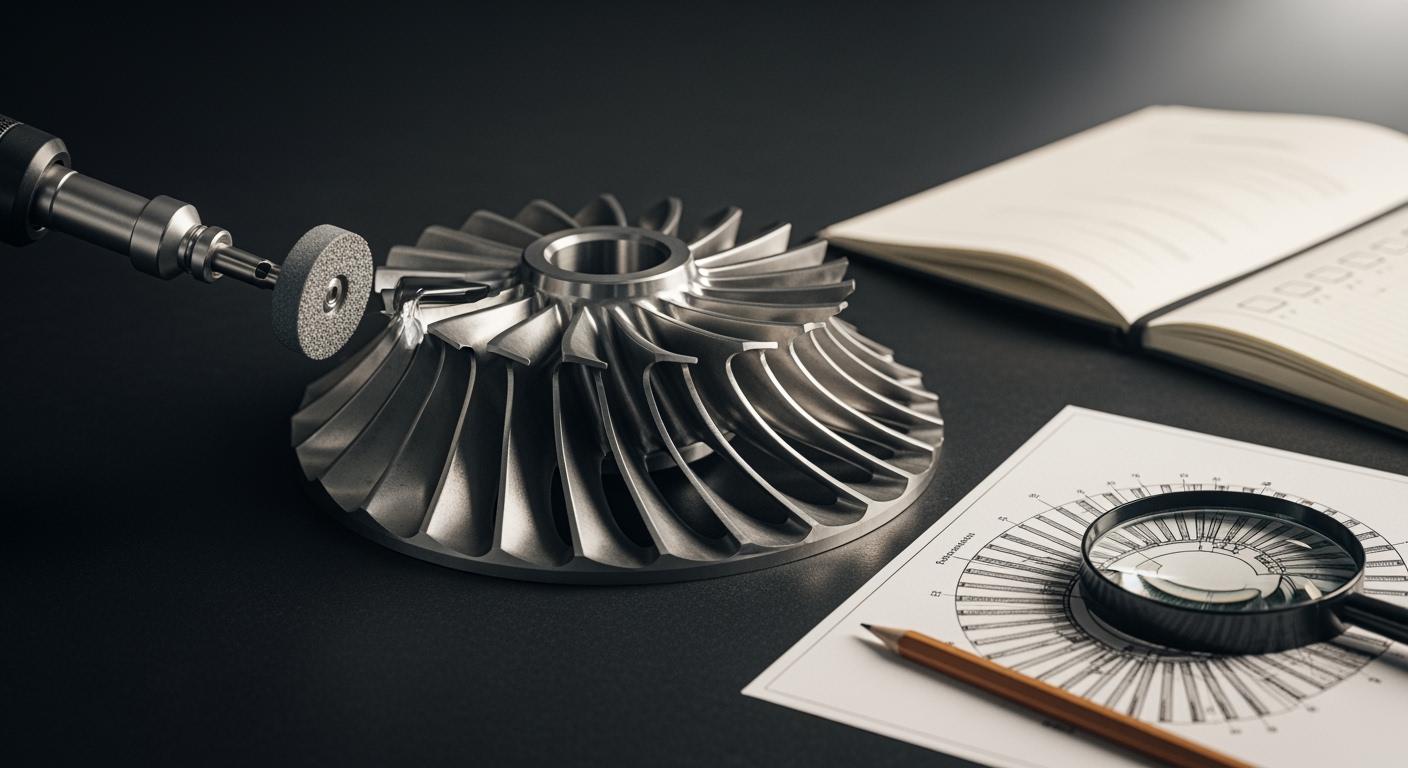
You work with single-crystal blade materials that demand high precision. Small mistakes in grinding can lead to cracks or surface defects. You must control every step to protect the blade’s quality and performance. Careful attention to material sensitivity, tool choice, and temperature control helps you avoid costly errors. Aimgrind provides you with expert solutions that match your needs for high-precision grinding.
Key Takeaways
- Understand the unique properties of single-crystal materials to enhance blade quality and performance.
- Control grinding parameters like speed and feed rate to prevent overheating and surface defects.
- Select the right tools, especially diamond grinding wheels, to achieve a smooth finish and reduce the risk of cracks.
- Implement effective cooling methods to manage heat and protect the blade during grinding.
- Regularly inspect and maintain tools to ensure high-quality results and extend their lifespan.
Material Sensitivity in Single-Crystal Blade Grinding
Properties of Single-Crystal Materials
You work with single-crystal blade materials that show unique properties. These materials do not have grain boundaries. This feature gives them special strength and resistance to high temperatures. You see that single-crystal nickel-base turbine blade parts perform well in extreme environments. They keep their shape and resist deformation. You notice that the absence of grain boundaries changes how the material reacts during grinding. The surface stays smooth, and the mechanical properties improve. Nano-sized grains can form on the surface, which increases wear resistance. You must understand these properties to protect the quality of your blade.
Tip: Single-crystal materials help you achieve better surface integrity and longer-lasting turbine blades.
Single Crystal Nickel-Base Turbine Blade Challenges
You face several challenges when grinding single crystal nickel-base turbine blade parts. These blades are tough and resist wear, but they are sensitive to grinding conditions. If you use the wrong grinding method, you risk damaging the surface or causing microcracks. You must select grinding solutions that match the material characteristics. You need to control the grinding speed and pressure. You must avoid overheating, which can weaken the blade. You see that creep feed grinding works well for these blades. This method forms nano-sized grains and improves wear resistance. You must always focus on quality and protect the blade from defects.
- Common challenges you encounter:
- Surface microcracks
- Subsurface damage
- Loss of mechanical strength
Crystallographic Orientation Effects
You must pay attention to the crystallographic orientation of the single-crystal blade. The direction of the crystal affects how the material responds to grinding. If you grind along the wrong orientation, you may cause unwanted defects. You need to align your grinding process with the crystal structure. This step helps you achieve a smooth finish and maintain the quality of the turbine blade. You must match your grinding solutions to the material’s orientation. Aimgrind helps you select the right tools and parameters for each blade. You protect the blade and ensure it performs well in demanding conditions.
Note: Always check the crystal orientation before you start grinding. This step prevents defects and keeps your blade strong.
Grinding Parameters for Quality Results
You must control your grinding parameters to protect the single-crystal blade. Each setting changes how the material reacts. If you choose the wrong speed or feed rate, you can damage the surface or cause tool wear. Careful parameter selection helps you keep the blade strong and improves manufacturing quality. Aimgrind supports you with expert parameter matching and sample optimization for every grinding job.
Speed and Feed Rate Optimization
You need to set the right speed and feed rate for your grinding process. High speeds can make the blade overheat. Low speeds may not remove enough material. If you use a fast feed rate, you risk surface defects. A slow feed rate can cause tool wear and waste time. You must find a balance that gives you a smooth finish and keeps the blade safe.
Tip: Always check your machine’s limits before you change speed or feed rate. This step helps you avoid grinding burn and keeps your equipment in good shape.
Depth of Cut Control
You must pay attention to the depth of cut. A deep cut removes more material in one pass, but it changes the heat and force on the blade. Creep-feed grinding lets you use a larger depth of cut, which can create a gradient microstructure. This change can improve wear resistance. If you use shallow cuts with many passes, you may raise the surface temperature. This can lead to grinding burn or subsurface damage.
Deeper cuts (creep-feed grinding):
- Lower risk of surface burn
- Better wear resistance
- Less chance of subsurface cracks
Shallow cuts (conventional grinding):
- Higher surface temperatures
- More risk of grinding burn
- Possible tool wear
Creep-Feed Grinding Techniques
You can use creep-feed grinding to shape single-crystal blades. This method uses slow feed rates and deep cuts. It helps you avoid repeated heating and cooling, which can cause grinding burn. Creep-feed grinding creates nano-sized grains on the surface. These grains make the blade stronger and improve its wear resistance. You get a better finish and protect the material from damage.
Aimgrind helps you choose the best grinding parameters for your blade. You get support for every step, from parameter selection to final inspection.
Tool Selection: Aimgrind Diamond Grinding Wheels
Choosing the Right Abrasive
You need to pick the right abrasive for your single-crystal blade. Diamond grinding wheels from Aimgrind give you the hardness and sharpness you need. These wheels cut through tough materials with ease. You get a smooth finish and reduce the risk of cracks. Diamond abrasives work well for high-precision grinding. They help you keep the blade strong and free from defects. You can trust Aimgrind’s wheels to handle the demands of advanced materials.
Tip: Always match your abrasive to the material. Diamond wheels are the best choice for single-crystal blade grinding.
Bond Types and Grit Sizes
You must select the correct bond type and grit size for your grinding job. Aimgrind offers resin, metal, and vitrified bonds. Each bond type gives you different benefits. Resin bonds provide a cool cut and smooth finish. Metal bonds offer long life and high strength. Vitrified bonds give you stability and shape retention. You also need to choose the right grit size. Coarse grits remove material fast. Fine grits give you a polished surface. Aimgrind helps you pick the best combination for your blade.
| Bond Type | Benefit | Best Use Case |
|---|---|---|
| Resin | Cool, smooth finish | Precision finishing |
| Metal | Long life, strength | Heavy-duty grinding |
| Vitrified | Shape retention | High-precision work |
Tool Conditioning and Maintenance
You must keep your grinding tools in top shape. Regular conditioning keeps the wheel sharp and clean. You should dress the wheel to expose fresh diamond grains. This step helps you maintain cutting efficiency and surface quality. Clean your wheels after each use. Check for wear or damage before every job. Aimgrind supports you with advice on tool care. Good maintenance extends tool life and protects your blade from defects.
Note: Well-maintained tools help you achieve the best quality and performance in every grinding task.
Thermal Management in Grinding
Heat Generation and Control
You must control heat during grinding. When you grind single-crystal blades, friction creates heat at the contact point. Too much heat can change the blade’s structure. This can hurt surface integrity. You want to keep the temperature low to protect the blade. Always watch for signs of overheating. If you see discoloration or feel the part getting hot, you need to adjust your process. Use the right grinding parameters to lower heat. Choose the correct speed and feed rate. This helps you keep the surface strong and smooth.
Tip: Always check the temperature of your blade during grinding. Quick checks help you avoid damage.
Cooling Methods and Coolant Choices
You need to use good cooling methods to protect your blade. Coolant helps carry heat away from the grinding zone. Water-based coolants work well for most jobs. Oil-based coolants can give extra protection for tough materials. You should direct the coolant right at the contact point. This keeps the surface cool and clean. Use enough flow to cover the area. Clean coolant helps you avoid buildup and keeps the blade in good shape.
- Best practices for cooling:
- Use clean, filtered coolant.
- Aim the coolant stream at the grinding contact point.
- Check coolant flow often.
Preventing Thermal Damage
You want to prevent thermal damage at all times. High heat can cause microcracks or change the blade’s properties. This can lower surface integrity and shorten blade life. Always use sharp tools and keep them in good condition. Dull tools make more heat. Adjust your grinding parameters if you see signs of damage. Use proper coolant and keep the grinding area clean. These steps help you keep the surface free from defects and maintain high integrity.
Note: Good thermal management protects your blade and helps you achieve the best surface integrity.
Surface Integrity and Defect Prevention
Minimizing Surface Defects
You must pay close attention to surface integrity when you grind single-crystal blades. Small scratches or pits can weaken the blade. You should always use sharp tools and the right grinding parameters. Clean your work area before you start. This step helps you avoid dust or debris that can scratch the surface. You can use Aimgrind’s diamond grinding wheels to get a smooth finish. These wheels help you keep the surface free from unwanted marks.
Tip: Inspect the blade after each pass. Early checks help you catch defects before they grow.
Microcrack and Subsurface Damage Avoidance
You need to protect the blade from microcracks and subsurface damage. These problems can start below the surface and spread over time. You should use gentle pressure and avoid overheating. If you see any signs of damage, stop and check your process. Aimgrind supports you with expert advice on tool selection and parameter matching. This support helps you keep the surface integrity high and the blade strong.
- Ways to avoid microcracks:
- Use the right coolant flow.
- Keep grinding tools sharp.
- Monitor the blade for early signs of damage.
Achieving High-Quality Finish
You want every blade to have a high-quality finish. A smooth surface improves performance and extends blade life. You should choose the right grit size for the final pass. Fine grits give you a polished look and protect surface integrity. Aimgrind offers custom solutions to help you reach your finish goals. You can trust their experience to guide you in every step.
| Step | Action | Result |
|---|---|---|
| Tool Selection | Use Aimgrind wheels | Better surface finish |
| Parameter Control | Adjust carefully | High surface integrity |
| Inspection | Check after grinding | Fewer defects |
Note: Careful grinding protects surface integrity and helps you deliver top quality in every blade.
Process Monitoring and Quality Control
In-Process Monitoring Tools
You need to watch your process closely during every grinding job. In-process monitoring tools help you see what happens in real time. You can use sensors to check the force, temperature, and vibration. These tools let you spot problems early. If you see a sudden change, you can stop and fix it before it gets worse. You can also use cameras to look at the blade surface as you work. This helps you keep the process safe and steady.
Tip: Use digital displays or alarms to alert you when something goes wrong. Fast action keeps your blades in top shape.
Post-Grinding Inspection
After you finish, you must check each blade carefully. Post-grinding inspection helps you find any defects that might have formed. You can use magnifying glasses or microscopes to look for cracks or scratches. You can also measure the surface roughness with special tools. If you find a problem, you can fix it before the blade goes to the next step. This inspection makes sure your blades meet high standards.
- Steps for inspection:
- Clean the blade.
- Check for visible defects.
- Measure the surface finish.
- Record your results.
Ensuring Consistent Quality
You want every blade to meet the same high level of quality. You can do this by following a set process each time. Write down your steps and use checklists. Train your team to follow these steps. You should also keep records of your results. This helps you see patterns and improve over time. Aimgrind supports you with a full service process. You get help with problem diagnosis, parameter matching, and sample optimization. This support helps you deliver the best results for every blade.
Note: Good records and careful checks help you keep your work at a high standard.
Common Mistakes in Single-Crystal Blade Grinding
You want to avoid common mistakes when you work with single-crystal blades. These errors can lead to problems that lower the quality of your turbine parts. You can prevent most issues by learning what to watch for and using best practices.
Overheating Issues
You may see overheating if you use too much pressure or the wrong speed. High temperatures can cause burn marks on the blade. Overheating can also change the structure of the material. This makes it easier for cracks to form. You should always check the temperature during grinding. Use enough coolant and keep your tools sharp. These steps help you keep the blade cool and safe.
Tip: If you see smoke or discoloration, stop and check your process right away.
Incorrect Tool or Parameter Use
You need to pick the right tool and set the correct parameters. If you use the wrong wheel or settings, you can damage the blade. This can lead to a defect on the surface. You should always match the tool to the material. Check the speed, feed rate, and depth of cut before you start. Aimgrind can help you choose the best wheel for your job. You get better results and protect your equipment.
| Mistake | Result | How to Avoid |
|---|---|---|
| Wrong wheel type | Surface damage | Use Aimgrind diamond wheels |
| Incorrect speed/feed | Poor finish | Follow recommended settings |
| Dull tool | Overheating, burn | Dress and clean tools often |
Neglecting Blade Orientation
You must pay attention to the orientation of the blade. The crystal direction affects how the material reacts. If you ignore this, you may not get defect-free surfaces. Always check the orientation before you begin. Align your grinding process with the crystal structure. This helps you avoid cracks and keeps the turbine blade strong.
Note: Careful setup leads to better results and longer blade life.
You achieve the best results in single-crystal blade grinding when you focus on material sensitivity, control your grinding parameters, select the right tools, manage heat, and protect surface integrity. Aimgrind supports you with innovative solutions and custom grinding wheels.
Remember: Using best practices helps you avoid defects and improve blade performance.
If you need expert advice or want to optimize your process, contact Aimgrind. You can trust their experience to guide you.
FAQ
What makes single-crystal blade grinding different from other materials?
You work with single-crystal blades that have no grain boundaries. This makes them stronger but also more sensitive to grinding. You must use special tools and careful settings to avoid defects.
Why should you choose diamond grinding wheels for single-crystal blades?
Diamond grinding wheels give you high hardness and sharpness. You get a smooth finish and less risk of cracks. These wheels work well for tough, high-precision jobs.
How do you prevent overheating during grinding?
You should use enough coolant and keep your tools sharp. Always check the blade temperature. Adjust your speed and feed rate if you see signs of heat.
Tip: Clean coolant and sharp tools help you control heat better.
Which Aimgrind wheel should you use for your application?
| Application Type | Recommended Bond Type |
|---|---|
| Precision finishing | Resin |
| Heavy-duty grinding | Metal |
| High-precision shaping | Vitrified |
You can contact Aimgrind for custom advice.
Contact Us
For More Grinding Solution or Customized Abrasive Tools