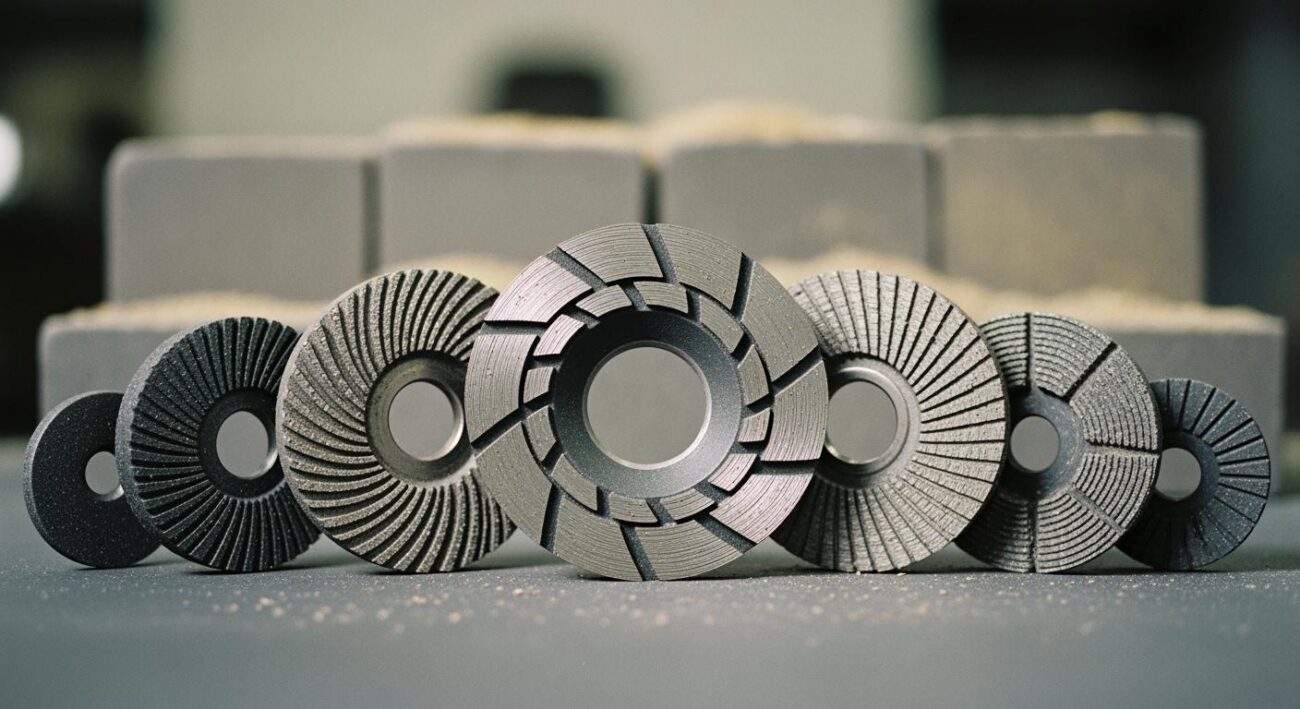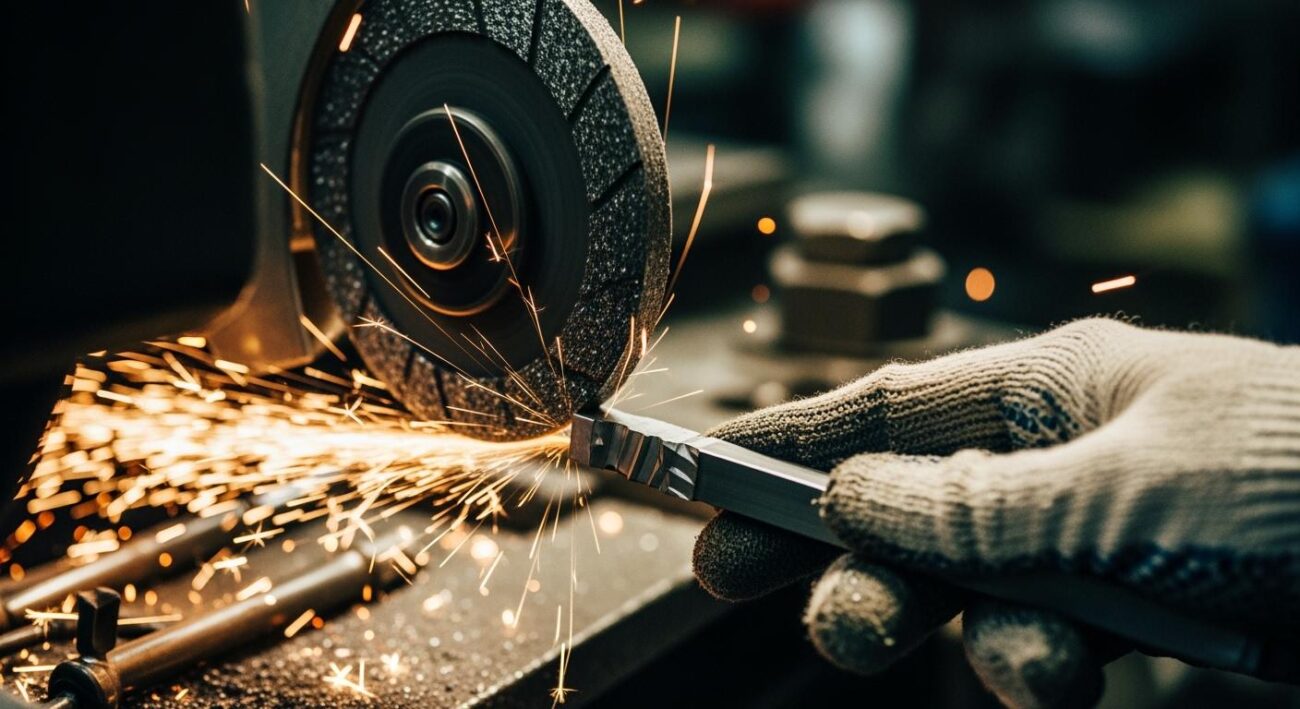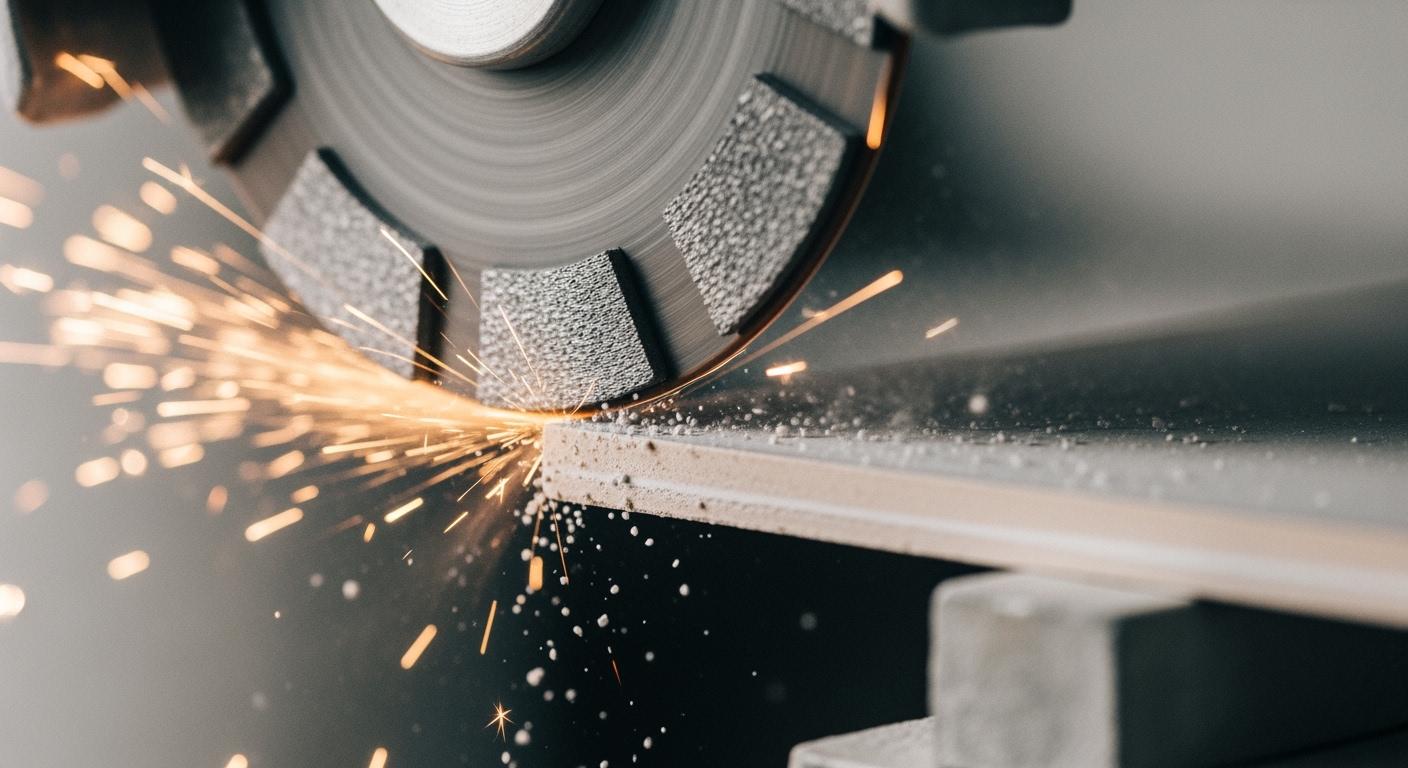
You need diamond wheels for grinding ceramics because ceramics have extreme hardness and brittleness. For example, most ceramics measure above 1000 VHN on the hardness scale, which is much higher than metals like aluminum or steel. Only diamond, with even greater hardness, can cut and shape ceramics efficiently. Diamond wheels offer faster grinding speeds and longer tool life, which makes them ideal for these tough materials. Aimgrind specializes in creating custom diamond grinding wheels, so you get the precision and durability needed for your ceramic applications.
Key Takeaways
- Diamond wheels are essential for grinding ceramics due to their extreme hardness, allowing for efficient cutting and shaping.
- Using diamond wheels significantly reduces tool changes and maintenance costs, leading to increased productivity and lower operational expenses.
- Diamond grinding wheels provide superior durability and longevity, lasting up to 100 times longer than conventional wheels.
- These wheels ensure high precision finishes, maintaining tight tolerances and minimizing thermal damage to sensitive ceramic materials.
- Aimgrind offers customized diamond grinding wheels tailored to specific ceramic applications, enhancing performance and results.
Diamond Wheels for Grinding Ceramics
Why Ceramics Need Diamond Abrasives
You face a unique challenge when grinding ceramics. Ceramics have extreme hardness and brittleness. Most conventional abrasives cannot handle these properties. You need a tool that matches the hardness of ceramics. Diamond wheels provide the solution. Diamond is the hardest known material. It cuts through ceramics with ease and precision.
Take a look at the properties that make diamond wheels essential for grinding ceramics:
| Property | Explanation |
|---|---|
| Extreme Hardness | Diamond is one of the hardest materials, allowing it to effectively grind ceramics, which are also very hard. |
| Thermal Conductivity | Diamond’s excellent thermal conductivity helps dissipate heat generated during grinding, preventing damage. |
| Hardness Comparison | Diamond’s hardness is significantly greater than that of other abrasives like silicon carbide or aluminum oxide, making it suitable for grinding ceramics. |
You see that diamond wheels outperform other abrasive tools. Diamond abrasive grains cut through hard materials like ceramics without losing their sharpness. You get a stable grinding process and a smooth finish. Diamond grinding wheels also resist wear, so you spend less time changing tools.
Aimgrind specializes in diamond wheels for grinding ceramics. You can choose from resin, metal, or vitrified bonds. Aimgrind offers customization services. You get wheels designed for your specific ceramic application. Aimgrind’s diamond grinding wheels deliver high grinding efficiency and long service life. You achieve stable dimensions and minimal dust during operation. These wheels are ideal for high-speed and high-precision ceramic processing.
Limitations of Conventional Wheels
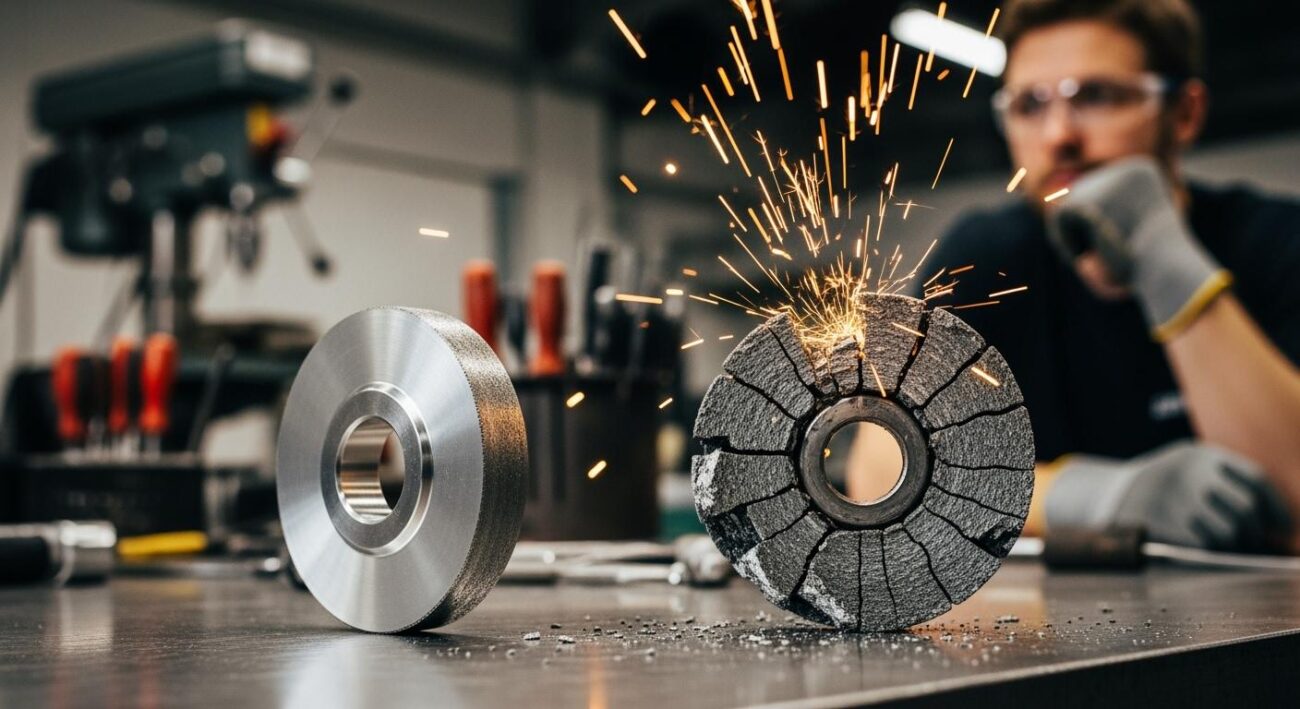
You may wonder why conventional wheels fail when grinding ceramics. Conventional abrasives like silicon carbide or aluminum oxide do not match the hardness of ceramics. They wear out quickly and lose their cutting ability. You face frequent wheel changes and inconsistent results.
Here are some typical failure modes of conventional wheels:
| Failure Mode | Description |
|---|---|
| Wheel Wear | Gradual erosion of the grinding wheel’s abrasive surface, leading to reduced cutting efficiency. |
| Glazing | The wheel’s surface becomes smooth and glossy, reducing grinding ability and causing uneven finishes. |
| Loading | Clogging of the wheel’s surface with material, causing overheating and loss of accuracy. |
| Wheel Breakage | Severe issue that can lead to tool damage and personal injury due to sudden shattering. |
| Inefficient Grinding | Slow material removal and prolonged job completion times, affecting productivity. |
| Excessive Noise or Vibration | Indicates underlying problems, affecting operator comfort and grinding quality. |
| Overheating | Can lead to wheel breakdown and reduced tool life. |
| Uneven or Rough Finishes | Results in poor aesthetic quality and potential rejection of the workpiece. |
You experience slow material removal and rough finishes. Overheating and wheel breakage can cause safety risks. Conventional wheels often glaze or load, making grinding ceramics inefficient.
Diamond wheels solve these problems. You get a much longer lifespan. In production, diamond grinding wheels last for days or weeks. Conventional wheels may need replacement several times a day. This longevity reduces your costs and machine downtime.
| Metric | Conventional Wheel | Diamond Wheel | Advantage |
|---|---|---|---|
| Wheel Life | 8 – 16 hours | 800 – 1,200 hours | ~100x Longer Life |
Diamond wheels use superabrasives that resist wear. You get consistent performance and high-quality finishes. Aimgrind’s diamond wheels feature ultra-hard abrasive layers, long service life, and eco-friendly operation. You can rely on Aimgrind for customized solutions that match your equipment and process needs.
Tip: Choose diamond wheels for grinding ceramics to maximize efficiency and minimize tool changes. Aimgrind helps you achieve precision and productivity with their advanced diamond grinding wheels.
Advantages of Diamond Grinding Wheels
Fast Material Removal
You want to finish grinding ceramics quickly and efficiently. Diamond wheels help you achieve this goal. The high hardness of diamond allows the abrasive grains to cut through tough ceramic materials with ease. You see a much higher material removal rate compared to conventional abrasives. This means you spend less time on each workpiece and increase your productivity.
- Diamond grinding wheels are known for their high efficiency in stock removal, which speeds up the grinding process.
- This efficiency leads to a reduction in overall processing time.
- Vitrified diamond wheels allow for higher material removal rates due to their rigid structure and sharp cutting properties.
- The high thermal stability and sharp diamond edges enable more precise contouring with fewer grinding passes, resulting in a 20% reduction in processing time.
You can look at the following data to understand the impact:
- At a cutting depth of 3-4μm, the overall removal ratio of the workpiece can reach 80%.
- When the cutting depth is reduced to 1-2μm, the material removal ratio decreases significantly.
- At a cutting depth of 4μm and a workpiece movement speed of 0.25m/s, the overall material removal structure proportion can reach 95%.
Switching to diamond wheels in porcelain processing can increase your production capacity by 45%. Defect rates drop from 3.2% to 0.8%. One facility processed 1,200 square meters daily after making the switch. This improvement shows the financial value of using diamond wheels for ceramics.
“Diamond wheels consistently outperform silicon carbide alternatives in terms of total material removed per wheel, often achieving 10-15 times greater productivity,” notes ceramic processing engineer Dr. Maria Rodriguez.
Superior Durability
You need tools that last. Diamond grinding wheels offer superior durability because of their exceptional hardness and resistance to wear. The diamond abrasive layer stays sharp, so you do not need to replace the wheel often. This durability means you spend less time and money on maintenance.
- Diamond grinding wheels endure the high pressures involved in grinding ceramics, which contributes to their long life.
- Although the initial cost is higher, their longevity and reduced downtime lead to lower overall maintenance costs.
- Diamond wheels require less maintenance, which reduces your operational costs.
- You benefit from lower overall spending on grinding wheels due to their longevity.
- Reduced machine downtime for wheel changes means more consistent production output.
Diamond wheels also produce less dust compared to traditional wheels. For example, a 400 Series brazed diamond wheel emits only 0.8-1.2 mg/m³ of dust, while traditional grinding wheels emit 4.8-5.2 mg/m³. This reduction means a cleaner and safer work environment.
High Precision Finish
You want your ceramic parts to have a smooth surface and exact dimensions. Diamond grinding wheels help you achieve high precision results. The superabrasives in these wheels maintain their shape and sharpness, which is essential for tight tolerances and consistent geometry.
The study showed that textured diamond grinding wheels significantly lowered both the grinding force and the surface roughness of alumina ceramics. This means you get a superior surface finish quality with diamond wheels.
Diamond wheels also help you maintain dimensional accuracy. The following table shows how diamond wheels contribute to precision:
| Feature | Benefit for Ceramics Grinding |
|---|---|
| Resin bond wheel | Lower tool pressure, less sub-surface damage |
| Consistent geometry | Enhanced accuracy, reduced variation |
| Slow wear rate | Outstanding dimensional stability |
You achieve smooth and consistent surface finishes, which are important for both the look and function of ceramic products. The exceptional thermal conductivity of diamond wheels ensures efficient heat dissipation. This minimizes the risk of thermal damage to heat-sensitive ceramics and helps maintain the integrity of the material.
Diamond grinding wheels provide unparalleled precision, which is essential for achieving tight tolerances and precise shapes in ceramic products. They help you maintain material integrity and reduce heat distortion, which is critical for applications that require high precision.
Aimgrind Solutions for Grinding Ceramics
Customized Diamond Grinding Wheels
You need the right tool for grinding ceramics. Aimgrind offers diamond grinding wheels designed for your specific needs. You can choose from different bond types, grit sizes, and wheel shapes. Each option helps you achieve the best performance for your application. Diamond wheels from Aimgrind give you high precision and a smooth surface finish. You get consistent results, even with hard and brittle ceramics.
Aimgrind understands that every ceramic material is different. You may need a wheel with a special grit size to improve surface quality. You might want a certain bond type to reduce wheel wear and increase cost-effectiveness. Aimgrind works with you to select the best diamond grinding wheels for your process. You can expect low heat generation and excellent removal rates. This means you get a clean surface and avoid damage to your ceramics.
Service Process and Support
Aimgrind supports you at every step of grinding ceramics. You start with a problem diagnosis. Aimgrind experts listen to your needs and analyze your grinding challenges. They help you match the right parameters for your diamond grinding wheels. These parameters include grinding speed, feed rate, grinding depth, and coolant use. Each factor affects the surface finish and overall performance.
You benefit from Aimgrind’s sample optimization service. You can test different wheels and settings to find the best solution. Aimgrind’s team helps you adjust the process for maximum precision and cost-effectiveness. You get reliable support and fast answers to your questions.
Aimgrind values innovation and quality. You receive products that meet strict standards. You also get a partner who cares about your satisfaction. Aimgrind’s commitment ensures you achieve the best results in grinding ceramics. You improve your productivity, reduce wheel wear, and enjoy a high-quality surface on every part.
Tip: Choosing the right diamond grinding wheels and process parameters helps you achieve top performance and a flawless finish when grinding ceramics.
When you choose diamond wheels for grinding ceramics, you get better results and fewer problems. You avoid thermal damage and keep your parts strong and precise. The table below shows why grinding ceramics with diamond wheels is the best choice:
| Benefit | Description |
|---|---|
| Reduced Thermal Damage | Minimizes the risk of burning or cracking heat-sensitive materials like certain ceramics. |
| Maintained Material Integrity | Helps preserve the desired properties of the workpiece near the ground surface. |
| Improved Precision | Less heat distortion contributes to maintaining tighter dimensional tolerances for precision parts. |
Aimgrind gives you custom solutions for grinding ceramics. You get expert support and high-quality tools. Trust Aimgrind to help you achieve the best results in grinding ceramics.
FAQ
What makes diamond wheels better for grinding ceramics?
Diamond wheels have extreme hardness. You can grind ceramics faster and get a smoother finish. You also change wheels less often. This saves you time and money.
Can you use diamond wheels for both wet and dry grinding?
Yes, you can use diamond wheels for both wet and dry grinding. Wet grinding helps keep the wheel cool and reduces dust. Dry grinding works well for some jobs, too.
How do you choose the right diamond wheel for ceramics?
You should look at the ceramic type, wheel bond, grit size, and your machine. Aimgrind helps you pick the best wheel for your needs. You get expert advice and custom options.
How long do diamond grinding wheels last?
Diamond wheels last much longer than regular wheels. You can use them for hundreds of hours before needing a replacement. This means less downtime and more work done.
Contact Us
For More Grinding Solution or Customized Abrasive Tools