

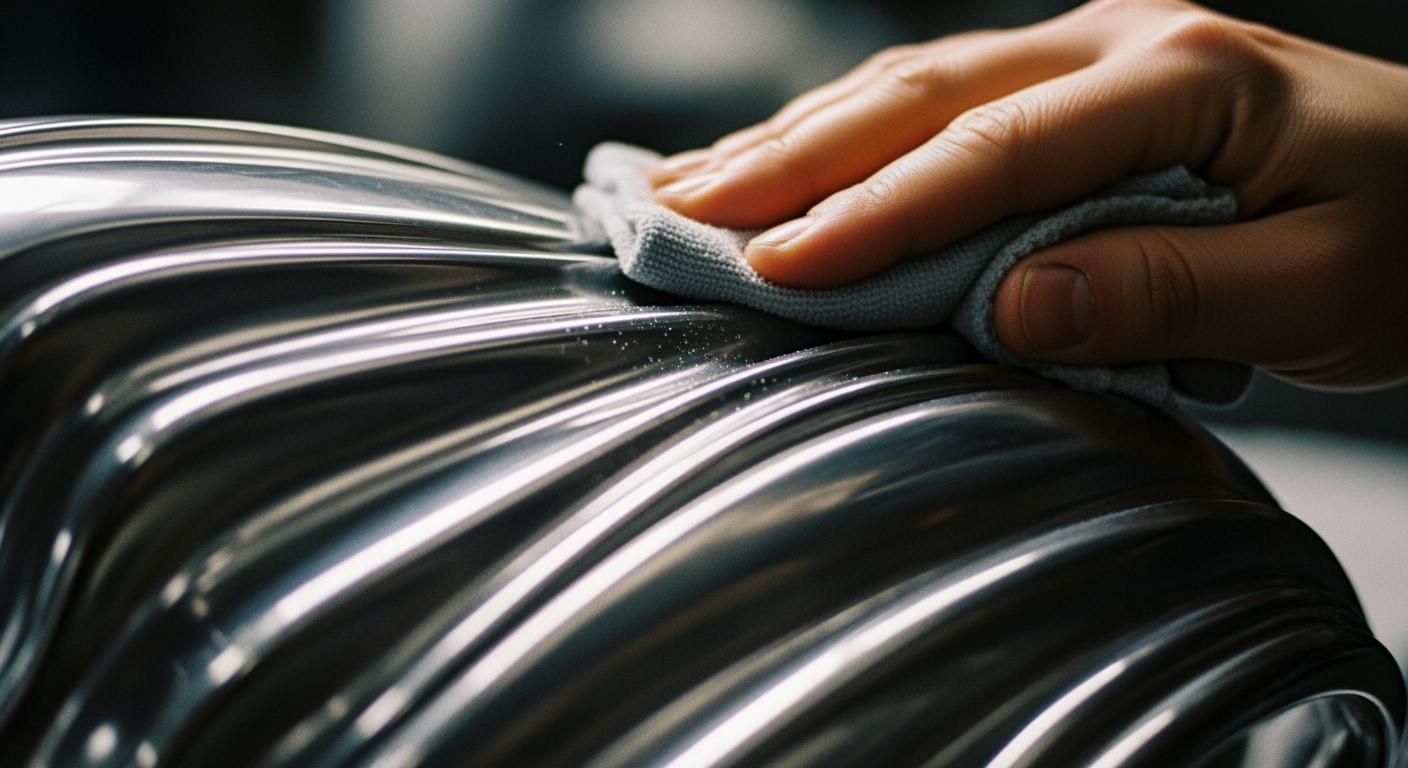
You can achieve uniform polishing on complex surfaces when you select the right tools and follow a careful process. Aimgrind super hard abrasives help you polish metals, ceramics, and composites with precision. You need to clean surfaces, use the correct grit, and control your pressure during polishing. If you polish with patience and pay attention to detail, even the most intricate surfaces will shine.
Tip: Always start polishing with a clean surface and use Aimgrind abrasives for best results.
Key Takeaways
- Start with a clean surface to ensure a consistent polish. Use a lint-free cloth and appropriate solvents to remove dust and residue.
- Select the right Aimgrind super hard abrasives for your material. These tools provide a strong cutting action and maintain their shape for uniform results.
- Follow a systematic grit progression. Begin with coarse grits to remove scratches, then move to finer grits for a smooth, shiny finish.
- Control pressure and direction during polishing. Apply steady pressure and change directions with each grit to catch imperfections.
- Inspect your work frequently. Regular checks help you identify missed spots and ensure a consistent polish throughout the entire surface.
Tool Selection for Uniform Polishing
Choosing Aimgrind Super Hard Abrasives
You need the right polishing tools to achieve a smooth finish on every stone surface. Aimgrind super hard abrasives use diamond polishing technology. These high-quality polishing tools help you work on metals, ceramics, and composites. Diamond polishing gives you a strong cutting action and a long-lasting tool. You can use these tools for both rough and fine polishing. They keep their shape and sharpness, so you get a uniform result every time.
Tip: For professional stone tools, Aimgrind offers custom solutions that match your equipment and polishing needs.
Here is a table showing common polishing methods and tools used in manufacturing:
| Polishing Method | Description | Common Tools Used |
|---|---|---|
| Mechanical Polishing | Removes surface bumps and unevenness through physical abrasion. | Abrasive materials (sandpaper, polishing paste, polishing wheels) |
| Ultrasonic Polishing | Uses ultrasonic vibrational energy for fine processing of surfaces. | Ultrasonic vibration tools (needles, knives, grinding heads) |
| Chemical Mechanical Polishing (CMP) | Combines chemical etching and mechanical grinding to flatten surfaces. | N/A |
| Electrolytic Polishing | Uses electric current to smooth surfaces. | N/A |
Matching Tools to Surface Complexity
You must match your polishing tools to the complexity of the stone surface. Simple flat surfaces need basic diamond polishing wheels. Complex shapes, like curves or corners, need special tools. For example, mounted points or flexible diamond polishing pads work well on detailed areas. The type of abrasive material should match the stone you are working on. Particle size and hardness affect how much material you remove. You should always choose tools that fit the shape and hardness of your stone.
- Grinding removes material for a smoother finish.
- Polishing smooths out surface bumps.
- Buffing adds shine.
- Lapping gives you a flat, even surface.
Tailored finishing processes help you get the best results, especially in industries like aerospace and automotive. You often need to combine different polishing methods and use special abrasives for each stone type.
Importance of Bond Types and Grit Sizes
Bond types and grit sizes play a big role in diamond polishing. Resin, metal, vitrified, and electroplated bonds each offer different strengths. For hard stones like ceramics or titanium, you need a strong bond to keep the diamond grains in place. Grit size controls how smooth your stone becomes. Start with a coarse grit for fast material removal, then move to finer grits for a shiny finish. The right grit-blasting parameters can change the surface roughness of titanium without damaging its structure. Good surface treatment helps the bond between the tool and the stone, making your polishing more effective.
Note: Always check the bond type and grit size before starting your polishing job. This ensures you get a uniform finish on every stone, even on complex surfaces.
Step-by-Step Polishing Process
Surface Preparation and Cleaning
You must start every polishing process with careful surface preparation. Clean the surface to remove dust, oil, and old residue. This step helps you get a consistent polish later. Use a lint-free cloth and a solvent like isopropyl alcohol to wipe the surface. For grooves or small corners, use compressed air to clear out debris. If you work with intricate shapes, rinse them with warm water and mild detergent. Dry the surface fully before you begin polishing. For stone or masonry, use low-pressure water washing or a soft abrasive method like walnut shell blasting. Always match your cleaner to the material. Rinse thoroughly to remove any leftover cleaner before you move to the next step.
Tip: Cleaning between each polishing stage prevents residue from scratching the surface and helps you achieve uniform polishing.
Grit Progression for Consistent Polish
A systematic grit progression is the key to a consistent polish. You should follow a step-by-step sequence:
- Start with coarse polishing. Use a 1.0 µm abrasive to remove visible scratches and flatten the surface.
- Move to intermediate smoothing. Use 0.5 µm, then 0.3 µm abrasives to smooth out the surface further.
- Finish with a fine polish. Use a 0.05 µm abrasive for a mirror-like shine.
Each stage removes marks left by the previous grit. Clean the surface between each step to avoid contamination. This polishing technique ensures you do not skip any stage, which helps you get a uniform polishing result. Aimgrind’s expertise in process matching means you can select the right abrasive for each stage, making your polishing process more efficient.
Pressure and Direction Control
You must control both pressure and direction during polishing. Too much pressure can damage the surface, while too little may not remove scratches. Use the following table as a guide:
| Polishing Stage | Pressure Range (N) |
|---|---|
| Rough grinding | 25–30 |
| Fine grinding | 15–20 |
| Polishing | 5–10 |
Apply steady, even pressure. Change your polishing direction with each stage. For example, polish in one direction with coarse grit, then switch to a perpendicular direction with the next grit. This method helps you spot any remaining scratches and ensures a consistent polish. Monitor tool wear and check your results often. Aimgrind’s process matching and sample optimization help you maintain the right pressure and direction for every material.
Note: Accurate measurement tools help you check your progress and keep your polishing process on track.
Multiple Passes for Complex Surfaces
Complex surfaces need multiple passes to achieve a consistent polish. Deep recesses and intricate features often require special attention. You may need to use chemical polishing with specialized solvents for hard-to-reach areas. Custom-designed fixtures can help you access difficult spots. Vapor polishing works well for intricate shapes, and robotic finishing systems ensure a uniform polishing result across all features. Multi-axis CNC polishing is ideal for precision surfaces, such as those found in optics.
You should repeat the polishing process as many times as needed. Each pass removes more imperfections and brings you closer to a consistent polish. Monitor environmental factors like temperature and vibration, as these can affect your results. Aimgrind’s sample optimization and tailored abrasive tools help you address these challenges and achieve uniform polishing, even on the most complex geometries.
Tip: Always inspect your work between passes. This helps you catch any missed spots and ensures a consistent polish throughout the entire surface.
| Aspect | Description |
|---|---|
| Customized Solutions | Aimgrind specializes in tailored abrasive tool solutions for various materials. |
| Process Matching | Ensures compatibility between grinding wheels and equipment/processes. |
| Sample Optimization | Enhances the effectiveness of the abrasive tools used in polishing. |
| Addressing Challenges | Focuses on vibration control, burn prevention, and lifespan enhancement through personalized design. |
By following these steps, you can master the polishing process and achieve a consistent polish on even the most challenging surfaces. Aimgrind’s expertise in process matching and sample optimization supports you at every stage, helping you get the best results from your polishing technique.
Addressing Challenges in Polishing
Deep Imperfections and Uneven Areas
You often face deep imperfections and uneven stone surfaces when you polish complex shapes. These imperfections can make polishing difficult and lead to poor results. You need to choose the right method for each type of stone and surface. For sturdy metals, mechanical polishing works well to remove deep scratches and imperfections. If you work with delicate designs or uneven stone surfaces, ultrasonic polishing helps you reach deeper pits without damaging the stone. You can also hone the surface using a diamond honing pad with grits around 100 to 200. This method levels uneven stone surfaces and smooths out imperfections.
Aimgrind super hard abrasives give you the control you need for polishing uneven stone surfaces. These tools help you remove imperfections and create a flat, even finish. You should always check the surface after each polishing step to make sure you have removed all imperfections. Repeat the process if you still see uneven stone surfaces or deep marks.
Tip: Use a structured plan for polishing. Start with coarse abrasives for uneven stone surfaces, then move to finer grits for a smooth polish.
Polishing Intricate Geometries
Polishing intricate geometries presents unique challenges. Curves, corners, and detailed features often hide imperfections and uneven stone surfaces. You need flexible tools and the right polishing technique to reach every part of the stone. Mounted points and flexible diamond pads from Aimgrind help you polish these areas. Change your polishing direction often to catch imperfections on uneven stone surfaces.
You should use gentle pressure when polishing intricate shapes. Too much force can damage the stone or create new imperfections. For best results, inspect the stone after each polishing pass. If you find uneven stone surfaces, repeat the process with the right abrasive. This approach helps you achieve a uniform polish on every part of the stone.
| Challenge | Explanation |
|---|---|
| Surface Defects | Incorrect abrasives or uneven force can lead to sink marks. Proper grit and force can mitigate this. |
| Over-Polishing | Excessive polishing can alter mold size, affecting fit. A structured plan can prevent this issue. |
| Material Sensitivity | Different materials require specific techniques; for example, aluminum needs gentle pressure. |
| Maintenance Strategies | Regular upkeep prevents defects and extends mold life, including cleaning and protective coatings. |
Avoiding Common Mistakes
You can avoid many mistakes during polishing by following a few simple rules. Always start with proper surface preparation. If you skip this step, you may leave dirt or residue on uneven stone surfaces, which leads to more imperfections. Keep your polishing tools in good condition. Worn tools can create uneven stone surfaces and make it hard to polish the stone evenly.
Set the correct speed for each polishing job. If you use the wrong speed, you may overheat the stone or fail to remove imperfections. Use gentle pressure to avoid scratching or deforming uneven stone surfaces. Choose the right abrasive for each step. The wrong grit can leave scratches or fail to polish out imperfections.
Here are some common mistakes and how to avoid them:
- Neglecting surface preparation—always clean uneven stone surfaces before polishing.
- Overlooking equipment maintenance—replace or maintain tools to avoid uneven stone surfaces.
- Incorrect speed settings—adjust speed for each stone and polishing stage.
- Using harsh cleaning products—avoid abrasive scrubbers or chemicals that can damage the stone.
- Applying excessive pressure—use gentle, even pressure to polish without creating imperfections.
- Over-polishing—stop when you achieve a uniform polish to avoid damaging the stone.
- Inconsistent pressure—keep pressure steady to prevent uneven stone surfaces.
- Using incorrect abrasives—select the right grit for each polishing step.
Note: Aimgrind abrasives help you avoid these mistakes by providing the right tool for every polishing challenge. Regular inspection and maintenance keep your polishing process on track.
Tips for Consistent Polish and Best Results
Water Cooling and Thermal Management
You need to control heat during polishing to protect your stone and tools. Water cooling plays a key role in thermal management. When you use water or a coolant, you keep the temperature low. This prevents thermal defects like microcracks and oxidation on the stone surface. Cryogenic polishing, which uses very cold liquids, can help you avoid damage and keep your stone strong. Lubricants also help by reducing friction and spreading heat away from the polishing area. When you polish with Aimgrind super hard abrasives, you get better results because these tools work well with cooling systems. You protect your stone, extend tool life, and achieve a smoother finish.
Inspection and Maintenance During Polishing
You must inspect your stone and equipment often during polishing. Skipping inspection or cleaning can lead to poor results. Always check your polishing pads before you start. Clean them to remove dust and old polish. After each polishing step, look at your stone under different lights and from different angles. This helps you spot any missed spots or uneven areas. Wait until the stone cools before your final inspection, as heat can hide flaws.
Keep your equipment in top shape. Check pad condition, monitor water flow, and listen for strange noises. Wipe down surfaces with a lint-free cloth and mild detergent. Use compressed air to clear dust from vents. Clean trays after each batch. Deep clean your machine every month and lubricate moving parts every quarter. Calibrate speed and pressure settings every six months. Aimgrind’s service process supports you with regular maintenance and quality checks, so your polishing stays consistent.
| Maintenance Task | Recommended Frequency | Notes |
|---|---|---|
| Visual & Functional Inspection | Monthly | Check wear parts & electronics |
| Lubrication of Moving Parts | Quarterly | Use manufacturer lubricants |
| Calibration of Settings | Every 6 Months | Ensures polishing consistency |
Final Mirror Finish Techniques
You want your stone to shine with a flawless, mirror-like finish. Start final polishing with a cutting compound and a wool or cotton buffing wheel. Switch to foam pads or finer cloth wheels as you move to finer polishing compounds. Use progressively finer abrasives, starting from 320 or 400 grit and moving higher. Each step in final polishing removes micro-grooves and brings out the shine. For complex stone shapes, ultrasonic polishing or magnetic abrasive finishing can help you reach every detail. Specialized lapping systems also give you ultra-smooth results.
Apply thin layers of polish using the three-stroke method. Let each coat dry for one to two minutes before the next. Use a high-gloss top coat to protect the stone and boost shine. Finish by wiping the stone with a clean microfiber cloth. Final buffing removes any last imperfections and gives you a high-reflectivity finish. Aimgrind’s quality assurance ensures your final polishing meets the highest standards, so your stone always looks its best.
Tip: Always start with a clean stone, use the right polishing compound, and apply light, steady pressure for the best final polishing results.
- Start with a clean surface to avoid scratches.
- Use the right polish for your stone.
- Apply light, even pressure during final polishing.
- Inspect your stone after each step.
- Use final buffing to achieve a perfect mirror finish.
With these tips and Aimgrind’s expert support, you can master polishing and achieve a consistent, beautiful finish on every stone.
You can achieve uniform polishing on complex surfaces by following a clear process and using the right tools. Here are the main steps you should follow:
- Surface preparation—clean and remove defects from the stone.
- Initial surface preparation—grind and hone the stone to fix larger flaws.
- Polishing process—use mechanical, chemical, or electrochemical methods for the best finish.
- Control key process parameters—choose the right abrasive, pressure, speed, and slurry for uniform polishing.
A methodical technique helps you get better results. You can use advanced methods to control heat and remove microcracks. This approach improves the quality of your stone. When you pay attention to detail and use Aimgrind super hard abrasives, you make polishing easier and more effective. You can trust Aimgrind’s service to help you get a perfect finish every time.
FAQ
What makes Aimgrind super hard abrasives different from regular abrasives?
You get longer tool life and a smoother finish with Aimgrind super hard abrasives. These tools use diamond or CBN grains. They stay sharp and work well on tough materials like metals, ceramics, and composites.
How do I choose the right grit size for polishing?
Start with a coarse grit to remove scratches. Move to finer grits for a smooth, shiny finish. Always match the grit size to your material and polishing stage.
Tip: Clean the surface between grit changes to avoid scratches.
Can I polish curved or detailed surfaces with Aimgrind tools?
Yes! You can use flexible diamond pads or mounted points from Aimgrind. These tools help you reach curves, corners, and small details. You get a uniform polish even on complex shapes.
How often should I inspect my polishing tools and surfaces?
Check your tools and surfaces before each polishing step. Look for wear, dust, or missed spots. Regular inspection helps you catch problems early and keeps your results consistent.
| Inspection Task | When to Do It |
|---|---|
| Tool Condition | Before each use |
| Surface Cleanliness | After each stage |
| Final Finish Check | At the end |
Contact Us
For More Grinding Solution or Customized Abrasive Tools