

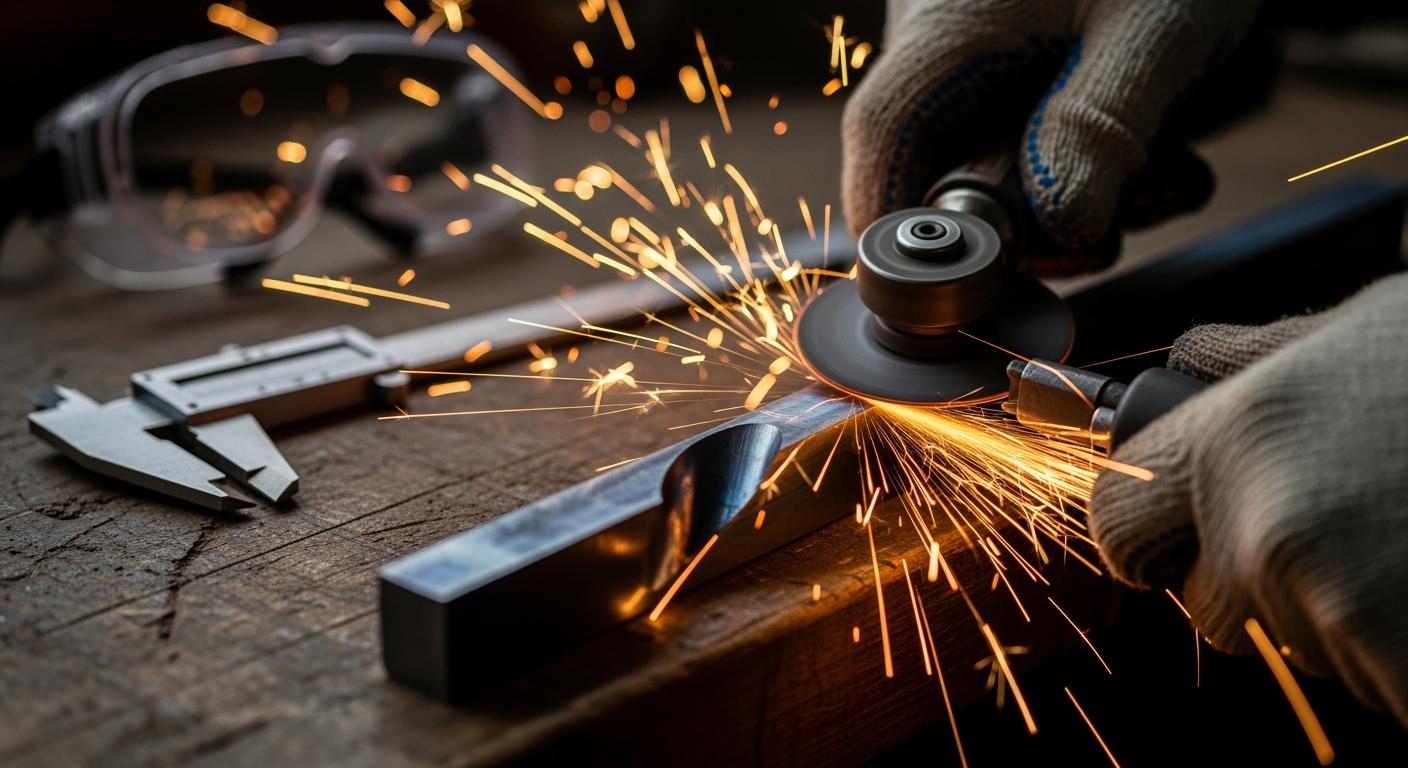
You need to pay attention when grinding HSS after proper heat treatment. Overheating can cause the steel to lose hardness. Warping may damage your tool. You can avoid these risks by using specialized tools. CBN grinding wheels from Aimgrind help you keep your tools sharp and strong.
Aimgrind’s wheels give you cooler grinding and longer tool life. You protect your tools and work safely by choosing the right equipment.
Key Takeaways
- Control the grinding temperature to prevent overheating. Use coolants and light passes to maintain hardness and avoid warping.
- Choose CBN grinding wheels for better durability and precision. They reduce heat generation and improve tool life, making them ideal for hardened HSS.
- Select the right grit size for your grinding needs. Coarse grits remove material quickly, while fine grits provide a smooth finish.
- Inspect parts after heat treatment for distortion. This helps ensure accuracy before grinding and prevents damage during the process.
- Always wear proper safety gear and check equipment before grinding. This protects you and ensures a smooth grinding operation.
Grinding HSS After Heat Treating
Key Challenges Post Heat Treating
You face several challenges when grinding hss after heat treating. The steel becomes much harder, so you need to use more force during grinding. This can cause your tools to wear out faster. Thin parts or sharp edges may chip or crack easily. You must use rigid fixtures to keep the workpiece steady. If the part moves or vibrates, you risk damaging it. Heat treating can cause distortion, especially in long or thin parts. You need to check for changes in shape before you start grinding. Sometimes, you must do finish operations to restore the correct size and shape. Tool life often drops by half when working with hardened steel. If you plan heat treating and machining separately, you may lose positional accuracy. Features can shift, and surfaces may not line up as before.
| Challenge Description | Details |
|---|---|
| Higher Cutting Forces | The hardened material requires higher cutting forces and increases tool wear. |
| Increased Risk of Damage | Chipping or cracking is more likely in thin walls, ribs, or sharp features. |
| Need for Rigid Fixtures | Fixtures must be rigid to prevent vibration, spring-back, or movement during cutting. |
| Anticipating Distortion | Distortion from quenching or tempering must be anticipated, particularly for thin, long, or asymmetrical parts. |
| Need for Finish Operations | Finish operations, such as grinding or light cuts, may be needed to restore dimensional tolerances. |
| Decreased Tool Life | Tool life can decrease by up to 50% on hardened stock. |
| Positional Accuracy Issues | If heat treating and machining are planned separately, features move, datums shift, and previously aligned surfaces lose positional accuracy, leading to increased rework. |
Tip: Always inspect your parts after heat treating. Look for any distortion or changes in size before you begin grinding hss.
Importance of Controlled Grinding
You must control the grinding process carefully after heat treating. If you rush, you risk overheating the steel. Overheating can make the steel lose hardness and strength. You need to use the right grinding wheel and keep the speed steady. Aimgrind’s CBN grinding wheels help you grind cooler and more precisely. You should avoid deep cuts and use light passes. This keeps the temperature low and prevents warping. Use coolant if possible to help control heat. Controlled grinding protects your tools and keeps your parts accurate. You maintain the quality of your hss tools by following these steps.
Choosing the Right Grinding Wheel
Why CBN Grinding Wheels from Aimgrind
You need the right grinding wheel to get the best results when working with hardened high-speed steel (HSS). Aimgrind stands out because you get custom grinding solutions designed for your exact needs. The team at Aimgrind helps you match the grinding wheel to your machine and your process. This means you get better performance and fewer problems.
CBN (Cubic Boron Nitride) grinding wheels from Aimgrind offer many advantages over conventional wheels. You get:
- Superior durability and long lifespan. CBN wheels last much longer than regular abrasive wheels. You spend less time changing wheels and more time working.
- Efficient and precise grinding. CBN wheels keep a sharp edge. You get accurate and consistent results, which is important for aerospace and automotive parts.
- Reduced heat and thermal damage. CBN wheels move heat away from your workpiece. This protects your HSS from losing hardness or warping.
- Lower overall cost and downtime. Even though CBN wheels cost more at first, you save money in the long run. You replace them less often and spend less time on maintenance.
- Versatility in grinding applications. You can use CBN wheels for many different grinding jobs and materials. This makes your shop more flexible.
CBN wheels also remove material faster and more efficiently than traditional wheels. You finish jobs quicker and keep your parts accurate. The wheels hold their shape well, so you do not have to worry about losing precision. CBN wheels are chemically stable when grinding iron-based materials. They do not react with iron, even at high temperatures. This helps your tools last longer and keeps your grinding process smooth.
Note: Aimgrind’s CBN wheels are a smart choice for grinding hardened HSS. You get cooler grinding, longer tool life, and better results.
Grit Size and Bond Selection
You must choose the right grit size and bond type to match your grinding needs. Grit size affects how fast you remove material and how smooth the surface becomes. Bond type holds the abrasive grains together and affects how the wheel behaves during grinding.
How Grit Size Affects Your Results:
- Coarse grits (24 to 36): Use these for rough grinding and heavy material removal. You get fast results but a rougher surface.
- Medium grits (46 to 60): These give you a balance between speed and surface finish. Use them for intermediate grinding.
- Fine grits (80 to 120): Choose these for finishing operations. You get a smooth surface and better control.
- Very fine grits (150 to 600): Use these for super fine grinding and polished surfaces.
| Grit Size Range | Application Type | Result |
|---|---|---|
| 24 – 36 | Rough Grinding | Fast removal, rough finish |
| 46 – 60 | Intermediate Grinding | Balanced speed and finish |
| 80 – 120 | Fine Grinding | Smooth finish, good control |
| 150 – 600 | Super Fine Grinding | Polished, mirror-like finish |
Finer grits give you a smoother finish, which is important for precision parts. Coarser grits help you remove more material quickly.
How to Pick the Right Bond Type:
- Vitrified bonds: These have an open, porous structure. Coolant can reach the grinding area easily, and chips move away fast. Vitrified wheels work well for aggressive stock removal.
- Electroplated bonds: These can remove a lot of material quickly. They are good for high-performance grinding but may clog if you push them too hard.
You should match the bond type to your grinding job. If you need to remove a lot of material, start with a vitrified or electroplated wheel. For finishing, use a wheel with a finer grit and a bond that gives you good control.
Tip: Aimgrind can help you select the best grit size and bond type for your HSS grinding job. You get expert advice and a wheel that fits your process.
You can also consider White Fused Alumina (WA) wheels for some HSS jobs. WA wheels break down during grinding, exposing new sharp edges. This helps keep the grinding cool and protects your steel from heat damage.
Choosing the right grinding wheel is key to getting the best results. You protect your tools, save time, and get a better finish when you make the right choice.
Optimizing the Heat Treating Process
Managing Heat During Grinding
You need to control the temperature during grinding to protect your high-speed steel. If you let the temperature rise too much, you risk softening the steel or causing temper brittleness. You should always follow temperature recommendations to keep your tools strong. Grinding at the recommended temperatures helps you avoid damage and keeps your parts accurate.
Here is a table showing the effects of different temperature ranges:
| Temperature Range (°F) | Description |
|---|---|
| 400-700 | Temper brittleness occurs if quenched in this range. |
| 900-1100 | Typical temper range for most high-speed steel. |
| >1000 | Exceeding this temperature will soften the steel. |
You should keep the grinding process below the recommended temperatures. If you see sparks or discoloration, the temperature may be too high. You can use coolant to lower the temperature and protect your steel. Aimgrind’s CBN grinding wheels help you grind cooler and maintain the right temperature. Always check the temperature recommendations for your steel grade.
To make grinding easier after heat treatment, follow these best practices:
- Choose materials that respond well to heat treatment and meet your mechanical needs.
- Design parts with shapes that allow even heating and cooling, avoiding areas that may warp.
- Make sure your designs fit heat treatment fixtures and tooling.
- Keep parts close to their final shape to reduce extra machining after heat treatment.
- Define heat treatment parameters like temperature, time, and cooling rates in your design.
Tip: Monitor the temperature during grinding. Use a coolant and check the recommended temperatures for your steel.
Wet vs. Dry Grinding Methods
You can choose between wet and dry grinding methods for high-speed steel. Wet grinding uses coolant to control the temperature and improve the surface finish. Dry grinding is faster to set up and does not need coolant management. Each method has benefits and drawbacks.
| Method | Benefits | Drawbacks |
|---|---|---|
| Wet Grinding | Better heat dissipation, improved surface finish, reduced grinding burns, longer abrasive life, lower risk of micro-cracks, improved dimensional accuracy. | More complex setup, requires coolant management. |
| Dry Grinding | Faster setup, no coolant management, lower operating costs, suitable for mobile work. | Higher risk of heat-related defects, potential for lower surface quality. |
Wet grinding helps you keep the temperature low and stay within the recommended temperatures. You get a better finish and protect your steel from overheating. Dry grinding works well for quick jobs but may raise the temperature too much. Always consider the temperature recommendations when choosing your method.
Note: Wet grinding is best for controlling temperature and achieving the recommended temperatures for high-speed steel.
Grinding Parameters for HSS
Speed, Feed, and Depth Settings
You must set the right speed, feed, and depth when grinding high-speed steel. These settings help you reach the desired hardness and avoid damage. Surface feet per minute (SFM) measures how fast the wheel moves. You can use different SFM ranges for each grinding operation. The table below shows recommended values:
| Grinding Operation | Recommended SFM Range |
|---|---|
| Rough Grinding | 5,000-6,500 SFM |
| Finish Grinding | 6,500-12,000 SFM |
| Tool and Cutter Grinding | 4,000-6,000 SFM |
| Surface Grinding | 5,500-6,500 SFM |
| Cylindrical Grinding | 6,000-9,500 SFM |
You should use lower feed rates and shallow cuts to keep the temperature stable. Higher feed speeds can help reduce grinding temperature and minimize surface burns. Deep cuts increase energy conversion and raise the risk of thermal damage. You must adjust these parameters to protect the hardness and prevent microcracking.
Tip: Always monitor the process and check for signs of overheating. Adjust speed and feed to maintain the desired hardness.
Preventing Overheating and Warping
You need to prevent overheating and warping during the grinding process. High temperature can soften the steel and reduce hardening. You can use several methods to control temperature and protect the desired hardness:
- Use coolants to stabilize temperature and avoid heat buildup.
- Select grinding wheels with larger grains for better chip removal and heat dissipation.
- Choose CBN wheels from Aimgrind to generate less heat and maintain hardening.
- Dress grinding wheels regularly to keep them sharp and reduce heat.
- Adjust parameters like lower feed rates, shallow cuts, and optimized wheel speeds.
Grinding temperature above 450 °C can cause a softened layer and surface burns. You must keep the process below this limit to maintain hardness. Regular checks help you spot signs of warping early. You protect your tools and keep the desired hardness by following these steps.
Note: Careful control of the grinding process ensures you achieve the desired hardness and avoid defects.
Cooling and Lubrication in Grinding HSS
Coolant Types and Application
You need to choose the right coolant when grinding high-speed steel. Coolants help you control temperature and protect your tools. Traditional water-based coolants work well for many jobs. You can use oil-based coolants for extra lubrication. Cryogenic coolants, like Liquid Nitrogen (LN2), lower the grinding temperature much more. Minimum Quantity Lubrication (MQL) systems use small amounts of oil and air. These systems reduce heat and grinding forces. Studies show that cryogenic coolants and MQL systems improve surface integrity and minimize defects. You get fewer microstructural problems and a cleaner finish. These eco-friendly solutions help you protect both your tools and the environment.
You must apply coolant correctly. The flow rate, pressure, and temperature of the coolant matter. A high flow rate, such as 40 mL/s, improves surface roughness and keeps the grinding area cool. Coherent-jet nozzles direct coolant exactly where you need it. You reduce thermal damage and improve surface quality by using the right nozzle.
| Coolant Type | Benefits | Application Method |
|---|---|---|
| Water-based | Good cooling, easy to use | Flood or spray |
| Oil-based | Extra lubrication, less wear | Flood or mist |
| Cryogenic (LN2) | Low temperature, fewer defects | Direct jet |
| MQL | Eco-friendly, less heat | Mist or micro-jet |
Tip: Use a high flow rate and direct the coolant jet at the grinding zone for best results.
Best Practices for Heat Control
You must control heat to keep your HSS tools strong. Start by using coolants with the right flow rate and pressure. High flow rates lower surface roughness and improve economic efficiency. Adjust the coolant temperature to match your grinding needs. Keep the coolant jet directed at the grinding zone. Coherent-jet nozzles help you reduce thermal damage and achieve a better finish.
Follow these steps for effective heat control:
- Monitor coolant flow and pressure during grinding.
- Use cryogenic or MQL systems for advanced cooling.
- Choose the right nozzle for precise coolant delivery.
- Check surface temperature often to avoid overheating.
You protect your tools and improve part quality by following these practices. Proper cooling and lubrication help you achieve accurate results and extend tool life.
Achieving Surface Finish and Accuracy
Avoiding Surface Defects
You want your high-speed steel parts to look smooth and work well. Surface defects can make your tools weak or cause them to fail early. Common defects include grinding lines, holes, burrs, and a burned surface. These problems often happen when you use too much force, grind at high temperatures, or use the wrong wheel.
- You may see fish scale patterns if grinding forces suddenly increase.
- Grinding lines, holes, and burrs often appear on unpolished areas, especially after CNC grinding.
- High heat can cause a white layer or even microcracks on the surface.
Burn (Grinding Burn) is thermal damage to the workpiece surface or subsurface caused by excessive grinding heat. It is visible as discoloration and can result from a dull wheel, insufficient coolant, excessive infeed, or wrong wheel grade, leading to rehardening, soft spots, tensile residual stress, and premature part failure.
To avoid these defects, you should use sharp CBN wheels from Aimgrind, apply enough coolant, and keep your grinding passes light. Polishing after grinding can also help remove small defects and improve hardness.
Maintaining Dimensional Precision
You need to keep your parts the right size and shape. CBN grinding wheels help you reach very tight tolerances. You can achieve standard precision of ±0.0002 to ±0.0005 inches (±5 to ±12.5 micrometers), high-precision of ±0.0001 inches (±2.5 micrometers), and even ultra-precision below 1 micrometer.
| Type of Grinding | Tolerances (inches) | Tolerances (micrometers) |
|---|---|---|
| Standard precision | ±0.0002 to ±0.0005 | ±5 to ±12.5 |
| High-precision | ±0.0001 | ±2.5 |
| Ultra-precision | Sub-micrometer | < 1 |
- You can hold cylindricity, roundness, and straightness to 0.0001 to 0.0003 inches.
- Positional tolerances are usually within ±0.0005 inches.
To keep these tight tolerances, use the spark-out technique. This means you let the wheel pass over the part without cutting at the end of grinding. You should also manage coolant flow and pressure to prevent heat from changing the part’s size. CBN grinding is the best way to control roundness and flatness to very small levels. You get accurate, high-quality parts every time.
Safety in Grinding HSS
Essential PPE and Equipment Checks
You must protect yourself every time you grind high-speed steel. Grinding creates sparks, noise, and flying debris. Wearing the right personal protective equipment (PPE) keeps you safe. The table below shows what you need and the safety standards you should follow:
| Type of PPE | Description | Relevant Standard |
|---|---|---|
| Eye Protection | Safety glasses, splash goggles, and face shields for eye and face safety. | OSHA Eye and Face Protection Standard 29 CFR 1910.133 |
| Hearing Protection | Earplugs and earmuffs to protect against high noise levels. | OSHA Occupational Noise Exposure Standard 29 CFR 1910 Subpart G |
| Foot Protection | Closed-toed shoes or boots to prevent foot injuries. | OSHA Foot Protection Standard 29 CFR 1910.136 |
You should also check your equipment before you start. This helps you avoid accidents and keeps your grinding process smooth. Here is a checklist you can follow:
- Identify the type of grinding you plan to do, such as rough, precision, or finishing.
- Make sure the CBN wheel matches your material, especially for high-speed steel.
- Check the wheel’s grit size, bond type, and shape to fit your grinding job.
- Confirm that you have the right coolant and that it flows well.
- Use oil-based coolants instead of water-soluble ones to protect the CBN wheel.
- Dress and true the wheel regularly to keep it sharp and safe.
Tip: Always inspect your PPE and equipment before each grinding session. This simple step can prevent injuries and equipment damage.
Safe Handling of CBN Wheels
You need to handle CBN grinding wheels with care. Proper handling and mounting help you avoid accidents and get the best results. The table below lists important safety steps:
| Safety Consideration | Description |
|---|---|
| Dressing the Wheel | Use a diamond roller for dressing. This keeps the wheel efficient and extends its life. |
| Wheel Mounting | Make sure the wheel and arbor are concentric after mounting. This prevents vibration and uneven grinding. |
| Cooling Alignment | Align the cooling nozzle with the grinding area. This helps control temperature and protects your workpiece. |
| Monitoring Temperature | Watch the water temperature during grinding. This prevents overheating and damage. |
| Coolant Selection | Pick the right coolant and adjust pressure and flow for best performance. |
| Feed Rate Adjustment | Measure your workpiece often. Adjust the feed rate to account for thermal expansion. |
You keep yourself and your tools safe by following these steps. Always stay alert and use best practices when working with CBN wheels.
You protect your tools and achieve accurate results by following careful grinding steps after heat treatment. Aimgrind’s CBN grinding wheels help you grind high-speed steel without reacting with iron at high temperatures. These wheels keep their performance over time and need less maintenance. You improve consistency by running process trials, inspecting samples from different locations, and using full-sized loads. Always wear proper safety gear and check your equipment before you start. You maintain tool quality and keep your process under control.
FAQ
What makes CBN grinding wheels better for hardened HSS?
CBN wheels cut faster and stay cooler. You get less heat damage and longer tool life. These wheels keep their shape and help you achieve precise results.
How do you choose the right grit size for grinding HSS?
You select coarse grits for rough grinding. Medium grits work for general tasks. Fine grits give you a smooth finish. Aimgrind can help you match the grit to your job.
Can you use CBN wheels for both wet and dry grinding?
Yes, you can use CBN wheels for wet or dry grinding. Wet grinding keeps the temperature low and improves surface quality. Dry grinding works well for quick jobs.
What safety steps should you follow when grinding HSS?
Always wear eye protection, hearing protection, and closed-toed shoes.
Check your equipment before starting. Dress the wheel regularly. Align the coolant nozzle for best heat control.
Contact Us
For More Grinding Solution or Customized Abrasive Tools