

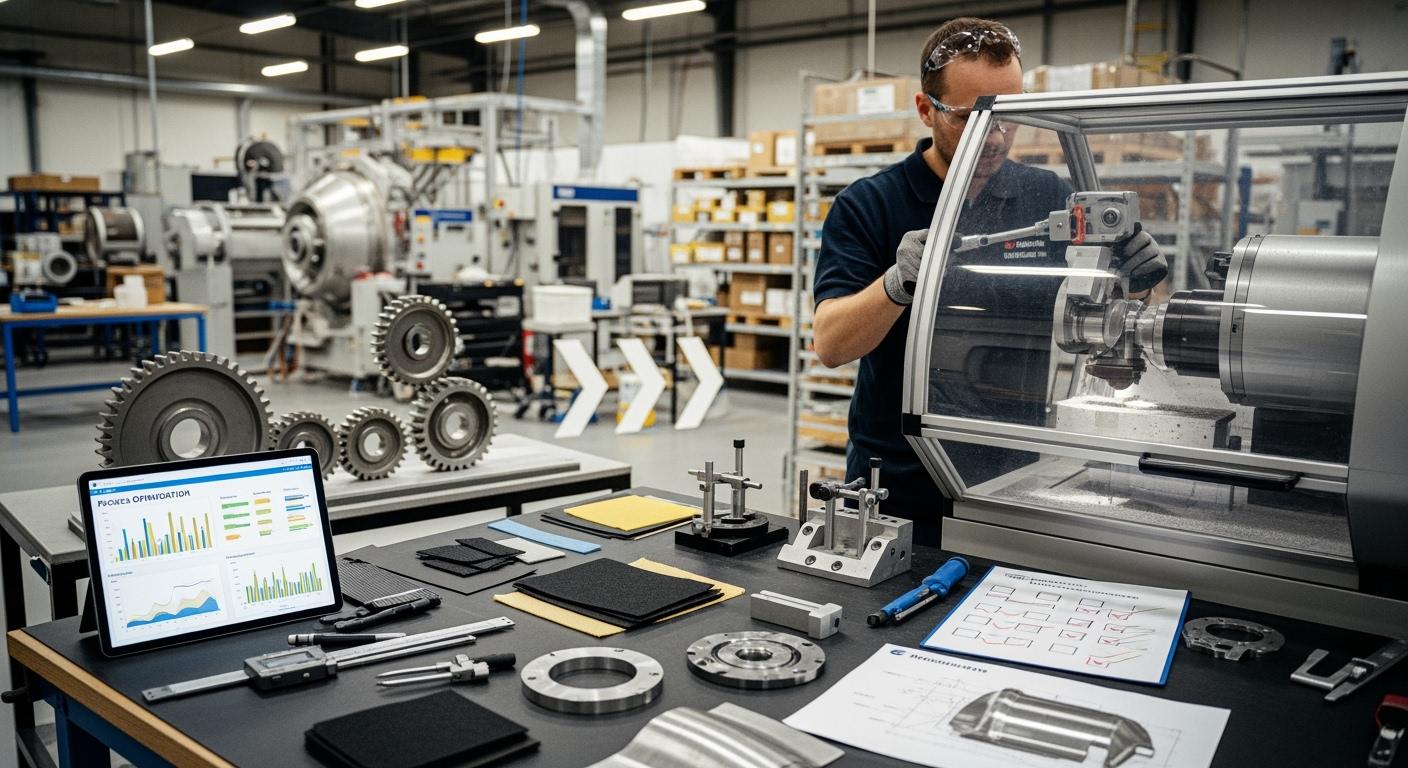
You can improve overall efficiency in composite grinding by using advanced grinding wheels, optimizing machine settings, and maintaining equipment regularly. Aimgrind’s diamond grinding wheels help you improve overall efficiency through their durability and precision. When you choose the right grinding tools, you improve overall efficiency by reducing grinding force and minimizing tool wear. Automation and monitoring systems improve overall efficiency and product quality. You improve overall efficiency with nano-composite grinding media, which lowers energy consumption and increases productivity.
Key Takeaways
- Optimize machine settings like spindle speed and feed rate to improve grinding efficiency and surface quality.
- Choose the right grinding tools, such as Aimgrind’s diamond wheels, to enhance precision and reduce tool wear.
- Use coolant and lubrication to manage heat, improve surface finish, and extend tool life during grinding.
- Schedule regular maintenance to keep machines in top condition, reduce downtime, and improve safety.
- Train operators on machine adjustments and tool handling to boost production efficiency and minimize delays.
Grinding Efficiency in Composites
What Is Grinding Efficiency?
You improve grinding efficiency in composites by adjusting machine settings and choosing the right tools. Grinding efficiency means how well you use energy and resources to remove material from composites while keeping the surface smooth and the process fast. You can change spindle speed, grinding depth, and feed speed to get better results. For example, higher spindle speed lowers grinding force, while deeper grinding and faster feed increase it. You need to balance these settings to get both high efficiency and good surface quality.
Grinding efficiency depends on many factors. You must pay attention to machine parameters and tool design. If you use diamond grinding wheels with the right bond type, you can boost efficiency and get a better finish on composites.
Here are some important factors that influence grinding efficiency in composites:
| Factor | Description |
|---|---|
| Equipment Maintenance | Regular upkeep keeps grinding machines working well and lasting longer. |
| Operational Techniques | The way you grind affects efficiency and the quality of composites. |
| Material Properties | The features of composites change how grinding works and how efficient it is. |
| Feed Size | The size of composite pieces you feed into the grinder changes the process efficiency. |
| Mill Speed | The speed of the mill can help or hurt grinding efficiency. |
| Grinding Media Type | The type of grinding media you use affects how well you grind composites. |
| Equipment Condition | Machines in good condition give you better efficiency. |
| Tool Design | The design of grinding tools, like diamond grain size, changes cutting forces and efficiency. |
| Feed Rate | Higher feed rates can increase cutting forces and affect grinding performance. |
Why Efficiency Matters for Composites
You need high efficiency when grinding composites because these materials are tough and often expensive. Efficient grinding helps you save time and money. It also keeps the surface of composites smooth and strong. If you use the right grinding wheels and adjust machine settings, you get better results and less waste.
| Evidence | Description |
|---|---|
| Optimization of grinding parameters | You improve surface quality and machining efficiency by adjusting settings. |
| Impact of spindle speed | Higher spindle speeds lower grinding force and make surfaces smoother. |
| Influence of feed speed and grinding depth | Faster feed and deeper grinding increase force, but depth matters more. |
| Recommended adjustments | You should increase cutting speed and feed rate, but balance them with material removal. |
| Grinding wheel comparison | Resin-based diamond wheels give you better surface quality than ceramic-bonded or electroplated wheels. |
You want to keep composites strong and avoid damage. Efficient grinding lets you finish jobs faster and keeps your tools in good shape. If you use Aimgrind’s diamond grinding wheels, you get high efficiency and a smooth finish every time.
Strategies to Improve Overall Efficiency
Optimize Machine Parameters
You improve grinding efficiency by adjusting machine parameters. You set spindle speed, feed rate, and grinding depth to match the properties of composites. You increase spindle speed to lower grinding force and get a smoother surface. You balance grinding depth and feed rate to boost material removal rate without damaging fiber matrix composites. You use precision grinding to achieve tight tolerances and high-quality finishes. You monitor machine vibration and stability to keep grinding consistent. You check the grinding wheel condition before each job. You use superabrasive grinding wheels for tough composite machining tasks. You track performance considerations to make sure you get the best results in manufacturing with composite materials.
Tip: You use Aimgrind’s diagnostic services to match machine parameters with your grinding solutions for composites. You get sample optimization and parameter matching for every grinding job.
Choose the Right Grinding Tools (Aimgrind Diamond Grinding Wheels)
You select the right grinding tools to improve efficiency and precision. You choose superabrasive grinding wheels like diamond wheels for grinding composites. You pick resin bond diamond wheels for high-speed grinding and smooth finishes. You use metal bond diamond wheels for edge grinding and durability. You select diamond grinding wheels for precision and long life. You use diamond-coated wheels for intricate shapes and complex composite machining. You match the bond type to your application to control wear rate and cutting efficiency.
- The bond type of the grinding wheel influences its wear rate and cutting efficiency, affecting surface finish.
- Using coolant during grinding can improve surface finish and prolong wheel life by reducing heat and friction.
- Higher grinding wheel speeds can enhance surface finishes by preventing wheel loading.
You use Aimgrind’s customized superabrasive grinding wheels to get cool and fast cutting capability. You achieve cost savings by reducing tool changes and downtime. You improve material removal rate and surface quality with diamond wheels. You get consistent performance and precision in additive manufacturing with composites.
Coolant and Lubrication Practices
You use coolant and lubrication to manage heat and improve grinding performance. You apply high-pressure coolant to flush chips and keep the grinding wheel open. You use flooded cooling to reduce tool wear and enhance surface quality. You avoid dry machining because it leads to poor surface finish and short tool life. You select coolant types based on your grinding composites process.
| Coolant Type | Effect on Tool Life | Effect on Grinding Quality |
|---|---|---|
| High-Pressure Coolant | Improves tool life by reducing contact area | Significant improvement in surface roughness |
| Flooded Cooling | Reduces tool wear compared to dry machining | Enhances surface quality |
| Dry Machining | Not effective in maintaining tool life | Poor surface finish |
You use coolant to lubricate abrasive grains, slow down wear, and extend tool life. You improve the G-Ratio, allowing for self-sharpening of superabrasive grinding wheels. You manage heat transfer to prevent grinding burn and keep dimensional accuracy. You maintain consistent geometry during long production cycles. You achieve cost savings by maximizing machine uptime and lowering tooling cost.
Regular Maintenance and Training
You schedule regular maintenance to keep grinding machines in top condition. You check machine parts, replace worn components, and clean grinding wheels. You maintain consistent operation and reduce wear on equipment. You extend the lifespan of machines and reduce energy consumption. You prevent costly emergency repairs and improve workplace safety. You keep grinding solutions for composites running smoothly.
You train operators to adjust machines and handle batch changes. You teach them how to use superabrasive grinding wheels and diamond wheels correctly. You reduce downtime by improving operator skills. You increase production and efficiency with proper training.
| Key Factor | Impact on Downtime | Impact on Efficiency |
|---|---|---|
| Operator-related issues | Major contributor | Significant improvement |
| Machine adjustment training | Reduces downtime | Enhances efficiency |
| Batch change training | Minimizes delays | Increases production |
You use Aimgrind’s support services to diagnose problems and optimize grinding performance. You keep manufacturing processes efficient and precise. You achieve cost savings and reduced downtime with regular maintenance and training.
Overcoming Composite Grinding Challenges
Tool Wear and Heat Management
You face tool wear and heat problems when you grind composite materials. Incorrect speeds and feeds cause tools to wear out quickly. Poor chip evacuation lets heat build up, which damages both the tool and the composite. Using the wrong tool material or coating makes grinding less effective. Vibration from lack of rigidity increases tool wear. You can manage heat and extend tool life by using flood, mist, or through-tool coolant methods. High-pressure coolant systems help remove chips and improve surface finish. Keeping the right coolant concentration prevents excessive tool wear. Aimgrind’s diagnostic services help you match grinding parameters and select the best grinding wheels for composites.
Tip: You check for vibration and adjust machine settings to prevent tool wear and overheating during grinding.
Handling Material Variability
Composite materials change in density, hardness, and chemical composition. These changes affect grinding efficiency and product quality. Higher cutting speeds and feed rates increase thermal energy, which leads to faster tool wear. Chips can build up on the grinding tool and cause loss of process stability. You must choose the right grinding media properties, such as density, hardness, and shape, to improve milling efficiency and quality. Aimgrind helps you optimize grinding composites by matching grinding wheel types and parameters to your material.
| Parameter | Effect on Surface Quality | Effect on Grinding Efficiency |
|---|---|---|
| Spindle Speed | Greatest impact on surface roughness | Decreases grinding force |
| Grinding Depth | Increases grinding force | Surpasses feed speed influence |
| Feed Speed | Increases grinding force | Affects material removal rate |
| Grinding Wheel Type | Resin-based wheels yield superior quality | N/A |
Ensuring Consistent Quality
You need to keep quality consistent when grinding composite materials. Dimensional accuracy ensures the wheel’s size and shape meet specifications. Material and bond verification confirm the abrasive and bond types are right for your job. Hardness and density tests check the wheel’s resistance to wear. Performance testing lets you monitor cutting efficiency and overall grinding performance. Compliance with standards keeps your process safe and reliable. Documentation and certification help you track quality and origin. Aimgrind’s support services provide sample optimization and parameter matching to help you achieve consistent results.
| Quality Control Measure | Description |
|---|---|
| Dimensional Accuracy | Ensures the wheel’s size, shape, and concentricity meet specifications for optimal performance. |
| Material and Bond Verification | Confirms the abrasive type and bond type to ensure compatibility and effectiveness. |
| Hardness and Density Tests | Assesses the wheel’s resistance to wear and ensures even distribution of materials. |
| Performance Testing | Involves trial runs to monitor cutting efficiency and overall performance. |
| Compliance with Standards | Ensures adherence to industry standards and manufacturer specifications for safety and reliability. |
| Documentation and Certification | Maintains quality certificates and traceability records to verify compliance and origin. |
Note: You use Aimgrind’s diagnostic and support services to solve grinding challenges and maintain high quality in composite manufacturing.
You can boost efficiency in composite grinding by optimizing machine parameters, choosing the right grinding tools, and maintaining your equipment. Aimgrind’s diamond grinding wheels help you achieve smoother surfaces and longer tool life. Recent studies show that using resin-based diamond wheels and advanced technologies leads to better results:
| Key Factor | Impact on Efficiency |
|---|---|
| Optimization of Grinding Parameters | Improves surface quality and enhances machining efficiency. Spindle speed has the greatest impact on surface roughness. |
| Selection of Grinding Equipment | Resin-based diamond grinding wheels provide superior surface quality compared to other types. |
| Implementation of Advanced Technologies | Advanced techniques can lead to better control over grinding processes and improved outcomes. |
You should monitor your process, make adjustments, and consult experts for continuous improvement. Ongoing evaluation and support help you keep your grinding operations efficient and reliable.
FAQ
What makes diamond grinding wheels better for composites?
Diamond grinding wheels cut hard materials like composites with less effort. You get smoother surfaces and longer tool life. These wheels also help you finish jobs faster and reduce downtime.
How do you choose the right grinding wheel bond type?
You match the bond type to your job. Resin bonds work well for smooth finishes. Metal bonds give you durability for edge grinding. Vitrified bonds help with precision. Ask Aimgrind for advice if you are unsure.
Why is coolant important during composite grinding?
Coolant keeps your grinding wheel and composite cool. It helps prevent heat damage and tool wear. You also get a better surface finish. Always use the right coolant for your process.
How often should you maintain your grinding equipment?
You should check your equipment before each job. Clean and inspect grinding wheels regularly. Schedule full maintenance every few months. Regular care helps you avoid breakdowns and keeps your grinding efficient.
Contact Us
For More Grinding Solution or Customized Abrasive Tools