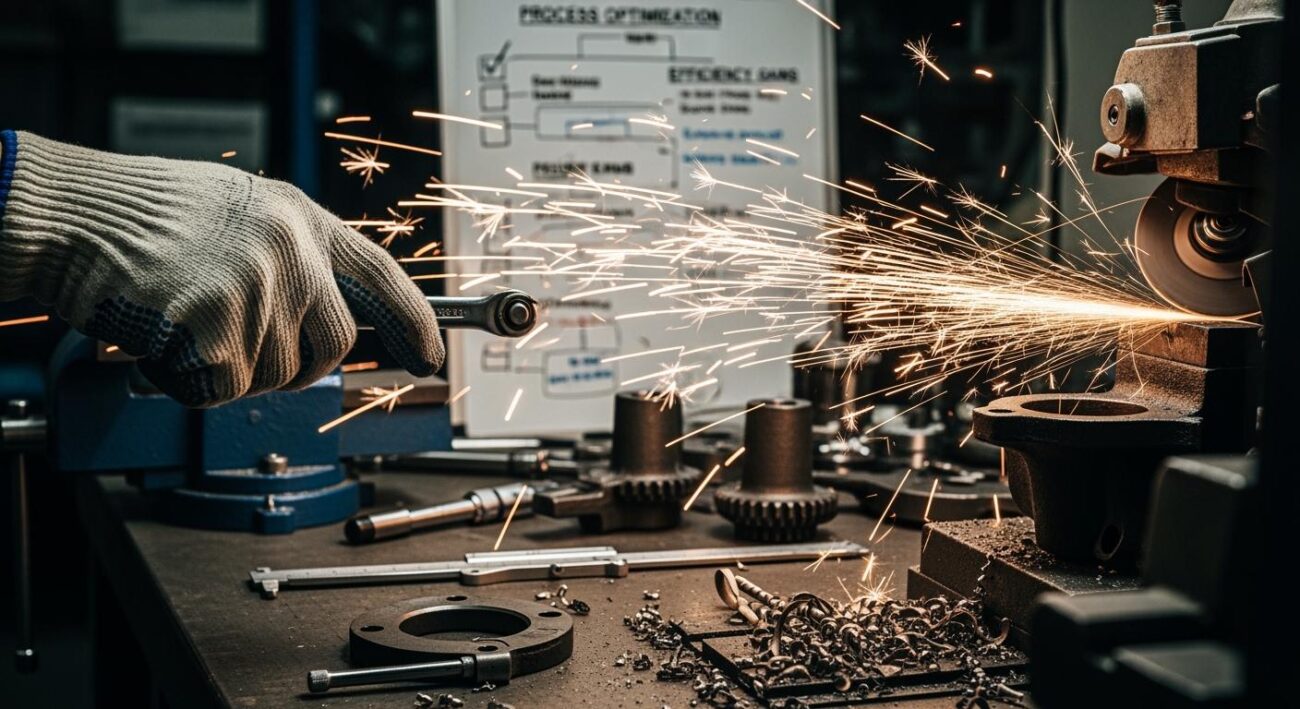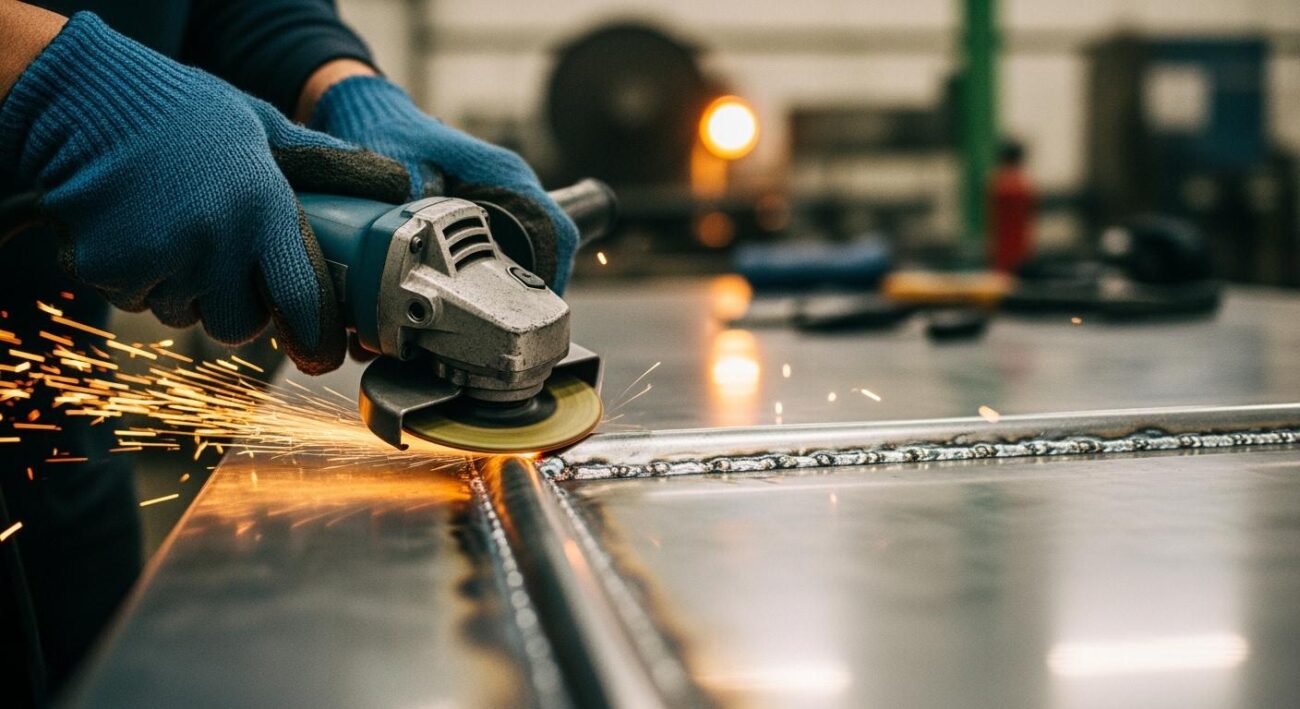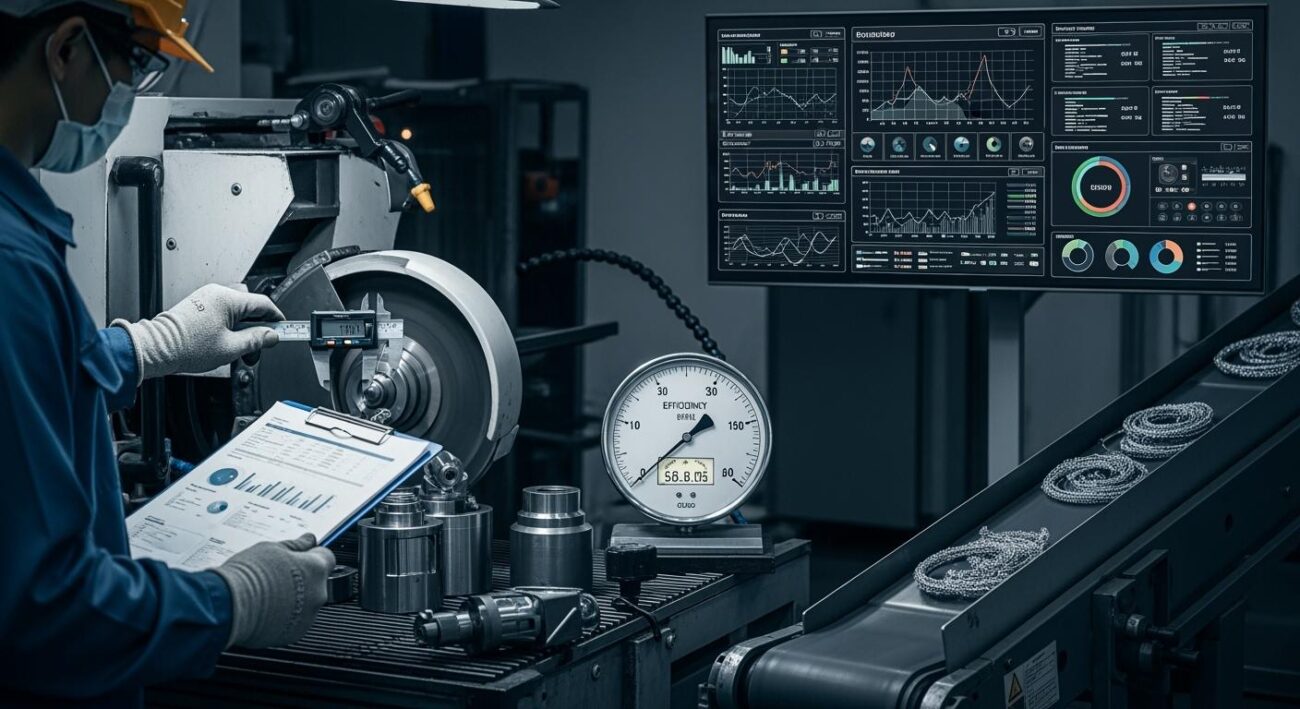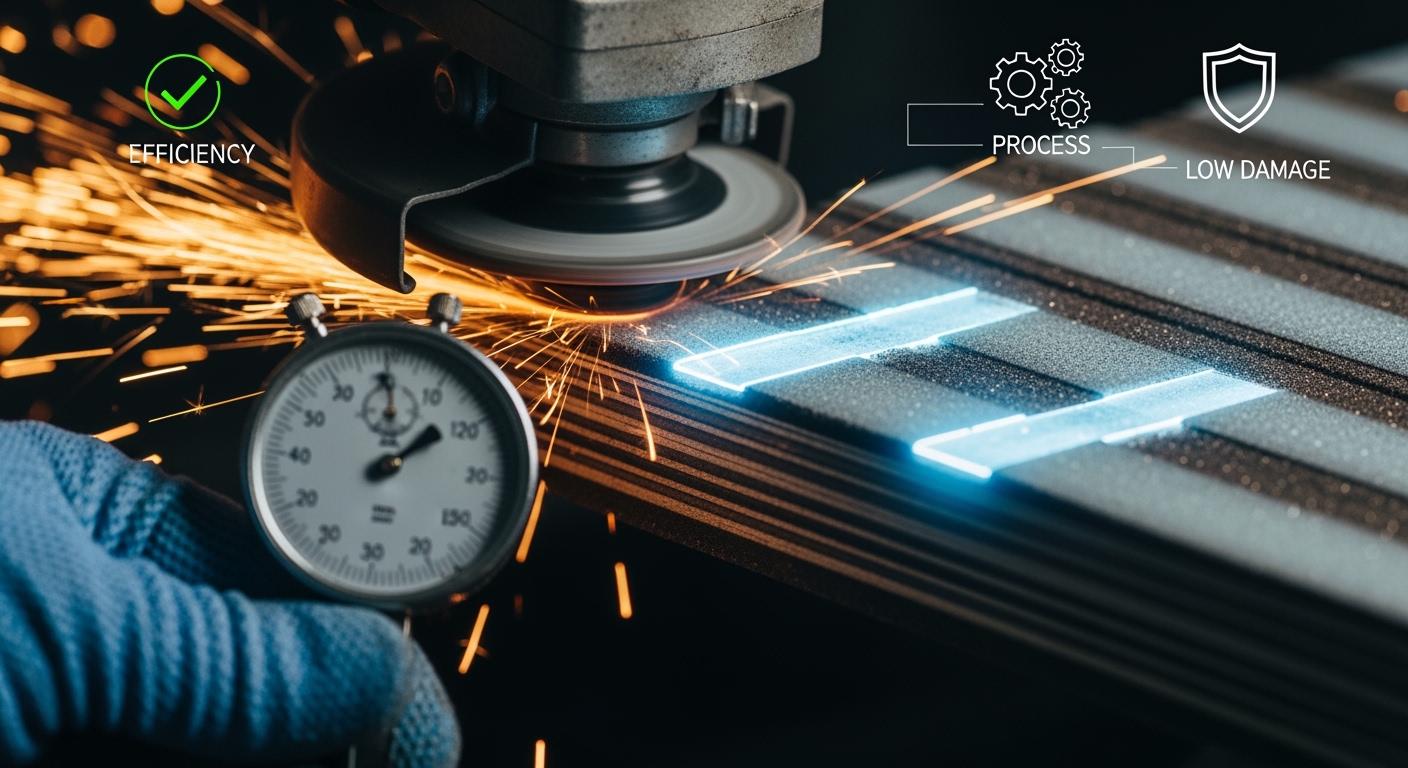
You face many challenges when you work to improve grinding efficiency for composite materials. Grinding these advanced materials can lead to issues like fiber pull-out, edge chipping, and delamination. Conventional tools often fail because carbon and glass fibers are very abrasive. High grinding forces or dull wheels can separate layers, while too much heat can damage the resin.
| Challenge | Description |
|---|---|
| Abrasiveness of Fibers | Carbon and glass fibers wear down conventional tools quickly. |
| Delamination Risk | High grinding forces or dull tools can cause layers to separate. |
| Fiber Pull-out | Fibers may be pulled from the resin matrix, leading to poor surface quality. |
| Edge Chipping | Ground composites can chip at the edges. |
| Thermal Sensitivity | Excessive heat can damage the resin binding the fibers. |
To achieve high grinding efficiency, you need advanced abrasive tools and careful control of cutting parameters. Grinding efficiency not only boosts productivity but also reduces costly downtime and surface defects.
Key Takeaways
- Choose super hard abrasives like diamond and CBN for grinding composites. They last longer and reduce the risk of damage.
- Optimize grinding parameters such as speed, feed, and depth to improve efficiency and minimize thermal damage.
- Use effective cooling and lubrication to control temperature and pressure during grinding. This helps maintain surface quality.
- Implement real-time monitoring and quality checks to detect damage early and adjust processes for better results.
- Utilize proper handling and fixturing techniques to stabilize workpieces, reducing vibration and preventing delamination.
Grinding Tools Selection with Aimgrind
Super Hard Abrasives for Composites
When you work with cfrp, you need tools that can handle the unique challenges of grinding hard materials. Aimgrind specializes in customized grinding solutions for cfrp and other advanced composites. You can trust Aimgrind to help you choose the right abrasive for your needs. Super hard abrasives, such as diamond and CBN, offer many advantages over conventional abrasives when grinding cfrp.
Here is a table that shows why super hard abrasives are the best choice for grinding hard materials like cfrp:
| Advantage | Description |
|---|---|
| High Hardness | Super hard abrasives can process high hardness materials that are difficult for conventional abrasives. |
| Wear Resistance | They exhibit low wear, leading to a longer service life and higher grinding ratios. |
| Grinding Efficiency | Improved economic efficiency due to better shape retention and reduced need for frequent dressing. |
| Processing Accuracy | Sharp cutting edges enhance processing accuracy and surface roughness, reducing machine power consumption. |
| Lower Grinding Temperature | Results in improved surface quality and minimizes defects like cracks and burns, enhancing part longevity. |
You will notice that super hard abrasives keep their sharpness even when grinding hard materials like cfrp. This means you spend less time changing tools and more time working. You also get better surface finishes and less risk of damage to your cfrp parts.
For cfrp and glass fiber composites, polycrystalline diamond (PCD) micro tools work very well. These tools have high hardness and wear resistance. You can use them to achieve high grinding efficiency and long tool life. Many industries that use cfrp rely on PCD tools for precision grinding.
Tool Geometry and Bond Types
Choosing the right tool geometry and bond type is just as important as picking the right abrasive. The geometry of your grinding tool affects how much heat you generate and how quickly you can remove material from cfrp. If you reduce grain protrusion, you decrease roughness peaks and increase the number of grains that engage with the cfrp. This helps you control the grinding process and avoid overheating.
| Aspect | Observation |
|---|---|
| Grain Protrusion | A reduction in grain protrusion decreases roughness peaks and increases the number of engaged grains. |
| Material Removal Rate | At a constant specific material removal rate, more grains engage, but each grain’s contribution decreases. |
| Grain Geometry Influence | Variations in grain geometry affect kinematic engagement and grinding forces, impacting heat generation. |
You should also pay attention to the size of the abrasive grains when grinding cfrp. Here are some key points:
- The size of abrasive grains influences material removal rates and surface quality.
- Coarser grits are effective for bulk material removal, while finer grits enhance surface quality and minimize scratches.
- The selection of abrasive type and grit size is essential to reduce deformation and damage during grinding.
Bond type matters when you grind cfrp. Each bond type offers different strengths for grinding hard materials. The table below shows the main properties and uses of each bond type:
| Bond Type | Key Properties and Strengths | Applications |
|---|---|---|
| Vitrified | High rigidity and strength, excellent form holding, good dressability. Porous structure allows for effective coolant flow and swarf removal. Chemical inertness ensures consistent performance. | Ideal for precision grinding tasks, such as grinding bearings and gears. Suitable for high stock removal rates in rigid machines. Long life in appropriate applications. |
| Resinoid | Good strength and toughness, can withstand higher mechanical stresses. Tougher than vitrified bonds, making them less susceptible to chipping. | Suitable for demanding operations, especially where flexibility is needed. Effective for grinding operations that require resilience under shock loads. |
| Metal | Offers high strength and durability, suitable for heavy-duty applications. | Commonly used in applications requiring high impact resistance and longevity. |
When you match the right tool geometry and bond type to your cfrp application, you improve grinding efficiency and reduce the risk of damage. Aimgrind can help you select the best combination for your grinding hard materials needs. You get better results, longer tool life, and higher productivity when you make informed choices.
Optimizing Grinding Efficiency Parameters
Speed, Feed, and Depth Control
You can achieve high grinding efficiency and low damage in composites by adjusting operational parameters like speed, feed, and depth. These parameters control the energy input, pressure, and temperature during grinding. When you set the right wheel speed, you reduce the risk of thermal damage and improve surface quality. For carbon fiber composites, you should use wheel speeds between 20 and 30 m/s. This range helps you balance energy consumption and grinding temperature.
Feed rate also plays a big role in process optimization. Low feed rates, such as 0.01 to 0.05 mm per pass, help you avoid excessive pressure and keep the cutting temperature low. If you increase the feed rate too much, you raise the grinding pressure and energy, which can cause surface cracks and fiber pull-out. Depth of cut should stay shallow to prevent high pressure and temperature spikes. Shallow cuts lower the risk of thermal damage and keep the energy consumption steady.
Tip: Always monitor the grinding pressure and temperature during operation. Small changes in operational parameters can lead to big differences in efficiency and surface quality.
Improper selection of these parameters can cause several types of damage. The table below shows how incorrect settings affect the composite surface:
| Evidence Type | Description |
|---|---|
| Surface Damage | Cracks form on the carbon fiber surface upon tool contact, causing brittle fractures. |
| Fiber Breakage | Fiber/matrix debonding occurs as carbon fibers are removed, leading to poor surface quality. |
| Orientation Impact | At 0° orientation, fibers are deformed and removed by brittle fracture. At 90°, fibers are pulled out, causing defects. |
| Temperature Effects | High temperatures lead to smearing of the resin matrix, making surface damage worse. |
| Compression Damage | At 45° and 135°, bending of fibers results in compression damage at the fiber tip, increasing debonding. |
You can see that process optimization is not just about speed. You must consider all operational parameters, including pressure and energy input, to avoid thermal damage and maintain high efficiency.
Cooling and Lubrication Methods
Cooling and lubrication are essential mechanisms for controlling grinding temperature and pressure. When you use the right coolant, you prevent thermal damage and keep the grinding temperature stable. Coolant neutralizes thermal expansion, which helps you maintain dimensional accuracy. It acts as a thermal barrier, absorbing heat and flushing it away from the grinding zone. This keeps the temperature from rising and protects the workpiece from thermal damage.
The table below explains how coolant and lubrication affect grinding temperature and surface quality:
| Evidence Description | Effect on Grinding Temperature and Surface Quality |
|---|---|
| Coolant neutralizes thermal expansion, preventing dimensional changes during grinding. | Maintains dimensional accuracy and prevents thermal damage. |
| Coolant acts as a thermal barrier, absorbing heat and flushing it away. | Stabilizes temperature, preventing heat from affecting the workpiece core. |
| Grinding burn indicates thermal distress due to high temperatures. | High temperatures can lead to surface discoloration and oxide formation. |
| Contaminated coolant leads to overheating and thermal damage. | Causes cracking or warping in heat-sensitive materials. |
| Coolant optimizes surface finish by flushing away debris. | Reduces roughness and prevents scratches on the surface. |
| Lack of lubrication causes plowing action, creating surface imperfections. | Results in jagged peaks and valleys on the microscopic level. |
Lubrication also plays a key role in process optimization. It reduces friction between the grinding tool and the workpiece. This lowers the grinding pressure and energy consumption. Lubrication helps dissipate heat, which keeps the grinding temperature low and prevents thermal damage. It also removes swarf, abrasive particles, and debris from the grinding zone. This keeps the cutting mechanisms sharp and improves efficiency.
- Lubrication reduces friction and grinding pressure.
- It helps dissipate energy and keeps the grinding temperature low.
- Lubrication flushes away debris, which protects the cutting mechanisms and improves surface quality.
- Effective lubrication improves your G-Ratio, which means you remove more material with less wheel wear.
- It allows abrasive grains to self-sharpen, which keeps the grinding mechanisms efficient.
Coolant acts as a slick barrier between the grinding tool and the workpiece. It reduces mechanical stress on the abrasive bond posts. This is similar to tapping a threaded hole in steel. If you run a tap dry, friction dulls the cutting edges instantly, and the tap might snap. If you add tapping oil, the tool glides through, and the cutting edges stay sharp for hundreds of holes.
You must also consider the environmental and health impacts of coolants. Inhalation of grinding machine coolant can cause skin rashes and respiratory problems. Sharp particles in the coolant can damage lung tissue. Bacteria in the coolant can also pose health risks. Improper disposal of coolants can lead to soil and water contamination. You should always manage coolant use carefully to protect both workers and the environment.
By focusing on process optimization, you can control grinding temperature, pressure, and energy consumption. This helps you achieve high efficiency, low thermal damage, and excellent surface quality in composite grinding.
Process Monitoring for Low Damage
Real-Time Damage Detection
You need to monitor the grinding process closely to keep damage as low as possible. Real-time detection helps you spot problems before they become serious. When you use advanced sensors, you can catch early signs of damage and make quick adjustments. This keeps your grinding efficiency high and your parts safe from thermal damage mechanisms.
The table below shows how different technologies help you detect subsurface damage during grinding:
| Technology | Effectiveness in Identifying Subsurface Damage | Key Features |
|---|---|---|
| Acoustic Emission (AE) | Highly effective | Captures transient elastic stress waves, detects micro-crack initiation and propagation, suitable for real-time monitoring. |
| Thermal Imaging | Limited effectiveness | Focuses on temperature distribution, cannot detect mechanical failure modes like AE systems. |
Acoustic emission sensors give you a powerful way to control grinding. They pick up stress waves from micro-cracks and help you react fast. Thermal imaging lets you watch temperature changes, but it cannot catch all types of damage. You should use both methods together for better control and low damage.
Quality Checks and Feedback
After grinding, you must check the surface and structure to make sure you have not caused damage. Quality checks help you control the process and keep efficiency high. You can use several methods to assess your results:
- Visual inspection lets you spot surface defects, check smoothness, and see if the edges are sealed.
- Surface roughness measurement uses a profilometer to give you numbers for how smooth the surface is. For bonding, you want Ra values between 1.5 and 3.0 micrometers.
- Acoustic emission testing helps you control structural integrity during and after grinding.
You can improve control by connecting your grinding machines to a manufacturing execution system. This system collects real-time data and helps you adjust your process quickly. It also links with IoT sensors and automated quality control tools. This setup lets you track grinding, control damage, and boost efficiency.
Tip: Always use feedback from your quality checks to adjust your grinding parameters. This keeps your process under control and helps you avoid damage.
When you combine real-time monitoring, quality checks, and feedback loops, you control grinding damage and keep your process efficient. You protect your composite parts and achieve low damage every time.
Best Practices to Minimize Grinding Damage
Handling and Fixturing Techniques
You can prevent grinding damage by using the right handling and fixturing techniques. Secure your composite workpiece with heavy-duty clamping systems. Hydraulic or pneumatic clamps hold large parts tightly, stopping movement and reducing the risk of damage. Structural support, such as fixture plates and angle plates, spreads out the grinding forces. This keeps the workpiece stable and helps you achieve better efficiency. Vibration damping materials inside the fixture absorb shocks. This leads to smoother grinding and less tool wear.
| Technique | Description |
|---|---|
| Heavy-Duty Clamping Systems | Hydraulic or pneumatic clamping systems provide consistent pressure to hold large workpieces securely, preventing deformation and ensuring precision during machining. |
| Structural Support and Stability | Using fixture plates, angle plates, and base blocks helps distribute machining forces evenly, minimizing vibrations and ensuring a stable cutting environment, which is critical for precision operations like CNC grinding. |
| Vibration Damping | Incorporating damping materials or mechanisms within the fixture absorbs vibrations, leading to smoother machining operations and improved surface finishes, essential for maintaining precise tool paths. |
- Custom fixtures designed for your specific part shape give you more stability. You can adapt these fixtures for complex designs, which helps you keep grinding accuracy high.
- Proper support stops delamination. If you leave edges or thin sections unsupported, vibration and flexing can cause layers to separate. Even with the best grinding tools, poor fixturing increases the risk of damage.
Tip: Always check your fixturing before grinding. Stable support means less vibration, less wear, and lower risk of damage.
Post-Grinding Surface Treatments
After grinding, you need to restore and protect the composite surface. Surface treatments improve both mechanical properties and long-term durability. Abrasive blasting increases bending and impact strength. Chemical treatments, such as methylene chloride, boost shear strength. When you combine abrasive and chemical treatments, you get better adhesion and micromechanical retention. This combination gives you extra wear protection and helps prevent future damage.
Cleaning the surface is also important. Solvent wiping removes oils and contaminants. Detergent cleaning works well for heavy dirt but needs rinsing and drying. Dry ice blasting removes paint and sealants without causing extra wear. Plasma treatment raises surface energy, which is good for thermoplastic composites. Laser surface preparation lets you control texture with little heat, so you avoid thermal damage. Chemical treatments, like sodium hydroxide for polyester resins, target specific resin systems for better wear protection.
- Clean surfaces last longer and resist wear.
- Surface treatments add another layer of wear protection.
- You keep grinding efficiency high and reduce the chance of future damage.
Note: Post-grinding treatments not only repair damage but also give your composite parts better wear resistance and longer life.
You can boost grinding efficiency and keep composite parts safe by choosing the right tools, adjusting process settings, and using smart monitoring. Aimgrind’s super hard abrasives help you achieve better results with less damage. As you look ahead, expect grinding technology to grow with new materials, smart factories, and eco-friendly methods:
- New grinding techniques for advanced composites
- Smart factories with real-time control
- Cleaner, sustainable grinding solutions
Follow these steps to get the best results every time.
FAQ
What makes super hard abrasives better for composites?
Super hard abrasives, like diamond and CBN, stay sharp longer. You get smoother surfaces and less tool change time. These abrasives also help you avoid cracks and chips in your composite parts.
How do I choose the right grinding wheel for my composite material?
You should match the wheel’s abrasive type, grit size, and bond to your material. Aimgrind can help you select the best wheel for your needs. This ensures you get high efficiency and low damage.
Why is cooling important during grinding?
Cooling keeps your composite from overheating. It stops burns, cracks, and resin damage. You also get a better surface finish when you use the right coolant.
Can Aimgrind customize grinding solutions for my process?
Yes! Aimgrind offers custom grinding wheels and tools. You can get expert advice, sample testing, and formula design. This helps you solve your unique grinding challenges.
Contact Us
For More Grinding Solution or Customized Abrasive Tools