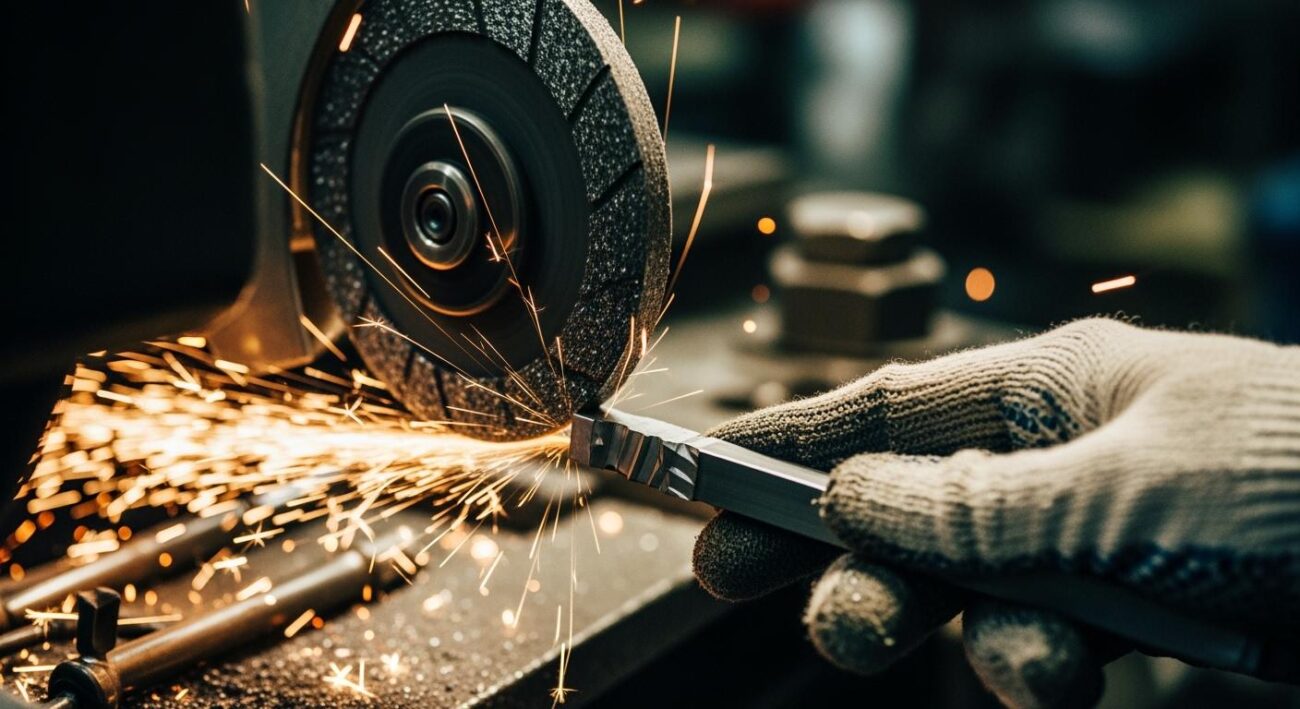
You can control chipping risk in tungsten carbide knives by focusing on grinding wheel selection, parameter changes, and stable machine setup. Many believe more pressure helps, but this causes chipping. Use smaller grit sizes and sharper wheels for tungsten carbide knives. Aimgrind’s super hard abrasives protect tungsten carbide knives from chipping and extend tool life. Tungsten carbide knives need careful edge preparation. Always sharpen tungsten carbide knives with proper methods. Tungsten carbide knives last longer with the right grinding approach. Tungsten carbide knives resist wear but require precise grinding to avoid chipping. Tungsten carbide knives work best when you match wheels and parameters. Tungsten carbide knives hold their edge if you follow these steps.
Key Takeaways
- Choose Aimgrind super hard abrasives for tungsten carbide knives. These wheels reduce chipping and extend tool life.
- Use fine grit sizes (120-320) and appropriate bond types to achieve a smooth finish and minimize chipping.
- Maintain a slow feed rate and shallow depth of cut during grinding. This approach helps keep the edge sharp and reduces the risk of chipping.
Grinding wheel selection for control chipping risk
Aimgrind super hard abrasives advantages
You need to choose the right grinding wheel to control chipping risk when working with tungsten carbide knives. Aimgrind super hard abrasives use diamond and CBN grains. These grains are very hard and stay sharp for a long time. You can grind tungsten carbide knives with less force and get a smooth finish. This helps you avoid chipping and keeps the edge strong. Aimgrind wheels work well for cutting hard materials and protect tungsten carbide knives from damage. You get longer tool life and better results.
Tip: Use Aimgrind super hard abrasives for tungsten carbide knives. You will see fewer chips and more consistent edges.
Grit size and bond type
You must pay attention to grit size and bond type. Grit size means the size of the tiny particles in the wheel. For tungsten carbide knives, fine grits (120–320) give you a smooth finish and reduce chipping. Coarse grits (60–80) remove material fast but can cause chipping. Resin bonds are good for finishing tungsten carbide knives. Vitrified bonds hold their shape better for profile work. Hybrid bonds combine the best features of resin and metal. You can use hybrid or resin bonds with medium concentration for sharpening tungsten carbide knives. This keeps the edge sharp and avoids overheating.
| Wheel Type | Bond | Surface Quality | Grinding Force | Wheel Life |
|---|---|---|---|---|
| Resin Diamond | Resin | Smooth | Light | Long |
| Hybrid Diamond | Hybrid | Smooth | Medium | Long |
| Metal Diamond | Metal | Rough | Heavy | Long |
You can control chipping risk by matching the right grit size and bond type to your tungsten carbide knives. This gives you a strong edge and fewer chips.
Grinding parameters for preventing chipping
Feed rate and depth of cut
You can improve your grinding results by adjusting the feed rate and depth of cut. When you grind tungsten carbide knives, use a slow feed rate. This helps you remove material gently. Fast feed rates can cause the wheel to push too hard. This leads to chipping along the knife edge. A shallow depth of cut also helps. You should avoid deep cuts because they create more force and heat. Both of these can damage the edge of tungsten carbide knives.
If you want to control chipping risk, always start with a light touch. Increase the feed rate or depth of cut only if you see no signs of chipping. You can check the edge under a magnifier. Look for small chips or cracks. If you see any, reduce the feed rate or make the cut shallower. Aimgrind can help you match the right parameters for your grinding process. Their experts know how to set up your machine for the best results with tungsten carbide knives.
Tip: Use a slow feed rate and shallow depth of cut when you grind tungsten carbide knives. This keeps the edge sharp and reduces chipping.
Wheel speed and coolant
Wheel speed is another key factor in preventing chipping. High wheel speeds can make the grinding process smoother. You should use the recommended speed for your grinding wheel. If you run the wheel too slow, it may rub instead of cut. This can heat up the tungsten carbide knives and cause chipping. If you run the wheel too fast, it may break down the edge. Always check the speed settings before you start.
Coolant plays a big role in preventing chipping. Coolant keeps the grinding area cool and flushes away chips. You can use different methods to apply coolant. Flood cooling covers a large area but may not reach tight spots. High-pressure coolant breaks the vapor barrier and cools the edge better. It can lower the tool temperature by up to 200°C. This helps prevent cracks and chips in tungsten carbide knives. High-pressure coolant also flushes chips away so they do not get ground again.
Here is a table that shows how different coolant methods and flow rates help with chipping:
| Coolant Method | Flow Rate (L/min) | Benefits |
|---|---|---|
| Flood Cooling | 20-50 | Covers large areas but less effective in tight spaces. |
| High-Pressure Coolant | 5-10 per nozzle | Breaks vapor barrier, improves heat transfer, reduces tool temperature by 150-200°C, flushes chips away to prevent re-cutting. |
You should always use enough coolant when grinding tungsten carbide knives. This keeps the edge cool and clean. Aimgrind can help you choose the right coolant method and wheel speed for your grinding setup. Their team will work with you to find the best way to prevent chipping and get a smooth finish.
Note: Good parameter matching is key to preventing chipping. Aimgrind offers expert support to help you set the right feed rate, depth of cut, wheel speed, and coolant flow for your tungsten carbide knives.
Machine setup and common failure modes
Machine rigidity and support
You must set up your machine correctly to protect tungsten carbide knives from chipping. Many common failure modes happen when the machine lacks rigidity or proper support. Here are the most common failure modes in carbide grinding:
- Excessive lateral pressure and over-leveraging cause fractures in tungsten carbide knives.
- Incorrect RPM synchronization leads to chipping and heat checking.
- Collet integrity and tool runout create wobbling and fatigue fractures.
- Selection of flute geometry affects stress failures.
- Thermal shock and coolant mismanagement result in fractures.
You can avoid these problems by making your machine more rigid. Use strong clamps and supports to hold tungsten carbide knives steady. Check collet fit and tool extension. Shorten stick-out to reduce wobble. Make sure your burr rotates with low runout. Use the right burr shape for tungsten carbide knives. Keep your coolant flow steady to prevent thermal shock.
Tip: Always check your machine setup before grinding tungsten carbide knives. A rigid setup helps you avoid chipping and keeps the edge strong.
Vibration and workpiece stability
Vibration is a major cause of chipping in tungsten carbide knives. You can control vibration by clamping the workpiece tightly. Even a simple backing bar helps. Adjust RPM down by 10–20% if you see vibration. Clean your collet and check for mix-ups. Change engagement from tip contact to side engagement. Switch cut style if needed.
- Clamp or support tungsten carbide knives immediately.
- Shorten stick-out and re-seat the burr.
- Reduce pressure and increase sweep speed.
- Use double-cut style for steels and aluminum geometry for non-ferrous materials.
Vibration causes intermittent cutting and rubbing. Heat rises locally. Edge micro-chipping begins. Cutting becomes rougher and needs more pressure. Vibration increases further. Tool life collapses. Automated systems can help by monitoring load, vibration, and temperature. They analyze tool conditions in real time and replace tools before they reach critical wear limits. This reduces chipping risk for tungsten carbide knives.
| Step | Action | Result |
|---|---|---|
| Clamp workpiece | Use backing bar or strong clamp | Less vibration, stable grinding |
| Adjust RPM | Lower speed by 10–20% | Smoother cutting, less chipping |
| Clean collet | Remove debris and check fit | Steady rotation, fewer chips |
You can keep tungsten carbide knives sharp and strong by controlling vibration and supporting the workpiece. This prevents common failure modes and reduces chipping.
Maintenance and monitoring with Aimgrind solutions
Wheel dressing and inspection
You must keep your grinding wheel in top condition to get the best results. Regular wheel dressing and inspection help you avoid problems before they start. Dressing the wheel keeps the cutting edge sharp and clean. You should dress the grinding disc every 10 to 15 hours of continuous use. This prevents thermal cracks and extends the life of your wheel.
You need to watch for signs that your wheel needs attention:
- Glazing on the wheel surface
- Slower cutting speed
- More vibration during grinding
- Heat marks on the workpiece
Grinding pressure, wheel bond type, coolant quality, and how much you use the wheel all affect how often you should dress it. If you see any warning signs, stop and check the wheel. Aimgrind’s team can guide you on the right dressing schedule for your process.
Tip: Regular inspection and dressing keep your grinding wheel safe and effective.
Condition monitoring practices
You can spot early signs of chipping by using good condition monitoring practices. Start with visual checks. Look for chip buildup or changes on the wheel surface. You can use digital tools, like image processing software, to see small changes that your eyes might miss.
Some shops use acoustic sensors to listen for changes in grinding sounds. These sensors can tell you when the wheel starts to wear out. You can also use scanning electron microscopes to check for chip buildup and surface changes.
Aimgrind supports you with advanced monitoring solutions. Their experts help you set up the right tools and checks for your grinding process. This keeps your carbide knives sharp and reduces the risk of chipping.
Operator best practices for chipping control
Skill development and consistency
You improve grinding results by building your skills and keeping your work consistent. Training programs help you learn safe practices and understand how to use machines. You gain knowledge about materials and grinding methods. Certifications teach you how to inspect your work and follow quality standards. You also learn how to keep your workspace organized and efficient. The table below shows important skills covered in operator training:
| Skills Covered | Description |
|---|---|
| Production floor safety | Essential for maintaining a safe working environment. |
| CNC controls and programming | Fundamental for operating CNC machines effectively. |
| Metallurgy | Understanding materials is crucial for grinding. |
| Machining and grinding processes | Directly relevant to carbide grinding techniques. |
| Inspection methods | Ensures quality and consistency in grinding outputs. |
| Six Sigma, 5S, Lean, and TPM | Methodologies that enhance operational efficiency. |
| Workholding principles | Important for maintaining stability during grinding. |
You build confidence and reduce mistakes by practicing these skills. Consistent training helps you prevent chipping and keeps your tools in good condition.
Documentation and process control
You keep grinding quality high by using process control methods and documenting your steps. You follow proven techniques to reduce chipping risk. Here are the most effective process control methods:
- Pre-milling at the exit end stabilizes the cutting environment.
- Climb milling minimizes impact forces on workpiece edges.
- Control of cutting depth keeps the process stable.
- Vacuum cleaner wind speed settings remove dust and improve machining quality.
- Timely tool replacement prevents increased cutting forces and vibrations.
- Adjustment of tool speed and feed rate enhances cutting efficiency.
You record your settings and results after each grinding session. You check your tools and machines regularly. Good documentation helps you spot problems early and make improvements. You create a routine that keeps your grinding process reliable and safe.
You can control chipping risk by reducing step depth, improving fixturing rigidity, and adding chamfers before heavy grinding. Aimgrind super hard abrasives help you get better results. Keep improving your process and monitor your tools. The table below shows how process changes impact chipping and tool life:
| Process Change | Impact on Tool Life and Chipping Rates |
|---|---|
| Higher feed rate and cutting speed | Reduces damage, enhances tool life |
| Smaller clearance angle | Extends tool life, increases productivity |
| Adjusting chip morphology with cutting data | Improves chip formation, reduces chipping rates |
FAQ
What is the best grinding wheel for carbide chipping control?
You get the best results with Aimgrind super hard abrasives. Diamond and CBN wheels keep edges sharp and reduce chipping.
How often should you dress your grinding wheel?
You should dress your wheel every 10–15 hours of use.
- Check for glazing
- Watch for slower cutting
- Inspect for vibration
Can coolant help prevent chipping in carbide grinding?
| Coolant Type | Benefit |
|---|---|
| High-pressure coolant | Lowers tool temperature |
| Flood cooling | Keeps grinding area clean |
You keep the edge cool and reduce chipping with proper coolant.
Contact Us
For More Grinding Solution or Customized Abrasive Tools