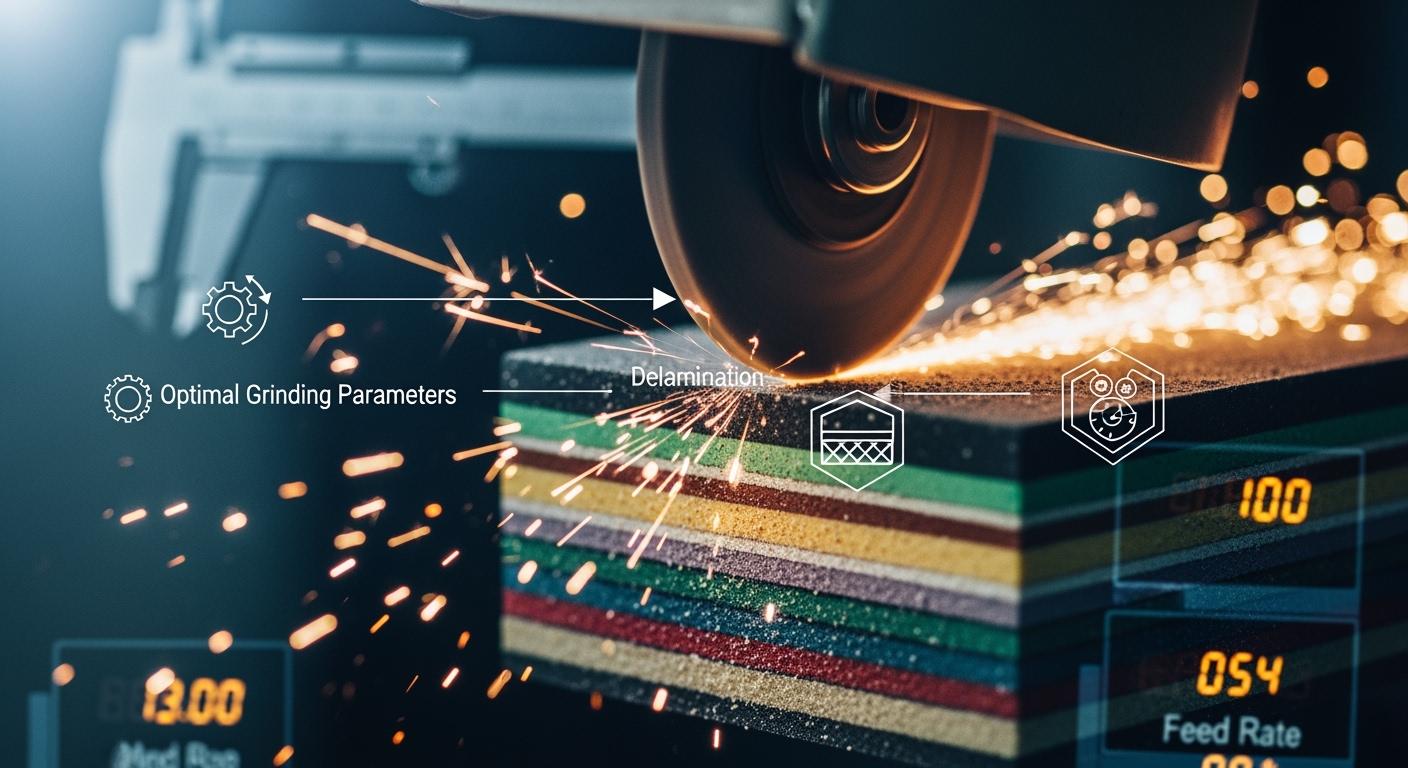
To prevent delamination in composites, you must set grinding parameters with precision. Using the right tools like Aimgrind super hard abrasives helps you achieve smoother surfaces and maintain material strength. Delamination often occurs when grinding forces exceed the bond between composite layers. This weakens the structure and reduces product life. Studies show that adjusting speed and feed rate has a significant impact on surface quality and grinding force.
Table: How Grinding Parameters Affect Composite Integrity
| Parameter | Effect on Cutting Forces | Effect on Surface Roughness |
|---|---|---|
| Spindle Speed | Varies | Varies |
| Feed Rate | Most effective | Affects surface quality |
When you select the right grinding parameters, you protect the integrity of composite materials and improve overall machining results.
Key Takeaways
- Set the right grinding parameters to prevent delamination in composite materials. This keeps your parts strong and extends their life.
- Control spindle speed and feed rate carefully. High speeds can create heat, which weakens the material and increases delamination risk.
- Use Aimgrind super hard abrasives for better results. These tools stay sharp and help maintain stable grinding parameters.
- Always use coolant when grinding composites. It keeps the temperature low and helps achieve a smoother surface.
- Support your workpiece with a rigid backing plate. This prevents movement and helps maintain the integrity of the composite layers.
Key Grinding Parameters to Prevent Delamination
When you work with composite materials, you must set the right grinding parameters to prevent delamination and keep your parts strong. Each parameter affects how the tool interacts with the layers of the composite. If you use the wrong settings, you can damage the material or shorten its life. Aimgrind super hard abrasives help you achieve the best results because they stay sharp and reduce heat during machining composites.
Speed and Feed Rate Settings
You need to control speed and feed rate carefully when machining composites. High spindle speeds can make the surface smoother, but they also create more heat. Too much heat can weaken the resin in composite materials and cause delamination. If you use a feed rate that is too high, you increase the force on the layers, which can also lead to damage.
Tip: Always balance speed and feed rate to keep forces low and avoid heat buildup.
Here is a table to help you choose the right grinding parameters for different tool sizes:
| Tool Diameter | Recommended Spindle Speed | Feed Rate Range | Application |
|---|---|---|---|
| 4-6mm | 18,000-24,000 RPM | 200-500 mm/min | Detail work, small features |
| 8-10mm | 15,000-20,000 RPM | 300-800 mm/min | General milling, edge trim |
| 12-16mm | 12,000-18,000 RPM | 400-1000 mm/min | Large area milling, roughing |
| 18-20mm | 10,000-15,000 RPM | 500-1200 mm/min | Heavy stock removal |
When you use Aimgrind super hard abrasives, you can run at higher speeds without losing sharpness. This helps you keep the grinding parameters stable and prevent delamination during machining composites.
Grit Size and Tool Geometry
The grit size and tool geometry play a big role in how you machine composite materials. Fine grit sizes give you a smoother finish and lower the risk of delamination. Coarse grits can pull at the fibers and cause the layers to separate.
You should also pay attention to tool geometry. Tools with sharp cutting edges and positive rake angles reduce cutting forces. Fewer flutes help remove chips faster, which is important for machining composites like carbon fiber. A higher helix angle helps move chips away and keeps the layers from peeling.
| Tool Feature | Recommendation | Purpose |
|---|---|---|
| Cutting Edges | Sharp, positive rake angles | Reduces cutting forces and delamination risk |
| Flute Count | Fewer flutes for carbon fiber | Better chip removal, less force on layers |
| Helix Angle | Higher helix angles | Moves chips away, prevents layer separation |
| Coating | Diamond or PCD coatings | Keeps tool sharp, protects fibers |
Modern tools for machining composites often use diamond coatings. Aimgrind super hard abrasives use diamond and CBN grains, which keep the tool sharp and help you maintain the right grinding parameters. This makes it easier to prevent delamination and get a clean finish on composite materials.
Coolant and Workpiece Support
Coolant is very important when you grind composite materials. It keeps the temperature low and washes away dust. When you use coolant, you get a smoother surface and less fiber tearing. This helps you prevent delamination and improve the quality of your parts.
Note: Always use coolant when machining composites to keep the surface smooth and the layers strong.
Workpiece support is another key factor. If you do not support the workpiece well, the layers can bend or peel away. Use a rigid backing plate to hold the material steady. This stops the layers from moving and helps you keep the grinding parameters under control.
- Use a strong backing plate to stop bending.
- Make sure the workpiece does not vibrate during grinding.
- Choose Aimgrind super hard abrasives for stable, precise machining.
When you combine the right grinding parameters, sharp tools, coolant, and good support, you can machine composite materials with less risk of delamination. Aimgrind super hard abrasives give you the edge you need for high-quality results in machining composites.
Causes of Delamination in Composites
Mechanisms and Contributing Factors
You need to understand why delamination in composites happens during grinding. The main reason is the way forces act on the layers of the material. When you grind, different forces can pull or push the layers apart. Here are the main forces that cause delamination:
- Thrust force pushes down on the composite and can separate the layers if it gets too high.
- Peeling force happens when the tool lifts up at the end of a cut, pulling the layers upward.
- Cutting torque twists the material and can break the bond between layers.
Composites have a special structure. They are made of different phases, like fibers and a matrix. These parts have different strengths and react differently to grinding. The matrix can get soft from heat or pressure, making delamination more likely. The fibers and matrix do not always move together, so the layers can split if you do not control the grinding process.
- Composites are not uniform. This makes them more likely to have delamination.
- The matrix and fibers have different properties, which makes grinding tricky.
- The matrix can get damaged by heat or pressure, increasing the risk of delamination in composites.
Effects of Improper Parameter Settings
If you set the wrong grinding parameters, you increase the risk of delamination in composites. High feed rates or wrong tool shapes can create too much force against the fiber direction. This can pull the layers apart. Studies show that too much force from bad settings leads to layer separation.
- Delamination in composites often starts when the grinding tool pushes or pulls too hard on the layers.
- If you do not cut the fibers cleanly, you get peel-up delamination at the top surface.
- If the tool bends the layers or pushes too much, you get push-out delamination at the bottom.
You must choose the right grinding parameters to keep forces low and protect the bond between layers. Good parameter settings help you avoid delamination and keep your composite parts strong.
Step-by-Step Guide to Setting Parameters
Preparing the Workpiece and Machine
You must prepare your workpiece and machine before grinding to reduce delamination. Follow these steps to get the best results:
- Choose the right drills for composites. This helps you avoid fiber damage and keeps the layers strong.
- Select drilling methods that match your material. Some methods work better for carbon fiber, while others suit glass fiber.
- Use lower feed rates. This improves hole quality and lowers the risk of delamination.
- Set high spindle speeds with low feed rates. This gives you tight tolerances and fewer uncut fibers.
- Clean the workpiece and secure it with a rigid backing plate. This stops movement and prevents layer separation.
A stable machine setup is one of the key prevention strategies. You need to minimize vibrations and runout. This keeps the grinding tool steady and protects the composite layers. Always use shallow passes instead of deep cuts. This helps you keep the material intact and lowers the chance of delamination.
Adjusting and Monitoring Parameters
You must adjust grinding parameters carefully. Start with recommended spindle speeds and feed rates for your tool size. Use drills for composites that match your application. Monitor the process and check for signs of delamination, such as fiber lifting or surface roughness.
Set the depth of cut low. This reduces force on the layers. Watch the coolant flow and make sure the workpiece stays cool. Check the tool sharpness often. Dull tools increase delamination risk. Use key prevention strategies like regular inspection and parameter adjustment.
Using Aimgrind Solutions for Best Results
Aimgrind super hard abrasives help you achieve precision and prevent delamination. These tools stay sharp and cut cleanly through composite layers. You can use Aimgrind drills for composites to get smooth surfaces and strong bonds. The diamond and CBN grains in Aimgrind products keep grinding forces low.
Aimgrind solutions let you set grinding parameters with confidence. You get stable performance and less downtime. This makes Aimgrind a top choice for key prevention strategies against delamination. If you want reliable results, choose Aimgrind super hard abrasives for your composite machining needs.
Troubleshooting Delamination Issues
Identifying Delamination Signs
You need to spot delamination early to protect your composite parts. Look for changes on the surface and inside the material. Some signs are easy to see, while others need special tools. Here are common indicators:
- You may notice cracks or splits between the layers.
- The surface might show raised spots or rough patches.
- Entry and exit points can have chipped or lifted layers.
- C-scan damage maps can show the size and location of layer delamination. These maps use color to highlight damaged areas.
- In carbon fiber parts, check for damage at the start and end of a grind.
You can use different inspection methods to find delamination. The table below shows some options:
| NDT Method | Description | Advantages and Limitations |
|---|---|---|
| Visual Testing (VT) | Checks for defects using your eyes or simple tools. | Easy and cheap, but may miss hidden layer delamination. |
| Ultrasonic Testing (UT) | Uses sound waves to find flaws inside the layers. | Finds hidden damage, but can be hard on complex shapes. |
| Radiographic Testing (RT) | Uses radiation to make images of the inside. | Shows fine details, but needs special equipment. |
| Thermography | Looks for heat changes to spot subsurface defects. | Fast for large areas, but does not go deep. |
| Acoustic Emission (AE) | Listens for stress waves from damage in the layers. | Gives real-time alerts, but needs special sensors. |
Correcting Parameter Mistakes
If you find layer delamination, you should adjust your grinding parameters right away. Start by lowering the feed rate. This reduces the force on the layers. Increase the spindle speed to help cut smoothly and lower the risk of damage. Use shallow passes instead of deep cuts. This keeps the layers from peeling apart.
The table below shows how changes in parameters affect layer delamination:
| Parameter Adjustment | Effect on Delamination |
|---|---|
| Sequential drilling (multiple drills) | Reduces delamination at entry and exit |
| Increasing drill diameter | Increases delamination at entry, decreases at exit |
| Increasing feed rate | Increases delamination at both entry and exit |
| Increasing spindle speed | Reduces delamination at both entry and exit |
| Control of feed rate and spindle speed | Balances efficiency and layer integrity |
You should also check your tool. Dull or wrong tools can cause more damage to the layers. Aimgrind super hard abrasives stay sharp and help you keep the right settings.
Practical Solutions and Tips
You can prevent layer delamination by following a few simple steps:
- Always use the correct tool for your composite material. Aimgrind offers expert advice on tool selection.
- Support your workpiece well. A strong backing keeps the layers from moving or flexing.
- Inspect your parts often. Regular checks help you catch delamination before it spreads.
- Try ultrasonic testing if you suspect hidden damage in the layers.
- Adjust your grinding parameters if you see any signs of layer delamination.
Tip: Aimgrind’s technical support can help you choose the best tools and settings. Their team can guide you on how to avoid layer delamination and keep your composite parts strong.
If you follow these steps and use Aimgrind solutions, you can reduce the risk of layer delamination and get better results in your grinding projects.
You can prevent delamination in composites by following key grinding practices. Use compressive helix cutters and maintain aggressive cutting speeds. Choose tools with low helix angles and replace dull tools quickly. Aimgrind super hard abrasives help you achieve smooth finishes and strong parts. Improved grinding parameters boost surface quality and extend component lifespan.
- Check machine rigidity.
- Optimize workpiece fixturing.
- Set correct speeds and feeds.
- Ensure proper coolant flow.
- Monitor tool performance.
- Adjust parameters as needed.
Apply these steps for reliable results and lasting composite integrity.
FAQ
What is the best way to prevent delamination when grinding composites?
You should use sharp tools, set the correct speed and feed rate, and always support your workpiece. Aimgrind super hard abrasives help you keep the layers strong and the surface smooth.
How do I know if my grinding parameters are set correctly?
You should check the surface for cracks or rough spots. If you see clean edges and no layer separation, your parameters work well. Regular inspection helps you catch problems early.
Why do I need coolant during composite grinding?
Coolant keeps the workpiece cool and washes away dust. This helps you avoid heat damage and reduces the risk of delamination. Always use coolant for better results.
Can Aimgrind super hard abrasives be used on all composite types?
Yes, you can use Aimgrind super hard abrasives on many composite materials. They work well on carbon fiber, glass fiber, and other advanced composites. You get long tool life and smooth finishes.
Contact Us
For More Grinding Solution or Customized Abrasive Tools