

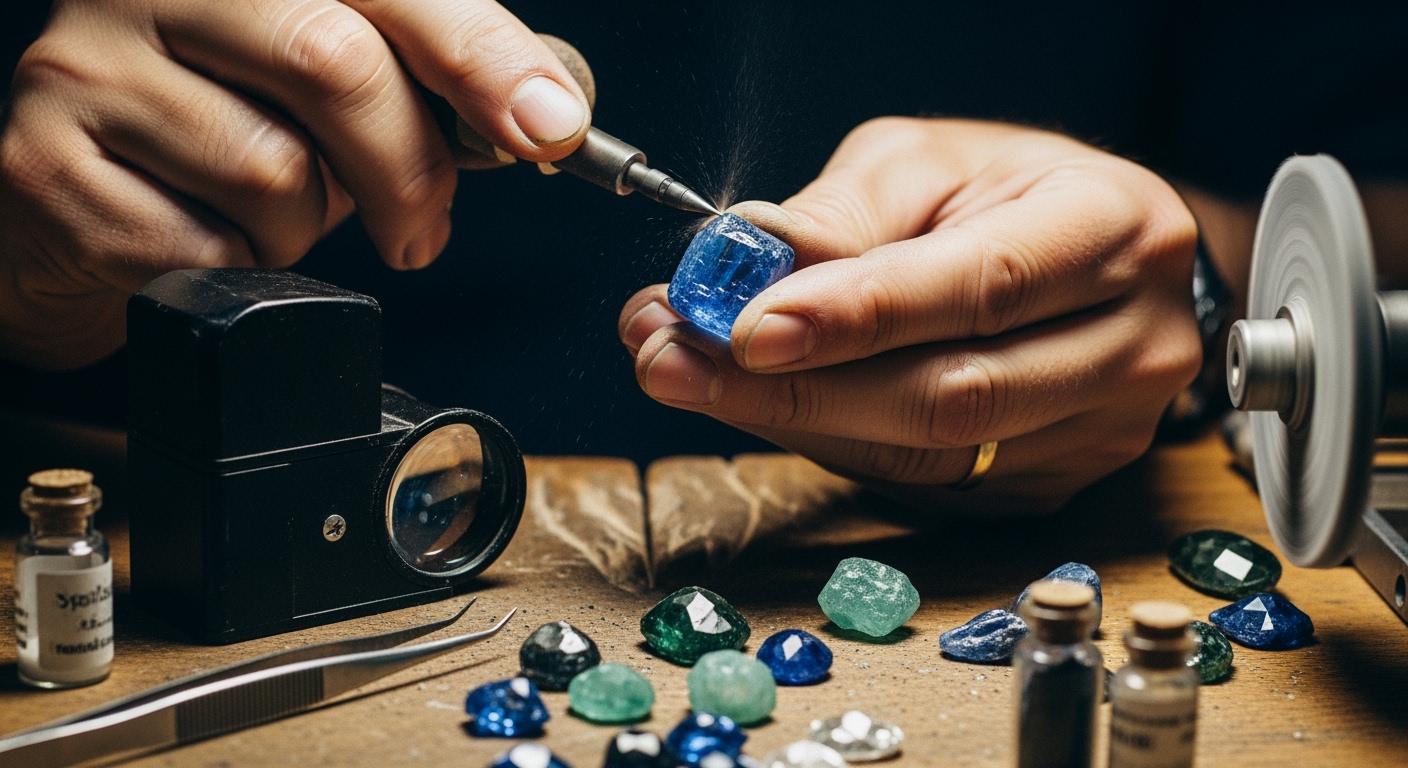
Lapidary is the art and science of shaping, cutting, and polishing gemstones. You start with a rough gemstone and turn it into a sparkling jewel through careful lapidary techniques. Each step in the lapidary process boosts the beauty and value of the stone. The skill of the cutter and the quality of the rough gemstone both play key roles in the final result. The global lapidary industry is huge, with countries like India, Thailand, and Sri Lanka exporting billions in gemstones and jewelry each year. Gemstone Cutting transforms ordinary stones into treasures.
Key Takeaways
- Always wear safety gear, including goggles, gloves, and dust masks, to protect yourself from hazards during lapidary work.
- Organize your workspace with proper lighting and ventilation to create a safe and efficient environment for gemstone cutting.
- Use the right lapidary tools, such as diamond saw blades and grinders, to ensure precise cuts and enhance the beauty of each gemstone.
- Clean your gemstones between polishing stages to prevent scratches and ensure a flawless finish.
- Experiment with different polishing wheels and compounds to achieve the best shine for each type of gemstone.
Lapidary Safety and Preparation
Safety Gear and Precautions
Before you start any lapidary work, you must protect yourself. Lapidary techniques involve sharp tools, spinning wheels, and fine dust. These hazards can cause injuries if you do not use the right safety gear. You should always wear goggles to shield your eyes from flying debris and sharp fragments. Gloves help prevent cuts and scrapes when you handle rough stones and tools. Dust masks or respirators are important because lapidary work creates fine dust that can harm your lungs. Long-term exposure to silica dust can lead to silicosis, a serious lung disease. Old lead alloy laps may release lead particles, which are also dangerous.
Professional lapidary organizations recommend using safety goggles or a full-face shield, dust masks or respirators, and hearing protection like earmuffs or plugs. You should also wear aprons, gloves, and non-slip shoes. These items protect you from cuts, dust, and loud noises. Good ventilation or dust collection systems help keep the air clean. You can reduce dust by using water during the cutting and polishing process.
Tip: Always check your safety gear before you begin. Replace any damaged items right away.
Workspace Setup for Gemstone Cutting
A safe and efficient workspace makes lapidary work easier and more enjoyable. You need to organize your tools and materials so you can find them quickly. Good lighting helps you see details and spot hazards. Proper ventilation keeps dust and fumes away from your breathing space. You should clean your workspace often to prevent accidents and keep your tools in good shape.
Set up your workspace with these features:
- Safety gear: goggles, gloves, and dust masks
- Organized tools and materials
- Bright lighting for clear visibility
- Ventilation to remove dust and fumes
- Regular cleaning and maintenance
When you follow these steps, you create a safe environment for practicing lapidary techniques. You can focus on the gemstone and enjoy the process of transforming rough stones into beautiful pieces.
Gemstone Cutting Tools and Equipment
Essential Lapidary Tools
You need the right lapidary tools to shape and polish gemstones. Both beginners and professionals rely on a set of basic tools to start the lapidary process. These tools help you cut, grind, and polish stones with precision. Here are some of the most common lapidary tools:
- Diamond discs
- Diamond saw blades (continuous rim and segmented)
- Trim saws
- Slab saws
- Band saws
- Basic grinders
Each tool serves a specific purpose in lapidary techniques. Diamond saw blades and discs allow you to make clean cuts. Trim and slab saws help you slice rough stones into workable pieces. Grinders shape the stone and prepare it for faceting or polishing. Using the right tools ensures you can bring out the beauty in every gemstone.
Machines for Gem Cutting
You will find that different gemstone cutting machines offer unique advantages. Diamond cutting machines use high-speed rotating discs and computer programs. These machines give you precise cuts and help you save material. Water jet cutting works well for softer gemstones. This method reduces the risk of damage and lets you create detailed designs. Some machines use CAD software, which lets you model gemstones before you cut them. This digital approach helps you plan each facet and improve the yield of your finished stones. Advanced machines make faceting gemstones more accurate and efficient.
Aimgrind Polishing Wheels Overview
Note: Aimgrind stands out as a trusted provider of customized grinding and polishing solutions. With nearly two decades of experience, Aimgrind offers a wide range of products for lapidary work, including specialized polishing wheels designed for gemstone finishing.
Aimgrind Polishing Wheels play a key role in the final stages of the lapidary process. You use these wheels to achieve a smooth, brilliant finish on gemstones. The wheels come in different types and sizes, so you can match them to your specific needs. Choosing the right polishing wheel and compound is important for maximizing the brilliance and beauty of each gemstone. Aimgrind’s expertise ensures you get reliable results, whether you are faceting or using other techniques to finish your stones.
Gem Cutting Techniques
Lapidary stands as a fascinating field where you transform rough stones into sparkling treasures. You use different cutting techniques to bring out the beauty and value of each gemstone. In this section, you will learn about the main lapidary techniques: faceting gemstones and creating cabochons, along with gemstone carving.
Faceting Process
Faceting is a precise lapidary technique that creates many flat surfaces on a gemstone. These surfaces, called facets, help the stone reflect light and show off its brilliance. You need patience and skill to master this process. Here are the main steps you follow during the faceting process:
- Planning the Cut: You start by studying the rough stone. You look for the best way to cut it, checking for cracks or inclusions. This step helps you decide how to position the stone for maximum beauty.
- Preshaping & Dopping: You shape the stone roughly using a spinning wheel. Then, you attach the stone to a metal rod called a dop. This makes it easier to handle during the next steps.
- Faceting: You use a faceting machine to cut tiny, flat surfaces on the stone. You must control the angle and position of each facet carefully. This step requires steady hands and sharp eyes.
- Polishing: You polish each facet until it shines. This final step brings out the gemstone’s sparkle and brilliance.
You must pay close attention to symmetry and angle control. A well-cut stone reflects light evenly, making it more attractive. You should check your work often with a loupe or microscope. The crown and pavilion, two main parts of the stone, must gather and reflect light well. When you use these techniques, you create gemstones that catch the eye and show off their true beauty.
Tip: Use a faceting machine with accurate settings. This helps you achieve precise cuts and meet points, which are important for symmetry and brilliance.
Cabochon and Carving Methods
Not all gemstones are faceted. Many lapidary artists use other cutting techniques, such as creating cabochons or gemstone carving. These methods use different tools and produce unique results.
| Technique | Tools Used |
|---|---|
| Cabochon Cutting | Genie Cutting Machine, Lortone Cutting Machine, Rock Rascal Cutting Machine |
| Gemstone Carving | Various hand tools and specialized carving equipment |
When you make a cabochon, you shape the stone into a smooth, rounded top with a flat base. This style highlights the natural colors and patterns of the gemstone. You use machines like the Genie or Lortone to grind and polish the stone. Creating cabochons is a popular lapidary technique because it works well for stones with interesting patterns or those that are too soft for faceting.
Gemstone carving lets you create detailed shapes and artistic designs. You use special hand tools and carving machines to cut and shape the stone. This technique allows for more creativity and produces one-of-a-kind pieces. Many artists choose gemstone carving to make unique jewelry or decorative objects.
- Cabochon cutting gives you a classic, smooth look that shows off the stone’s natural beauty.
- Gemstone carving lets you add fine details and create custom shapes, making each piece special.
You can choose the cutting process that matches your vision and the qualities of your stone. Lapidary gives you many ways to express your creativity and bring out the best in every gemstone.
Polishing Process with Aimgrind Polishing Wheels
The final step in lapidary brings out the true beauty of your gemstone. You use polishing wheels to create a smooth, shiny surface that makes each facet sparkle. Aimgrind Polishing Wheels help you achieve professional results, whether you work with sapphires, emeralds, or opals. You can trust these wheels for their durability, versatility, and ability to deliver a flawless finish.
Polishing Materials and Compounds
You need the right polishing materials and compounds to match the hardness and type of your gemstone. Each material works best for certain stones and gives a unique finish. You can find polishing compounds in powders, pastes, and sprays. The table below shows which compounds and materials work best for different gemstones:
| Polishing Compound | Best for Gemstones | Finish Type |
|---|---|---|
| Cerium Oxide | Quartz-based stones | High-gloss finish |
| Tin Oxide | Softer stones | Gentle shine |
| Aluminum Oxide | Wide range of materials | Versatile |
| Diamond Paste | Extremely hard stones | Flawless polish |
| Polishing Material | Suitable for Gemstones | Characteristics |
|---|---|---|
| Aluminum Oxide | Opal, Quartz | Versatile option |
| Tin Oxide | Opal, Jade | Gentle polish |
| Cerium Oxide | Agate, Amethyst | High-gloss finish |
| Diamond Paste | Sapphire, Ruby | Aggressive, high-quality polish |
- Hard stones like agate and jasper need diamond paste or cerium oxide for a high-gloss shine.
- Softer stones such as opal or jade require gentle polishing with tin or aluminum oxide.
- You can choose from powders, pastes, or sprays based on your technique and equipment.
You should always match the compound to the gemstone for the best results. This step ensures you do not scratch or damage the surface during the lapidary process.
Achieving a High-Quality Gemstone Finish
You want your gemstone to shine with maximum brilliance. The right polishing wheel makes a big difference. Aimgrind Polishing Wheels offer several advantages for lapidary artists:
- You get a consistent, high-quality finish every time.
- The wheels fit most standard machines, so you can use them with your current setup.
- Their soft, elastic materials adapt to the stone’s surface, reducing the risk of damage.
- Efficient heat dissipation protects your gemstone from cracks or burns.
You must select the right wheel for each stage of polishing. For example, you can start with a coarser wheel to remove scratches from cutting. Then, you switch to a finer wheel for the final polish. Aimgrind offers BD wheels, BK wheels, wool felt wheels, and 10S wheels. Each type suits different lapidary techniques and gemstone types.
The choice of polishing wheels impacts the final look of your gemstone. Sapphires, emeralds, and opals each have unique qualities. You can enhance their optical properties with the correct wheel and abrasive. For hard stones like sapphire, you should use diamond paste with a durable wheel. For softer stones like opal, you need a gentle wheel with tin oxide. This approach brings out the best shine and color.
You should always check the manufacturer’s recommendations for each gemstone. You can experiment with different wheels and compounds to find the perfect combination. Aimgrind’s expertise helps you match the right wheel to your stone and technique. You can trust their products to deliver a flawless finish and highlight the beauty of your work.
Tip: Clean your gemstone between each polishing stage. This prevents grit from previous steps from scratching the surface.
You can master the art of lapidary by choosing the right tools, materials, and techniques. Aimgrind Polishing Wheels give you the confidence to achieve a professional, high-quality finish on every gemstone.
Specialized Lapidary Processes
Tumbling for Gemstones
Tumbling is a popular lapidary method that lets you polish many stones at once. You use a rock tumbler filled with abrasive grit and water. The stones rub against each other as the tumbler spins. This process smooths rough edges and brings out the natural shine. Tumbling works best for hard stones. If you are new to lapidary, you should start with agate or quartz. These stones are tough and easy to polish. Other good choices include jasper, chalcedony, and petrified wood. Many lapidary artists also use stones like hematite, lapis lazuli, malachite, and rhodonite for tumbling.
| Gemstone | Mohs Hardness |
|---|---|
| Agate | 7 |
| Chalcedony | 7 |
| Jasper | 7 |
| Quartz | 7 |
| Petrified Wood | 7 |
Tumbling is different from traditional hand-cutting. The table below shows the main differences:
| Feature | Tumbling | Traditional Hand-Cutting |
|---|---|---|
| Method | Bulk polishing using a rock tumbler | Precise cutting and polishing using a faceting machine |
| Process | Stones grind against each other with abrasive grit | Each facet is cut at exact angles for brilliance |
| Efficiency | Cost-effective for large quantities | Time-consuming, suitable for high-value stones |
| Resulting Shape | Smooth, rounded stones | Faceted gemstones with geometric arrangements |
| Suitable Stones | Harder stones like quartz, agate | High-value transparent stones like diamonds |
Tip: Always check the hardness of your stones before tumbling. Softer stones may break or scratch.
Advanced Finishing Techniques
Lapidary artists use advanced techniques to improve the durability and value of gemstones. Heating with flux healing repairs small cracks and makes stones stronger. This technique helps gemstones last longer and keeps their beauty. Some lapidary processes, like dyeing or glass filling, can change the look of a stone. Dyed stones may lose color over time. Glass-filled stones can get damaged by acids. These treatments can lower the value of a gemstone. Flux-healed rubies often keep a value close to untreated stones, but glass-filled gems are worth less because the changes do not last.
You can use advanced lapidary techniques to create unique effects. Some artists carve special patterns or use laser etching. Others use special polishing wheels to get a mirror-like finish. These methods let you show off the beauty of each gemstone and make your work stand out.
Finishing Touches and Care
Cleaning and Inspecting Gems
You have reached the final stage of the lapidary process. Cleaning and inspecting your work is important for every lapidary artist. After you finish polishing, you should always remove any leftover residue. Use mild soap or a special burnishing compound to clean your stones. You can tumble your stones with water and cleaning agents for several hours. This step helps you make sure your stones are free from grit and polishing residue.
You should also clean your tumbler barrel and stones after each tumbling stage. This prevents grit from one stage from scratching your stones in the next. Good cleaning habits protect your hard work and keep your lapidary techniques effective.
When you inspect your finished stones, use these methods:
- Hold each stone up to the light. Look for transparency, luster, and a smooth surface.
- Use a 10x loupe to check for inclusions and surface details. This tool helps you see small flaws or scratches.
- For a closer look, use a stereo microscope. This lets you examine the facet edges and spot any treatments or repairs.
Tip: Careful inspection helps you spot problems early. You can fix small issues before you display or sell your stones.
Storage and Display Tips
Proper storage keeps your lapidary creations safe and beautiful. Store your stones in a clean, dry place. This protects them from humidity and temperature changes. Use small jewelry bags or padded jars to prevent scratches and chips. Label each container with the stone type, carat weight, and any special features. Acid-free parcel papers help you organize and preserve your collection.
When you display your stones, lighting makes a big difference. Soft LED lights enhance the brilliance of your jewelry without causing glare. Position lights around your display so every piece gets attention. Natural daylight works well, but avoid direct sunlight to prevent fading. Specialized lighting, like LED or halogen, can highlight the unique qualities of each stone.
- Store stones in padded containers or bags.
- Label each item for easy identification.
- Use soft lighting to show off the beauty of your lapidary work.
- Avoid harsh overhead lights and direct sunlight.
Lapidary techniques do not end with cutting and polishing. Good cleaning, careful inspection, and smart storage keep your stones looking their best. You can enjoy the results of your hard work and share the beauty of each gemstone with others.
You can master gemstone cutting and polishing by following these main steps:
- Use lubricants and match compounds to stone hardness.
- Layer grits from coarse to fine.
- Clean stones between each stage.
- Measure and mark for accuracy.
- Maintain a clean workspace.
For beginners: Always wear safety gear, work in a ventilated area, and use wet sanding. Start with a tumbler or basic tools. Learn from local clubs, YouTube, or books like ‘The Art of Gem Cutting’. Practice often to improve your skills and stay safe during the process.
| Protective Equipment | Benefits |
|---|---|
| Safety goggles | Protects eyes from flying debris |
| Gloves | Prevents cuts from sharp pieces |
| Face/dust mask | Prevents inhalation of fine dust |
| Closed-toe shoes | Protects feet from dropped stones |
FAQ
What is the most important factor for gemstone brilliance?
You must focus on how the gemstone interacts with light. The cut, polish, and clarity all affect how light enters and exits the stone. Good cutting increases light return and creates strong scintillation. This makes your gemstone sparkle and shine.
How do polishing wheels affect the final appearance?
Polishing wheels help you create a smooth surface. This smoothness lets light travel through the gemstone without scattering. When you use the right wheel, you increase the amount of light that reflects back. Your gemstone will show more color and shine.
Why does gemstone orientation matter during cutting?
You need to place the gemstone so it catches the most light. The right orientation helps light bounce inside the stone. This increases brightness and makes the colors stand out. Poor orientation can cause light to leak out, making the stone look dull.
How can I check if my gemstone is polished well?
Hold your gemstone under a bright light. Move it around and watch how the light reflects. You should see even light and no scratches. A well-polished stone will show strong light and clear patterns. This means you finished the polishing process correctly.
What is scintillation in gemstones?
Scintillation means the flashes of light you see when you move a gemstone. You notice this effect best under direct light. Each facet reflects light in a different way. You want to cut and polish your stone to increase scintillation and make it more beautiful.
Contact Us
For More Grinding Solution or Customized Abrasive Tools