

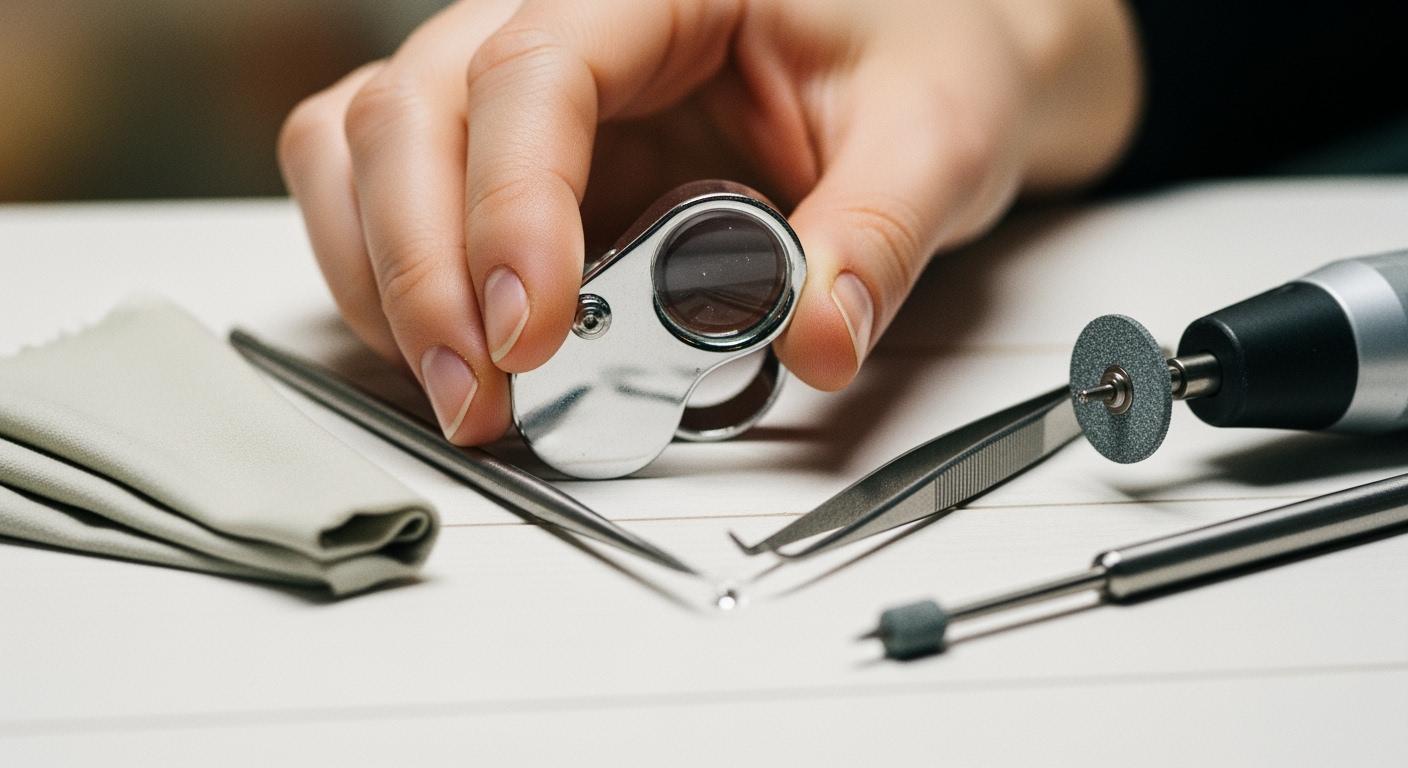
If you’re just starting, a gem cutting toolkit gives you everything you need to turn a rough gemstone into a sparkling gem. Novices should focus on tools that boost safety and efficiency. Always wear gloves and glasses, keep your machine steady, and use water cooling to cut down dust.
Key Takeaways
- Start with essential tools like coarse and medium laps, diamond blades, and safety gear. These basics help you shape and polish your first gemstones effectively.
- Always prioritize safety by wearing goggles, gloves, and dust masks. A safe workspace enhances your focus and enjoyment while cutting gems.
- Choose quality diamond tools for better precision and efficiency. They provide cleaner cuts and last longer, making your gem cutting experience smoother.
Gem Cutting Toolkit Basics
Essential Tools for Beginners
When you start your gem cutting journey, you want a gem cutting toolkit that covers all the basics. You do not need every fancy gadget right away. Focus on the essential tools that help you shape and polish your first gemstone. These tools make your work easier and help you learn the craft step by step.
Here’s a simple table to show you the most recommended tools for beginners. Each tool has a special job in the process. You will use these tools to cut, grind, and polish your gem until it shines.
| Tool Type | Description |
|---|---|
| 260 grit coarse lap | Solid steel or cap lap, good for initial cutting. |
| 600 grit medium lap | NuBond 600 works well for beginners, cuts finer after some use. |
| 1,200 steel lap | Great for fine cutting before polishing, highly recommended for new cutters. |
| NuBond 1,200 | Best for pre-polishing quartz and beryl, but not for every material. |
| Spectra Ultralaps | Inexpensive laps for polishing quartz and beryl, easy for new cutters. |
| Tin lap | Used for polishing tourmaline and garnet, can be scored for your preference. |
| Oxide Polishes | Cerium oxide for quartz and beryl, alumina oxide for tourmaline and garnet. |
| Additional laps | 100, 300, and 600 grit steel laps, plus a package of Spectra Ultralaps for more options. |
You will find that these essential tools help you handle most beginner projects. As you gain experience, you can add more lapidary accessories and advanced lapidary equipment to your collection. For now, stick with the basics and enjoy learning how to turn a rough stone into a sparkling gemstone.
Safety Gear Overview
Safety always comes first when you work with lapidary tools. Even if you feel excited to start, you should never skip safety gear. It protects you from dust, sharp edges, and flying bits of stone. Many novices forget this step, but it is just as important as any tool in your gem cutting toolkit.
Here’s a quick list of safety gear you should always use:
- Safety goggles keep your eyes safe from chips and dust.
- Gloves protect your hands from sharp stones and hot surfaces.
- Dust masks or respirators help you breathe clean air and avoid harmful particles.
You should wear your safety gear every time you use your tools. This habit keeps you safe and lets you focus on shaping your gemstone. Remember, a safe workspace makes gem cutting more fun and less stressful.
Tip: Set up your workspace with all your safety gear within reach. This way, you never forget to use it before you start working on your gem.
By starting with the right essential tools and safety gear, you set yourself up for success. You will feel more confident as you practice and improve your skills with each gemstone you cut.
Cutting and Shaping with Diamond Tools
Lapidary Tools for Rock Cutting
When you start working with gemstones, you need the right lapidary tools for cutting. These tools help you turn rough rocks into shapes ready for faceting or cabbing. You want tools that make clean cuts and keep your gemstone safe from cracks or chips. Many beginners use a 7″ skilsaw tile saw or a 10″ saw for larger rocks. Pairing these saws with a Dewalt porcelain blade gives you better results and smoother cuts.
You should also look at basic grinders. These help you smooth rough edges and shape your gemstone before you move to the faceting machine. Trim saws, slab saws, and band saws are all great beginner rock cutting tools. They let you cut your stone into smaller pieces, so you can work on each one with your faceting equipment. Always remember to use safety gear like goggles, gloves, and dust masks. This keeps you safe while you learn and practice.
Diamond tools stand out when you want precision and clean cuts. Diamond drill bits make holes in your gemstone without causing damage. Diamond-coated blades cut hard materials much better than regular steel blades. You get stable and intricate cuts, which is important for faceting and shaping.
Aimgrind Diamond Tools Introduction
If you want to make your cutting process easier, Aimgrind Diamond Tools can help. Aimgrind has years of experience making high-quality diamond tools for lapidary work. Their tools use industrial-grade diamond grains, so you get sharp, precise cuts every time. You can use these tools for glass, ceramics, and gemstones. They work well with both manual and CNC faceting machines.
Aimgrind Diamond Tools last longer than many traditional options. You spend less time changing blades and more time working on your gemstone. The tools come in different shapes and sizes, so you can pick what fits your faceting equipment. You can find diamond drill bits, reamers, and milling cutters in their lineup. Each tool is made to give you control and accuracy, which is perfect for novices and anyone learning gemstone faceting.
Tip: If you want to see all the options, check out Aimgrind’s full range of diamond tools on their website. You can find tools for every step of the gem cutting process.
Beginner Rock Cutting Tools Selection
Choosing your first set of cutting tools can feel confusing. You want to focus on quality and the right fit for your faceting machine. Here are some tips to help you pick the best tools for your needs:
- Start with essential tools like trim saws, slab saws, and band saws. These give you clean cuts and help you prepare your gemstone for faceting.
- Use basic grinders to smooth and shape your stone before you place it on the faceting machine.
- Always wear safety gear. Goggles, gloves, and dust masks protect you while you work.
- Pick diamond tools for better cutting efficiency and precision. Diamond drill bits and blades give you cleaner results than traditional steel tools.
- Look for lapidary accessories that match your faceting equipment. This helps you avoid mistakes and keeps your workspace organized.
Many beginners make common mistakes when choosing their first tools. Here are a few things to watch out for:
- Some people pick larger stones instead of focusing on quality. Always check your stone for clarity and transparency. The best stones for faceting practices are clear and let light pass through.
- Don’t buy tools or stones without a plan. Think about what you want to create before you start. This saves you time and materials.
If you want to get started with gemstone faceting, you need a beginner faceting machine that matches your skill level. Look for faceting machines that are easy to use and come with clear instructions. As you gain experience, you can add more lapidary accessories and upgrade your faceting equipment.
A good toolkit includes a faceting machine, diamond tools, and the right safety gear. You also need a workspace where you can organize your tools and keep everything within reach. With the right setup, you can enjoy faceting, cabbing, and shaping your gem. You will see your skills grow with every gemstone you cut.
Note: Practice with the best stones for faceting practices. Clear quartz and beryl are great choices for novices. They are easy to cut and polish, so you can learn the basics before moving on to more valuable gems.
By starting with quality tools and a solid plan, you set yourself up for success in gemstone faceting. Aimgrind Diamond Tools and the right faceting machine make the process smoother and more enjoyable. You will soon see your rough stones turn into sparkling gems, ready for any jewelry project.
Grinding and Polishing Essentials
Polishing Tools for Gemstone Faceting
You want your gemstone to shine, so you need the right polishing tools for gemstone faceting. Good polishing tools help you get a mirror-like finish and bring out the best in your gem. Many lapidary experts recommend these tools for faceting:
- Burnishing powder or polishing powder for tumblers
- Buffing with polishing cloths or denim
- Buffing and polishing belts, wheels, and bits for grinders and rotary tools
- Diamond pastes or cerium oxide for hard stones
- Tin or aluminum oxide for softer stones
- Flat lap machines with felt, leather, or resin-bonded polishing discs
- Cabochon machines with polishing wheels
High-quality buffing systems and variable speed control help you avoid surface imperfections. Cool-running machines protect delicate stones during faceting. These lapidary accessories make polishing easier for novices and help you get professional results.
Grinding Wheels and Pads
Grinding wheels and pads are key tools for shaping and smoothing your gemstone. You want to pick the right ones for your faceting equipment. Here’s a quick table to help you choose:
| Type of Wheel/Pad | Advantages | Notes |
|---|---|---|
| Diamond wheels | Grind and sand faster than SiC | Great for efficient material removal |
| Resin wheels | Last longer than belts | Good for sanding and polishing stages |
| Diamond belts | Last longer than SiC belts at same grit | Ideal for durability in grinding tasks |
| SiC belts | Grit breaks down to smaller sizes with use | Use caution on delicate materials |
| Expanding drum | Eliminates flat spots during sanding | Smooths out the dome of gemstones |
| Silicon carbide wheels | Common for shaping gemstones | Needs lubricant to prevent overheating |
Aimgrind’s grinding wheels stand out for their durability and precision. You get smooth, even results with less risk of chipping. These wheels fit most faceting equipment and work well for both cutting and polishing. Always start with coarse grits for rough cutting, then switch to finer grits for final shaping. Practice on scrap stones first to get a feel for your lapidary tools.
Workspace and Organization Tips
A clean and organized workspace helps you stay safe and work faster. Here’s some advice for setting up your workspace essentials:
- Use a centralized water supply with quick-connect hoses for your saws and cabbing machines.
- Plan for drainage with trays or sump buckets to keep water off the floor.
- Group power outlets by station and use heavy-duty cords for safety.
- Clean up daily and do a deep clean every week.
- Try rolling workbenches for easy cleaning and moving between projects.
- Install LED lighting over your jewelers bench to reduce eye strain.
Keep your lapidary accessories, vise, and bench vise close to your jewelers bench. Store your tools in labeled bins or drawers. This setup makes it easy to find what you need and keeps your faceting equipment in top shape. Good organization means you spend more time cutting and less time searching for tools.
Tip: Always keep your vise and lapidary accessories within arm’s reach. This simple habit saves time and helps you focus on your gemstone faceting.
| Aspect | Impact on Gemstone Appearance |
|---|---|
| Precision | High-quality tools ensure symmetrical facets, making your gemstone look amazing. |
| Smoothness | Proper polishing tools give a mirror finish, boosting brilliance. |
| Prevention of Damage | Quality tools lower the risk of chips or cracks. |
| Control over Angles | Fine control during faceting increases the stone’s value. |
| Grit Selection | The right grit size affects the final shine and smoothness of your gem. |
With the right grinding wheels, polishing tools, and workspace setup, you can turn rough stones into sparkling gems. You will see your skills improve with every cutting and faceting project.
Measuring and Handling Lapidary Tools
Calipers and Loupes for Precision
When you work on gemstone faceting, measuring your gem accurately matters a lot. Even small mistakes can change how your gem looks or how labs classify it. For example, a tiny difference in length or width can make a stone look square or rectangular.
Consider the reporting of the length-to-width ratio (L:W) of a rectangular gemstone, which uses two decimal places by trade convention. A ratio of 1.05 or less supports describing the gemstone as square. A stone’s owner uses a micrometer with readability to 0.01 mm (and similar uncertainty), and measures 8.45 × 8.01 mm for length and width, for a ratio of 1.054931336. But because the input precision is only two decimal places, the result is rounded to 1.05. The owner thinks that the shape will be classified as square but does not factor in the measurement uncertainty or how close the ratio is to the boundary between square and rectangle. When that gemstone arrives at a laboratory, the scanning system measures 8.454 × 8.014 mm (with an uncertainty of ±0.005 mm), well within the uncertainty of the micrometer values. Now the calculated L:W is 1.054903918 and rounds to 1.06 ± 0.001, making use of the additional precision of the laboratory’s measuring device. The owner will be disappointed when the laboratory report lists the stone as a rectangle.
You can see how precise measuring tools like calipers and loupes help you avoid surprises. Calipers let you measure length, width, and depth with great accuracy. Loupes help you inspect facets closely, checking for symmetry and flaws. For novices, digital calipers with a clear display work well. They give you quick, easy readings without guesswork. A 10x or 15x loupe is perfect for examining your gem’s details during faceting.
Tweezers and Sorting Trays
Handling your gem safely is just as important as measuring it. Tweezers give you control when you pick up or move your stone. They come in different styles, like pointed tips or long noses, so you can reach small or tricky spots without dropping or scratching your gem. Sorting trays keep your stones organized and secure. They stop gems from rolling away or getting mixed up while you work.
Tweezers are designed to provide precise control when handling gemstones, which minimizes the risk of damage during manipulation. They come in various styles, such as long-nose and pointed-tip, making it easier to reach and grasp even the smallest and most delicate stones. Sorting trays, on the other hand, organize and secure gemstones, preventing loss and ensuring that each piece is readily accessible during the handling process.
Here are some beginner-friendly lapidary tools for measuring and handling:
| Tool | Why It Helps You |
|---|---|
| Digital Calipers | Fast, accurate measurements with easy reading |
| 10x or 15x Loupe | Clear view of facets and surface details |
| Pointed Tweezers | Precise grip on small or delicate gems |
| Sorting Trays | Keeps your gems safe and organized during work |
Using these tools makes your faceting equipment easier to handle and improves your results. You’ll avoid mistakes and keep your gem safe from damage. With practice, you’ll gain confidence in measuring and handling your stones like a pro.
Tip: Always clean your tweezers and trays before use. Dirt or grit can scratch your gem or affect your measurements.
Building Your First Gem Cutting Toolkit
Budgeting for Essential Tools
You want to build your gem cutting toolkit without breaking the bank. Start by making a list of the supplies you need most. Many beginners struggle with picking the right tools, so focus on essentials first. Look for a starter kit that covers basic cutting, grinding, and polishing. Set a budget for each item. You can save money by buying supplies in bundles or waiting for sales. Safety gear should always be part of your budget. Workspace setup matters, too. Plan for a bench lamp, containers for scrap, and a bench vise. These help you stay organized and safe.
Tip: Write down your spending plan and stick to it. You’ll avoid buying supplies you don’t need.
Where to Buy Lapidary Tools
You can find lapidary tools and supplies at specialty stores, online shops, or local gem clubs. Aimgrind offers high-quality diamond tools and grinding wheels. Their supplies work well for beginners and pros. Check their website for a wide selection. Local gem clubs sometimes sell used tools or starter kits. You can also find beginner-friendly books at these clubs or online. Ask other hobbyists for recommendations. They know which stores have reliable supplies.
Quick-Reference Checklist
Here’s a handy checklist for your gem cutting toolkit. Most lapidary associations suggest these items for beginners:
- Bench lamp
- Bench block or bench pin
- Bench vise
- Hand vise
- Ring clamp
- Burrs
- Beeswax
- Brushes (camel’s hair, washout, bristle wheel)
- Burnisher
- Caliper
- Containers for filings and scrap
- Files and wood file handles
- Flush wire cutters
- Hand drills and small drill bits
- Hammers and mallet
- Pliers
- Jewelers saw and blades
- Optivisor magnifier #5
- Mandrel/ring
- Ring sizes (U.S. standard)
- Metal ruler
You can use this checklist to track your supplies and build your toolkit step by step.
You set yourself up for success when you start with a solid gem cutting toolkit. Quality diamond tools, like Aimgrind’s, last longer and keep their sharpness. You save money and get better results. Try these next steps:
- Practice your skills often.
- Share your work online.
- Learn new techniques.
FAQ
What is the best way to clean diamond tools?
You should rinse your diamond tools with water after each use. Dry them with a soft cloth. Store them in a dry place.
Can I use Aimgrind Diamond Tools on any gemstone?
Yes! You can use Aimgrind Diamond Tools on most gemstones. They work well on quartz, beryl, tourmaline, and even glass.
How do I know when to replace my grinding wheel?
If your grinding wheel feels dull or takes longer to cut, it’s time for a replacement. Always check for cracks or uneven wear before each use.
Contact Us
For More Grinding Solution or Customized Abrasive Tools