

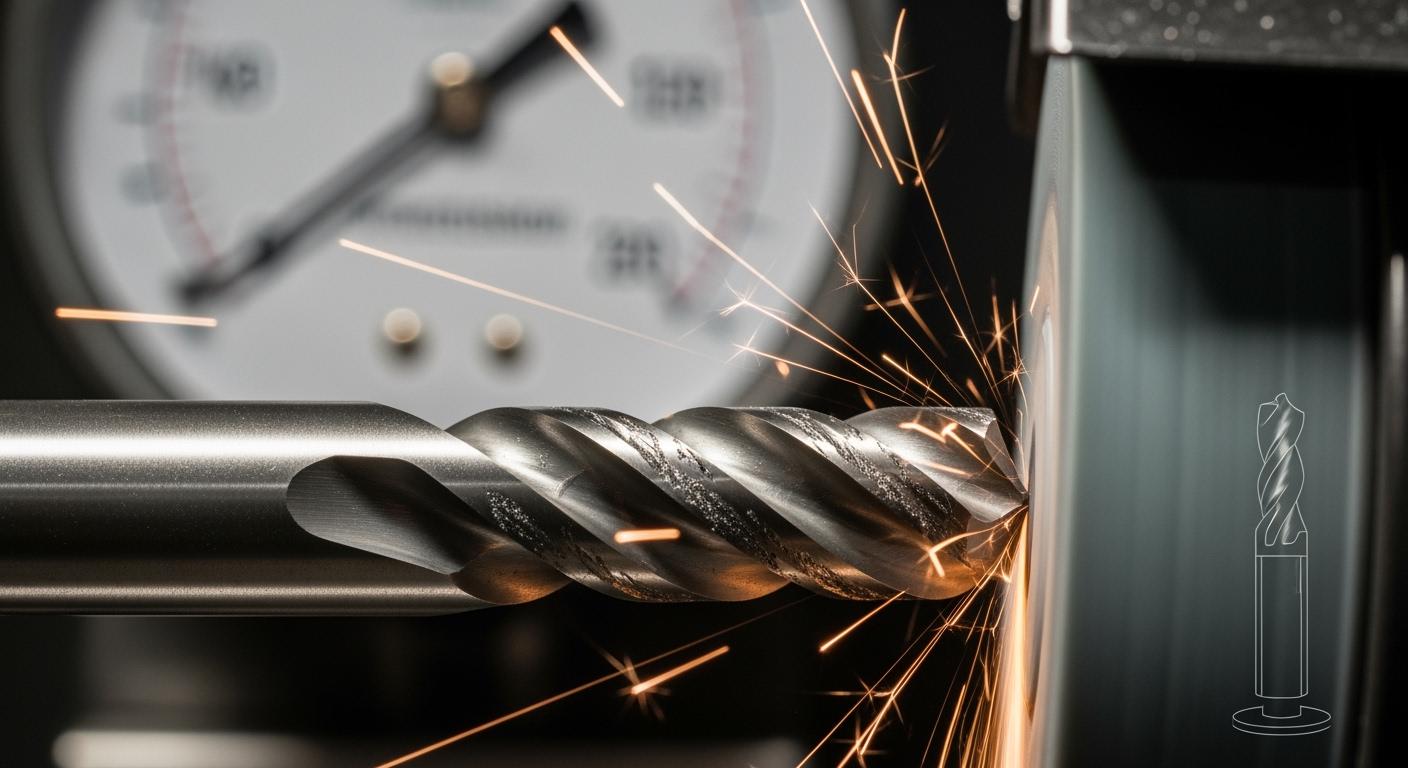
You see a big difference in how your hss tool works when you use the right grinding process. Grinding shapes the cutting edge and helps your tool last longer. If you pick the best grinding wheels, like Aimgrind’s diamond grinding wheels, your tool stays sharp and strong. Good grinding makes your hss tools cut better and boosts your tool’s productivity. Proper grinding keeps your tool ready for every cutting job.
Key Takeaways
- Choose the right grinding wheel to enhance tool performance and longevity. Aimgrind’s diamond wheels offer superior sharpness and durability.
- Control the grinding temperature to prevent overheating. Use proper coolant and monitor the grinding process to maintain tool strength.
- Follow a clear sequence of grinding operations for optimal results. Each step shapes the tool and improves cutting efficiency.
- Regularly inspect your tools after each grinding step. This helps identify cracks or flaws early, ensuring tools remain effective.
- Adjust angles and surfaces carefully during grinding. Proper angles enhance cutting efficiency and extend tool life.
Grinding Process Fundamentals
Why Grinding Matters for HSS
You shape the performance of your hss tools with the grinding process. Grinding gives your tool a sharp cutting edge. You need a sharp edge for clean cuts and smooth finishes. When you grind hss tools, you control the shape and angle of the cutting surface. This control helps your tool cut metal, wood, or other materials with less effort. You also protect your tool from damage. Grinding removes tiny cracks and flaws that can weaken your tool. You keep your tool strong and ready for tough jobs.
Grinding stands out from other finishing methods. You can see the difference in surface quality and flatness. The table below shows how grinding compares to milling, honing, and lapping:
| Parameter | Surface Grinding | Milling (Finishing) | Honing | Lapping |
|---|---|---|---|---|
| Cutting Mechanism | Abrasive micro-cutting | Shear cutting with a rotating tool | Fine abrasive sliding motion | Free abrasive slurry action |
| Contact Type | Point/line contact | Edge or face contact | Full surface contact | Full surface contact under light pressure |
| Typical Ra Range | 0.2 – 1.6 µm | 1.6 – 6.3 µm | 0.1 – 0.4 µm | 0.01 – 0.2 µm |
| Flatness Control | High (0.005 – 0.01 mm) | Medium (0.02 – 0.1 mm) | High (internal surfaces) | Very high (ultra precision) |
| Material Removal Rate | Very low | Moderate to high | Very low | Extremely low |
| Thermal Impact | Moderate to high | Moderate | Low | Very low |
| Best Feature Type | Flat external surfaces | General geometry, pockets | Cylindrical bores | Ultra-precision mating surfaces |
Key Properties Affected by Grinding
You affect many properties of your hss tool with the grinding process. Grinding changes the hardness, toughness, and cutting ability of your tool. You must control temperature during grinding. High heat can damage your tool and cause cracks. You need to use the right grinding wheel and coolant. The table below shows important principles for grinding hss tools:
| Principle | Description |
|---|---|
| Temperature Control | Grinding hss tools requires careful temperature management to avoid overheating, which can lead to material degradation. |
| Grinding Wheel Selection | The type of grinding wheel used is crucial for effective grinding and minimizing damage to the tool. |
| Effects of Overheating | Overheating can cause permanent loss of hardness and surface cracking, significantly affecting tool performance. |
| Coolant Usage | Insufficient coolant can lead to localized heating and cracking, emphasizing the need for proper cooling during grinding. |
| Internal Stress Management | High temperatures during grinding can induce internal stresses that may result in surface cracks if not managed properly. |
You improve the durability and cutting efficiency of your tools by following these principles. You keep your hss tools sharp and ready for every cutting job. Grinding helps you get the best performance from your tool.
Grinding Process Steps
Order of Operations
You follow a clear sequence when you grind a hss turning tool. Each step shapes the tool and improves its cutting performance. Here is a typical order of operations for tool grinding:
- Prepare the grinder. You use a bench grinder or belt sander with coarse grit. This step sets up your workspace for accurate grinding.
- Set up the tool rest. You adjust it for precise angle settings. This helps you control the shape of the tool.
- Grind the side face. You create the side cutting edge angle and side relief angle at the same time.
- Grind the end face. You form the end cutting edge angle and end relief angle. You keep the relief angle consistent with the side.
- Grind the top face. You make the side rake and back rake angles. You push straight into the belt for accuracy.
- Hone the tool. You use finer grits to sharpen each face. You finish with a nose radius for smooth cutting.
The grinding process affects the final quality and finish of your hss tools. The sequence of grinding operations impacts precision and surface finish. You often use different grinding wheels in succession to achieve various features. This can add process time but improves productivity and accuracy. Aimgrind’s diamond grinding wheels help you maintain consistency and precision throughout each step.
Tip: Always check your tool after each grinding step. You ensure the angles and surfaces match your requirements.
Angles & Surfaces
You must pay attention to angles and surfaces during tool grinding. The right angles make your tool cut efficiently and last longer. Here are some important angles for grinding lathe tools:
- Side rake angle: 12°-18°
- Angle of keenness: 60°-68°
- Side relief angle: 10°-12°
You also need to dress the grinding wheel before you start. This keeps the wheel sharp and prevents tool overheating. You avoid cracks and maintain a smooth finish. Aimgrind’s customized grinding wheels support precise angle formation and surface preparation. You match the wheel type and parameters to your tool material and application.
| Parameter | Effect on Grinding Performance |
|---|---|
| Relief angles | Reduces cutting forces and improves finishes |
| Side Rake | Reduces cutting forces and temperatures, enhances penetration |
| Back Rake | Controls cutting forces and reduces temperatures |
| Nose Radius | Smaller radii minimize deflection, improving cutting efficiency |
You achieve the best finish by following these guidelines. You keep your tools sharp and ready for cutting jobs.
Grinding Lathe Tools
Grinding lathe tools requires careful attention to both the tool and the grinding wheel. You select the right wheel for your hss tool. Aimgrind offers diamond grinding wheels that deliver precision and durability. You choose the wheel based on material compatibility, grit size, diameter, and speed.
- Aluminum oxide wheels work well for many metals.
- Silicon carbide wheels suit harder materials.
- Grit size affects how much material you remove and how smooth the edge becomes.
- Larger wheels cover more area at lower speeds. Smaller wheels spin faster and are ideal for precision work.
- You ensure the wheel matches your hss lathe tool for sharpness and longevity.
| Wheel Type | Grit Size Range | Application Description |
|---|---|---|
| Gray Wheels | N/A | Standard, economical option for general use. |
| White Wheels | 60-80, 100-120 | Recommended for hss tool grinding, harder than surface grinding wheels. |
| Norton White Wheel | 100 | Effective for sharpening various bits, requires a wheel dresser. |
| Pink Wheels | N/A | Used for hss tool grinding, durable and long-lasting. |
Aimgrind’s expertise in customized grinding wheels ensures you get the right match for your tool and application. You improve the finish and cutting efficiency of your lathe tool. You avoid overheating and maintain consistent results. You grind lathe tools with confidence, knowing your tools will perform well and last longer.
Note: Always use proper cooling and check the tool for cracks or wear after grinding. This keeps your tools safe and effective.
You see the difference when you use the right grinding process and the best grinding wheels. Aimgrind helps you achieve precision, durability, and a high-quality finish for your hss tools.
Grinding Tools & Wheels
Choosing the Right Wheel
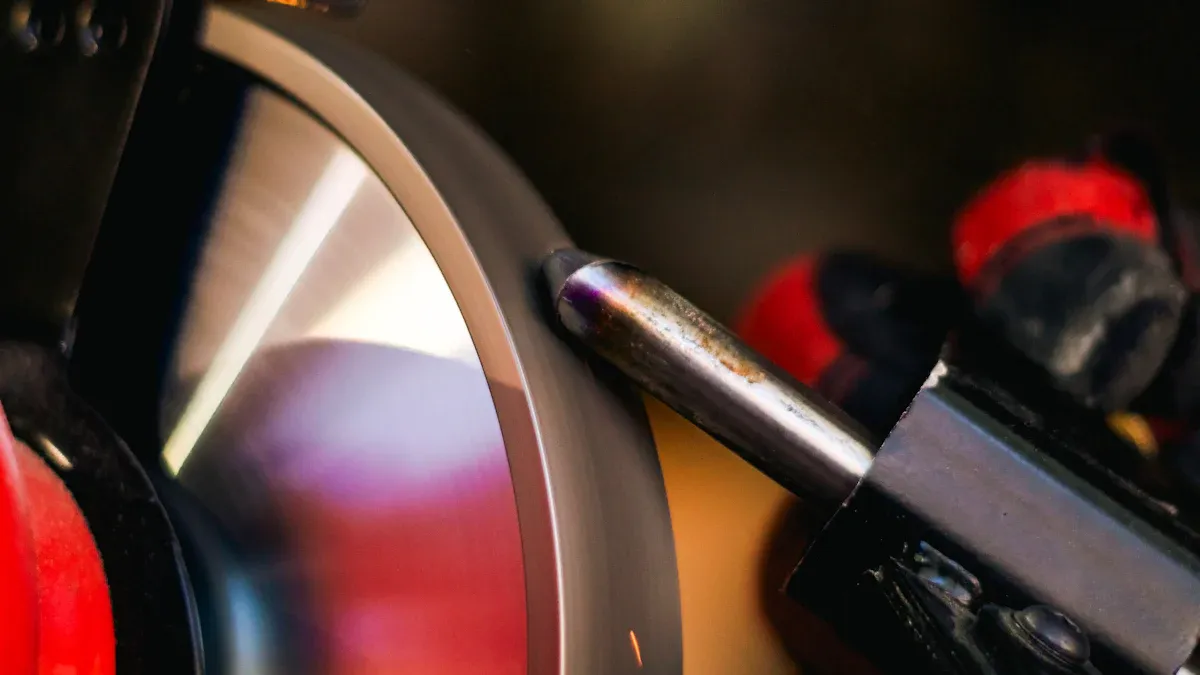
You need to pick the right grinding wheel for your hss tool. The wheel you choose affects how well your tool cuts and how long it lasts. Many people use alumina wheels, but studies show that CBN wheels work much better for hss. CBN wheels give you higher grinding performance, better surface finish, and more precision. The grinding ratio of CBN wheels is much higher than alumina wheels. This means you remove more material with less wheel wear. Resin bond CBN wheels are good for normal tool grinding. Metal bond CBN wheels are best for deep cutting when you use enough coolant.
The right grinding wheel also helps you control heat. CBN wheels make less heat than regular wheels. This keeps your tool hard and sharp. You also need to think about grit size and bond type. Fine grit gives you a smooth edge. Coarse grit removes more material faster. When you match the wheel to your tool and job, you get better tool life, lower costs, and a smoother finish.
Tip: Super-abrasive wheels like CBN and diamond keep your tool’s cutting edge strong by reducing grinding heat and keeping the shape of the tool.
Aimgrind Diamond Grinding Wheels
You can boost your tool grinding results with Aimgrind diamond grinding wheels. These wheels use diamond abrasives, which are extremely hard. They resist wear when you grind tough materials. You get sharp edges and smooth finishes every time. Aimgrind wheels keep their shape longer than regular wheels. This means you spend less time dressing the wheel and more time grinding tools.
Here is how Aimgrind diamond grinding wheels help your hss tools:
| Key Reasons for Longevity | Description |
|---|---|
| Extreme Hardness | Diamond abrasives resist wear when grinding hard material. |
| Improved Grinding Efficiency | Sharp diamond particles cut more efficiently, reducing friction. |
| Superior Profile Retention | Wheels keep their shape and size for many grinding cycles. |
| Consistent Performance | You get the same finish and accuracy every time you grind. |
You also save money and help the environment. Aimgrind diamond wheels last much longer than regular wheels. You change wheels less often and spend less on replacements. You also reduce downtime because you do not need to dress the wheel as much. This makes your tool grinding process faster and more cost-effective.
Note: When you use Aimgrind diamond grinding wheels, you get high grinding efficiency, better dimensional accuracy, and a longer-lasting tool. You keep your hss tools sharp and ready for any job.
Performance & Longevity
Cutting Efficiency
You see the real value of your tool when you measure cutting efficiency. The grinding process shapes the cutting edge and controls how well your tool cuts through metal or other materials. If you grind your tool with care, you get a sharp edge that slices cleanly. A sharp cutting edge lowers cutting forces and keeps cutting temperatures down. You finish jobs faster and with less effort.
You must pay attention to symmetry and edge radius. If the symmetry deviation goes over 0.03mm, your drilling diameter can change by more than 0.05mm. When the cutting edge blunt radius increases from 10μm to 20μm, tool life drops by about 35%. You keep your tool strong and efficient by maintaining a fine edge.
Here is a table that shows how grinding affects cutting efficiency:
| Description | Data |
|---|---|
| Symmetry deviation impact on drilling diameter | Deviation exceeds 0.03mm leads to >0.05mm |
| Cutting edge blunt radius effect on tool life | Increase from 10μm to 20μm decreases life by ~35% |
| Grinding force ratio during spiral groove grinding | Normal to tangential force ratio: 2.5-3.5 |
| Grinding wheel porosity and heat management | Proper porosity channels heat effectively |
| Grit size vs efficiency | Finer grit improves finish but reduces efficiency significantly |
You also need to manage heat. Cutting temperatures rise quickly if you do not use the right grinding wheel or coolant. You protect your tool by using cutting fluids or slower speeds. This keeps the tool from losing temper and strength. You can resharpen your tools easily, which saves money and keeps cutting efficiency high.
You must consider the environment of the cut. If you work with interrupted cuts, you need a tool with higher toughness. Machining parts with gaps or rough surfaces creates impacts on the cutting edge. You choose tougher tool materials to keep performance steady.
Tip: Always check the finish after each grinding step. A smooth finish means your tool will cut better and last longer.
Durability & Wear Resistance
You want your tool to last as long as possible. Grinding gives your tool the strength to handle tough jobs. You improve tool life by keeping the cutting edge sharp and the finish smooth. If you grind your tool well, you reduce wear and keep the tool strong.
You must look at several factors to boost durability:
- The grinding wheel porosity helps manage heat. Proper porosity channels heat away from the tool, lowering cutting temperatures and protecting tool strength.
- The right grit size gives you a balance between finish and efficiency. Finer grit improves finishing but can slow down the grinding process.
- You keep tool life high by avoiding overheating. High cutting temperatures can cause cracks and reduce tool strength.
- You maintain the tool’s toughness for interrupted cuts. Tough tools resist impacts and keep the cutting edge sharp.
You see the difference when you use Aimgrind diamond grinding wheels. These wheels keep their shape and deliver a consistent finish. You spend less time dressing the wheel and more time grinding. Your tools stay sharp and strong, which means you get more jobs done before needing to replace them.
Here are some ways you can improve tool life and wear resistance:
- Use proper cooling during grinding to lower cutting temperatures.
- Match the grinding wheel type to your tool material and cutting operation.
- Check the finish and cutting edge after each grinding step.
- Resharpen tools when needed to keep cutting efficiency high.
Note: A well-ground tool gives you better performance, longer tool life, and a smoother finish. You keep your tools ready for every cutting job.
Best Practices & Common Mistakes
Consistent Results
You want your tool to perform well every time you use it. To get consistent results, you should follow some best practices during grinding and finishing. Start by keeping the tool moving across the wheel. This helps you avoid overheating and protects the cutting edge. Use a coarse grit wheel when you need to reshape the tool quickly. Joint the top of the wing profile before you grind the bevel. High-speed steel can handle some heat, but you should still work carefully.
You can follow these steps for better accuracy and finishing:
- Begin with standard angles, then adjust the relief angle if you need better performance.
- Test the tool for durability and cutting depth, and change the relief angle as needed.
- Change the side rake and back rake to improve chip clearance and cutting depth.
- Check how the tool cuts and look at the surface hardness to see if you reduce work hardening.
- Pick a smaller nose radius for harder materials.
- Once you find the best angles, grind a keeper tool to match.
Grinding techniques also matter. In hot mills, you use coarser grits for fast stock removal. In cold mills, you switch to finer grits for a smooth finish. The right grit size helps you get the best results for your tools. CNC grinding machines can help you keep every tool the same. These machines follow exact instructions, so you get perfect accuracy and repeatable finishing every time.
Tip: Always check your tool after each grinding step. This helps you spot problems early and keep your tools sharp.
Errors to Avoid
You can make mistakes during grinding that hurt your tool’s performance. Overheating the tool can damage the material or make it lose hardness. If you grind the wrong angles, your tool will not cut well. Skipping inspections can leave cracks or chips that weaken the tool.
Here are some common mistakes to watch for:
- Overheating the tool during grinding.
- Using incorrect angles for the cutting edge.
- Not inspecting the tool for cracks or chips.
- Choosing the wrong grinding wheel for the tool material.
- Picking the wrong grit size, which can make the grinding too aggressive or too slow.
- Using the wrong bond type, which affects the surface quality.
The grinding wheel you choose is important. For high-speed steel tools, CBN or diamond wheels help reduce heat and keep the tool hard. Matching the wheel to the tool material, grit size, and bond type gives you the best cutting and finishing results.
Note: Careful grinding and regular checks help you avoid mistakes and keep your tools ready for every job.
You shape the performance and life of your tool with every grinding step. The grinding process changes the tool’s microgeometry, which affects wear, cutting quality, and tool life. High-quality grinding wheels, like Aimgrind’s diamond wheels, help you get smoother tool edges and longer tool life. You keep your tools sharp by matching the tool to the job, using steady motion, and checking the tool often. Adjust machine settings and train for best results. Clean and dress your grinding wheels to keep your cutting tools working longer.
- Match the tool and abrasive to the job.
- Use steady pressure and motion.
- Clean and inspect tools and wheels often.
- Adjust machine speed and feed for each tool.
- Train to improve tool handling and safety.
- Try new abrasive technologies for better tool life.
Remember: Good grinding gives your tool a sharp cutting edge, longer life, and better cutting results every time.
FAQ
What is the main reason to grind HSS tools?
You grind HSS tools to create a sharp edge. A sharp edge helps you cut materials easily. Grinding also removes flaws and keeps your tools strong for longer use.
How often should you check your tools during grinding?
You should check your tools after every grinding step. This helps you spot cracks, chips, or wrong angles. Regular checks keep your tools safe and ready for work.
Can you use diamond grinding wheels for all tools?
You can use diamond grinding wheels for many hard tools. These wheels work best for tough materials. Always match the wheel to the tool material for the best results.
Why does overheating matter when grinding tools?
Overheating can make your tools lose hardness. This weakens the cutting edge. You should use coolant and avoid pressing too hard to keep your tools strong.
How do you keep tools sharp for a long time?
You keep tools sharp by using the right grinding wheel, checking the edge often, and resharpening when needed. Clean your tools after grinding to remove dust and keep them ready.