

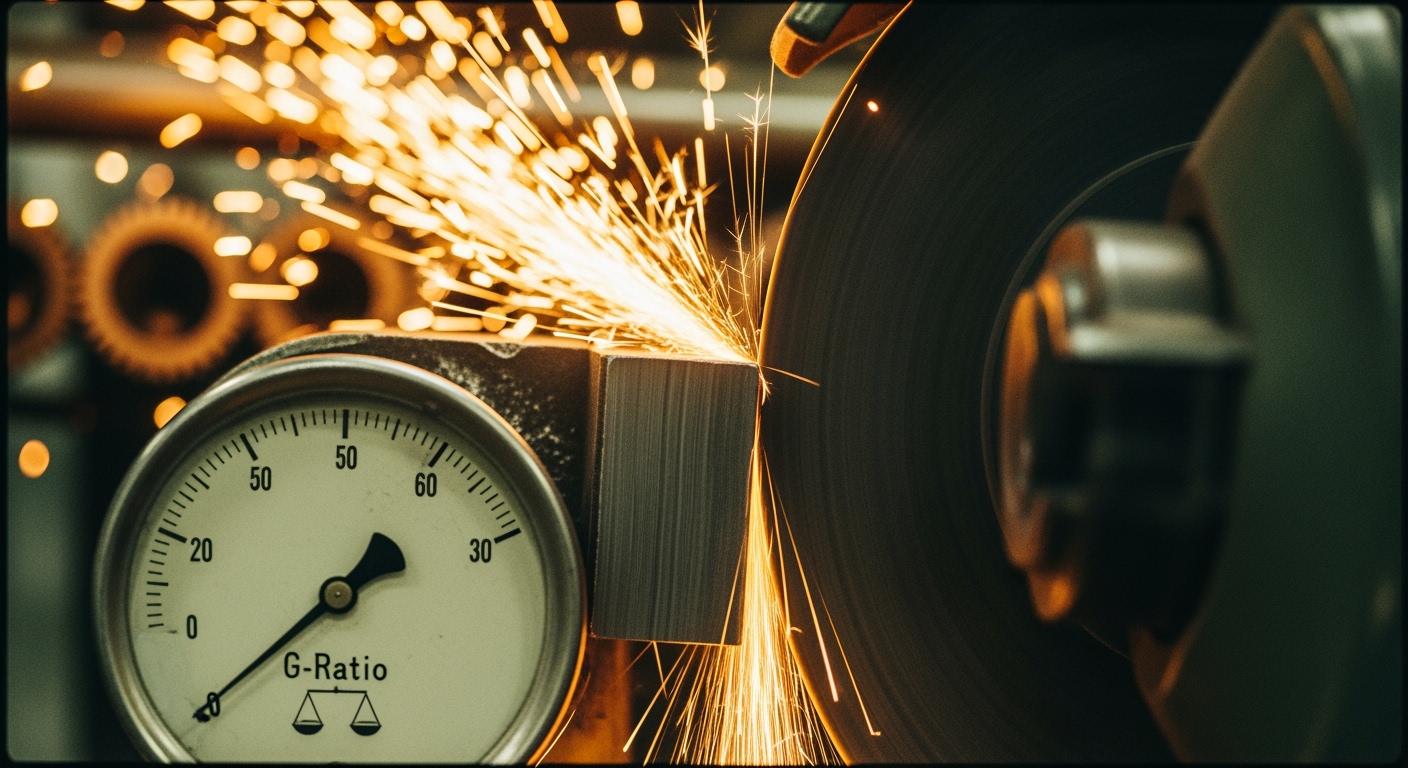
You need to understand g-ratio in grinding to improve your grinding process. G-ratio measures how much material you remove compared to the amount of abrasive wheel wear. This helps you select the right abrasive tool for your job. Aimgrind offers customized grinding solutions and advanced diamond grinding wheels. These tools give you better performance and longer life.
Key Takeaways
- Understand g-ratio to improve your grinding process. A high g-ratio means more material removal and less abrasive wear.
- Choose the right abrasive wheel based on properties like grade, grit size, and bond type. This selection impacts your grinding efficiency.
- Monitor your grinding cycle and wheel performance. Regular checks help maintain high g-ratio and ensure quality results.
- Use advanced diamond grinding wheels for better performance. These wheels last longer and provide a smoother finish.
- Aim for efficiency and cost-effectiveness. A high g-ratio saves time and money by reducing the need for frequent wheel changes.
G-Ratio in Grinding Explained
What Is G-Ratio?
You need to understand the g-ratio in grinding if you want to get the best results from your gear. The g-ratio tells you how much material you remove from your workpiece compared to how much your abrasive wheel wears down. When you use a grinding wheel, both the gear and the abrasive change shape. The g-ratio measures this balance. If you have a high g-ratio, your gear removes more material before the abrasive wears out. If you have a low g-ratio, your abrasive wears out quickly and you need to replace it more often.
Many people think that only the type of abrasive matters for the g-ratio. This is not true. You must also look at other properties of your gear, such as grade, grit size, concentration, and bond type. These properties affect how your gear works and how long your abrasive lasts. Here is a table that shows what each property controls and how you can adjust it:
| Property | What It Controls | How to Adjust |
|---|---|---|
| Grade (Hardness) | When dull diamonds release from bond | Bond matrix strength |
| Grit Size | Cutting edge sharpness, surface finish | Mesh size (80–400) |
| Concentration | Diamond density per volume | C-50 to C-150 (100 = 25% diamond) |
| Bond Type | Form retention, wheel life, sharpness | Resin, Vitrified, Metal, Electroplated |
You can see that each part of your gear plays a role in the g-ratio. You need to choose the right combination for your grinding process.
Why G-Ratio Matters in Grinding
You want your grinding process to be efficient and cost-effective. The g-ratio helps you reach this goal. If you use a gear with a high g-ratio, you spend less time and money changing abrasive wheels. Your gear lasts longer and you get better performance. If you use a gear with a low g-ratio, you waste time and resources. Your abrasive wears out fast and your process slows down.
The g-ratio also affects the quality of your finished product. A good g-ratio means your gear keeps its shape and sharpness. You get a smooth surface and accurate results. If your g-ratio is too low, your gear may lose its shape and damage your workpiece.
Aimgrind knows how important the g-ratio is for your grinding needs. The company focuses on innovation and quality. Aimgrind offers customized abrasive solutions that help you get the best g-ratio for your gear. You can trust Aimgrind to match the right abrasive to your process and improve your grinding performance.
Tip: Always check the g-ratio when you select a new abrasive wheel for your gear. This simple step can boost your efficiency and save you money.
G-Ratio Formula and Calculation
G-Ratio Equation
You can measure how well your abrasive wheel works by using the g-ratio equation. This equation helps you see how much material you remove compared to how much your wheel wears down. The formula is simple:
G-Ratio = Volume of Material Removed / Volume of Abrasive Wheel Worn Away
You need to know two things. First, how much material you take off your workpiece. Second, how much your abrasive wheel loses during the process. You can use this equation to compare different wheels and find the best one for your grinding job.
Tip: If you want a higher g-ratio, choose wheels that remove more material and wear down less. Aimgrind’s diamond grinding wheels are designed for this purpose. They help you get more work done with less wheel wear.
Variables Defined
You must understand what each part of the equation means. Here is a table that explains the variables:
| Variable | What It Means | How You Measure It |
|---|---|---|
| Volume of Material Removed | Amount of workpiece taken off | Measure before and after grinding |
| Volume of Abrasive Wheel Worn Away | Amount of wheel lost during grinding | Measure wheel before and after |
- Volume of Material Removed: This is the total amount you grind off your workpiece. You can weigh or measure the workpiece before and after grinding.
- Volume of Abrasive Wheel Worn Away: This is the amount your abrasive wheel loses. You can measure the wheel’s size or weight before and after the process.
You can use these measurements to calculate the g-ratio. This helps you see which abrasive wheel gives you the best value.
Example Calculation
Let’s look at a simple example. You use an Aimgrind diamond grinding wheel to grind a metal part. You remove 100 cubic centimeters of metal. Your wheel loses 2 cubic centimeters during the process.
Here is how you calculate the g-ratio:
G-Ratio = 100 / 2 = 50
This means your wheel removes 50 times more material than it loses. You get high efficiency and less wheel replacement. Aimgrind’s diamond grinding wheels help you reach this high g-ratio. They use advanced abrasives that last longer and cut faster.
Note: You can use this calculation for different wheels and materials. Always check your g-ratio to make sure you use the best abrasive for your job.
You can improve your grinding process by understanding the g-ratio formula. You get better results and save money when you choose the right abrasives. Aimgrind offers high-performance diamond grinding wheels that help you achieve a higher g-ratio and better efficiency.
Impact of G-Ratio on Grinding Performance
High vs. Low G-Ratio
You need to know how a high or low g-ratio in grinding affects your gear and your process. When you use a high g-ratio, your gear removes more material before the abrasive wears out. This means you get longer grinding wheel life, better gear finish, and higher gear transmission efficiency. You spend less time changing wheels and more time making quality gears. In continuous generating grinding, a high g-ratio helps you keep your cycle short and your gear finish smooth.
If you have a low g-ratio, your abrasive wears out fast. You need to stop your grinding cycle often to replace the wheel. This slows down your process and can hurt the finish and quality of your gear. Low g-ratio also means more waste and higher costs. In aggressive grinding cycles, a low g-ratio can lead to poor gear transmission efficiency and lower gear quality.
Abrasive Wheel Wear
You can see how abrasive wheel wear changes during a grinding cycle by looking at the numbers. Here is a table that shows what happens to your gear and abrasive over time:
| Time (s) | Radial Wear (μm) | Grinding Ratio (G) |
|---|---|---|
| 0-608 | 16 (mean) | 1.65 |
| 608-1208 | 480 (mean) | Decreased to unacceptable values |
At the start of the grinding cycle, your abrasive wears slowly and keeps a good g-ratio. As the cycle goes on, the abrasive wears faster, and the g-ratio drops. This means your gear may lose its shape, and the finish gets worse. You need to watch for these changes to keep your grinding wheel performance high.
You should not use g-ratio as the only way to judge your grinding wheel. Sometimes, things like wheel clogging or low porosity can make the g-ratio look good, but your gear finish and quality suffer. Dressing the wheel can help the surface, but it may lower the wheel’s life and reduce the g-ratio. Always look at the whole process, not just one number.
Grinding Efficiency
You want your grinding process to be efficient and give you the best gear quality. Good maintenance and machine conditions help you keep a high g-ratio and better grinding wheel life. Here are some things you should check:
- Wheel speed: Find the right speed for your gear. Too fast can cause more wear and high grinding temperatures.
- Coolant delivery: Use enough coolant to keep grinding temperatures low. This helps your abrasive last longer and keeps the gear finish smooth.
- Machine stiffness and power: Make sure your machine is strong and has enough power. Weak machines can lower your material removal rates and hurt your grinding cycle.
Aimgrind’s diamond grinding wheels help you get high performance and long life in your gear grinding process. These wheels use advanced abrasives that keep their shape and sharpness, even in hard gear finishing and continuous generating grinding. You get better material removal rates, less grinding wheel wear, and higher gear quality. This means you can finish more gears in each grinding cycle and improve your transmission efficiency.
Tip: Always check your grinding cycle, gear finish, and grinding temperatures to keep your process running at top efficiency.
New Grinding Wheel Technologies and G-Ratio
Innovations in Abrasive Tools
You see many changes in the world of abrasive tools. New grinding wheel technologies now help you achieve better results in gear grinding. Recent advances use needle-shaped grains. These grains let you remove more material while using less energy. This means you get a higher g-ratio and better efficiency.
You also find new bond technology, like the EVO Hybrid Bond. This bond lets you grind aggressively. It reduces wear and keeps the corners of your gear sharp. The bond also moves heat away from the grinding area. This protects the diamond in your abrasive wheel and helps you keep a longer dressing interval.
Engineered-shape ceramic grains and agglomerate grain technology have changed the way you grind. Products like the newest generation gear grinding wheel, Altos, and Targa, use these grains. You can now reach high metal removal rates and still keep a g-ratio of 30–40. This is true even when you work with tough gear materials.
You also see dressable vitrified CBN wheels. These wheels can double the performance of older wheels. You can reach Q’ values up to 20 mm³/mm/sec. G-ratios can go as high as 3,000 with water-based coolant and 10,000 with oil. These innovations let you grind both hard and soft gear materials with ease.
Tip: Choose abrasive tools with advanced grains and bonds to boost your gear grinding performance.
Aimgrind Diamond Grinding Wheels
You want the best results for your gear. Aimgrind diamond grinding wheels use the latest abrasive technology. These wheels have a strong diamond layer. This gives you high cutting efficiency and a long life. You can use them for both wet and dry gear grinding.
Aimgrind offers wheels in resin, metal, and vitrified bonds. You can pick the right wheel for your gear and process. The wheels keep their shape and sharpness. This means you get a smooth finish and high accuracy for every gear.
You can also find superabrasives and dual polishing grinding wheel options at Aimgrind. These products help you reach top gear quality and reduce downtime. Aimgrind’s wheels fit many machines and can be customized for your gear needs.
| Feature | Benefit for Gear Grinding |
|---|---|
| Advanced diamond layer | High efficiency, long life |
| Multiple bond types | Match to your gear and process |
| Custom options | Fit any gear grinding machine |
You improve your gear grinding process when you use Aimgrind’s newest generation gear grinding wheel. You get better results, higher g-ratio, and more value from your abrasive tools.
You improve your grinding process when you understand g-ratio in grinding. You boost performance and grinding wheel life. You see better quality and finish in each grinding cycle. Aimgrind’s diamond grinding wheels and advanced technology help you achieve higher performance and longer life. You reduce grinding wheel wear mechanisms and keep grinding temperatures low. You get more value from each cycle and improve quality in continuous generating grinding.
- You save money and time with improved efficiency and reduced grinding wheel wear.
- You see better finish and quality in every grinding cycle.
- You support sustainability by using technology that recycles abrasive waste and reduces plastic waste.
You should always check grinding wheel performance and grinding temperatures. You get the best quality and finish when you choose advanced technology for continuous generating grinding. Aimgrind helps you reach your goals in every grinding cycle.
FAQ
What does a high g-ratio mean for your grinding process?
A high g-ratio means you remove more material before your grinding wheel wears out. You save money and time because you change wheels less often. You also get better results and higher efficiency.
How can you measure the g-ratio during grinding?
You measure the g-ratio by dividing the volume of material removed by the volume of wheel worn away. Use a scale or caliper to check both before and after grinding.
Why should you choose diamond grinding wheels for a better g-ratio?
Diamond grinding wheels last longer and cut harder materials. You get a higher g-ratio because these wheels wear down slowly. You also achieve a smoother finish.
Can you use the same grinding wheel for all materials?
No, you should match your grinding wheel to the material. Harder materials need stronger abrasives like diamond. Using the right wheel improves your g-ratio and finish.
Where can you find customized grinding solutions?
You can contact Aimgrind for custom grinding wheels and expert advice. Visit Aimgrind’s website or reach out for personalized support.
Contact Us
For More Grinding Solution or Customized Abrasive Tools