

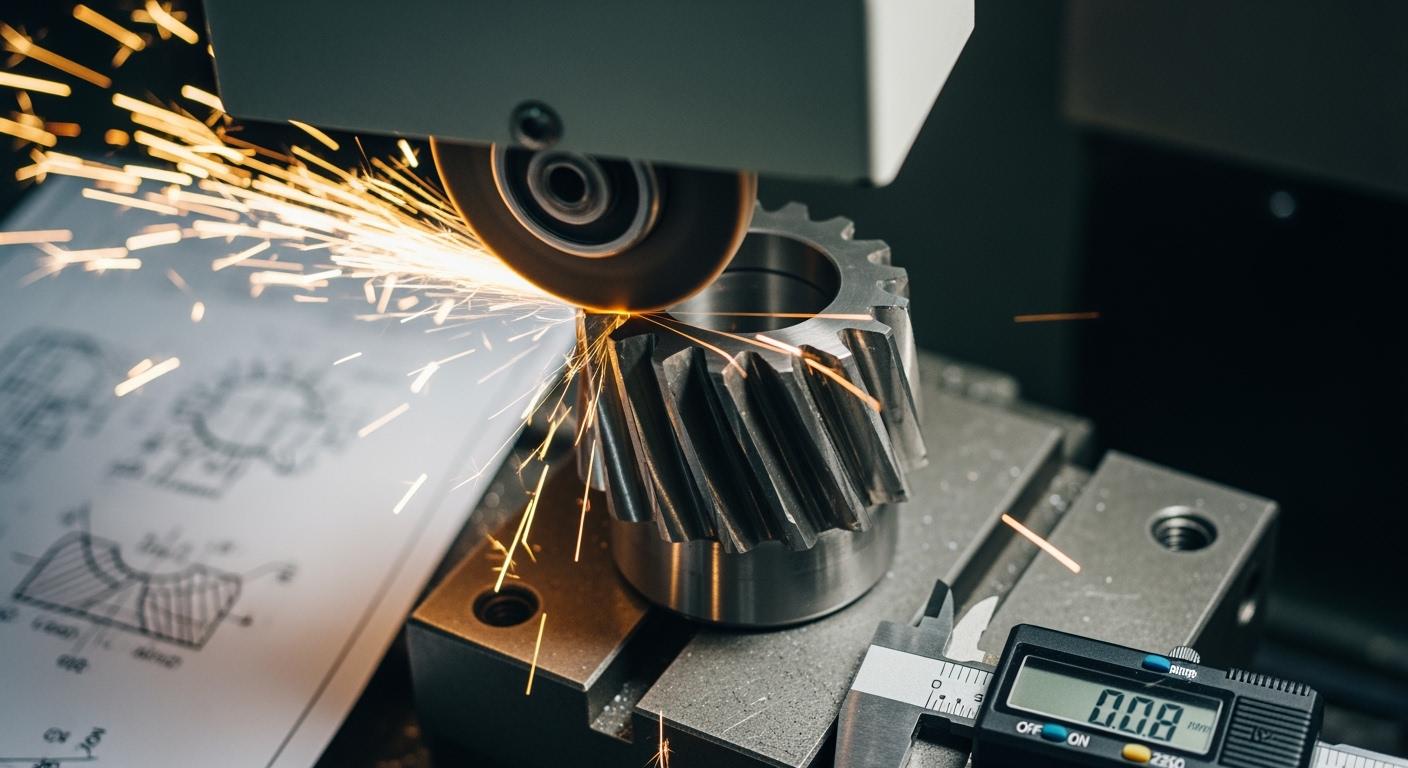
You want to achieve precision in gear manufacturing because even a small error can affect performance. Precision in gear depends on careful inspection, proper machine setup, and the right tools. Aimgrind diamond grinding wheels help you reach the highest level of precision in gear production. When you focus on each step, you keep precision in gear at its best. Precision in gear also means checking the gear hob before grinding. If you use the right process, you improve precision in gear every time.
Key Takeaways
- Perform thorough pre-grinding checks on the gear hob. Inspect for damage and clean it to ensure a smooth grinding process.
- Adjust the rake angle accurately before grinding. This step is crucial for achieving the correct gear profile and preventing damage.
- Select the right Aimgrind diamond grinding wheel. Using the appropriate wheel enhances precision and reduces the need for frequent changes.
- Monitor the grinding process in real time. Regular checks help catch errors early and maintain high gear accuracy.
- Document all inspection results and settings. Keeping detailed records supports continuous improvement and ensures traceability in gear manufacturing.
Pre-grinding Checks for Gear Hob
Visual Inspection and Cleaning
You start by looking at the hob closely. Check for chips, cracks, or any signs of wear. Clean the hob with a soft brush or cloth to remove dust and oil. This step helps you spot problems early. If you find damage, you avoid wasting time and materials during grinding. Keeping the hob clean also helps you get a smooth finish on the gear hob.
Tip: Always inspect the hob under good lighting. Small cracks or chips can hide in shadows.
Dimensional Measurement
You need to measure the hob before you begin grinding. Use calipers, micrometers, or a coordinate measuring machine. Check the gear’s diameter, tooth thickness, tooth profile shape, position, and surface finish. These measurements help you know if the hob is ready for grinding or if it needs repair. When you measure carefully, you keep the gear hob within the right size and shape.
- Careful control of concentricity during pre-grinding checks leads to better productivity.
- When you minimize grinding stock, you reduce the chance of errors.
- Modern tools let you measure hobs quickly and spot problems before grinding starts.
Selecting Aimgrind Diamond Grinding Wheels
Choose the right Aimgrind diamond grinding wheel for your gear hob. These wheels match the hardness and shape of the hob. Aimgrind offers wheels that fit many grinding machines and gear hob types. You get a wheel that lasts longer and keeps its shape. This means you spend less time changing wheels and more time making precise gear hobs. Using the right wheel helps you avoid mistakes and keeps your grinding process smooth.
Note: Aimgrind can help you select the best wheel for your hob and grinding needs.
Gear Hobbing Machine Setup
Setting up your gear hobbing machine is the most important step for achieving high accuracy in the gear hobbing process. You need to focus on every detail to avoid errors in rake angle, gear profile, and involute accuracy. A good setup helps you get the best results in gear manufacturing and keeps your gear hob in top condition for sharpening and regrinding.
Rake Angle Adjustment
You must adjust the rake angle carefully before you start grinding. The rake angle controls how the hob cuts the gear material. If you set the wrong angle, you can damage the hob or create a poor gear profile. Use the machine’s adjustment features to set the rake angle according to the gear hob design. Always check the axial rake angle, as it affects the cutting action and the final gear accuracy.
You should use a cnc hob sharpening machine for precise rake angle adjustment. This machine lets you set the angle with high accuracy. You can also use digital readouts to check the angle during setup. If you skip this step or make a mistake, you will see problems in the gear hobbing process, such as uneven wear or poor involute accuracy.
Tip: Mark the correct rake angle on your setup sheet for easy reference during regrinding or hob sharpening.
Spindle and Tailstock Alignment
You need to align the spindle and tailstock of your gear hobbing machine before you start the grinding process. Misalignment can cause errors in the gear profile and reduce gear accuracy. Common causes of misalignment include a loose or damaged center, a misaligned tailstock, or a machine that is not level. You should check the alignment every time you set up for hob sharpening or regrinding.
- Check the tailstock for tightness and make sure it lines up with the spindle.
- Inspect the machine bed for levelness.
- Use a dial indicator to measure runout and correct any errors.
If you do not align the spindle and tailstock, you may see problems like uneven grinding, poor flute lead, or defects in the gear hobbing process. These problems can lower the quality of your gear and increase the need for extra sharpening or regrinding.
Parameter Selection for Grinding
You must select the right cutting parameters for the gear hobbing process. These parameters include hob tooth modulus, normal pressure angle, hob-setting angle, number of starts of hob, hob outside diameter, and hob base diameter. Each parameter affects the grinding accuracy and the final gear profile.
Here is a table to help you understand the most critical parameters:
| Parameter | Description |
|---|---|
| Hob Tooth Modulus | Controls the size and shape of the hob teeth, which changes the rake angle. |
| Normal Pressure Angle | Sets the force on the hob teeth and changes the rake-face orientation. |
| Hob-Setting Angle | Sets the hob axis tilt, which is key for rake angle accuracy. |
| Number of Starts of Hob | Changes the cutting action and the effectiveness of the rake angle during grinding. |
| Hob Outside Diameter | Changes the hob’s geometry, which is important for rake angle determination. |
| Hob Base Diameter | Affects the hob’s stability and performance during the grinding process. |
You should always start with the manufacturer’s recommendations for cutting parameters. Monitor the surface finish and involute accuracy during grinding. Use multiple passes if needed to reach the best results. Aimgrind offers expertise in parameter matching and sample optimization. You can ask Aimgrind for help to match the grinding wheel and machine settings to your gear hobbing process.
Calibration is also important for gear hobbing machines. You need to check setup accuracy, machine rigidity, and cutting parameters. Here is a quick guide:
| Calibration Aspect | Details |
|---|---|
| Setup Accuracy | Verify hob angle calculation, check center distance, confirm workpiece clamping rigidity. |
| Machine Rigidity | Ensure spindle synchronization ≤0.001°, positioning repeatability ≤0.5 µm. |
| Cutting Parameters | Start with manufacturer recommendations, monitor surface finish, use multiple passes. |
If you do not set the parameters correctly, you may see errors such as incorrect tooth profiles, noisy gear meshes, or burns on the hob. These problems can come from misalignment, wrong pressure angle, or poor coolant delivery. Always check your setup before you start grinding.
Note: Aimgrind can help you with parameter selection, wheel matching, and process optimization for your gear hobbing machines.
Common Setup Errors to Avoid
- Misalignment of center distance and axial position can cause incorrect tooth profiles and inconsistent finishes.
- Using the wrong pressure angle, module, or protuberance can lead to profile problems and noisy gear meshes.
- Failing to adjust settings after hob sharpening or regrinding can cause size drift and production issues.
- Poor coolant delivery can result in burns and scoring on the hob.
- Errors in indexing and timing can create repeating defects in the gear hobbing process.
You can prevent these errors by following a strict inspection and calibration routine. Always record your settings for each gear hob and update them after every sharpening or regrinding. This practice helps you maintain high gear accuracy and prolongs the life of your hob.
Grinding Process Execution
Step-by-Step Grinding Procedure
You begin the grinding process by setting up your gear hobbing machine. Make sure the hob is clean and free from defects. Place the hob in the machine and secure it tightly. Check the gear hob design and confirm the rake angle matches your requirements. Use a cnc hob sharpening machine for high accuracy. Set the cutting parameters based on the gear hobbing process. These parameters include speed, feed rate, and depth of cut.
Follow these steps for grinding:
- Start the machine and let it reach full speed.
- Move the grinding wheel to the hob surface.
- Begin grinding the hob teeth. Keep the wheel steady and avoid sudden movements.
- Check the axial rake angle during grinding. This angle affects the cutting action and gear accuracy.
- Monitor the flute lead and tooth profile. Make adjustments if you see any errors.
- Stop the machine after grinding each section. Inspect the hob for surface finish and involute accuracy.
- Repeat the process for all hob teeth. Use multiple passes if needed for sharpening or regrinding.
Tip: Record each step in your inspection log. This helps you track optimization and maintain gear accuracy.
Real-time Monitoring and Control
You must monitor the grinding process in real time. Watch for changes in the hob surface and listen for unusual sounds. Use digital displays on your cnc hob sharpening machine to check the rake angle and cutting parameters. Adjust the machine settings if you see any errors in the gear hobbing process.
Here are key points for real-time control:
- Check the hob sharpening progress after each pass.
- Inspect the gear hob for burns, scoring, or uneven grinding.
- Monitor the gear hobbing machine for vibration or misalignment.
- Use sensors to track temperature and surface finish.
- Adjust the cutting parameters to improve optimization and manufacturing quality.
If you notice problems, stop the machine and inspect the hob. Make corrections before continuing. This prevents errors in the gear hobbing process and keeps the gear hob within the right profile and rake angle.
Note: Real-time monitoring helps you avoid mistakes and improves gear accuracy.
Using Aimgrind Diamond Grinding Wheels for Consistency
Aimgrind diamond grinding wheels give you consistent results in gear hobbing technologies. These wheels keep their shape and sharpness during grinding. You get a smooth finish and high accuracy on every gear hob. The wheels work well for hob sharpening, regrinding, and manufacturing.
Advantages of Aimgrind diamond grinding wheels:
| Feature | Benefit for Gear Hobbing Process |
|---|---|
| High durability | Fewer wheel changes, more consistent grinding |
| Precise shape | Maintains rake angle and tooth profile |
| Fast material removal | Speeds up optimization and manufacturing |
| Smooth surface finish | Improves gear accuracy and involute quality |
| Custom options | Matches gear hob design and gear hobbing machines |
You use Aimgrind wheels for sharpening and regrinding. These wheels help you keep the hob within the right rake angle and cutting parameters. You avoid errors in the gear hobbing process and improve optimization. Aimgrind offers support for wheel selection and process optimization.
Callout: Aimgrind diamond grinding wheels help you achieve the best results in gear hobbing technologies. You get reliable performance and high gear accuracy every time.
Post-grinding Verification for Precision in Gear
Rake Angle Measurement
You need to measure the rake angle after grinding. This step confirms that the hob sharpening process produced the correct angle. Use industry-standard tools like a universal measuring microscope or a digital protractor. These tools help you check the axial rake angle and ensure the hob matches the gear hob design. Accurate measurement keeps gear accuracy high and prevents errors in manufacturing. Aimgrind offers guidance for selecting the right tools and methods for rake angle inspection. You can rely on Aimgrind’s expertise for optimization and reliable results.
Tip: Always measure the rake angle at multiple points along the hob. This practice helps you spot any variation and maintain involute accuracy.
Profile and Surface Finish Checks
You must inspect the profile and surface finish of the hob after sharpening and regrinding. Use a profile projector or a coordinate measuring machine to check the gear hob profile. Look for smooth surfaces and correct flute lead. Surface finish affects gear accuracy and involute quality. If you see scratches or uneven spots, you may need to repeat the grinding or adjust cutting parameters. Aimgrind can help you optimize the process for better manufacturing results.
| Inspection Tool | Purpose |
|---|---|
| Profile Projector | Checks hob profile |
| Surface Roughness Tester | Measures surface finish |
| Coordinate Measuring Machine | Confirms involute accuracy |
You improve gear hobbing technologies by keeping the hob within the right profile and surface finish. This step ensures the gear meets manufacturing standards.
Documentation and Traceability
You should record all inspection results after hob sharpening and regrinding. Keep a log of rake angle measurements, profile checks, and cutting parameters. Documentation helps you track optimization and maintain gear accuracy. Traceability lets you find the cause of any errors in gear manufacturing. Aimgrind recommends using digital logs for easy access and review. You can share these records with your team to improve gear hobbing machines and processes.
Note: Good documentation supports continuous improvement and helps you meet quality standards in gear manufacturing.
Common Hob Grinding Mistakes & Maintenance Tips
Avoiding Errors in Rake Angle
You must pay attention to the rake angle every time you sharpen a hob. If you set the wrong angle, you risk profile errors on the gear. Always check the hob against its original specification drawing before grinding. Use digital tools to verify the rake angle setup. Dress the grinding wheel before each hob to prevent hollow grind on the rake face. Inspect for cracks before you start. If you skip this step, the hob can break in the machine and cause damage. Make sure you use enough coolant on high-speed steel hobs. This prevents burns and keeps tool life high.
Tip: Never grind a hob without post-grind inspection. You avoid running out-of-spec hobs in gear manufacturing.
Best Practices for Multiple Regrinds
You need to follow best practices when you regrind a hob many times. Keep involute accuracy by checking the hob meets its original class after each regrind. Dress the grinding wheel before every hob. Verify rake angle setup and measure flute lead after grinding. Check the hob arbor and machine center for wear. This prevents inconsistent stock removal across flutes. Use gear hobbing machines with minimum 4-axis control and electronic synchronization for flute indexing. Integrate a probing cycle to verify lead and runout after sharpening.
- Maintain involute accuracy after each regrind.
- Dress the grinding wheel before every hob.
- Verify rake angle setup against the original drawing.
- Measure flute lead post-grind.
- Check hob arbor and machine center condition.
Routine Maintenance and Inspection
You must keep a regular maintenance schedule for your gear hobbing technologies. Clean the machine and check all moving parts. Inspect the hob for cracks, wear, and surface finish. Record cutting parameters for each sharpening cycle. Use a table to track common mistakes and their impact:
| Mistake | Consequence | Cost Impact |
|---|---|---|
| Grinding without inspecting for cracks first | Hob breaks in machine, potential spindle damage | Very high |
| Wrong rake angle setup | Profile errors on gear, batch rejection | High |
| Insufficient coolant on HSS hob | Grinding burn, reduced hardness, poor tool life | Medium-high |
| No post-grind inspection | Running out-of-spec hob on production parts | High |
| Over-grinding | Premature hob retirement, wasted regrind life | Medium |
| Not re-coating after grinding coated hobs | 30–40% reduction in tool life per regrind | Medium |
Note: Good maintenance and inspection help you achieve optimization in gear manufacturing. You keep gear accuracy high and extend hob life.
You achieve precision in gear hob grinding by following systematic steps. You select the right hob design, adjust machine parameters, and use Aimgrind diamond grinding wheels. You check gear accuracy after every grinding cycle. Regular inspections and maintenance keep gear manufacturing consistent. You reduce emergency fixes and increase gear production efficiency. The table below shows how surface roughness improves gear quality in manufacturing:
| Hob Rake Surface Roughness (μm) | Average Gear Surface Roughness (Rz) (μm) |
|---|---|
| 3.2 | 5.62 |
| 0.8 | 2.87 |
You follow these best practices to get reliable gear hobs and boost manufacturing productivity.
FAQ
What is the rake angle in gear hob grinding?
The rake angle is the angle between the cutting face of the hob and a reference line. You set this angle to control how the hob cuts gear material. Accurate rake angle improves gear quality.
How do Aimgrind diamond grinding wheels help in precision grinding?
Aimgrind diamond grinding wheels keep their shape and sharpness. You get consistent results and a smooth finish. These wheels last longer and reduce the need for frequent changes.
What tools should you use to measure the rake angle?
You can use a universal measuring microscope or a digital protractor. These tools help you check the rake angle quickly and accurately. Always measure at several points for best results.
How often should you inspect your gear hob during grinding?
You should inspect the gear hob after every grinding pass. Look for cracks, wear, and surface finish. Regular checks help you catch problems early and keep gear accuracy high.
What are common mistakes in gear hob grinding?
You may set the wrong rake angle, skip inspection, or use insufficient coolant. These mistakes can cause profile errors, burns, or tool breakage. Always follow best practices to avoid these issues.
Contact Us
For More Grinding Solution or Customized Abrasive Tools