

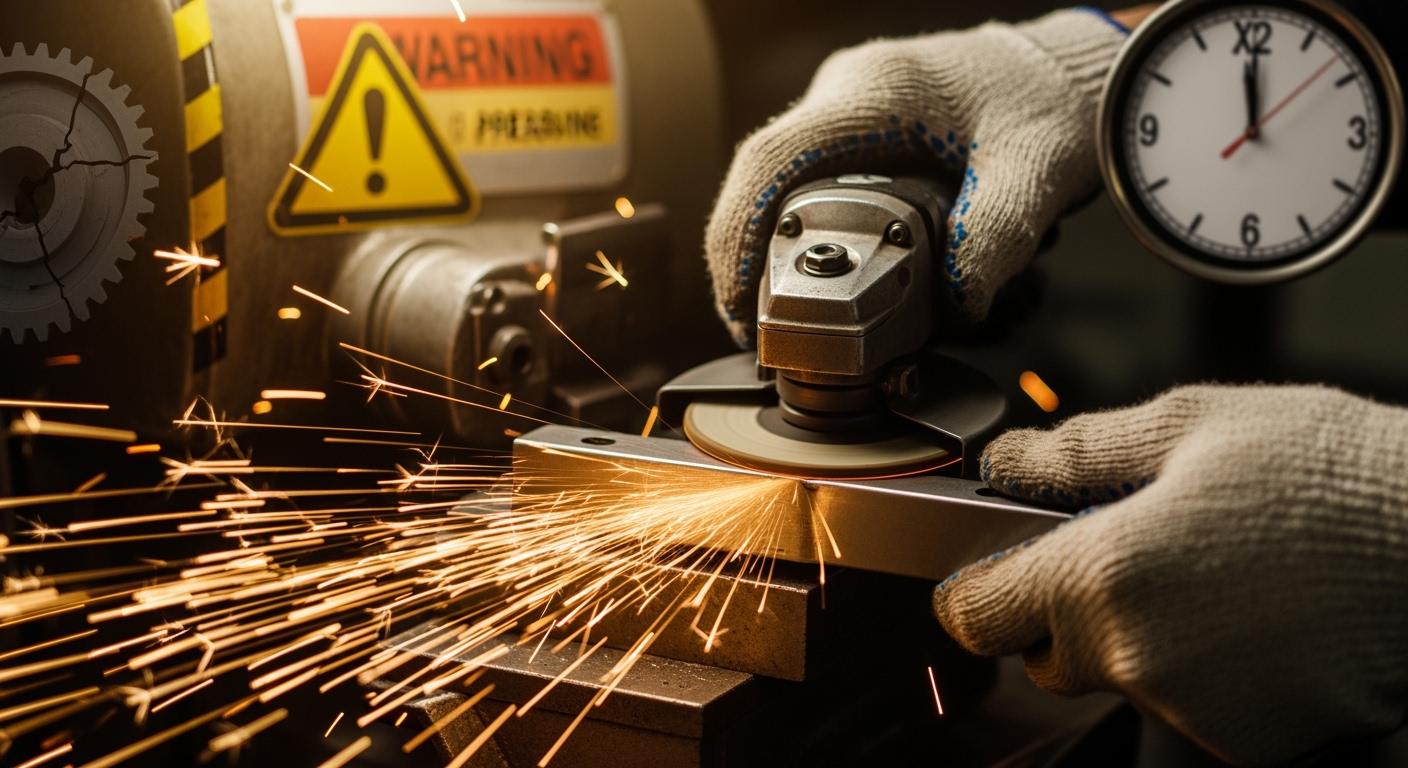
You face several main challenges when grinding stainless steel, including poor surface finish, chatter, burning, wheel life too short, wheel cutting slowly, and wheel not cutting at all. These issues can cause heat discoloration, work hardening, and make it harder to achieve precise tolerances. If you want to improve productivity and maintain quality, you need to address these problems quickly. Aimgrind’s super hard abrasives help you solve these challenges by providing durable tools and consistent results.
Key Takeaways
- Choose the right abrasives for stainless steel to avoid poor finishes and damage. Use ceramic or zirconia abrasives for best results.
- Minimize heat buildup during grinding by using coated abrasives and maintaining steady pressure. This helps prevent discoloration and warping.
- Prevent contamination by using tools specifically designed for stainless steel. Keep work areas clean to maintain corrosion resistance.
- Avoid work hardening by keeping tools sharp and using proper feeds and speeds. This ensures efficient grinding and reduces tool wear.
- Handle and store stainless steel parts carefully to maintain their finish quality. Use protective coatings and avoid contact with carbon steel.
Main challenges in stainless steel grinding
Abrasive selection issues
You face abrasive selection issues as one of the main challenges in stainless steel grinding. Stainless steel needs special abrasives because it is tough and sensitive to contamination. If you use the wrong abrasive, you risk poor surface finish, slow cutting, and even damage to the material. You must consider several factors when choosing the right abrasive:
- Base Material: Stainless steel requires abrasives like ceramic or zirconia to avoid contamination.
- Desired Finish Quality: Choose the correct grit size for rough prep or fine finish.
- Type of Abrasive Media: Zirconia alumina works well for stainless steel.
- Application Method: The tool or machine you use affects the abrasive choice, such as flap discs for angle grinders.
- Heat Sensitivity: Cool cutting abrasives help prevent heat discoloration or warping.
Aimgrind’s super hard abrasives, which use diamond and CBN grains, give you unmatched cutting efficiency and durability. These abrasives maintain sharpness and deliver consistent results, even when you grind tough stainless steel grades. You get a longer wheel life and a better finish, which helps you solve the main challenges of abrasive selection.
Heat buildup and thermal damage
Heat buildup and thermal damage create another set of main challenges in stainless steel grinding. Grinding generates friction, which raises the temperature of the workpiece. High temperatures can cause discoloration, warping, and even cracks. Residual tensile stresses from thermal damage reduce fatigue strength and may lead to cracking. Grinding temperatures, energy partition, and cooling fluids all affect how much thermal damage occurs.
You can minimize heat buildup by:
- Using coated abrasives designed for stainless steel.
- Choosing contaminant-free or INOX wheels to reduce heat.
- Selecting thinner wheels to decrease heat and waste.
- Starting with a pullback motion to avoid gouging.
- Using flap discs for grinding and finishing in one step.
- Employing variable-speed grinders and applying light, steady pressure.
- Making short passes and allowing cooling between them.
- Using ceramic and zirconia grains for efficient, low-heat grinding.
Aimgrind’s super hard abrasives feature excellent thermal conductivity. These abrasives resist overheating and help you avoid thermal damage. You achieve a superior surface finish and maintain the integrity of your stainless steel parts, which addresses the main challenges of heat buildup.
Tip: Always monitor grinding temperatures and use cooling fluids to protect your workpiece from thermal damage.
Contamination risks
Contamination risks present main challenges during stainless steel grinding. Stainless steel relies on a chromium oxide layer for corrosion resistance. Grinding and fabrication can disrupt this layer. Iron contamination leads to visible defects and localized corrosion. Common contaminants include steel or iron dust, steel brushes, carbon steel wool, steel blasting shot, and carbon steel tools.
To prevent contamination, you should:
- Use abrasive products labeled as ‘Stainless’ or ‘inox’ that are free from iron, sulfur, and chlorine.
- Avoid using tools and media that have touched carbon or alloy steel.
- Keep vises, clamps, and holders clean and dedicated to stainless steel work.
Contamination from iron particles negatively affects corrosion resistance and surface quality. Grinding reduces the resistance of stainless steels to localized corrosion. Rough surfaces show lower breakdown potentials compared to smooth surfaces. Changes in passive film properties are critical for pitting corrosion resistance.
| Findings | Description |
|---|---|
| Grinding Impact | Grinding reduces the resistance of stainless steels to localized corrosion. |
| Surface Roughness | Rough surfaces exhibit lower breakdown potentials compared to smooth surfaces. |
| Passive Film Properties | Changes in passive film properties are critical for pitting corrosion resistance. |
Aimgrind’s super hard abrasives are engineered to be contaminant-free. You protect the integrity and corrosion resistance of your stainless steel parts. You maintain a high-quality finish and avoid the main challenges of contamination.
Material sensitivity and compatibility
Work hardening problems
Stainless steel can become harder when you grind it. This is called work hardening. You may notice that the material gets tougher and more difficult to cut. Work hardening makes grinding slower and increases tool wear. You can avoid these problems by following some simple steps:
- Keep your cutting tools sharp. This reduces friction and heat.
- Use the right feeds and speeds for your grinding machine.
- Avoid spring passes. These cause extra rubbing and heat.
- Use coolant-fed tools to manage heat.
- Do not dwell on one spot. This prevents localized heating.
- Maintain a constant feed when drilling.
- Try the peck drilling technique. This clears chips and reduces heat.
Tip: Sharp tools and steady movement help you prevent work hardening and keep your grinding process efficient.
Matching abrasives to stainless steel grades
Different grades of stainless steel respond differently to abrasive materials. You need to match the abrasive to the grade for the best results. If you use the wrong abrasive, you risk poor surface finish, corrosion, and even hazardous outcomes. The table below shows how various grades react and which abrasives work best:
| Stainless Steel Grade | Machinability | Grindability | Recommended Abrasives |
|---|---|---|---|
| Austenitic | Fair | Fair | Aluminum oxide, Zirconia, Ceramic |
| Ferritic | Poor | Difficult | Aluminum oxide, Zirconia |
| Martensitic | Good | Easier | Zirconia, Ceramic |
You can also choose abrasives based on their type and grit range:
| Abrasive Type | Grit Range | Suitable Use |
|---|---|---|
| Aluminum Oxide | 40-320 | Heavy scale removal to general polishing |
| Silicon Carbide | 120+ | Finer finishes on harder stainless steel grades |
| Ceramic | Various | Medium to fine polishing tasks |
| Non-Woven Pads | Various | Finishing or cleaning with minimal material removal |
| Buffing Compounds | Various | Achieving mirror-like finishes |
Note: Using mismatched abrasives can cause corrosion, damage the protective layer, and lead to poor surface finishes.
Clogging and wheel loading
Clogging and wheel loading are main challenges in stainless steel grinding. You may see the grinding wheel fill up with metal particles. This reduces cutting efficiency and causes overheating. You can prevent clogging by choosing the right abrasive and grit size. Super hard abrasives from Aimgrind resist wheel loading and keep your grinding process smooth. You get consistent results and a better finish.
Callout: Clean your grinding wheels regularly and select abrasives designed for stainless steel to avoid clogging.
Grinding welds and tight spaces
Weld joint finishing
You often face unique challenges when grinding weld joints on stainless steel. Welds create uneven surfaces that require careful finishing. Stainless steel’s high ductility and strain hardening make it harder to grind than carbon steel. You must control heat to prevent discoloration and maintain corrosion resistance. Use variable-speed grinders or flap discs. Apply light, steady pressure. Make short passes and allow cooling between them. Always use dedicated stainless steel abrasives. Introducing carbon steel particles can cause rust and corrosion later. After grinding, remove any oxide or discoloration to keep the surface clean and resistant to corrosion. Abrasive cleaning is safer than acid pickling and just as effective.
Tip: Use abrasive grinding followed by pickling for weld joints. This method keeps your stainless steel clean and strong.
Accessing confined areas
Grinding in tight spaces requires special tools and techniques. You need to reach corners, edges, and small welds without damaging the surrounding metal. Angle grinders work well in tight spots. Die grinders help with detailed work. Cordless angle grinders offer flexibility and mobility. Flap discs are effective for finishing confined areas. Cut-off wheels are essential for cutting stainless steel in restricted spaces. Hand tools like hammers and pliers assist with manual tasks.
| Tool Type | Description/Use in Confined Areas |
|---|---|
| Angle Grinders | Ideal for grinding in tight spaces |
| Bench Grinders | Useful for stationary grinding tasks |
| Die Grinders | Perfect for detailed work in confined areas |
| Cordless Angle Grinders | Offers flexibility and mobility in restricted spaces |
| Cut-Off Wheels | Essential for cutting stainless steel in tight spots |
| Grinding Wheels | Used for smoothing and shaping stainless steel surfaces |
| Flap Discs | Effective for finishing work in confined areas |
| Hand Tools | Manual tasks in small spaces |
Tool selection with Aimgrind solutions
You need the right tools to grind welds and access tight spaces efficiently. Aimgrind’s super hard abrasives give you unmatched durability and precision. These abrasives resist wheel loading and maintain sharpness. You achieve a smooth finish even in difficult areas. Aimgrind offers grinding wheels, flap discs, and mounted points designed for stainless steel. You can select the best tool for your task and trust that it will deliver consistent results. Aimgrind’s products help you avoid contamination and overheating. You keep your stainless steel parts strong and corrosion-resistant.
Note: Aimgrind’s super hard abrasives make grinding welds and tight spaces easier, safer, and more productive.
Handling and storage after grinding
Preventing surface damage
You need to protect stainless steel surfaces after grinding. Surface damage can happen if you use too much pressure or the wrong speed during finishing. Always use the right pressure and speed to avoid overworking the surface. Keep the area clean and dry. Moisture and dirt can cause rust or stains. You should store stainless steel in dry places and clean the surfaces often to remove dust and metal shavings. Use protective coatings or lubricants to boost corrosion resistance. Never drag or slide stainless steel across floors. This can create scratches and defects that weaken the protective layer. Handle each piece with care to keep the surface smooth and strong.
Tip: Use proper lifting tools and avoid impacts to prevent dents and scratches.
Avoiding recontamination
You must keep stainless steel free from iron and carbon steel particles after grinding. Recontamination can ruin the corrosion resistance of your parts. Follow these steps to avoid it:
- Keep stainless steel and carbon steel work areas separate.
- Do not grind carbon steel near stainless steel.
- Store stainless and carbon steel in different places.
- Use packaging materials like cardboard to stop direct contact with steel bands during transport.
- Choose stainless steel tools and handling equipment whenever possible.
Cross-contamination can happen if steel tools touch stainless steel. This can transfer iron and make your parts more likely to rust. Always check your tools and workspaces before handling finished pieces.
Maintaining finish quality
You want your stainless steel to look good and last long. To keep the finish quality high, avoid impacts when moving or storing parts. Store stainless steel in a dry environment. Use proper lifting techniques to prevent bending or scratching. Cover or store grinding machines and wheels in clean, dry, and well-ventilated areas. Protect them from moisture, dust, and extreme temperatures. Use original packaging or racks for grinding wheels to avoid warping or breakage.
Note: Careful handling and storage help you maintain the smooth finish and corrosion resistance of your stainless steel parts.
You face several main challenges when grinding stainless steel. These include contamination, heat buildup, improper product selection, and incorrect handling. Each challenge can lower efficiency and damage your work. The table below shows how these issues affect your results and how you can solve them:
| Challenge | Impact on Efficiency | Solution |
|---|---|---|
| Contamination | Surface defects, rework needed | Use contaminant-free, INOX abrasives |
| Heat buildup | Discoloration, product scrap | Choose high-performance abrasives |
| Product selection | Increased labor, poor results | Select wheels for stainless steel |
| Handling/storage | Lower grinding quality | Store and handle parts properly |
You improve your results by using the right abrasives and techniques. Aimgrind’s super hard abrasives help you achieve better finishes and longer tool life. Review your grinding practices and choose products made for stainless steel to get the best outcome.
FAQ
What makes stainless steel harder to grind than other metals?
Stainless steel has high toughness and work hardening properties. You need sharper tools and special abrasives. The material resists cutting and can quickly become harder during grinding.
How do you prevent heat discoloration when grinding stainless steel?
You should use cool-cutting abrasives and apply light, steady pressure. Make short passes and allow cooling between them. Aimgrind’s super hard abrasives help reduce heat buildup and protect the surface.
Why is contamination a concern in stainless steel grinding?
Contamination can ruin the corrosion resistance of stainless steel. Iron particles or carbon steel dust cause rust and surface defects. You must use contaminant-free tools and keep work areas clean.
Which abrasive works best for stainless steel?
You get the best results with super hard abrasives like diamond or CBN. These abrasives last longer and cut faster. Aimgrind offers wheels designed for stainless steel, giving you a smooth finish and consistent performance.
How do you maintain the finish quality after grinding?
Store stainless steel in dry, clean areas. Handle parts carefully to avoid scratches. Use protective coatings or lubricants. Always check your tools and storage spaces for cleanliness.
Contact Us
For More Grinding Solution or Customized Abrasive Tools