

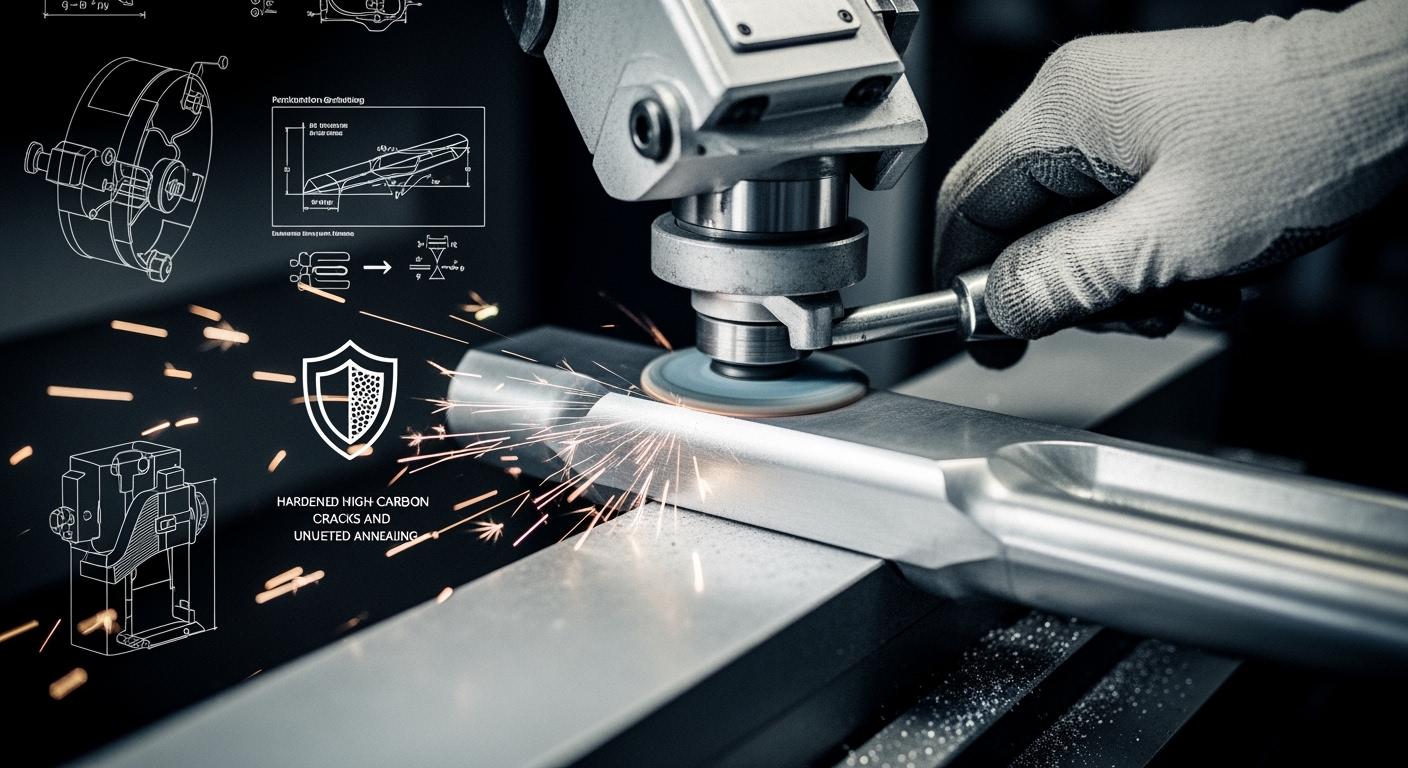
You want to avoid cracks when grinding hardened high-carbon tool steel. High temperatures can cause carbon to move and create weak spots. If you do not control heat, you will not avoid cracks. You need the right wheel to avoid cracks in carbon-rich tools. Grinding with Aimgrind CBN wheels helps you avoid cracks. These wheels lower heat and protect the carbon structure. You avoid cracks by choosing the best grinding process and keeping the steel safe.
Key Takeaways
- Control heat during grinding to prevent cracks. Use steady coolant flow to absorb heat and maintain steel hardness.
- Select the right CBN grinding wheel for your tool. Consider bond type, grit size, and wheel diameter for optimal performance.
- Set proper grinding parameters. Use slow feed rates and small depths of cut to enhance control and reduce overheating.
- Regularly inspect and maintain your grinding machine. Daily checks help catch issues early and ensure safe operation.
- Follow safe grinding practices. Always wear protective gear and keep your workspace organized to avoid accidents.
Causes of Cracking and Annealing in Grinding
Heat Generation and Overheating
Grinding hardened high-carbon tool steel creates intense heat at the contact point. You must control cooling to prevent overheating. If you let heat build up, you risk cracking and annealing. Overheating changes the hardness of steel. It can cause oxidation burn, thermal softening, and re-hardening burn. These problems weaken the steel and make cracks more likely.
| Cause | Description |
|---|---|
| Oxidation burn | Excessive heat leads to oxidation of the surface. |
| Thermal softening | Localized heating softens the material. |
| Residual tensile stress | Stresses remaining after grinding can lead to cracking. |
| Re-hardening burn | Hardening in some areas causes cracks. |
You see cracks when heat alters the microstructure. Grain boundaries and phase changes affect hardness. Cooling must be steady and fast to avoid overheating. If cooling fails, you lose hardness and risk annealing.
- Excessive heat changes the microstructure and lowers fracture toughness.
- Grain boundaries play a role in crack development.
- Wear mechanisms change with tool shape, affecting cracking.
Improper Grinding Parameters
You need to set the right grinding parameters. High feed rates and wheel speeds cause overheating. If you grind too fast, you create thermal shock and microcracking. Uneven material removal leads to surface integrity issues and cracking. You must match grinding parameters to the hardness of steel.
| Parameter | Recommended Value |
|---|---|
| Wheel Speed (VS) | 30–35 m/s |
| Work Speed (VW) | 10–25 m/min |
| Depth of Cut | 0.01–0.03 mm/pass |
| Feed Rate | Slow and steady |
If you follow these values, you protect hardness and avoid annealing. You keep cooling steady and prevent overheating.
Inadequate Coolant Use
Cooling is vital for grinding. If you do not use enough coolant, you risk overheating and cracking. Coolant absorbs heat and carries it away. Without proper cooling, the steel loses hardness and annealing occurs. Blocked coolant pathways or a broken water pump cause poor cooling. You must check cooling systems often.
Coolant serves as a vital heat transfer medium that rapidly absorbs and carries away the intense thermal energy generated at the contact point between the grinding wheel and the workpiece. Without this immediate cooling action, the localized temperature at the cut zone would spike uncontrollably, causing irreversible structural damage to the metal and rendering the part unusable.
- Water-soluble coolant keeps parts cool and maintains hardness.
- Neat oil coolant provides superior lubrication and prevents overheating.
Stress and Support Issues
Grinding creates mechanical stresses. If you do not support the steel properly, you increase cracking. Residual tensile stresses build up and cause microcracks. Cooling must be steady to avoid thermal shock. You need to relieve stress and support the workpiece.
Grinding cracks primarily result from the interaction of mechanical stresses during grinding and the microstructural characteristics of the steel. The grinding process involves high localized heat and mechanical forces that induce residual stresses—either tensile or compressive—on the surface. If the residual tensile stresses exceed the local fracture toughness of the steel, microcracks can initiate at microstructural heterogeneities such as inclusions, carbides, or grain boundaries. The rapid cooling and thermal gradients during grinding can cause thermal shock, leading to brittle fracture along microstructural planes.
- Use soft-bond, coarse-grit wheels for air-hardened steel to prevent burning.
- Select the right coolant to avoid exceeding tempering temperatures.
- Avoid excessive pressure to minimize stress.
- Redress the grinding wheel often.
- Keep the setup stable to avoid chatter.
You protect hardness and prevent cracking by controlling cooling, heat, and stress. You avoid annealing and keep steel strong.
How to Avoid Cracks with Aimgrind CBN Grinding Wheels
Wheel Selection for Hardened Tool Steel
You need to choose the right CBN grinding wheel for hardened steel. Aimgrind helps you select the best wheel for your tool and machine. You look at several factors before you decide. Each factor affects how well the wheel works and how safe your grinding process is.
| Factor | Description |
|---|---|
| Bond Type | The material that holds the CBN abrasive particles. It affects performance and how long the wheel lasts. |
| Grit Size | This tells you how coarse the wheel is. Lower numbers remove material fast. Higher numbers give a fine finish. |
| Wheel Diameter | The wheel must fit your grinder. This keeps your grinding safe and smooth. |
| Profile | The shape of the wheel must match your grinding machine. |
| RPM | The speed rating of the wheel is important. You must not go over the maximum RPM for safety and performance. |
You check these factors with Aimgrind’s experts. They help you match the wheel to your grinding needs. You get a wheel that fits your machine and your steel.
- Bond type matters. Resin-bond wheels are common for tool and cutter grinding.
- Grit size affects how much material you remove and how smooth the finish is.
- Wheels with a concentration of 75 to 100 work well for good removal rates and long life.
- Coarser grits are good for fast grinding. Finer grits are better for smooth finishes.
- Vitrified bond wheels let coolant flow well, keeping grinding temperatures low.
Benefits of CBN Grinding Wheels
You get many benefits when you use CBN grinding wheels from Aimgrind. These wheels help you avoid cracks and keep your steel strong. CBN wheels lower heat and improve grinding efficiency.
| Grinding Method | Grinding Temperature (°C) | Specific Energy (J/mm³) | Thermal Conductivity Effect |
|---|---|---|---|
| Creep Feed Grinding (CBN) | ~100 | 200–300 | Conducts heat away from contact zone |
| Conventional Surface Grinding | High | N/A | Transfers heat into workpiece |
CBN wheels conduct heat away from the grinding zone. This keeps the steel cool and prevents cracks. Conventional wheels transfer heat into the workpiece, which can cause damage.
You also see better grinding efficiency and surface quality with CBN wheels.
| Evidence Point | Description |
|---|---|
| Material Removal Rates | Coarse CBN grains let you remove more material from hardened steel. |
| Process Forces | Larger grains lower process forces, making grinding easier. |
| Surface Quality | Coarse grains help form chips and give a better surface finish. |
| Tool Wear | CBN wheels last longer and do not wear out quickly. |
| Grinding Force Ratio | Coarse grain tools increase productivity with higher feed rates. |
You get faster grinding, less heat, and a smoother finish. Your tool stays strong and lasts longer.
Tip: CBN wheels from Aimgrind keep your grinding process cool and efficient. You protect your steel and avoid cracks.
Matching Parameters to Prevent Cracking
You must set the right grinding parameters to avoid cracks. Aimgrind helps you match these parameters to your wheel and steel. You look at grinding speed, feed rate, grinding depth, and coolant use.
| Parameter | Description |
|---|---|
| Grinding Speed | The wheel’s rotation speed affects how much material you remove and how smooth the finish is. Higher speeds can make more heat and vibration. |
| Feed Rate | This is how fast you move the workpiece to the wheel. A slower feed rate gives you more control. |
| Grinding Depth | This tells you how much material you remove each pass. Smaller depths give you better control. Deeper depths are faster but need a strong machine. |
| Coolant Use | Coolant lowers heat and helps your grinding wheel and workpiece last longer. It also improves accuracy and finish. |
You set these parameters with Aimgrind’s guidance. You keep grinding safe and steady. You avoid cracks and protect your tool.
- Use a slow feed rate for accuracy.
- Keep grinding depth small for control.
- Make sure coolant flows well to keep the steel cool.
- Check grinding speed and do not go over the wheel’s maximum RPM.
You get the best results when you match your grinding wheel and parameters. Aimgrind’s experts help you every step of the way.
Note: Aimgrind’s custom wheel selection and parameter matching make your grinding process safer and more efficient. You avoid cracks and keep your steel strong.
Grinding Best Practices to Prevent Cracking
Optimal Grinding Parameters
You can improve machinability and prevent cracking by using the right grinding parameters. When you set the correct values, you protect the steel and boost performance. The table below shows the best values for grinding hardened high-carbon tool steel:
| Parameter | Optimal Value |
|---|---|
| Depth of Cut | 25.23 μm |
| Wheel Speed | 15.02 mm/s |
| Feed Rate | 369.45 mm/s |
| Incidence Angle | 44.98 degrees |
You should always check these values with your grinding wheel specialist. If you use the right parameters, you keep the grinding process safe and steady. This helps you get the best machinability and surface quality.
Effective Coolant Application
Coolant plays a big role in machinability and performance. You need to apply coolant correctly to prevent cracking and overheating. Here are some important points:
- Coolant removes heat from the grinding zone and keeps the steel cool.
- It acts as a thermal barrier and flushes away heat, which protects the workpiece.
- Proper coolant use stops rapid heating and cooling, so you avoid thermal shock and cracks.
You should pick a coolant that matches your grinding wheel and steel type. Make sure the coolant flows well during the whole process. Good coolant application improves machinability and extends the life of your tools.
Machine Setup and Workpiece Handling
A stable setup increases machinability and prevents cracking. You need to support the steel well and avoid too much pressure. Follow these best practices for top performance:
- Use soft-bond, coarse-grit wheels for better machinability and to avoid burning.
- Do not press too hard on the grinding wheel or die section.
- Redress the wheel often to keep machinability high and prevent loading.
- Keep your setup stable to reduce chatter and vibration.
- Ask a grinding expert for advice on wheel choice and setup.
- Consider stress-tempering if you grind the steel for a long time.
You get better machinability, higher performance, and safer results when you follow these steps. You protect your steel and prevent cracking every time you grind.
Safe Grinding Steps for High-Carbon Tool Steel
Pre-Grinding Preparation
You need to prepare carefully before you start grinding. Good preparation helps you avoid cracks and keeps your work safe. Follow these steps:
- Start with rough grinding. Shape the basic profile of your tool while the steel is still soft. This makes it easier to remove material.
- Move to finer grinding. Refine the edge and make sure the shape is precise.
- Control the final properties. Pre-grinding helps you avoid warping or distortion during heat treatment. You get a more consistent result.
When you follow these steps, you set up your steel for a safer and more effective grinding process.
Controlled Grinding Process
You must control the grinding process to protect your tool. Use the right grinding wheel and set the correct parameters. Keep the feed rate slow and the depth of cut small. Make sure coolant flows well to keep the temperature low. Support the workpiece firmly to avoid vibration. Do not press too hard on the wheel. Redress the wheel often to keep it sharp. These actions help you prevent cracks and maintain the quality of your steel.
Tip: Always check your machine setup before you begin. A stable setup keeps your grinding process safe and smooth.
Post-Grinding Inspection
After grinding, you need to inspect your tool for cracks or signs of annealing. Use non-destructive testing methods to check the quality. The table below shows common inspection methods:
| Inspection Focus | Method Type |
|---|---|
| Heat treatment validation | Non-destructive testing |
| Hardness (Rockwell or Vickers) | Non-destructive testing |
| Microstructure evaluation | Non-destructive testing |
| Crack detection (magnetic particle or dye penetrant) | Non-destructive testing |
Careful inspection helps you catch problems early. You can fix issues before they affect the performance of your steel.
Troubleshooting Cracking and Annealing Issues
Identifying Cracks and Overheating
You need to spot cracks and overheating early to protect your tools. Start with a clean surface. Good lighting helps you see small flaws. Use a magnifier or flashlight to check for tiny cracks. Move in a pattern so you do not miss any spots. Write down what you find and take pictures if you can. This helps you track changes over time.
| Step | Description |
|---|---|
| Preparation | Clean the steel and use bright light. |
| Equipment selection | Pick tools like magnifiers or cameras. |
| Inspection | Check the surface in a set pattern. |
| Defect identification | Look for cracks, burns, or color changes. |
| Reporting | Record your findings with notes and photos. |
You can also use thermal cameras to find overheating. Let the steel reach room temperature or use a heat source to show hot spots. Scan the steel with the camera. Use software to see where the heat is trapped. Write a report with images and notes. This helps you find softening or other problems before they get worse.
Solutions to Prevent Cracking
You can stop cracks by using the right grinding wheel and keeping the steel cool. Always use enough coolant. Set the grinding speed and feed rate to safe values. Do not press too hard. Support the steel well to avoid bending. Redress the wheel often. If you see softening or cracks, stop and check your process. Make changes before you continue. This is one of the best ways to anneal steel and keep it strong.
Tip: If you notice softening or overheating, review your grinding parameters and coolant flow. This helps you avoid common annealing mistakes and keeps your tools safe.
How to Anneal Steel After Cracking
If you find cracks, you need to know how to anneal steel the right way. Annealing helps remove stress and repairs softening. Here are the best ways to anneal steel:
- Heat the steel evenly to the correct annealing temperature. Use a furnace or torch for this step.
- Allow the steel to soak at the annealing temperature. This means you keep it hot for a set time.
- Cool the steel slowly. Do not rush this step. Slow cooling is key to softening and stress relief.
- Never cool the steel too fast. Cooling too fast can cause new cracks or make old ones worse.
- After slow cooling, check the steel for softening and cracks. Repeat the process if needed.
You must avoid common annealing mistakes like cooling too fast or not letting the steel soak long enough. Always heat the steel evenly and allow the steel to soak for the right time. This is how to anneal steel and fix softening. If you follow these steps, you will solve most troubleshooting softening problems and keep your tools in good shape.
Note: Annealing temperature and slow cooling are important for heat treatment. They help you avoid softening and keep your steel strong.
Maintenance and Safety Checklist
Daily Machine and Wheel Checks
You should check your grinding machine and wheel every day before you start work. Look for cracks, chips, or any damage on the grinding wheel. Make sure the wheel is tight and secure on the spindle. Check the guards and covers to see if they are in place. Clean dust and debris from the machine. Test the coolant system to confirm it works well. Listen for strange noises when you turn on the machine. If you find a problem, stop and fix it before you grind.
- Inspect the grinding wheel for cracks or chips.
- Confirm the wheel is mounted correctly.
- Clean the machine and work area.
- Test the coolant flow.
- Listen for unusual sounds.
Tip: A quick check each day helps you avoid accidents and keeps your grinding process safe.
Operator Safety Guidelines
You must follow safety rules when you grind hardened tool steel. Always wear safety glasses and gloves. Use hearing protection if the machine is loud. Wear a dust mask to protect your lungs. Stand to the side when you start the grinder. Never touch the wheel while it spins. Keep your hands away from moving parts. Do not wear loose clothing or jewelry. Tie back long hair. Stay alert and focus on your work.
- Wear personal protective equipment (PPE).
- Stand clear when starting the machine.
- Keep hands and tools away from the wheel.
- Avoid distractions in the work area.
Note: Safety gear protects you from flying debris, sparks, and dust.
Routine Maintenance for Consistency
You need to follow a routine maintenance plan to keep your grinding results consistent and safe. Regular alignment and calibration of your machine prevent mistakes. Lubricate moving parts to reduce friction and stop heat build-up. Set up a schedule for cleaning, inspection, and lubrication. Use predictive tools to spot problems before they cause breakdowns. Train everyone on your team to handle and maintain tools the right way. Standardize your grinding techniques, such as angles and pressure, to get the same results every time.
| Maintenance Practice | Description |
|---|---|
| Alignment and Calibration | Check and adjust alignment often. Calibrate tools for best performance. |
| Lubrication | Lubricate parts to reduce friction and prevent heat and rust. |
| Scheduled Maintenance Program | Plan regular inspections, cleaning, and lubrication. |
| Predictive Maintenance | Use technology to find problems early and avoid failures. |
| Staff Training | Teach everyone the best ways to care for tools and machines. |
| Standardized Grinding Techniques | Use the same angles, pressure, and grit steps for every job. |
Keeping up with maintenance helps you avoid costly repairs and keeps your grinding safe and steady.
You protect steel from cracks and annealing by choosing the right grinding wheel, using steady coolant, and following safe grinding steps. Aimgrind CBN grinding wheels give you long-lasting performance and consistent accuracy.
| Benefit | Description |
|---|---|
| Superior Hardness and Wear Resistance | CBN is highly durable, ideal for grinding hardened steels, ensuring long-lasting performance. |
| Thermal Stability | CBN maintains stability at high temperatures, unlike diamond, allowing effective grinding of high-speed steels. |
| Consistent Accuracy | CBN wheels preserve their shape and cutting ability, ensuring precise tolerances and quality finishes. |
| Reduced Downtime | Longer tool life leads to fewer wheel changes, minimizing downtime and enhancing productivity. |
Keep using the checklist and ask Aimgrind for custom solutions. Process optimization helps you improve efficiency and extend the life of your steel.
FAQ
What makes Aimgrind CBN grinding wheels ideal for hardened tool steel?
You get CBN wheels with high hardness and thermal stability. These wheels keep grinding temperatures low. You protect your steel from cracks and maintain a smooth finish. Aimgrind helps you choose the best wheel for your needs.
How do you prevent overheating during grinding?
You use steady coolant flow and set slow feed rates. You check your grinding speed and depth. Aimgrind CBN wheels conduct heat away from the steel. You avoid thermal damage and keep your tool strong.
Can you use CBN wheels for both wet and dry grinding?
Yes, you can use CBN wheels for wet or dry grinding. Wet grinding gives better cooling and protects the steel. Dry grinding works for small jobs. You choose the method based on your process and steel type.
What should you check before starting the grinding process?
You inspect the grinding wheel for cracks or chips. You confirm the wheel is tight and secure. You test the coolant system. You clean the machine and work area. You follow safety rules every time.
Contact Us
For More Grinding Solution or Customized Abrasive Tools