

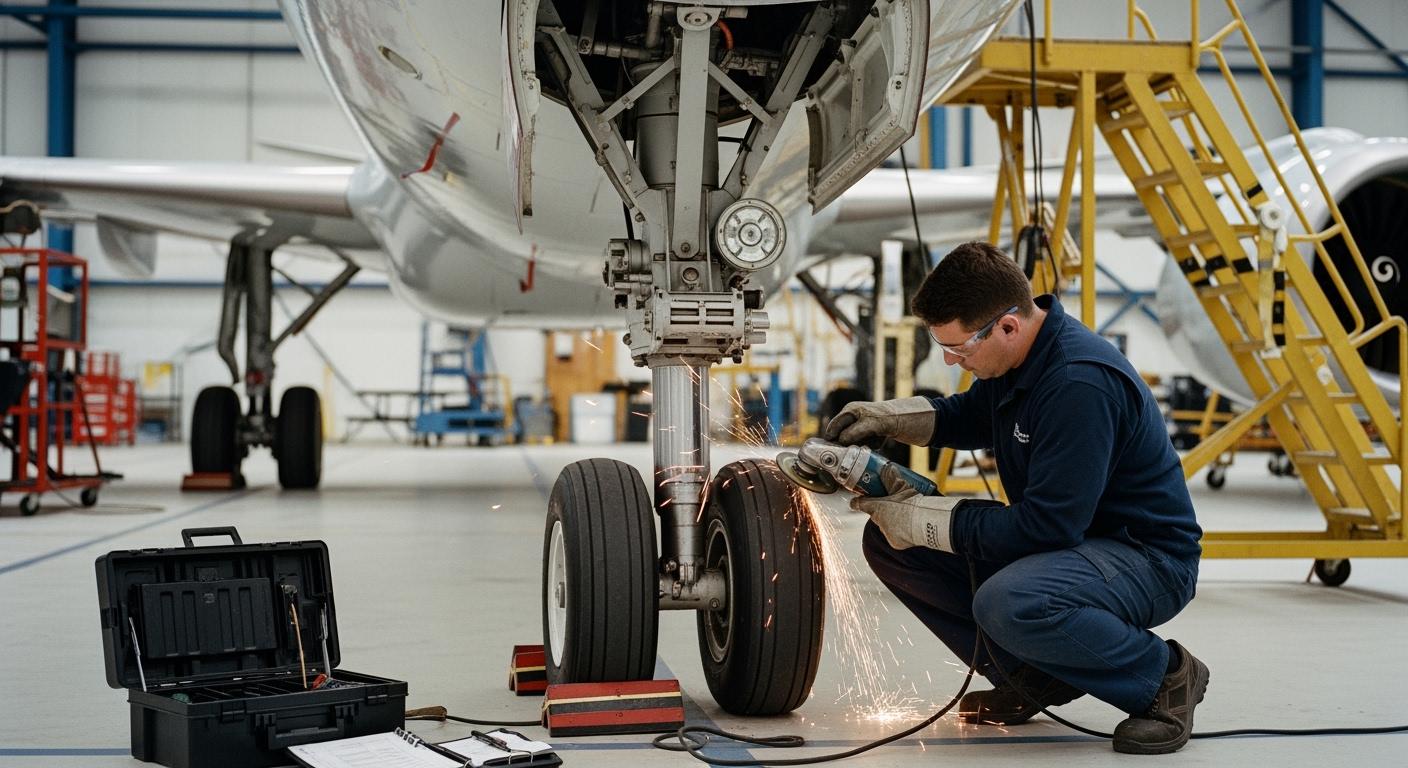
When you need to keep your aircraft in top condition, on-site grinding solutions make a big difference. You can choose from portable grinding machines, orbital grinders, and specialized handheld tools. These on-site grinding solutions help you remove surface irregularities quickly, restore brake rotors, and boost maintenance efficiency. You reduce downtime and improve safety by minimizing the time your equipment stays out of service. Advanced grinding technologies and customized solutions from Aimgrind give you the precision and flexibility needed for high-performance results.
Key Takeaways
- On-site grinding solutions, like portable machines and handheld tools, enhance aircraft maintenance efficiency by allowing repairs directly at the aircraft.
- Precision grinding improves surface finishes and accuracy, ensuring critical components meet strict industry standards and reducing the risk of part failure.
- Custom grinding solutions address unique challenges of different materials, ensuring uniformity and integrity in aerospace components.
- Advanced grinding technologies, such as diamond and CBN wheels, provide high cutting efficiency and longer service life, minimizing downtime and maintenance costs.
- Using on-site grinding reduces the need for transporting parts, speeding up repairs and keeping aircraft ready for service.
On-Site Grinding Solutions Overview
You need reliable grinding solutions to keep up with the demands of aerospace manufacturing. On-site grinding solutions include portable grinding machines, orbital and surface grinders, and handheld tools. Each type brings unique advantages to your maintenance routine.
Portable Grinding Machines
Portable grinding machines give you the power to perform precision work directly at the aircraft. You can use these machines for tasks like valve seat repair and surface restoration. Their compact design and adjustable features make them ideal for tight spaces in aerospace manufacturing. Here is a quick look at their main features:
| Feature | Description |
|---|---|
| Grinding diameter | DN100-400mm (4″-16″) |
| Suitable for | Valve seat of plane globe valve, safety valve |
| Spindle speed (rpm) | 0-900, 0-2800 |
| Greatest grinding depth | 850 mm |
| Power supply | 220 V/50Hz |
| Motor power | 1100W |
| Stability feature | Fixed on valve body to reduce work strength |
| Flexibility feature | Telescopic sleeve for adjustable axial pressure |
| Perpendicularity compensation | Universal coupling at main shaft output end |
| Drive system | Adjustable speed motor for coarse and fine grinding |
| Operation direction | Positive and negative |
| Precision | High precision after sandpaper replacement |
You can adjust the speed and pressure to match the needs of different aerospace manufacturing tasks. This flexibility helps you achieve high-quality results with less downtime.
Orbital and Surface Grinders
Orbital and surface grinders play a key role in aerospace manufacturing. You use these machines to restore flatness and remove surface defects from large components. They handle complex geometries and tough materials with ease. These grinders support both CBN and diamond abrasives. The table below shows how these abrasives compare:
| Feature | CBN (Cubic Boron Nitride) | Diamond |
|---|---|---|
| Hardness | Second hardest material | Hardest known material |
| Best For | Ferrous materials (steels, superalloys like Inconel®) | Non-ferrous materials, composites, ceramics, carbides |
| Key Benefit | Chemically stable with iron at high temps | Extreme hardness for very hard/abrasive materials |
| Avoid With | Very soft, gummy materials | Most ferrous materials (steels, cast iron) |
You can select the right abrasive for each aerospace manufacturing application. This ensures you meet strict industry standards for surface quality and dimensional accuracy.
Handheld Tools for Aircraft Maintenance
Handheld tools give you the control needed for detailed work in aerospace manufacturing. You can use these tools for small repairs, edge finishing, and touch-ups. They work well with different bond types:
- Vitrified bonds: Strong and porous, great for precision grinding of superalloys and ceramics.
- Resin bonds: Flexible and versatile, perfect for finishing operations.
- Metal bonds: Durable and ideal for heavy-duty grinding tasks.
You benefit from the adaptability of these tools. They help you maintain high standards in aerospace manufacturing, even in challenging environments.
Tip: On-site grinding solutions offer unmatched flexibility. You can handle complex shapes and demanding materials, which is essential for aerospace manufacturing. This adaptability leads to better surface finishes, improved safety, and longer component life.
Precision Grinding Technologies in Aviation
Precision grinding stands at the core of modern aerospace maintenance. You rely on this technology to keep critical components performing at their best. When you maintain tight tolerances, you ensure the safety and reliability of every flight. Precision grinding helps you remove imperfections, restore surfaces, and extend the life of high-value parts.
Diamond Grinding Wheels by Aimgrind
You need tools that match the demands of aerospace materials. Aimgrind’s diamond grinding wheels deliver unmatched performance for the maintenance of critical components. These wheels use a diamond abrasive layer, which gives you the hardest cutting surface available. You can use them on hard alloys, ceramics, and composites—materials common in aerospace manufacturing.
Aimgrind’s diamond grinding wheels offer several advantages:
- High cutting efficiency reduces your grinding time.
- Long service life means fewer wheel changes and less downtime.
- Consistent shape and sharpness help you achieve tight tolerances.
- Compatibility with wet and dry grinding processes increases your flexibility.
You can choose from resin, metal, or vitrified bonds to match your specific application. Aimgrind also provides custom sizes and configurations, so you always get the right fit for your equipment. When you use these wheels, you improve surface finish and reduce the risk of thermal damage to sensitive aerospace parts.
Note: Aimgrind’s comprehensive service process includes problem diagnosis, parameter matching, and sample optimization. You receive grinding wheels tailored to your needs, which boosts your productivity and quality.
Advanced Abrasive Tools and Systems
Aerospace maintenance requires more than just standard tools. You need advanced abrasive systems that handle the unique challenges of modern aircraft materials. Specialized abrasives work on jet engine components and turbine blades, ensuring each part meets strict safety and performance standards. Superabrasives, such as diamond and CBN, allow you to work at high speeds with minimal heat generation. This is crucial for composite materials found in many aerospace designs.
The table below shows how advanced abrasive tools and systems improve your grinding processes:
| Evidence Description | Benefit to Aircraft Maintenance |
|---|---|
| Specialized abrasives for jet engine components and turbine blades | Ensure components meet safety and performance standards during repairs. |
| Superabrasives for composite materials | Allow for high-speed work with minimal heat generation, crucial for modern aircraft. |
| High-performance abrasives for surface preparation | Efficiently remove old paint and prepare surfaces for new coatings, ensuring adherence. |
| Polishing and deburring capabilities | Enhance aerodynamic properties and ensure smooth operation of components. |
| Use of diamond and CBN superabrasives | Provide hardness and thermal conductivity necessary for machining high-strength alloys. |
| Precision surface finishing | Removes imperfections that could impact performance and reliability of components. |
You benefit from these technologies by achieving better surface finishes, faster turnaround times, and improved reliability in aerospace maintenance.
Custom Grinding Solutions for Aircraft Components
Every aerospace component presents unique challenges. You need custom grinding solutions to address the specific requirements of different materials, such as titanium, aluminum, and composites. Custom solutions ensure uniformity in material properties, which is essential for the integrity of aerospace components. Centerless grinding allows you to shape materials with high accuracy, meeting the tight tolerances required in aerospace manufacturing.
You face several challenges when working with advanced materials. Custom grinding solutions help you overcome these obstacles:
- Excessive heat during grinding: Cotton fiber abrasives run cooler, reducing material warping.
- Risk of edge rounding: Controlled abrasive action preserves critical part geometry.
- Material sensitivity: Custom abrasive blends protect composite and alloy integrity.
You can also choose from specialized tooling systems:
- PCD tooling systems work well for high-speed machining of aluminum alloys and composites. They offer wear resistance and superior surface finishes.
- CBN tooling systems are designed for hardened materials like Inconel and titanium. They provide thermal stability and maintain accuracy.
- Advanced grinding technology includes diamond and CBN wheels tailored for precision grinding of tough aerospace materials.
The table below summarizes how custom grinding solutions address key challenges in aerospace:
| Challenge | Custom Grinding Solution |
|---|---|
| Material Imperatives | Tools designed to withstand abrasiveness, thermal loads, and chemical reactivity for materials like titanium and composites. |
| Complexity and Precision | Custom tools ensure intricate designs are machined without stress or damage, crucial for aerospace components. |
| Efficiency and Cost Optimization | Tailored solutions maximize machining efficiency and reduce costs, essential in a competitive market. |
You gain a competitive edge by using custom grinding solutions. You improve efficiency, reduce costs, and ensure the highest quality in the maintenance of critical components.
Applications of Grinding Solutions
Brake Rotors and Discs
You rely on brake rotor resurfacing to keep your aircraft braking system safe and efficient. Precision grinding restores rotors to a true, flat state when you notice wear, damage, or deformation. You must remove contaminants and debris from the rotor surface to meet strict specifications. Advanced grinders improve the efficiency of brake rotor resurfacing, enhancing both performance and safety.
- Precision grinding is essential for brake rotor resurfacing.
- You restore rotors when they show signs of wear or deformation.
- Removing contaminants ensures reliable braking.
- High-performance grinders boost safety and efficiency.
| Defect Type | Cause | Effect | Solution |
|---|---|---|---|
| Uneven wear | Irregularly worn brake disc | Squeal, brake pedal pulsation, premature pad wear | Replace rotors and pads |
| Glazing | High intermittent pad temperature | Temporary reduction in braking performance | Normal use can remedy |
| Surface contamination | Oil, grease, or brake fluid spillage | Vehicle may pull to one side, reduction in braking performance | Replace pads |
| Tapered pads | Distorted caliper, caliper slides sticking | Premature pad wear, uneven braking pressure, noise | Replace pads, service calipers |
You address these defects with brake rotor resurfacing, ensuring your aircraft meets operational standards.
Landing Gear Components
You use on-site grinding to extend the lifespan and reliability of landing gear components. This process creates surfaces free from stress, eliminating micro-cracks. Fine abrasive grains reduce subsurface deformation, and consistent coolant application prevents thermal damage. Precise wheel dressing avoids surface imperfections, making landing gear parts more resistant to fatigue and corrosion.
Tip: Grinding landing gear components helps you prevent costly repairs and maintain safe landing operations.
Engine and Turbine Parts
You apply specialized grinding techniques to maintain aircraft engines and turbine parts. Precision grinding shapes and finishes high-performance components, ensuring they meet exact specifications. You use surface grinders, cylindrical grinders, and tool and cutter grinders based on the part requirements. CNC technology improves accuracy and repeatability. Coolant systems prevent thermal damage, and specialized tooling and abrasives process tough aerospace materials.
- Controlled grinding achieves precise blade geometry and stable edge quality.
- Polishing and finishing improve surface roughness and aerodynamic efficiency.
- Airfoil finishing removes machining marks and blends transitions.
- Leading edge preparation optimizes aerodynamic performance.
- Trailing edge finishing maintains blade integrity.
- Profile polishing enhances surface quality before inspection.
You use speed-stroke grinding for turbine blades, making light, fast passes to minimize heat transfer. This prevents material melting and preserves blade properties. Integrated quality control systems ensure your engine and turbine parts meet required standards. Safety features, such as protective enclosures and emergency stop mechanisms, keep your maintenance operations secure.
Benefits of On-Site Precision Grinding
Enhanced Accuracy and Surface Finish
You achieve higher accuracy and better surface finishes when you use on-site precision grinding. Advanced grinding tools, such as Aimgrind’s diamond grinding wheels, help you maintain tight tolerances on critical aircraft parts. You can remove imperfections and restore surfaces to their original condition. This process ensures that every component meets strict industry standards. When you work with precision, you reduce the risk of part failure and improve the overall reliability of your aircraft.
Tip: Consistent surface quality leads to smoother operation and longer-lasting components.
Efficiency and Reduced Downtime
On-site grinding solutions save you valuable time. You do not need to transport large parts to off-site facilities. Instead, you complete repairs and maintenance directly at the aircraft. This approach speeds up your workflow and minimizes aircraft downtime. You can quickly address issues like worn brake rotors or damaged landing gear. Fast turnaround means your aircraft returns to service sooner, which keeps your operations running smoothly.
- Portable grinding machines let you work in tight spaces.
- Handheld tools allow for quick touch-ups and adjustments.
- Custom grinding solutions match your specific needs, improving efficiency.
Safety and Cost Savings
You improve safety and reduce costs with advanced on-site grinding technologies. These tools enhance precision and efficiency, which lowers the risk of mistakes. Automation in grinding reduces human error and helps you achieve consistent results. Faster rotor resurfacing improves both performance and safety. Precise grinding extends the life of your components, so you replace parts less often.
- Enhanced precision and efficiency
- Lower risk of human error
- Improved performance and safety
- Longer-lasting components
Note: Investing in on-site precision grinding helps you protect your team, reduce maintenance costs, and keep your aircraft in top condition.
You have many options for on-site grinding in aircraft maintenance. Portable machines, advanced abrasives, and custom solutions like those from Aimgrind help you achieve precision and efficiency. You work in controlled environments with filtration systems that protect your team and equipment. New materials and 3D-printed parts drive innovation in grinding technology. You can improve reliability, reduce downtime, and stay ready for the future of aviation.
FAQ
What are the main benefits of on-site grinding for aircraft maintenance?
You save time and reduce downtime. On-site grinding lets you repair parts without removing them from the aircraft. You improve efficiency and keep your fleet ready for service.
Can you use Aimgrind diamond grinding wheels on all aircraft materials?
You can use Aimgrind diamond grinding wheels on hard alloys, ceramics, and composites. For ferrous metals, you should choose CBN wheels. Aimgrind offers custom solutions for different materials.
How do you choose the right grinding tool for a specific aircraft part?
You match the tool to the material and the task. For example, use diamond wheels for composites and ceramics. Use resin bonds for finishing. Contact Aimgrind for expert advice on tool selection.
Is on-site grinding safe for sensitive aircraft components?
You ensure safety by using precision tools and following proper procedures. Advanced grinding wheels, like those from Aimgrind, minimize heat and vibration. This protects sensitive parts during maintenance.
How do you maintain grinding wheels for best performance?
You clean wheels regularly and check for wear. Replace wheels when you see damage or reduced efficiency. Store them in a dry, safe place. Follow Aimgrind’s guidelines for optimal results.
Contact Us
For More Grinding Solution or Customized Abrasive Tools