

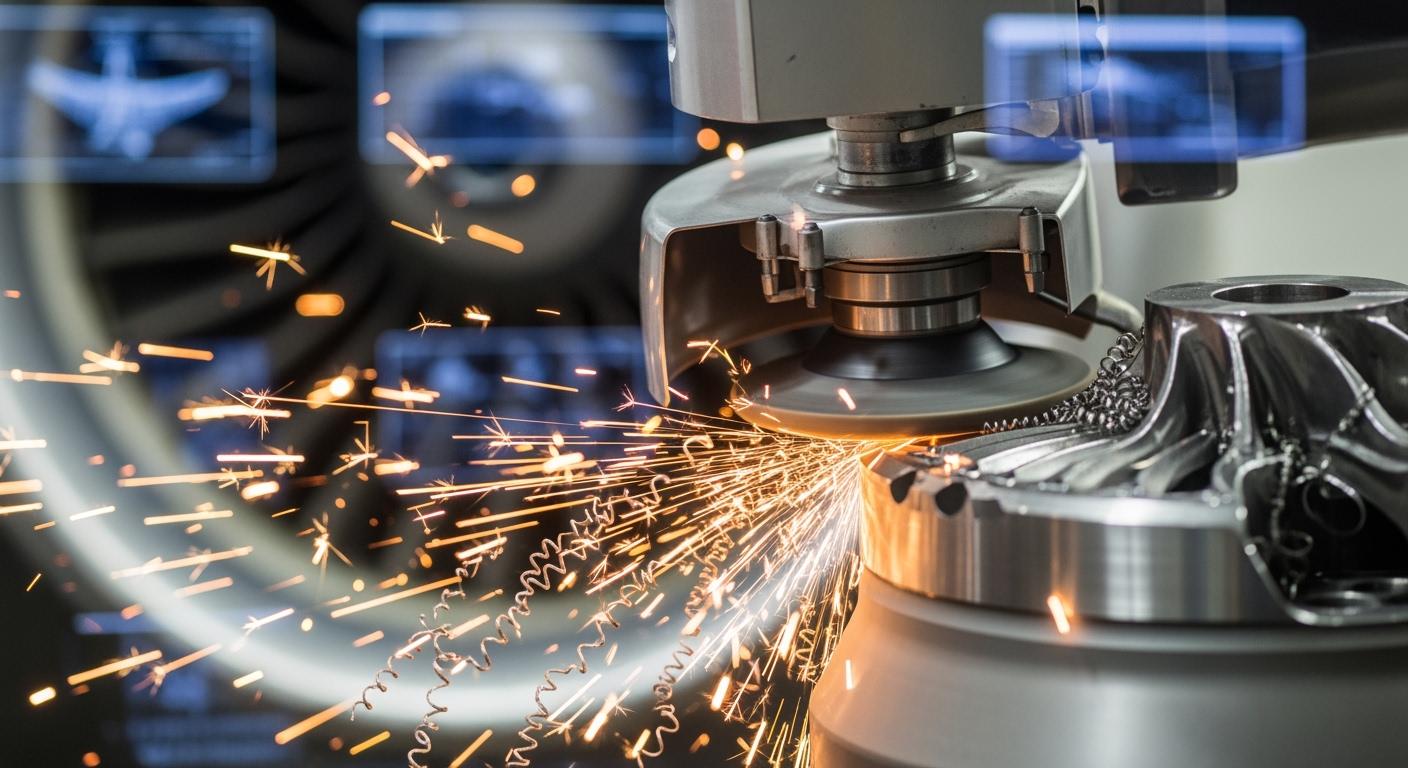
You face strict demands for precision and durability in aerospace manufacturing. Superhard grinding wheels help you meet these requirements by delivering superior hardness, precision finishing, and extended durability. These tools maintain cutting efficiency on tough aerospace materials and achieve smooth surfaces with sharp edges. Aimgrind offers customized grinding solutions, including diamond grinding wheels, to help you overcome the unique challenges of aerospace. You gain reliable performance and consistent quality with every manufacturing process.
Key Takeaways
- Superhard grinding wheels, like diamond and CBN, ensure precision and durability in aerospace manufacturing.
- Achieve tight tolerances and mirror-like finishes by using the right grinding wheels for specific materials.
- Optimize grinding parameters, such as wheel speed and coolant type, to enhance performance and extend tool life.
- Skilled operators play a crucial role in maintaining precision and quality during the grinding process.
- Aimgrind offers tailored solutions to help you meet the unique challenges of aerospace manufacturing.
Aerospace Grinding Challenges
Precision and Tolerance Needs
You must achieve the highest level of precision in aerospace manufacturing. Precision grinding is essential for producing parts with extremely tight tolerances and mirror-like finishes. The need for precision means you cannot accept even the smallest error. The table below shows typical tolerance requirements for aerospace components:
| Process | Typical dimensional tolerance | Form (roundness/flatness) | Typical Ra |
|---|---|---|---|
| Cylindrical OD/ID | 2–5 µm | Roundness 1–2 µm | 0.1–0.4 µm |
| Surface grinding | 2–5 µm flatness | Flatness 2–5 µm | 0.1–0.4 µm |
| Centerless | 2–5 µm | Roundness 1–3 µm | 0.1–0.4 µm |
| Tool/jig grinding | ≤1–2 µm positional | Excellent form accuracy | 0.05–0.2 µm |
Superhard grinding wheels, such as diamond and CBN, help you maintain these tolerances. You get stable cuts, minimal heat, and consistent precision. Precision grinding ensures every part meets strict aerospace standards.
Hard-to-Machine Materials
You often work with advanced materials like titanium, stainless steel, and composites. These materials have extreme hardness and brittleness. They resist cutting and can chip or crack if you do not control grinding forces. The table below highlights common materials and their challenges:
| Material | Properties | Machining Challenges |
|---|---|---|
| Stainless Steel | Hard, generates high cutting forces, heat | Rapid tool wear, needs special tooling and parameters |
| Titanium | High strength, low thermal conductivity | Needs special tooling, coolants, and grinding strategies |
Composites add another layer of complexity. You must use precision grinding to avoid damaging the material and to achieve the required quality.
Surface Integrity in Aerospace
You need to protect the surface integrity of every aerospace part. Superhard grinding wheels, like diamond and CBN, give you high-performance finishing for tough materials such as nickel-based superalloys, titanium, and composites. You can remove material aggressively while keeping heat low. This prevents thermal damage and maintains the quality of the surface. Precision grinding with superhard wheels reduces roughness to sub-micrometer levels. You achieve mirror-like finishes and improve the fatigue life of critical components. Superabrasive machining also removes unwanted layers and residues, which boosts subsurface quality.
Tip: Use superhard grinding wheels to achieve Ra values below 0.2 μm and minimize residual stresses in composites and metals.
Compliance and Quality Standards
You must meet strict compliance and quality standards in aerospace manufacturing. Grinding titanium alloys, nickel-based superalloys, and composites requires advanced tools and processes. Superhard grinding wheels help you maintain low temperatures and resist chemical reactions that can clog the wheel. High-efficiency deep grinding and continuous dressing grinding, combined with proper coolant, improve surface quality and process efficiency. You can trust Aimgrind to diagnose your grinding problems and match the right parameters for your application. This ensures you meet every quality standard and deliver reliable aerospace components.
Superhard Grinding Wheels and Tools
Diamond Grinding Wheels by Aimgrind
You need reliable aerospace grinding tools for demanding applications. Aimgrind’s diamond grinding wheels deliver unmatched performance for precision grinding. These wheels help you cut hard alloys, ceramics, and composites with ease. You achieve high-quality finishes and maintain tight tolerances. Diamond grinding wheels offer superior hardness and wear resistance. You can use them for pcd cutting tools and superhard pcd cutting tools. The table below shows how diamond grinding wheels compare to traditional abrasive wheels:
| Feature | Diamond Grinding Wheels | Traditional Abrasive Wheels |
|---|---|---|
| Hardness | The hardest known natural material | Generally less hard than diamond |
| Wear Resistance | Exceptional wear resistance | Prone to wear over time |
| Material Suitability | Ideal for tough materials | Limited effectiveness on hard materials |
| Toughness | Can withstand shocks and stresses | May chip or break under stress |
You gain consistent results and reduce downtime. Diamond grinding wheels help you optimize your grinding process for aerospace parts.
CBN Wheels for Aerospace Alloys
You often work with aerospace alloys that contain ferrous metals. CBN wheels are ideal for these materials. CBN wheels provide thermal stability and resist chemical reactions with iron. You achieve exceptional surface finishes and precision. CBN wheels maintain performance for aerospace grinding tools and pcd cutting tools. You use CBN wheels for applications that require tight tolerances. CBN wheels are preferred for grinding aerospace alloys. You can rely on CBN wheels for superabrasives and superabrasive wheels in aerospace manufacturing.
- CBN wheels deliver consistent performance for aerospace grinding tools.
- CBN wheels are best for ferrous metals and aerospace alloys.
- Diamond grinding wheels are better for non-ferrous and brittle materials.
- CBN wheels provide high-quality finishes and precision for aerospace parts.
Selection Criteria for Aerospace Grinding Tools
You must select the right aerospace grinding tools for each material and application. You consider abrasive type, bond system, grit size, and grinding parameters. The table below helps you choose superabrasive wheels and superabrasives for aerospace grinding tools:
| Criteria | Description |
|---|---|
| Abrasive Type | Match the abrasive type to the material characteristics, such as titanium or superalloys. |
| Bond System | Choose between vitrified, resin, metal, or electroplated bonds for your application needs. |
| Grit Size | Select medium to coarse grit sizes to improve chip clearance and manage heat generation. |
| Grinding Parameters | Adjust wheel speeds and material removal rates to minimize heat and optimize performance. |
You use superabrasives and superabrasive wheels for pcd cutting tools, cnc laser cutting, and other aerospace grinding tools. You select the best grinding wheels for your process. You achieve precision and efficiency in every grinding operation.
Tip: Always match your superabrasives and superabrasive wheels to the specific aerospace material and grinding requirements. This ensures optimal performance and extends tool life.
Application in Aerospace Manufacturing
Grinding Titanium and Superalloys
You encounter titanium alloys and nickel-based superalloys in many aerospace manufacturing projects. These materials support high-strength applications and withstand extreme conditions in aircraft engines, airframes, and structural components. You need superhard grinding wheels to achieve precision and maintain quality during grinding titanium alloys and grinding nickel-based superalloys. Aimgrind’s diamond grinding wheels and CBN tools help you overcome the challenges of heat generation and rapid tool wear. You benefit from superior thermal stability and wear-resistant performance. These wheels maintain sharp cutting edges, which enhances dimensional accuracy and surface integrity.
- Superhard grinding wheels deliver excellent wear resistance for grinding titanium alloys and grinding nickel-based superalloys.
- You achieve precision and quality even when working at elevated temperatures.
- CBN inserts and specialized tools facilitate efficient grinding, ensuring dimensional accuracy and surface integrity.
- You replace slower grinding processes with high-precision solutions that maintain quality.
You rely on Aimgrind’s expertise to select the right grinding wheels for your aerospace manufacturing needs. You optimize grinding for aircraft components and achieve consistent results.
Machining Ceramics and Composites
You face unique challenges when grinding aerospace composites and ceramics. These materials include carbon fiber reinforced polymer (cfrp), advanced ceramics, and other composites used in aircraft design. You must use diamond grinding wheels to achieve precision and protect the quality of these brittle materials. Aimgrind’s diamond wheels are ideal for grinding hard and brittle materials, including ceramics and composites. You avoid chipping and cracking, which ensures the quality of every aerospace part.
| Type of Grinding Wheel | Application |
|---|---|
| Diamond Grinding Wheels | Ideal for grinding hard and brittle materials |
| Rising Demand | Driven by the need for precise tools in aerospace |
You use diamond grinding wheels for grinding aerospace composites, such as carbon fiber reinforced polymer and advanced ceramics. You achieve high-quality finishes and maintain precision in every manufacturing process. You meet the demands of high-strength applications and ensure the reliability of aircraft components.
Optimizing for Precision and Surface Finish
You strive for precision and surface quality in every aerospace manufacturing project. Aimgrind’s superhard grinding wheels help you optimize grinding parameters and achieve mirror-like finishes. You select the right abrasive type, bond system, and grit size for each application. You adjust wheel speeds and material removal rates to minimize heat and maximize precision. You use advanced grinding wheels to produce components that meet stringent safety and performance standards.
Tip: Use superhard grinding wheels to reduce waste and energy consumption. You extend tool life and minimize environmental impact.
| Environmental Impact | Superhard Grinding Wheels | Traditional Grinding Methods |
|---|---|---|
| Waste Reduction | Yes | No |
| Energy Consumption | Lower | Higher |
| Tool Life | Longer | Shorter |
You benefit from longer tool life and more efficient machining processes. You minimize waste and energy consumption, which aligns with environmental goals in aerospace manufacturing. You achieve precision and quality in grinding aerospace composites, titanium alloys, and superalloys. You deliver reliable aircraft parts for high-strength applications and advanced aircraft design.
You rely on Aimgrind’s comprehensive service to match grinding wheels to your machines and processes. You optimize grinding for precision, quality, and environmental responsibility. You achieve superior results in every aerospace manufacturing project.
Factors for Grinding Success
Machine Compatibility
You must match your grinding wheels to your machines for the best results in aerospace manufacturing. Machine compatibility affects the performance of superhard grinding wheels and the precision you achieve. When you use diamond wheels on ferrous materials, high temperatures can cause a chemical reaction with iron. This leads to rapid wear and less efficient grinding. CBN wheels work better with iron-based materials because they stay stable and keep their hardness. You need to choose the right wheel for each material and machine to maintain precision and extend tool life.
- Diamond wheels excel on non-ferrous and brittle materials.
- CBN wheels provide stable grinding for iron-based aerospace alloys.
- Proper matching ensures you reach the required precision in every manufacturing step.
Process Parameters and Coolant
You control many factors during grinding, such as wheel speed, feed rate, and coolant type. These parameters help you maximize the lifespan and efficiency of your superhard grinding wheels. The right choices lead to better precision and lower costs. The table below shows how you can select the best bond and process for your needs:
| Consideration Category | Key Question(s) to Ask | General Implication for Bond Choice |
|---|---|---|
| Workpiece Material | What is the material? What is its hardness, toughness, and thermal sensitivity? | Hard/Brittle: Vitrified, Metal. Soft/Ductile: Resinoid, softer Vitrified, Rubber. Heat Sensitive: Porous Vitrified, Rubber, cool-cutting Resinoids. |
| Grinding Objective(s) | What is the primary goal: high stock removal, fine surface finish, or tight dimensional accuracy? | High Stock Removal: Resinoid, porous Vitrified. Fine Surface Finish: Rubber, Shellac, fine grit Vitrified/Resinoid. Tight Tolerance: Vitrified, Metal. |
| Machine & Conditions | What is the machine’s power, rigidity, and spindle speed? Is coolant used? | High Speed: Resinoid. Low Power: Softer bonds. Precision Machine: Harder, precise bonds like Vitrified. Dry Grinding: Cool-cut or heat-resistant bonds. |
| Abrasive Type | Are you using conventional or superabrasives? | Conventional: Vitrified, Resinoid, Rubber. Superabrasives: Metal, specialized Vitrified/Resinoid, Electroplated. |
| Economic Factors | What is the required wheel life versus cost? | Long life: Metal. General Purpose: Vitrified, Resinoid. |
You can rely on Aimgrind to help you match parameters and optimize samples for your grinding process. This support ensures you achieve the highest precision in aerospace manufacturing.
Operator Skill and Training
You play a key role in grinding success. Skilled operators know how to optimize grinding processes and maintain precision. Training helps you avoid costly mistakes, especially when using expensive superhard wheels and advanced machines. You must understand the unique properties of PCD and PCBN tools. Your knowledge of grinding techniques leads to better edge quality and longer tool life. You also ensure proper machine operation and maintenance. Your attention to detail supports quality inspection and safety in every manufacturing project.
- Skilled operators improve process optimization and precision.
- Training reduces errors and extends tool life.
- You help maintain high standards in aerospace grinding and manufacturing.
Note: Aimgrind offers comprehensive services, including problem diagnosis, parameter matching, and sample optimization. You receive expert support to ensure your grinding wheels deliver the precision needed for aerospace manufacturing.
You gain a clear advantage in aerospace manufacturing when you choose superhard grinding wheels. Aimgrind supports your need for precision and quality with customized solutions. Advanced grinding wheels help you reduce waste, improve energy efficiency, and use materials better. You see new trends shaping the future, including:
- Growing demand for precision machining and automation
- Focus on high-performance materials and smart technology
- Opportunities for specialized wheels despite raw material challenges
You can trust Aimgrind to help you achieve your goals and stay ahead in aerospace manufacturing.
FAQ
What materials can you grind with Aimgrind’s diamond wheels?
You can grind hard alloys, ceramics, and aerospace composites. These wheels work well on titanium, nickel-based superalloys, and carbon fiber reinforced polymers. You achieve precise results on tough materials.
How do you choose the right grinding wheel bond?
You select the bond based on your material and grinding goal. Resin bonds suit high-speed grinding. Metal bonds offer durability for hard materials. Vitrified bonds provide precision for tight tolerances.
Can you use Aimgrind’s diamond wheels for both wet and dry grinding?
Yes. You can use Aimgrind’s diamond grinding wheels for both wet and dry grinding. Wet grinding helps control heat and improves surface finish. Dry grinding offers flexibility for certain applications.
How does Aimgrind help you optimize your grinding process?
Aimgrind supports you with problem diagnosis, parameter matching, and sample optimization. You receive expert advice to match wheels with your machines and processes. This ensures you achieve the best results in aerospace manufacturing.
Contact Us
For More Grinding Solution or Customized Abrasive Tools