

Abrasive Stones Beyond the Wheel: Sharpening, Dressing, and Honing
Grinding wheels get most of the attention in a machine shop. But the rectangular abrasive stones sitting in drawers and on benches do three completely different jobs — and confusing them wastes money and time.
This guide sorts the three families: sharpening stones for cutting edges, dressing stones for grinding wheel maintenance, and honing stones for precision bore finishing. Each has its own selection logic, grit range, and field of application.
What Is an Abrasive Stone?
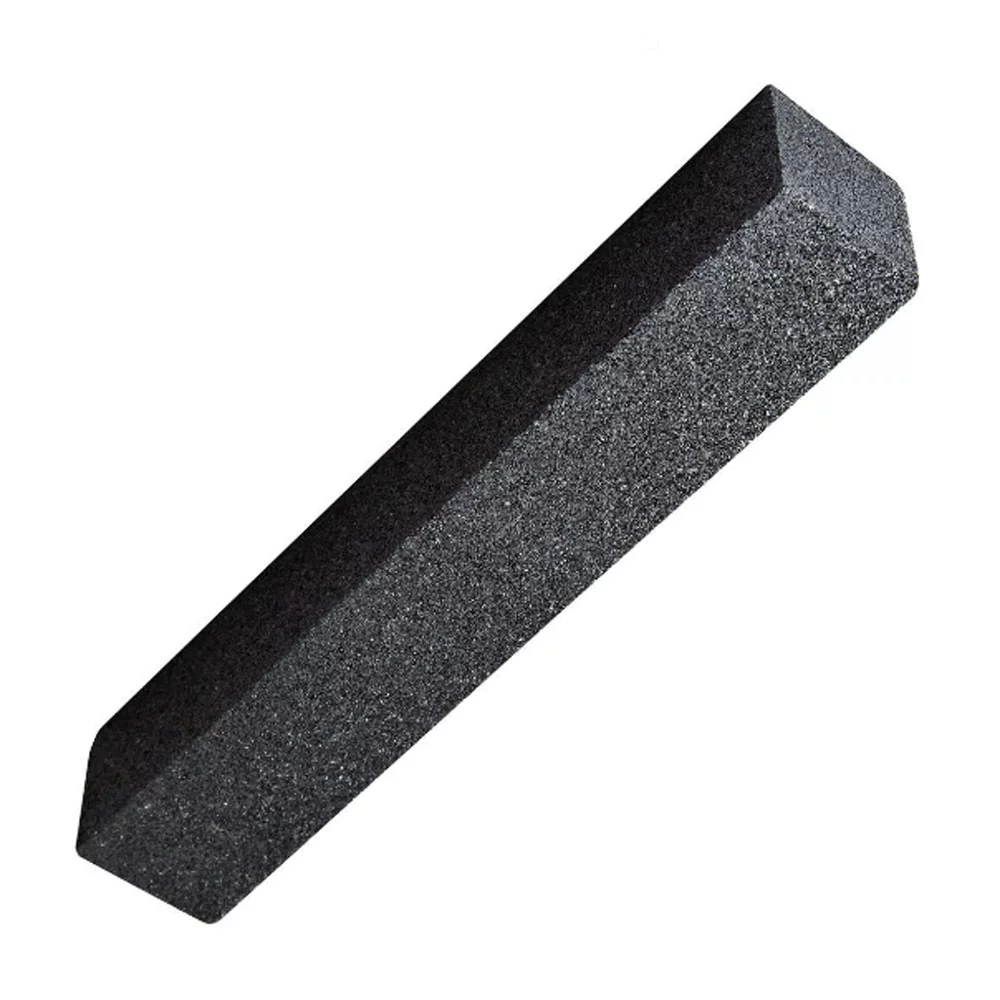
An abrasive stone is a bonded abrasive product with a rectangular, block, or stick configuration — distinct from the circular grinding wheel. The same abrasive grain families are used (aluminum oxide, silicon carbide, diamond, CBN), but the shape and bond system are optimized for a specific task.
The three main categories serve entirely different purposes:
| Category | Purpose | Typical User |
|---|---|---|
| Sharpening stone | Restore or create a cutting edge on knives, tools, and blades | Tool room, maintenance, woodworking, kitchen |
| Dressing stone | Clean, open, or reshape a grinding wheel face | Grinding machine operator |
| Honing stone | Precision finishing of internal bores and cylinders | Engine remanufacturing, hydraulic cylinder production |
Expert Tip: The three categories are not interchangeable. Using a sharpening stone to dress a wheel wastes a precision tool. Using a dressing stick on a knife gives a rough, uneven edge. Match the stone to the job before worrying about grit number.
Sharpening Stones: Restoring Cutting Edges
A sharpening stone — also called a whetstone or oil stone — is used to sharpen or hone steel blades of knives and cutting utensils. The rectangular block form is the most common, though shaped sticks are made for specific blade geometries.
Common Shapes
| Shape | Typical Use |
|---|---|
| Square / rectangular block | General knife and tool sharpening; the standard bench stone |
| Triangle | Sharpening serrations, tight angles, and confined profiles |
| Round | Curved edges, gouges, and hollow profiles |
| Half-round | Combination of flat and curved surfaces for mixed blade geometries |
| Slip stone | Curved cutting edges — firmer gouges, carving tools, radiused blades that a flat stone cannot reach [citation:3] |
Single Grit vs. Combination Stones
Single grit stones carry one abrasive particle size, ranging from ultra-fine to coarse. They are the simplest choice when you need one specific finish.
Combination stones have a different grit on each side. This is the practical choice for most users. A typical progression uses a coarse side to restore a damaged or dull edge, then the fine side to refine and polish. Combinations are commonly available from ultrafine/fine through coarse/very coarse.
A specialized example: rubber tapping knives require a specific edge geometry, and sharpening stones for this application are often made from high-grade silicon carbide with a ceramic bond, designed specifically for the blade profile of tapping knives.
The Three Stone Materials
| Type | Characteristics | Best For |
|---|---|---|
| Oil stone (benchstone) | Aluminum oxide (India) or silicon carbide (Crystolon); durable, wears slowly, retains flatness; oil lubricant [citation:10] | General shop use, tools, durable edges; silicon carbide cuts faster but leaves a rougher finish |
| Water stone | Softer and more porous; forms a fast-cutting slurry; requires soaking before use [citation:10] | Faster cutting than oil stones; finer finishes available; popular for kitchen knives |
| Diamond stone / plate | Diamond particles bonded to a flat plate; cuts extremely fast; retains flatness throughout life [citation:2] | Hard steels, rapid stock removal, flattening other stones; not for fine polishing |
Natural Arkansas stones occupy a separate category — very hard and dense, they cut slowly but polish as they sharpen, producing extremely fine edges. They are typically used as the final step after a faster-cutting stone [citation:10].
Choosing Grit
Grit progression follows one rule: start coarse, finish fine. Coarse grit removes material and establishes the edge geometry; fine grit refines and polishes.
| Grit Range | Stage |
|---|---|
| #120 – #400 | Rough sharpening — repairing chips, setting a new edge |
| #400 – #1000 | General sharpening — the working range for most knives |
| #1000 – #2000 | Refining the edge |
| #3000 – #8000+ | Polishing and final finish |
A practical starting point for most users: a #400 and #1000 combination covers basic repair and sharpening. A #1000 and #6000 combination is the standard recommendation for beginners and occasional users — it handles most needs for years [citation:2].
Expert Tip: Water stones wear faster than oil stones and can dish in the middle. Flatten them periodically with a lapping plate or flattening stone. A dished stone cannot produce a straight edge, no matter how good the grit is.
Dressing Stones: Keeping the Wheel Cutting
A dressing stone reshapes or resharpens a grinding wheel. For conventional wheels, it can do both truing and opening. For diamond and CBN wheels, it is primarily used for resharpening — opening the bond so the abrasive grains cut freely again.
Why Dressing Matters
A diamond tool can glaze over and start tearing instead of grinding if it is not regularly dressed. The result is friction, heat, and potential damage to both the tool and the workpiece. Keeping the wheel dressed prevents this.
Choosing the Right Dressing Stick
The abrasive in the dressing stick should match the wheel it is dressing. Norton’s recommendation is a useful reference:
| Wheel Being Dressed | Dressing Stick Selection | Grade |
|---|---|---|
| Resin/vitrified diamond or CBN | One to two grit sizes finer than the wheel abrasive | Soft (H or I) |
| Metal bond diamond or CBN | Same grit size or one size coarser | Medium (K–M) |
| Conventional vitrified wheels | Silicon carbide, coarse grit | Match to wheel hardness |
Common dressing stick materials:
Black silicon carbide — sharp and durable, effective on masonry, stone, brass, and stainless steel. Keeps grinding wheels flat, sharp, and running smoothly. Used for conventional vitrified wheel dressing.
White aluminum oxide (WA) — the standard for diamond and CBN wheel resharpening. A typical WA dressing stone for diamond profile wheels in auto glass edge processing is 200 mm long, 50 mm wide, 180 grit, with thicknesses from 2 mm to 8 mm depending on the wheel width.
Expert Tip: A dressing stick is a consumable, not a permanent tool. When the stick becomes glazed or worn unevenly, replace it. A loaded dressing stick transfers contamination back to the wheel instead of opening it.
Honing Stones: Precision Bore Finishing
A honing stone is an abrasive tool used in honing operations — the precision finishing of internal surfaces through a combination of rotary and reciprocating motion under controlled pressure. The result is the characteristic crosshatch pattern that holds oil and improves wear resistance.
Unlike sharpening stones, honing stones are used in a machine tool (a honing head), not by hand. The stone removes material from the bore surface as it rotates and reciprocates, typically at modest speed.
Conventional Honing Stones
Made from aluminum oxide or silicon carbide with vitrified, resin, or rubber bonds. Applications include hydraulic and pneumatic cylinders, cylinder blocks and liners, gears, nozzles, gun barrels, connecting rod ends, gauges, bushes, and bores. They are the standard choice for general bore finishing where diamond-level precision is not required.
Diamond and CBN Honing Stones
For high-production and automated environments, diamond and CBN honing stones offer the longest life cycles. The extreme hardness of these abrasives means fewer stone changes and more consistent bore quality across multi-shift operation.
Most diamond and CBN honing stones use a metal bond. By varying the metal composition, grain type, grain size, and concentration, the stone can be tailored to the workpiece [citation:7].
| Honing Problem | Countermeasure |
|---|---|
| Dulling (cutting ability declines) | Select grain with high crushability and soft bond for faster self-sharpening |
| Clogging (chips in pores) | Select softer bond; adjust concentration |
| Premature grain loss | Select harder bond to hold grains more firmly |
Honing stones are friable and sensitive to breakage because they are made of small grains bonded together. Many are waxed to extend life and protect the edges during handling.
Expert Tip: Honing stone selection is application-specific. When ordering, be prepared to provide: workpiece material, hardness and heat treatment, bore diameter and length, stock allowance, required surface finish, crosshatch angle, spindle and stroke speed, and honing oil type. Without this information, the stone is a guess.
Quick Selection Reference
| If You Need To… | Use This Stone | Key Selection Factor |
|---|---|---|
| Sharpen a kitchen knife or hand tool | Sharpening stone (combination #400/#1000 or #1000/#6000) | Grit progression; oil vs. water preference |
| Reach a curved gouge or carving tool | Slip stone (round, half-round, or shaped) | Profile match to the blade curve |
| Open a glazed diamond or CBN wheel | White aluminum oxide dressing stick | One to two grit sizes finer than the wheel; soft grade |
| Clean a conventional vitrified wheel | Black silicon carbide dressing stick | Coarse grit for aggressive cleaning |
| Finish a hydraulic cylinder bore | Conventional honing stone (alumina or SiC) | Bond type and grit for the required Ra |
| High-volume automated bore finishing | Diamond or CBN honing stone (metal bond) | Life cycle and consistency; concentration and grain size |
Frequently Asked Questions
What is the difference between a sharpening stone, a dressing stone, and a honing stone?
✅ A sharpening stone restores cutting edges on knives and tools. A dressing stone cleans or opens a grinding wheel face. A honing stone finishes internal bores on a honing machine. They share the rectangular abrasive form but serve completely different purposes and should not be interchanged.
What grit should a beginner start with for knife sharpening?
✅ A combination of #1000 and #6000 is the standard recommendation. The #1000 side handles general sharpening and minor repairs; the #6000 side refines and polishes. This pair covers most needs for years. Add a coarser stone (#400 or below) only if you regularly repair damaged edges.
Which dressing stick should I use on a diamond grinding wheel?
✅ For resin or vitrified bond diamond wheels, use a white aluminum oxide dressing stick one to two grit sizes finer than the wheel abrasive, in a soft grade (H or I). For metal bond diamond wheels, use a stick the same size or one size coarser, in a medium grade (K–M).
Why do water stones need to be soaked before use?
✅ Water stones are porous and absorb water like a sponge. Soaking for about five to ten minutes saturates the stone so it holds water during sharpening. The water forms a slurry that flushes swarf and exposes fresh grit. Oil stones, by contrast, use a thin film of oil on the surface and do not require soaking.
When should I choose diamond or CBN honing stones over conventional ones?
✅ Choose diamond or CBN when the production environment demands long stone life, consistent bore quality across multi-shift operation, and minimal downtime for stone changes. Conventional alumina or silicon carbide stones are adequate for lower-volume work or where the bore material and finish requirements do not justify the higher cost of superabrasives.
Key Takeaways
- Abrasive stones come in three functional families: sharpening, dressing, and honing. They are not interchangeable.
- Sharpening stones restore cutting edges. Shape matters — rectangular for flat blades, slip stones for curved gouges.
- Combination stones (#1000/#6000) are the most practical starting point for most users.
- Oil stones are durable and slow-wearing; water stones cut faster and require soaking; diamond plates cut fastest and stay flat.
- Dressing sticks keep grinding wheels cutting. Match the stick abrasive and grade to the wheel bond and abrasive.
- White aluminum oxide is the standard for diamond and CBN wheel resharpening. Black silicon carbide handles conventional vitrified wheels.
- Honing stones finish internal bores. Conventional stones cover general work; diamond and CBN handle high-volume automated production.
- Honing stone selection requires knowing the workpiece, bore geometry, finish requirement, and machine parameters.
- A worn or glazed dressing stick transfers contamination instead of opening the wheel. Replace it when it stops cutting freely.
Questions about sharpening, dressing, or honing stones?