

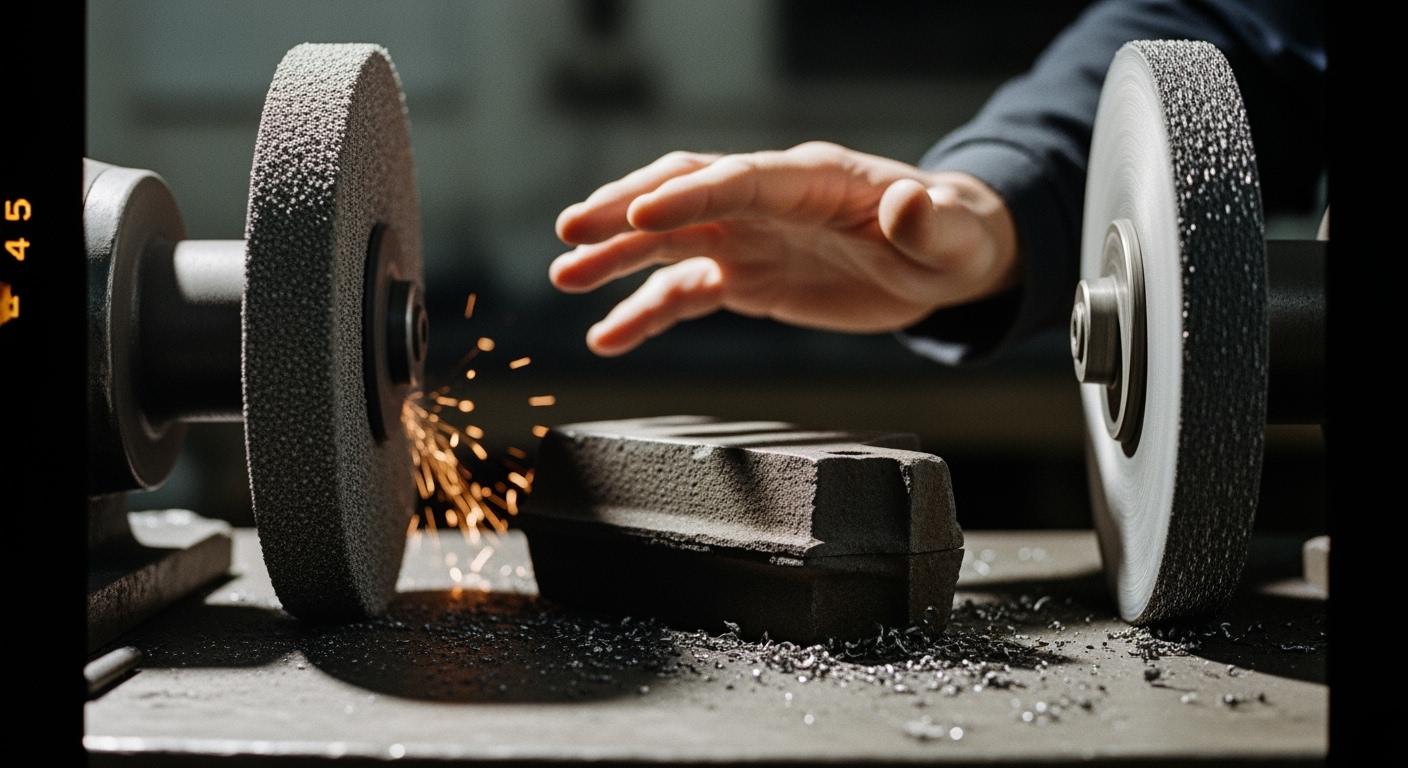
When you select grinding wheels for roughing or finishing cast iron, you want the best results. You can choose Aimgrind CBN grinding wheels for fast, cool, and precise grinding. Conventional grinding wheels, like silicon carbide or aluminum oxide, also work well. Always select grinding wheels that match your operation and material. The right wheel improves grinding speed, finish, and safety. You get better performance when you select grinding wheels based on your needs.
Key Takeaways
- Choose the right abrasive material for grinding cast iron. Silicon carbide is best for roughing, while aluminum oxide is great for durability.
- Consider using CBN grinding wheels for high performance. They cut faster, stay cooler, and last longer than conventional wheels.
- Select the appropriate grit size for your task. Use coarse grit for roughing to remove material quickly and fine grit for finishing to achieve a smooth surface.
- Match the grinding wheel to your machine’s specifications. Ensure the wheel size, speed, and bond type are compatible with your equipment.
- Always prioritize safety. Inspect wheels for damage, wear protective gear, and follow proper mounting and balancing procedures.
Abrasive Materials for Iron
Conventional Abrasives: Silicon Carbide & Aluminum Oxide
You have two main choices for conventional abrasive materials when grinding iron: silicon carbide and aluminum oxide. Each abrasive has unique properties that affect grinding performance. You should know how these materials behave before you select a grinding wheel.
Here is a table that shows the main differences:
| Abrasive Type | Sharpness | Durability | Best Use Cases |
|---|---|---|---|
| Silicon Carbide | High | Low | Harder materials like cast iron |
| Aluminum Oxide | Medium | High | Metals including cast iron |
Silicon carbide is sharper and harder than aluminum oxide. This abrasive cuts iron quickly. It works well for roughing operations. Silicon carbide is brittle, so it wears down faster. You may need to replace the wheel more often. Aluminum oxide is tougher and lasts longer. It is less sharp, but it handles steady grinding on iron. You can use aluminum oxide for both roughing and finishing. It is a good choice for general grinding tasks.
You should use silicon carbide wheels for grinding cast iron. The hardness and sharpness of this abrasive make it effective for this brittle material. If you want a wheel that lasts longer, choose aluminum oxide. It is more durable and works well for many metals, including iron.
CBN Grinding Wheels from Aimgrind
You can choose superabrasive grinding wheels for advanced grinding needs. CBN grinding wheels from Aimgrind use cubic boron nitride as the abrasive material. CBN is a superabrasive that is much harder than conventional abrasives. These wheels offer several advantages for grinding iron.
CBN wheels cut faster and stay cooler during grinding. You get a precise finish with less risk of burning the material. The wheel keeps its shape for a long time. You do not need to dress or replace it as often. CBN wheels work well for both roughing and finishing cast iron. You can use them for high-speed grinding and heavy-duty tasks.
Aimgrind offers CBN grinding wheels in different bond types. You can choose resin, vitrified, or electroplated bonds. Each bond type matches a specific grinding process. You can ask Aimgrind for a custom wheel to fit your machine and material.
Superabrasive grinding wheels like CBN are ideal for workshops that need high performance. You get better results and save time. You also reduce the cost of wheel changes and dressing.
Material Matching for Cast Iron
You must match the abrasive material to the type of iron you want to grind. Cast iron comes in many forms. Some types are harder or more brittle than others. You need to pick the right grinding wheel for each type.
- Use silicon carbide wheels for most cast iron. This abrasive is sharp and hard. It grinds brittle iron quickly.
- Choose aluminum oxide wheels if you want a more durable option. This abrasive works well for steady grinding and finishing.
- Pick CBN wheels from Aimgrind for the best performance. These superabrasive grinding wheels handle both roughing and finishing. They last longer and give you a better finish.
You should always check the iron type before you start grinding. Gray iron, ductile iron, and white iron have different properties. Match the wheel to the material for the best results. If you are not sure, you can ask Aimgrind for advice. They can help you select the right wheel for your grinding needs.
Tip: Always use the right abrasive for your iron material. This will improve grinding speed, surface finish, and wheel life.
You can use diamond wheels for some special grinding tasks. Diamond is a superabrasive that is even harder than CBN. It is not common for iron, but you may need it for composite materials or very hard surfaces. Aimgrind also offers diamond superabrasive grinding wheels for these special cases.
Superabrasives like CBN and diamond give you the highest grinding performance. You get faster cutting, cooler operation, and a longer-lasting wheel. You can trust Aimgrind to provide the right grinding wheel for any iron material.
Wheel Specs for Roughing & Finishing
Grit Size Selection for Iron
You need to choose the right grit size for roughing and finishing cast iron. Grit size for roughing is usually coarser. This helps you remove more material quickly. For finishing, you should use a finer grit. This gives you a smoother surface and better finish and form tolerance.
- Use a coarse grit, such as 100 grit size for roughing. This grit size for roughing removes stock fast and prepares the surface for the next step.
- Choose a fine grit, like 400 grit or finer, for finishing. This grit size improves surface finish and helps you meet strict finish and form tolerance.
- Finer grits lower the Ra and RMS values. This means you get a smoother surface and better form tolerance.
You should always match the grit size to your grinding goal. If you want to remove a lot of material, pick a coarse grit size for roughing. If you want a smooth finish and tight tolerance, use a fine grit for finishing.
Bond Types: Resin, Vitrified, Electroplated
The bond type in a grinding wheel holds the abrasive grains together. You can choose from resin, vitrified, or electroplated bonds. Each bond type affects grinding performance and finish and form tolerance.
Resin bonds are common in superabrasive grinding wheels. They use synthetic resins to hold the grains. Resin bonds give you a good balance of cutting speed and surface finish. You can use resin bonds for both roughing and finishing cast iron.
Vitrified bonds offer high rigidity and thermal stability. These bonds work well for high-precision grinding. Vitrified bonds have engineered porosity, which helps control heat and improve finish and form tolerance. You should use vitrified bonds when you need tight tolerance and a smooth finish.
Electroplated bonds attach abrasive grains directly to the wheel surface. These bonds give you a sharp cutting edge and high form tolerance. Electroplated wheels are good for special shapes and profiles. You can use them for tasks that need exact finish and form tolerance.
Aimgrind offers all three bond types. You can ask for a custom grinding wheel with the right bond for your grinding job.
Wheel Hardness & Structure
Wheel hardness is an important part of grinding wheel specifications. If you pick a wheel that is too hard, it can glaze. Glazing stops the wheel from cutting well and makes too much heat. Too much heat can cause micro-cracks in cast iron. This can ruin your finish and form tolerance.
You should choose a wheel with a hardness grade between H and K. This range is medium-soft to medium. It helps control heat and lowers the risk of thermal damage. You get better grinding results and protect your workpiece.
The structure of the wheel also matters. A more open structure lets heat and chips escape. This helps you keep a good finish and form tolerance. You can ask Aimgrind to customize the structure for your grinding needs.
Dimensions for Grinding Performance
Grinding wheel dimensions affect how well you can grind cast iron. You need to match the wheel size to your machine and the part you want to grind. The diameter, thickness, and shape are all part of the specifications.
- A larger diameter wheel covers more area and can remove more material. This is good for roughing.
- A thinner wheel gives you more control and a better finish. This helps you meet tight finish and form tolerance.
- The shape of the wheel should match the profile you need. Special shapes help you keep form tolerance on complex parts.
Aimgrind can make grinding wheels in many sizes and shapes. You can get a custom wheel that fits your machine and your grinding job. This helps you get the best finish and form tolerance every time.
Tip: Always check your grinding wheel specifications before you start. The right specs help you grind faster, safer, and with better results.
You can contact Aimgrind for help with grinding wheel specifications. They can design a wheel that matches your machine, your material, and your finish and form tolerance needs.
Machine Compatibility & Safety
Matching Wheels to Equipment
You must check compatibility between your grinding wheel and your machine before you start. Each machine has its own requirements. You need to match the wheel size, speed, and material to your equipment. Aimgrind helps you with this process. Their experts diagnose your grinding needs and recommend wheels that fit your machine. You avoid problems like sand blockage and dust buildup when you use the right wheel for cast iron. Machines for cast iron often need corundum wheels. You should also check the grinding speed. For cast iron, use speeds between 25 and 30 meters per second. Feed rates should stay between 0.05 and 0.1 millimeters per pass. This keeps compatibility high and prevents wheel blockage.
Tip: Always ask Aimgrind for advice if you are unsure about compatibility. Their service process ensures your wheel matches your machine and material.
Mounting, Balancing, Dressing
You must follow steps to mount, balance, and dress your grinding wheel. This keeps compatibility strong and improves safety.
- Inspect and test the wheel. Look for cracks or damage. Perform a ring test before mounting.
- Select the wheel that matches your workpiece material.
- Match the grinding wheel speed to your machine speed. Never exceed the maximum speed marked on the wheel.
- Run the wheel at operational speed to check balance.
- Avoid using force when mounting the wheel.
- Do not overtighten nuts or screws. This prevents deformation and imbalance.
- Stop coolant before stopping the wheel.
- Wear personal protective equipment every time.
- Dress the wheel regularly. This keeps performance high and maintains compatibility.
- Use the wheel only for its intended purpose. Do not grind on the side unless specified.
Safety Best Practices
You protect yourself and your equipment when you follow safety best practices. Always check compatibility before grinding. Wear safety goggles, gloves, and masks. Keep your workspace clean. Never use a damaged wheel. Make sure your grinding wheel is balanced and dressed. Stop the machine if you notice vibration or noise. You keep grinding safe and efficient when you follow these steps.
Note: Aimgrind offers support for compatibility checks and safety advice. You can contact their team for help with grinding wheel selection and mounting.
Grinding Performance & Process Factors
Material Removal Rate & Wheel Speed
You can boost grinding performance by adjusting material removal rate and wheel speed. Cast iron responds well to silicon carbide wheels because they grind brittle material quickly. You achieve high removal rates when you use the right wheel and set the correct speed. Plunge grinding often runs at about 6,500 feet per minute. You can remove 1 cubic inch of material every 20 seconds. The table below shows recommended wheel types and reasons for cast iron:
| Material Type | Recommended Wheel Type | Reason for Recommendation |
|---|---|---|
| Cast Iron | Silicon Carbide Wheels | Hard and sharp, effectively grinds brittle material. |
You should keep wheel speed between 5,000 and 7,000 surface feet per minute for cast iron. This range gives you the best performance and reduces wheel wear. The chart below compares optimal speeds for different materials:
Coolant Use for Iron Grinding
Coolant improves grinding performance and protects surface quality. It absorbs heat from the wheel and workpiece. You prevent overheating and avoid grinding burn. Flood coolant works best for cast iron. Wet cutting gives you a smoother surface finish than dry cutting. For harder grades, increase coolant flow and reduce feed to control thermal damage. You maintain surface integrity and avoid micro-cracks.
Tip: Always use coolant to keep grinding temperature low and protect surface quality.
Surface Finish Optimization
You can optimize surface finish by choosing the right wheel and adjusting grinding depth. Aimgrind CBN wheels deliver excellent surface finish and quality. The table below shows typical surface roughness values:
| Grinding Depth (μm) | Surface Roughness Ra (μm) CBN | Surface Roughness Ra (μm) SiC |
|---|---|---|
| 5 | 0.2 – 0.25 | Similar (ΔRa < 5%) |
| 20 | Increase by 43.2% | Higher increase |
| 50 | 30% – 45% lower | Higher than CBN |
You achieve better surface finish and quality with Aimgrind wheels. You improve efficiency and grinding performance by matching wheel specs, coolant, and speed to your process.
Selecting Grinding Wheels: Tips & Checklist
Balancing Cost & Performance
You need to balance cost and performance when you select grinding wheels for cast iron. High-performance wheels, like CBN from Aimgrind, deliver unmatched hardness and thermal stability. These wheels suit high-volume production and precision tasks. Ceramic alumina wheels offer excellent cutting action and surface finish at a lower cost. You can use them for aftermarket parts or engine rebuilding.
Here is a table that shows how cost and performance influence grinding wheel selection:
| Camshaft Material | Recommended Abrasive | Key Reason | Ideal Scenario |
|---|---|---|---|
| Hardened Forged Steel | CBN | Hardness and thermal stability prevent damage | Automotive OEM, performance engines |
| Chilled/Ductile Cast Iron | Ceramic Alumina | Good cutting, lower cost, self-sharpening | Aftermarket, engine rebuilding, low-volume |
You should consider the area of grinding contact. Use coarser grit for broad areas and finer grit for smaller areas. Match the wheel grade to your machine’s horsepower. Harder grades work best with higher horsepower machines.
Tip: Aimgrind offers custom grinding wheels to match your budget and performance needs. You can ask for expert support to optimize your grinding process.
Quick-Reference Table for Iron Grinding
You can use a quick-reference table to simplify grinding wheel selection for cast iron. This table highlights the most important factors:
| Key Factor | Details |
|---|---|
| Abrasive Material | Choose the right material for compatibility |
| Grit Size | Select coarse for roughing, fine for finishing |
| Bond Type | Pick resin for flexibility, vitrified for precision |
Checklist for optimal grinding wheel selection:
- Choose the right abrasive grain for cast iron, such as zirconia alumina or CBN.
- Select the correct bond type for your application.
- Inspect the wheel for damage and check the expiry date.
- Establish a regular dressing schedule. Dress the wheel every 1-2 hours or when the surface finish drops.
- Maintain effective cooling and dust control. Keep coolant concentration at 10-15% and temperature under 30°C.
- Ensure the wheel’s maximum RPM is higher than your grinder’s no-load RPM.
Note: Aimgrind provides personalized support and customization. You can contact their team for advice and tailored grinding solutions.
You improve grinding results when you match wheel specs, abrasive material, and process factors to your cast iron job. CBN wheels work best for high-volume grinding and hard materials. Ceramic Alumina wheels suit lower-volume tasks and softer iron. Aimgrind helps you achieve precision surface grinding, meet tight specifications, and boost performance. Use the checklist to guide your choices. Contact Aimgrind for custom grinding solutions that fit your needs.
FAQ
What grinding wheel works best for roughing cast iron?
You get the best results with silicon carbide wheels for roughing cast iron. Aimgrind CBN wheels also work well for fast material removal and cooler grinding.
How do you choose the right grit size for finishing?
Pick a fine grit, such as 400 or higher, for finishing cast iron. Fine grit gives you a smooth surface and helps you meet strict finish requirements.
Can Aimgrind customize grinding wheels for your machine?
Yes! Aimgrind offers custom grinding wheels. You can request wheels that match your machine, material, and grinding needs. Aimgrind experts help you select the best option.
What safety steps should you follow when mounting grinding wheels?
Always inspect the wheel for cracks. Wear safety goggles and gloves. Balance the wheel before use. Dress the wheel regularly. Never exceed the maximum speed marked on the wheel.
Contact Us
For More Grinding Solution or Customized Abrasive Tools