

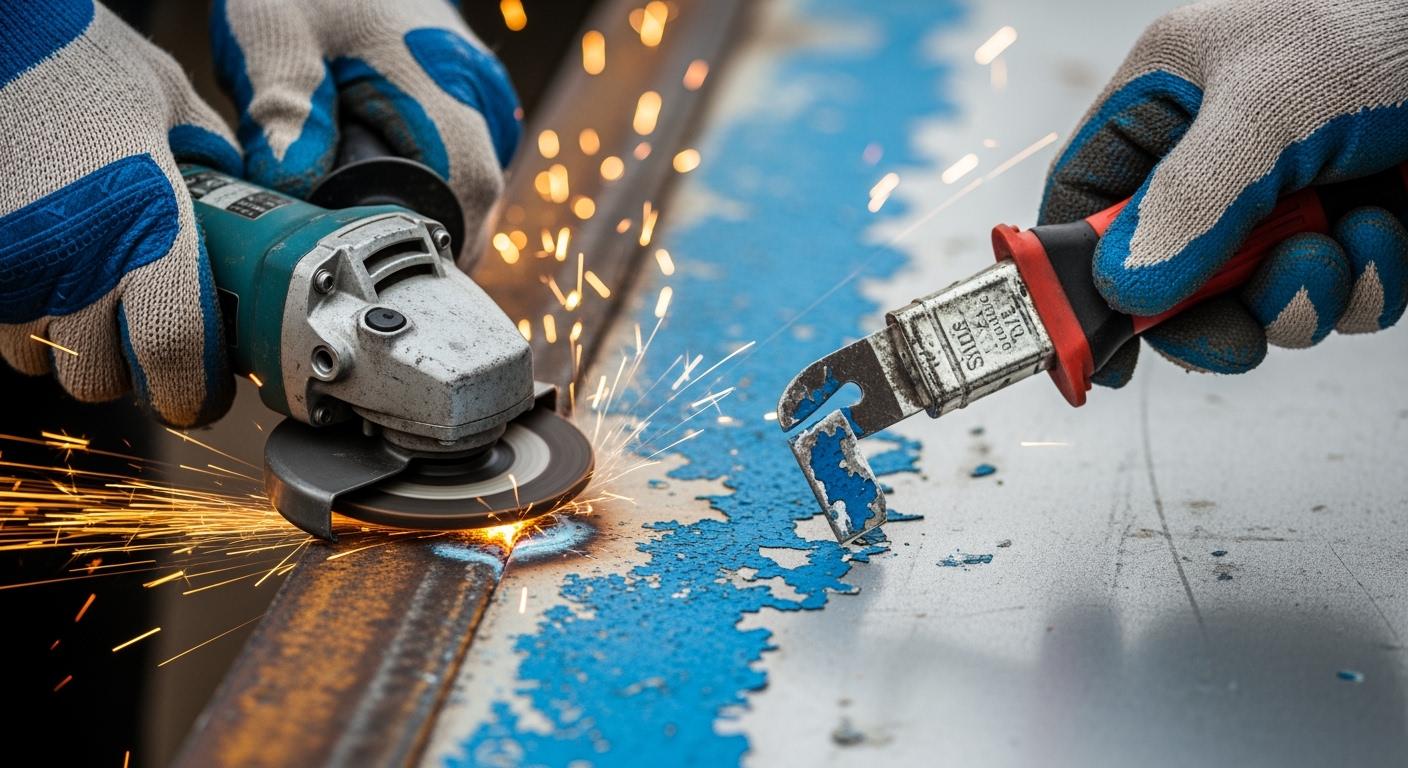
When you efficiently grind welds and remove paint, you want to keep the base metal safe from harm. Many workers face challenges like exposure to metal fumes, which can cause breathing problems and increase the risk of chronic diseases. The American Conference of Governmental Industrial Hygienists sets limits on welding fumes to protect your health. Using specialized tools such as Aimgrind super hard abrasives helps you achieve a smooth finish, work faster, and reduce risks. With the right approach, you can ensure your project looks professional and stays safe.
Key Takeaways
- Choose Aimgrind super hard abrasives for efficient grinding. They cut through tough materials while protecting the base metal.
- Select the right grit size for your task. Coarse grits remove heavy welds, while finer grits prepare surfaces for painting.
- Maintain a safe workspace. Clean the area, ensure proper ventilation, and wear protective gear to avoid health risks.
- Control your tool angle and pressure. Keep the grinder at a low angle and apply light pressure to prevent damage to the base metal.
- Inspect your work regularly. Check for overheating or defects to ensure a smooth, professional finish.
Tool Selection for Efficiently Grind Welds and Paint Removal
Choosing Aimgrind Super Hard Abrasives
When you want to efficiently grind welds and remove paint, your tool choice matters. Aimgrind stands out as a trusted brand for customized grinding wheels and super hard abrasives. With almost two decades of experience, Aimgrind helps you select the right tool for your job. Their super hard abrasives use diamond and cubic boron nitride (CBN). These materials are some of the hardest in the world. They cut through tough welds and stubborn paint while protecting the base metal underneath.
You get several benefits when you use Aimgrind super hard abrasives:
- They stay sharp longer, so you spend less time changing tools.
- They work fast, which helps you efficiently grind welds and finish projects sooner.
- They create less heat, which keeps the base metal safe from warping or damage.
- They give you a smooth, professional finish every time.
Selecting the Right Grit and Bond Type
Picking the right grit and bond type helps you efficiently grind welds and remove paint without harming the base metal. Grit size affects how much material you remove and how smooth the surface feels. Coarse grits (24–36) knock down heavy welds. Medium grits (60–80) help you blend and level the surface. Finer grits (120+) remove scratches and prepare the metal for painting.
| Grit Size | Application Description |
|---|---|
| Coarse (24–36) | For knocking down heavy weld beads |
| Medium (60–80) | For leveling and initial blending |
| Finer (120+) | For removing scratch patterns and prepping for paint |
Bond type also matters. Each bond works best for certain jobs and materials.
| Type of Bond | Characteristics | Suitable Applications |
|---|---|---|
| Resinoid Bond | Flexible, good for fine finishes | Conventional and super abrasive wheels |
| Metal Bond | Strong, slow wear, less aggressive | Diamond and CBN super abrasive wheels |
| Electroplated Bond | Thin, precise, great for delicate work | Super abrasive wheels |
| Brazed Bond | Very strong, handles heat well | Super abrasive wheels |
| Rubber Bond | Flexible, absorbs shock | Low-vibration, low-noise cutting |
Tip: For stainless steel, use contaminant-free abrasives to avoid rust. For aluminum, pick abrasives made for non-ferrous metals to prevent clogging.
When you match the right grit and bond to your material, you efficiently grind welds and remove paint while keeping the base metal in top shape.
Step-by-Step Process for Efficiently Grind Welds
Preparing the Work Area and Safety
You need a safe and organized workspace before you start grinding welds or removing paint. Follow these steps to set up your area:
- Clean your workspace. Remove dust, oil, and paint chips. Make sure the area is dry.
- Check for flammable materials. Move gasoline, oil, wood, paper, and solvents away from your work zone.
- Set up proper ventilation. Open windows or garage doors. Use fume extractors or exhaust fans to remove smoke and dust. Wear a respirator if you work with painted or galvanized metals.
- Prepare your tools. Place your grinding station and welding area on a sturdy, fire-resistant metal workbench. Keep a fire extinguisher and first aid kit nearby.
- Allow space to move. Keep at least three feet of clearance around your workbench.
Tip: Bright lighting helps you see welds and paint clearly. Use focused lights to avoid mistakes.
Wear the right protective gear every time you efficiently grind welds or remove paint. Choose fire-resistant clothing, safety glasses with Z87.1 approval, and heavy leather gloves. Use a helmet to protect your head and face. Place welding curtains or blankets to contain sparks and shield nearby areas.
Grinding Welds with Aimgrind Tools
Aimgrind super hard abrasives make weld grinding faster and safer. You get a smooth finish and protect the base metal. Start by selecting the right abrasive wheel for your material and weld size. Use diamond or CBN wheels for tough metals.
Follow these steps:
- Hold the grinder at a slight angle, about 15–30 degrees, to the weld bead.
- Apply steady, gentle pressure. Let the abrasive do the work. Avoid pushing too hard, which can damage the base metal.
- Move the grinder along the weld in short, controlled passes. Check your progress often.
- Switch to a finer grit wheel for blending and smoothing after removing the bulk of the weld.
| Step | Action | Result |
|---|---|---|
| 1 | Select Aimgrind abrasive | Matches material and weld |
| 2 | Angle grinder 15–30° | Prevents gouging |
| 3 | Steady, gentle pressure | Protects base metal |
| 4 | Short, controlled passes | Even removal |
| 5 | Switch to finer grit | Smooth, blended finish |
Note: Aimgrind abrasives create less heat. This reduces the risk of warping and keeps your base metal safe.
Controlled Paint Removal Techniques
You can efficiently grind welds and remove paint without harming the base metal if you use the right technique. Start with a medium grit abrasive for paint removal. Use a lighter touch than you would for weld grinding.
- Work in small sections. Move the grinder slowly across the painted surface.
- Keep the grinder moving to avoid heat buildup.
- Use Aimgrind super hard abrasives for consistent results. Diamond and CBN wheels stay sharp and cut through paint easily.
- Check the surface often. Stop if you see bare metal or signs of overheating.
Alert: Never over-grind. Excessive grinding can thin the base metal and weaken your project.
If you follow these steps, you efficiently grind welds and remove paint while keeping your base metal strong and smooth. Aimgrind tools help you achieve a professional finish every time.
Preventing Base Metal Damage
Tool Angles and Pressure Control
You need to control your tool angle and pressure to protect the base metal. Aimgrind super hard abrasives help you do this with ease. They cut smoothly and do not dig into the metal. You should keep your grinder at a low angle, between 5 and 15 degrees. This angle gives you more control and helps you avoid gouging the surface. A lower angle also increases the contact area, which makes the grinding less aggressive.
- Hold the grinder at 5–15 degrees for best results.
- Use light, steady pressure. Heavy pressure can cause overheating and damage.
- Lower the angle for blending steps. This makes the finish smoother and keeps the base metal safe.
- Do not rush. Let the abrasive do the work.
Tip: If you feel the grinder pulling or skipping, check your angle and pressure. Adjust until the tool moves smoothly.
Managing Heat and Warping
Heat can warp your base metal if you do not control it. Aimgrind abrasives have excellent thermal conductivity. They help keep the workpiece cool. You can also manage heat by using small tacks when welding. This reduces the amount of filler metal and limits heat input. For paint removal, move the grinder slowly and keep it in motion. Do not stay in one spot for too long.
- Use a lower speed setting during the final blending step.
- Apply light pressure and cover a large area.
- Make relief cuts if you see signs of warping.
- Use vertical down techniques with MIG welding to keep welds flat and cool.
Note: Always let the metal cool between passes if it feels hot to the touch.
Progress Checks and Stopping Points
You should check your progress often. Over-grinding can thin the base metal and weaken your project. Stop and inspect the surface after each pass. Look for signs of overheating, such as discoloration or warping. If you see bare metal, slow down and switch to a finer grit.
- Check the surface every few minutes.
- Stop grinding if you see sparks change color or the metal turns blue.
- Use a straightedge to check for flatness.
- Switch to a finer abrasive for the final passes.
Callout: Careful checks help you avoid mistakes and keep your base metal strong.
Aimgrind super hard abrasives make it easy to control your work. You get a smooth finish without damaging the base metal.
Common Mistakes and Solutions
Mistakes can happen when you grind welds or remove paint. You can avoid most problems by knowing what to watch for and using the right tools like Aimgrind super hard abrasives.
Over-Grinding Issues
Over-grinding is a common problem. You might press too hard or stay in one spot for too long. This can thin the base metal and weaken your project. Sometimes, you may see blue spots or feel the metal get hot. These are signs you need to stop.
- Overwelding adds extra material and makes grinding harder.
- Poor weld placement can leave seams that need more cleanup.
- Skipping weld preparation can lead to weak welds.
Tip: Use Aimgrind super hard abrasives for better control. They help you remove just enough material without damaging the base.
You can also use a flap disc for precision grinding. This tool helps you avoid gouging the metal. If you want even more control, robotic grinding systems can keep pressure and angle steady, which reduces mistakes.
Incorrect Abrasive Selection
Choosing the wrong abrasive can cause many problems. If you use a hard grinding wheel for spatter removal, you might scratch or damage the base metal. Picking the right grit and bond type is important.
- Match the abrasive to your material. For stainless steel, use Inox-labeled abrasives to prevent contamination.
- Use coarser grits for heavy welds, but switch to finer grits for smoothing.
- Select tools that manage heat well to protect the metal.
Note: Aimgrind offers a wide range of abrasives for different materials and tasks. Their diamond and CBN wheels give you the right balance of cutting power and surface finish.
Skipping Safety Steps
Skipping safety steps can put your health at risk. You might breathe in toxic fumes or get exposed to lead when removing old paint. Always wear the right personal protective equipment (PPE) like gloves, goggles, and a respirator.
- Use proper PPE every time you grind or remove paint.
- Set up good ventilation to keep fumes away.
- Follow safe work practices to protect yourself and others.
Alert: Safety should always come first. Aimgrind tools help you work efficiently, but you must follow safety rules for the best results.
By avoiding these common mistakes and using Aimgrind super hard abrasives, you can achieve a smooth, safe, and professional finish every time.
Finishing and Inspection
Smoothing and Blending
You want your welds and paint removal to look clean and professional. After grinding, you need to smooth and blend the surface so it matches the surrounding metal. Aimgrind super hard abrasives help you achieve this with ease.
- Start with a coarse grit (24–36) to remove heavy welds.
- Switch to a medium grit (60–80) for leveling and blending.
- Use a finer grit (120+) for final smoothing and to reduce scratch marks.
- For a consistent finish, try abrasive flap discs or non-woven surface conditioning discs.
- If you need a mirror finish, use specialized polishing pastes and felt wheels.
- On painted parts, use finer grit sanding discs (120 to 220) for a smooth surface.
Tip: After grinding down the weld, blend the area with 80 to 120 grit abrasives. For a mill finish, use 120 to 180 grit for extra smoothness.
Surface Inspection and Touch-Ups
Once you finish smoothing, you need to inspect the surface for any defects. This step ensures your work is strong and ready for coating or painting.
- Look for cracks, corrosion, or misalignment. These can weaken your project.
- Check for excessive or lack of penetration, porosity, slag inclusion, and spatter.
- Use visual checks first. For critical jobs, use non-destructive testing (NDT) methods.
- Maintain the weld contour and reinforcement height for strength.
| Defect Type | Description | Correction Method |
|---|---|---|
| Cracking | Internal stress causes cracks | Use proper welding techniques and materials |
| Corrosion | Metal reacts with environment | Apply protective coatings and inspect regularly |
| Misalignment (HiLo) | Height difference between welded parts | Align parts correctly before welding |
| Porosity | Bubbles in weld from contamination | Clean materials before welding |
| Slag inclusion | Non-metallic particles trapped in weld | Prepare and clean materials thoroughly |
| Spatter | Metal particles stuck to surface | Improve welding technique and preparation |
If you find any defects, use Aimgrind abrasives to grind out the problem areas. Re-inspect after touch-ups to confirm a smooth, defect-free surface. This careful process helps you achieve a professional result every time.
You can achieve a smooth, professional finish by following these steps:
- Start with a hard grinding wheel for thick welds.
- Switch to a 36- or 40-grit ceramic fiber disc for smoother cuts.
- Use a flap disc to blend welds with the base metal.
- Remove spatter with a knotted wire wheel.
- Finish with a non-woven disc for paint prep.
Aimgrind super hard abrasives give you fast results, less fatigue, and longer tool life.
| Feature | Benefit |
|---|---|
| Self-sharpening grains | Faster grinding, less time needed |
| Reduced hand fatigue | More comfort, less vibration |
| Longer wheel life | Fewer replacements, less downtime |
| High-pressure optimization | Extra safety in every job |
Always wear fire-retardant clothing, use eye protection, and set up good ventilation. These habits keep you safe and help you work better.
FAQ
What makes Aimgrind super hard abrasives better for weld grinding?
You get longer tool life and faster results with Aimgrind super hard abrasives. Diamond and CBN grains stay sharp. You spend less time changing wheels. Your base metal stays safe from heat and damage.
Can I use Aimgrind abrasives on different metals?
Yes, you can use Aimgrind abrasives on many metals. They work well on steel, stainless steel, aluminum, and more. Always match the grit and bond type to your specific metal for the best results.
How do I know which grit size to choose?
Start with a coarse grit for heavy welds. Move to a medium grit for blending. Finish with a fine grit for smoothing.
Tip: Check your progress often and switch grits as needed.
Do Aimgrind abrasives help prevent overheating?
Yes, Aimgrind abrasives have excellent thermal conductivity. They help keep your workpiece cool. You avoid warping and discoloration when you use the right pressure and keep the tool moving.
What safety gear should I wear when grinding or removing paint?
You should wear safety glasses, gloves, and fire-resistant clothing. Use a respirator if you work with painted or galvanized metals.
Always set up good ventilation in your workspace.
Contact Us
For More Grinding Solution or Customized Abrasive Tools