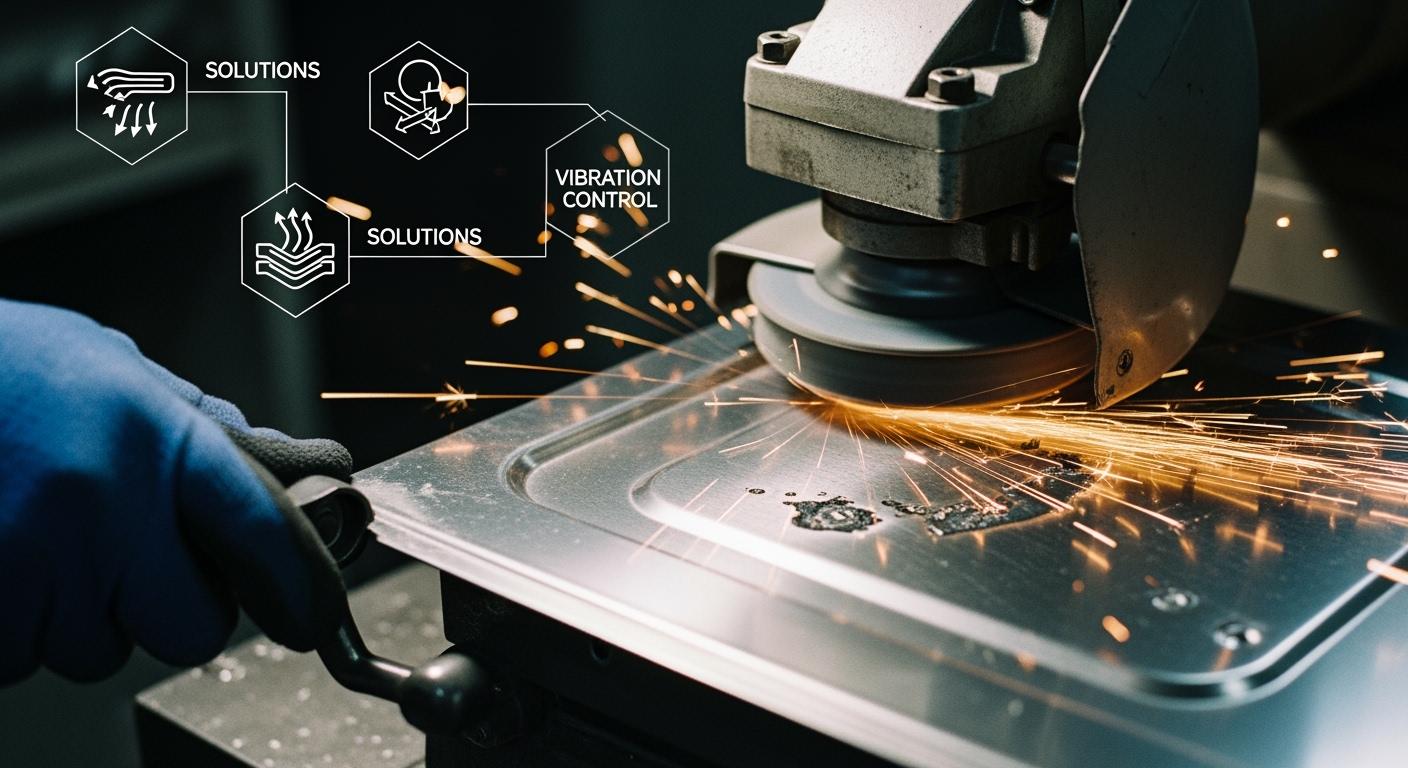
You need effective grinding solutions to eliminate chatter marks and burning during appliance panel grinding. A smooth surface improves both product quality and productivity. Choose the right grinding wheel and adjust your process for a consistent surface. Trust Aimgrind for expert grinding solutions, including CBN grinding wheels. These tools help you achieve a flawless surface finish and reliable results.
Key Takeaways
- Spot chatter marks by looking for wavy lines and listen for strange grinding noises to catch problems early.
- Prevent grinding burn by reducing grinding depth, adjusting feed speed, and using heat-resistant CBN grinding wheels.
- Balance your grinding wheel and maintain your machine regularly to reduce vibration and improve surface quality.
- Use proper coolant concentration and keep the fluid flowing steadily to cool the surface and avoid defects.
- Train operators and review your grinding process often to keep improving results and avoid costly errors.
Identifying Chatter Marks and Burning
Signs of Chatter Marks
You can spot chatter marks by looking for regular, wavy lines or patterns on the surface of your appliance panels. These lines often run across the direction of grinding. Chatter marks usually appear as a series of evenly spaced ridges or grooves. You might notice that the surface feels rough when you touch it. Sometimes, you can even hear a strange noise during grinding. This noise often means that chatter is happening. If you see these patterns, you should check your grinding process right away.
Tip: Use a bright light to inspect the surface. Chatter marks become easier to see when you shine light at an angle.
Detecting Grinding Burn
Grinding burn shows up as discoloration or dark spots on the surface. You may see blue, brown, or black areas. These burn marks mean that the surface got too hot during grinding. When you notice these colors, you should stop and check your grinding settings. Burn marks can weaken the panel and make it look bad. You can also feel the surface for rough or brittle spots. If you find any, you may have grinding burn.
Effects on Panel Quality
Chatter and burn marks can lower the quality of your appliance panels. Chatter marks make the surface uneven and can cause problems in later steps, like painting or coating. Burn marks can damage the metal and make it weaker. Both issues can lead to more rework and higher costs. A good surface finish is important for both looks and strength. You should always check for chatter and burn marks to keep your panels at a high standard.
Root Causes of Chatter Marks and Burning
Machine Vibration
You often see chatter marks when your grinding machine vibrates. Vibration comes from several sources. Worn spindle bearings, loose belts, or imbalances in the grinding wheel can cause problems. Sometimes, vibrations travel from nearby machines through the floor. Improper clamping and tool deflection also lead to chatter. When you use a grinding process with long tool overhangs or high spindle speeds, you increase the risk. You can reduce vibration by replacing worn parts, balancing the grinding wheel, tightening bolts, and adjusting spindle speed. Contact-length filtering helps by increasing the depth of cut and lowering the feed rate. This method smooths out chatter marks even if you cannot fix the machine right away. Minimizing vibrations improves your grinding process and panel quality.
Tip: Use vibration-dampening pads under your grinding machine to reduce floor vibrations.
Grinding Wheel Selection
Choosing the right grinding wheel is important for your grinding process. If you pick the wrong wheel, you may see parallel marks or burn marks on your panels. Chatter marks often appear when the grinding wheel does not match the material or process. Burn marks show up when the wheel generates too much heat. Specialised abrasives like CBN grinding wheels from Aimgrind work well for hard materials. These wheels cut faster and stay cooler, helping you avoid burn marks and chatter. You should always match your grinding wheel to your material and process needs.
Process Parameters
You must set your grinding process parameters carefully. Feed rates, depth of cut, and grinding fluid application affect the outcome. If you use feed rates near the machine’s natural frequency, you risk chatter. Too deep a cut or too fast a feed rate can cause burning. Aimgrind recommends checking patterns, listening for sound changes, and using vibration analysis tools. Adjust your grinding process to minimize vibrations and heat. You improve your results by making small changes to your process and using the right abrasives.
Troubleshooting Steps and Grinding Solutions
Eliminate Chatter Marks
You can eliminate chatter marks by following a step-by-step approach. Start by identifying the pattern of the marks on your panel. Closely spaced marks often point to wheel rotation issues, while wider marks may come from machine or workpiece vibration. Listen for changes in the grinding sound. A sudden noise can signal chatter. Use vibration analysis tools if you cannot find the source easily.
Take these corrective measures to minimize chatter and achieve a correct finish:
- Balance your grinding wheel before each use. An unbalanced wheel causes vibration and leads to chatter marks.
- Inspect your grinding machine for worn spindle bearings, loose belts, or damaged parts. Replace or repair them as needed.
- Securely clamp your workpiece. Loose clamping lets the part move and creates chatter marks.
- Adjust your grinding parameters one at a time. Change the feed rate, depth of cut, or wheel speed and observe the effect on the surface.
- Use a softer grade grinding wheel for hard materials and a harder grade for soft materials. This helps prevent excessive hardness that can cause chatter.
- Slow down the wheel speed or increase the workpiece speed. This allows the wheel to break down more effectively and reduces chatter.
- Increase the traverse speed of the grinding wheel to help it break down and minimize chatter marks.
- Dress your grinding wheel properly. Take heavier cuts and increase the traverse rate during dressing to keep the wheel sharp.
- Keep your grinding wheel clean and true. A dirty or uneven wheel will not give you a smooth surface.
Aimgrind offers CBN grinding wheels that help you eliminate chatter marks. These wheels provide precision grinding and maintain their shape, giving you a consistent surface finish. Regular machine maintenance and careful wheel selection are key corrective measures for finishing grinding tasks.
Tip: Always change only one process parameter at a time. This helps you see which adjustment eliminates chatter marks most effectively.
Prevent Grinding Burn
Grinding burn can ruin your panel’s surface and weaken the material. You can prevent grinding burn by making smart adjustments to your process and using the right grinding wheel.
Use these corrective measures to avoid burning:
- Reduce the grinding depth. A lighter cut lowers the temperature and protects the surface.
- Optimize the feed speed. Too fast or too slow can cause overheating. Find the best speed for your material.
- Adjust the grinding speed. Lower speeds help minimize grinding burn.
- Choose a grinding wheel with high thermal stability. CBN grinding wheels from Aimgrind resist heat and keep the workpiece cool.
- Use proper dressing techniques to keep the wheel sharp and effective.
- Monitor the color of your panel’s surface. Stop grinding if you see blue, brown, or black spots.
Here is a quick table to guide your process adjustments:
| Parameter | Recommendation | Effect on Grinding Burn |
|---|---|---|
| Grinding Depth | Reduce | Lowers grinding temperature |
| Feed Speed | Optimize | Reduces temperature and exposure |
| Grinding Speed | Adjust to lower | Minimizes grinding burn |
CBN grinding wheels help you achieve precision grinding and prevent overheating. Their hardness and thermal stability make them ideal for grinding ferrous materials that are sensitive to heat. Using these wheels as part of your corrective measures ensures a high-quality finish.
Optimize Coolant and Fluid
Coolant and fluid management play a big role in both eliminating chatter marks and preventing grinding burn. You need to keep your grinding machine supplied with the right fluid at the correct concentration.
Follow these steps for optimal fluid management:
- Increase the concentration of your grinding fluid to about 6-7%. This helps minimize chatter marks and keeps the surface cool.
- Make sure the grinding fluid flows steadily over the workpiece and grinding wheel. Consistent supply reduces friction, cools the surface, and cleans away chips.
- Check coolant concentration regularly. Use a refractometer to measure and adjust as needed.
- Train your team on coolant management. Everyone should know how to check and maintain the system.
- Clean the fluid system and sumps often. Dirty fluid can cause problems with finish and machine performance.
- Try new fluid products in small trials before full use. This lets you see how they affect your grinding process and surface finish.
Note: Good coolant management is one of the most effective corrective measures for both eliminating chatter marks and preventing burn. It also extends the life of your grinding wheel and grinding machine.
By following these troubleshooting steps and using Aimgrind’s CBN grinding wheels, you can eliminate chatter marks, prevent grinding burn, and achieve a smooth, high-quality surface on every appliance panel. Consistent application of these corrective measures will help you maintain a reliable finishing grinding process.
Preventative Measures and Best Practices
Routine Maintenance
You keep your grinding machine in top shape by following routine maintenance steps. Regular checks help you avoid typical grinding errors and reduce the risk of chatter. You should inspect your machine daily for loose parts, worn bearings, and vibration. Make sure all components are tight and secure. Document ideal cutting parameters for each material. Create checklists for tooling selection and machine inspection. Plan professional inspections every six to twelve months. These inspections uncover hidden errors and optimize performance. Support slender workpieces properly and check tool holders for grip and runout. Adjust spindle speed to avoid resonant frequencies. Enrich grinding fluid to improve cooling and lubrication. Slow down the infeed amount to take lighter cuts and prevent vibration.
Tip: A clean and calibrated machine produces a better surface and prevents faulty grinding result.
Operator Training
You improve grinding results by training your operators. Teach your team how to spot surface defects and errors early. Show them how to secure workpieces and clamp parts tightly. Train them to use proper dressing techniques and adjust parameters for each material. Operators should know how to isolate vibration sources and check for machine tightness. Encourage them to document their findings and follow daily inspection routines. Well-trained operators reduce the chance of typical grinding errors and maintain high surface quality.
Continuous Improvement
You achieve better grinding outcomes by focusing on continuous improvement. Review your process regularly and look for ways to reduce errors. Manufacturers have seen fewer surface defects and lower maintenance costs after making changes like custom robotic gripper designs. These improvements led to consistent finishes and faster cycle times. Try new tools and methods in small trials. Track your results and share best practices with your team. Continuous improvement helps you avoid faulty grinding result and keeps your surface finish at a high standard.
Note: Small changes in your grinding process can make a big difference in surface quality and efficiency.
You can eliminate chatter marks and burning by following proven steps. Focus on machine vibration control, correct wheel selection, and regular maintenance.
- Inspect and balance your grinding wheels often.
- Adjust wheel speed and dressing for better results.
- Monitor coolant and system performance.
| Feature | CBN Grinding Wheels | Conventional Grinding Wheels |
|---|---|---|
| Material Removal | Superior rates | Slower rates |
| Durability | High resistance to wear | Wears out quickly |
| Quality | Exceptional finishes | Less consistent |
Keep improving your process. For custom grinding solutions, contact Aimgrind.
FAQ
What causes chatter marks during grinding?
You see chatter marks when your grinding machine vibrates or the wheel is not balanced. Loose parts and wrong wheel selection also lead to these marks.
How do CBN grinding wheels help prevent burning?
CBN grinding wheels cut faster and stay cooler. You avoid burning because these wheels resist heat and keep your panels safe.
How often should you check coolant concentration?
You should check coolant concentration every day. Use a refractometer to measure and adjust the fluid for best grinding results.
Can you use CBN wheels for both wet and dry grinding?
Yes, you can use CBN grinding wheels for wet and dry grinding. These wheels work well in both conditions and give you a smooth finish.
Contact Us
For More Grinding Solution or Customized Abrasive Tools