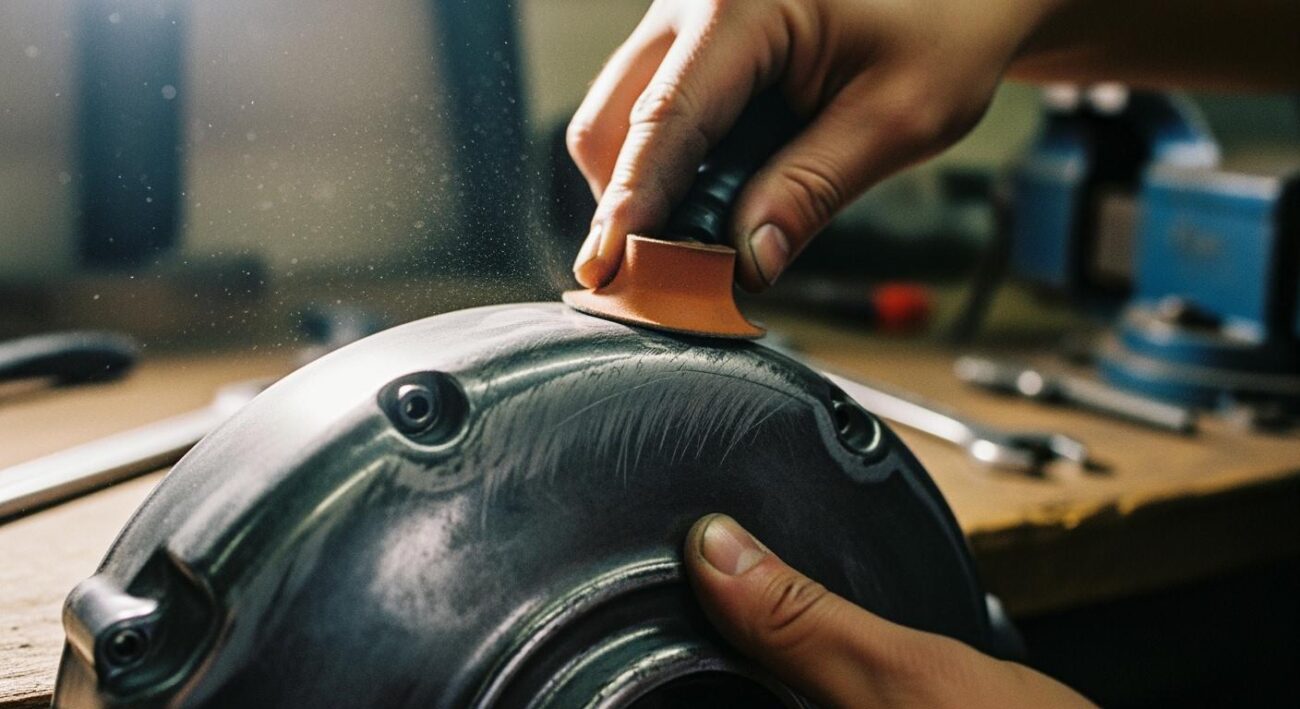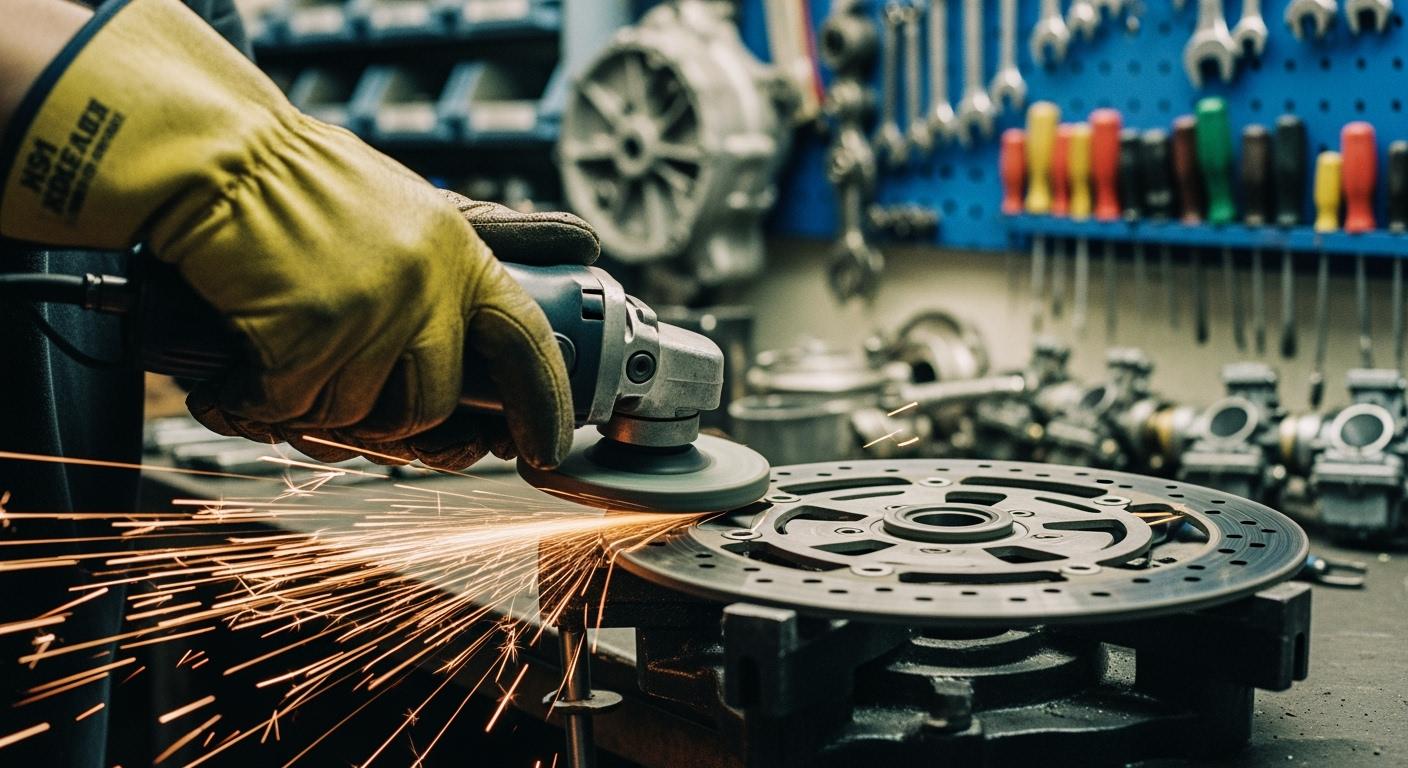
You can use this guide to quickly find the best Grinding Processes for motorcycle-specific materials. Aimgrind’s expert advice helps you choose the right tools, abrasives, and finishing methods. You will see practical tips and a lookup table that make decisions easy. Matching grinding techniques to the unique properties of each motorcycle part gives you better results and longer-lasting components.
Key Takeaways
- Choose the right grinding method based on material properties. For aluminum alloys, use surface or centerless grinding to avoid damage.
- Use CBN grinding wheels for hard metals. They provide durability and precision, ensuring smooth finishes on tough components.
- Select appropriate abrasives for each material. Aluminum oxide works well for most metals, while silicon carbide is best for plastics.
- Always check your grinding wheels for damage before use. This step prevents accidents and ensures high-quality results.
- Follow a grit size guide for finishing. Start with coarse grits for shaping, then move to finer grits for a smooth, polished finish.
Motorcycle Materials and Their Properties
Common Metals in Motorcycle Parts
When you look at a motorcycle, you see many different parts made from strong materials. Steel, aluminum alloys, and titanium are the most common choices for motorcycle parts. Steel gives you strength and durability. You find steel in engine blocks, frames, and transmission gears. Aluminum alloys are popular because they are light and resist rust. You see aluminum alloys in wheels, swingarms, suspension parts, and body panels. Titanium is rare and costs more, but it is very strong and light. You find titanium in high-performance motorcycle exhausts, fasteners, and racing components.
Aluminum alloys play a big role in motorcycle design. You get lighter motorcycles that are easier to handle. Aluminum alloys also help parts last longer because they do not rust easily. Motorcycle makers use aluminum alloys for both style and function. You see shiny aluminum alloys on fuel tanks, handlebars, and even brake calipers.
Tip: When you choose materials for a motorcycle, think about where you need strength and where you need less weight. Aluminum alloys give you both.
Key Properties Affecting Grinding
You need to know how different materials react to grinding. Each motorcycle part has its own needs. Some parts must handle high stress, vibration, and heat. Others need to stay light but strong. Aluminum alloys are soft and ductile, so you must use the right grinding method. If you use the wrong tool, you can damage the surface or change the shape.
Here is a quick look at how material properties affect grinding methods:
| Material Type | Recommended Grinding Methods |
|---|---|
| Hard metals (e.g., tool steel, tungsten carbide) | Cylindrical, creep-feed, or surface grinding |
| Soft or ductile materials (e.g., aluminum, copper, aluminum alloys) | Surface or centerless grinding with coarser grit |
| Brittle materials (e.g., ceramics, glass) | Creep-feed or internal grinding with fine abrasives |
| Heat-treated or hardened components | Gear, thread, and form grinding |
| Long, slender parts (e.g., rods, tubes) | Centerless grinding |
Motorcycle parts must meet strict tolerance levels. You want every part to fit perfectly. Aluminum alloys help you reach these goals because they are easy to shape and finish. When you grind aluminum alloys, you get smooth surfaces and precise edges. You also avoid extra weight, which makes the motorcycle faster and easier to control.
Motorcycle parts face tough conditions. They must resist wear, corrosion, and shock. Aluminum alloys give you a good balance of strength and lightness. You see aluminum alloys in almost every part of a modern motorcycle. When you grind these parts, you must pick the right tools and methods to keep the quality high.
- Motorcycle frames use aluminum alloys for less weight.
- Motorcycle wheels often use aluminum alloys for better speed.
- Motorcycle swingarms and forks use aluminum alloys for strength and flexibility.
- Motorcycle body panels use aluminum alloys for style and protection.
- Motorcycle engine covers and cases use aluminum alloys for heat resistance.
You see that aluminum alloys are everywhere in motorcycle design. When you grind these parts, you make sure each motorcycle is safe, strong, and ready for the road.
Grinding Processes for Motorcycle Components
Surface Grinding and Finishing
You use surface grinding to achieve flat, smooth surfaces on motorcycle parts. This process helps you reach tight tolerances and a high-quality finish. Surface grinding works well for engine covers, brake discs, and other flat components. You can use it to remove small amounts of material and correct minor imperfections. Surface grinding also helps you prepare parts for further finishing steps.
Surface grinding gives you excellent control over thickness and flatness. You can achieve tolerances as tight as ±0.0001″ (0.0025 mm). This level of precision grinding is important for motorcycle parts that must fit together perfectly. You often use surface grinding before finishing aluminum or steel parts. This step ensures that the next process, such as painting or coating, will look smooth and even.
Tip: Always check the surface finish after grinding. A smooth finish helps prevent corrosion and improves the look of your motorcycle.
You can use different types of grinding processes for various shapes and sizes. Centerless grinding is useful for round parts like axles and rods. Internal grinding helps you finish holes and bores inside engine parts. Each process gives you a different result, so you must choose the right one for your needs.
CNC Machining Motorcycle Parts
CNC machining motorcycle parts gives you unmatched precision and repeatability. You can create complex shapes and detailed features that are hard to achieve with manual methods. CNC machining motorcycle parts includes milling, turning, drilling, and engraving. Each process helps you make parts that fit together perfectly and last longer.
Here is a table showing the typical tolerances you can achieve with CNC machining motorcycle parts:
| Process | Tolerance Range | Notes |
|---|---|---|
| Milling (3-axis) | ±0.005″ (0.13 mm) | Suitable for most general-purpose machining tasks. |
| Milling (5-axis) | ±0.005″ (0.13 mm) | Offers higher precision for complex geometries. |
| Turning (Lathe) | ±0.005″ (0.13 mm) | Ideal for cylindrical parts and high-volume production. |
| Engraving | ±0.005″ (0.13 mm) | Used for fine details and markings on parts. |
| Drilling | ±0.010″ (0.25 mm) | Tolerances depend on hole size and depth. |
| Routing | ±0.005″ (0.13 mm) | Commonly used for cutting sheet materials like wood, plastic, metal. |
| Wire EDM | ±0.0002″ (0.005 mm) | High-precision process for intricate shapes and hard materials. |
| Surface Grinding | ±0.0001″ (0.0025 mm) | Achieves extremely tight tolerances and smooth surface finishes. |
| Plastic Machining | ±0.010″ (0.25 mm) | Tolerances may vary due to material flexibility and thermal expansion. |
| Aluminum Machining | ±0.005″ (0.13 mm) | Aluminum is easy to machine, allowing for tighter tolerances. |
| Steel Machining | ±0.005″ (0.13 mm) | Requires robust tooling and slower speeds to maintain precision. |
| Titanium Machining | ±0.010″ (0.25 mm) | Challenging material; tolerances may be looser due to hardness. |
CNC machining motorcycle parts offers many advantages over manual grinding. You get higher precision, lower production costs, and improved efficiency. You also produce consistent, high-quality parts with complex designs. CNC machining motorcycle parts allows you to switch between different parts quickly, which helps you keep production moving.
| Advantage | Description |
|---|---|
| Precision | CNC machining offers unmatched precision, allowing for intricate designs and flawless fit-ups. |
| Lower production cost | Reduces material waste and costs through efficient use of raw materials and detailed technical drawings. |
| Improved efficiency | Increases production capacity and speed, enabling quick turnaround of high-quality parts. |
| Superior quality | Produces consistent, high-quality parts with complex designs through lean manufacturing processes. |
| Flexibility | Allows for quick changeovers between different parts with minimal downtime, enhancing production flow. |
You use CNC machining motorcycle parts for frames, engine cases, wheels, and more. This process helps you achieve the best results for both strength and appearance. When you focus on finishing aluminum, you get lightweight parts that look great and perform well.
Aimgrind CBN Grinding Wheels for Hard Metals
When you work with hard metals in motorcycle parts, you need grinding wheels that can handle the challenge. Aimgrind CBN grinding wheels give you the durability and precision you need for tough jobs. These wheels work well for grinding hardened steel, tool steel, and superalloys. You get faster cutting speeds and cooler operation, which helps you avoid thermal damage to your parts.
CBN grinding wheels from Aimgrind offer several key benefits:
- Superior durability for hard metals, even at high temperatures.
- Chemical inertness, which prevents unwanted reactions with your motorcycle parts.
- Robust cutting action for heavy-duty grinding tasks, such as roughing and shaping.
- A balance of durability and precision, especially when you need high material removal rates.
You can use CBN grinding wheels for many types of grinding processes. They work well for centerless grinding, internal grinding, and surface grinding. These wheels help you achieve precision grinding on engine components, gears, and transmission parts. You also get a longer wheel life, which saves you time and money.
For grinding hard metals in motorcycle parts, ceramic cutting wheels also provide high efficiency and fast material removal. Ceramic abrasive grains have a crystalline structure with many self-sharpening edges. This feature allows ceramic wheels to cut faster and last longer when you work with titanium, hardened steel, or nickel alloys.
When you choose Aimgrind CBN grinding wheels, you get reliable performance for all your motorcycle projects. You can trust these wheels to deliver the results you need for finishing, shaping, and maintaining critical parts. Whether you focus on finishing aluminum or working with tough steel, Aimgrind gives you the right tools for the job.
Note: Always match your grinding processes and wheel type to the material you are working with. This step ensures you get the best finish and the longest life from your motorcycle parts.
Grinding Aluminum Alloys and Other Materials
Techniques for Aluminum Alloys
You often work with aluminum fabrication when building motorcycle parts. Grinding aluminum alloys requires special care because these metals are soft and can clog grinding wheels. You must select the right abrasive for aluminum fabrication. Aluminum oxide and silicon carbide work well for cutting aluminum. You can use calcium stearate wax or grinding aids to prevent loading and improve metal removal. Grease sticks help reduce loading during aluminum fabrication. When cutting aluminum, choose coarse saw blades with fewer teeth per inch to avoid clogging.
Here is a table showing effective techniques for aluminum fabrication:
| Technique | Description |
|---|---|
| Abrasive Selection | Use aluminum oxide or silicon carbide for cutting aluminum alloys. |
| Preventing Loading | Apply calcium stearate wax or grinding aids to reduce chip binding. |
| Grit Size | Start with finer grit to minimize heating and improve finish quality. |
| Grease Sticks | Use to reduce loading when grinding soft metals like aluminum. |
| Coarse Saw Blades | Opt for blades with lower teeth per inch to minimize clogging. |
| Gentle Grinding | Apply light pressure to allow the abrasive to work effectively. |
You must also use the right coolant when grinding aluminum fabrication parts. Water soluble coolants work well for clean environments and heat dissipation. Oil based coolants provide excellent lubrication for high friction tasks. Semisynthetic coolants offer a balance of cooling and lubrication for various aluminum fabrication jobs.
- Water soluble coolants help keep aluminum fabrication clean and cool.
- Oil based coolants are best for cutting aluminum with high friction.
- Semisynthetic coolants fit many aluminum fabrication applications.
Tip: Always grind gently when cutting aluminum. Light pressure lets the abrasive do the work and prevents overheating.
Grinding Composites and Plastics
You see composites and plastics in motorcycle parts like fairings and covers. Grinding these materials presents unique challenges. You need machines with strong rigidity to handle high cutting forces and vibrations. If you use weak machines, you risk poor results during aluminum fabrication or cutting aluminum.
The performance of superabrasive wheels depends on the bonding matrix and the abrasive grains, such as diamond or cubic boron nitride (CBN). Tough grains keep their shape, while friable grains remove more material. Coatings like copper improve heat transfer, making them ideal for dry grinding.
You must select the right abrasive for aluminum fabrication and cutting aluminum. Diamond and CBN wheels work well for composites and plastics. Copper coatings help with heat transfer during dry grinding. Always check machine stability before starting aluminum fabrication or cutting aluminum.
Abrasives, Grit Sizes, and Equipment Selection
Choosing the Right Abrasive
When you start any motorcycle fabrication project, choosing the right grinding method and abrasive is key. Each material needs a different approach. For most fabrication jobs, you use aluminum oxide because it is tough and works well for general prep and filler removal. If you work with smooth plastics during fabrication, silicon carbide cuts faster but wears out quickly, making it good for fine touch-ups. Ceramic abrasives give you high performance for heavy removal and work well on tough plastics in fabrication.
You also need to think about the type of fairing material. Fiberglass, ABS, and polycarbonate each need a careful sanding approach. This helps primer stick, paint go on evenly, and the finish last through tough rides. Choosing the right grinding method for each fabrication step helps you get the best results.
| Abrasive Material | Description |
|---|---|
| Ceramic | High performance, self-sharpening, great for tough fabrication tasks. |
| Aluminum Oxide | Durable, versatile, ideal for most metals and general fabrication. |
| Zirconium | Dense, self-sharpening, good for aggressive stock removal in fabrication. |
| Silicon Carbide | Very hard, sharp, best for non-ferrous and non-metallic fabrication. |
| Garnet | Sharp but weak, mainly for woodworking, not common in motorcycle fabrication. |
Grit Size Guide for Finishing
You need to use the right grit size at each stage of fabrication to get a smooth finish. Start with coarse grits (40–80) for bulk material removal and shaping during fabrication. Move to 120–180 for refining the surface. Use 220–320 for final smoothing. Finish with 400–800 for wet polishing and primer-ready textures. Wet sanding during the fine stages helps reduce heat and dust, giving you a more even finish.
- For steel fabrication, start with #00 steel wool and WD40, then use #0000 for a finer finish.
- For aluminum fabrication, finish with #0000 and a polishing compound.
- For titanium fabrication, use medium to fine grits for a smooth finish.
Tip: Always match your grit size to the stage of fabrication. This helps you avoid scratches and get a professional finish.
Equipment Recommendations from Aimgrind
Aimgrind offers specialized grinding wheels and abrasive tools for motorcycle fabrication. If you work with hard metals like hardened steel or nickel alloys, Aimgrind’s CBN grinding wheels are the best choice. These wheels give you superior heat resistance, high material removal rates, and a long life. You can use them for both wet and dry grinding during fabrication.
| Feature | Description |
|---|---|
| Superior heat resistance | No hardness loss at high temperatures during fabrication |
| Ideal for | Hardened steel, bearing steel, HSS, nickel-based alloys in fabrication |
| High material removal rate | Consistent precision and faster stock removal in fabrication |
| Longer wheel life | Outlasts conventional wheels in tough fabrication jobs |
| Suitable for | Wet and dry grinding in all fabrication steps |
| Available Bond Types | Resin, vitrified, electroplated for different fabrication needs |
When you choose Aimgrind equipment, you get reliable results for every fabrication project. Always check your equipment before starting fabrication. Inspect wheels for cracks, use guards, and wear protective gear. Regular maintenance keeps your fabrication tools safe and effective.
Remember: Choosing the right grinding method and equipment for each fabrication step helps you achieve a smooth, durable finish on every motorcycle part.
Quick-Reference Table for Grinding Processes
You can use this table to choose the best grinding process for your motorcycle parts. The table helps you match each material with the right abrasive, grit size, and equipment. You will also see tips for deburring and finishing. This makes your work faster and easier.
| Material Type | Recommended Abrasive | Grit Size | Equipment (Aimgrind) | Key Tips for Deburring and Finishing |
|---|---|---|---|---|
| Hardened Steel | CBN, Ceramic | 80–120 | CBN Grinding Wheel | Use light pressure for deburring. Cool with water. |
| Aluminum Alloys | Aluminum Oxide, Silicon Carbide | 120–180 | Resin Bond Wheel, Flap Disc | Use wax for deburring aluminum. Avoid clogging. |
| Titanium | Ceramic, CBN | 80–120 | CBN Grinding Wheel | Deburring needs slow speed. Prevent overheating. |
| Plastics/Composites | Silicon Carbide, Diamond | 180–320 | Resin Bond Wheel | Use gentle strokes for deburring. Avoid melting. |
| Cast Iron | Aluminum Oxide | 60–100 | Vitrified Bond Wheel | Deburring works best with coarse grit. |
| Stainless Steel | Ceramic, Zirconium | 80–120 | CBN or Ceramic Wheel | Deburring removes sharp edges. Use steady motion. |
Tip: Always check the part after deburring. A smooth edge means better safety and fit.
You can use the table by finding your material in the first column. Then, follow the row to see which abrasive, grit size, and equipment you need. The last column gives you a quick tip for deburring or finishing. For example, if you are deburring aluminum, you should use aluminum oxide or silicon carbide with a resin bond wheel. Wax helps prevent loading when deburring aluminum. You should always use gentle pressure for deburring aluminum to avoid damaging the surface.
Deburring is an important step for every motorcycle part. You remove sharp edges and make the part safe to handle. Deburring aluminum is easy if you use the right tools and techniques. You can use a flap disc or a fine grit wheel for deburring aluminum. Always check your work after deburring. If you see any rough spots, repeat the deburring step.
You can save time by using this table before you start grinding or deburring. The table helps you avoid mistakes and choose the best process for each material. Deburring makes your motorcycle parts look better and last longer.
Practical Tips and Common Mistakes
Optimizing Grinding Results
You can achieve great results by following best practices for grinding motorcycle parts. Start with dual-action sanders when working on fairings made from composite materials. These sanders help you control the finish and avoid uneven surfaces. Choose sanding sheets with grit ranges from P120 to P600. Begin with lower grit to remove imperfections. Move to higher grit for polishing techniques that create a smooth finish.
Check your grinding wheels before you start. Make sure you mount them on clean flanges and spindles. Tight spindle bearings help you avoid vibration. Keep the spindle speed optimal for the wheel diameter. This step improves material removal and surface finish. Perform truing and dressing of grinding wheels. These actions prepare the wheels for cutting and help you get consistent results.
Tip: Use polishing techniques after grinding to enhance the appearance and durability of motorcycle parts. Progress through finer grits for the best shine.
Avoiding Errors in Motorcycle Part Grinding
You can prevent mistakes by paying attention to common errors. Do not skip wheel inspection. Cracks or chips can cause accidents. Always check spindle bearings for tightness. Loose bearings lead to poor finishes and unsafe conditions.
Avoid using the wrong abrasive for the material. For hard metals, select CBN wheels. For aluminum, use aluminum oxide or silicon carbide. Do not rush the grinding process. Apply steady pressure and let the abrasive do the work. Overheating can damage the part and reduce its lifespan.
Cylindrical grinding works well for round parts like axles and rods. Make sure you use the correct setup for these shapes. If you skip truing and dressing, you risk uneven surfaces. Use polishing techniques after cylindrical grinding to remove fine scratches and improve the look.
Note: Keep your workspace clean and organized. This habit reduces errors and helps you focus on quality.
| Common Mistake | How to Avoid It |
|---|---|
| Skipping wheel inspection | Always check wheels for damage |
| Wrong abrasive selection | Match abrasive to material type |
| Overheating parts | Use steady pressure and coolant |
| Ignoring spindle speed | Adjust RPM for wheel diameter |
| Skipping truing/dressing | Prepare wheels before grinding |
You improve high-quality motorcycle parts when you select the right grinding process and equipment. You protect optimal surface integrity and boost the durability of every part. Precision matters at every step. Precision in wheel selection, feed rate, and dressing technique helps you avoid weak spots and ensures high-quality motorcycle parts. Precision also restores worn cores and supports sustainable remanufacturing. Use the quick-reference table for fast decisions. Trust Aimgrind’s expertise and CBN grinding wheels for unmatched precision and long-lasting results. Precision gives you confidence in every ride.
FAQ
What is the best grinding wheel for hard motorcycle parts?
You should use CBN grinding wheels for hard motorcycle parts. These wheels give you fast cutting and long life. You get smooth finishes on steel and titanium. CBN wheels work well for gears, shafts, and other tough motorcycle components.
How do you avoid overheating when grinding motorcycle aluminum parts?
You can avoid overheating by using light pressure and the right coolant. Water-based coolants work well for aluminum. You should also use sharp abrasives and keep the grinding wheel clean. This helps you protect the surface of your motorcycle parts.
Can you use cnc for making custom motorcycle parts?
Yes, you can use cnc for making custom motorcycle parts. cnc gives you high precision and repeatable results. You can create complex shapes and fine details. Many shops use cnc for frames, engine covers, and other custom motorcycle parts.
What grit size should you use for finishing motorcycle surfaces?
You should start with 120–180 grit for most motorcycle surfaces. Move to 220–320 grit for smoother finishes. For final polishing, use 400–800 grit. This process helps you get a clean and shiny look on your motorcycle parts.
Why choose Aimgrind CBN wheels for cnc grinding of motorcycle components?
Aimgrind CBN wheels give you excellent results for cnc grinding. You get fast material removal and cool operation. These wheels last longer than standard abrasives. You can trust them for precision work on custom motorcycle parts and other cnc projects.
Contact Us
For More Grinding Solution or Customized Abrasive Tools