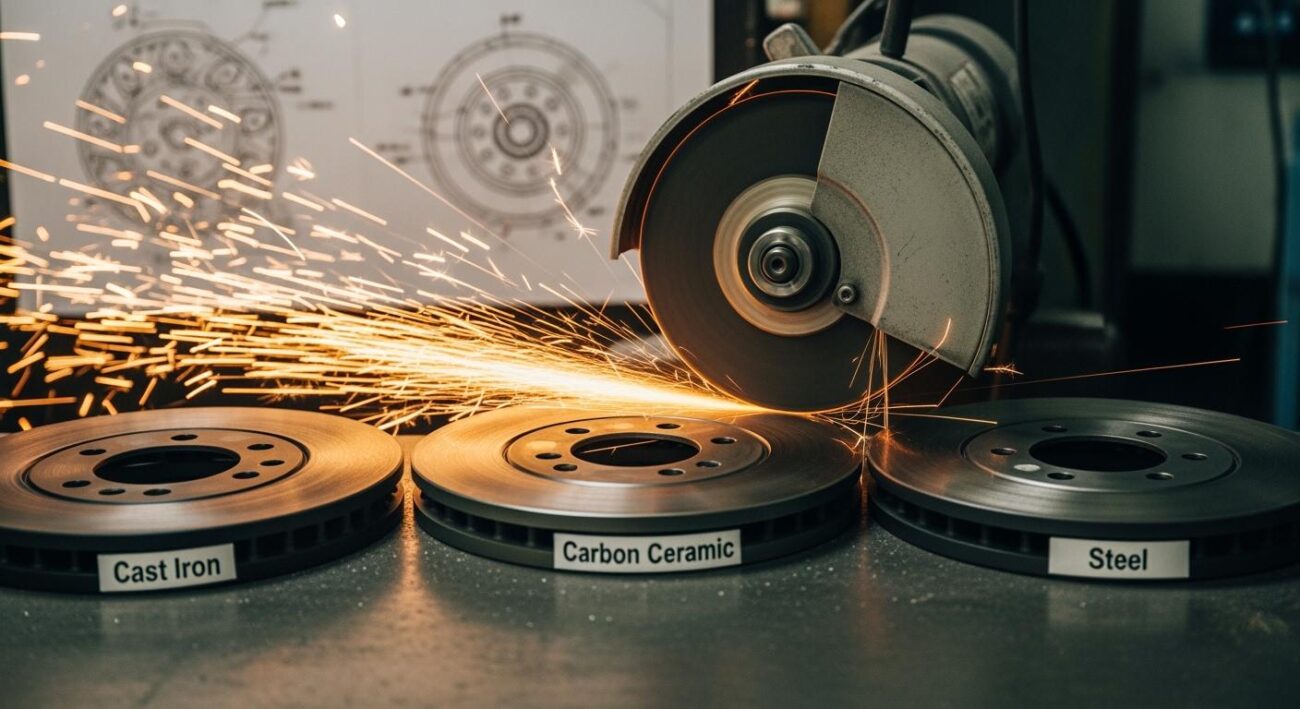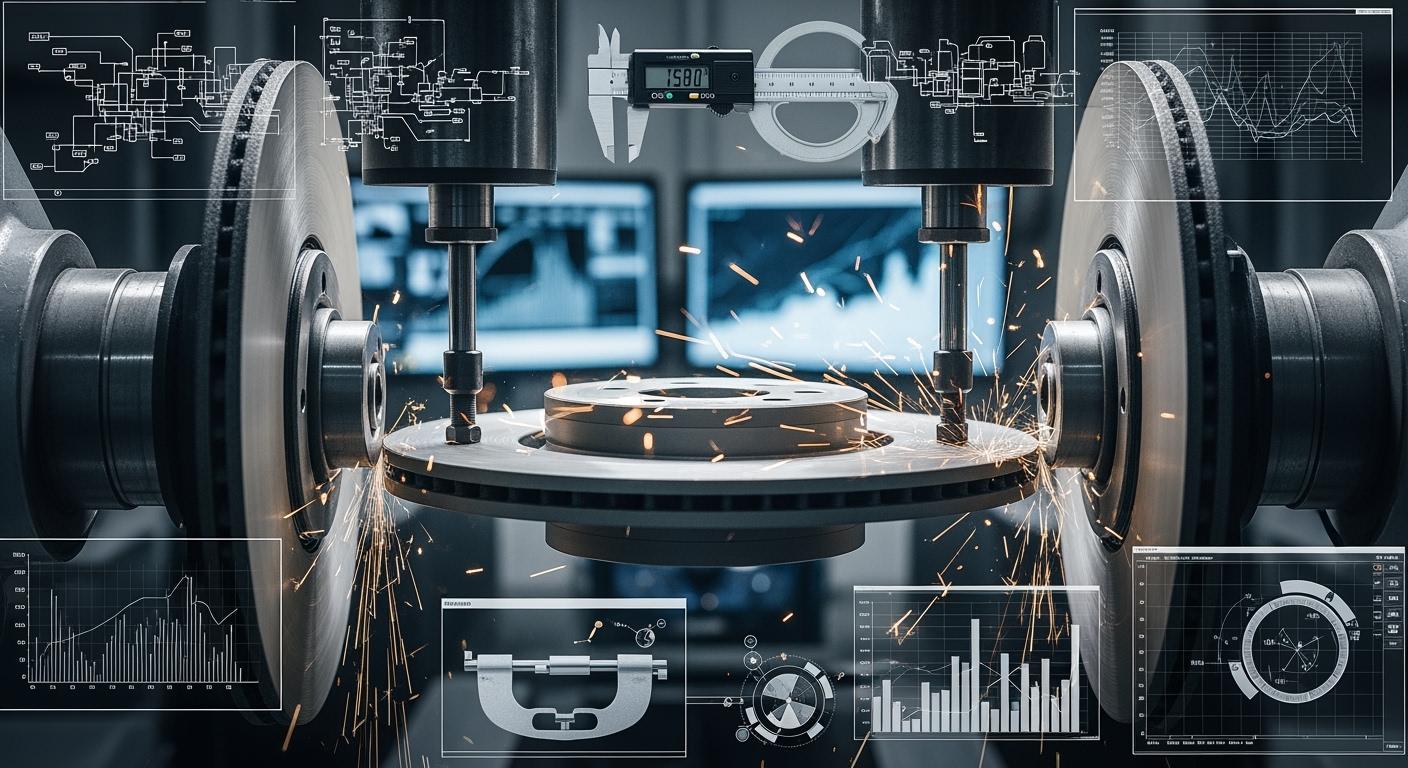
Double-disc grinding plays a vital role in making automotive brake discs safe and reliable. This process shapes each disc with high precision and creates surfaces that are smooth and even. Studies show that a fine surface finish improves how brake pads contact the disc, which leads to quieter and more effective braking. When thickness variation stays below 0.013 mm, the disc wears evenly and resists shuddering or vibration. Advanced grinding solutions from Aimgrind help manufacturers meet these strict standards for performance and safety.
Key Takeaways
- Double-disc grinding ensures high precision and flatness in brake discs, crucial for safe and effective braking.
- Using Aimgrind super hard abrasives leads to smoother surfaces, enhancing brake performance and reducing noise.
- Regular inspections and monitoring during the grinding process help catch defects early, ensuring high-quality brake discs.
- Data-driven improvements and automation in grinding processes increase efficiency and reduce downtime in production.
- Proper maintenance and operator training are essential for maximizing the performance of double-disc grinding machines.
Why Double-Disc Grinding Matters for Brake Discs
Precision and Parallelism in Automotive Applications
Automotive brake discs must meet strict standards for thickness and flatness. Double-disc grinding helps manufacturers achieve these goals. This process grinds both sides of the disc at the same time. As a result, the disc stays flat and even. Many factories use double-disc grinding because it can reach a parallelism tolerance of 0.0005 inches. This level of accuracy is important for safe and smooth braking. The process is also popular in high-volume production, where every part must match exact measurements.
Note: Double-disc grinding is widely used for automotive components, especially when close tolerances are needed.
Performance and Safety Benefits
Brake discs with precise surfaces work better and last longer. Double-disc grinding creates a smooth finish that helps brake pads grip the disc evenly. This reduces noise and makes braking more reliable. When discs have the same thickness across their surface, they wear evenly and resist vibration. This means drivers feel safer and more comfortable on the road.
Comparison with Other Grinding Methods
Double disc grinding stands out when compared to single-disc grinding. The table below shows some key differences:
| Feature | Double-Disc Grinding | Single-Disc Grinding |
|---|---|---|
| Tolerances | Tighter | Looser |
| Contact Area | Up to 99% | Lower |
| Precision | Higher | Lower |
| Tool Costs | Lower | Higher |
Double-disc grinding also offers better efficiency and quality than other grinding methods. The process improves part quality and reduces the need for regrinding. It uses advanced controls and programming, which helps factories save time and money.
| Aspect | Double-Disc Grinding | Other Grinding Methods |
|---|---|---|
| Part Quality | Improved part quality with reduced regrinding needs | Varies, often requires more regrinding |
| Process Efficiency | Enhanced performance and cost-effectiveness | Generally less efficient |
| Technology Advancements | Incorporates advanced controls and programming | May lack modern technological integration |
Double-Disc Grinding Process Overview
Workpiece Preparation and Loading
The process begins with careful preparation of the brake disc blanks. Workers first pre-turn the blanks to achieve the correct shape and size. Some discs receive a laser coating to improve durability. After coating, the surface is rough and needs further work. Operators load the discs onto the double-disc grinder, making sure each part is aligned correctly. Proper alignment helps maintain tight tolerances and prevents shape deviations. The machine feeds the parts between two counter-rotating grinding wheels. This step sets the stage for high-precision grinding.
Grinding Wheel Selection with Aimgrind Super Hard Abrasives
Grinding wheel selection plays a key role in precision grinding. Aimgrind offers super hard abrasives made from diamond and cubic boron nitride (CBN). These materials provide unmatched hardness and durability. When manufacturers choose Aimgrind super hard abrasives, they get wheels that stay sharp longer and deliver consistent results. The wheels handle tough materials and maintain their shape under high pressure. This leads to better surface finishes and reduces downtime for wheel changes. Aimgrind customizes each wheel to match the specific needs of the process, ensuring optimal performance for every brake disc.
Tip: Using Aimgrind super hard abrasives helps achieve the fine surface finish needed for brake discs, often reaching a roughness of 5 µm or better.
Simultaneous Grinding on Double-Sided Grinders
Double-disc grinding machines process both sides of the brake disc at the same time. This simultaneous grinding improves efficiency and consistency. The process reduces overall processing time compared to single-side grinding. It also ensures that each disc has uniform thickness and flatness. This is important for brake performance and safety. Double disc grinding achieves tight tolerances and superior flatness, which are essential for high-quality manufacturing. Factories can increase throughput and maintain high standards across large batches.
- Simultaneous grinding enhances efficiency.
- The process ensures uniformity and precision.
- It is critical for maintaining performance and safety in automotive applications.
Cooling and Lubrication Systems
Cooling and lubrication systems protect the workpiece and grinding wheels during the process. These systems reduce heat and prevent thermal damage. Factories use several types of cooling and lubrication methods. The table below shows some common systems and their effectiveness:
| Cooling/Lubrication System | Effectiveness in Minimizing Thermal Damage |
|---|---|
| Cryo-grinding | Significantly reduces thermal damage and improves surface quality |
| Minimum Quantity Lubrication (MQL) | Environmentally friendly with reduced coolant usage |
| Hybrid MQL-CO2 systems | Enhances lubrication while lowering heat generation |
Cooling systems are essential for precision grinding. Recent trends include hybrid systems that combine MQL with CO2 for better performance. These methods help maintain the quality of the surface and extend the life of the grinding wheels.
Unloading and Initial Inspection
After grinding, operators unload the finished brake discs. The process includes an initial inspection to check for quality. Workers inspect the discs at regular intervals, following manufacturer and regulatory guidelines. They look for signs of wear, damage, or corrosion. Inspectors check the rotors for scoring, heat cracks, and thickness variations. They also examine brake lines and hoses for leaks or abrasions. This careful inspection ensures that only high-quality discs move to the next stage of production.
Note: Regular inspections help catch defects early and maintain high standards for safety and performance.
Key Parameters in Double Disc Grinding
Tolerance and Flatness Control
Manufacturers focus on tight tolerances and flatness when producing brake discs. These parameters ensure each disc meets strict industry standards for safety and performance. Operators use several steps to maintain accuracy during grinding:
- Workers load each disc onto carriers or secure them with vacuum or chuck systems.
- The abrasive wheel, often made with diamond or CBN, rotates against the disc surface.
- Operators control pressure, rotation speed, coolant flow, and dwell time with precision.
- Multiple passes help achieve the required flatness, thickness, and finish.
This careful process allows factories to deliver discs with consistent thickness and minimal variation. High accuracy in grinding leads to better brake performance and longer disc life.
Surface Finish and Roughness
Surface finish plays a major role in how well a brake disc performs. Grinding must create a smooth surface with low roughness. A fine finish helps the brake pad contact the disc evenly. This reduces noise and improves stopping power. Operators measure roughness using specialized tools. They adjust grinding parameters to reach the desired finish. Consistent surface quality ensures each disc meets safety standards and customer expectations.
Tip: A smoother surface finish on the disc can help prevent early wear and reduce the risk of vibration during braking.
Managing Thermal Effects and Deformation
Grinding generates heat, which can cause deformation in the disc if not managed properly. Factories use several methods to control temperature and prevent damage. The table below shows common approaches:
| Method | Description |
|---|---|
| Multiscale simulation approach | Considers grain engagement, heat generation, and coolant interaction to predict grinding forces. |
| Temperature modeling | Provides a comprehensive overview of approaches for managing thermal effects in grinding. |
| Analytical methods | Used for shallow, deep, and creep feed grinding to assess temperature and energy partitioning. |
These strategies help maintain the shape and strength of each disc. Proper cooling and monitoring protect both the grinding wheel and the workpiece. This attention to detail ensures every disc leaves the factory ready for safe use.
Quality Assurance in Double-Sided Grinding
In-Process Monitoring Techniques
Operators use several monitoring techniques during double-sided grinding. Sensors track the position and pressure of each disc. Machines measure the force between the grinding wheels and the workpiece. These sensors help detect any changes in the process. If a problem appears, the system alerts the operator. Some factories use acoustic emission sensors. These sensors listen for unusual sounds that signal wheel wear or part damage. Real-time data helps workers adjust the process quickly. This keeps the grinding operation stable and reduces the risk of defects.
Post-Grinding Inspection Methods
After grinding, workers inspect each brake disc to ensure it meets strict standards. They use micrometers and dial gauges to check thickness and flatness. Surface roughness testers measure how smooth the disc feels. Some factories use automated vision systems. These systems scan the disc for cracks, chips, or uneven surfaces. The table below shows common inspection tools and their uses:
| Inspection Tool | Purpose |
|---|---|
| Micrometer | Measures disc thickness |
| Dial Gauge | Checks flatness |
| Surface Roughness Tester | Evaluates surface finish |
| Vision System | Detects visual defects |
Regular inspections help maintain high quality and safety for every brake disc.
Preventing Common Defects
Defects can appear during grinding if the process is not controlled. Operators watch for signs like burns, cracks, or uneven wear. They adjust wheel speed, pressure, and coolant flow to prevent these problems. Using high-quality grinding wheels, such as those from Aimgrind, reduces the chance of defects. Training and clear procedures also help workers avoid mistakes. Factories keep records of each batch to trace any issues. This careful approach ensures that each disc meets the required standards for performance and safety.
Tip: Early detection and quick action can stop small problems from becoming bigger defects.
Optimizing Double-Sided Grinding with Aimgrind Solutions
Data-Driven Process Improvements
Factories use data to improve double-sided grinding. Sensors on double-sided grinders collect information about speed, pressure, and temperature. Operators review this data to find ways to make double-sided grinding more efficient. Aimgrind provides grinders that support real-time monitoring. These grinders help teams spot problems early. Data helps workers adjust double-sided grinders for better results. When teams use Aimgrind super hard abrasives, they see fewer wheel changes and more consistent double-sided grinding. This leads to higher quality brake discs.
Tip: Data from double-sided grinders can show when to replace wheels or adjust settings for better double-sided grinding.
Integration with Manufacturing Lines
Automotive factories need double-sided grinders that fit into busy production lines. Aimgrind designs double-sided grinders for easy integration. These grinders work with robots and conveyors. Teams can set up double-sided grinding to match the speed of other machines. This keeps the line moving smoothly. Double-sided grinders from Aimgrind connect with factory software. Operators track double-sided grinding progress and spot delays. This helps factories keep up with demand.
| Integration Feature | Benefit for Double-Sided Grinding |
|---|---|
| Robot compatibility | Faster loading and unloading |
| Software connectivity | Real-time tracking of double-sided grinding |
| Modular design | Easy upgrades for double-sided grinders |
Maintenance and Wheel Conditioning
Regular care keeps double-sided grinders working well. Aimgrind grinders use super hard abrasives that last longer. Workers clean and check double-sided grinders every day. They look for signs of wear on the wheels. Aimgrind grinders make wheel changes simple. Teams use special tools to dress and condition wheels. This keeps double-sided grinding sharp and accurate. Good maintenance means fewer breakdowns and better double-sided grinding.
Operator Training and Automation
Well-trained workers get the best results from double-sided grinders. Aimgrind offers training for double-sided grinding. Operators learn how to set up grinders and check quality. Automation helps too. Many double-sided grinders from Aimgrind use sensors and smart controls. These grinders adjust double-sided grinding settings on their own. This reduces mistakes and keeps double-sided grinding consistent. Factories that use Aimgrind double-sided grinders see better safety and higher output.
Note: Training and automation together help teams get the most from double-sided grinders and double-sided grinding.
Double-disc grinding shapes high-quality brake discs for the automotive industry. Many manufacturers choose this method because it delivers fast results and precise surfaces.
- Machines like the VLC 450 DG handle coated brake discs with accuracy.
- Aimgrind super hard abrasives help factories achieve smooth finishes and long-lasting tools.
“Double-sided grinding is favored by machine manufacturers because, according to Wöhrle, it guarantees simultaneous machining of both friction ring surfaces, high throughput rates and short cycle times.”
Manufacturers should keep improving their processes. They can contact Aimgrind to upgrade their grinding solutions.
FAQ
What is double-disc grinding?
Double-disc grinding uses two grinding wheels to finish both sides of a brake disc at the same time. This method creates flat, even surfaces and helps keep the disc the same thickness all over.
Why do manufacturers use super hard abrasives from Aimgrind?
Super hard abrasives from Aimgrind, like diamond and CBN, last longer and cut more precisely than regular abrasives. They help factories make smoother, more accurate brake discs with less downtime.
How does double-disc grinding improve brake disc safety?
Double-disc grinding creates discs with even thickness and smooth surfaces. This helps brake pads grip better and reduces noise or vibration. Drivers get safer and more comfortable braking.
What steps help prevent defects during grinding?
Operators use sensors, regular inspections, and high-quality wheels. They adjust machine settings and follow strict procedures. These steps help catch problems early and keep each disc safe and reliable.
Contact Us
For More Grinding Solution or Customized Abrasive Tools