

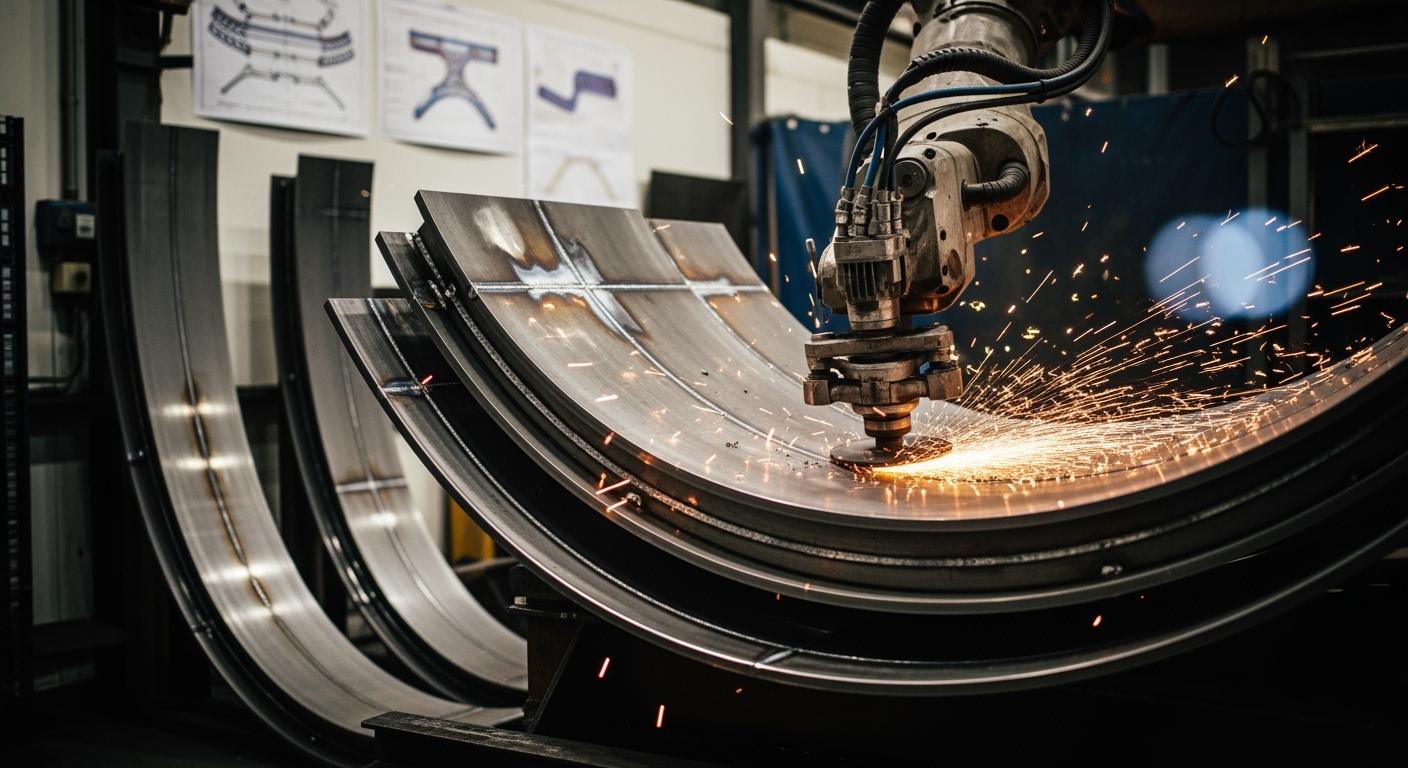
You face many challenges when grinding large curvature arc plates and complex welding joints. Contour grinding technology gives you advanced solutions. Aimgrind offers CBN grinding wheels that help you achieve high precision and efficiency. You see innovations like CNC and 5-axis contour machines, which improve grinding and welding results. Automation and robot systems make your grinding tasks faster and more consistent. Contour-profiled grinding wheels can handle different shapes and last much longer. You benefit from quality, innovation, and efficiency with modern technology in grinding and welding applications.
Key Takeaways
- Contour grinding technology enhances precision and efficiency in shaping complex surfaces, making it essential for large curvature arc plates and joint welds.
- Aimgrind CBN grinding wheels provide superior hardness and thermal stability, leading to smoother surfaces and fewer defects during grinding.
- Automation in grinding processes reduces manual labor, increases consistency, and improves overall quality, allowing for faster and more accurate results.
- Regular maintenance and proper training for your team are crucial for maximizing the performance and longevity of grinding equipment.
- Using mobile welding robots can significantly enhance the efficiency and quality of weld seam grinding, especially in complex applications.
Challenges in Grinding and Welding Applications
Material and Shape Complexity
You often face many challenges when working with large curvature arc plates in grinding and welding. The surface of these plates does not stay flat or simple. You must handle complex shapes that curve in many directions. This makes the grinding process harder because you need to keep the accuracy high on every surface. In each application, you must adjust your grinding tools to match the changing surface. The welding process also becomes more difficult when the surface is not even. You need to control the welding process carefully to avoid mistakes. Every time you work on a complex plate, you must check the accuracy of your grinding and welding. This helps you keep the quality of the final product high.
Weld Joint Irregularities
You see many irregularities in the welding process. Sometimes, the weld joint does not line up well. You may find leftover flash or uneven surfaces after welding. These problems make the grinding process longer and harder. You must spend more time fixing the surface to reach the right accuracy. If you do not fix these irregularities, the weld may not meet the quality standards. Cracks, porosity, and incomplete fusion can appear in the weld. These defects lower the strength of the weld and can cause safety risks in your application. You may need to grind more or even redo the welding process. This increases your labor and affects the final quality of your product.
Quality and Precision Needs
You must meet strict quality and accuracy standards in every grinding and welding application. Modern manufacturing needs you to keep the surface smooth and the weld height within a small range. Studies show that using a good model for grinding depth can cut errors in half. You can keep the average weld height at 0.15 mm and the maximum at 0.18 mm. This level of accuracy helps your product last longer and work better. You need to check the surface after every grinding and welding process. Keeping high accuracy in each application means you deliver safe and strong products. You help your company meet industry standards and keep customers happy.
Contour Grinding Technology Solutions
Principle and Process Overview
You use contour grinding technology to shape and finish complex surfaces. This technology helps you handle large curvature arc plates and joint welds. You follow a process that starts with careful planning. You select the right grinding wheel and set the machine for the job. You move the grinding wheel along the contour of the workpiece. The process removes material and smooths the surface. You check the shape and accuracy after each step. You repeat the process until you reach the desired contour and finish. You rely on technology to guide the grinding wheel and keep the process precise. You see how contour grinding technology improves the quality of your work.
You use contour grinding technology to match the shape of the workpiece. You follow the contour and avoid mistakes. You keep the grinding process consistent. You use technology to control the speed and depth. You adjust the grinding wheel for each contour. You finish the process with a smooth and accurate surface. You see how contour grinding technology helps you achieve high standards.
Tip: You can improve your grinding results by planning each step of the process and checking the contour often.
Key Equipment and Automation
You need special equipment for contour grinding technology. You use contour grinders to shape and smooth complex geometries. These machines come in manual, semi-automatic, and fully automated systems. You choose the right machine based on your grinding needs. You use adjustable axes to move the grinding wheel and workpiece in many directions. You rely on technology to make the process easier.
You see CNC technology in modern contour grinders. You use CNC to program the grinding process. You set the contour and let the machine follow it. You use automation to improve precision and efficiency. You see repeatable results and consistent quality. You reduce manual labor and streamline your operations. You use automated welding robots to handle complex joint welds. You combine grinding technology with automated welding to finish the process faster.
- Contour grinders help you shape complex parts.
- Automated welding robots work with grinding technology to improve the process.
- CNC technology lets you program the contour and automate the grinding process.
- Adjustable axes allow you to move the grinding wheel and workpiece for better results.
You see how automation makes the grinding process more efficient. You get consistent results and save time. You use technology to keep your grinding process accurate.
Role of Aimgrind CBN Grinding Wheels
You use Aimgrind CBN grinding wheels to enhance contour grinding technology. These wheels help you grind hard materials with precision. You see faster cutting and cooler operation during the process. You rely on Aimgrind CBN wheels for long-lasting performance. You use them for grinding large curvature arc plates and complex joint welds. You trust the technology behind Aimgrind products.
You choose Aimgrind CBN grinding wheels for their hardness and thermal stability. You use them in automated welding and grinding systems. You see how these wheels keep their shape and sharpness. You get consistent results in every grinding process. You use Aimgrind CBN wheels in CNC contour grinders and automated welding robots. You match the grinding wheel to the contour of the workpiece. You finish the process with high-quality surfaces.
Note: Aimgrind CBN grinding wheels help you achieve better results in contour grinding technology. You get reliable performance and improved efficiency.
You use Aimgrind CBN grinding wheels to support automated welding and grinding technology. You see how these wheels make the process smoother and more accurate. You rely on Aimgrind for advanced grinding solutions.
Grinding Large Curvature Plates
Process Steps and Automation
You start the grinding process by preparing the curved arc plate. You check the contour and mark the areas for material removal. You select the right grinding wheel for the job. You set up the machine and adjust the settings for the curved surface. You use contour grinding technology to follow the shape of the plate. You move the grinding wheel along the contour and control the removal of material. You monitor the process and check the grinding quality at each step.
You use automation to improve grinding efficiency. You program the machine to follow the contour of the curved plate. You let the system handle the removal process with precision. You use sensors to track the grinding quality and adjust the process as needed. You rely on technology to keep the grinding process consistent. You see how automation helps you achieve better grinding quality and faster removal.
Tip: You can use automated contour grinding machines to reduce errors and improve grinding efficiency.
Quality Improvements with Aimgrind
You notice big improvements in grinding quality when you use Aimgrind CBN grinding wheels. You see smoother surfaces and more accurate contours. You get better removal rates and less heat during the process. You use Aimgrind solutions to handle curved plates with complex contours. You check the grinding quality after each removal step.
You compare the results before and after using Aimgrind products. You see fewer defects and higher grinding efficiency. You use a table to track the improvements:
| Step | Before Aimgrind | After Aimgrind |
|---|---|---|
| Surface Finish | Rough | Smooth |
| Contour Accuracy | Low | High |
| Removal Rate | Slow | Fast |
| Grinding Quality | Inconsistent | Consistent |
You rely on Aimgrind technology to keep the grinding process stable. You achieve high grinding quality on curved arc plates. You trust Aimgrind solutions for reliable removal and precise contour grinding.
Welding Joint Grinding with Mobile Robots
Complex Weld Seam Solutions
You face many challenges when you work with complex curved welds. The weld seam often changes shape and direction. You need to keep the grinding process accurate. Mobile welding robot technology helps you solve these problems. You use a mobile welding robot to follow the weld seam. The robot moves along the complex weld and adjusts its grinding tool. You see how the robot weld grinding system keeps the grinding process steady. You use a robotic welding system to handle complex weld seams. The robot can reach hard-to-access areas and grind the weld seam with precision.
You use mobile welding robots for weld grinding on large structures. The robot follows the weld seam and keeps the grinding process consistent. You see how the robot weld grinding system improves the quality of complex welds. You use the robot to grind the weld seam and remove defects. The robot keeps the grinding process smooth and accurate. You rely on mobile welding robots to handle complex curved welds and difficult weld seams.
Tip: You can use a mobile welding robot to grind complex weld seams and improve welding efficiency.
Efficiency and Consistency Gains
You want to increase efficiency in your grinding and welding process. Mobile welding robots help you achieve this goal. You use a robot weld grinding system to speed up the process. The robot moves along the weld seam and grinds the weld with steady force. You see how the robotic welding system keeps the grinding process consistent. You use mobile welding robots to reduce errors and improve welding efficiency.
You track the efficiency gains with a table:
| Process Step | Manual Grinding | Robot Weld Grinding |
|---|---|---|
| Grinding Speed | Slow | Fast |
| Consistency | Low | High |
| Weld Seam Quality | Variable | Stable |
| Welding Efficiency | Low | High |
You use mobile welding robots to grind weld seams on many projects. The robot keeps the grinding process fast and accurate. You see fewer mistakes and better weld seam quality. You rely on mobile welding robots to improve efficiency and consistency in weld grinding.
Traditional vs. Contour Grinding Methods
Performance and Cost Comparison
You see big differences when you compare traditional grinding with contour grinding technology. Traditional grinding often gives you variable surface quality and texture. The grain size and density of the grinding wheel change the results. You notice that the contact geometry affects the finish. Sometimes, you get rough surfaces or uneven contours. Contour grinding technology, especially with advanced machines like wire EDM, gives you more uniform textures. You control fine features better. The inner corner radius of form contours stays smaller and more precise. You handle complex geometries and fine concavities with ease. Contour grinding helps you achieve high accuracy on large curvature arc plates. You spend less time fixing mistakes. You save money because you reduce rework and material waste. You improve efficiency by finishing jobs faster. You use robotic grinding to automate the process. Robots follow the contour and keep the grinding consistent. You see how robotic grinding boosts efficiency and lowers labor costs. You rely on contour grinding for better performance and cost savings in welding and weld grinding applications.
Safety and Consistency
You improve safety and consistency when you switch from traditional grinding to contour grinding technology. You use CNC machines to reach micron-level accuracy. You get repeatable results every time. You protect yourself from injury because automation handles heavy equipment. You depend less on operator skill. You see consistent performance with robotic grinding and robot weld grinding systems. You trust robots to keep the grinding steady. You use robotic grinding to produce similar parts over long runs. You notice fewer mistakes and higher efficiency. You rely on robots to keep the welding and weld grinding process safe and reliable.
- CNC grinding gives you precision and repeatability.
- Automation reduces injury risk during grinding and welding.
- Robots maintain consistent grinding and weld grinding results.
- You depend less on operator skill for quality.
- Robotic grinding ensures reliable production over time.
- You see stable weld grinding quality with robot systems.
- You boost efficiency and safety with robotic grinding and welding robots.
- Robots handle complex weld grinding tasks with ease.
- You trust robotic grinding for consistent results in welding applications.
- You achieve high efficiency and safety with robot weld grinding.
Tip: You can use robotic grinding and robot weld grinding systems to improve safety and consistency in your welding and grinding operations.
Best Practices for Implementation
Tips for Success
You can achieve great results with contour grinding technology in your shop. Start by adjusting machine parameters like wheel speed, feed rate, and depth of cut. This helps you balance material removal and surface finish during grinding. Always make sure your workpiece is clamped tightly. This keeps the grinding process stable and accurate. Use coolant to reduce heat and improve the surface quality. You should check the grinding wheel often and dress it when needed. Clean your machine after each grinding job to prevent debris from building up. Lubricate moving parts as the manufacturer recommends. Check machine alignment and calibration to keep your grinding precise. Watch for vibration during grinding. If you notice any, fix the problem right away.
You may face challenges when you use grinding technology for welding jobs. Sometimes, CBN grinding speeds have limits. You can solve this by working with experts and using new grinding methods. Lightweight materials can be hard to grind. Use advanced grinding techniques to handle these materials. You can use CNC-based grinding machines to make setup faster and more flexible. Parametric canned cycles help you save time in moldmaking.
| Challenge | Solution |
|---|---|
| Limitations of CBN grinding speeds | Work with research teams and use new grinding processes |
| Lightweight material grinding challenges | Use advanced grinding technology and special grinding methods |
Tip: Use a robot for grinding and welding tasks. A robot can follow complex shapes and keep your grinding and welding consistent.
Maintenance and Training
You need to keep your grinding equipment in top shape. Make sure you use enough coolant during grinding. This cools the grinding zone and helps your grinding wheel last longer. Dress and true your grinding wheel often. Dressing exposes new abrasive grains for better grinding. Truing fixes any wheel shape problems. Store your grinding wheels in a cool, dry place. Do not stack them to avoid damage.
Train your team to use grinding and welding machines safely. Teach them how to set up the grinding wheel and use the robot for welding and grinding. Show them how to check the grinding quality and fix problems. Remind them to clean and lubricate the grinding machine after each job. Good training helps you get the best results from your grinding, welding, and robot systems.
Note: Regular maintenance and training keep your grinding, welding, and robot operations safe and efficient.
You see how contour grinding technology and Aimgrind CBN grinding wheels help you solve the toughest grinding and welding challenges. You use grinding machines with CNC and multi-axis control to shape large curvature arc plates. You trust grinding robots to follow complex welding seams. You rely on grinding robots to use 3D data and smart algorithms for precise grinding. You notice that grinding robots improve welding quality and reduce errors. You use grinding robots to finish welding jobs faster and safer. You depend on grinding robots to keep your grinding and welding work consistent. You save time and money with grinding robots in your welding shop. You see that grinding robots make welding safer for everyone. You can expect grinding and welding robots to become even smarter and more important in the future.
FAQ
What is contour grinding technology?
You use contour grinding technology to shape and finish surfaces with curves or complex profiles. This method helps you achieve smooth and accurate results on arc plates and joint welds. You rely on special machines and grinding wheels for this process.
Why should you choose Aimgrind CBN grinding wheels?
You choose Aimgrind CBN grinding wheels because they help you grind hard materials with precision. These wheels last longer and keep your grinding process cool. You see better results and fewer defects when you use Aimgrind products for grinding tasks.
How does automation improve grinding quality?
You use automation to make grinding faster and more consistent. Automated machines follow the contour and control grinding depth. You see fewer mistakes and higher quality. Robots help you grind complex welds and plates with steady force and accuracy.
Can you use grinding robots for welding joint grinding?
You use grinding robots to handle welding joint grinding. Robots move along the weld seam and adjust their grinding tools. You see improved efficiency and consistent grinding results. Robots help you reach difficult areas and keep the grinding process stable.
What maintenance steps help your grinding equipment last longer?
You clean your grinding machines after each job. You dress and true your grinding wheels often. You use coolant to keep the grinding zone cool. You store grinding wheels in a dry place. You train your team to check grinding quality and fix problems quickly.
Contact Us
For More Grinding Solution or Customized Abrasive Tools