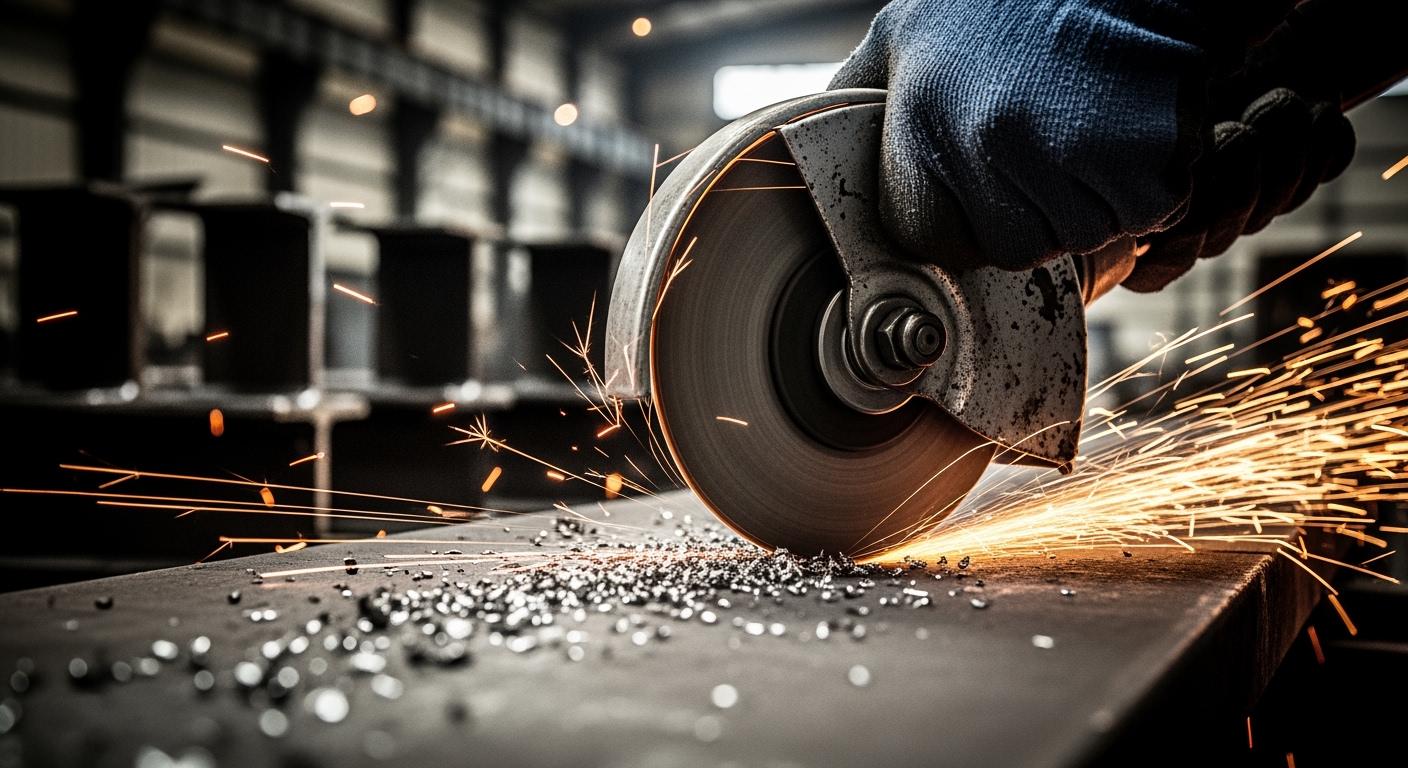
You need to focus on grinding wheel selection to achieve efficient results when working on large-area metal structures. Matching the grinding wheel’s type, material, grit, and size to your application improves cutting efficiency, extends tool life, and ensures a high-quality finish. The table below shows how each factor impacts grinding performance:
| Key Factor | Impact on Grinding Efficiency |
|---|---|
| Material Type | Matching abrasives to materials ensures efficient cutting and extends tool life. |
| Application | Different tasks require specific tools; aggressive wheels for weld removal vs. finer abrasives for surface prep. |
| Speed and Efficiency | High-performance tools save time while maintaining quality, crucial for operational efficiency. |
| Durability | Longer-lasting tools reduce replacements, minimizing downtime and improving cost-effectiveness. |
| Tool Geometry and Size | Correct size and shape enhance precision and material removal efficiency. |
| Heat Management | Advanced bonding technologies reduce heat generation, preserving material integrity and tool life. |
Aimgrind provides expert guidance and custom grinding wheel solutions for your unique needs. You should always consider both technical requirements and practical factors for optimal grinding results.
Key Takeaways
- Select the right grinding wheel based on the material type and application demands to enhance efficiency and tool life.
- Match grit size to your project goals: use coarse grits for fast material removal and fine grits for a smooth finish.
- Choose the appropriate bond type for your grinding needs; resin bonds are great for cool cutting, while metal bonds offer durability.
- Always verify the grinding wheel’s RPM rating to ensure safety and prevent accidents during operation.
- Regularly maintain your grinding wheel through dressing and timely replacement to ensure optimal performance and safety.
Grinding Wheel Selection Criteria
Application Demands
You need to start grinding wheel selection by looking at the demands of your application. The material you work with, the area of contact, the grinding pressure, and the finish requirements all play a role. Each factor changes how the grinding wheel performs and how much productivity you achieve.
- Material: Different metals require different abrasives. Aluminum oxide works best for carbon steel and alloy steel. Zirconia alumina is tougher and suits rough grinding. Ceramic aluminum oxide is strongest for precision grinding on hard steels. Silicon carbide is best for non-ferrous metals.
- Area of Contact: Large-area grinding needs wheels that can handle wide surface contact. Softer grades are ideal for hard metals and large surfaces. Medium grades balance rapid stock removal and longer life. Harder grades fit soft metals and smaller contact areas.
- Grinding Pressure: Higher grinding pressure can improve surface finish quality. You must balance pressure to avoid excessive tool wear.
- Finish Requirements: The grain size of the grinding wheel affects surface roughness. For rough grinding, use a grain size of 40–60 mesh. For finish grinding, choose 60–100 mesh. Fine grinding needs 100–320 mesh. Larger grains remove material faster, while finer grains give a smoother finish.
Tip: Always match the grinding wheel’s hardness and grain size to your metal and finish needs. This ensures you get the best results for your application.
Here is a table to help you decide which grade fits your needs:
| Grade | Application | Stock Removal | Surface Contact |
|---|---|---|---|
| Softer Grades | Hard metals (tool steels, carbide) | Most important | Large surface contact |
| Medium Grades | Hard and soft metals | Balanced | Medium surface contact |
| Harder Grades | Soft metals | Longer wheel life | Small surface contact |
Aimgrind’s comprehensive service process helps you with grinding wheel selection. You get problem diagnosis, parameter matching, and sample optimization. Aimgrind makes sure your grinding wheel fits your equipment and process. You also benefit from vibration control, burn prevention, and longer tool life.
Productivity vs. Surface Quality
You must decide if you want higher productivity or better surface quality. This choice affects which grinding wheel you select. If you need to remove a lot of material quickly, pick a wheel with larger grains and softer grades. This boosts productivity and saves time. If you want a smooth finish, choose finer grains and harder grades. This improves surface quality but may slow down the process.
Grinding pressure also matters. When you increase grinding pressure, you lower surface roughness and get a finer finish. You must watch for tool wear, though. Too much pressure can shorten the life of your grinding wheel.
Aimgrind helps you balance productivity and surface quality. Their parameter matching process finds the right wheel for your application. You get compatibility with your equipment, reduced vibration, and burn prevention. Aimgrind’s sample optimization ensures you achieve the best results for large-area metal grinding.
Note: Always consider your end goal. If you need fast material removal, focus on productivity. If you need a polished surface, focus on surface quality. Aimgrind’s experts can guide you to the right grinding wheel for your needs.
Grinding Wheel Types and Materials
Abrasive Options
You need to know the main abrasive material choices before making a grinding wheel selection. Each abrasive works best for certain tasks and metals. The most common grinding wheel materials include aluminum oxide, zirconia, ceramic, and diamond. These types of grinding wheels give you different benefits and drawbacks.
Here is a table to help you compare the main abrasive material options:
| Abrasive Type | Benefits | Drawbacks |
|---|---|---|
| Ceramic Abrasive | Longest life, fastest cut rate, self-sharpening | More expensive, brittle under high pressure |
| Aluminum Oxide | Most common, economical, many shapes and sizes | Can overheat workpiece, not for heavy-duty |
| Zirconia | Aggressive removal, durable under high pressure | Not for smooth finishes, can overheat |
You should use aluminum oxide for general grinding wheels for steel. This abrasive material works well for most jobs and costs less. Zirconia abrasive material removes metal quickly and lasts longer under pressure. Ceramic abrasive material gives you the longest life and fastest cutting, but it costs more. Diamond abrasive material stands out for grinding hard alloys and ceramics.
Aimgrind Diamond Grinding Wheels
You can choose Aimgrind diamond grinding wheels for the toughest jobs. These grinding wheels use a diamond abrasive material that cuts hard alloys, ceramics, and composites with high precision. You get a grinding wheel that lasts longer and keeps its shape. Aimgrind offers different bond types, such as resin, metal, and vitrified, to match your process.
When you use Aimgrind diamond grinding wheels, you get faster material removal and a better finish. These grinding wheels work for both wet and dry grinding. You can also ask for custom sizes to fit your equipment. Aimgrind’s grinding wheel materials help you achieve high productivity and quality in large-area metal grinding.
Tip: Always match the abrasive material to your metal and application. This step ensures you get the best results and longest tool life.
Selecting the Right Size Grinding Wheel
Diameter and Thickness
When you start selecting the right size grinding wheel, you need to focus on diameter and thickness. The grinding wheel diameter affects how much surface area you can cover in one pass. A larger diameter lets you grind bigger areas faster. If you work on large metal structures, you should choose a grinding wheel diameter that matches your machine and the size of the workpiece. Small diameter wheels work best for detail work or tight spaces.
Thickness also plays a big role in grinding performance. A thicker grinding wheel gives you more stability and lasts longer during heavy grinding. You should use a thicker wheel for aggressive material removal. If you need a smoother finish or work on delicate parts, a thinner grinding wheel is better. Thinner wheels create less heat and allow for more precise control.
Here are some tips for choosing diameter and thickness:
- Use a large diameter for wide, flat surfaces.
- Pick a small diameter for corners or detailed work.
- Choose a thick grinding wheel for heavy-duty jobs.
- Select a thin grinding wheel for fine finishing.
Tip: Always check your machine’s manual for the recommended grinding wheel diameter and thickness. This helps you avoid problems and keeps your grinding process safe.
RPM Compatibility
You must always match the grinding wheel to your machine’s speed. Each grinding wheel has a maximum RPM rating. If you use a wheel with a lower RPM rating than your machine, you risk serious accidents. The grinding wheel can break apart or even explode.
The table below shows why RPM compatibility matters:
| Safety Notice | Description |
|---|---|
| Safety Notice | Always verify that the maximum RPM rating of your grinding wheel matches or exceeds the operating speed of your machine. Using an incompatible wheel can lead to catastrophic failure, posing serious injury risks. |
| Warning | The most common cause of grinding wheel accidents is mismatched RPM ratings. Using a wheel rated below the machine’s operating speed can result in violent wheel explosion. Always ensure the wheel’s maximum RPM is equal to or greater than the machine’s operating speed. |
You should always check the grinding wheel label for the maximum RPM. Never use a grinding wheel if you are unsure about its speed rating. This simple step keeps you safe and protects your equipment.
Note: Selecting the right size grinding wheel means looking at diameter, thickness, and RPM compatibility. These factors help you achieve efficient, safe, and high-quality grinding.
Grit Size and Wheel Hardness
Coarse vs. Fine Grit
You need to understand how grit size affects your grinding wheel performance. Grit size tells you how coarse or fine the abrasive material is. When you use a coarse grit size, you remove material quickly. This works best for heavy stock removal on large metal structures. Fine grit size gives you more points of contact with the workpiece. You achieve a smoother finish, but the grinding wheel removes material at a slower rate.
Here are some important points about grit size and abrasive material:
- Coarse grits (24–80 mesh) enable rapid stock removal.
- Fine grits (200–600 mesh) yield smooth, precision finishes.
- Finer grits lead to more points of contact, ideal for achieving a smooth finish.
- Coarser grits are used for heavy stock removal, prioritizing speed over finish quality.
- Fine-grit wheels are designed for finishing operations, producing smoother surfaces at a slower material removal rate.
- Grit size determines the abrasive material’s coarseness or fineness.
You should select the right grit size based on your goal. If you want to remove a lot of material fast, choose a coarse grit size. If you need a polished surface, pick a fine grit size. The abrasive material in your grinding wheel must match your application.
Wheel Grade Impact
Wheel grade tells you how hard or soft the grinding wheel is. The grade affects how the abrasive material wears during grinding. Softer grades let abrasive grains break away easily. This prevents glazing when you grind hard materials like tool steel. Harder grades hold the abrasive material longer. You use these grades for softer metals and high stock removal rates.
Here is a table showing how wheel grade impacts grinding wheel performance:
| Grade Type | Characteristics | Applications |
|---|---|---|
| Softer Grades (A-H) | Weaker bond allows abrasive grains to wear away easily, ideal for hard materials. | Grinding hard materials like tool steel, prevents glazing. |
| Harder Grades (I-Z) | Stronger bond resists wear, suitable for softer materials and high stock removal. | Grinding softer materials like aluminum, high stock removal rates. |
You need to match the wheel grade to your metal and grinding needs. Softer grades work well for tough metals. Harder grades suit softer metals and jobs where you want the grinding wheel to last longer. The right abrasive material and grit size help you achieve the best results.
Tip: Always check the grit size and wheel grade before starting your grinding project. This ensures you get the right balance between material removal and surface finish.
Bond Types and Construction
Resin, Metal, Vitrified Bonds
You need to understand how the bond type affects your grinding wheel’s performance. The bond holds the abrasive grains together and shapes how the grinding wheel behaves during use. The three main bond types are resin, metal, and vitrified. Each one has unique strengths and best-fit applications.
Here is a table to help you compare these bond types:
| Bond Type | Benefits | Drawbacks |
|---|---|---|
| Metal | High wear resistance, high thermal resistance, form-holding ability | Poor dressability, higher prices |
| Vitrified | Free-cutting ability, good dressability for ferrous materials | N/A |
| Resin | Cool cut, suitable for wet and dry grinding, low process forces, self-sharpening | Limited application in industry |
You should choose a resin bond when you want a grinding wheel that cuts cool and works for both wet and dry grinding. Metal bonds give you high wear resistance and hold their shape well, which is important for tough jobs. Vitrified bonds offer easy dressing and work well with ferrous metals.
Performance and Longevity
The bond type you select changes how long your grinding wheel lasts and how well it performs. Resin bonds give you a smooth cut and are easy to handle, but they wear out faster on hard materials. Metal bonds last longer and cut aggressively, making them a good choice for hard composites and continuous use. Vitrified bonds provide consistent performance and resist glazing, which helps in industrial grinding.
You should also think about the material you are grinding. Hard materials need harder bonds like metal or vitrified. Tough materials create high grinding forces, so you need a strong bond. If you work with materials that do not conduct heat well, pick a bond that helps keep the grinding wheel cool.
Tip: Always match the bond type to your grinding needs. This step helps you get the best performance and longest life from your grinding wheel.
Matching Grinding Wheel to Application
Weld Removal
When you need to remove welds from large structures, you should choose a grinding wheel designed for fast material removal. A coarse-grain grinding wheel with a grit size between 24 and 36 works best. This grit size helps you flatten weld beads quickly and blend them with the surrounding surface. For tough jobs, select a hard-grade wheel made from zirconia alumina or ceramic grains. These materials give you durability and strong performance under high pressure. You can finish your weld removal faster and keep your grinding wheel working longer.
Surface Finishing
If your goal is a smooth, polished finish, you need to focus on the right grinding wheel and abrasive material. Closed-coat aluminum oxide and silicon carbide are good choices for stainless steel. Ceramic flap discs also work well because they last long and resist heat. Using the right abrasive prevents contamination, which can cause rust. Bonded grinding wheels help you remove material quickly and evenly. Flap discs combine grinding and finishing, saving you time. Keep your motion steady and use the correct angle to get the best finish. This approach helps you avoid heat buildup and keeps your surface smooth.
- When matching grinding wheel specifications to your application, consider:
- Types of grinding wheels
- Materials used in grinding wheels
- Bond types that affect performance
- Grit sizes for different applications
- Diameter and thickness for safety and efficiency
Heavy Stock Removal
For heavy stock removal, you need a grinding wheel that can handle tough jobs. The right specifications make your work more efficient. Look at this table to see how different features affect performance:
| Specification | Impact on Efficiency |
|---|---|
| Grit Size | Coarse grits (24–80 mesh) enable rapid material removal, while fine grits (200–600 mesh) produce smooth finishes. |
| Bond Material | Different bond materials (e.g., bronze for wear resistance, copper for heat conductivity) affect durability and performance. |
| Porosity | High-porosity wheels enhance coolant flow and chip clearance, crucial for heavy-duty grinding operations. |
You should always match your grinding wheel to the specific application. This step helps you get the best results for all grinding wheel applications, from weld removal to finishing and heavy stock removal.
Recommended Grinding Wheels and Brands
Aimgrind Solutions
You want the best grinding wheel for your project. Aimgrind offers diamond grinding wheels that stand out for quality and performance. These wheels work well for hard alloys, ceramics, and composites. You can use them for both rough and fine grinding. If you need grinding wheels for steel, Aimgrind provides options that deliver fast material removal and a smooth finish.
You can ask Aimgrind for custom grinding wheel sizes and shapes. The company helps you match the grinding wheel to your machine and your process. You get support for choosing the best grinding wheel for weld removal, surface finishing, or heavy stock removal. Aimgrind’s experts guide you through the selection process. You receive sample optimization and parameter matching. This service ensures you get the best grinding wheel for your needs.
Tip: Contact Aimgrind for advice on the best grinding wheel for your application. You can visit their website or reach out by phone or email.
Industry Comparisons
You see many brands that offer different types of grinding wheels. Some popular brands include Norton, 3M, and Pferd. These companies make grinding wheels for steel and other metals. You find that each brand has its own strengths. Norton wheels are known for durability. 3M wheels cut fast and stay cool. Pferd wheels offer good value for general use.
When you compare brands, look for the best grinding wheel for your job. Check the abrasive material, bond type, and grit size. Make sure the grinding wheel fits your machine and your safety needs. Aimgrind stands out because you can get custom solutions. You also get expert support and a wide range of grinding wheels.
You should always choose the best grinding wheel for your metal structure. The right grinding wheel improves efficiency and finish quality. You save time and reduce costs with the best grinding wheel for your application.
Common Mistakes and Safety Tips
Avoiding Selection Errors
You can avoid many problems by choosing the right grinding wheel for your job. One common mistake is using a grinding wheel that is too fine for roughing. Fine grits clog quickly and cause overheating. This leads to burns on your workpiece and slows down your grinding process. For rough grinding, you should pick a coarser grit. This helps you remove material faster and keeps the grinding wheel working well.
When you work with aluminum, you need a grinding wheel made for aluminum. Aluminum has a low melting point. If you use the wrong wheel, the metal can gum up and load the wheel. This makes grinding less effective and can damage your part.
You should also think about the area of contact. Large-area grinding needs a coarser grit and a softer grade. This helps the grinding wheel cut better under heavy loads. If you use the wrong grade, you may see poor results or even damage your equipment.
Tip: Always match the grinding wheel to your material and the size of your grinding area. This step helps you avoid common errors and keeps your work safe.
Safe Operation
You must follow safety rules every time you use a grinding wheel. Safe handling and regular checks protect you and your team. Here is a table with important safety protocols:
| Safety Protocols | Description |
|---|---|
| Safe Handling | Use carriers to move wheels. Do not drop or stack them. |
| Pre-Use Inspection | Check wheels for cracks or damage before use. |
| Operating Parameters | Follow the RPM limits and use moderate pressure during grinding. |
| Regular Wheel Dressing | Dress the wheel often to keep it sharp and effective. |
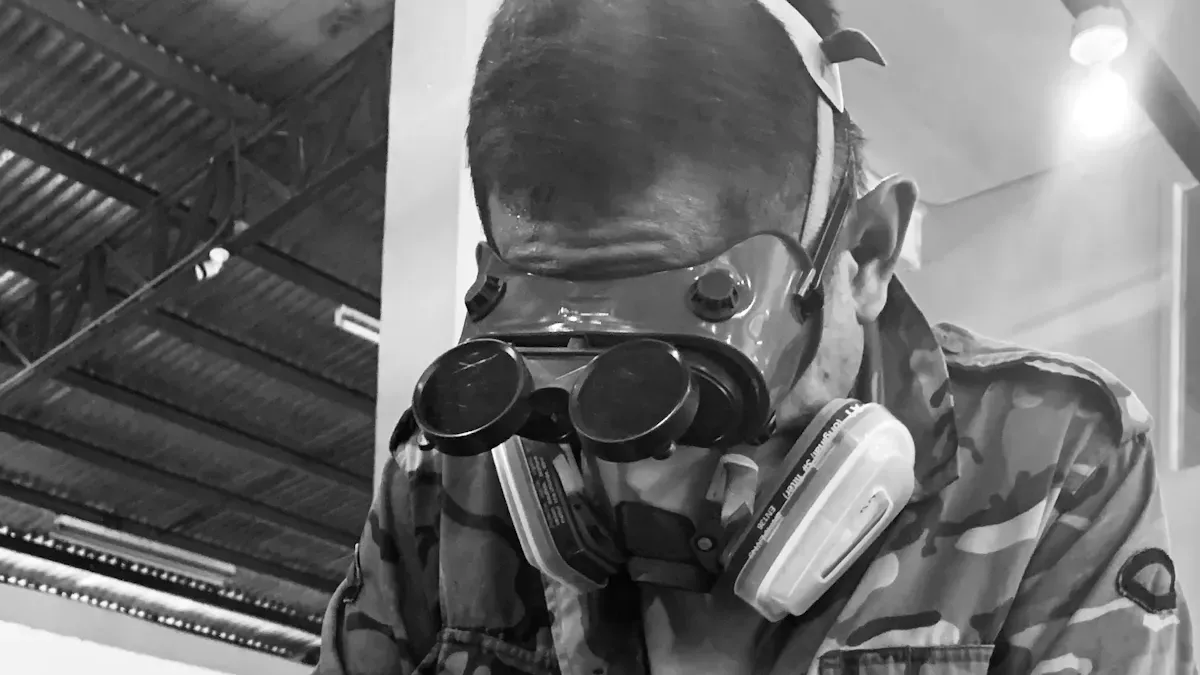
| PPE Usage | Wear cut-resistant gloves and safety goggles at all times. |
You should always inspect your grinding wheel before starting. Look for cracks or chips. Never use a damaged wheel. Wear gloves and goggles to protect your hands and eyes. Follow the speed limits for your machine. Dress the grinding wheel often to keep it sharp. These steps help you stay safe and get the best results from all types of grinding wheels.
Maintenance for Grinding Wheel Efficiency
Storage and Inspection
You protect your grinding wheel by storing it in the right environment. Moisture can damage the wheel and lower its performance. Keep your grinding wheel in a dry and ventilated area. Use racks that support the wheel and prevent vibrations. Do not stack wheels randomly. Limit the stacking height and place protective plates between wheels. This prevents cracks and keeps the wheel safe. If you use rubber or resin bonds, monitor storage time. These materials can age and lose strength.
- Store grinding wheels in dry, ventilated spaces.
- Use racks to avoid vibrations and random stacking.
- Place protective plates between wheels.
- Check storage time for rubber and resin bonds.
Inspect your grinding wheel before every use. Look for cracks, chips, or signs of aging. A damaged wheel can break during grinding and cause accidents. You keep your workspace safe by checking wheels regularly.
Dressing and Replacement
You maintain grinding wheel efficiency by dressing and replacing wheels on time. Dressing restores the wheel’s cutting ability and keeps the surface geometry correct. When you dress the wheel, you remove dull grains and expose fresh abrasive material. This step improves cutting performance and helps you achieve the right grit size for your task.
If you use a dull grinding wheel, you struggle to remove hard materials. The wheel vibrates more and loses precision. You must replace the wheel when it shows signs of wear or damage. Timely replacement prevents premature failure and keeps your process reliable.
| Aspect | Effect on Grinding Efficiency and Surface Quality |
|---|---|
| Regular Dressing | Restores cutting ability and surface geometry |
| Timely Replacement | Prevents premature failure and maintains reliability |
| Consistent Maintenance | Ensures high-quality results and minimizes rework |
You improve cutting performance and prolong tool life with regular maintenance. You also meet industry standards and reduce downtime. Keep your grinding wheel clean and sharp. Dress the wheel often to match the grit size needed for each job. Train operators to follow best practices and use advanced abrasive technologies. Adjust machine settings to fit the wheel and material. These steps help you achieve high-quality results in metal fabrication.
Tip: Regular maintenance keeps your grinding wheel efficient and your workspace safe. You get better results and save time.
You can achieve efficient grinding wheel selection for large-area metal structures by following these steps:
- Choose the right abrasive for your workpiece and application.
- Match grit size to your finish and material needs.
- Select a bond that fits the hardness of your metal and grinding process.
Aimgrind offers custom grinding wheel solutions and expert support for every application. Always prioritize safety and regular maintenance to keep your grinding wheel performing at its best.
FAQ
What is the best grinding wheel for large-area metal grinding?
You should use a grinding wheel with a coarse grit and a strong bond. Aimgrind diamond grinding wheels work well for hard metals and large surfaces. These wheels help you remove material quickly and keep your finish smooth.
How do I choose the right grit size?
You need to match grit size to your task. Use coarse grits for fast material removal. Choose fine grits for smooth finishes. Check your project requirements before picking a grit size.
Tip: Coarse grit (24–80) removes material fast. Fine grit (200–600) gives a polished finish.
Can I use the same grinding wheel for different metals?
You should not use the same wheel for all metals. Each metal needs a specific abrasive. Aluminum oxide works for steel. Diamond wheels suit hard alloys and ceramics. Always check the wheel label for compatibility.
How often should I dress or replace my grinding wheel?
You need to dress your grinding wheel regularly to keep it sharp. Replace the wheel if you see cracks, chips, or heavy wear. Frequent dressing and timely replacement help you get better results and stay safe.