

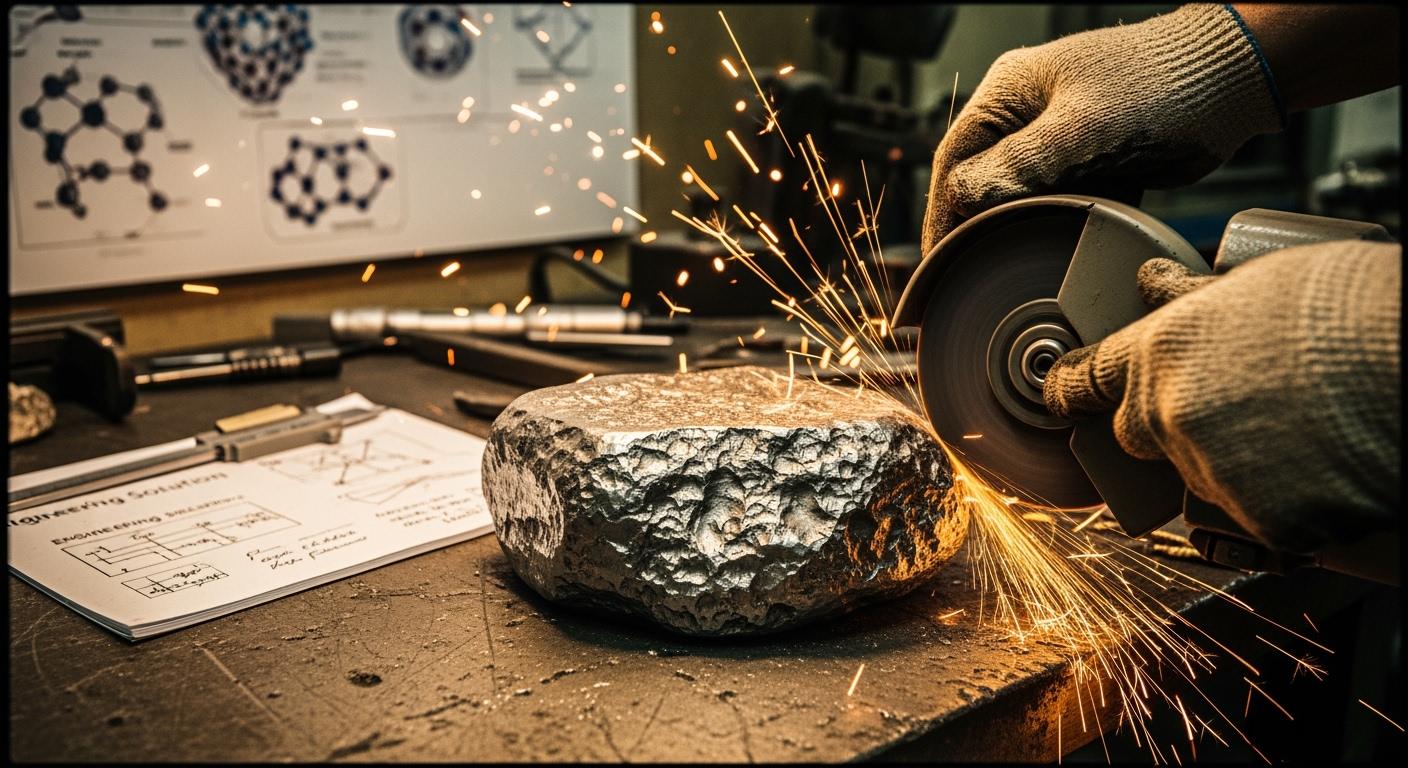
You face tough challenges when grinding superalloy forgings. Tool wear happens fast. High thermal stress can damage your parts. Good surface quality is hard to achieve. You might see rubbing, ploughing, or cutting during the process. These grinding difficulties can lower your productivity and affect your final results. Aimgrind uses super hard abrasives and deep industry experience to help you overcome these problems.
Key Takeaways
- Grinding superalloys is challenging due to their unique properties, including high toughness and poor heat conductivity. Understanding these characteristics is essential for effective machining.
- Tool wear occurs rapidly when grinding superalloys. Using Aimgrind’s super hard abrasives can extend tool life and improve surface finishes, making your process more efficient.
- Heat generation during grinding can damage parts. Implementing effective cooling strategies, like high-pressure cooling, helps control temperatures and reduces tool wear.
- A stable setup and proper fixturing are crucial for achieving consistent results. Ensure your workpiece is secure to minimize vibration and surface defects.
- Regular maintenance and operator training are vital for safety and performance. Inspect equipment frequently and follow safety protocols to maintain a safe working environment.
Why Superalloys Are Hard to Grind
Unique Properties of Superalloys
You work with superalloys because they offer strength and durability. These materials have high toughness and contain special strengthening phases. Their complex microstructures make grinding much harder than with regular metals. Superalloys resist wear and deformation, so your tools struggle to cut through them. You notice that superalloys keep their strength even at high temperatures. This means they do not soften easily during grinding. Their corrosion resistance also makes them last longer, but it adds to the challenge. When you grind superalloys, the surface often work-hardens. This creates a tough layer that slows down your progress and increases tool wear.
Grinding superalloys generates a lot of heat. Their poor heat conductivity causes temperatures to rise quickly. High heat can damage your parts or change their shape. You must control the grinding process carefully to avoid these problems.
Forging Challenges and Material Inconsistencies
Forging superalloys adds another layer of difficulty. The forging process changes the material’s structure and can create inconsistencies. You might see areas with different hardness or grain sizes. These variations make it hard to achieve a smooth surface. Sometimes, forged superalloys have internal stresses. These stresses cause the material to react unpredictably during grinding. You may find that some sections grind faster than others, leading to uneven finishes.
- Common issues you face with forged superalloys:
- Uneven hardness across the part
- Unexpected surface defects
- Increased tool wear in certain areas
You need to adjust your grinding technique for each batch. Industry examples show that aerospace parts often require extra care because superalloys are used for critical components. If you do not manage these challenges, you risk damaging expensive parts or wasting time.
Main Grinding Difficulties
Workhardening and Surface Issues
You face grinding difficulties when you work with superalloys. These materials often work-harden during grinding. The surface becomes tougher after each pass. You see changes in microstructure and mechanical properties. Surface integrity matters, especially for superalloy components in aerospace. You need to watch for subsurface alteration, white layer formation, and hardness variation. Coolants help improve surface quality and reduce roughness. Robotic burnishing methods can strengthen the surface without extra heat.
| Issue | Description |
|---|---|
| Subsurface Material Alteration | Changes in microstructure and mechanical properties due to grinding conditions. |
| Recrystallization | Happens during dry grinding and alters material properties. |
| White Layer Formation | Forms during dry grinding and lowers hardness. |
| Hardness Variation | Different cooling methods cause notable differences in hardness depth. |
| Surface Morphology Improvement | Coolants reduce roughness and improve surface quality. |
| Compressive Residual Stress | High-pressure cooling improves stress states in the workpiece. |
Heat Generation and Poor Conductivity
Grinding superalloys creates a lot of heat. You see high temperatures and strain rates on the surface. The microstructure changes, and mechanical properties shift. For example, after rough grinding inconel, a layer with high hardness and compressive stress forms. Superalloys like hastelloy and rene have low thermal conductivity. Heat builds up and causes thermal distortion. Residual stresses can compromise the structural integrity of high-performance materials. Poor heat conduction disrupts grinding processes and damages the workpiece.
In grinding, the surface material faces high temperature, high strain, and high strain rate. This leads to changes in microstructure and affects mechanical properties. After rough grinding, a layer of high hardness and compressive stress forms on the surface.
Tool Wear and Wheel Failure
You notice rapid tool wear and wheel failure when grinding superalloys. These materials resist deformation and work-harden quickly. Each pass of the cutting tools engages a harder surface. Heat concentrates at the cutting edge and accelerates wear. Grinding difficulties increase as you work with advanced superalloy materials like waspaloy. The pressure and heat cause deformation and hardening of the alloy’s crystal structure. You must replace grinding wheels more often, which adds to manufacturing challenges.
- Exceptional high-temperature strength resists deformation during cutting.
- Rapid work-hardening increases cutting forces and speeds up tool wear.
- Poor thermal conductivity causes heat concentration at the cutting edge.
- Each pass engages a newly hardened surface, making grinding more difficult.
Interrupted Cuts and Surface Defects
You deal with interrupted cuts and surface defects in superalloy forgings. Material inconsistencies lead to uneven grinding. You see rough patches, cracks, and unwanted marks. These grinding difficulties affect the quality of superalloy components. In aerospace and manufacturing, surface defects can cause failures. You need to adjust your grinding technique for each batch. Superalloys like inconel and hastelloy require careful monitoring to avoid defects. You must use proper cooling and grinding wheels to reduce these issues.
Grinding difficulties in machining superalloys challenge you every day. You need to understand the properties of rene, waspaloy, and other high-performance materials. You must choose the right grinding wheels and processes to overcome these manufacturing challenges.
Solutions for Grinding Difficulties
Process Optimization
You can improve your results by optimizing your grinding process. Start by adjusting your grinding speed and depth. When machining nickel superalloys, you should know that grinding speed affects surface quality more than grinding depth. If you increase the speed, you can reduce surface roughness. However, deeper cuts may raise residual stress and plastic strain. You need to find the right balance for each batch. Different superalloys require different settings. Always test and adjust your parameters to match the material and part shape. This approach helps you avoid surface defects and keeps your process stable.
Choosing Super Hard Abrasives from Aimgrind
Selecting the right grinding wheel is key to success. Aimgrind’s super hard abrasives use diamond and CBN grains. These materials cut through tough superalloys with ease. You get longer tool life and better surface finishes. When machining nickel superalloys, you need abrasives that stay sharp and resist wear. Super hard abrasives from Aimgrind work well at high speeds and under heavy loads. You can choose from different bond types, such as vitrified, resin, metal, or electroplated, to match your needs. Aimgrind offers custom solutions for your equipment and process. You save time and reduce costs by using wheels that last longer and need fewer changes.
Tip: Use Aimgrind’s formula design service to match the abrasive to your specific superalloy and grinding machine.
Cooling and Lubrication Strategies
Heat is a big problem when grinding superalloys. You need to control temperature to protect your parts and tools. Use high-pressure coolants or hybrid methods like MQL with CO₂. These systems lower cutting temperatures and slow down tool wear. However, even advanced lubrication can struggle with heat in machining nickel superalloys. Lubricants may not spread heat fast enough, so you still see adhesive and abrasive wear. You should combine good cooling with the right abrasive to get the best results. Always check your coolant flow and adjust as needed.
Setup and Fixturing Improvements
A solid setup helps you avoid vibration and uneven grinding. Use strong fixtures to hold your superalloy forgings in place. Make sure the workpiece does not move during grinding. You can use custom jigs or clamps for odd shapes. Check your machine alignment before each job. A stable setup reduces surface defects and improves accuracy. You also protect your grinding wheel from damage. Good fixturing is important for both small and large parts.
Monitoring and Adaptive Control
You can use modern technology to keep your grinding process on track. Install sensors to watch temperature, force, and vibration. Use adaptive control systems that adjust parameters in real time. These systems help you handle changes in superalloy hardness or structure. They improve surface finish and reduce defects.
Adaptive control systems are crucial for advanced manufacturing methods, addressing challenges such as non-uniform mechanical properties in additively manufactured metals. These systems dynamically adjust machining parameters based on real-time data, improving surface finishes and reducing defects.
The precision grinding machine utilizes advanced CNC technology and AI algorithms to optimize grinding parameters in real-time, ensuring consistent quality outcomes by automatically adjusting key factors like wheel speed and feed rates.
Integrated sensor networks continuously monitor critical process parameters, enabling predictive maintenance and ensuring optimal grinding conditions, which are essential for maintaining consistent quality in superalloy forgings.
You can use these tools to spot problems early and make quick changes. This keeps your grinding process smooth and your parts high quality.
By following these solutions, you can overcome the main challenges of grinding superalloy forgings. Choose the right tools, control heat, and use smart technology. Aimgrind’s super hard abrasives give you the edge you need for machining nickel superalloys and other tough materials.
Best Practices for Superalloy Grinding
Operator Training and Safety
You need strong training to work safely with superalloy grinding. Operators must know how to handle machines and tools. You should always follow safety protocols to protect yourself and your team. The table below shows important safety steps you should take every day:
| Safety Protocols | Description |
|---|---|
| Wear Appropriate Personal Protective Equipment (PPE) | Use safety goggles, ear protection, masks, and gloves to ensure personal safety during grinding. |
| Inspect Equipment Before Use | Check for damage, ensure proper mounting of wheels, and verify safety guards are functional. |
| Maintain a Safe Work Environment | Keep the area clean, well-lit, and free of hazards to prevent accidents. |
| Follow Proper Operating Procedures | Adhere to manufacturer guidelines for speed and pressure to avoid equipment failure. |
| Stay Alert and Focused | Avoid distractions and do not operate machinery when impaired or fatigued. |
You should review these steps before each grinding session. This helps you avoid accidents and keeps your workspace safe.
Maintenance and Inspection
Regular maintenance keeps your grinding equipment in top shape. You should inspect wheels and machines before and after each use. Look for cracks, wear, or loose parts. Clean your tools and work area to prevent dust buildup. Replace worn grinding wheels right away. You should also check coolant systems and sensors often. Good maintenance reduces downtime and improves the quality of your grinding work.
Continuous Improvement with Aimgrind Support
You can improve your grinding results by using feedback and data. Connected devices give you instant feedback on your process. Machine data and smart analytics show you how to make better choices. You can see cycle times and tool performance in real time. This helps you adjust your grinding process quickly. Aimgrind supports you with custom grinding solutions and expert advice. You can ask for help with formula design, parameter matching, or sample testing. Aimgrind works with you to solve problems and boost your productivity.
Tip: Keep a log of your grinding results and share it with Aimgrind’s team. This helps you find new ways to improve and stay ahead in your industry.
You face many grinding difficulties with superalloy forgings, such as surface cracking and rapid tool wear. Research shows that controlling forging temperature and local conditions helps reduce surface cracks. Using Aimgrind’s super hard abrasives gives you longer tool life and better finishes. Cooling methods also improve results.
| Cooling Method | Tool Life | Surface Quality |
|---|---|---|
| High-Pressure Cooling | Highest | Best |
| MQL + CO₂ | High | Excellent |
Adopt best practices and reach out to Aimgrind for custom solutions.
FAQ
What makes superalloy forgings difficult to grind?
You face tough surfaces and rapid workhardening. Superalloys resist cutting and generate high heat. These factors make grinding challenging and require special tools and techniques.
How do Aimgrind’s super hard abrasives help?
You get longer tool life and better surface finishes. Aimgrind’s super hard abrasives use diamond and CBN grains. These materials cut through tough superalloys and reduce downtime.
Which cooling method works best for superalloy grinding?
You achieve the best results with high-pressure cooling. This method lowers temperature and protects your tools. MQL with CO₂ also improves surface quality and tool life.
Can you use Aimgrind wheels for aerospace parts?
You can use Aimgrind wheels for aerospace components. Aimgrind offers custom solutions that match your equipment and material needs. You get reliable performance and consistent quality.
How often should you inspect grinding equipment?
You should inspect your equipment before and after each session. Look for cracks, wear, and loose parts. Regular checks keep your tools safe and your results consistent.
Contact Us
For More Grinding Solution or Customized Abrasive Tools