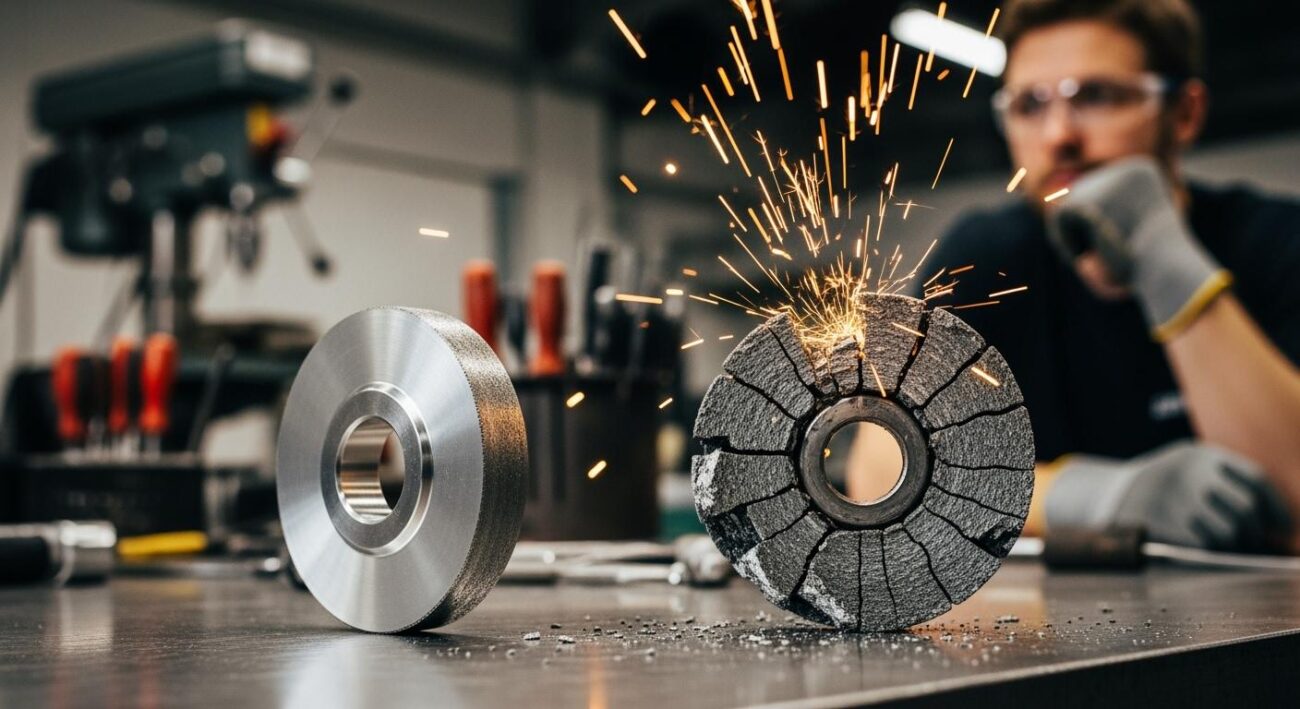
Superabrasive wheel grinding creates a strong economic impact in non-ferrous metal applications. Economic analysis shows superabrasive wheels become cost-effective when businesses need longer wheel life and less maintenance. The analysis highlights initial costs, wheel longevity, and maintenance as key economic factors. Superabrasive wheels cost more at first, but they last longer and require less upkeep. This economic analysis proves that companies can grind more non-ferrous parts with less downtime. Aimgrind delivers solutions that help businesses achieve better results through careful economic analysis.
Key Takeaways
- Superabrasive wheels offer long-term savings despite higher initial costs, making them a smart investment for non-ferrous metal grinding.
- These wheels last significantly longer than conventional options, reducing replacement frequency and maintenance costs.
- Higher material removal rates and lower operational costs lead to increased productivity and efficiency in grinding operations.
- Aimgrind diamond grinding wheels provide consistent quality and performance, helping manufacturers meet strict surface finish standards.
- Choosing the right abrasive wheel based on material type and production volume maximizes efficiency and cost-effectiveness.
Economic Analysis of Cost Structure
Initial Investment vs. Long-Term Savings
Manufacturers often compare the initial investment for different types of abrasive wheels before choosing a grinding solution. Superabrasive grinding wheels require a higher initial investment than conventional wheels. However, the long-term value analysis shows that superabrasive wheels deliver greater savings over time. The table below presents a clear initial investment analysis for grinding wheels used in non-ferrous metal applications:
| Aspect | Superabrasive Wheels | Conventional Wheels |
|---|---|---|
| Initial Investment | Generally higher | Generally lower |
| Wear Rate | Lower, leading to less frequent replacement | Higher, requiring more frequent replacement |
| Productivity | Increased due to higher material removal rate | Lower compared to superabrasive wheels |
| Long-term Cost-effectiveness | More cost-effective in certain applications | Less cost-effective in the long run |
Superabrasive grinding wheels last much longer than conventional wheels. In many cases, these wheels can last 50 to 200 times longer. This longevity reduces replacement costs and increases uptime. The types of abrasive wheels used in grinding affect both productivity and costs. Superabrasive wheels require less frequent dressing, which means less abrasive waste and more time spent grinding. The cost per part ground drops significantly when using superabrasive wheels. Fewer wheel changes and less dressing also reduce labor costs and inventory management needs. These factors make superabrasive grinding wheels a smart choice for companies seeking long-term value analysis and cost considerations and longevity.
Operational and Maintenance Costs
Operational costs play a major role in grinding applications. Manufacturers report a 30.19% reduction in per-part costs when switching to superabrasive grinding wheels for compressor crankshaft production. Superabrasive wheels have higher G-ratios and stock removal rates. These features lead to shorter cycle times and longer wheel life. Many superabrasive grinding wheels last twelve months or more, while conventional wheels may last only one month. The types of abrasive wheels used in grinding determine how often maintenance is needed. Superabrasive wheels require less maintenance, which lowers costs and increases productivity. Companies benefit from reduced downtime and fewer interruptions in their grinding operations.
- Superabrasive grinding wheels reduce per-part costs.
- Higher G-ratios and stock removal rates improve efficiency.
- Longer wheel life means fewer replacements and lower maintenance costs.
- Reduced dressing frequency saves labor and inventory costs.
Grinding wheels impact operational costs in every step of the process. The right types of abrasive wheels help companies control costs and improve output. Superabrasive wheels offer clear advantages in cost considerations and longevity.
Aimgrind Diamond Grinding Wheels Value
Aimgrind diamond grinding wheels stand out in the market for their durability and performance. These grinding wheels use advanced diamond abrasives that deliver high cutting efficiency and long service life. Aimgrind offers different types of abrasive wheels, including resin, metal, and vitrified bonds. Each type suits specific grinding needs and materials. Aimgrind’s grinding wheels maintain their shape and sharpness, providing consistent results over time.
The value of Aimgrind diamond grinding wheels lies in their ability to reduce costs and improve productivity. Companies experience fewer wheel changes, less downtime, and lower maintenance costs. Aimgrind’s grinding wheels support both wet and dry grinding processes. They fit standard machines and can be customized for special applications. The long-term value analysis shows that Aimgrind grinding wheels help companies achieve better surface finishes and higher throughput. These grinding wheels deliver reliable performance and cost savings in non-ferrous metal grinding.
Aimgrind’s commitment to innovation and quality ensures that every grinding wheel meets the highest standards. Manufacturers trust Aimgrind for solutions that optimize costs and maximize efficiency.
Grinding wheels from Aimgrind provide a strong return on investment. Their durability, versatility, and performance make them a top choice for companies focused on cost control and productivity in grinding operations.
Applications and Efficiency in Non-Ferrous Metals
Productivity and Throughput Gains
Superabrasive wheels play a vital role in many applications involving non-ferrous metals. These wheels help manufacturers achieve higher productivity and throughput in their daily operations. In metalworking applications, Aimgrind diamond grinding wheels deliver superior cutting efficiency and material removal rates. The following table compares key features of superabrasive wheels and conventional wheels in non-ferrous metal applications:
| Feature | Superabrasive Wheels | Conventional Wheels |
|---|---|---|
| Material Removal Rate | Higher efficiency in grinding non-ferrous metals | Lower efficiency in grinding non-ferrous metals |
| Surface Finish | Better surface finish and precision | Adequate surface finish but less precise |
| Grit Size and Bond System | Customizable for specific applications | Limited customization options |
Manufacturers see a clear difference in cutting efficiency and surface quality when using Aimgrind wheels. These wheels support a wide range of applications, from aerospace to electronics, where high productivity and consistent results matter most. The ability to customize grit size and bond system means each application receives the best possible solution for its needs.
Cycle Time and Labor Efficiency
Cycle time and labor efficiency improve greatly with superabrasive wheels. Operators notice faster grinding cycles and fewer interruptions during applications. The following points highlight the impact on efficiency and productivity:
- Proper wheel selection increases parts per hour in many applications.
- Fewer tool changes mean less downtime and higher machine uptime.
- Improved product quality leads to fewer reworks in applications.
- Lower operating costs benefit every stage of the process.
- Resin bond wheels resist loading, keeping performance steady in demanding applications.
- Self-sharpening wheels extend life and boost productivity in continuous applications.
These benefits make Aimgrind wheels a top choice for applications that demand high cutting efficiency and reliable performance.
Downtime Reduction with Aimgrind Solutions
Downtime reduction is a key advantage in non-ferrous metal applications. Aimgrind solutions help companies keep machines running longer and reduce the need for frequent wheel changes. The table below shows how throughput improves when switching to superabrasive wheels in various applications:
| Benefit | Description |
|---|---|
| Higher Material Removal Rates | Vitrified superabrasive wheels allow for significantly increased material removal rates in applications. |
| Lower Wear Rates | These wheels last longer, reducing replacements in applications. |
| Reduced Downtime | Less frequent wheel changes mean more uptime in all applications. |
Aimgrind’s diamond grinding wheels support a wide range of applications, including high-volume production and precision metalworking applications. Their advanced design ensures maximum cutting efficiency and minimal downtime, helping manufacturers achieve their productivity goals across all applications.
Quality, Yield, and Performance Analysis
Surface Finish and Tolerance Improvements
Manufacturers value surface finish quality in non-ferrous metal grinding. Aimgrind diamond wheels deliver high surface finish quality and tight tolerances. Operators see smoother surfaces and fewer defects. The diamond abrasive layer provides consistent performance. Engineers measure performance characteristics by checking surface finish quality and tolerance levels. Aimgrind wheels help achieve precise results. The diamond structure maintains sharpness, which improves performance. Many industries require strict surface finish quality standards. Aimgrind wheels meet these standards with reliable performance. The diamond bond system supports stable performance characteristics. Companies notice better surface finish quality and improved performance in every grinding cycle.
Scrap Rate and Tool Life Benefits
Scrap rate affects economic value in manufacturing. Aimgrind diamond wheels reduce scrap rate by providing steady performance. The diamond abrasive cuts cleanly, which lowers the chance of errors. Longer tool life means fewer replacements. Operators see performance improvements in tool life and scrap reduction. The diamond material resists wear, which extends performance characteristics. Companies save money by reducing scrap and increasing tool life. The diamond wheels show strong performance in high-volume production. Engineers track performance by monitoring tool life and scrap rate. Aimgrind wheels deliver performance that supports cost savings and higher yield.
Aimgrind diamond wheels help companies achieve better performance and lower scrap rates. The diamond abrasive ensures reliable performance characteristics in every operation.
Consistency with Aimgrind Diamond Wheels
Consistency matters in grinding operations. Aimgrind diamond wheels provide steady performance across batches. The diamond bond system keeps performance stable. Operators rely on performance characteristics to maintain quality. Aimgrind wheels show consistent performance in surface finish quality and tolerance. The diamond abrasive layer supports repeatable performance. Companies trust Aimgrind for performance that meets quality standards. Engineers use Aimgrind wheels to achieve performance goals in non-ferrous metal grinding. The diamond wheels deliver performance that improves yield and quality. Aimgrind diamond grinding wheels offer performance advantages in every application.
| Performance Characteristic | Aimgrind Diamond Wheels | Conventional Wheels |
|---|---|---|
| Surface Finish Quality | High | Moderate |
| Tool Life | Long | Short |
| Scrap Rate | Low | High |
| Consistency | Excellent | Variable |
Aimgrind diamond wheels show strong performance in quality, yield, and surface finish quality. The diamond abrasive layer ensures performance characteristics that support economic value. Companies achieve performance improvements with Aimgrind solutions.
Comparative Case Studies and ROI
Real-World Example: Aluminum Grinding
Many factories use superabrasive grinding wheels to process aluminum parts. In one example, a manufacturer switched from conventional wheels to Aimgrind diamond grinding wheels. The team noticed that the wheels lasted much longer. Workers changed wheels less often, which saved time. The machines ran for more hours each day. The company produced more aluminum parts without increasing labor costs. The surface finish on the parts improved, and there were fewer rejects. This change helped the company meet strict quality standards and deliver orders on time.
ROI Scenario: High-Volume Copper Applications
High-volume copper grinding shows clear economic benefits with superabrasive grinding wheels. The table below compares Aimgrind diamond grinding wheels to conventional wheels in these applications:
| Factor | Aimgrind Diamond Wheels | Conventional Wheels |
|---|---|---|
| Initial Cost | Higher initial purchase price | Lower initial purchase price |
| Wheel Life | Lasts 50 to 200 times longer | Shorter lifespan |
| Dressing Frequency | Less frequent dressing | More frequent dressing |
| Uptime | More uptime | Less uptime |
| Tooling Costs | Lower cost per part ground | Higher cost per part ground |
| Labor and Inventory | Reduced labor and inventory needs | Higher labor and inventory |
| Process Stability | Ideal for automated environments | Less stable for automation |
Factories that use Aimgrind wheels grind more copper parts before needing to replace the wheel. They spend less time on maintenance and more time making products. The lower cost per part and higher uptime lead to a strong return on investment.
Total Cost of Ownership Analysis
Total cost of ownership includes all expenses over the life of a grinding wheel. This covers the purchase price, maintenance, labor, and downtime. Superabrasive grinding wheels from Aimgrind may cost more at first, but they save money over time. Companies spend less on replacements and repairs. They also reduce labor costs because workers do not need to change wheels as often. Machines stay in operation longer, which increases output. Over a year, these savings add up. Many manufacturers see that Aimgrind diamond grinding wheels offer the best value for non-ferrous metal grinding.
Key Economic Considerations for Selection
Production Volume and Material Type
Production volume and material type play a major role in choosing the right abrasive wheel. High-volume operations benefit from wheels that last longer and require less maintenance. Companies often select superabrasive wheels for grinding non-ferrous metals because these wheels provide better performance and higher productivity. The following materials are best suited for superabrasive wheel grinding from an economic perspective:
- Superabrasive wheels, such as diamond and cBN, deliver higher grinding performance than conventional wheels.
- These wheels have a higher G-ratio, which means less dressing and more productivity.
- Vitrified cBN wheels help maximize productivity and minimize costs.
- High-performance conventional wheels with high porosity work well for superalloys and offer lower operational costs.
Choosing the right abrasive wheel depends on the material being processed and the volume of production. Companies must consider these factors to achieve the best economic outcome.
Process Integration Factors
Process integration affects the efficiency and cost of grinding operations. Manufacturers need wheels that fit their machines and processes. Aimgrind diamond grinding wheels support both wet and dry grinding. They can be customized for different machines and applications. Companies look for wheels that reduce downtime and improve throughput. Choosing the right abrasive wheel helps streamline production and maintain quality. Operators see fewer interruptions and more consistent results when the wheel matches the process requirements.
Tip: Companies should review their grinding process and equipment before choosing the right abrasive wheel. This step ensures the wheel delivers maximum value and performance.
Decision Criteria for Aimgrind Solutions
Manufacturers use clear criteria when choosing the right abrasive wheel for non-ferrous metal applications. The table below shows important decision points for Aimgrind diamond grinding wheels:
| Decision Criteria | Description |
|---|---|
| Workpiece Material | The type of material being ground influences abrasive choice. Diamond wheels suit non-ferrous metals. |
| Stock Removal Requirements | The amount of material to be removed affects grit size and wheel design. |
| Required Surface Finish | The desired smoothness of the ground surface dictates the necessary grit size. |
Companies select Aimgrind diamond grinding wheels when they need high productivity, long wheel life, and consistent surface finish. These wheels help reduce costs and improve output in non-ferrous metal grinding. Choosing the right abrasive wheel ensures the process meets production goals and quality standards.
Manufacturers see clear economic benefits when they choose superabrasive wheel grinding for non-ferrous metals. Aimgrind diamond grinding wheels help reduce costs, improve productivity, and deliver consistent quality. Key recommendations include:
- Use diamond abrasives for non-ferrous metals.
- Select the right grit size for the job.
- Match wheel dimensions to the machine.
Choosing the correct abrasive type and grit size increases efficiency and lowers costs. For tailored grinding solutions, manufacturers can trust Aimgrind’s expertise.
FAQ
What materials can Aimgrind diamond grinding wheels process?
Aimgrind diamond grinding wheels handle non-ferrous metals, ceramics, and composites. They work well in grinding operations that require high accuracy and durability.
How do Aimgrind wheels improve accuracy in grinding operations?
Aimgrind wheels use advanced diamond abrasives. These abrasives help operators achieve tight tolerances and consistent accuracy. The wheels maintain their shape, which supports precise results.
Why is accuracy important in non-ferrous metal grinding?
Accuracy ensures each part meets quality standards. Manufacturers rely on accurate grinding operations to reduce scrap and improve product performance. High accuracy also supports better surface finishes.
What is the productivity impact assessment for Aimgrind diamond wheels?
Aimgrind diamond wheels increase throughput and reduce downtime. The productivity impact assessment shows that these wheels help factories produce more parts with fewer interruptions.
Can Aimgrind wheels be customized for specific accuracy needs?
Aimgrind offers custom wheel sizes, grit levels, and bond types. These options help manufacturers match wheels to their accuracy requirements and grinding operations.
Contact Us
For More Grinding Solution or Customized Abrasive Tools