

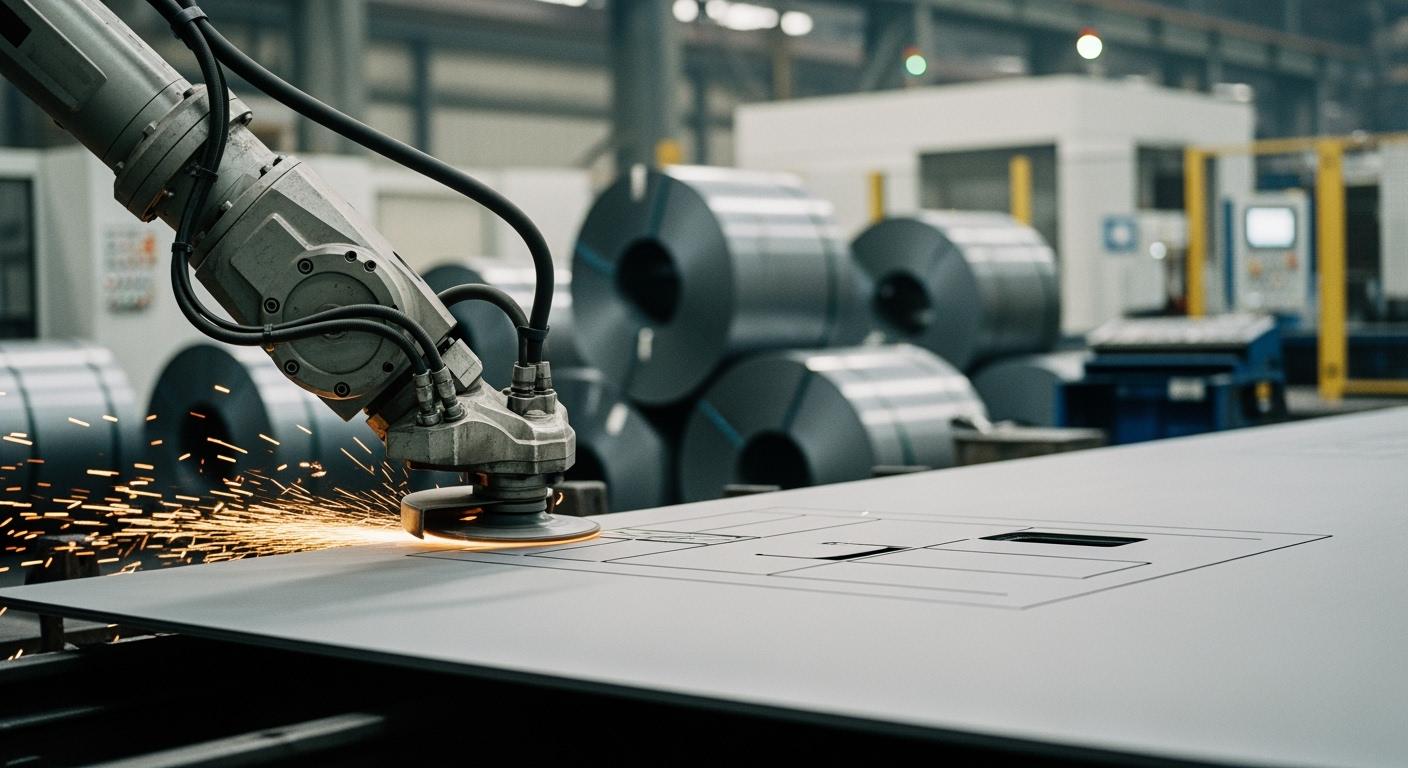
The steel industry experiences rapid growth in the adoption of innovative abrasive solutions. These solutions play a vital role in enhancing efficiency, safety, and sustainability. Recent innovation in abrasive solutions introduces tougher, sharper grains that deliver superior cutting performance and product quality. The integration of smart technologies, such as AI and machine learning, supports predictive maintenance and reduces downtime. Many regions drive growth in abrasive solutions, as shown below:
| Region | Key Drivers of Growth |
|---|---|
| North America | Rising manufacturing activities and stringent quality standards |
| Europe | Dominance of automotive and metalworking industries |
| Asia-Pacific | Expanding industrial sectors and infrastructure investments |
| Latin America | Brazil and Mexico as key players in emerging markets |
| Middle East & Africa | Construction and oil sectors drive development |
Aimgrind stands out by delivering customized abrasive solutions that match unique steel processing needs.
- Advancements in abrasive solutions support eco-friendly practices.
- These solutions expand into sectors like aerospace and renewable energy.
Aimgrind’s commitment to innovation ensures every solution meets the highest standards for productivity and sustainability.
Key Takeaways
- Innovative abrasive solutions enhance efficiency, safety, and sustainability in steel production.
- Aimgrind’s super hard abrasives, made from diamond and CBN, offer unmatched durability and reduce downtime.
- AI-driven technologies optimize production processes, improving performance and reducing waste.
- Customization of abrasives ensures they meet specific production needs, enhancing quality and efficiency.
- Eco-friendly abrasives, like recycled steel grit, support sustainability goals while maintaining high performance.
Advanced Materials in Abrasive Solutions
Super Hard Abrasives by Aimgrind
Aimgrind leads the industry with super hard abrasives designed for steel manufacturing. These abrasives use diamond and cubic boron nitride (CBN) grains, which deliver unmatched durability and cutting efficiency. Aimgrind engineers each abrasive to withstand high temperatures and pressures, ensuring consistent quality and reliable performance. The company offers a wide range of products, including grinding wheels, cutting wheels, and polishing wheels. Each product meets the demands of steel manufacturing, providing superior surface finishes and reducing downtime.
Aimgrind’s super hard abrasives maintain sharpness over extended periods. This feature reduces the need for frequent replacements and increases productivity. The brand’s expertise in formula design allows for precise matching of abrasives to customer equipment and processes. Aimgrind’s commitment to innovation ensures that every abrasive solution supports high-quality results and efficient manufacturing.
Aimgrind’s motto, “Grind with Passion, Achieve with Aim,” reflects its dedication to quality and innovation in abrasive solutions.
Diamond and CBN Innovations
Recent advancements in diamond and CBN abrasive technologies have transformed steel manufacturing. CBN grinding wheels show superior thermal stability and hardness compared to diamond wheels. These properties make CBN more effective for steel applications. CBN maintains its cutting ability at high temperatures, which is crucial for grinding hardened steels. The durability of CBN wheels leads to significant improvements in wheel life, achieving up to 500% longer lifespan than conventional abrasives.
Cubic boron nitride exhibits superior thermal and chemical stability compared to diamond, especially in metal grinding. Diamond abrasives excel in cutting hard materials but tend to wear out faster when interacting with certain metals. CBN offers better durability and cutting efficiency in specific contexts. Experimental studies show that CBN tools maintain better wear resistance and produce superior surface finishes when machining titanium alloys. CBN performs well under high-temperature conditions, supporting its durability and efficiency in cutting applications.
- CBN wheels achieve wheel life improvements of 200-500% when grinding hardened steels above 45 HRC.
- CBN’s resistance to chemical degradation allows for consistent cutting action and predictable wear patterns.
Aimgrind integrates these innovations into its super hard abrasives, ensuring that steel manufacturers benefit from the latest technology and highest quality standards.
Application-Specific Customization
Customization plays a key role in abrasive solutions for steel manufacturing. Aimgrind offers tailored engineering, allowing customers to select the right abrasive material and settings for their specific needs. Precision ensures the deburring process is as gentle or aggressive as required, providing high-quality results without damaging the workpiece. Efficiency improves by selecting the optimal abrasive and process settings, reducing material waste and time spent on rework.
Aimgrind’s machines handle a wide variety of materials, making them suitable for multi-material environments and diverse production lines. The company provides a range of machine configurations, abrasive options, and process settings. This versatility allows Aimgrind to customize solutions for different metal parts, finish requirements, and production goals.
The advent of 3D printing in abrasive technology enables rapid and precise design of customized abrasive products. This innovation reduces material waste and enhances product efficiency. Studies show that flexible abrasive tools provide superior surface quality and higher material removal rates for specific steel alloys. Application-specific customization improves productivity and product quality in steel manufacturing.
- Precision: Delivers high-quality results without damaging steel parts.
- Efficiency: Reduces material waste and rework time.
- Versatility: Supports multi-material environments and diverse production lines.
- Tailored engineering: Customizes solutions for unique production goals.
Aimgrind’s expertise in customization ensures that every abrasive solution meets the exact requirements of steel manufacturers, supporting innovation and high-quality manufacturing.
Industry 4.0 and Abrasive Innovation
AI-Driven Process Optimization
Steel manufacturers rely on AI-driven process optimization to improve abrasive applications. AI predicts endpoint temperatures in electric arc furnaces, optimizes charge mixes, and reduces tap-to-tap times. Machine learning forecasts alloy consumption and minimizes material waste during ladle furnace and RH refining. Continuous casting control uses AI to stabilize strands and enhance product quality. Computer vision monitors hazard zones, reducing operator exposure and improving workplace safety. Energy optimization lowers costs per ton and increases throughput. Refractory life prediction extends asset life, while production coordination boosts profitability and supports decarbonization. The power of innovation in AI-driven systems transforms steel production by making processes smarter and more efficient.
Automation in Steel Processing
Automation changes how steel plants manage abrasive processes. Robotic arms maintain precise belt paths, ensuring uniform surface finishes. Automated graining produces consistent scratch patterns through overlapping passes, which improves finish quality. Robotic blasting systems and smart abrasive media reduce labor costs and human error. Automation increases efficiency and product consistency by minimizing variation. Industry experts note that automation delivers reliable results and supports high-volume production. Innovative technologies in automation help steel manufacturers achieve better performance and inventory management.
Digital Twins for Predictive Maintenance
Digital twins simulate production processes in steel plants. These virtual models allow operators to track real-time data and predict maintenance needs. Digital twins use technology to optimize abrasive tool performance and reduce downtime. Operators can test new process settings in a digital environment before applying them to actual equipment. This approach improves flexibility and adaptability in manufacturing. Digital twins enable seamless communication across production lines, supporting efficient and customized manufacturing. The integration of digital twins demonstrates how technology drives improvements in steel production and abrasive solutions.
Industry 4.0 enhances manufacturing efficiency, flexibility, and adaptability. The adoption of innovative technologies ensures steel producers stay competitive and maintain high standards.
Efficiency and Maintenance in Abrasives
Real-Time Monitoring
Steel manufacturers depend on real-time monitoring to maintain efficiency in abrasive operations. They use advanced techniques to track abrasives and tool wear during production processes. Intelligent monitoring combines machine learning algorithms for accurate wear prediction. Real-time data capture uses vibration and force sensors to monitor tool conditions. Wear prediction models optimize hyperparameters for improved accuracy. Operators rely on direct sensors for precise evaluation of tool state, while indirect sensors assess tool states based on temperature and vibration. Machine learning models, such as SVM and neural networks, predict tool wear. Acoustic emission sensors analyze sound signals to detect wear states. Sensor integration with accelerometers and force sensors captures real-time data on tool wear. Decision tree classifiers predict abrasive belt wear with high accuracy.
| Technique | Description |
|---|---|
| Intelligent Monitoring | Combines machine learning for effective wear prediction |
| Real-time Data Capture | Uses vibration and force sensors for continuous monitoring |
| Wear Prediction Models | Optimizes hyperparameters for improved accuracy |
| Direct Sensors | Provide accurate evaluation of tool state in-cycle |
| Indirect Sensors | Assess tool states based on process parameters |
| Machine Learning Models | Use SVM and neural networks for predictive monitoring |
| Acoustic Emission Sensors | Analyze sound signals related to wear states |
| Sensor Integration | Use accelerometers and force sensors for real-time data |
| Decision Tree Classifier | Predicts abrasive belt wear with high accuracy |
Data-Driven Scheduling
Data-driven scheduling improves efficiency and reduces maintenance costs in abrasive operations. Operators use data to plan maintenance and tool changes, which lowers system downtime by 35% and maintenance costs by 28%. Scheduling based on real-time data reduces unplanned downtime and lowers operating costs. Equipment lifespan extends when maintenance follows data-driven plans. Annual savings reach $12 million, and mean time between failures increases by 25%. These improvements boost operational efficiency and ensure consistent performance of abrasives.
| Impact | Percentage Reduction |
|---|---|
| System Downtime | 35% |
| Maintenance Costs | 28% |
| Impact | Result |
|---|---|
| Unplanned Downtime | Reduced |
| Operating Costs | Lowered |
| Equipment Lifespan | Extended |
| Impact | Result |
|---|---|
| Unplanned Downtime | 35% Reduction |
| Annual Savings | $12M |
| Mean Time Between Failures | 25% Increase |
Minimizing Downtime
Steel producers implement strategies to minimize downtime during abrasive tool changes. They select the right tool material and design to enhance durability and performance. Machining parameters, such as cutting speed, feed rate, and depth of cut, optimize tool life and reduce wear. Proper cooling and lubrication minimize friction and heat, preserving tool integrity. Machine setup and operator skill prevent unnecessary wear and extend tool life. Monitoring tool wear with advanced systems allows timely tool changes and prevents downtime.
- Tool material and design improve durability and performance.
- Machining parameters optimize tool life and reduce wear.
- Cooling and lubrication preserve tool integrity.
- Machine setup and operator skill prevent unnecessary wear.
- Monitoring tool wear enables timely tool changes.
These strategies support efficiency and maintain high performance in abrasive operations. Steel manufacturers achieve greater operational efficiency and consistent results by adopting these practices.
Efficient maintenance and monitoring of abrasives ensure reliable production processes and maximize uptime in steel manufacturing.
Safety and Compliance in Abrasive Solutions
Ergonomic Tools
Steel production environments require a strong focus on safety. Workers handle abrasive tools for long periods. Ergonomic design reduces strain and prevents injuries. Aimgrind engineers abrasive tools with comfortable grips and balanced weight. These features help workers maintain control and reduce fatigue. Proper tool design lowers the risk of repetitive stress injuries. Safety improves when workers use tools that fit their hands and work style. Training on correct handling techniques also supports safety. Employers must provide regular instruction to reinforce safe practices. Ergonomic abrasive tools play a key role in creating a safer workplace.
Dust Reduction Technologies
Dust from abrasives can threaten worker safety. Inhalation of fine particles may cause respiratory problems. Steel plants use advanced technologies to control dust and protect workers. The table below shows common dust reduction methods:
| Technology | Description |
|---|---|
| Local Exhaust Ventilation (LEV) | Captures dust at the source using a hood, duct system, and fan to reduce workplace dust concentration. |
| Dust Collectors | Removes dust from the air using bag filters, cyclones, or electrostatic precipitators. |
| Wet Suppression | Sprays water or liquids to reduce dust generation and prevent airborne dust. |
| Enclosures and Barriers | Contains dust within a specific area to prevent its spread. |
| Personal Protective Equipment | Provides extra protection for workers through respirators and dust masks. |
| Dust Monitoring Systems | Measures dust concentration in real-time to identify areas needing better dust control. |
| Automated Dust Control Systems | Uses sensors to adjust dust control equipment based on real-time dust levels. |
| Nanotechnology | Develops new materials and coatings for efficient dust control. |
Steel manufacturers combine these methods to maximize safety. Automated systems and real-time monitoring help maintain clean air. Personal protective equipment adds another layer of safety for workers exposed to dust from abrasive tools.
Regulatory Standards
Regulatory standards guide the use of abrasives in steel production. Companies must follow strict rules to ensure safety. Key points include:
- Employers assess risks from abrasive blasting and implement safety measures.
- Workers face hazards such as toxic materials, loud noise, and risks to hands and arms. Personal protective equipment is required.
- Compliance with OSHA guidelines is essential for abrasive operations.
- Environmental, Social, and Governance (ESG) principles shape the development of safer, eco-friendly abrasives.
- Manufacturers innovate with recycled materials and sustainable methods to meet regulations.
Aimgrind supports safety by designing abrasive tools that meet or exceed these standards. The company helps clients stay compliant and maintain a safe workplace. Regular audits and updates ensure ongoing safety and regulatory alignment.
Safety remains the top priority in steel production. Proper use of abrasives, advanced dust control, and strict compliance protect workers and improve productivity.
Sustainability and Environmental Impact
Eco-Friendly Abrasives
Aimgrind demonstrates a strong commitment to sustainability by developing eco-friendly abrasives for steel production. Steel grit, garnet, and slag represent common sustainable abrasive materials. Steel grit stands out because manufacturers produce it from recycled steel. This material offers durability and reusability, which supports sustainability goals and reduces waste. Garnet works well for precision tasks but generates more waste and lasts less than steel grit. Slag costs less but wears out quickly, leading to higher consumption and increased waste. Steel grit can be reused hundreds of times, resulting in lower project costs and a cleaner workspace. Many industries have adopted steel grit to meet sustainability goals. For example, a shipyard switched from slag to steel grit, improving blasting speed and reducing abrasive consumption by over 85%. A manufacturing facility using a closed-loop system with steel grit saw immediate drops in abrasive purchases and improved air quality. Bridge recoating projects benefit from steel grit’s consistent finish and reduced waste, which leads to faster completion.
Waste Reduction Initiatives
Steel manufacturers focus on waste reduction to achieve sustainability. Aimgrind supports these efforts by designing abrasives that minimize material loss during processing. Companies implement closed-loop systems that recycle abrasives, lowering the need for new materials. These systems help maintain a cleaner workspace and reduce environmental impact. Steel grit’s durability allows for repeated use, which decreases waste and supports sustainability goals. Facilities that use steel grit report improved air quality and reduced abrasive purchases. Waste reduction initiatives also include proper disposal and recycling of spent abrasives. Aimgrind’s products help clients meet strict environmental standards and maintain high-quality production.
Energy-Efficient Solutions
Energy-efficient abrasives play a key role in reducing operational costs and environmental footprint. Steel grit minimizes waste generation and conserves natural resources. Its durability means less material is needed, which lowers operational costs and waste. Steel grit enhances cleaning efficiency, requiring less time and energy. This reduces energy consumption and greenhouse gas emissions. The recyclability of steel grit decreases the demand for new materials and further reduces waste. Aimgrind’s energy-efficient abrasives help steel producers achieve sustainability goals while maintaining high performance. These solutions support cleaner production and contribute to a healthier environment.
Aimgrind’s dedication to sustainability ensures that every abrasive solution meets industry standards for quality and environmental responsibility.
Supply Chain Adaptability
Rapid Market Response
Abrasive manufacturers in the steel sector must adapt quickly to changing market demands. They use technological advancements like recycled metal abrasives and automation-enabled systems. These tools help companies respond to new trends and customer needs. Strategic collaborations and acquisitions allow businesses to diversify their product portfolios. Investments in research and development lead to eco-friendly and low-emission abrasives. Manufacturers also focus on sustainability, which aligns with global goals. Geographic expansion in high-growth regions such as Asia-Pacific and North America supports rapid market response. Companies build strong distribution networks and offer after-sales support to maintain quality standards and regulatory compliance.
- Technological advancements drive quick adaptation.
- Strategic partnerships and acquisitions expand product offerings.
- Investments in R&D support sustainable manufacturing.
- Geographic expansion increases market reach.
A strong supply chain helps the manufacturing industry stay competitive and resilient.
Flexible Manufacturing
Flexible manufacturing practices allow abrasive producers to meet diverse steel processing needs. They adjust parameters to achieve the best results for each application. The table below shows key parameters that support flexibility in manufacturing:
| Parameter | Value |
|---|---|
| Minimum Surface Roughness | 2.498 μm |
| Air Pressure | 5 bars |
| Nozzle Angle | 90° |
| Abrasive Particle Length | 350 μm |
| Maximum Material Removal Rate | 0.07993 g/s |
| Machining Time | 19s |
Manufacturers use fine-grit aluminum oxide for deburring and edge radius operations. They combine large and small media for both aggressive action and precision. Plastic-based media create fine micro-finishes, while steel media provide polishing effects. This flexibility ensures that manufacturing processes can adapt to different steel grades and finish requirements.
Collaboration with Steel Producers
Collaboration between abrasive manufacturers and steel producers drives innovation. Strategic partnerships enhance product development and give access to advanced technologies. These relationships help companies respond quickly to changing consumer needs. Innovation from collaboration leads to new products that can set market standards. Strong partnerships also help businesses navigate challenges and take advantage of emerging trends. By working together, manufacturers and steel producers improve outcomes and support the growth of the manufacturing industry.
- Strategic partnerships enhance product development.
- Collaboration enables access to new technologies.
- Joint efforts lead to innovative solutions.
Collaboration ensures that manufacturing stays at the forefront of industry advancements.
Innovative abrasive solutions drive efficiency, safety, and sustainability in steel production. Aimgrind’s super hard abrasives help manufacturers achieve consistent results and reduce downtime.
“…the more sparks that you can see there coming off every one of those is a chip right? Every one of those is a chip coming off of that workpiece, right?”
Ongoing evaluation of new technologies supports competitive production and compliance.
| Trend | Description |
|---|---|
| Efficiency | Smart technologies improve productivity in production. |
| Safety | Advanced monitoring enhances safety in production environments. |
| Innovation | AI adoption boosts performance and maintenance in production. |
| Sustainability | Eco-friendly practices shape future production. |
- Regularly review abrasive technologies to optimize production.
- Use advanced materials for better durability and compliance.
- Integrate smart practices for efficient production.
FAQ
What are super hard abrasives?
Super hard abrasives use diamond or cubic boron nitride (CBN) grains. These materials provide high durability and cutting power. They help steel manufacturers achieve precise results and reduce tool changes.
How do Aimgrind’s abrasives improve steel production?
Aimgrind’s abrasives deliver consistent quality and long service life. They help reduce downtime and increase productivity. Their custom design matches each customer’s equipment and process needs.
Are eco-friendly abrasives effective for steel processing?
Yes. Eco-friendly abrasives, like recycled steel grit, offer strong performance. They reduce waste and support sustainability goals. Many steel plants use them to lower costs and improve air quality.
How does real-time monitoring help with abrasive maintenance?
Real-time monitoring tracks tool wear and performance. Operators can schedule maintenance before problems occur. This approach reduces unexpected downtime and saves money.
Contact Us
For More Grinding Solution or Customized Abrasive Tools