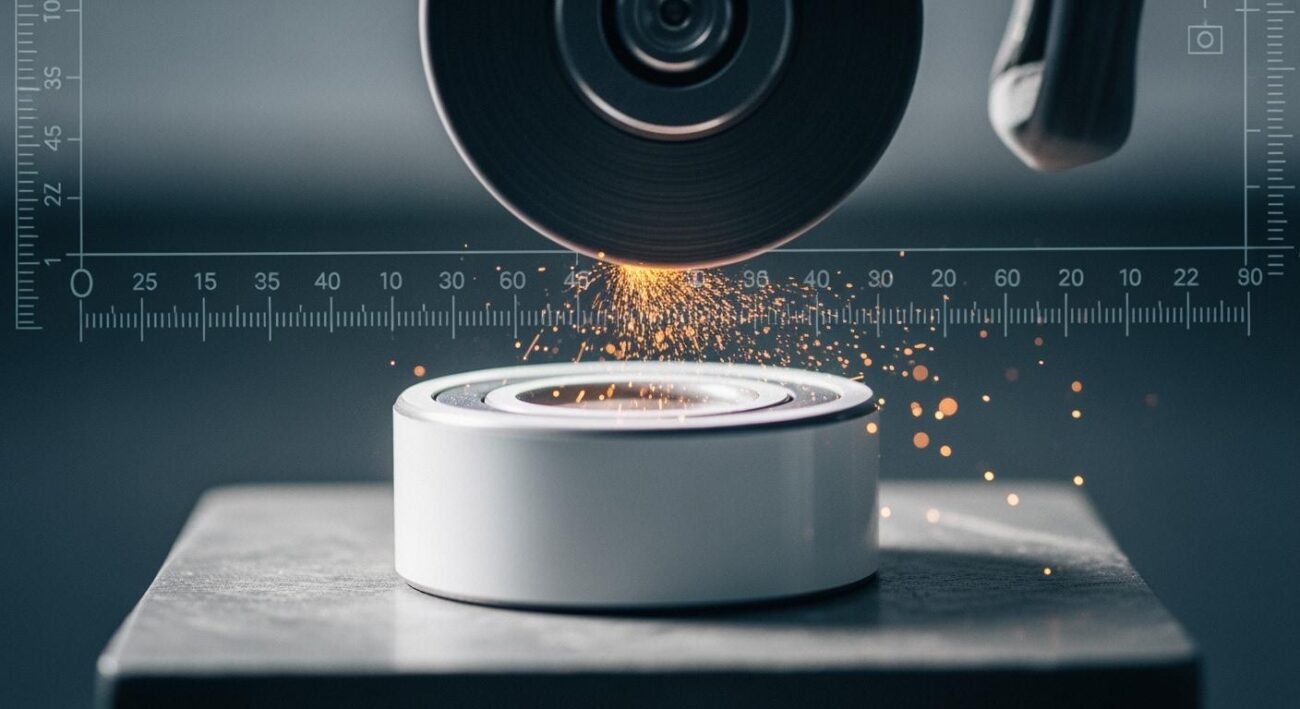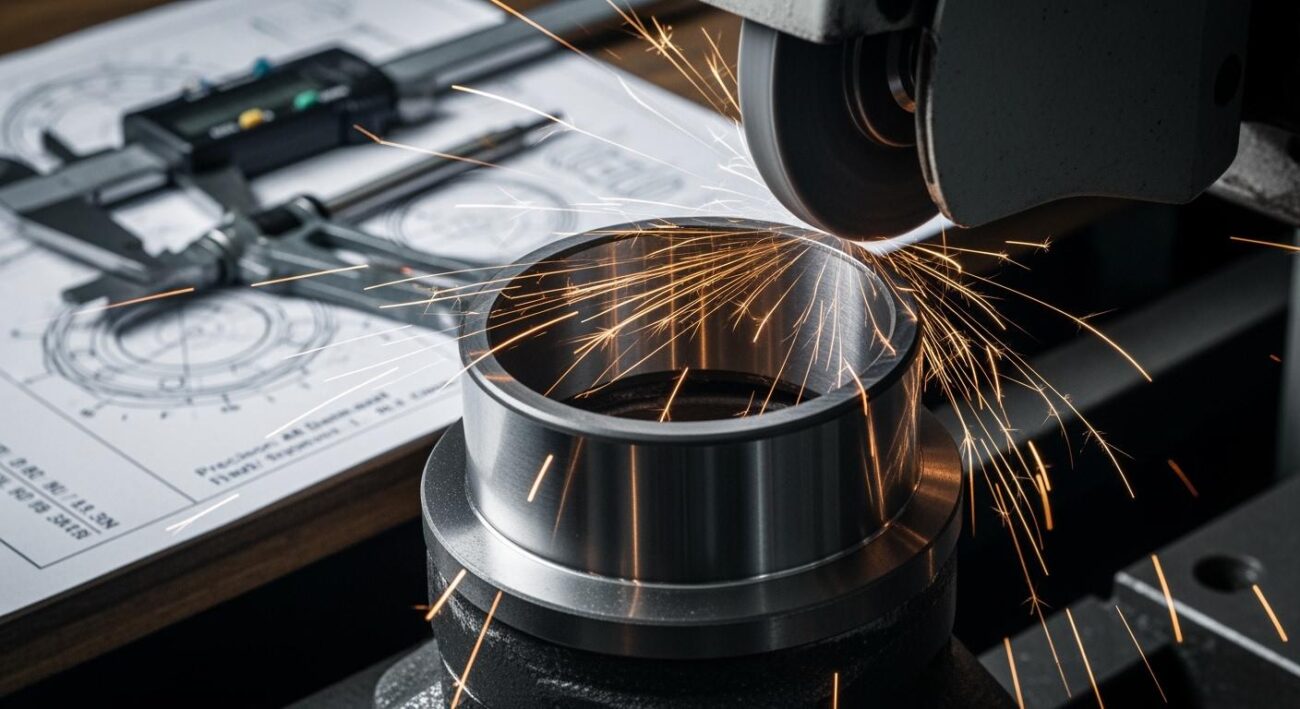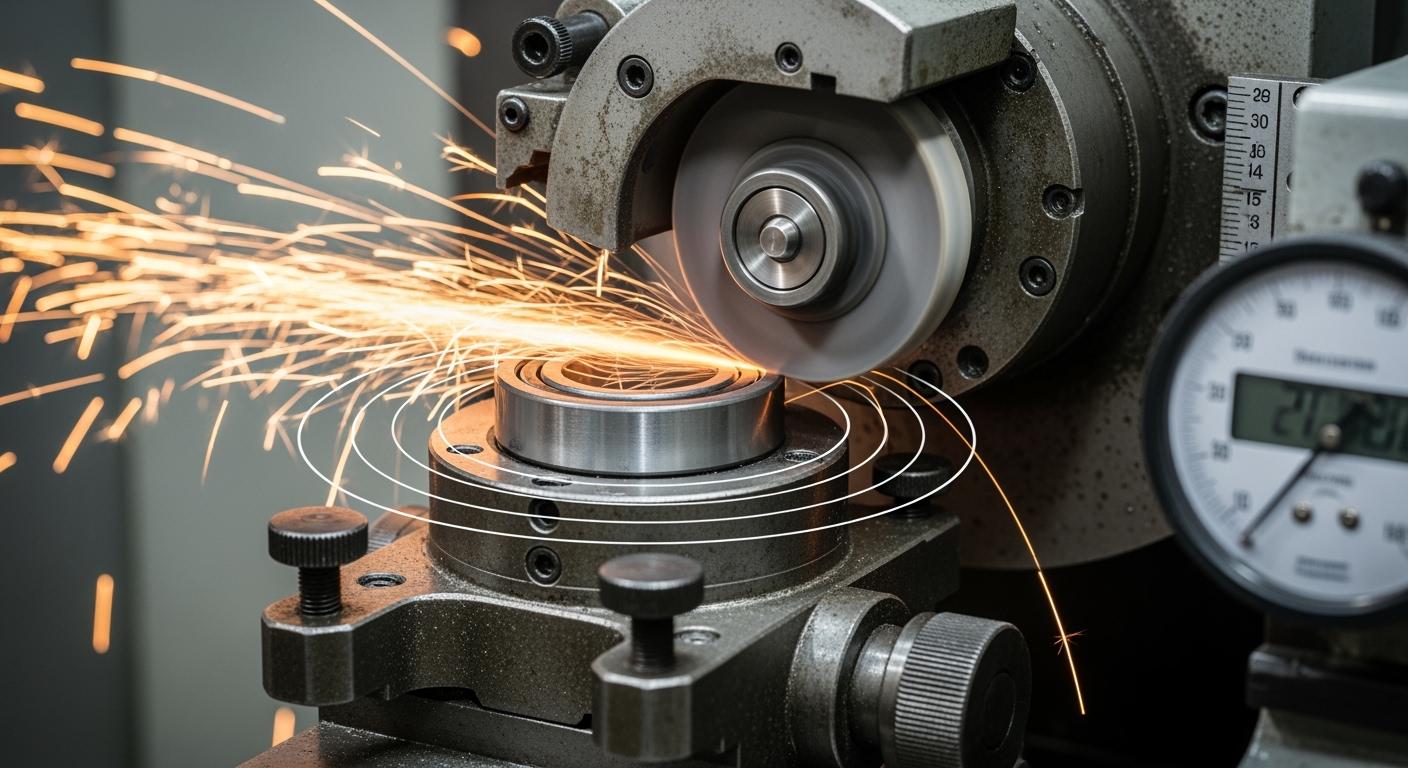
You can solve chatter and vibration in bearing ring grinding by choosing the right grinding tools and adjusting your process setup. Chatter means unwanted noise and marks during grinding. Vibration is the shaking or movement of the machine or workpiece. Both problems hurt the surface finish and lower the performance of bearings. Industry studies show that low-frequency vibration can ruin the surface quality. Aimgrind‘s CBN grinding wheels help you get a smoother finish and reduce these issues.
| Key Findings | Description |
|---|---|
| Vibration Impact | Low-frequency resonances degrade surface finish during machining processes. |
| Chatter Types | Mode-coupling chatter comes from low structural stiffness. |
| Stability Criteria | Process setup guidelines help achieve chatter-free, high-quality surfaces. |
Key Takeaways
- Choose the right grinding wheel, like Aimgrind’s CBN wheels, to minimize chatter and vibration for a smoother finish.
- Adjust your grinding parameters, such as feed rate and wheel speed, to reduce unwanted noise and marks on the workpiece.
- Regularly inspect your machine for balance and rigidity to prevent excessive vibration that can harm surface quality.
- Use strong clamps and fixtures to stabilize the workpiece during grinding, which helps eliminate chatter marks.
- Monitor vibration levels with analysis tools to catch issues early and maintain high-quality bearing performance.
Chatter and Vibration in Bearing Ring Grinding
What Is Grinding Chatter?
You may notice strange marks or hear odd noises during grinding. These are signs of grinding chatter. Chatter happens when parts of your grinding machine vibrate at their natural frequencies. This vibration can move into the workpiece and create visible stripes, often called zebra-like marks. You can see these marks as a pattern on the surface of the bearing ring.
Grinding chatter comes from two main types of vibration. Force vibration can start from problems like an unbalanced wheel or damaged bearings. This type can even happen when the grinding wheel is not touching the workpiece. Self-excited vibration starts during the grinding process. It depends on how you set your grinding parameters and the machine’s design. Both types can cause chatter output, which means you see or hear the effects during grinding.
Many things can cause grinding chatter:
- You may set the grinding cut too heavy. Try reducing the infeed amount.
- The wheel may be too hard. Use a softer wheel or adjust your settings.
- Dressing feeds may need changes. Adjust them for a better balance between speed and finish.
- Grinding fluid may not be enough. Increase coolant to help the process.
- Slender workpieces may lack support. Use a steady rest.
- Machine parts may be loose or unbalanced. Check belts and wheels for defects.
Effects on Surface Finish and Performance
Chatter and vibration can ruin the finish of your bearing rings. You want a smooth, even surface for the best bearing performance. Chatter output leaves marks that lower the quality of the finish. These marks can make the bearings noisy or cause them to wear out faster.
A poor finish can lead to problems in the final product. Bearings with chatter marks may not roll smoothly. They may also fail sooner than expected. You can avoid these issues by controlling grinding chatter and vibration. Always check your grinding setup and use the right tools to get the best finish.
Tip: Regular inspection helps you catch chatter output early and keep your bearings in top shape.
Causes of Chatter Problem and Vibration
Machine Imbalance and Rigidity
You may notice machine vibration if your equipment is not balanced or rigid. When you have unbalance, the machine parts wobble during rotation. This wobbling acts as a source of vibration and can lead to excessive runout. If the bearings inside your machine fail, you will see more friction and heat. This can cause the grinding process to become unstable. Mechanical looseness, like worn or poorly installed parts, also increases machine vibration. Misalignment puts extra stress on the machine, which reduces stability and can create a chatter problem.
| Error Type | Description |
|---|---|
| Bearing Failure | Leads to more friction and heat from contamination, poor lubrication, overloading, or misalignment. |
| Mechanical Looseness | Comes from bad installation or worn parts, causing more machine vibration and possible failures. |
| Unbalance | Makes rotating parts wobble, which increases vibration and speeds up wear. |
| Misalignment | Raises stress on machine parts, causing more vibration and possible breakdowns. |
Wheel Selection and Condition
The grinding wheel you choose affects the stability of the machine. If you use a wheel that is not right for your job, you may see excessive runout. A wheel with poor balance or one that is worn out becomes a source of vibration. This can lead to a chatter problem. You should check the wheel for cracks, chips, or uneven wear. Always mount the wheel correctly to avoid runout. A good wheel keeps the grinding process smooth and helps you maintain stability.
Process Parameters and Clamping
You control many factors during grinding. If you set the feed rate or wheel speed too high, you may cause excessive runout and machine vibration. Poor clamping or weak fixtures reduce the stability of the machine. This makes the workpiece move, which becomes a source of vibration. Out-of-round part centers and non-isotropic part stiffness can also lead to a chatter problem. You can use these tips to improve stability:
- Lower the feed rate or wheel speed if you see chatter.
- Make sure all clamps and fixtures hold the part tightly.
- Check for excessive runout in the setup.
- Adjust parameters to avoid the natural frequency that causes vibration.
Note: You can control the amplitude of vibration by changing process parameters. This helps you shift the frequency and improve the stability of your grinding process.
How to Eliminate Chatter Marks with Aimgrind CBN Grinding Wheels
You can eliminate chatter marks in bearing ring grinding by making smart adjustments and using the right tools. Aimgrind’s CBN grinding wheels give you a strong advantage. These wheels help you minimize chatter and vibration, leading to a smoother finish and better bearing performance. Follow these steps to get the best results.
Adjusting Wheel Speed and Feed Rate
You control the grinding process by setting the wheel speed and feed rate. These two factors have a big impact on grinding chatter. If you set the feed rate too high or the wheel speed too low, you may see more chatter marks on your workpiece. You can eliminate chatter marks by using a slower feed rate and a higher wheel speed. This combination lowers the force on each abrasive grain and reduces heat. Less heat means less risk of thermal damage and fewer marks.
- A slower feed rate and higher wheel speed lead to a better surface finish.
- This setup reduces the force on each grain, which helps prevent grinding chatter.
- If you use the wrong settings, you may see more heat and poor chip removal. This can cause more chatter marks.
You can use the table below to find the recommended wheel speed for different CBN grinding wheel bond types. These values help you minimize chatter and get a clean finish.
| Bond Type | Wet Grind SFPM | Dry Grind SFPM |
|---|---|---|
| Resin Bond | 3937–9843 | 3937–7874 |
| Poly Bond | 3937–9843 | 3937–7874 |
| Metal Bond | 3937–15748 | 3937–9843 |
| Vit Bond (OD) | Dia: 4921–6890 | N/M |
| Vit Bond (ID) | 4921–13780 | N/M |
| EP Bond | Dia: 3940–6895 | Same as Wet |
| Hybrid Bond | 3150–5906 | 3150–4921 |
| Vacuum Brazed | Dia: 3940–6895 | Same as Wet |
| Rubber Bond | <5906 | <5906 |
Tip: Try changing one setting at a time. Listen for changes in sound and watch for new chatter marks. This helps you find the best setup for your grinding job.
Improving Fixture Stability
You can eliminate chatter marks by making your fixture stable. If your workpiece moves during grinding, you will see more marks and noise. Use strong clamps and check that all parts hold the workpiece tightly. A stable fixture keeps the workpiece from shifting, which helps you minimize chatter.
- Always check for loose parts before you start.
- Use vibration analysis tools to find sources of movement.
- Keep your grinding wheel balanced and clean.
- Make sure your machine is stable and well-maintained.
If you notice a pattern in the chatter marks, use it as a clue. The pattern can help you find the cause and fix it faster.
Choosing the Right CBN Grinding Wheel
You can eliminate chatter marks by choosing the right CBN grinding wheel for your application. Aimgrind offers many options, so you can match the wheel to your needs. When you select a wheel, look at these factors:
- Grit size controls how rough or smooth the finish will be.
- Concentration tells you how much CBN is in the wheel. More CBN means faster cutting.
- Bond type affects how long the wheel lasts and how it performs.
- Grinding parameters like wheel speed, work speed, and infeed rates must be set correctly.
- Truing and dressing keep the wheel in good shape.
- Coolant management stops thermal damage and keeps the surface quality high.
Aimgrind’s CBN grinding wheels work well for hard materials. They help you eliminate chatter marks and get a smooth finish. You can use them for both wet and dry grinding. They last longer and cut faster than regular wheels.
Note: Always optimize your grinding parameters and keep your wheel in top condition. This helps you minimize chatter and get the best results.
You can also use these troubleshooting tips to eliminate chatter marks:
- Listen for changes in sound during grinding.
- Use vibration analysis to find problem areas.
- Change one setting at a time to see what works.
- Keep your grinding wheel balanced and clean.
- Clamp the workpiece tightly.
- Adjust feed rate and depth of cut for better results.
You can see a big difference when you use Aimgrind’s CBN grinding wheels and follow these steps. You will eliminate chatter marks, improve your surface finish, and extend the life of your bearings.
Inspection to Remove Chatter Marks and Monitor Vibration
Surface Finish Measurement Methods
You need to check the surface finish to remove chatter marks and keep your grinding process stable. Measuring chatter is important for quality control. You can use several methods to inspect bearing rings. Surface image analysis helps you spot unstable areas. This method uses special algorithms to find patterns and indexes that show chatter marks. Signal correlation and mode decomposition improve measuring chatter accuracy. You can predict surface topography affected by vibration, which helps you understand where chatter marks may appear.
Surface roughness is a key factor in vibration. If roughness goes above the lubricant film thickness, metal-to-metal contact happens. This can cause more vibration and damage. Waviness can create vibration at high frequencies, but it is most important at lower speeds. You should measure parameters like Ra and Rz for quality control. Optical profilometers work well for high-speed applications. They help you get consistent chatter measurements and remove chatter marks before they affect bearing performance.
Tip: Regular chatter inspection lets you link process settings to chatter marks. You can adjust your grinding setup quickly and keep quality control strong.
Vibration Analysis Tools
You must monitor vibration to keep your grinding process smooth. Vibration analysis tools help you find problems early. You can use vibration sensors like accelerometers and proximity probes. These tools capture vibration data from your machine. Data acquisition systems collect and process this information. Portable analyzers give you real-time feedback in the field. Diagnostic software helps you interpret the data and track changes over time.
Quality control improves when you use vibration analysis. You can spot faults and remove chatter marks before they become serious. Preventive maintenance practices help you avoid chatter and vibration. Apply coolant properly, balance tools, secure workpieces, and monitor vibration levels. Flat mounting areas for spindles prevent distortion. Avoid overtightening belts to protect bearings.
Regular inspections help you detect process instabilities and equipment issues early. You can keep your grinding process stable and remove chatter marks quickly. Quality control depends on measuring chatter and vibration analysis. You ensure reliable bearing performance and reduce defects.
You can solve chatter and vibration in bearing ring grinding by following a few key steps. Start by making small changes to RPM and feed rates, using water rings or damping materials to control vibration. Select the right grinding wheel for your needs. The table below shows how each parameter affects your finish:
| Parameter | Description | Impact on Surface Finish |
|---|---|---|
| Abrasive Type | Choose CBN for hard materials | Reduces surface damage, improves finish |
| Grit Size | Use finer grits for smoother results | Smoother surfaces |
| Bond Type | Pick vitrified for precision | Less vibration, better finish |
| Wheel Structure | Open structure lowers heat | Improves finish on sensitive parts |
Keep your machine stable and inspect it often. Regular checks and good workholding help you prevent chatter. Aimgrind’s CBN grinding wheels give you reliable performance and a smooth finish every time.
FAQ
What is the best way to identify chatter patterns during grinding?
You can spot chatter patterns by looking for repeating marks on the workpiece. Use visual checks and surface measurement tools. Chatter analysis helps you understand the cause and guides you to adjust your grinding setup for better results.
How does vibration in spindles affect grinding quality?
Vibration in spindles creates uneven movement. This leads to poor surface finish and possible damage. You should check for loose parts and balance your spindles to keep your grinding process stable.
What role does chatter data play in process improvement?
Chatter data gives you important information about your grinding process. You can use this data to track changes, find problems, and improve your setup. Regular review helps you prevent defects and maintain high quality.
How can you solve bore grinding problems related to vibration?
You can solve bore grinding problems by checking machine alignment, using stable fixtures, and selecting the right grinding wheel. Adjusting speed and feed rates also helps reduce vibration and improve results.
Why is regular inspection important for chatter analysis?
Regular inspection lets you catch issues early. You can use chatter analysis to find the source of vibration and fix it before it affects quality. This keeps your grinding process reliable and efficient.
Contact Us
For More Grinding Solution or Customized Abrasive Tools