

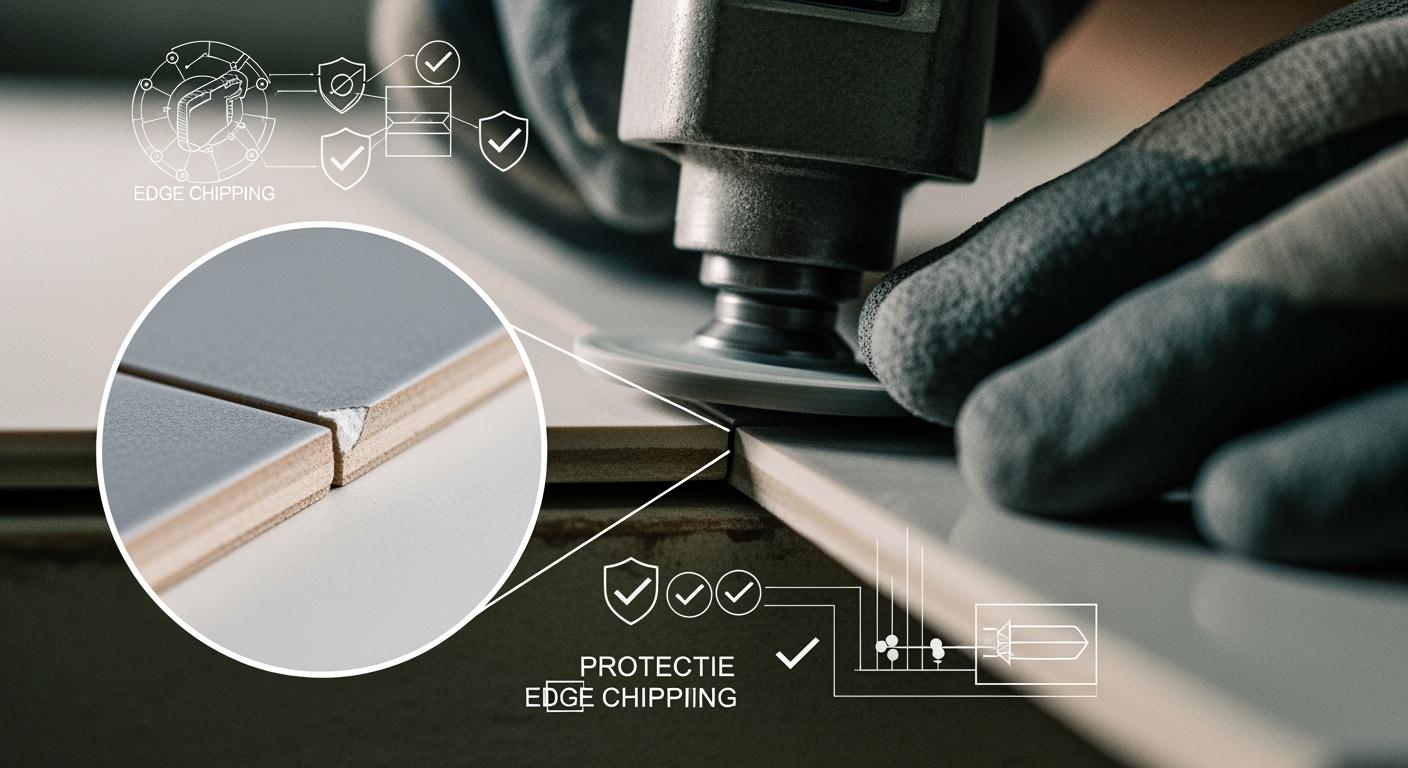
You can achieve success in minimizing edge chipping during ceramic grinding by focusing on the right tools and methods. Aimgrind’s diamond grinding wheels stand out because their hardness and durability provide cleaner cuts. Their sharpness and wear resistance help you maintain consistent performance, minimizing edge chipping even on tough materials. Precision in material removal is key for minimizing edge chipping. Proper grinding wheel selection, careful adjustment of parameters, and advanced techniques all play a role in minimizing edge chipping. You can confidently tackle both common and persistent issues by prioritizing these strategies.
- Diamond grinding wheels deliver clean cuts and reduce surface defects, which aids in minimizing edge chipping.
- Consistent performance from sharp and durable wheels leads to minimizing edge chipping.
- Precise material removal ensures you are minimizing edge chipping every step of the way.
Key Takeaways
- Use Aimgrind’s diamond grinding wheels for cleaner cuts and reduced edge chipping.
- Select the right grit size to match the hardness of porcelain for smoother edges.
- Adjust feed rate and wheel speed to control heat and prevent chipping during grinding.
- Implement proper fixturing methods to secure porcelain parts and minimize stress.
- Utilize advanced techniques like ultrasonic-assisted grinding for better results and less chipping.
Minimizing Edge Chipping in Ceramic Grinding
What Is Edge Chipping?
You may notice small pieces breaking away from the edge of a ceramic part during grinding. This is called edge chipping. Edge chipping often happens when you use the wrong cutting technique or when you grind too fast. It is a common problem when cutting porcelain tile. Many factors can cause edge chipping, especially when you work with porcelain. Some of the most common causes include:
- Excessive feed rates causing impact loads
- Improper diamond tool selection leading to stress concentration
- Insufficient cooling causing thermal shock
- Vibration due to poor fixation
- Damage to the ground surface acting as weak points
- Thermal expansion
- Tool wear
- Sintering shrinkage
- Poor fixturing
Edge chipping is a common failure mode in ceramics, often starting from mechanical stresses near edges. The material properties and machining conditions play a big role in how much chipping you see.
When you use the right techniques for cutting porcelain tile, you can reduce edge chipping. You should always pay attention to your cutting technique and the tools you use. This is especially true for porcelain, which is brittle and can chip easily.
Impact on Grinding Quality
Edge chipping affects both the look and strength of your ceramic parts. If you see chips along the edge after cutting porcelain tile, the part may not be as strong or as smooth as you want. This is important when you need a clean finish, like when cutting porcelain tile for a kitchen or bathroom.
Here is a table that shows how edge chipping can affect different types of ceramics, including porcelain:
| Ceramic Type | Chipping Resistance | Flexural Resistance | Aesthetic Quality |
|---|---|---|---|
| Zirconia-based ceramics | Superior | High | Moderate |
| Glass-ceramics | Moderate | Lower | High |
| Porcelain-veneered zirconia | Similar to porcelain | Moderate | High |
If you do not control edge chipping, you may see cracks or weak spots. This can lead to broken tiles or parts that do not last. When you use the best techniques for cutting porcelain tile, you get better results. You also save time and money because you do not need to replace chipped tiles. Always focus on the right cutting technique and tools when working with porcelain. This will help you achieve smooth, strong edges every time you are cutting porcelain tile.
Grinding Wheel Selection for Ceramics
Aimgrind Diamond Grinding Wheels
When you work with porcelain, you need the right tools for cutting porcelain tile. Aimgrind’s diamond grinding wheels give you a big advantage. These wheels use a diamond abrasive layer that is very hard and durable. You get clean, smooth edges on porcelain parts. This helps you avoid edge chipping and keeps your work looking professional.
You can use Aimgrind’s diamond grinding wheels for many types of ceramics, including porcelain. These wheels last a long time and keep their shape. You do not have to worry about the wheel wearing down too fast. When you use the right wheel, you spend less time changing tools and more time getting the job done.
Aimgrind offers many options for diamond grinding wheels. You can choose different sizes, shapes, and bonds. This means you can match the wheel to your machine and your project. If you need help, Aimgrind can help you pick the best wheel for your porcelain grinding job. You can also use these wheels with a wet saw, which is great for cutting porcelain tile with diamond blade wet saw. This method helps you get the best results and reduces the chance of chipping.
Tip: Always ensure your blade is sharp before you start grinding or cutting. A sharp blade gives you better control and a cleaner finish.
Grit Size and Bond Types
Choosing the right grit size is very important when you grind porcelain. Grit size means how fine or coarse the diamond particles are on the wheel. If you pick the wrong grit size, you might see micro-chipping or even thermal damage on your porcelain. Many edge quality problems happen because the grit size does not match the hardness of the porcelain. Research shows that the right grit size can make your grinding faster and help your tools last longer.
- Picking the right grit size keeps the edge of your porcelain smooth.
- The wrong grit size can cause small chips or cracks.
- Good grit selection can speed up your work by 35% and make your tools last up to 60% longer.
- Most edge chipping problems come from using the wrong grit size for the material.
Bond type is also important. The bond holds the diamond particles in place. Aimgrind offers resin, metal, and vitrified bonds. Each bond type works best for different jobs. For example, resin bonds are good for high-speed grinding. Metal bonds are strong and last a long time. Vitrified bonds give you a very precise finish on porcelain.
Studies show that the way you bond the grinding wheel can change how much chipping you see. Some bonds help the wheel hold together better, which means less chipping. Other studies found that using special layers or cementing methods can make porcelain more resistant to chipping.
You should always match the grit size and bond type to your porcelain and your grinding needs. Aimgrind can help you choose the best combination. This makes your tools for cutting porcelain tile work better and last longer. You get fewer chips and a smoother finish every time.
| Grit Size | Best Use Case | Edge Quality | Tool Life | Chipping Risk |
|---|---|---|---|---|
| Coarse | Fast material removal | Lower | High | Higher |
| Medium | General grinding | Good | Good | Moderate |
| Fine | Finishing, edge smoothing | Excellent | Moderate | Lowest |
When you use the right diamond grinding wheel, grit size, and bond type, you get the best results for porcelain. You save time, reduce waste, and make your work look great.
Grinding Parameters to Reduce Chipped Tile Edges
Feed Rate and Wheel Speed
You can control chipped tile edges by adjusting feed rate and wheel speed. When you grind porcelain, you need to use a slow feed rate. This gives you more control and helps you avoid sudden impacts that cause chipping. If you move too fast, you might see chipped tile edges. You should also set the wheel speed to match the hardness of porcelain. High wheel speed works well for cutting porcelain tile because it lets the diamond grinding wheel stay sharp and cut smoothly. You get a cleaner edge and reduce the risk of chipping. If you use a low wheel speed, you may not remove material fast enough, which can cause the wheel to rub and heat up the porcelain. This can lead to cracks or chips.
Tip: Always check your machine settings before you start cutting porcelain tile. A steady feed rate and proper wheel speed help you achieve the best results.
Aimgrind supports you with parameter matching. You can ask for sample optimization to find the best settings for your porcelain grinding job. This makes your cutting technique more effective and helps you avoid chipped tile edges.
Depth of Cut and Pressure Control
Depth of cut plays a big role in cutting porcelain tile. If you take shallow cuts, you put less stress on the tile. This helps prevent chipped tile edges. Deep cuts can cause more heat and stress, which increases the chance of chipping. You can use a multi-pass method. Start with shallow cuts and then make deeper passes. This technique gives you more control and helps you avoid chips.
- Shallow cuts reduce stress and prevent chipping.
- Deep cuts increase heat and stress, leading to chipped tile edges.
- Multi-pass methods with shallow initial cuts help maintain control.
Pressure control is important for smoothing the cut. If you press too hard, you can damage the porcelain and cause chips. You should use gentle, steady pressure. This helps you keep the edge clean and strong. Aimgrind can help you find the right pressure for your cutting technique. You get better results and longer tool life.
You can improve your cutting technique by matching the right feed rate, wheel speed, depth of cut, and pressure. Aimgrind offers support for parameter matching and sample optimization. You get the best results when cutting porcelain tile and avoid chipped tile edges.
Coolant and Lubrication Techniques
Preventing Thermal Damage
You need to control heat when grinding porcelain. Too much heat can cause cracks or chips along the edge. Using the right coolant and lubrication helps you avoid breaking or chipping your porcelain tiles. Coolants keep the temperature low and protect the delicate edges. Water is one of the best coolants for porcelain grinding. It cools the surface and helps you keep the edge strong.
Here is a table that shows how different coolants help you protect your porcelain during grinding:
| Coolant Type | Description |
|---|---|
| Water squaring wheels | Use water cooling to improve edge quality and reduce chipping risk. |
| Cooling effect of water | Maintains temperature control and preserves delicate porcelain features. |
| Effective cooling | Prevents overheating and thermal damage, which helps avoid edge chipping. |
| Coolants reduce temperature | Keeps the cutting zone cool and maintains the integrity of porcelain tiles. |
Lubrication also plays a big role. When you use lubricant, you reduce friction and heat. This keeps the grinding wheel sharp and helps you get a smooth finish on porcelain. Lubrication flushes away debris and stops the abrasive from loading up. You get better results and longer tool life.
Adequate lubrication is critical to prevent thermal shock and ensure effective grinding.
Application Methods
You should always use the best methods for applying coolant and lubrication. Continuous coolant flow is important. It keeps the grinding area cool and stops sudden temperature changes. This helps you avoid chips on porcelain edges. Water-based cutting fluids work better than oil-based fluids for porcelain. They cool the surface and do not leave sticky residue.
Here are some best practices for applying coolant and lubrication during porcelain grinding:
- Use a steady, continuous flow of coolant.
- Choose water-based fluids for porcelain materials.
- Apply plenty of coolant to cover the grinding area.
- Make sure the coolant reaches the edge where you want to avoid chipping.
A clean and cool grinding process helps you keep porcelain edges smooth and strong. When you follow these steps, you protect your work and get a professional finish every time.
Workpiece Support and Fixturing
Secure Fixturing Methods
You need to support porcelain parts carefully during grinding. Secure fixturing helps you avoid cracks and edge chipping. When you use soft jaws or vacuum fixtures, you hold the porcelain without adding too much stress. This keeps the part safe and helps you get a smooth finish. You should also use just enough clamping pressure to keep the porcelain steady. Too much pressure can cause stress fractures or chips.
Here is a table that shows some of the best fixturing methods for porcelain:
| Fixturing Method | Description | Benefits |
|---|---|---|
| Hydrostatic Chucks | Oil-pressure systems that distribute a uniform holding force of <5MPa | Reduces stress points on ceramics |
| Viscoelastic Pads | Silicone-based interfaces that absorb 90% of clamping vibrations | Minimizes vibration and edge chipping |
| Soft Jaws/Vacuum Fixtures | Hold porcelain securely without excessive stress | Prevents cracks and chipping |
| Minimized Clamping Pressure | Applies only the needed force | Improves grinding quality |
Tip: Always check that your porcelain part sits flat and secure before you start grinding. This helps you avoid unwanted movement and chipping.
Vibration Reduction
Vibration can cause edge chipping in porcelain. You can use special pads or chucks to absorb vibrations. Viscoelastic pads work well because they soak up most of the shaking during grinding. Hydrostatic chucks also help by spreading the holding force evenly. This keeps the porcelain safe from sudden shocks.
You can also use smart techniques to reduce vibration. Automated processing lines keep the grinding steady. Predictive maintenance lets you check for problems before they cause damage. When you adjust your grinding speed and feed rate, you keep the process smooth. Quality feedback loops help you spot changes and fix them fast.
| Technique | Description |
|---|---|
| Automated Processing Integration | Combines finishing steps for steady grinding and less vibration |
| Predictive Maintenance | Uses vibration checks to keep diamond wheels working well |
| Parameter Optimization | Adjusts speed and feed rate for best results |
| Quality Feedback Loops | Monitors edge quality and keeps it consistent |
When you use these methods, you protect your porcelain from chips and cracks. Good support and less vibration mean better results every time you grind porcelain.
Advanced Techniques for Cutting Porcelain Tile Without Chipping
You can achieve cleaner edges and reduce chipping by using advanced techniques for cutting porcelain tile. These methods help you get professional results and make your work easier. You will find that cutting porcelain tile without chipping is possible when you use the right tools and techniques.
Ultrasonic-Assisted Grinding
Ultrasonic-assisted grinding uses high-frequency vibrations to improve the cutting technique. You can remove more material with each grain, which leads to fewer chips. This method works well for porcelain because it reduces stress on the tile. You can adjust the support length in rotary ultrasonic machining to cut porcelain tile with less chipping. Studies show that you can reduce edge chipping size by about 50% with this technique. You get smoother edges and less waste.
- High-frequency vibrations help you cut porcelain tile cleanly.
- Adjusting support length lowers chipping risk.
- You get better results with less effort.
Laser Pre-Treatment
Laser pre-treatment prepares the surface before you start cutting porcelain tile. You use a laser to change the tile’s structure, making it easier to cut. When you use the right laser power, you see fewer subsurface cracks and better machinability. The table below shows how laser power affects porcelain:
| Laser Power (W) | Subsurface Cracks | Depth of Cracks (µm) | Material Performance |
|---|---|---|---|
| 0 | Dense network | ~2 | High brittleness |
| 20 | Sparse | ~3.8 | Increased toughness |
| 28 | None | N/A | Enhanced machinability |
You can use laser pre-treatment to make cutting porcelain tile easier and safer. You get stronger tiles and cleaner edges.
Aimgrind Innovative Solutions
Aimgrind offers you advanced grinding wheels and tools for cutting porcelain tile. You can choose blades that grind and cut at the same time. This minimizes chipping and gives you a smooth finish. You should use an angle grinder in good condition for cutting porcelain tile with angle grinder. Guide your cut smoothly and avoid excessive pressure. Let the diamonds settle when you change the cutting angle. These techniques for cutting porcelain without chipping help you achieve the best results.
Tip: Always select the right blade for porcelain. Continuous rim blades work best for wet cutting and give you the smoothest edge.
| Blade Type | Rim Design | Ideal Application | Pros | Cons |
|---|---|---|---|---|
| Continuous Rim | Solid, unbroken ring | Wet cutting: Porcelain | Smoothest cut, minimal chipping | Slower feed rate; needs water |
| Turbo Rim | Serrated | Wet/Dry: Hard Porcelain | Faster cutting, cooling | Slightly rougher edge |
| Segmented | Deep gullets | Concrete, Masonry | Fastest cut, max cooling | High chipping risk |
You can use Aimgrind’s innovative solutions to improve your cutting technique. You get fewer chips, smoother edges, and longer tool life. These techniques help you master cutting porcelain tile without chipping.
Troubleshooting Chipped Tile Edges
Identifying Causes
You may notice chipped tile edges even after using the right grinding wheels. To solve this, you need to find the cause. Start with a careful visual inspection. Look for patterns in the chipping. Consistent, small chips often mean normal wear. Irregular or large chips can point to bigger problems, like bond breakdown or contamination.
You can use these steps to identify the source of edge chipping:
- Check the edges for chipping patterns.
- Monitor your grinding performance. Watch for changes in finish or speed.
- Examine the grinding wheel. Look at the diamond exposure and check if the bond is still strong.
If you see severe or uneven chipping, you may have a problem with the grinding wheel or the setup. Sometimes, contamination or a worn-out wheel causes these issues. Aimgrind’s service process helps you diagnose these problems. You can get expert advice on matching the right wheel and parameters to your equipment. This support helps you fix issues quickly and keep your porcelain parts in top shape.
Quick Solutions
Once you know the cause, you can take action. Try these quick solutions to reduce edge chipping:
- Use fine-grained abrasives, such as W10 grit diamond. This cutting technique that can reduce chipped tile edges works well for porcelain.
- Add pore-forming agents to your grinding wheel. This increases porosity, keeps the wheel sharp, and prevents clogging.
- Balance grinding efficiency with surface quality. Do not use grit that is too fine, or you may slow down your work.
If you still see chipping, reach out to Aimgrind for a full problem diagnosis. Their team can help you adjust your grinding process, select the best wheel, and optimize your setup. You get a smoother finish and longer tool life with the right support.
Tip: Regular checks and small adjustments can prevent most edge chipping problems before they start.
You can minimize edge chipping by using Aimgrind’s diamond grinding wheels, optimizing grinding parameters, and applying advanced techniques. Customized grinding solutions help you achieve smooth edges. Testing and feedback improve your results. Ongoing evaluation keeps your process effective. Aimgrind supports you with expert advice and tailored tools.
- Testing custom wheels in real production improves performance.
- Feedback lets you adjust grinding parameters for better results.
| Evidence Description | Link |
|---|---|
| Evaluating grinding techniques helps reduce edge chipping over time. | Study |
| Continuous adaptation of grinding methods minimizes defects. | Paper |
Apply these strategies now and keep improving for the best results.
FAQ
What causes edge chipping when grinding ceramics?
You often see edge chipping from high feed rates, wrong wheel selection, or too much pressure. Vibration and poor cooling also play a role. Always check your grinding setup and use the right tools to reduce chipping.
How do Aimgrind diamond grinding wheels help prevent chipping?
Aimgrind diamond grinding wheels use hard, sharp diamond particles. These wheels cut cleanly and last longer. You get smoother edges and fewer chips. You can also choose different grit sizes and bonds for your specific needs.
What is the best way to cut porcelain tile without chipping?
You should use a continuous rim diamond blade with water cooling. Move slowly and apply steady pressure. Support the tile well. This method gives you the smoothest edge and helps you avoid chips.
Can I use the same grinding wheel for all ceramics?
No, you should match the wheel to the ceramic type. Harder ceramics need finer grit and stronger bonds. Aimgrind offers custom wheels for different materials. This helps you get the best results and avoid chipping.
How do I know if my grinding parameters are correct?
Check the edge quality after grinding. If you see chips or cracks, adjust your feed rate, wheel speed, or pressure. You can ask Aimgrind for help with parameter matching and sample optimization.
Contact Us
For More Grinding Solution or Customized Abrasive Tools