

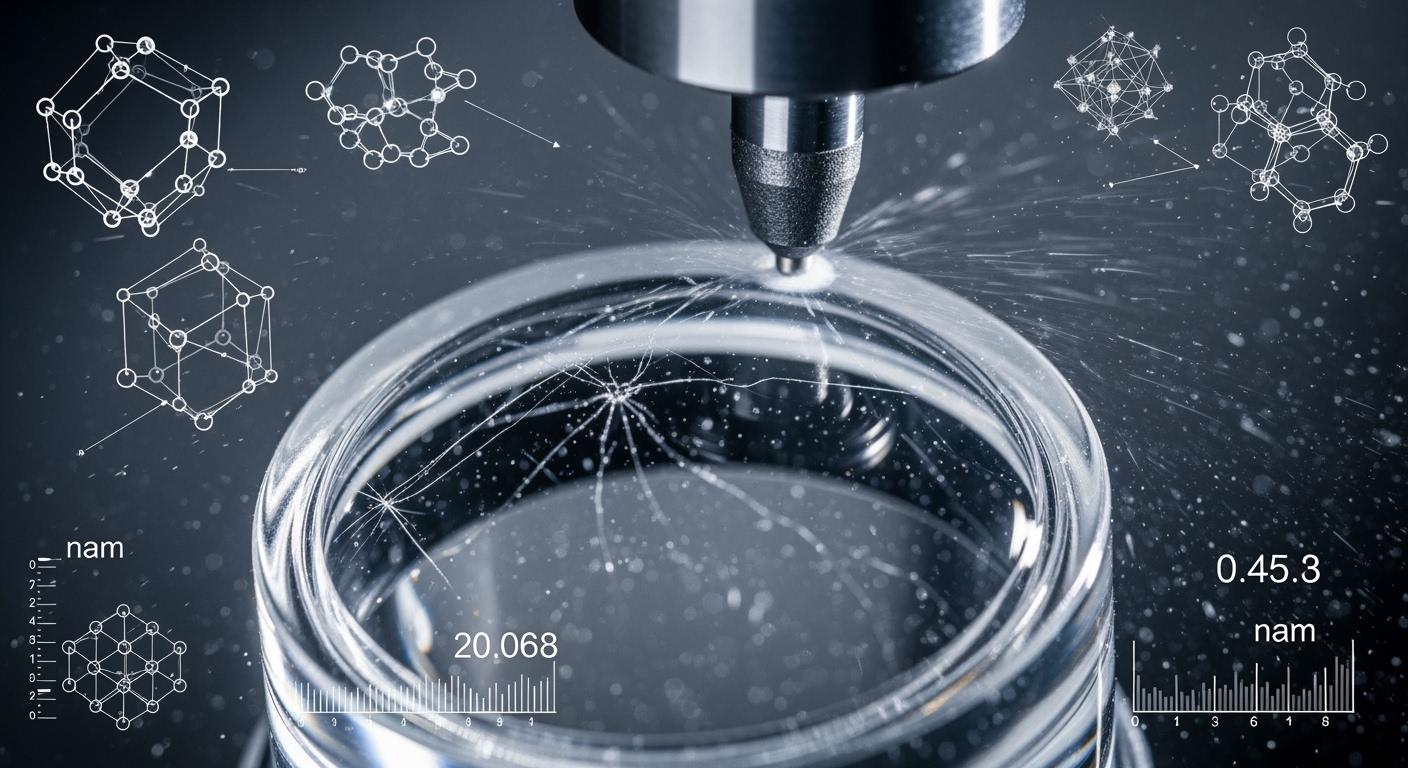
You can control subsurface damage in optical glass grinding by carefully selecting process parameters. For example, choosing a shallow wheel depth of cut, such as 1.0 μm, helps you achieve a crack-free surface and boosts the optical performance and durability of your glass components. Advanced tools like Aimgrind diamond grinding wheels give you precise control and consistent results for demanding optical applications.
Key Takeaways
- Select smaller abrasive particles to minimize subsurface damage and achieve a smoother surface finish.
- Monitor grinding parameters like wheel speed and depth of cut to control subsurface damage effectively.
- Use advanced tools like Aimgrind diamond grinding wheels for precise control and consistent results in optical glass grinding.
- Implement stepwise polishing and the 3X removal method to gradually eliminate subsurface damage and enhance optical quality.
- Regularly assess both surface and subsurface conditions using microscopy or selective etching to ensure high optical performance.
Subsurface Damage in Optical Glass
Causes of Subsurface Damage
When you grind optical glass, you create subsurface damage beneath the surface. This damage forms because optical glass is brittle. During grinding, cracks can appear. Abrasive particles may scratch the surface. Sometimes, the grinding process leaves indentations from the pressure you apply. You also create residual stress in the glass, which can affect its strength.
Here is a table that shows the main causes of subsurface damage in optical glass grinding:
| Mechanism | Description |
|---|---|
| Cracks | Generated during grinding due to the brittle nature of optical glass. |
| Scratches | Formed from abrasive interactions, affecting surface integrity. |
| Indentations | Result from external forces applied during the grinding process. |
| Residual Stress | Created as a byproduct of the grinding process, impacting the material’s performance. |
| Influence of Parameters | Factors like abrasive grain size, grinding pressure, and duration significantly affect subsurface damage. |
You can control subsurface damage by adjusting grinding parameters. For example, using smaller abrasive grains can give you a finer surface finish, but it may also increase the depth of subsurface damage. Longer grinding times and higher surface roughness can also make the subsurface damage worse.
Impact on Optical Performance
Subsurface damage affects how well your optical components work. Cracks and roughness under the surface can lower the mechanical strength of the glass. They also reduce the optical quality by scattering light and causing unwanted reflections. If you leave too much subsurface mechanical damage, your optical glass may not perform as expected.
You can see the relationship between surface roughness and subsurface damage in the following way:
- Higher surface roughness leads to deeper subsurface damage.
- The depth of the damaged layer is often measured with microscopes and special tests.
- There is a direct link between the height of the roughness profile and the thickness of the subsurface damage layer.
Tip: Always check both the surface and the subsurface when you want high-quality optical glass. Even if the surface looks smooth, hidden damage below can still affect performance.
By understanding these causes and effects, you can make better choices in your grinding process and improve the quality of your optical products.
Grinding Process Optimization with Aimgrind Diamond Grinding Wheels
When you want to achieve high-quality optical glass, you need to focus on the grinding process. Aimgrind diamond grinding wheels give you the control and precision needed for this task. These grinding tools help you manage the grinding rate, reduce subsurface damage, and improve the surface finish of your optical components. Aimgrind offers a range of diamond grinding wheels that match your equipment and process needs, making them a reliable choice for optical glass grinding.
Abrasive Particle Size Selection
Choosing the right abrasive particle size is one of the most important steps in controlling subsurface damage. If you use smaller abrasive particles, such as those around 30 microns, you can reduce the risk of damage to the optical glass. Larger particles, like 60 microns, tend to create deeper cracks and more subsurface issues. Finer abrasives help you achieve a smoother surface and protect the subsurface from hidden cracks.
Note: Always select the finest abrasive size that still allows you to maintain an efficient grinding rate. This balance helps you protect the optical quality of your glass while keeping the process productive.
Aimgrind diamond grinding wheels come in a variety of grit sizes. You can choose the right size for your specific optical application. This flexibility lets you optimize the grinding process for both speed and quality.
Process Parameters and Quality Control
You need to pay close attention to process parameters during optical glass grinding. These parameters include wheel speed, depth of cut, feed rate, and grinding pressure. Each one affects the final surface and subsurface condition of your optical glass.
- Critical undeformed chip thickness controls the switch from brittle to ductile removal. If you keep the chip thickness low, you can avoid cracks and get a better surface.
- Depth of cut and wheel speed are key factors. A shallow depth of cut and the right wheel speed help you achieve a smooth surface and reduce subsurface damage.
Quality control is also essential. You can use several methods to monitor and evaluate subsurface damage during the grinding process. Here is a table that shows some common quality control methods:
| Method | Description |
|---|---|
| Chemical Etching | Uses HF chemical etching to reveal and measure subsurface damage linked to grinding parameters. |
| Statistical Models | Evaluates subsurface damage by analyzing grinding process data. |
| Planetary Grinding Method | Uses bonded abrasives to study and detect subsurface damage. |
| Relation Establishment | Connects subsurface damage with surface roughness, especially for BK7 glass. |
| Nondestructive Evaluation | Allows you to check subsurface damage during and after grinding without harming the glass. |
| Process Parameter Optimization | Helps you adjust grinding parameters to control and minimize subsurface damage. |
You can also improve the surface quality by adjusting polishing time, pressure, and abrasive concentration. For example, when you change these parameters, you can lower the surface roughness of N-BK7 optical glass from 0.350 µm to 0.018 µm. This shows that careful control of the grinding process leads to better optical performance.
Tip: Always monitor both the surface and subsurface during grinding. Use quality control methods to catch hidden damage early and keep your optical glass performing at its best.
Aimgrind diamond grinding wheels, combined with the right process parameters and quality control, help you achieve consistent results. You can trust these grinding tools to deliver the precision and reliability needed for advanced optical applications.
Assessing Subsurface Mechanical Damage
Microscopy and Selective Etching Methods
You can use microscopy and selective etching to check for subsurface mechanical damage in optical glass. Microscopy helps you see the layers of cracks and roughness that form under the surface. Studies show that the roughness and crack layers you find with these methods can lower the mechanical and optical performance of your glass. When you want to reveal hidden cracks and defects, selective etching works well. This process uses chemicals to highlight areas where the structure has changed.
Here is a table that shows how selective etching reveals subsurface cracks and defects in optical glass:
| Evidence Description | Methodology Used |
|---|---|
| Etch rates correlate strongly with the morphology of dielectric modifications, particularly self-ordered nanocracks. | Focused femtosecond laser radiation and selective chemical etching. |
| Atomic force microscopy (AFM) and scanning electron microscopy (SEM) were employed to assess modification morphologies post-etching. | Assessment of structural characteristics. |
You can use atomic force microscopy or scanning electron microscopy after etching to see the cracks and changes in the surface. These tools help you understand how the grinding process affects the glass.
Advanced Evaluation Techniques
You have more advanced ways to measure subsurface mechanical damage in optical glass. These methods let you see how deep the damage goes and how it connects to surface roughness. Research shows that the damaged area has roughness and crack layers that can hurt both mechanical and optical performance. The depth of the damaged layer often matches the total height of the roughness profile. When you use abrasive grains during grinding, you create surface damage quickly. If you grind for a longer time, the damage spreads deeper.
However, you should know about some limits of current assessment methods:
- The methods take a lot of time.
- The process may change or destroy the surface.
- You need expensive equipment and skilled operators.
- Preparation work can be slow and difficult.
Tip: Always balance the need for detailed assessment with the time and resources you have. Choose the method that fits your optical application best.
By using these techniques, you can better control subsurface damage and improve the quality of your optical glass products.
Strategies to Minimize Subsurface Damage
Stepwise Polishing and 3X Removal Method
You can achieve minimal subsurface damage in optical glass by using stepwise polishing. This method involves removing the damaged layer in stages. You start with coarse abrasives and gradually switch to finer ones. Each step reduces the depth of cracks and scratches left from the previous grinding process. The 3X removal method helps you control the process. You remove three times the thickness of the subsurface damage layer. This ensures that you eliminate hidden cracks and improve the optical quality.
You follow these steps for the 3X removal method:
- Measure the thickness of the damaged layer after grinding.
- Choose the right abrasive size for the next polishing step.
- Remove material equal to three times the measured thickness.
- Repeat the process with finer abrasives until you reach the desired surface quality.
Tip: Always check the surface roughness after each polishing step. This helps you track your progress and avoid leaving subsurface cracks.
Stepwise polishing gives you better control over the grinding process. You protect the optical performance and extend the lifespan of your glass components.
Process Improvement and Best Practices
You can improve the grinding process by focusing on key factors that affect subsurface damage. You select the right grinding media and optimize machining parameters. You also use advanced grinding techniques to enhance surface quality.
Here are some best practices for minimizing subsurface damage:
- Select grinding media with high hardness and exceptional strength. Diamond abrasives offer excellent wear resistance and processing efficiency. They also have environmentally friendly characteristics.
- Optimize wheel speed, feed rate, and depth of cut. Lower grinding pressure and smaller abrasive grain size help you reduce subsurface damage.
- Use solid abrasive grinding processes for superior quality and efficiency. Diamond abrasives are recommended for their hardness and wear resistance.
- Match rough grinding surfaces to lifespan criteria. This reduces scratches and maximizes the surface finish.
- Apply response surface methodology (RSM) to optimize cutting conditions. This helps you find the best process parameters for your optical glass.
You can also use the planetary grinding method with bonded abrasives. This method analyzes the effects of abrasive grain size and grinding pressure on surface quality. You evaluate subsurface damage after grinding and optimize process parameters to control it. You study grinding parameters in relation to surface finish and aim to maximize the lifespan of glass workpieces by measuring scratches and cracks.
Note: Consistent monitoring of the grinding process helps you catch subsurface damage early. You maintain high optical quality by adjusting your process as needed.
You achieve minimal subsurface damage by following these best practices. You protect the optical performance and durability of your glass components. You also improve the efficiency of your grinding process and extend the life of your workpieces.
You can control subsurface damage in optical glass by following key strategies:
- Choose smaller grinding media to reduce cracks.
- Use proper surface preparation methods like rotary or double side grinding.
- Assess the surface with tools such as microscopy or acid etching.
Ongoing process evaluation helps you understand how materials behave during grinding and keeps your optical components strong. New innovations also support your work:
| Innovation Type | Description |
|---|---|
| Shear-Thickening Polishing (STP) | Flexible polishing that minimizes subsurface damage in fused quartz glass. |
| Inert Ion Beam Etching | Layer-by-layer etching that improves surface quality and reduces subsurface damage. |
| Magnetization-Enhanced Polishing | Predictive model for accurate detection of subsurface damage depth in silicon carbide materials. |
You achieve consistent optical quality by using advanced tools like Aimgrind diamond grinding wheels and adopting new techniques.
FAQ
What is subsurface damage in optical glass grinding?
Subsurface damage means cracks or scratches below the surface of your glass. You cannot see this damage with your eyes. It affects the strength and optical quality of your glass.
How do Aimgrind diamond grinding wheels help reduce subsurface damage?
Aimgrind diamond grinding wheels use hard diamond particles. You get a smoother surface and fewer cracks. These wheels let you control grinding depth and speed for better results.
Which abrasive size should you choose for optical glass grinding?
You should pick smaller abrasive sizes for optical glass. Fine abrasives create less subsurface damage. You get a smoother finish and higher optical quality.
How can you check for subsurface damage after grinding?
You can use microscopes or selective etching. These tools show hidden cracks and roughness. You see how deep the damage goes and decide if more polishing is needed.
What are the best ways to minimize subsurface damage?
You should use stepwise polishing and the 3X removal method. You remove damaged layers in stages. You also monitor grinding parameters and use quality tools like Aimgrind diamond wheels.
Contact Us
For More Grinding Solution or Customized Abrasive Tools