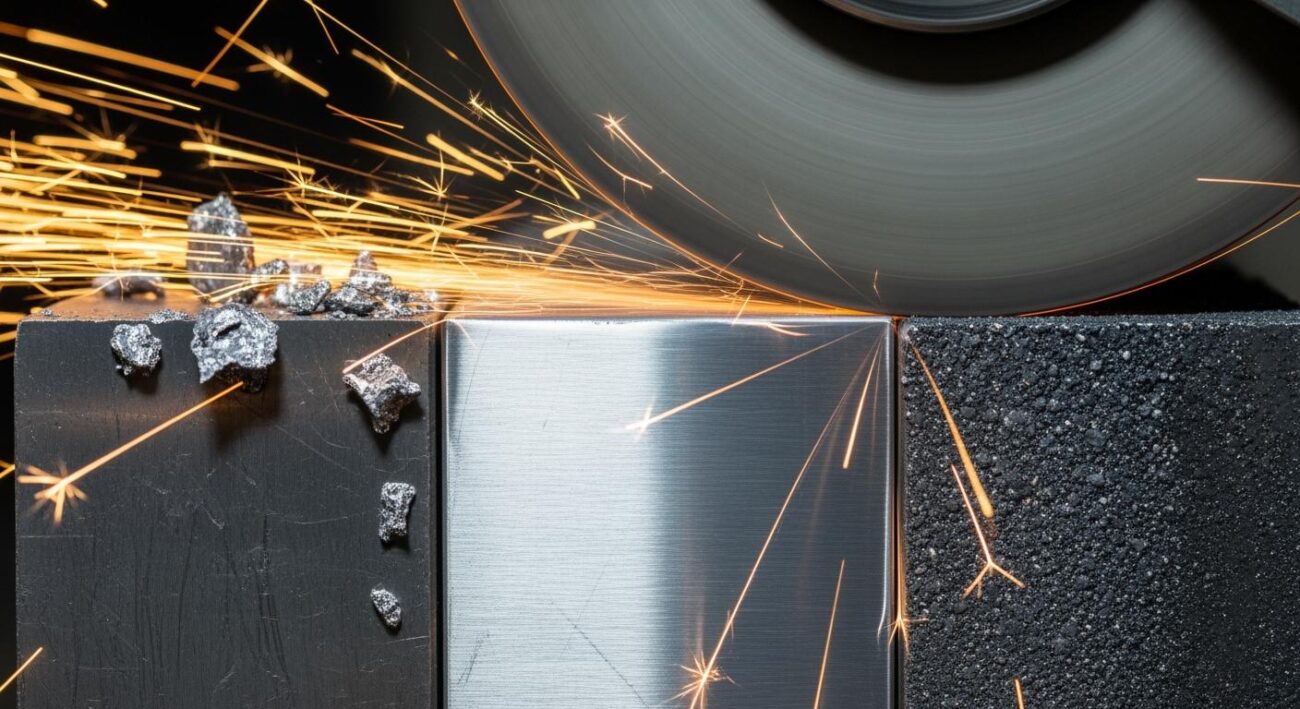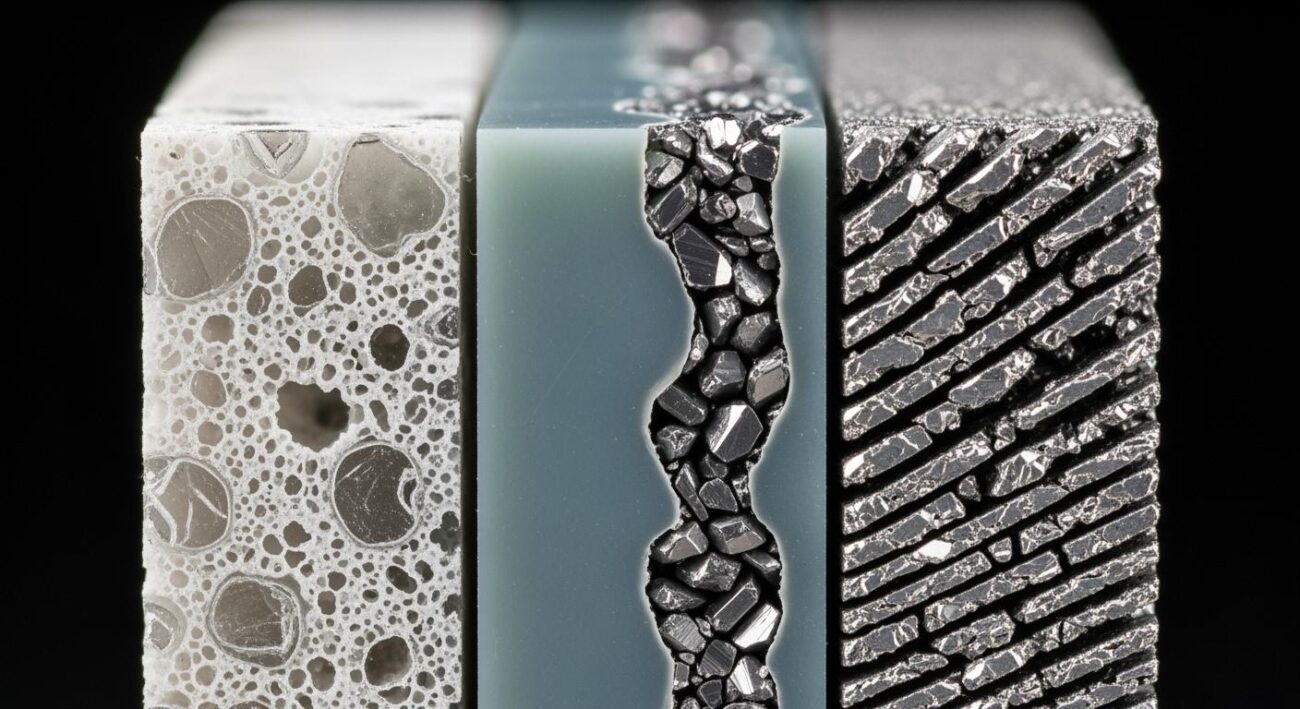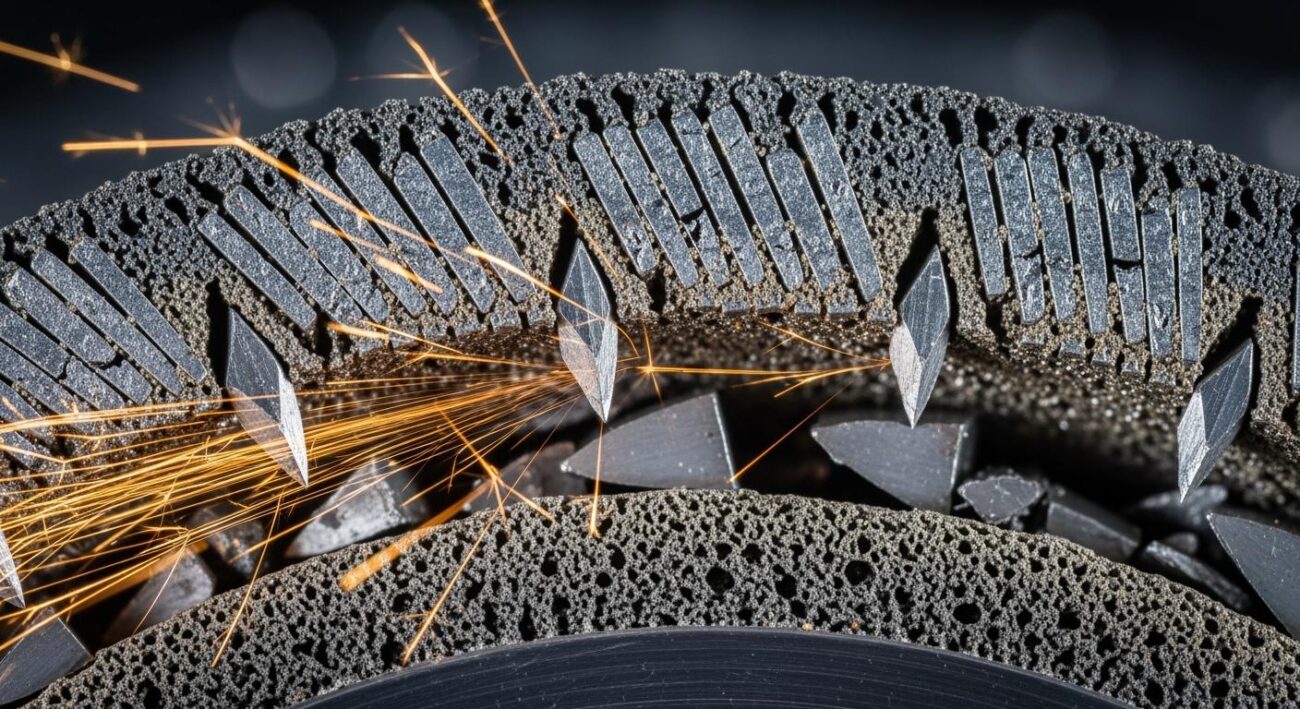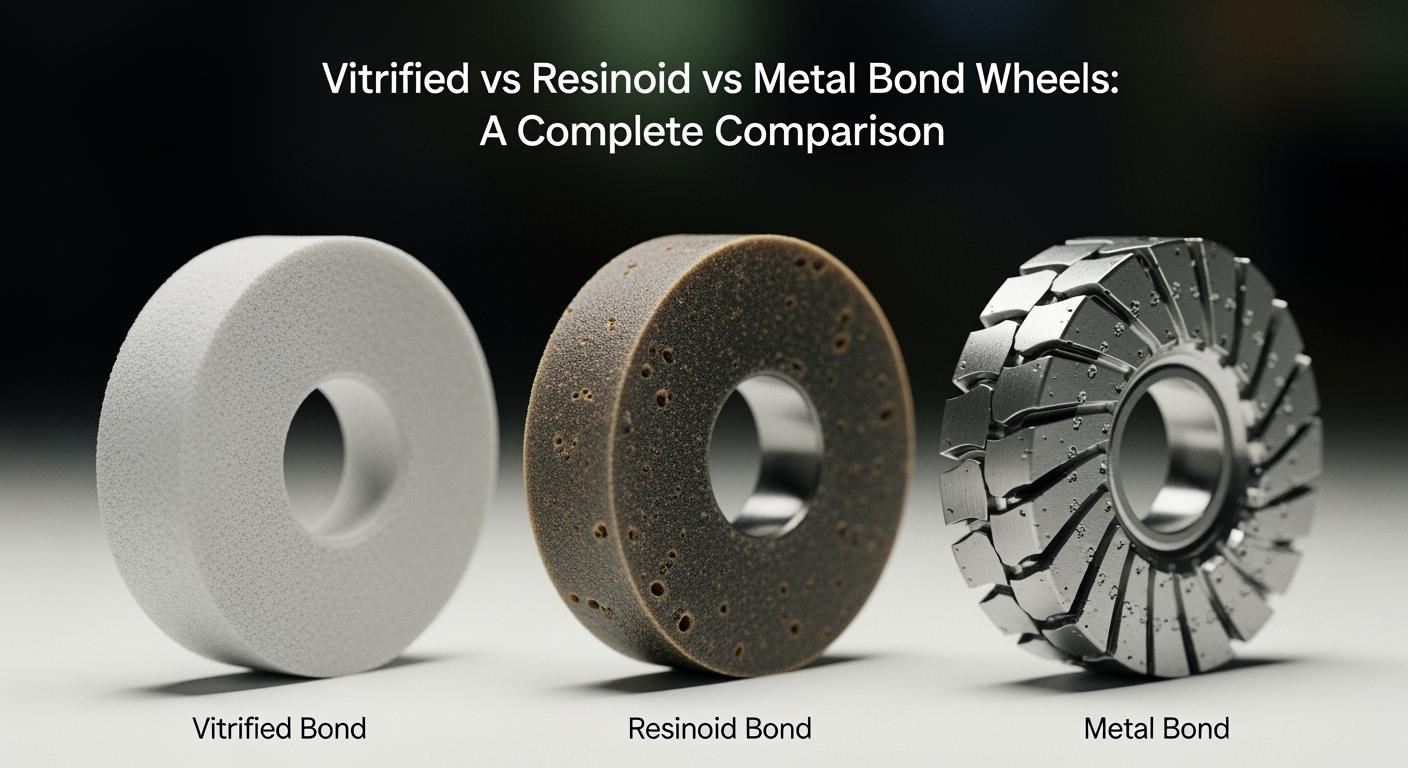
You want to know which bond works best for your grinding job. The answer depends on your material, speed, and finish needs. Vitrified vs Resinoid wheels each offer unique strengths, and metal bond wheels serve special uses. You can check the summary table below for a quick side-by-side look. Aimgrind helps you choose the right bond for your project. You get expert advice, custom bond formulas, and support for every grinding challenge.
Key Takeaways
- Choose the right bond type based on your material and grinding needs. Vitrified bonds excel in precision, resinoid bonds are great for flexibility, and metal bonds are best for durability.
- Consider the application of the grinding wheel. Vitrified wheels work well for hard materials, resinoid wheels are ideal for fast stock removal, and metal bond wheels are perfect for high-speed grinding.
- Understand the performance characteristics of each bond. Vitrified wheels offer high rigidity and thermal stability, resinoid wheels provide flexibility and better finishes, while metal bonds ensure exceptional wear resistance.
- Evaluate cost-effectiveness. Vitrified wheels may have a higher initial cost but last longer, while resinoid wheels are cheaper upfront but may need more frequent replacements.
- Seek expert advice from Aimgrind for custom solutions tailored to your specific grinding challenges. Their experience can help you achieve better results and save money.
Quick Comparison: Vitrified vs Resinoid vs Metal Bond
Key Differences Table
You need to understand how each bond type performs before you choose a grinding wheel. The table below shows the main differences in material composition, hardness, and thermal resistance. This helps you see which bond fits your needs best.
| Type | Material Composition | Hardness | Thermal Resistance |
|---|---|---|---|
| Vitrified | Mixture of clays, feldspars, and ceramic materials | Rigid, exceptional strength | Excellent heat resistance, stable at high temperatures |
| Resinoid | Phenolic resins and organic materials | More flexible | Less heat-resistant, suitable for lower forces |
| Metal Bond | Mixture of metal powders with a metallic binder | Strongest bond type | Less sensitive to heat, ideal for high-speed grinding |
Tip: You can ask Aimgrind for custom bond formulas. Aimgrind matches the right bond to your material and grinding process.
Best Applications Overview
You want the right bond for your grinding job. Each bond type works best in certain applications. Here is a quick overview to help you decide:
Vitrified Bond:
You use this bond for precision surface grinding, cylindrical grinding, and tool sharpening. It gives you flat, accurate surfaces and holds shape well. You get excellent results in high-precision applications.Resinoid Bond:
You choose this bond for fast stock removal and jobs that need a flexible wheel. It works well for cutting, rough grinding, and applications with lower heat.Metal Bond:
You pick this bond for high-speed grinding and when you need the strongest wheel. It is ideal for glass, ceramics, and superhard materials. You get long life and stable performance.
Aimgrind supports you with custom solutions for all three bond types. You can rely on Aimgrind to design the perfect grinding wheel for your unique applications.
Understanding Grinding Wheel Bonds
What Is a Bond?
When you look at a grinding wheel, you see a solid disc, but the real secret lies inside. The bond is the material that holds the abrasive grains together. It acts like glue, giving the wheel its shape and strength. Without the right bond, the wheel would fall apart or not work as expected. Each bond type has unique properties that affect how the wheel performs during grinding.
You can see the main properties and strengths of different bonds in the table below:
| Bond Type | Key Properties | Strengths |
|---|---|---|
| Vitrified | High rigidity and strength, porosity, chemical inertness, excellent form holding, good dressability | Precision grinding, high stock removal rates, versatility with conventional abrasives, long life |
| Resinoid | Good strength and toughness, elasticity/resilience, heat sensitivity, variety of formulations | High-speed operations, rough grinding and stock removal, cut-off wheels, good for superabrasives |
The bond controls how the abrasive grains break away and how the wheel wears down. This means you get different results depending on which bond you choose.
Why Bond Type Matters in Grinding
You need to pick the right bond for your grinding job because it affects efficiency, quality, and cost. The bond type changes how the wheel reacts to heat, pressure, and the material you are working on. For example, a vitrified bond works well for hard and brittle materials, while a resinoid bond fits softer or more ductile materials.
Here are some important questions to ask when choosing a bond:
| Consideration Category | Key Question(s) to Ask | General Implication for Bond Choice |
|---|---|---|
| Workpiece Material | What is the material? What is its hardness, toughness, and thermal sensitivity? | Hard or brittle: vitrified or metal bond. Soft or ductile: resinoid or softer vitrified bond. |
| Grinding Objective(s) | What is the primary goal: high stock removal, fine surface finish, or tight accuracy? | High stock removal: resinoid or porous vitrified. Fine finish: fine grit vitrified or resinoid. Tight tolerance: vitrified or metal. |
| Machine & Conditions | What is the machine’s power and speed? Is coolant used? | High speed: resinoid. Precision machine: vitrified. Dry grinding: heat-resistant bonds. |
You can trust Aimgrind to help you select the best bond for your needs. Aimgrind uses years of experience to match bond properties to your material and process. You get custom solutions that improve your grinding results and make your work easier.
Vitrified Bond Grinding Wheels by Aimgrind
Vitrified Bond Overview
You need to know what makes a vitrified bond special. This bond uses a mix of clays and ceramic materials. When you heat these materials, they form a strong and rigid structure. You get a vitrified wheel that holds its shape well. This bond works best for jobs that need high accuracy and a smooth finish.
Properties and Performance
You will notice that vitrified bond grinding wheels have unique properties. The bond gives the wheel high hardness and excellent thermal stability. You can use these wheels at high speeds without losing performance. The vitrified bond also helps the wheel resist wear. You get a long-lasting tool that keeps working well. The bond allows for good heat dissipation, so your workpiece stays safe from thermal damage.
Tip: You can use vitrified bond grinding wheels for both wet and dry grinding. This gives you more options for your process.
Advantages of Aimgrind Vitrified Bond Wheels
You get many benefits when you choose Aimgrind’s vitrified bond wheels. The bond provides strong adhesion for the abrasive grains. This means you get consistent grinding results. The vitrified bond also reduces the need for frequent wheel changes. You save time and money. Aimgrind offers many sizes and shapes, so you can find the right wheel for your job. You also get support from Aimgrind’s experts to match the bond to your needs.
Typical Applications
You can use vitrified bond grinding wheels in many industries. These wheels work well for grinding hard metals, ceramics, and composites. You will see them in manufacturing, automotive, and aerospace. You can use a vitrified wheel for surface grinding, tool sharpening, and precision work. The bond gives you the accuracy and finish you need for high-quality results.
Resinoid Bond Grinding Wheels
Resinoid Bond Overview
You see resinoid bond as the most common organic bond type in grinding wheels. This bond uses synthetic resin to hold abrasive grains together. You get a wheel that softens under heat, which helps with rapid stock removal. Resinoid wheels stand out for their flexibility and ability to deliver better finishes compared to vitrified wheels.
Resinoid-bonded wheels are ideal for jobs where you need quick material removal and a smooth surface.
Here is a table comparing the defining characteristics of resinoid and vitrified wheels:
| Characteristic | Resinoid Wheels | Vitrified Wheels |
|---|---|---|
| Composition | Made from synthetic resin | Made from glass-ceramic |
| Stock Removal | Rapid stock removal | Moderate stock removal |
| Finish Quality | Better finishes | Varies |
| Damping Characteristics | Higher damping | Lower damping |
| Modulus Values | 15 to 35 GPa | 25 to 70 GPa |
Properties and Performance
You benefit from moderate flexibility and heat resistance with resinoid bond. These wheels operate at high speeds and temperatures, up to 150°C, without losing shape or finish quality. You notice higher damping, which reduces vibration during grinding operations. This bond gives you a wheel that adapts well to tough materials and heavy-duty tasks.
Tip: Resinoid wheels are effective for grinding stainless steel and other hard metals.
Advantages and Limitations
You gain several advantages with resinoid bond. These wheels withstand higher temperatures and offer longer lifespan than many other types. You find them suitable for grinding materials like stainless steel. However, you may see some limitations in extreme heat or when you need very rigid wheels.
| Advantages | Limitations |
|---|---|
| Can withstand higher temperatures | May soften under extreme heat |
| Suitable for materials like stainless steel | Less rigid than vitrified bond |
| Longer lifespan compared to other types | Not ideal for ultra-precision |
Common Uses
You use resinoid bond grinding wheels in many industries. Here are the most common applications:
- Cut-off operations: Slicing metal bars, pipes, and sheets with thin, reinforced wheels.
- Snagging and rough grinding: Removing gates, risers, and flashing from castings, smoothing weld beads.
- Portable grinding: Deburring and shaping on handheld grinders.
- Roll grinding: Grinding large industrial rolls.
- High-speed grinding: Conditioning steel billets in mills.
- Centerless bar grinding: Through-feed grinding of bars and tubes for high productivity.
Resinoid bond works well for steels, stainless steels, cast irons, non-ferrous metals, and superabrasives. You rely on these wheels for fast, efficient grinding operations.
Metal Bond Grinding Wheels
Metal Bond Overview
You will find that a metal bond grinding wheel uses a mixture of metals like bronze or iron to hold abrasive grains together. Manufacturers create this bond by hot pressing the materials in high-temperature molds. This process gives the metal bond its strength and makes it the hardest bond type available. You get a wheel that can handle tough jobs and high grinding forces.
Here is a table comparing the composition and performance of different bond types:
| Bond Type | Composition and Manufacturing Process | Performance Characteristics |
|---|---|---|
| Metal Bond | Made from metals like bronze and iron, hot pressed in high temperature molds. | Hardest bond type, generates high grinding forces, ideal for hard materials like glass and ceramics. |
| Vitrified Bond | Engineered with porosity, cold pressed and sintered. | Lower grinding forces, ideal for high volume production, can be readily dressed and formed. |
| Electroplated Bond | A single layer of abrasive bonded to a metallic core through a deposition process. | Complex shapes achievable, generally don’t require dressing, can be reconditioned for cost savings. |
Properties and Performance
You get high strength and durability with a metal bond. This bond stands out for its wear resistance and long life. You can use a metal bond grinding wheel for jobs that need high grinding forces. The wheel keeps its shape and precision even after many uses. You will notice that metal bond wheels work well for hard materials like glass, ceramics, and tough metals.
- Metal bond grinding wheels are characterized by high strength and durability, making them suitable for high grinding forces and wear resistance.
- Vitrified bond wheels offer excellent grinding performance and a long service life, making them comparable to metal bonds in specific applications.
- Resinoid bond wheels are more prone to heat and wear, leading to a shorter service life compared to both metal and vitrified bonds.
Advantages and Limitations
You benefit from several advantages when you use a metal bond. The bond provides exceptional wear resistance and a long wheel life. You get high thermal conductivity, which helps keep your workpiece cool. The metal bond maintains form and precision, even during tough grinding jobs. You also get strong and rigid support for abrasive grains, so the wheel withstands high grinding forces.
However, you may face some limitations. Metal bond wheels are more expensive than other types. You might find them harder to dress and sharpen. The manufacturing process also costs more, and maintenance can be higher.
Advantages:
- Exceptional wear resistance
- Long wheel life
- High thermal conductivity
- Maintains form and precision
- High strength and durability
- High grinding efficiency
- Strong and rigid support for abrasive grains
- Withstands high grinding forces
Limitations:
- Difficulty in dressing and truing
- Higher manufacturing costs
- Less versatility
- Increased maintenance costs
Note: You should choose a metal bond when you need a wheel that lasts a long time and keeps its shape, even under tough conditions.
Typical Applications
You will see metal bond grinding wheels in many industries. These wheels work best for jobs that need high precision and long life. Here are some common applications:
| Application Type | Benefits/Description |
|---|---|
| Centerless Grinding | Outstanding interrupted cuts, maintains original dimensions |
| Cylindrical Grinding | Effective for energetic grinding actions |
| Creep Feed Grinding | Superior quality service, minimal maintenance required |
| Deburring | Retains tool dimensions during use |
| Cutoff Applications | Performs well under high-energy conditions |
| Surface Grinding | Achieves a smooth finish on flat surfaces |
| Deep Cutting | Cuts through thick materials |
| Glass Cutting | Specialized for precision cutting of glass materials |
| Grooving | Ideal for creating grooves in various materials |
| Wet or Dry Grinding | Versatile for different grinding conditions |
| OD Grinding | Used for external diameter grinding applications |
| Metal Working | Applicable in various metalworking processes |
You can rely on a metal bond grinding wheel for tasks that demand accuracy, durability, and a long service life.
Vitrified vs Resinoid: Which Grinding Wheel to Choose?
Performance Comparison
You want to know how vitrified vs resinoid wheels compare in grinding jobs. The bond type affects how the wheel works and how well it handles different materials. Vitrified wheels use a mix of clay, feldspar, and quartz, fired in a kiln. Resinoid wheels use synthetic resins like phenolic or polyimide. You see that vitrified vs resinoid wheels each have unique strengths.
Here is a table that shows how these wheels perform in grinding and surface finish quality:
| Feature | Vitrified Bond Grinding Wheels | Resinoid Bond Grinding Wheels |
|---|---|---|
| Bond Material | Mixture of clay, feldspar, and quartz, fired in a kiln | Made from synthetic resins like phenolic or polyimide |
| Characteristics | Durable, heat resistant, withstands high loads | Flexible, resilient, suitable for high shock loads |
| Applications | Heavy-duty grinding, precision machining | Applications with high grinding forces |
| Grinding Efficiency | Excellent performance, high precision | Good for flexible applications |
| Surface Finish Quality | Ideal for high accuracy and surface finish | Suitable for applications needing resilience |
You get excellent performance with vitrified wheels when you need high precision and a smooth finish. Resinoid wheels work well when you need flexibility and resilience. You can choose the bond type that fits your grinding needs.
Tip: If you need high accuracy and a fine surface, you should pick vitrified wheels. If you need a wheel that can handle shock and flexible jobs, resinoid wheels are a good choice.
Durability and Cost
You want your grinding wheel to last and to be cost-effective. Vitrified vs resinoid wheels show differences in durability and cost. Vitrified wheels have a rigid bond that gives you long life and strong wear resistance. You can use them for many grinding jobs without frequent replacements. Resinoid wheels have a softer bond. They offer flexibility but may wear out faster in tough jobs.
You see that vitrified wheels often cost more at first. You get value because they last longer and need less maintenance. Resinoid wheels cost less and are easier to replace. You may need to change them more often if you use them for heavy-duty grinding.
- Vitrified wheels: Long-lasting, strong bond, higher initial cost, less frequent replacement.
- Resinoid wheels: Flexible bond, lower cost, more frequent replacement, good for quick jobs.
Note: You save money over time with vitrified wheels if you need durability. You spend less upfront with resinoid wheels but may need to buy more often.
Application Suitability
You need to match the bond type to your material and grinding job. Vitrified vs resinoid wheels each fit different applications. Vitrified wheels work best for hard materials like hardened steels, ceramics, and superabrasives. You get high precision and a smooth finish. Resinoid wheels fit jobs with high shock loads and flexible needs.
Here is a list that shows which bond type suits specific materials:
- Hardened Steels: Vitrified wheels give you the rigidity needed for grinding tool steels and alloy steels.
- Superabrasives (CBN) for Ferrous Alloys: Vitrified CBN wheels are ideal for grinding hardened ferrous materials. You get long life and high precision.
- Superabrasives (Diamond) for Non-Metallics: Vitrified diamond wheels help you grind advanced ceramics and tungsten carbide.
- Flexible Applications: Resinoid wheels work well for jobs with high grinding forces and shock loads.
You can use vitrified wheels for precision machining, heavy-duty grinding, and jobs that need a fine finish. You use resinoid wheels for cutting, rough grinding, and jobs that need flexibility.
Tip: You should choose vitrified wheels for hard materials and high-precision jobs. You should pick resinoid wheels for flexible tasks and quick material removal.
You see that the right bond type helps you get the best results. You can ask Aimgrind for help in choosing the best wheel for your grinding needs. Aimgrind offers custom solutions for all types of abrasives and grinding wheels.
How to Select the Right Grinding Wheel Bond
Key Factors to Consider
You need to choose the right grinding wheel bond for your job. The bond affects how the grinding wheel works, how long it lasts, and how much it costs to use. You should look at several key factors before you decide.
Material Type
Start by looking at what you want to grind. Hard metals, ceramics, and composites often need a vitrified bond. If you work with softer metals or need a flexible wheel, resin bond is a better choice. For glass, stone, or superhard materials, metallic-bonded wheels give you the best results.Application and Finish
Think about what you want to achieve. If you need a smooth finish and high accuracy, a vitrified bond or resin bond grinding wheel works well. For fast stock removal, resin bond wheels are the top pick. When you need a wheel that keeps its shape for a long time, choose a metal bond.Industry Needs
Each industry has different needs. In tool manufacturing, you often need a superabrasive grinding wheel with a resin bond for cutting tools. In glass processing, metallic-bonded wheels help you get clean edges. For aerospace, you may need a vitrified bond for precision and durability.Machine and Speed
Check your grinding machine’s power and speed. High-speed machines work best with resin bond wheels. If your machine runs at lower speeds or needs high precision, a vitrified bond is a good fit.Cost and Productivity
The bond material in grinding wheels plays a big role in productivity and cost-effectiveness. Harder bonds last longer, so you spend less on replacements. Softer bonds, like resin, help you grind faster and expose new abrasive grains quickly. This can make your work more efficient in some jobs. Picking the right bond helps you get the best performance and save money.
Here is a simple table to help you match your needs:
| Factor | Best Bond Type | Why Choose It? |
|---|---|---|
| Hard Materials | Vitrified, Metal | High strength, keeps shape |
| Fast Stock Removal | Resin | Flexible, quick grinding |
| High Precision | Vitrified, Resin | Smooth finish, tight tolerances |
| Superhard Materials | Metal | Long life, stable performance |
| High-Speed Grinding | Resin | Handles heat, works at fast speeds |
Tip: Always match the bond to your material and your goal. This helps you get the best results and control your costs.
Aimgrind’s Custom Solutions
You do not have to make this choice alone. Aimgrind gives you expert help to select the right grinding wheel bond for your job. You get a personalized service that starts with understanding your needs. Aimgrind listens to your goals, your materials, and your equipment.
Personalized Selection
Aimgrind studies your grinding process and recommends the best bond. You can get resin bond, vitrified bond, or metallic-bonded wheels made just for your application. Aimgrind uses advanced formula design to match the bond to your workpiece and machine.Support at Every Step
You get help from start to finish. Aimgrind helps you diagnose problems, match parameters, and test samples. If you need a special resin bond for a superabrasive grinding wheel, Aimgrind can create it. If your job needs a unique shape or size, Aimgrind can make it.Industry Experience
With nearly two decades of experience, Aimgrind knows the performance characteristics of every bond type. You can trust Aimgrind to help you improve productivity and get the most value from your grinding wheels.Wide Range of Solutions
You can choose from resin bond, vitrified bond, and metallic-bonded wheels for many industries. Whether you work in aerospace, tool manufacturing, or glass processing, Aimgrind has a solution for you.
Note: Aimgrind’s team helps you select the right grinding wheel bond, so you get better results and save money on every project.
If you want to improve your grinding process, reach out to Aimgrind. You will get a custom solution that fits your needs and helps you achieve the best possible results.
You now see how vitrified, resinoid, and metal bond grinding wheels each serve different needs. Use the table below to match your requirements to the right bond:
| Factor | Recommendation |
|---|---|
| Surface Finish | Choose finer grits for smooth results |
| Dimensional Tolerance | Pick harder grades for accuracy |
| Stock Removal | Softer bonds help remove more material |
Aimgrind helps you select the best bond for your job. Reach out for a custom solution.
FAQ
What materials can you grind with vitrified, resinoid, and metal bond grinding wheels?
You can use grinding wheels on metals, ceramics, glass, and composites. Vitrified wheels work well for hard metals and ceramics. Resinoid wheels suit softer metals and fast jobs. Metal bond wheels handle glass, stone, and superhard materials.
How do you choose the right grinding wheels for your application?
You should check your material, machine speed, and finish needs. Grinding wheels with vitrified bonds give you accuracy. Resinoid wheels offer flexibility. Metal bond wheels last longer. You can ask Aimgrind for help with selection.
Can you use grinding wheels for both wet and dry grinding?
Yes, you can use many grinding wheels for wet or dry grinding. Vitrified wheels handle both methods. Resinoid wheels work best with coolant. Metal bond wheels also support wet and dry grinding. Always follow safety guidelines.
How often should you replace your grinding wheels?
You should replace grinding wheels when you see cracks, chips, or reduced performance. Regular checks keep you safe. High-quality wheels from Aimgrind last longer. Always inspect your wheels before each use.
Why do grinding wheels come in different shapes and sizes?
Grinding wheels come in many shapes and sizes to fit different machines and jobs. You need the right shape for your task. Flat wheels grind surfaces. Cup wheels shape edges. Aimgrind offers custom grinding wheels for every need.
Contact Us
For More Grinding Solution or Customized Abrasive Tools