

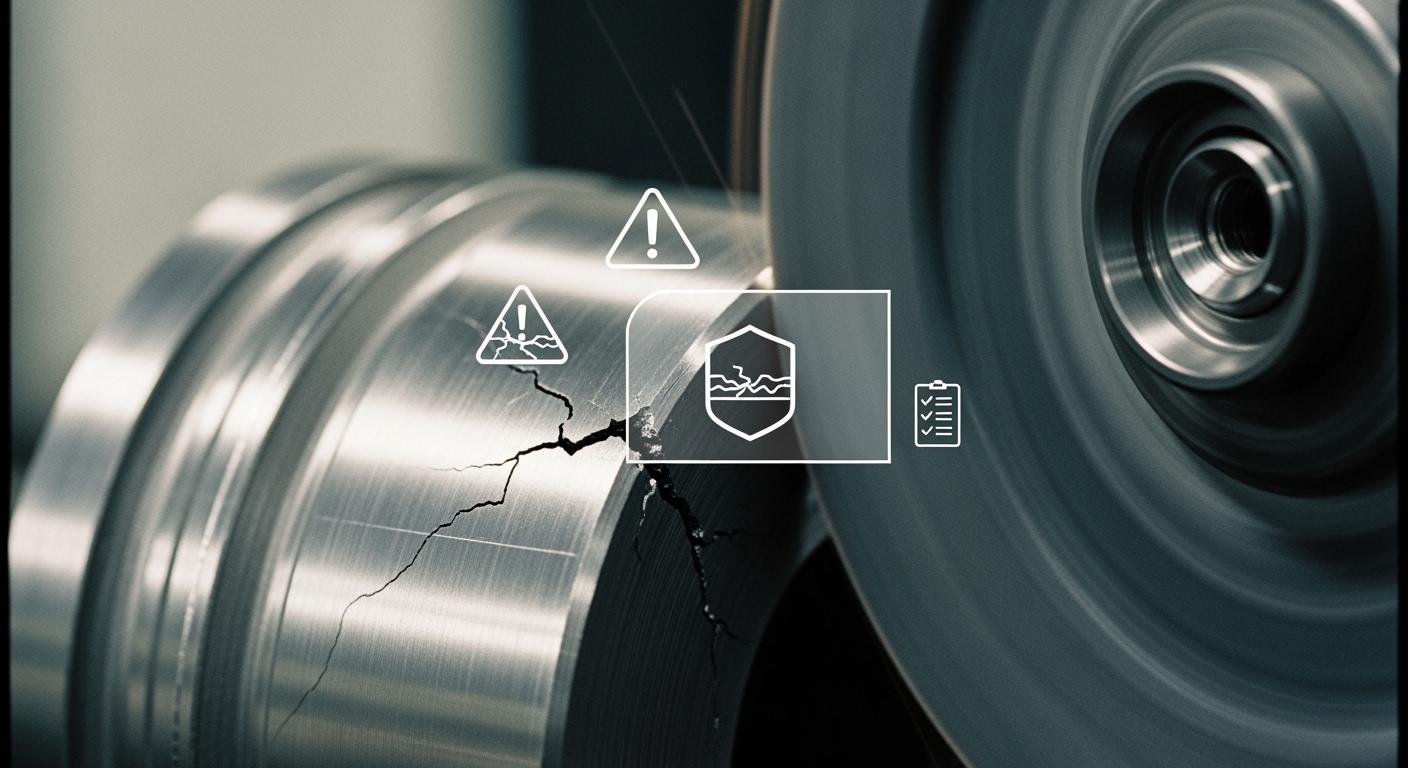
Grinding cracks in hardened steel often happen when you use too much heat, the wrong grinding wheel, not enough coolant, or set incorrect grinding parameters. You might see a crack form if surface tensile residual stresses increase during grinding. Abusive grinding can change the microstructure and make the steel more likely to fracture. To avoid these problems, you should follow preventive measures like picking the right wheel, using enough coolant, setting proper grinding parameters, and keeping your machine in good shape. Aimgrind’s expertise and CBN grinding wheels help reduce heat and improve your results.
Key Takeaways
- Understand the main causes of grinding cracks: excessive heat, improper wheel selection, insufficient coolant, and incorrect parameters.
- Choose the right grinding wheel for your steel type to ensure even material removal and reduce heat generation.
- Use adequate coolant during grinding to maintain low temperatures and protect the steel’s structure.
- Regularly maintain your grinding machine to prevent vibrations and ensure consistent performance.
- Monitor your grinding process closely and adjust parameters as needed to avoid creating excessive stress and cracks.
Main Causes of Grinding Cracks
Grinding cracks in hardened steel can happen for several reasons. You need to understand these causes of cracks to prevent damage and keep your workpieces strong. The table below shows the main causes and their explanations:
| Cause | Explanation |
|---|---|
| Excessive Heat | Grinding creates surface heating that can lead to cracks. |
| Improper Wheel Selection | Using the wrong grinding wheel can cause poor material removal and surface damage. |
| Insufficient Coolant | Not enough coolant raises temperatures and increases the risk of cracks. |
| Incorrect Parameters | High feed rates and heavy cuts add stress and can cause surface cracking. |
Excessive Heat
When you grind hardened steel, too much heat can change the metal’s structure.
- Excessive heat can make the grains in the steel larger and increase the amount of residual austenite.
- If the temperature gets too high, the steel can overheat, which weakens it.
- Grinding temperatures sometimes reach levels that are critical for quenching. This can cause stresses that go beyond the steel’s strength and lead to a crack.
Improper Wheel Selection
Choosing the wrong grinding wheel is a common cause of cracks. If you use a wheel that does not match the hardness or type of steel, you may not remove material evenly. Poor wheel selection can also cause the wheel to wear out quickly or load up, which increases friction and heat. This extra heat can make grinding cracks more likely.
Insufficient Coolant
Coolant keeps the grinding area cool and helps remove debris.
- If you do not use enough coolant, local temperatures can rise quickly.
- High temperatures may cause changes in the steel’s structure.
- These changes can create tensile stresses and lead to surface or sub-surface cracks.
Incorrect Parameters
Grinding cracks often start with thermal damage during finishing. Grinding friction can raise the surface temperature to 300-400°C. This heat can change the steel’s microstructure and create tensile stresses. If these stresses get too high, microcracks can form at the grain boundaries.
Residual tensile stress from grinding can lower the part’s fatigue life. If the stress goes past the steel’s strength, a crack will form.
Machine Maintenance
Poor machine maintenance can also lead to grinding cracks. If your grinding machine is not in good condition, it may vibrate or run unevenly. This can cause uneven grinding and extra heat. Always check your machine and keep it well-maintained to avoid these problems. Regular maintenance helps you prevent bearing grinding cracks and other issues.
How Cracks Form in Hardened Steel
Thermal Stress
You see grinding cracks appear when grinding heats the steel too much. The grinding process raises the surface temperature, sometimes reaching 300-400°C. If the temperature goes above the tempering range, the hardness drops. This change creates tensile residual stresses under the surface. Over-tempered martensite forms, and you can spot it as a dark layer beneath the surface. The severity of grinding affects the residual stress state. If the tensile stress grows large enough, a crack can form.
- Grinding friction increases surface temperature.
- Hardness decreases when the workpiece gets too hot.
- Tensile residual stresses build up under the surface.
- Over-tempered martensite appears as a dark layer.
Residual Stress
Grinding leaves behind residual stresses in the steel. You need to watch for these stresses because they can cause cracks. When thermal stresses from grinding exceed the yield stress, cracks start to form. High residual tensile stresses matter most in carburized parts. Cracking happens if residual thermal stress goes past the ultimate tensile stress.
- Grinding friction heats the surface.
- Martensite transforms during tempering, changing the surface microstructure to troostite.
- This transformation creates tensile residual stresses.
- Microcracks begin to nucleate at grain boundaries.
Surface Integrity
Surface integrity means the surface stays strong and free from defects. Grinding can damage surface integrity if you do not control heat and stress. Dislocation movement and accumulation at grain boundaries cause stress concentrations. These concentrations lead to microcracks. Microcracks follow paths set by the steel’s microstructure. Material removal happens as these cracks grow. You must protect surface integrity to avoid bearing grinding cracks and keep your parts reliable.
Tip: Always check the surface after grinding. Look for signs of microcracks or dark layers. This helps you catch problems early.
Preventive Measures for Grinding Cracks
Grinding cracks in hardened steel can cause serious problems. You need to follow preventive measures to keep your parts strong and reliable. These steps help you avoid cracks and improve your grinding results.
Choosing the Right Wheel
You must select the right grinding wheel for your application. The wheel should match the hardness and type of steel you work with. If you use the wrong wheel, you risk uneven material removal and extra heat. You should dress the wheel properly before grinding. This keeps the wheel sharp and helps you avoid grinding cracks. Aimgrind offers customized grinding wheels that fit your needs. Their experts help you choose the best wheel for hardened steel. You get advice on wheel size, grit, and bond type. This support helps you prevent bearing grinding cracks and other surface defects.
Using CBN Grinding Wheels
CBN grinding wheels give you a big advantage when you grind hardened steel. These wheels have exceptional hardness and high thermal stability. You get faster cutting and cooler operation. CBN wheels keep their sharp edges longer and reduce grinding forces. This means you generate less heat and lower the risk of cracks. Aimgrind’s CBN grinding wheels help you achieve high-quality finishes and minimize grinding cracks. You can see the difference in the table below:
| Feature | CBN Grinding Wheels | Conventional Wheels |
|---|---|---|
| Hardness | Exceptional hardness | Lower hardness |
| Thermal Stability | High thermal stability | Lower thermal stability |
| Cutting Edge Maintenance | Maintains sharp edges | Edges dull faster |
| Grinding Forces | Lower grinding forces | Higher grinding forces |
| Heat Generation | Minimized heat generation | Higher heat generation |
| Risk of Cracks | Reduced risk of thermal damage | Higher risk of thermal damage |
You can rely on Aimgrind’s CBN wheels to reduce heat and improve grinding quality. These wheels help you avoid surface damage and keep your parts strong.
Adequate Cooling
Cooling is important during grinding. You need to use enough coolant to keep temperatures low. Proper cooling helps you avoid grinding cracks caused by overheating. Enhanced cooling and lubrication systems work best. You can use improved coolant delivery methods and specialized cutting fluids. These systems help you transfer heat away from the grinding area. Aimgrind recommends using the right coolant and making sure it circulates well. You should check your cooling system before every grinding job. This step helps you protect surface integrity and avoid cracks.
Optimizing Parameters
You must set the correct grinding parameters for your job. Adjust feed rates, cutting depth, and speed to match your material and wheel. If you use high feed rates or heavy cuts, you risk creating cracks. You should test and evaluate your grinding quality and efficiency. Aimgrind’s experts help you match parameters to your equipment and process. They offer advice on how to minimize local heat generation and avoid grinding cracks. You can improve your results by refining your grinding recipe and checking your settings often.
Tip: Always monitor your grinding process. Make small changes to your parameters and check the surface for signs of cracks.
Regular Maintenance
Regular maintenance keeps your grinding machine in good shape. You need to inspect your machine and accessories before every job. Check for vibration, uneven movement, and worn parts. Conduct metallographic examination to assess crack morphology. Verify the microstructure and chemical composition of incoming material. Make sure you position the workpiece correctly during heating and quenching. Use proper induction equipment and apply quench delay if needed. Position tempering operation right after hardening to prevent delayed cracking. Aimgrind’s service process includes problem diagnosis and parameter matching. Their team helps you optimize maintenance routines and prevent grinding cracks.
Note: Maintenance helps you avoid unexpected problems and keeps your grinding results consistent.
You can follow these preventive measures to reduce grinding cracks in hardened steel. Aimgrind’s expertise and CBN grinding wheels give you reliable solutions. You get better surface integrity and lower risk of cracks.
Practical Preventive Measures in Industry
Operator Training
You need skilled operators to prevent grinding cracks in hardened steel. Training helps you understand how to use grinding machines safely and efficiently. You learn to select the right grinding wheel, set proper parameters, and apply coolant correctly. Many factories teach operators to inspect rolls for wear and damage. You also learn to store rolls properly and align them before grinding. Aimgrind’s experts guide you through problem diagnosis and parameter matching. This support helps you avoid mistakes that can cause a crack during grinding.
Tip: Regular training sessions keep your team updated on the latest grinding techniques and safety practices.
Quality Control
Quality control protects your workpieces from cracks. You use several methods to check for flaws after grinding. Visual inspection helps you spot surface defects, but you need more advanced tests for hidden cracks. Dye penetrant testing finds surface cracks, while magnetic particle inspection detects flaws near the surface. Ultrasonic testing checks for internal cracks. You also control feed rate and grinding speed, strengthen cooling, and choose the right heat treatment process. You select grinding wheels with intermittent working surfaces to reduce thermal stress. Aimgrind’s service process includes sample optimization and advice on quality control steps.
- Visual inspection
- Dye penetrant testing
- Magnetic particle inspection
- Ultrasonic testing
Monitoring Technologies
You use monitoring technologies to catch grinding problems early. Predictive maintenance tools help you track machine health and spot issues before they cause cracks. You optimize cooling and lubrication systems to keep temperatures low. Sensors monitor vibration and temperature during grinding. You get alerts if the machine needs maintenance or if grinding parameters drift. Aimgrind helps you match these technologies to your equipment and process. This approach keeps your grinding results consistent and reduces the risk of grinding cracks.
Note: Monitoring technologies save time and money by preventing unexpected machine failures.
You can prevent a grinding crack by understanding the main causes and taking the right steps. Use the correct grinding wheel, keep your machine in good shape, and always check your grinding parameters. Regular monitoring with sensors and thermal imaging helps you spot problems early. This keeps the surface strong and lowers the risk of a crack. Aimgrind’s CBN grinding wheels give you better grinding results and help protect your parts. The table below shows how following these steps improves surface integrity:
| Laser Power (kW) | Scanning Speed | Surface Hardness | Surface Roughness | Microstructural Stability |
|---|---|---|---|---|
| High (4.0) | Low | Deeper layers | Increased roughness | Retained austenite present |
| Moderate (3.0) | Variable | Consistently high | Stable | Martensitic matrix dominant |
Stay alert during every grinding job. You will see fewer cracks and get stronger, smoother surfaces.
FAQ
What causes cracks during grinding hardened steel?
You see cracks when grinding creates too much heat or stress. Improper wheel choice, poor cooling, and wrong settings also lead to cracks. Always check your grinding process to avoid these problems.
How can you prevent grinding cracks?
You prevent cracks by choosing the right wheel, using enough coolant, and setting correct grinding parameters. Regular machine maintenance helps you keep grinding safe and effective.
Why should you use CBN wheels for grinding hardened steel?
CBN wheels offer high hardness and thermal stability. You get faster grinding, cooler operation, and fewer cracks. Aimgrind’s CBN wheels help you achieve better results on hardened steel.
What signs show grinding cracks on steel?
You spot grinding cracks as dark lines or layers on the surface. Sometimes, you see roughness or small breaks. Always inspect your workpiece after grinding to catch cracks early.
How does Aimgrind help with grinding crack prevention?
Aimgrind provides expert advice, custom grinding wheels, and CBN solutions. You get help with wheel selection, parameter matching, and maintenance. Aimgrind’s support improves your grinding quality and reduces cracks.
Contact Us
For More Grinding Solution or Customized Abrasive Tools