

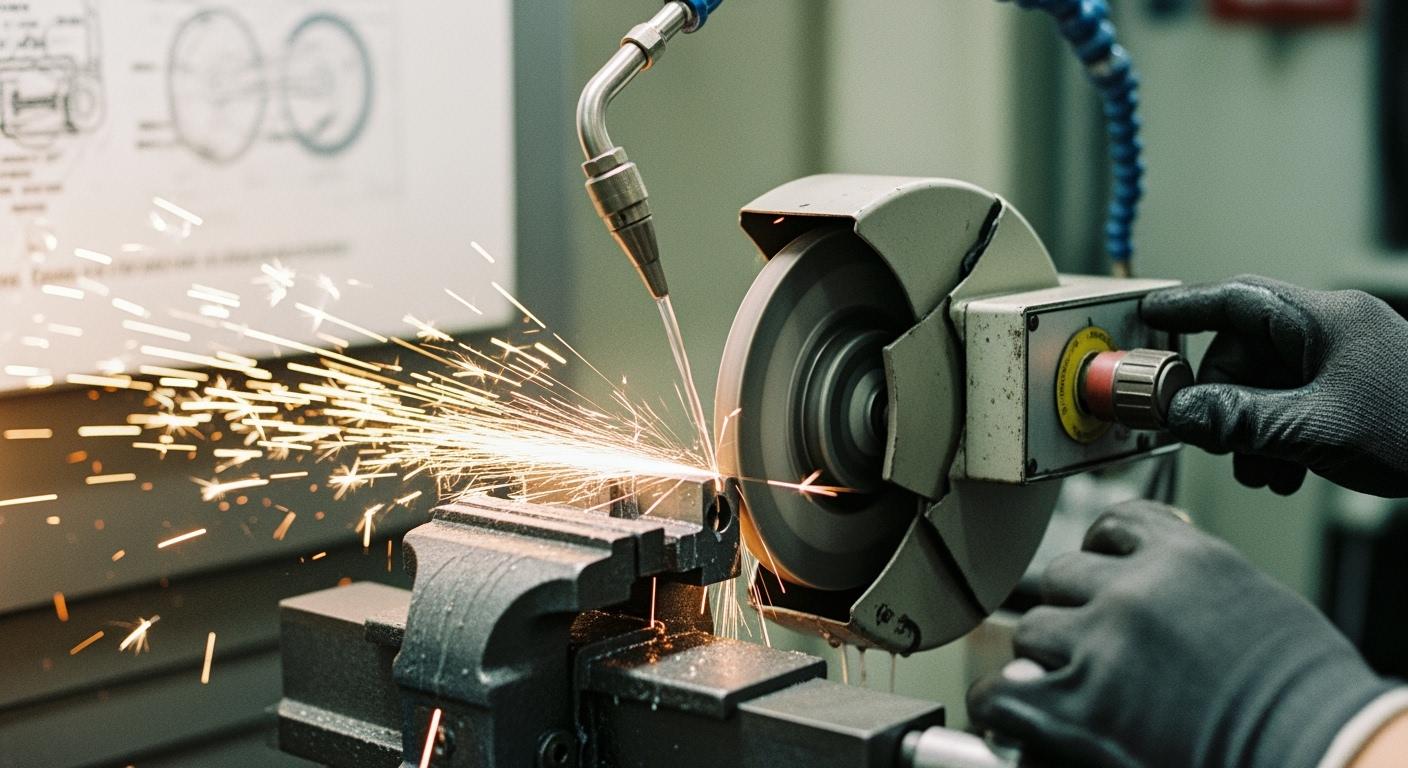
You can avoid workpiece burning when grinding high-hardness hardened steel by controlling grinding speed, feed rate, and depth. Use efficient cooling methods and select advanced grinding wheels like Aimgrind CBN wheels. Burning causes higher surface temperatures and changes in material properties. You risk reduced performance and shorter lifespan for your components. Aimgrind CBN wheels help you achieve cooler operation and precision, keeping your workpiece safe.
Key Takeaways
- Control grinding parameters like speed, feed rate, and depth to minimize heat generation and prevent burns.
- Use effective cooling methods, ensuring strong coolant flow to reduce temperature and protect the workpiece.
- Select Aimgrind CBN grinding wheels for their exceptional hardness and thermal stability, which help avoid overheating.
- Regularly inspect your workpiece for signs of grinding burns, such as discoloration or roughness, to catch issues early.
- Maintain your grinding equipment through routine checks and proper lubrication to ensure consistent performance and prevent thermal damage.
Understanding grinding burns
What are grinding burns?
You may notice grinding burns when you see changes in the surface of hardened steel after grinding. Grinding burns happen when the grinding process creates too much heat. This heat can cause thermal damage to the steel. The most common types of grinding burns in high-hardness hardened steel are re-tempering burn and re-hardening burn. Re-tempering burn lowers the hardness of the steel and forms over-tempered martensite. Re-hardening burn increases hardness and creates untempered martensite. Both types can change how the steel performs.
Tip: Always check for signs of grinding burns right after grinding. Early detection helps you prevent bigger problems.
Causes of grinding burns in hardened steel
Grinding burns occur because grinding generates heat. If you use the wrong grinding parameters or let the grinding wheel stay in one spot too long, the heat builds up. The mechanism of grinding burns involves microstructural changes in the steel. Excessive heat can cause cracks, oxidation, and phase transformations. These changes are examples of thermal damage. Specific factors that cause grinding burns include high grinding speed, too much pressure, and poor cooling. You must control these factors to avoid grinding burns.
Effects on workpiece quality
Grinding burns can ruin the quality of your workpiece. Thermal damage from grinding burns leads to lower fatigue strength and can cause cracks. You may see discoloration or rough spots on the steel. Grinding burns change the hardness and make the steel weaker or sometimes too hard. If you do not recognize grinding burns early, you risk making parts that fail during use. Always inspect your workpiece after grinding to catch any signs of thermal damage.
How to recognize workpiece burning
Visual and physical signs
You can spot grinding burns by looking for changes on the surface of your steel parts. When you finish grinding, check the color and texture. A silver-white luster means your grinding process worked well. If you see pale yellow, blue, or purple, you may have mild or moderate grinding burns. Dark gray or black colors show severe damage. These colors mean the steel has gone through microstructural alterations. You might also notice a rough surface or black powder. These signs point to deeper problems inside the steel. Scratches or chatter marks often appear with grinding burns. They show that the grinding process caused microstructural alterations and weakened the surface.
| Discoloration Level | Description |
|---|---|
| Uniform silver-white luster | Stable grinding process, no excessive heat. |
| Pale yellow | Mild grinding burn, adjust parameters. |
| Blue or purple | Moderate burn, surface hardness drops, residual stress forms. |
| Dark gray or black | Severe burn, metallurgical damage, possible micro-cracks. |
| Rough surface texture | Moderate or worse grinding burn, underlying microstructural alterations. |
| Presence of black powder | Oxidized debris, moderate or severe grinding burn. |
| Scratches or chatter marks | Surface defects, reduced wear resistance, microstructural alterations likely. |
Tip: Always check for color changes and roughness after grinding. Early detection helps you avoid bigger problems.
Inspection and testing methods
You can use several methods to confirm grinding burns and microstructural alterations. Simple shop-floor tests include looking for color changes and feeling for roughness. For more accurate results, use advanced inspection methods. Nital etching works well for small batches. It shows microstructural alterations by making burned areas visible. Eddy current testing helps you find surface softening. X-ray diffraction measures residual stress and gives you numbers. Barkhausen noise testing detects changes in hardness and stress. Each method has strengths and limits.
| Method | Advantages | Limitations |
|---|---|---|
| Nital Etching | Good for low-volume checks in aerospace | Slow, needs skilled operator, not for high production |
| Eddy Current Testing | Finds surface softening, safe for environment | Only works if structure changed, misses stress |
| X-ray Diffraction | Best for residual stress, gives numbers | Slow, needs lab, removes surface |
| Barkhausen Noise | Finds stress and hardness changes, can automate | Needs right conditions for best results |
You should choose the method that fits your needs and production level. Always combine visual checks with testing to catch grinding burns early.
Key strategies to avoid workpiece burning
Optimize grinding parameters
You can avoid workpiece burning by adjusting your grinding parameters. Grinding generates heat, so you must control speed, feed, and depth. Lower surface speed helps reduce temperature and thermal damage. Adjust the workpiece speed to minimize the risk of grinding burns. Set the feed rate and infeed carefully to keep the grinding process stable. Use the right speed ratio for your grinding operation. For creep-feed grinding, start with a speed ratio of 1,500. This approach helps you manage heat and protect component integrity during hardened steel processing.
| Parameter | Recommended Range |
|---|---|
| Surface Speed (vc) | Lower speeds to reduce burn risk |
| Workpiece Speed (nw) | Adjust RPM to minimize burn |
| Feed Rate (vf) | Optimize in mm/min |
| Infeed (ae) | Adjust in mm per pass |
| Speed Ratio (qs) | 60 to 80 (max 120) for safety |
| Creep-feed Speed Ratio | Start at 1,500 for effectiveness |
Grinding with the right parameters lowers the chance of thermal damage. You keep the temperature under control and avoid microstructural changes. This method supports burn-free machining solutions and grinding burn mitigation strategies.
Use effective cooling and lubrication
Coolant plays a big role in the prevention of grinding burns. You must use enough coolant and make sure it flows well. The type, concentration, and age of the coolant affect how much heat you remove from the grinding zone. A strong coolant flow reduces temperature and stops thermal damage. If you do not manage coolant flow, you risk overheating and surface defects. Micro-cracks and grinding burns can appear if the temperature gets too high. Always check your coolant system before you start hardened steel processing. Good coolant management protects component integrity and keeps grinding safe.
Tip: Use a coolant jet stream with 30-50% of the grinding wheel’s speed for best results.
Select the right grinding wheel (Aimgrind CBN grinding wheels)
Choosing the right grinding wheel is key for hardened steel processing. Aimgrind CBN grinding wheels give you many advantages over conventional wheels. These wheels have exceptional hardness and handle extreme temperature. They work best for grinding tough materials like hardened steel. CBN wheels resist wear and keep their shape, which helps you avoid workpiece burning and thermal damage.
| Feature | CBN Grinding Wheels | Conventional Wheels |
|---|---|---|
| Hardness | Exceptional hardness for tough materials | Generally softer than CBN |
| Temperature Resistance | Handles extreme temperatures | Limited temperature resistance |
| Material Suitability | Ideal for hardened steels | Less effective on hardened steels |
| Wear Resistance | High durability and wear resistance | Prone to wear with tough materials |
Aimgrind CBN grinding wheels support burn-free machining solutions. You get cooler operation and better grinding results. These wheels help you maintain component integrity and reduce the risk of thermal damage.
Maintain grinding equipment
Regular maintenance of your grinding equipment helps you avoid workpiece burning. You must check your coolant system and make sure you use enough lubricant. Select a grinding wheel that matches your material. Balance your wheel to prevent uneven grinding and thermal damage. Maintenance keeps your machine safe and your grinding process stable.
- Use an adequate amount of cooling lubricant. Make sure the coolant jet stream matches 30-50% of the grinding wheel’s speed.
- Choose a wheel with the right abrasiveness for hardened steel processing.
- Balance the wheel before you start grinding.
Operator skill also matters. You need to understand your machine and know how to use safety features. Learn the best grinding methods to avoid overheating. Routine checks and training help you spot problems early and keep your equipment in good shape. This approach supports the prevention of grinding burns and ensures consistent grinding quality.
Note: Well-trained operators and regular maintenance are your best defense against thermal damage and grinding burns.
Grinding scenarios and best practices
Surface grinding tips
You need to control heat when you do surface grinding on high-hardness steel. Set your grinding parameters carefully. Lower the grinding speed if you see any signs of burning. Always use enough coolant to keep the workpiece cool. You can try advanced cooling methods, like minimal-quantity lubrication, to move heat away fast. Choose Aimgrind CBN wheels for better grinding results. These wheels have high wear resistance and good thermal conductivity. They help you avoid thermal damage and keep your surface finish smooth. Check your grinding wheel often and dress it if needed. This keeps the wheel sharp and the grinding process stable.
Cylindrical grinding advice
Cylindrical grinding needs careful control to prevent burns on hardened steel shafts. Use Aimgrind CBN wheels because they resist heat and last longer. Set the grinding speed to match your material and wheel. Always use a generous amount of flood coolant. This helps remove heat and stops burns from forming. Avoid dry grinding unless you have special equipment. Keep your cutting conditions steady to avoid microcracks and surface defects. You can see the benefits of these steps in the table below:
| Technique | Benefit |
|---|---|
| CBN wheels | High thermal resistance, low dressing needs, prevents burns |
| Proper grinding speed | Stops overheating, improves tool life |
| Flood coolant usage | Removes heat, lowers burn risk |
| Controlled cutting | Reduces surface defects and microcracks |
Internal and raceway grinding
Internal and raceway grinding brings special challenges. You must achieve tight tolerances and a smooth finish. Aimgrind CBN wheels help you reach low micrometer tolerances and very fine surface finishes. Control your grinding parameters and coolant flow to avoid residual stresses and microhardness changes. Gentle grinding keeps the surface hard and avoids white layer formation. If you use aggressive grinding, you risk damaging the workpiece. The table below shows common challenges and how you can solve them:
| Challenge | Solution |
|---|---|
| Tight tolerances | Use CBN grinding for precise results |
| Surface finish | CBN wheels give low Ra values, reduce friction and wear |
| Residual stresses | Control coolant and grinding parameters |
| Microhardness changes | Use gentle grinding to keep surface hard |
| White layer formation | Avoid aggressive grinding, use well-controlled methods |
Tip: Always match your grinding wheel and process to the job. Aimgrind CBN wheels give you the control and quality you need for tough grinding tasks.
Equipment and technology for grinding
Machine selection and setup
You need the right machine setup to avoid burning during grinding. Machine rigidity keeps the grinding process stable and helps prevent burns. Vibration control is also important. Unwanted vibrations can cause extra heat and damage your workpiece. Cooling and lubrication systems remove heat from the grinding zone. The design of your grinding wheel affects how much heat builds up and how stable the process stays.
| Characteristic | Impact on Grinding Burns |
|---|---|
| Rigidity | Maintains stable cutting conditions to prevent burns. |
| Vibration Control | Reduces unwanted vibrations that can cause thermal damage. |
| Cooling and Lubrication | Helps manage heat generation during grinding. |
| Grinding Wheel Design | Affects stability and wear behavior, influencing burn risk. |
A rigid bond structure in your grinding wheel supports stable grinding. Structural consistency reduces vibration problems. Predictable wear behavior helps you keep precision during grinding.
Advanced grinding wheels (Aimgrind CBN)
You can improve your grinding results by choosing Aimgrind CBN grinding wheels. These wheels have excellent thermal conductivity. They move heat away from the workpiece, which lowers the risk of burning or cracking. This feature is important when you grind hard, heat-sensitive materials. CBN wheels also give you high-quality surface finishes on hardened steels. Modern CBN wheels with the right grit sizes and bonds work well for many precision grinding jobs.
- CBN wheels transfer heat away from the grinding zone and into the wheel or coolant.
- This prevents overheating, burns, and changes in your workpiece’s properties.
- Both diamond and CBN wheels are good at moving heat away, but CBN is best for hardened steel.
Aimgrind CBN grinding wheels help you achieve burn-free grinding and keep your workpiece safe.
Process monitoring and automation
You can use process monitoring and automation to reduce the risk of grinding burns. Intelligent monitoring systems use big data and smart algorithms to optimize grinding parameters. Real-time data analysis lets you spot problems like grinding burns right away. Adaptive control systems adjust the grinding process to keep it safe. Some systems use expert decision-making tools to manage data and improve grinding results.
| Key Findings | Implications for Grinding Burns Reduction |
|---|---|
| Intelligent monitoring systems utilize big data and decision-making algorithms | Optimize grinding parameters and improve process stability, reducing the risk of grinding burns. |
| Real-time data analysis and adaptive control | Diagnose issues like grinding burns promptly, leading to safer manufacturing processes. |
| Development of a decision-making expert system | Provides a structured approach to manage data and improve decision-making in grinding operations. |
You can also use real-time temperature monitoring. This helps you keep the temperature below critical levels and prevents burning. Improved control of grinding parameters, better cooling, and real-time monitoring all help you avoid heat damage and get the best results from your grinding equipment.
Troubleshooting grinding burns
Adjusting parameters after burning
You can fix grinding burns by changing your process settings. When you see signs of thermal damage, act quickly. Lower the grinding speed to reduce heat. Increase the forward speed to move the wheel faster across the workpiece. This helps lower the temperature and stops more thermal damage. Avoid increasing the cutting depth or feed speed, as these can make thermal damage worse. Use the table below to guide your adjustments:
| Parameter Adjustment | Effect on Grinding Burn |
|---|---|
| Increase in Cutting Depth | Leads to higher levels of grinding burn |
| Increase in Feed Speed | Increases grinding burn; can be managed |
| Decrease in Grinding Speed | Reduces grinding temperature, minimizing burns |
| Increase in Forward Speed | Decreases grinding temperature, resulting in less burn |
Tip: Always monitor the workpiece for color changes or roughness. Early action prevents deeper thermal damage.
Salvaging burned workpieces
If you find thermal damage on your workpiece, you can sometimes save it. Start by removing the affected layer with light grinding. Use a gentle touch to avoid more thermal damage. Check the surface after each pass. If the burn is shallow, you may restore the part. For deeper thermal damage, you might need to re-harden or re-temper the steel. Always inspect the microstructure to make sure the thermal damage is gone. If you cannot remove all the thermal damage, do not use the part in critical applications.
Preventive maintenance routines
You can stop thermal damage before it starts by following good maintenance routines. Check your spindle for runout often. Balance your grinding wheel on a schedule. Keep your coolant clean and flowing well. Lubricate machine ways to ensure smooth movement. Inspect machine alignment to prevent errors. Calibrate your dressing system to keep the wheel sharp. Use these practices to reduce the risk of thermal damage:
- Control the cooling system to prevent thermal damage.
- Dress the grinding wheel regularly to keep it effective.
- Manage vibration to reduce chatter and improve precision.
Note: Preventive maintenance keeps your grinding process safe and helps you avoid costly thermal damage.
You can avoid workpiece burning by using the right grinding parameters, keeping coolant flow strong, and choosing Aimgrind CBN grinding wheels. Make sure you reduce grinding thickness and increase workpiece speed to lower heat. Always check your workpiece for signs of burns. Try these tips:
- Use nital etching or other tests to spot burns early.
- Clean and inspect your equipment every day.
- Report any problems right away.
Stay alert and keep your grinding process safe.
FAQ
What causes workpiece burning during grinding?
You create workpiece burning when grinding generates too much heat. High grinding speed, heavy pressure, and poor cooling increase the risk. You must control these factors to protect your steel parts.
How can Aimgrind CBN wheels help prevent burning?
Aimgrind CBN wheels keep your grinding process cool. Their hardness and thermal stability let you grind hardened steel without overheating. You get a smoother finish and longer tool life.
Tip: Always choose CBN wheels for tough materials like hardened steel.
What signs show grinding burns on steel?
You see grinding burns as color changes. Pale yellow, blue, or black spots mean thermal damage. Rough surfaces and black powder also signal burns. You should inspect your workpiece after every grinding session.
| Sign | Meaning |
|---|---|
| Pale yellow | Mild burn |
| Blue or purple | Moderate burn |
| Black or rough | Severe burn |
How do you fix a burned workpiece?
You remove the burned layer with gentle grinding. Check the surface after each pass. If burns go deep, you may need to re-harden or re-temper the steel. Always inspect for microstructural changes before using the part.
Contact Us
For More Grinding Solution or Customized Abrasive Tools