

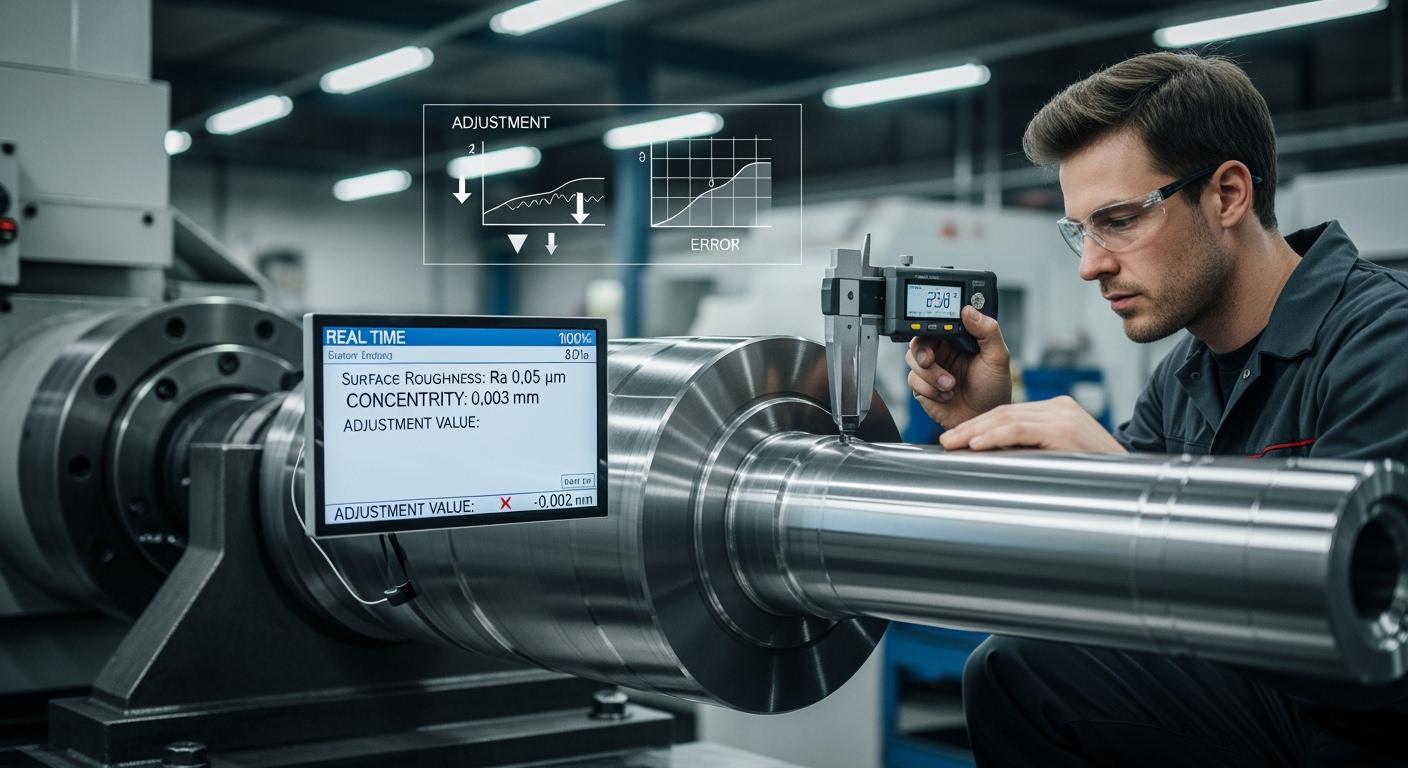
Precision matters when you work with large parts. Even small errors can lead to big problems in grinding. You can achieve higher accuracy by using error compensation. Aimgrind brings years of experience to this process. Their diamond grinding wheels help you reach the best possible results. These tools give you better control and a smoother finish.
Key Takeaways
- Understand common sources of grinding errors, such as process parameters and coolant issues, to improve your results.
- Implement real-time error compensation techniques to adjust your grinding process quickly and maintain precision.
- Use on-machine measurement systems to detect errors without moving parts, ensuring more accurate results.
- Regularly analyze your grinding data with error modeling to identify patterns and make informed adjustments.
- Follow best practices like using the right grinding wheel and maintaining a clean machine to enhance your grinding outcomes.
Error Sources in Large Part Grinding
Common Grinding Errors
You face many challenges when you work with large parts. Grinding errors can come from several sources. You need to know these sources to improve your results. The table below shows the most common causes of errors in large-scale grinding:
| Source of Error | Description |
|---|---|
| Process Parameters | Incorrect feeds and speeds can lead to substandard outcomes. |
| Grinding Wheel Dressing | Poorly dressed wheels can create uneven surfaces and visible errors. |
| Coolant Issues | Contaminated coolant can cause surface defects. Inadequate cooling can lead to burn marks. |
| External Disturbances | Vibration from nearby equipment can interfere with grinding, resulting in parallel marks on surfaces. |
| Imbalanced Grinding Wheel | Can cause chatter marks and indicate issues with speed relationships or external vibrations. |
You must pay attention to process parameters and grinding wheel dressing. Coolant issues and external disturbances also affect your results. Imbalanced wheels can cause chatter marks and surface defects. You can use error measurement and error modeling to identify these problems early.
Why Compensation Matters
Grinding errors can affect the final precision of your parts. You want every feature to meet specifications. Many companies use a three-stage grinding process—rough, semi-finish, and final—to prevent mistakes. In-process measurement helps you maintain stability and avoid over-removal or geometric drift. Custom hybrid measurement systems track eccentric features and validate dimensions. These steps ensure grinding errors do not compromise your results.
Error compensation gives you the power to correct mistakes as they happen. Real-time error compensation lets you adjust your process quickly. You can use error compensation to improve accuracy and reduce waste. When you understand the sources of error, you can apply error compensation methods to achieve better outcomes in large-scale grinding.
Tip: Use error compensation and error modeling together for the best results. This approach helps you catch problems early and fix them before they affect your parts.
Error Compensation Steps
Error Detection Tools
You need the right tools to find errors in grinding. On-machine measurement systems give you a big advantage. These systems let you check your work while the part stays on the machine. You avoid mistakes that happen when you move or re-clamp the part. The polar coordinate method works well for large parts, especially in gear grinding. This method uses the C-axis and X-axis to guide the probe along the correct path. You get more accurate results because the probe follows the shape of the part. This reduces the effect of machine errors and helps you keep high precision. Aimgrind’s diamond grinding wheels work well with these systems. They help you get smooth surfaces and keep your grinding process stable.
Data Analysis Methods
After you collect data from your error measurement tools, you need to analyze it. You can use error modeling to understand where the problems come from. Error modeling lets you see patterns in the data. You can spot trends and find out if the errors come from the machine, the grinding wheel, or the setup. Many shops use software to help with this step. The software can show you graphs and charts. You can compare your results to the part’s specifications. This helps you decide what changes to make. Aimgrind’s team can help you match the right grinding wheel to your process based on this data.
Compensation Techniques
You have several ways to fix errors in grinding. Real-time error compensation lets you adjust the process as you work. You can use on-machine measurement to check the part and then change the grinding path or speed. This keeps the part within the right size and shape. Residual error iteration is another method. You grind the part, measure the error, and then grind again to remove the leftover error. Realignment techniques help when the part or machine shifts out of place. You can reset the part’s position and keep the grinding process on track. Using high-precision tools like Aimgrind’s diamond grinding wheels makes these techniques more effective. These wheels keep their shape and sharpness, so you get consistent results.
Implementation Process
You need a clear plan to put error compensation into action. Start by setting up your on-machine measurement system. Make sure the probe and grinding wheel are both ready. Use the polar coordinate method if you work with large or complex parts. Collect data during the grinding process. Analyze the data with error modeling tools. Decide which compensation technique fits your needs. You might use real-time error compensation for fast changes or residual error iteration for fine adjustments. Always check the part after each step. Aimgrind’s service process includes problem diagnosis and parameter matching. Their experts help you choose the best grinding wheel and settings for your job. This support makes your large-scale grinding process more reliable and accurate.
Tip: Use multi-axis machine tools for complex shapes. These machines let you control the grinding wheel from different angles. You get better coverage and fewer errors.
Verification Process
Accuracy Checks
You must check the accuracy of your grinding process to make sure you meet your goals. Start by measuring the finished part with high-precision tools. Use a coordinate measuring machine (CMM) or a laser scanner. These tools help you see if the grinding process removed the right amount of material. Compare your measurements to the part’s blueprint. If you find any errors, you can adjust your grinding setup before making more parts.
You should also check the surface finish. Use a surface roughness tester to see if the grinding wheel left a smooth finish. If you see scratches or marks, you may need to dress the grinding wheel or change your grinding parameters. Always record your results. This helps you track changes and spot patterns in your grinding process.
Tip: Use Aimgrind’s diamond grinding wheels for better accuracy. These wheels help you keep your grinding results consistent.
Continuous Monitoring
You need to watch your grinding process all the time. Set up sensors on your grinding machine. These sensors can track vibration, temperature, and force during grinding. If you see a sudden change, you can stop and fix the problem before it gets worse.
Keep a log of your grinding data. Write down the date, time, and any changes you make. Review this log every week. Look for trends that show if your grinding process is getting better or worse. If you see a problem, you can fix it right away.
You can also use software to help you monitor your grinding process. Some programs send alerts if something goes wrong. This helps you keep your grinding process under control and avoid costly mistakes.
Note: Continuous monitoring helps you catch small problems before they become big ones. This keeps your grinding process safe and reliable.
Best Practices & Troubleshooting
Practical Tips
You can improve your grinding results by following a few best practices. Start by choosing the right grinding wheel for your material. Aimgrind offers diamond grinding wheels that give you high precision and long life. Always check your grinding wheel before you begin. Make sure it is clean and balanced. Use on-machine error measurement tools to check your work during grinding. This helps you catch mistakes early.
Keep your grinding machine clean. Dust and debris can cause problems. Dress your grinding wheel often to keep its shape. Use error modeling to understand where errors come from. Record your grinding data after each job. This helps you see patterns and improve your process.
If you work with large-scale grinding, use multi-axis machine tools. These machines let you reach all sides of the part. You get better coverage and fewer errors. Aimgrind’s service team can help you match the right grinding wheel and settings to your job. They use a step-by-step process that includes problem diagnosis and parameter matching.
Tip: Always use coolant during grinding. Coolant keeps the part and wheel from overheating.
Common Challenges
You may face some common challenges in grinding. One problem is uneven wear on the grinding wheel. This can cause poor surface finish. Fix this by dressing the wheel often. Another challenge is vibration during grinding. Check your machine for loose parts. Use a balanced grinding wheel to reduce vibration.
Sometimes, you may see errors even after using error measurement tools. Review your setup and check for alignment issues. Use error modeling to find the source of the problem. If you see burn marks or cracks, slow down the grinding speed and check your coolant flow.
You can solve most grinding problems by following a clear process. Use Aimgrind’s diamond grinding wheels for better results. Their wheels help you keep your grinding process stable and accurate.
Note: If you have trouble, contact Aimgrind’s support team. They can help you solve grinding problems quickly.
You can achieve high precision in large part grinding by following a systematic approach. Aimgrind’s diamond grinding wheels help you reach consistent results and improve efficiency. When you use best practices and focus on continuous improvement, you build reliability into your process.
| Strategy | Impact on Reliability |
|---|---|
| Lean Manufacturing | Reduces waste and improves efficiency |
| Process Optimization | Enhances quality |
| Quality Management Systems | Supports continuous improvement |
You create better outcomes by using these strategies and Aimgrind’s expert support.
FAQ
What is error compensation in large part grinding?
Error compensation means you find and fix mistakes during grinding. You use tools and data to adjust your process. This helps you make parts that match your design.
Why should you use diamond grinding wheels for error compensation?
Diamond grinding wheels give you high precision. They last longer and keep their shape. You get smoother surfaces and fewer errors. These wheels help you save time and improve quality.
How do you know if your grinding process needs adjustment?
You should check your parts with measuring tools. If you see size or shape errors, adjust your grinding setup. Use on-machine measurement for quick checks.
What should you do if you see vibration during grinding?
Check your machine for loose parts. Balance your grinding wheel. Use Aimgrind’s diamond grinding wheels for better stability. Vibration can cause poor surface finish, so fix it right away.
Contact Us
For More Grinding Solution or Customized Abrasive Tools