You face tough challenges when trying to boost grinding efficiency for gate removal and riser removal in your foundry. Removing gates and risers often involves heat, weight, and inconsistent manual grinding. Improper removal can cause stress and cracking, making surface finish requirements critical for production. Optimized grinding tools, such as Aimgrind’s customized solutions, significantly reduce damage rates and help you achieve better part size and finish. The table below illustrates how optimized grinding tool design improved productivity:
| Aspect | Damage Rate Before | Damage Rate After | Reduction Percentage |
|---|---|---|---|
| Total | 8.82% | 0.76% | 91.4% |
Key Takeaways
- Choose the right grinding wheel to improve efficiency and surface finish. Aimgrind resin bond wheels offer flexibility and strong cutting performance.
- Standardize your grinding process to reduce setup time and improve consistency. Use checklists and visual guides to ensure every operator follows the same method.
- Implement automated systems to monitor grinding parameters. Automation helps maintain consistent quality and reduces the risk of defects.
- Regularly inspect surfaces during grinding to catch defects early. This practice helps maintain high standards and reduces rework.
- Train operators on proper techniques and safety protocols. Proper training enhances efficiency and minimizes accidents in the foundry.
Grinding Tool Selection for Efficient Removal
Choosing Aimgrind Resin Bond Grinding Wheels
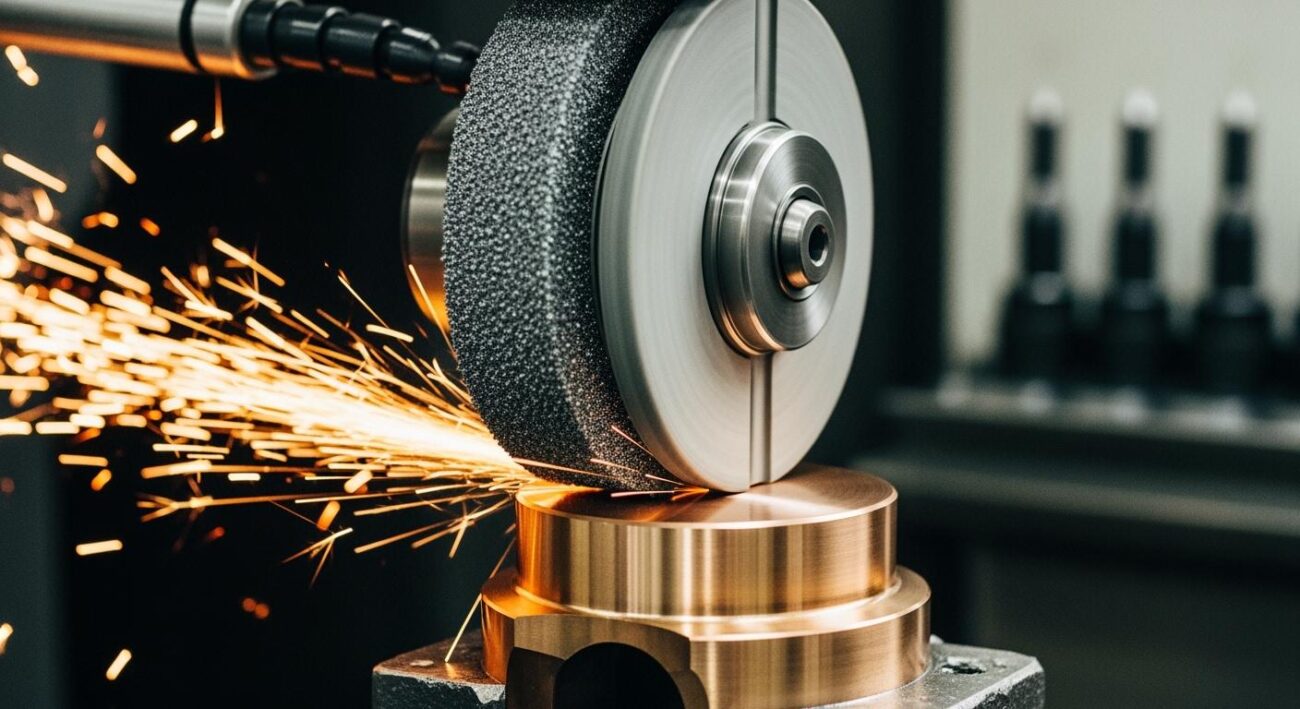
You need the right grinding wheel to achieve efficient gate and riser removal in your foundry. Aimgrind resin bond grinding wheels deliver flexibility and cutting performance for tough materials. These wheels handle stainless steel and titanium, which are common in casting production. You can rely on Aimgrind’s design expertise to match your grinding needs with the appropriate metal casting process.
| Characteristic | Description |
|---|---|
| Flexibility | Resin bonds offer more flexibility compared to vitrified bonds, making them suitable for finer finishes. |
| Suitability for Grinding | They are effective for both conventional and super abrasive wheels, allowing for smoother grinding actions. |
Aimgrind resin bond wheels help you achieve a smoother finish and reduce operator fatigue. You can boost productivity by choosing abrasives that cut faster and require less pressure. This approach shortens grinding cycles and lowers risks in casting operations.
| Key Factor | Description |
|---|---|
| Safety Issues | Proper PPE and tool matching prevent accidents and wheel breakage. |
| Operator Fatigue | Abrasives that reduce pressure and allow faster grinding minimize fatigue. |
| Productivity | Faster-cutting abrasives lead to shorter grinding cycles and higher output. |
Matching Wheel to Metal Casting Process
You must select grinding wheels based on the casting material and the appropriate metal casting process. Each casting type requires a specific abrasive and wheel structure to optimize material removal rate and surface finish. The table below shows how wheel specifications impact removal rates and finish in different casting applications.
| Parameter | Description | Impact on Surface Finish |
|---|---|---|
| Abrasive Type | Aluminum oxide for steels, silicon carbide for non-ferrous, CBN for alloys. | Choosing the right abrasive minimizes surface damage. |
| Grit Size | Coarse (36) to fine (120) | Finer grits (80–120) produce smoother surfaces. |
| Bond Type | Vitrified, resin, or metal bonds | Resin bonds are flexible for less critical surfaces. |
| Wheel Structure | Porosity and density | Open structures reduce heat and improve finish. |
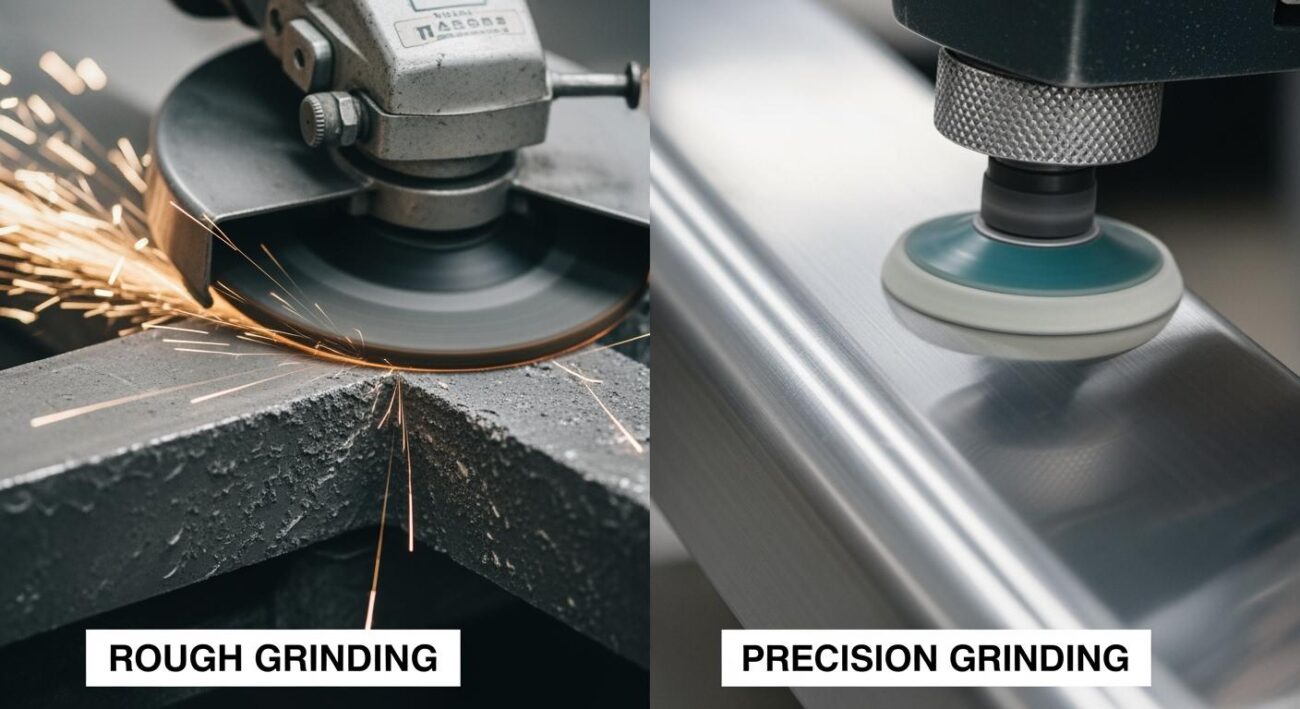
You can improve finish by matching the abrasive to the job. Use bonded wheels for heavy material removal and flap discs for balanced finish. Maintain a consistent technique with a 5–10° working angle. Observe spark flow to check pressure. Replace worn abrasives at the right time to avoid surface damage and prevent cross-contamination by using color-coded tools for different metals.
Cutting parameters such as wheel speed, workpiece speed, depth of cut, and feed rate affect surface finish. Higher wheel speeds reduce surface roughness by increasing abrasive contacts. You must maintain optimal speeds to avoid thermal damage and achieve the desired finish in casting production.
Tool Maintenance for Consistent Finish
You need to follow maintenance practices to ensure consistent finish and tool longevity in casting operations. Standardize angles and pressure windows to avoid overcutting or underfinishing. Define grit progressions so you reach the target finish without unnecessary rework. Set a measurable ‘done’ condition using surface finish, scratch depth, or RA value. Make expectations visible by providing visual or sample references.
- Standardize angles and pressure windows.
- Define grit progressions for logical steps.
- Set a measurable ‘done’ condition.
- Make expectations visible with visual or sample references.
You can manage consumables wisely by replacing worn abrasives at the right time. This prevents surface damage and keeps your casting process efficient. Prevent cross-contamination by using color-coded tools for different metals. These steps help you maintain a high-quality finish and maximize material removal rate in every casting operation.
Tip: Consistent tool maintenance and proper wheel selection improve finish, reduce operator fatigue, and boost productivity in your foundry.
Process Optimization to Boost Grinding Efficiency
Setting Parameters for Surface Quality
You can boost grinding efficiency in your foundry by setting the right parameters for each casting operation. Start with a clear analysis of your metal casting process. Examine the speed, feed rate, and pressure you use during grinding. Each method you choose affects the finish and overall performance of your tools. If you use too much pressure, you risk damaging the surface and reducing tool life. If you use too little, you slow down production and waste resources.
Aimgrind’s approach focuses on detailed process diagnosis and parameter matching. You receive support in selecting the best method for your specific casting material and part geometry. This analysis helps you set the right wheel speed and feed rate for each job. You can use a table to track your grinding parameters and results:
| Parameter | Target Value | Actual Value | Adjustment Method | Resulting Finish |
|---|---|---|---|---|
| Wheel Speed | 3000 RPM | 2950 RPM | Increase by 50 | Smoother |
| Feed Rate | 0.5 mm/sec | 0.7 mm/sec | Reduce by 0.2 | Improved |
| Pressure | 2 kg | 2.5 kg | Lower by 0.5 | Less Burn |
You can repeat this analysis for each casting batch. This method ensures you maintain high performance and consistent finish. You also reduce the risk of defects and rework.
Workflow Consistency and Setup Reduction
You need a consistent workflow to boost grinding efficiency in your foundry. Standardize your setup method for each casting type. This optimization reduces wasted time and improves performance. When you use the same method for each batch, you avoid errors and keep your process stable.
Many foundries see major gains from setup reduction. For example, a European aerospace OEM replaced three machines with a Cast Fast 8 unit. This change cut setup time by 75%. Monthly output increased by 50%. The company saved over €1.2 million each year. Operators saw cycle times drop from 90 seconds per part to under 18 seconds. Tool wear and tolerances stayed the same.
You can use these methods in your foundry:
- Create a checklist for each casting setup.
- Train operators to follow the same method every time.
- Use visual guides to show the correct setup method.
- Review your workflow and remove steps that do not add value.
This analysis leads to better performance and higher output. You also reduce the risk of mistakes and improve the finish of each casting.
Automated Feed and Monitoring Systems
Automated solutions play a key role in boosting grinding efficiency. You can use automated feed and monitoring systems to control each method in your casting process. These systems keep force and pressure stable during grinding. You get real-time feedback on each parameter. The system adjusts the method as needed to keep performance high.
Automated solutions offer several benefits:
- Consistent force control keeps contact pressure stable.
- Real-time feedback allows adaptive adjustments to each method.
- You optimize abrasive usage and reduce waste.
- Surface finish stays consistent across all castings.
You can use Aimgrind’s expertise to design and implement automated solutions in your foundry. The team provides analysis and parameter matching for your casting process. You receive support in choosing the right method for each application. Automated solutions help you maintain high performance and quality in every batch.
Tip: Use automated solutions to monitor your grinding process. This method helps you catch problems early and keep your finish consistent.
You can combine process analysis, workflow optimization, and automated solutions to boost grinding efficiency. Each method you use should focus on performance, finish, and quality. Aimgrind supports you with design, analysis, and implementation for every casting challenge.
Operator Skills and Safety in Metal Casting Removal
Training for Efficient Removal Techniques
You play a key role in the success of every casting operation. Proper training ensures you remove gates and risers efficiently and safely. Focus on learning the correct removal techniques for each casting design. Practice using the right angle and pressure to achieve the best finish. Aimgrind recommends hands-on sessions to help you master tool handling and grinding wheel selection. You should also review updated safety protocols before each production shift. When you understand the design of each casting, you can adjust your removal method to protect the surface and maintain a high-quality finish.
Ergonomics and Accident Prevention
You can reduce accidents and improve safety by following ergonomic practices in your foundry. Always use personal protective equipment such as gloves, goggles, and hearing protection. Handle equipment with care and perform regular maintenance to keep tools in top condition. Learn to identify unsafe conditions and use proper material handling techniques. These steps help you avoid injuries during casting removal. The incidence rate of nonfatal injuries in foundries is 6.4 per 100 full-time workers, with steel foundries reaching 9.7%. To lower these risks, wear PPE, use dust collection systems, and inspect machinery before use. Make sure you know the chemicals and metals in your casting area and keep materials dry to prevent dangerous reactions.
- Wear PPE for every removal task.
- Use dust collection and ventilation to protect your lungs.
- Inspect all grinding equipment before starting production.
- Check labels and Safety Data Sheets for all casting materials.
- Store materials in dry areas to avoid hazards.
Best Practices for Surface Inspection
You need to inspect the surface of each casting during and after riser and gate removal. Look for cracks, burns, or uneven finish that may affect the final product. Use visual guides or sample references to compare your work. If you find defects, adjust your removal technique or tool selection. Consistent inspection helps you catch problems early and maintain high standards in casting production. Aimgrind supports you with training and design advice to help you achieve the best surface finish on every casting.
Tip: Regular inspection and proper training help you deliver consistent results and reduce rework in your casting operations.
Quality Control and Minimizing Rework for Superior Finish
In-Process Surface Inspection
You need to check each casting during grinding to maintain high surface quality and reduce rework. In-process inspection helps you catch problems before they affect the finish. You can use several techniques to measure and monitor the surface in real time. The table below shows common methods used in foundries for quality inspections:
| Technique | Description |
|---|---|
| Optical and Ultrasonic | Measure specific areas over a 3D region; require multiple scans for average roughness conditions. |
| Contact Measurement | Uses a stylus to drag across a surface to measure roughness; provides an average profile. |
| Non-contact Measurement | Employs optical sensors or ultrasonic pulses for surface finish measurement without physical contact. |
| Machine Vision | Utilizes visual systems to assess surface quality in real-time during the grinding process. |
| Magnetic Inductance | Measures surface properties using magnetic fields, effective for certain metal types. |
| Ultrasonic Methods | Employs sound waves to evaluate surface conditions, suitable for various materials. |
You can use these methods to check for cracks, burns, or uneven finish during removal. Aimgrind supports you with sample optimization and testing to help you choose the best inspection tools for your casting process.
Preventing Overheating and Defects
You must control heat during grinding to avoid surface defects. Overheating can cause burns, cracks, or warping in your casting. Use the right wheel speed and pressure to keep the temperature low. Monitor the color of the casting and the spark flow to spot overheating early. If you see blue or dark marks, reduce pressure or adjust your grinding parameters. Aimgrind’s quality assurance services help you set safe limits for each casting design. You can also use coolant or air jets to keep the surface cool and protect the finish.
Tip: Always check the casting temperature during post-casting finishing operations. This step helps you prevent costly rework and maintain high quality.
Addressing Common Metal Casting Challenges
You face many challenges in post-casting finishing operations. Each casting design may have different shapes, sizes, and materials. You need to adjust your grinding method for each part. Use visual guides and sample references to compare your finish with the target standard. Perform regular inspection and testing to catch defects early. Aimgrind offers support with process analysis, sample optimization, and final inspection. You can rely on their expertise to improve your casting quality and reduce rework. Always document your inspection results and review them before final inspection to ensure every casting meets your production goals.
- Adjust your grinding method for each casting design.
- Use sample references for consistent finish.
- Record inspection and testing results for every batch.
You can achieve superior finish and reduce rework by following these steps in your foundry.
Advanced Technologies for Grinding Efficiency
Automation in Metal Casting Removal
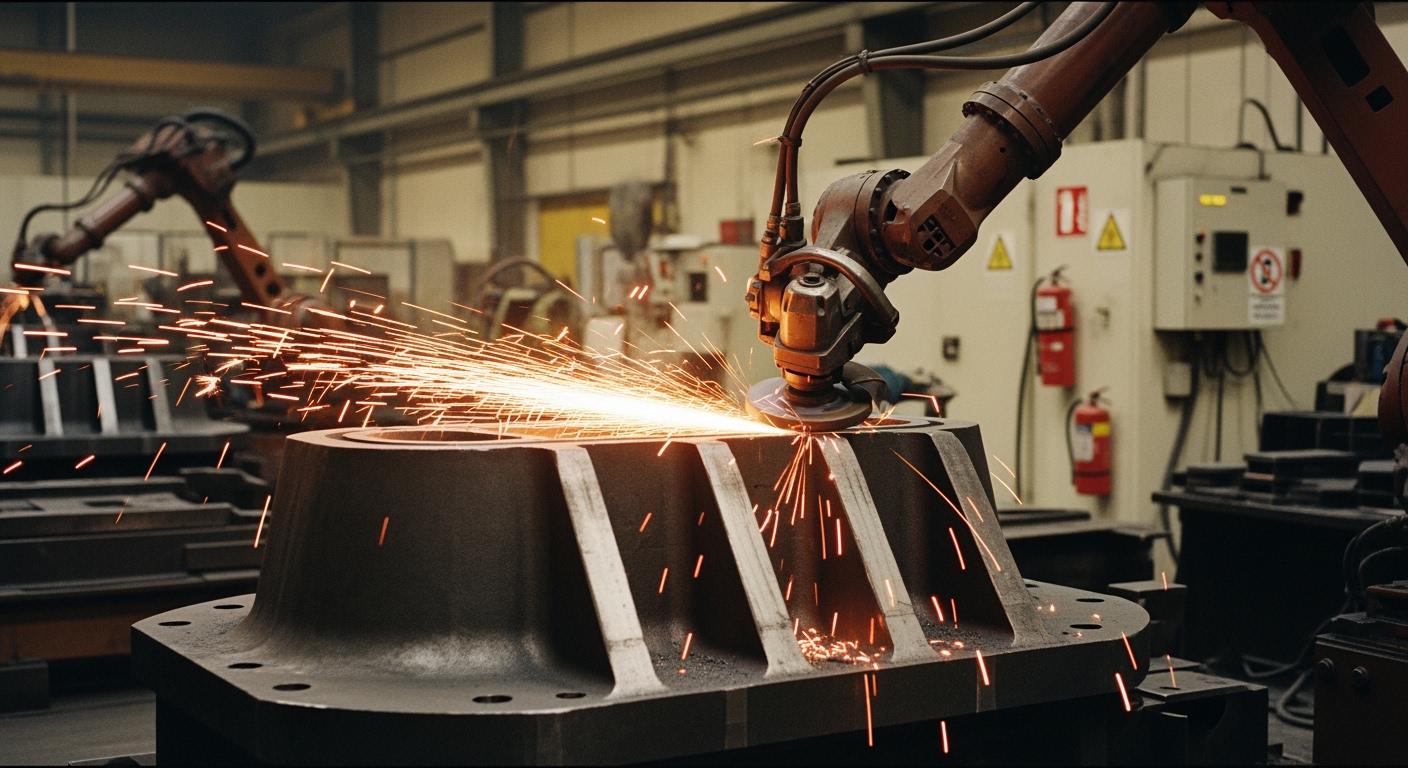
You can transform your casting operations by adopting automation for grinding and removal tasks. Automated systems streamline the final stage of casting, where you remove excess material and enhance the surface finish. Automation in post-casting operations, such as grinding and deburring, increases efficiency and ensures consistent results. Robotic blend grinding systems deliver accurate removal of gates and risers, improving surface quality and reducing downtime. You should consider automation when you need higher production capacity, shorter cycle times, and enhanced safety. Real-time monitoring enables predictive maintenance, which minimizes unplanned stoppages and boosts operational efficiency. Automation also supports effective tool life prediction and consistent product quality.
- Automation increases production capacity in your foundry.
- Robotic blend grinding improves consistency and speed.
- Real-time monitoring predicts tool life and ensures quality.
- Enhanced safety reduces workplace hazards.
Robotics and CNC for Surface Finish
You achieve superior surface finish and consistency by integrating robotics and CNC technologies into your casting process. These systems handle grinding and polishing tasks, removing gates, risers, and burrs with precision. Robotic blend grinding allows quick switching between tools, which enhances productivity and surface quality. Flexible configurations support multiple tools and automatic abrasive paper changers, increasing operational efficiency. Automated material handling speeds up loading and unloading, improving production flow. You benefit from reduced labor demand, improved environment, and better health protection. These advantages help your foundry comply with ESG standards and strengthen your corporate image.
| Aspect | Details |
|---|---|
| Processing Needs | Surface finishing before painting, weld seams, gates, risers, burr removal, post-processing burr treatment |
| Industry Applications | Casting: Grinding and polishing to remove gates, risers, parting lines, burrs, pre-paint surface smoothing |
| System Advantages | Reduced labor demand, improved environment, health protection, ESG compliance |
| Core Functions | Small workpiece grinding, flexible configurations, automated material handling |
Data Analysis for Continuous Improvement
You drive continuous improvement in grinding efficiency by using data analysis in your casting operations. Data analysis identifies process variables that affect defect rates and surface quality. Machine learning models and predictive analytics optimize these variables, enhancing part quality and reducing defects. Real-time monitoring and AI integration enable proactive strategies for tool life prediction and operational control. You use inspection data to refine your grinding process and improve surface design. Aimgrind offers innovative solutions and expertise in integrating advanced grinding systems, supporting your journey toward higher efficiency and quality in every casting batch.
Tip: Use data-driven control and inspection to maintain consistent surface quality and maximize grinding performance.
You can boost grinding efficiency in gate and riser removal by choosing the right grinding wheel, balancing wheel hardness, and measuring efficiency by metal removed. Automation, such as robotic torch cutting and blend grinding, increases consistency and reduces manual labor. Aimgrind’s resin bond grinding wheels and customized solutions help you achieve superior surface finish and higher production output. Regularly review your process and adopt advanced technologies to stay competitive.
| Action Step | Benefit |
|---|---|
| Select proper grinding tool | Improved finish, less waste |
| Automate removal tasks | Higher consistency, safety |
| Monitor process data | Continuous improvement |
Start implementing these strategies today for immediate and long-term gains.
FAQ
What makes Aimgrind resin bond grinding wheels suitable for gate and riser removal?
You get flexibility and strong cutting performance with Aimgrind resin bond grinding wheels. These wheels handle tough materials and help you achieve a smooth finish during gate and riser removal.
How do you choose the right grinding wheel for your casting process?
You should match the wheel to your casting material and removal needs. Consider abrasive type, grit size, and bond structure. Aimgrind offers expert guidance for your selection.
How often should you replace grinding wheels in casting operations?
You need to replace grinding wheels when you notice reduced cutting speed, increased vibration, or visible wear. Regular checks keep your finish consistent and your process safe.
Can automation improve grinding efficiency in foundry production?
Yes. Automation ensures consistent force, reduces errors, and increases output. You can use automated feed and monitoring systems to boost efficiency and maintain high surface quality in your production.
What safety steps should you follow during gate and riser removal?
You must wear personal protective equipment, inspect tools before use, and follow proper handling techniques. These steps protect you from injuries and keep your work environment safe.
Contact Us
For More Grinding Solution or Customized Abrasive Tools