

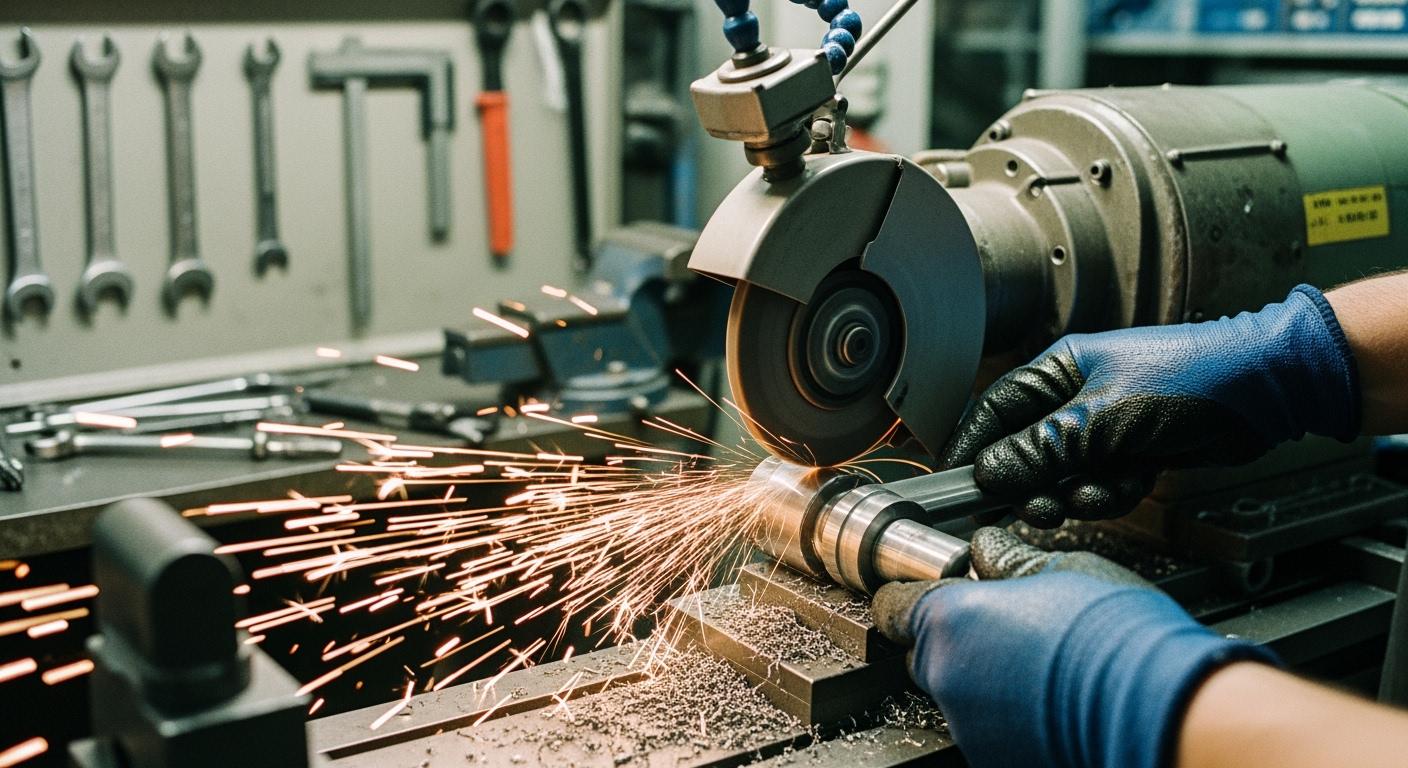
You face many challenges when grinding high-hardness materials. Tool wear, heat generation, and the need for precise grinding methods make the process demanding. Industrial surveys show that machine tool builders often report limits on CBN grinding speeds, especially in the 40-80 m/s range. Lightweight components like camshafts and valves present unique grinding challenges because of their material properties. Specialized tools, such as super hard abrasives, help you overcome these obstacles. Aimgrind offers products and expertise that make grinding safer and more efficient for hard materials. You will find practical advice to improve your grinding process.
Key Takeaways
- Choose super hard abrasives like diamond and CBN for grinding high-hardness materials. They last longer and improve efficiency.
- Select the right bond type for your grinding wheel. Harder bonds work best for very hard materials, enhancing tool life and efficiency.
- Use coolant during grinding to manage heat. It prevents damage to tools and workpieces, ensuring better performance.
- Monitor spark flow and color to assess grinding quality. Adjusting your technique based on spark patterns can lead to improved results.
- Maintain your tools with regular dressing. This keeps grinding wheels sharp and ensures a consistent surface finish.
Grinding High-Hardness Materials: Tool and Abrasive Selection
Choosing Super Hard Abrasives
You need the right abrasive to grind high-hardness materials. Super hard abrasives, such as diamond and cubic boron nitride (CBN), help you achieve better results. Diamond works well for almost all grinding materials except ferrous metals. CBN is best for ferrous materials like steel and carbides. These super hard abrasives last much longer than conventional abrasives. You can expect them to last 100-300 times longer. You spend less time changing tools and more time grinding.
- Diamond: Use diamond for grinding ceramics, glass, and carbides. Diamond has the highest hardness and cuts hard materials efficiently.
- CBN: Use CBN for grinding steel and other ferrous materials. CBN offers excellent hardness and thermal stability.
Aimgrind’s super hard abrasives give you unmatched performance. You get a grinding wheel that stays sharp and delivers consistent results. You also reduce downtime and improve productivity. Aimgrind designs grinding wheels for your specific needs. You can grind hard materials like ceramics and carbides with confidence.
Tip: Super hard abrasives cost more at first, but you save money over time. You buy fewer grinding wheels and spend less on labor.
Selecting the Right Bond Type
You must match the bond type to the hardness of your grinding materials. The bond holds the diamond or CBN grains in place. Choosing the right bond improves grinding efficiency and extends tool life. Harder bonds work best for grinding high-hardness materials. Softer bonds suit softer materials.
| Bond Type | Material Hardness Impact | Grinding Efficiency Impact | Tool Life Impact |
|---|---|---|---|
| Harder Bonds | Required for very hard materials to hold abrasives securely | Enhances efficiency by maintaining abrasive exposure | Increases tool life by reducing wear |
| Softer Bonds | Suitable for softer materials to allow easier breakdown | May reduce efficiency in hard materials | Can decrease tool life if used improperly |
| Vitrified Bonds | Excellent for dimensional accuracy in hard materials | Good for precision applications | Long tool life due to rigidity |
| Resinoid Bonds | Favored for toughness in tough materials | High stock removal rates | Moderate tool life, depending on application |
| Rubber Bonds | Flexible for fine finishes | May reduce efficiency in stock removal | Shorter tool life, but good for specific finishes |
Aimgrind offers grinding wheels with different bond types. You can choose vitrified bonds for precision grinding of ceramics and carbides. Resinoid bonds help you remove material quickly from tough parts. Aimgrind’s experts help you select the best bond for your grinding materials.
Note: The right bond type keeps your grinding wheel stable and prevents premature wear.
Grit Size and Wheel Grade
You must select the correct grit size and wheel grade for grinding high-hardness materials. Grit size affects the surface finish and grinding speed. A grit size of 46 works well for general flat grinding of hardened steels. Ceramic wheels are recommended for grinding D-2 steel. You should use coolant to manage heat during grinding.
- Use coarse grit for fast material removal.
- Use fine grit for smooth surface finishes.
- Choose a wheel grade that matches the hardness of your grinding materials.
Aimgrind helps you pick the right grit size and wheel grade. You get a grinding wheel that delivers the finish you need. You can grind ceramics, carbides, and other hard materials with precision.
Tip: Coolant keeps your grinding wheel and workpiece cool. It prevents damage and improves grinding performance.
You see clear advantages when you use Aimgrind’s super hard abrasives. Conventional abrasives, like silicon carbide and aluminum oxide, have lower hardness. They work for softer grinding materials. Super hard abrasives, such as diamond and CBN, grind high-hardness materials that conventional abrasives cannot handle. You get better machining capability and longer tool life.
| Feature | Conventional Abrasives | Super Hard Abrasives (Diamond/CBN) |
|---|---|---|
| Material Composition | Silicon carbide, aluminum oxide | Diamond (pure carbon), CBN (boron and nitrogen) |
| Hardness | Lower hardness | Highest hardness known |
| Machining Capability | Limited to softer materials | Capable of grinding high-hardness materials, even those considered impossible with conventional abrasives |
You also save money over the life of your grinding wheel. Super hard abrasives cost more at first, but you buy fewer wheels. You spend less time changing tools and more time grinding. You lower labor costs and increase production.
| Aspect | Super Hard Abrasives | Traditional Abrasives |
|---|---|---|
| Initial Purchase Price | Higher | Lower |
| Lifespan | Significantly longer | Shorter |
| Purchase Frequency | Reduced (fewer tools needed) | Higher (more frequent purchases) |
| Tool Changes | Fewer (less downtime) | More (increased downtime) |
| Labor Costs per Part | Lower (more production time) | Higher (time spent changing tools) |
Aimgrind’s grinding wheels help you grind high-hardness materials with less effort. You get reliable performance and a better surface finish. You can trust Aimgrind to provide the right grinding wheel for your application.
Safety Precautions in Grinding
Essential PPE for Grinding
You must protect yourself every time you start grinding high-hardness materials. Safety glasses or goggles shield your eyes from flying debris. Face shields give extra protection against sparks and larger particles. Gloves help you avoid cuts and burns. Ear protection reduces noise exposure. Respirators keep dust out of your lungs. You should wear sturdy clothing and closed-toe shoes. Loose clothing can get caught in machines.
| Region | Standard Details |
|---|---|
| China | Requires clear indication of traceability codes, manufacturer information, product specifications, and more. |
| Europe | EN 12413:2019 emphasizes visible safety warnings and instructions, complying with EN ISO 7010. |
| United States | ANSI/UAMA B74.12-2018 details requirements for abrasive grain size and types. |
| Japan | Sets stricter requirements for protective materials and detailed marking of safety performance indicators. |
| South Korea | KATS Regulation No. 2023046 mandates carbon footprint reports for high-end grinding wheel products. |
You see many safety incidents during grinding. Eye injuries happen often. You prevent them by using goggles. Entanglement accidents occur when loose clothing gets caught. You avoid these by following a strict dress code and guarding spindles. Fire hazards can arise, especially with magnesium alloys. You keep the area clean and cool workpieces to prevent ignition. Health hazards like silica dust exposure require local exhaust ventilation and respiratory protection.
Managing Heat and Coolant Use
Grinding creates heat. You must control it to protect both tools and workpieces. Coolant plays a key role. You use wet grinding to keep temperatures low. Wet coolant prevents thermal shock and tool cracking. It also stops uneven cooling and poor surface quality. You avoid accelerated machine wear by using coolant correctly.
- Wet grinding keeps the grinding wheel and workpiece cool.
- Proper coolant delivery improves surface finish.
- You reduce the risk of fire and health hazards.
Tip: Always check coolant flow before you start grinding. Good coolant management helps you avoid costly repairs.
Preventing Tool and Workpiece Damage
You protect your tools and workpieces by following best practices. Advanced tool coatings increase hardness and reduce friction. You use coolants and lubricants with targeted delivery and high-pressure systems. Monitoring systems give real-time feedback. You detect wear early and optimize tool usage. Regular training and detailed records help you manage tools efficiently.
- You avoid tool damage by using coated tools.
- You prevent workpiece damage with wet grinding and proper coolant use.
- Monitoring systems alert you to problems before they cause downtime.
Note: Aimgrind’s grinding wheels and super hard abrasives help you maintain safety and efficiency. You get reliable performance and protect your investment.
Grinding Technique Optimization
Spark Flow and Color Monitoring
You can improve your grinding results by watching spark flow and color. This technique helps you understand how much material you remove and how well your diamond wheel works. Skilled workers often use spark patterns to judge grinding quality. Modern monitoring systems make this easier for everyone. You see sparks change when you adjust grinding speed or pressure. Bright, steady sparks mean efficient grinding. Dull or scattered sparks show problems with your diamond wheel or grinding technique.
| Study Title | Key Findings |
|---|---|
| A Study of an Online Tracking System for Spark Images of Abrasive Belt-Polishing Workpieces | Monitoring spark characteristics helps in assessing material removal rates and controlling processing effectively, especially as experienced workers age and their skills are harder to transfer. |
| Development of portable power monitoring system and grinding analytical tool | A portable monitoring system enhances the ability to track process changes and optimize grinding conditions, leading to improved efficiency. |
| In-process belt-image-based material removal rate monitoring for abrasive belt grinding using CatBoost algorithm | Abrasive belt grinding is more efficient than wheel grinding, yielding higher material removal rates and reducing surface defects. |
You use diamond wheels for grinding hard materials. Spark monitoring helps you keep your diamond wheel sharp and your grinding process stable.
Adjusting Working Angle
You change the working angle to improve grinding efficiency. This technique lets you control heat and surface quality. You see better results when you set the right angle for your diamond wheel. The grinding energy depends on the angle you use. You avoid surface damage by managing heat and keeping your diamond wheel cool.
- Grinding performance improves when you select the correct angle.
- Surface integrity stays high when you manage heat generation.
- You adjust grinding depth, feed rate, and wheel speed to get the best results.
- A higher inclination angle can increase surface roughness and subsurface damage.
You use diamond wheels for grinding ceramics, glass, and metals. Adjusting the angle helps you get a smooth finish and avoid defects.
Listening for Unusual Sounds
You listen for strange sounds during grinding. This technique helps you spot problems early. Abnormal noises, like metallic grinding or high-frequency squeals, warn you about issues with your diamond wheel or machine. Impact sounds may mean poor lubrication or worn parts.
| Noise Type | Probable Source | Corrective Measure |
|---|---|---|
| Metallic grinding | Metal-to-metal contact in grinding chamber | Inspect and replace worn spacers/shims |
| High-frequency squeal | Bearing lubrication failure | Flush and repack bearings (NLGI Grade 2 grease) |
You use diamond wheels for grinding high-hardness materials. Listening helps you protect your diamond wheel and keep your grinding process safe.
Tip: Real-time monitoring systems help you maintain quality and accuracy. You check the wear status of your diamond wheel to achieve high surface roughness and geometric accuracy.
You use advanced monitoring techniques to improve grinding outcomes. Sensor systems and adaptive processes help you get the best results with your diamond wheels.
Consistent Pressure and Method Adaptation
Steady Pressure Application
You achieve the best results in grinding high-hardness materials by applying steady pressure. Uneven force can cause the diamond wheel to wear out quickly. You avoid sudden movements and keep your hands firm. Consistent pressure helps the diamond grains cut smoothly. You prevent chipping and get a better surface finish. You also reduce the risk of damaging your grinding wheel.
Tip: If you notice sparks changing color or intensity, check your pressure. Steady pressure keeps the diamond wheel sharp and efficient.
Adapting for Material Type
You must adapt your grinding method for each material. Tungsten carbide and hardened steel need different approaches. You use a bench grinder or CNC grinder with a diamond grinding wheel for tungsten carbide. You set the grinder speed between 3,600 and 6,000 RPM. You use coolants to keep the diamond wheel and workpiece cool. For hardened steel, you choose aluminum oxide or ceramic wheels. You adjust grinding parameters to match the material’s hardness.
- Select the right grinding machine and diamond wheel for tungsten carbide.
- Set the correct speed for diamond grinding.
- Use coolants to protect the diamond wheel and workpiece.
| Aspect | Tungsten Carbide | Hardened Steel |
|---|---|---|
| Hardness | Very high | Moderate |
| Wear Resistance | Excellent | Moderate |
| Typical Grinding Wheel | Diamond | Aluminum oxide/ceramic |
Avoiding Overheating
You prevent overheating by following best practices. Overheating can damage your diamond wheel and the workpiece. You check grinding parameters and consult manufacturer guidelines. You ensure enough coolant flows during grinding. You select a diamond wheel with the right specifications. You dress the diamond wheel regularly to keep its shape. You maintain your grinding machine and check the coolant system. You allow breaks during grinding to avoid heat buildup.
| Cause | Solution |
|---|---|
| Incorrect Grinding Parameters | Adjust parameters within recommended range. |
| Inadequate Cooling or Lubrication | Ensure adequate coolant or lubricant supply. |
| Incorrect Wheel Selection | Choose a diamond wheel with correct specifications. |
| Workpiece Material Issues | Adjust parameters for materials with low thermal conductivity. |
| Wheel Dressing Problems | Dress the diamond wheel regularly. |
| Inadequate Machine Maintenance | Maintain grinding machine and coolant systems. |
| Insufficient Wheel Coolant Flow | Optimize coolant delivery system. |
| Excessive Grinding Time | Use intermittent grinding and allow breaks. |
Note: You protect your diamond wheel and workpiece by managing heat and adapting your grinding method for each material.
Grinding and Polishing Efficiency with Aimgrind
Planning the Process
You can achieve better grinding and polishing results by planning each step. Aimgrind helps you set up a process that saves time and improves surface finish. Start with planar grinding to remove damage and create a flat surface. Use the finest grit that can quickly make the surface even. Move through a sequence of finer grits for both grinding and polishing. Always use wet grinding and mechanical polishing to keep heat low and avoid abrasive loading. Each step should remove the marks from the last one, so you get a smooth surface finish.
| Step | Description |
|---|---|
| 1 | Start with planar grinding to remove sectioning damage and create a common plane. |
| 2 | Use the finest grit that can quickly flatten the surface. |
| 3 | Progress through finer grits for effective fine grinding and polishing. |
| 4 | Perform all grinding and polishing steps wet to reduce heat. |
| 5 | Make sure each step removes damage from the previous one. |
Aimgrind’s experts help you choose the right diamond wheels and mechanical polishing technique for your material. This planning leads to a better surface finish and less rework.
Tool Maintenance and Dressing
You keep your diamond wheels and polishing tools in top shape with regular maintenance. Dressing restores the sharpness and shape of your grinding and polishing wheels. This step is important for accurate grinding and a high-quality surface finish. If you skip dressing, your wheels can clog or wear unevenly, which lowers grinding and polishing efficiency.
- Dressing keeps your diamond wheels sharp and ready.
- It shapes the wheel for precise grinding and polishing.
- Regular dressing helps you maintain a consistent surface finish.
You should always check your tools before each grinding and polishing session. Aimgrind provides guidance on the best maintenance routines for diamond wheels and mechanical polishing tools.
Maximizing Output
You can maximize output by following a few simple strategies. Adjust the wheel speed for harder materials. Set the feed rate so you avoid overheating during grinding and polishing. Use shallow cuts to improve surface finish and save your diamond abrasives. Always use the right wheel for your job, based on grit size, bond type, and wheel hardness. Train your team on proper grinding and polishing technique to get the best results.
- Adjust wheel speed for the material.
- Set a safe feed rate.
- Use shallow cuts for better surface finish.
- Dress your diamond wheels often.
- Train operators on grinding and polishing best practices.
Modern diamond wheels and super hard abrasives from Aimgrind help you get a better surface finish and reduce cycle time. Fine-tuning the grain size of your abrasives leads to smoother surfaces. New abrasive technology, like dressable vitrified bonds, also improves reliability and efficiency. You also help the environment by using Aimgrind’s diamond wheels. These wheels reduce toxic sludge, lower energy use, and improve air quality in your shop.
Tip: A well-planned grinding and polishing process with Aimgrind’s diamond wheels gives you a top-quality surface finish, saves time, and helps the environment.
You improve grinding results by planning your process, choosing super hard abrasives, and maintaining your tools. Manufacturers report longer tool life and less downtime after switching to Aimgrind’s CBN abrasives. Recent advancements, like ultra-fine diamond tools and high-pressure coolant systems, help you achieve better surface quality.
- Try new grinding techniques and monitor your results.
- Stay updated as materials and tools evolve.
Keep learning and adapting. You achieve safer, more efficient grinding with Aimgrind’s expertise.
FAQ
What are super hard abrasives?
Super hard abrasives use diamond or CBN grains. You use them to grind very hard materials. They last much longer than regular abrasives and give you a better surface finish.
How do you choose the right grinding wheel for hard materials?
You match the abrasive type, bond, and grit size to your material. For example, use diamond for ceramics and CBN for steel. Aimgrind experts can help you select the best wheel.
Why is coolant important during grinding?
Coolant keeps your grinding wheel and workpiece cool. It prevents overheating, reduces tool wear, and improves surface quality. Always check coolant flow before you start.
How often should you dress your grinding wheel?
You should dress your grinding wheel regularly. Dressing keeps the wheel sharp and clean. It helps you get a smooth finish and extends tool life.
Contact Us
For More Grinding Solution or Customized Abrasive Tools