

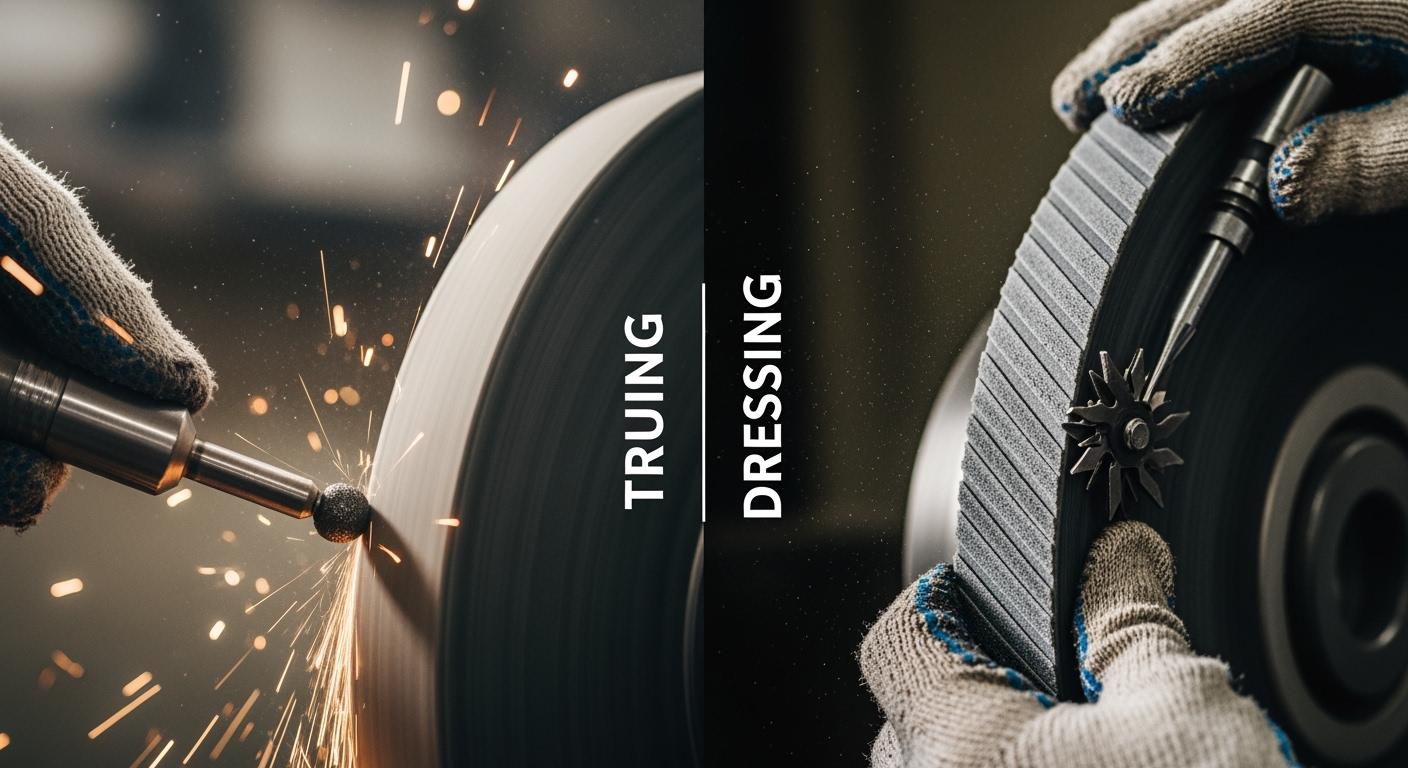
You may wonder about the difference in truing and dressing when it comes to grinding wheels. Truing vs dressing involves two separate tasks. Truing restores the original shape and balance of your grinding wheel, making sure it stays accurate and safe for grinding. Dressing cleans and sharpens the wheel, removing debris and exposing fresh abrasive grains. Both play a key role in grinding wheel performance, especially for diamond grinding wheels. You can trust Aimgrind to provide customized grinding solutions that keep your wheel working at its best.
Key Takeaways
- Truing restores the shape and balance of your grinding wheel, ensuring accurate and safe grinding.
- Dressing cleans and sharpens the wheel, removing debris and exposing fresh abrasive grains for better cutting performance.
- Regular truing and dressing are essential for maintaining the efficiency and longevity of Aimgrind diamond grinding wheels.
- Use truing when the wheel is out of round or shows uneven wear; use dressing when the wheel is dull or clogged.
- Choosing the right tools and methods for truing and dressing enhances grinding precision and quality.
Key Differences Between Truing and Dressing
Truing Explained
Truing is a process that restores the original shape and balance of your grinding wheel. You use truing to make the wheel round and concentric with the spindle. This step is important because it corrects any geometry errors that may develop during use. When you true a grinding wheel, you make sure the entire wheel face is straight and even. This helps the grinding process stay accurate and safe.
You can use several methods for truing. Some common options include:
- Single-point diamond pen truing: This method is simple but wears out quickly and does not work well for complex shapes.
- Pulse laser truing: This method can work in two directions but may have accuracy issues.
- Abrasive block truing: This method can be hard to control because the block wears down.
- Diamond roller truing: This method combines grinding and rolling. It gives high precision and works well for cup-shaped wheels.
Aimgrind diamond grinding wheels often need truing to keep their shape and deliver precise results. If you use Aimgrind wheels for grinding hard alloys or ceramics, you want the wheel to stay true for the best performance.
Dressing Explained
Dressing is a process that cleans and sharpens your grinding wheel. Over time, the wheel can get clogged with metal particles or the abrasive grains can become dull. When you dress the wheel, you remove these particles and worn grains. This exposes fresh, sharp diamond grains and restores the wheel’s cutting ability.
Dressing also helps restore the wheel’s shape and surface. If your grinding wheel becomes loaded or uneven, dressing fixes these problems. You can use different tools for dressing, such as single-point or multi-point diamond dressers. These tools help you remove the worn surface and reveal new abrasive grains.
Here is a quick look at common dressing tools:
| Method | Description |
|---|---|
| Single-point diamond dresser | Uses one diamond crystal for precise, straight dressing tasks. |
| Multi-point diamond dresser | Has several diamond tips, lasts longer, and is good for heavy-duty grinding wheel dressing. |
You need to dress your Aimgrind diamond grinding wheels regularly. This keeps the grinding process efficient and ensures you get a clean, sharp cut every time.
Truing vs Dressing Overview
You may wonder about the key differences between truing and dressing. Both processes are important for grinding wheel maintenance, but they serve different purposes:
- Truing restores the wheel’s geometry. You use it to make the wheel round and balanced.
- Dressing cleans and sharpens the wheel. You use it to remove debris and expose new abrasive grains.
Tip: Truing and dressing work together to keep your grinding wheel in top shape. Truing fixes the shape, while dressing restores the cutting surface.
The difference in truing and dressing matters most when you want high-quality results from your grinding process. If you use Aimgrind diamond grinding wheels, you need both truing and dressing to maintain accuracy and efficiency. Grinding wheel dressing and truing help you achieve the best finish and extend the life of your wheel.
When you understand the key differences between truing and dressing, you can choose the right process for your grinding needs. This knowledge helps you get the most out of your Aimgrind diamond grinding wheels and ensures your grinding process stays smooth and effective.
Why Truing and Dressing Matter for Grinding Wheels
Restoring Wheel Geometry
You need to keep your grinding wheel in the right shape for the best results. Truing brings your wheel back to its original form. This process removes any bumps or uneven spots that develop during grinding. When you true your wheel, you make sure it spins straight and stays balanced. This step is important for precision and quality in every grinding job.
- Truing restores the grinding wheel to its original shape.
- It removes irregularities and imbalances.
- You get a uniform and concentric surface.
- Precision improves because the wheel rotates evenly.
If you skip truing, you may see poor grinding efficiency and lower quality. Your grinding wheel performance drops, and you risk damaging your workpiece.
Enhancing Cutting Performance
Dressing your grinding wheel keeps it sharp and clean. Over time, metal particles and dull grains build up on the wheel. Dressing removes these and exposes fresh abrasive grains. This step boosts cutting efficiency and keeps your grinding process smooth.
| Parameter | Effect on Grinding Performance |
|---|---|
| Specific Grinding Energy | Changes with dressing settings |
| Radial Wheel Wear | Varies based on how you dress the wheel |
| Number of Active Grits | Affects energy use and grinding action |
| Grits Slope | Impacts how metal is removed |
You should dress your wheel when you see loading, glazing, or a poor surface finish. Regular dressing prevents overheating and keeps your grinding results consistent. This practice supports high precision and quality in every project.
Impact on Aimgrind Diamond Grinding Wheels
Aimgrind diamond grinding wheels need both truing and dressing for top performance. These wheels work on hard alloys, ceramics, and composites. You want to keep their shape and sharpness for the best grinding efficiency and quality.
- Truing and dressing help you avoid defects in your workpieces.
- You maintain high grinding efficiency and its impact on cost and productivity.
- Regular care extends the life of your grinding wheel and protects your investment.
Grinding wheel dressing and truing are not just routine steps. They are key to the importance of wheel dressing and the effects on grinding wheel performance. You get better precision, higher efficiency, and improved quality every time you use your Aimgrind diamond grinding wheels.
How Truing and Dressing Are Performed
Truing Methods and Tools
You need to keep your grinding wheel in perfect shape for top precision and efficiency. Truing corrects wheel run-out and restores the wheel’s original geometry. You can use several truing tools and methods, each with its own strengths. The most common tools for truing include brake-controlled truing devices and silicon carbide sticks. Brake-controlled devices create a speed difference that helps true the diamond wheel, which is ideal for high-precision surface grinders. Silicon carbide sticks work well for quick touch-ups in less critical grinding jobs.
Here is a table showing popular truing tools and their best uses:
| Tool Type | How It Works | Best For |
|---|---|---|
| Brake-Controlled Truing Device | Creates abrasive slip for truing through speed difference | High-precision surface grinders |
| Silicon Carbide (SiC) Stick | Fed into the spinning wheel for quick touch-ups | Fast setup, less critical jobs |
You should always select the right tool for your grinding and dressing method. Securely mount the tool, set the correct speed, and use coolant to keep the process smooth. Light infeed and steady movement across the wheel face help you achieve the best results. After truing, immediately dress the wheel to expose sharp diamonds and maintain efficiency.
Dressing Methods and Tools
Dressing a wheel keeps your grinding wheel sharp and clean. You use dressing tools to remove debris and expose new abrasive grains. For diamond grinding wheels, you have several dressing tools to choose from:
- Handheld abrasive sticks
- Conventional abrasive rotary wheels
- Single-point and multi-point stationary diamond tools
- Rotary diamond tool configurations like cups, discs, and form rollers
Rotary tools work especially well for vitrified-bonded diamond wheels. Hybrid and CVD-tipped diamond dressers offer low dressing forces and better part quality. When dressing a wheel, the choice of grit size matters. White aluminum oxide sticks are gentle and suit resin bond wheels, while silicon carbide sticks are more aggressive and fit conventional wheels.
Resin bond wheels need gentle cleaning to expose sharp diamonds. Metal bond wheels are much harder, so you need more powerful dressing tools, such as impregnated diamond rotary dressers, to break down the tough bond and keep the grinding process efficient.
Safety Tips
You must always follow safety steps when performing truing and dressing. Wear personal protective equipment, such as safety glasses and gloves. Use earplugs or earmuffs to protect your hearing. Make sure all wheel guards and machine enclosures are in place. Double-check that the grinding wheel and dressing tools are mounted securely. Work on a stable stand and follow the manufacturer’s recommendations for your tools and machines. Watch the process closely and make adjustments as needed to keep precision, efficiency, and quality high.
Tip: Proper training, such as a course on truing and dressing, helps you avoid mistakes and ensures the best grinding wheel performance.
When to Use Dressing or Truing
Practical Scenarios
You need to know when to use dressing or truing for your grinding wheel. Each process serves a different purpose in your grinding routine. Truing is necessary when you want to restore the original shape and balance of your grinding wheel. You should use truing if you notice the wheel is out of round or if you see uneven wear. This step is important for achieving high precision in every grinding operation. Dressing is the right choice when you want to clean and sharpen the wheel’s surface. You should look for common signs that a grinding wheel needs dressing:
- The abrasive edges become dull or rounded, which lowers cutting power.
- The grinding wheel surface looks glossy or smooth, a condition called glazing.
- You see the wheel getting clogged with metal or other materials.
- Grinding takes longer, or the finish on your workpiece is uneven.
- You hear more noise or feel vibrations during grinding.
- Fine particles, like cast iron or graphite, block the wheel’s pores.
You must pay attention to these signs that a grinding wheel needs dressing. Regular dressing keeps your Aimgrind diamond grinding wheels sharp and ready for high-precision work.
Choosing the Right Process
You should consider several factors when deciding when to use dressing or truing. If you need perfect wheel geometry for precision grinding, choose truing. If you want to remove debris and expose fresh abrasive grains, dressing is the best option. You should also think about coolant use, temperature, and machine vibrations. These factors can affect the effectiveness of dressing and help extend the life of your grinding wheel.
Aimgrind diamond grinding wheels require both processes for top performance. Use truing to keep the wheel round and balanced. Use dressing to maintain sharp cutting edges and a clean surface. The importance of wheel dressing grows when you work with hard alloys, ceramics, or composites. You get better precision, longer wheel life, and improved grinding results.
Tip: Check your grinding wheel before each job. Choose truing for shape and balance. Choose dressing for sharpness and cleanliness. This approach helps you achieve the highest precision and efficiency in every grinding task.
You need to understand the main difference between truing and dressing for grinding wheel maintenance. Truing corrects the shape and balance of your grinding wheel, while dressing sharpens and cleans the wheel. The table below shows these differences:
| Aspect | Dressing | Truing |
|---|---|---|
| Purpose | Sharpening, cleaning | Correcting shape, concentricity |
| Tools Used | Diamond dresser, star dresser | Diamond tool, truing device |
| Frequency | Regularly during use | As needed |
To keep your Aimgrind diamond grinding wheels in top performance, follow these tips:
- Select the right abrasive grit and wheel structure for each grinding job.
- Use coarse grit for rough grinding and fine grit for precision grinding.
- Control feed rate and speed to protect grinding wheel performance.
- Apply cooling fluid to reduce heat during grinding.
- Balance and dress your grinding wheel regularly.
- Store your wheel safely to prevent damage.
Regular grinding wheel maintenance helps you achieve consistent grinding performance and extends the life of your grinding wheel.
FAQ
What is the main purpose of truing in grinding?
You use truing to make your grinding wheel round and balanced. This process helps you achieve accurate results and keeps your grinding machine running smoothly.
How often should you dress a grinding wheel?
You should dress your grinding wheel whenever you notice dullness, glazing, or clogging. Regular dressing keeps your grinding process efficient and improves the quality of your work.
Can you use the same tool for truing and dressing?
You cannot use the same tool for both tasks. Truing tools restore wheel shape, while dressing tools sharpen and clean the grinding surface. Each tool serves a different purpose.
Why do Aimgrind diamond grinding wheels need both truing and dressing?
You need both truing and dressing for Aimgrind diamond grinding wheels. Truing keeps the wheel in shape. Dressing exposes fresh abrasive grains. These steps help you get the best grinding performance.
What happens if you skip truing or dressing?
You risk poor grinding results if you skip truing or dressing. Your grinding wheel may become uneven or dull. This can cause damage to your workpiece and reduce grinding efficiency.
Contact Us
For More Grinding Solution or Customized Abrasive Tools